

Identification and Characterisation of an Iron-Responsive Candidate Probiotic
Open accessThe DOI matches its Crossref record; 52 of the 52 references it cites were found in a registry or an index.
Abstract
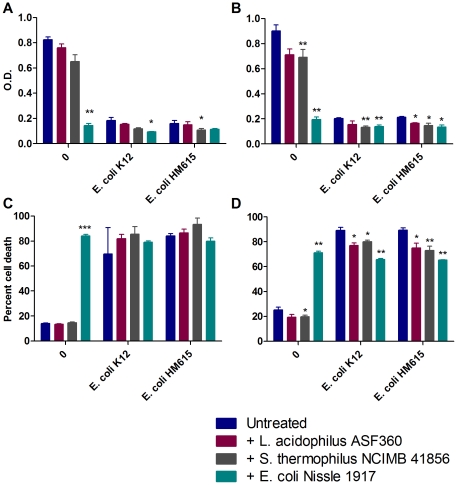
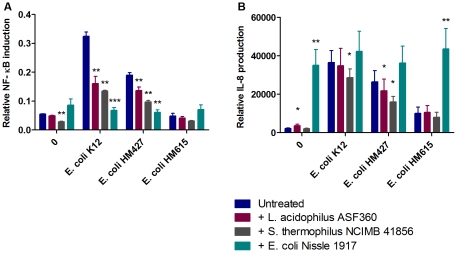
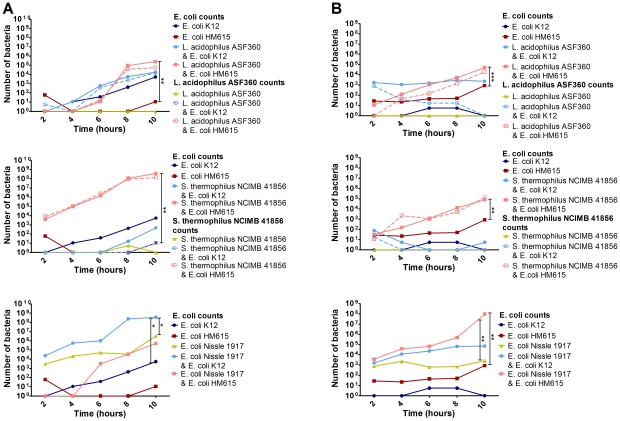
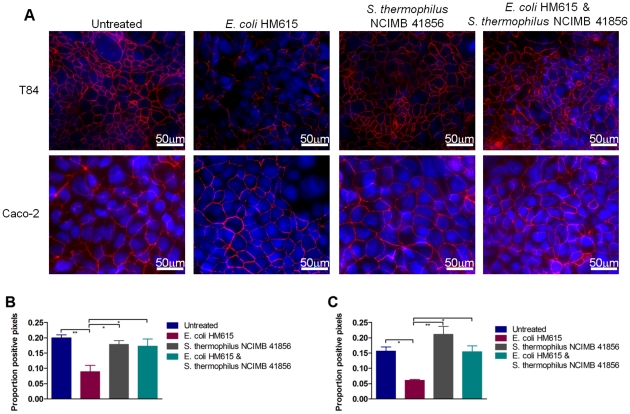
BACKGROUND: Iron is an essential cofactor in almost all biological systems. The lactic acid bacteria (LAB), frequently employed as probiotics, are unusual in having little or no requirement for iron. Iron in the human body is sequestered by transferrins and lactoferrin, limiting bacterial growth. An increase in the availability of iron in the intestine by bleeding, surgery, or under stress leads to an increase in the growth and virulence of many pathogens. Under these high iron conditions, LAB are rapidly out-competed; for the levels of probiotic bacteria to be maintained under high iron conditions they must be able to respond by increasing growth rate to compete with the normal flora. Despite this, iron-responsive genera are poorly characterised as probiotics. METHODOLOGY/PRINCIPAL FINDINGS: Here, we show that a panel of probiotics are not able to respond to increased iron availability, and identify an isolate of Streptococcus thermophilus that can increase growth rate in response to increased iron availability. The isolate of S. thermophilus selected was able to reduce epithelial cell death as well as NF-κB signalling and IL-8 production triggered by pathogens. It was capable of crossing an epithelial cell barrier in conjunction with E. coli and downregulating Th1 and Th17 responses in primary human intestinal leukocytes. CONCLUSIONS/SIGNIFICANCE: We propose that an inability to compete with potential pathogens under conditions of high iron availability such as stress and trauma may contribute to the lack of efficacy of many LAB-based probiotics in treating disease. Therefore, we offer an alternative paradigm which considers that probiotics should be able to be competitive during periods of intestinal bleeding, trauma or stress.
Overview
The claims and statistics of this paper haven’t been checked yet.
Free: it reads the open-access text and checks the first 5 claims that cite a source we can check. Create a free account to check every claim.
Integrity signals
Registry
Cites
Statistics
Figures
Verification
Claims the paper makes
The claims and statistics of this paper haven’t been checked yet.
Free: it reads the open-access text and checks the first 5 claims that cite a source we can check. Create a free account to check every claim.
Claims other papers make about this one
Each is checked against this paper’s own text: does it say what the citing paper says it does?
In the citing paper
“Lactic acid bacteria (also known as Lactobacillales) are normal components of the intestinal flora and have little or no requirement for iron; they thrive in the relatively iron-poor environment of the human intestine, but they may be displaced by other microorganisms when iron is administered60.”
From Iron homeostasis in host defence and inflammation (2015) · cites this paper as [60]
Self-check
Percentages, sums and reported differences re-computed from the paper’s own numbers.
The self-check needs the paper’s full text.
Citations
Cites
Proceedings of the National Academy of Sciences of the United States of America
Dowling, J. E., & Wald, G. (2009) · Nutrition Reviews · doi:10.1111/j.1753-4887.1981.tb06752.x · Cited by 17,893
Sokol, H., Pigneur, B., Watterlot, L., Lakhdari, O., Bermúdez-Humarán, L. G., Gratadoux, J.-J., Blugeon, S., Bridonneau, C., Furet, J.-P., Corthier, G., et al. (2008) · Proceedings of the National Academy of Sciences · doi:10.1073/pnas.0804812105 · Cited by 4,413 · cited 1×
“Faecalibacterium prausnitzii A2–165 (DSM 17677) is capable of reducing the expression of the pro-inflammatory cytokines IL-12 and IFNc by PBMCs [31].”
BackgroundApplied Microbiology and Biotechnology
(2013) · Applied Microbiology and Biotechnology · doi:10.1007/253.1432-0614 · Cited by 3,515
Probiotics in primary prevention of atopic disease: a randomised placebo-controlled trial
Kalliomäki, M., Salminen, S., Arvilommi, H., Kero, P., Koskinen, P., & Isolauri, E. (2001) · The Lancet · doi:10.1016/s0140-6736(00)04259-8 · Cited by 2,432 · cited 1×
“(strain F19) have been shown to decrease the incidence of eczema in cohorts of children”
BackgroundThe American Journal of Gastroenterology
(2003) · The American Journal of Gastroenterology · doi:10.1111/j.1572-0241.2003.80003397.x · Cited by 2,196
International Journal of Food Microbiology
(2015) · Food Microbiology · doi:10.1016/s0740-0020(14)00320-7 · Cited by 2,038
Kalliomäki, M., Salminen, S., Poussa, T., Arvilommi, H., & Isolauri, E. (2003) · The Lancet · doi:10.1016/s0140-6736(03)13490-3 · Cited by 1,342
Rembacken, B., Snelling, A., Hawkey, P., Chalmers, D., & Axon, A. (1999) · The Lancet · doi:10.1016/s0140-6736(98)06343-0 · Cited by 1,101 · cited 9×
“Clinical evaluation is now needed to determine whether its unique combination of effects in vitro translate to the treatment of IBD.”
BackgroundMethodInfluentialProbiotics in the management of atopic eczema
Isolauri, E., Arvola, T., SÜtas, Y., Moilanen, E., & Salminen, S. (2000) · Clinical & Experimental Allergy · doi:10.1046/j.1365-2222.2000.00943.x · Cited by 974 · cited 1×
“have been shown to reduce symptoms in allergic rhinitis [3] and atopic eczema [4,5].”
BackgroundProbiotics: A novel approach in the management of food allergy
Majamaa, H., & Isolauri, E. (1997) · Journal of Allergy and Clinical Immunology · doi:10.1016/s0091-6749(97)70093-9 · Cited by 918
Cited by
Iron homeostasis in host defence and inflammation
Ganz, T., & Nemeth, E. (2015) · Nature Reviews Immunology · doi:10.1038/nri3863 · Cited by 843
Constante, M., Fragoso, G., Lupien-Meilleur, J., Calvé, A., & Santos, M. M. (2017) · Inflammatory Bowel Diseases · doi:10.1097/mib.0000000000001089 · Cited by 106
Chairatana, P., Zheng, T., & Nolan, E. M. (2015) · Chemical Science · doi:10.1039/c5sc00962f · Cited by 80
Vazquez-Gutierrez, P., de Wouters, T., Werder, J., Chassard, C., & Lacroix, C. (2016) · Frontiers in Microbiology · doi:10.3389/fmicb.2016.01480 · Cited by 71
Integrating Dietary Supplements Into Cancer Care
Frenkel, M. A., Abrams, D. I., Ladas, E. J., Deng, G. E., Hardy, M. L., Capodice, J. L., Winegardner, M. F., Gubili, J., Yeung, K. S., Kussmann, H., et al. (2013) · Integrative Cancer Therapies · doi:10.1177/1534735412473642 · Cited by 81
“Others express caution about taking iron supplementation simultaneously with probiotics as iron may hinder probiotic growth.(172)”
BackgroundBifidobacteria strains isolated from stools of iron deficient infants can efficiently sequester iron
Vazquez-Gutierrez, P., Lacroix, C., Jaeggi, T., Zeder, C., Zimmerman, M. B., & Chassard, C. (2015) · BMC Microbiology · doi:10.1186/s12866-014-0334-z · Cited by 68
“It has been hypothesized that one of the beneficial actions of health promoting bifidobacteria is to sequester iron, thus making it less available to pathogens, hence representing another form of nutritional immunity [24].”
BackgroundGenetic modification of iron metabolism in mice affects the gut microbiota
Buhnik-Rosenblau, K., Moshe-Belizowski, S., Danin-Poleg, Y., & Meyron-Holtz, E. G. (2012) · BioMetals · doi:10.1007/s10534-012-9555-5 · Cited by 53
“Bailey et al. (2011) recently”
Streptococcus thermophiles DMST-H2 Promotes Recovery in Mice with Antibiotic-Associated Diarrhea
Hu, J., Huang, Y., Kuang, J., Yu, J., Zhou, Q.-Y., & Liu, D. (2020) · Microorganisms · doi:10.3390/microorganisms8111650 · Cited by 33
“coli in vitro, and decreased epithelial cell death [59].”
BackgroundBailey, J. R., Vince, V., Williams, N., & Cogan, T. A. (2017) · Beneficial Microbes · doi:10.3920/bm2016.0110 · Cited by 33
“4 epithelial cells, and reduce pro-inflammatory signalling from epithelial cells and intestinal leukocytes in vitro (Bailey et al., 2011).”
BackgroundInfluentialSelf-citationData mining the human gut microbiota for therapeutic targets
Collison, M., Hirt, R. P., Wipat, A., Nakjang, S., Sanséau, P., & Brown, J. R. (2012) · Briefings in Bioinformatics · doi:10.1093/bib/bbs002 · Cited by 32
Pápai, G., Torres-Maravilla, E., Chain, F., Varga-Visi, É., Antal, O., Naár, Z., Bermúdez‐Humarán, L. G., Langella, P., & Martín, R. (2020) · Probiotics and Antimicrobial Proteins · doi:10.1007/s12602-020-09702-2 · Cited by 32
Vazquez-Gutierrez, P., Stevens, M. J. A., Gehrig, P., Barkow‐Oesterreicher, S., Lacroix, C., & Chassard, C. (2017) · BMC Genomics · doi:10.1186/s12864-016-3472-x · Cited by 26
“Bifidobacteria are non-sporeforming, nonmotile, an- aerobic, Gram-positive bacteria with a high G + C content that are residents of the GI-tract and predominant * Correspondence: christophe.lacroix@hest.ethz.ch †Equal contributors 1Laboratory of Food Biotechnology, ETH Zurich, Institute of Food, Nutrition and Health,…”
InfluentialSaha, P., Chassaing, B., Yeoh, B. S., Viennois, É., Xiao, X., Kennett, M. J., Singh, V., & Vijay–Kumar, M. (2017) · Inflammatory Bowel Diseases · doi:10.1097/mib.0000000000001134 · Cited by 23
Modulating the Human Gut Microbiome as an Emerging Therapeutic Paradigm
Rajpal, D. K., & Brown, J. R. (2013) · Science Progress · doi:10.3184/003685013x13691404141587 · Cited by 19
Ghadimi, D., Hassan, M. F. Y., Fölster‐Holst, R., Röcken, C., Ebsen, M., de Vrese, M., & Heller, K. J. (2019) · Immunobiology · doi:10.1016/j.imbio.2019.11.009 · Cited by 17
Almášiová, S., Toman, R., Pšenková, M., Tančin, V., & Jančo, I. (2024) · Toxics · doi:10.3390/toxics12070467 · Cited by 15
“Moreover, milk and dairy products are not considered a significant source of iron [85].”
BackgroundDietary and Sentinel Factors Leading to Hemochromatosis
Oh, C.-K., & Moon, Y. (2019) · Nutrients · doi:10.3390/nu11051047 · Cited by 12
“Moreover, in vitro evaluation suggested that that the iron supplementation increases the growth rate and health benefits of some lactobacillus strains [112].”
BackgroundNutritional Requirements of Bifidobacteria
Levantovsky, R. M., Allen‐Blevins, C. R., & Sela, D. A. (2017) · Elsevier eBooks · doi:10.1016/b978-0-12-805060-6.00006-5 · Cited by 9
Necrotizing enterocolitis and high intestinal iron uptake due to genetic variants
for the German Neonatal Network, Göpel, W., Drese, J., Rausch, T. K., Twisselmann, N., Bohnhorst, B., Müller, A., Franz, A. R., Ziegler, A., Härtel, C., et al. (2017) · Pediatric Research · doi:10.1038/pr.2017.195 · Cited by 7
“The combined use of both species might be of particular importance, as Lactobacillus species have little or no requirement for iron, but are rapidly overgrown if increasing amounts of iron are available for competing bacterial strains (13).”
BackgroundWang, H., Liu, Z., Liu, Y., Qi, Z., Wang, S., Liu, S., Dong, S., Xia, X., & Li, S. (2014) · ACTA SCIENTIAE VETERINARIAE · Cited by 20
Almášiová, S., Toman, R., Pšenková, M., Tančin, V., & Jančo, I. (2023) · Journal of Microbiology Biotechnology and Food Sciences · doi:10.55251/jmbfs.9971 · Cited by 5
“Milk is not considered as a good source of iron and its low concentrations in milk do not meet human needs, but its presence in milk has been shown to have a positive effect on inhibiting the growth of bacteria ( Bailey et al ., 2011 ).”
BackgroundDeumić, S., Crnčević, N., Hukić, M., Dizdar, M., & Avdić, M. (2025) · Thalassemia Reports · doi:10.3390/thalassrep15010002 · Cited by 7
“TDT patients exhibited significantly higher iron overload and distinct microbial shifts, with increased Verrucomicrobiota and Fusobacteriota , further linking iron dysregulation to gut microbiome alterations [11,28].”
Role of Gut Microbiome in Neuromodulation
Kannan, S., Krishnamoorthy, G., Palanichamy, P., & Murugan, M. (2017) · Springer eBooks · doi:10.1007/978-981-10-5050-3_8 · Cited by 3
Lyte, M. (2016) · Elsevier eBooks · doi:10.1016/b978-0-12-802304-4.00006-2 · Cited by 2
(2020) · Biointerface Research in Applied Chemistry · doi:10.33263/briac114.1130311315 · Cited by 1
“Several mechanisms have occurred among various bacteria and metal ions, especially iron ions, including a ferric reduction to ferrous iron, siderophore production, and surface absorption by iron-binding proteins [26,27].”
BackgroundDoes flow culture impact upon gut-probiotic interactions: A comparison with static culture
Michael, D. R., Kerry-Smith, J., Webberley, T. S., Murphy, K. R., Plummer, S. F., Parry, L., & Marchesi, J. R. (2023) · Journal of Functional Foods · doi:10.1016/j.jff.2023.105519 · Cited by 1
“…(Cunningham et al., 2021; Kleerebezem et al., 2019) as demonstrated by the discrepancy between the probiotic induced elevation of interleukin (IL)-8 observed in vitro (Bailey, Probert, & Cogan, 2011; Malago, Tooten, & Koninkx, 2010; Tuo et al., 2018), but not observed in vivo (Walana et al., 2018).”
Background
Metadata
- Authors
- Bailey, J. R., Probert, C. S. J., & Cogan, T. A.
- Affiliations
- University of Bristol (GB)
- Corresponding author
- Cogan, Tristan A.
- Venue
- PLoS ONE
- Publisher
- Public Library of Science (PLoS)
- Published
- 2011-10-19
- Volume
- 6
- Issue
- 10
- Pages
- e26507
- ISSN
- 1932-6203 (ISSN-L)
- PMC
- PMC3198401
- OpenAlex
- W2119605330
- Cited by
- 25
- References
- 51
- Citations by year
- 2025: 1 · 2024: 1 · 2023: 1 · 2020: 3 · 2019: 2 · 2017: 7 · 2016: 2 · 2015: 3 · 2014: 1 · 2013: 2 · 2012: 2
- FWCI
- 2.34
- Type
- journal article
- Language
- en
- Open access
- gold
- doi.org
- Locations
- PLoS ONE (publishedVersion, cc-by)
- Europe PMC (PubMed Central) (publishedVersion, cc-by)
- PubMed Central (publishedVersion, cc-by)
- PubMed (publishedVersion)
- Explore Bristol Research (publishedVersion)
- DOAJ (DOAJ: Directory of Open Access Journals) (submittedVersion, cc-by-sa)
- Figshare (submittedVersion, cc-by)
- Bristol Research (University of Bristol) (submittedVersion, cc-by)
- Topics
- Life Sciences › Agricultural and Biological Sciences › Food Science › Probiotics and Fermented Foods
- Health Sciences › Nursing › Nutrition and Dietetics › Infant Nutrition and Health
- Life Sciences › Biochemistry, Genetics and Molecular Biology › Molecular Biology › Gut microbiota and health
- Keywords
- lactic acid bacteria, Streptococcus thermophilus, iron availability, epithelial cell death, NF-κB signaling, IL-8 production, Escherichia coli, Th1/Th17 response, intestinal inflammation, probiotic efficacy
- MeSH terms
- Humans, Intestinal Mucosa, Iron, Norepinephrine, T-Lymphocytes, Interleukin-8, NF-kappa B, Probiotics, Streptococcus thermophilus, Cell Proliferation
About these checks
Registry, retraction, Cites and statistics results are computed, not judged, with one exception: a printed reference that no index lists is read once by a model before it counts as a citation error. Claims are extracted by a model and kept only when their quote appears verbatim in the text; each cited source is then checked, with a model’s help, for whether it says what the claim relies on. Those verdicts can be wrong — read the claim’s quote and the cited source before relying on one.
Statistics and arithmetic are recomputed, not judged.
Confidence bands are shown only for fields calibrated on our annotated test set. None is calibrated yet, so no band is shown.
What counts as a claim ›How we measure confidence ›How we check this ›
Are you an author, or do you see a problem with this page? Request a review
Data sources
Bibliographic data: Semantic Scholar, OpenAlex, Crossref.
Contains information from the Semantic Scholar Academic Graph Datasets, made available under the ODC Attribution License (ODC-BY 1.0).
Semantic Scholar’s data is described in: Kinney, R., et al. (2023). The Semantic Scholar Open Data Platform. arXiv:2301.10140.
