

The DOI matches its Crossref record; 46 of the 46 references it cites were found in a registry or an index.
Comparing Statistical Methods for Constructing Large Scale Gene Networks
Open accessAbstract
The gene regulatory network (GRN) reveals the regulatory relationships among genes and can provide a systematic understanding of molecular mechanisms underlying biological processes. The importance of computer simulations in understanding cellular processes is now widely accepted; a variety of algorithms have been developed to study these biological networks. The goal of this study is to provide a comprehensive evaluation and a practical guide to aid in choosing statistical methods for constructing large scale GRNs. Using both simulation studies and a real application in E. coli data, we compare different methods in terms of sensitivity and specificity in identifying the true connections and the hub genes, the ease of use, and computational speed. Our results show that these algorithms performed reasonably well, and each method has its own advantages: (1) GeneNet, WGCNA (Weighted Correlation Network Analysis), and ARACNE (Algorithm for the Reconstruction of Accurate Cellular Networks) performed well in constructing the global network structure; (2) GeneNet and SPACE (Sparse PArtial Correlation Estimation) performed well in identifying a few connections with high specificity.
Overview
The claims and statistics of this paper haven’t been checked yet.
Run the check — free, no account needed. It reads the open-access text and checks the sources it cites.
Integrity signals
Registry
Cites
Statistics
Figures
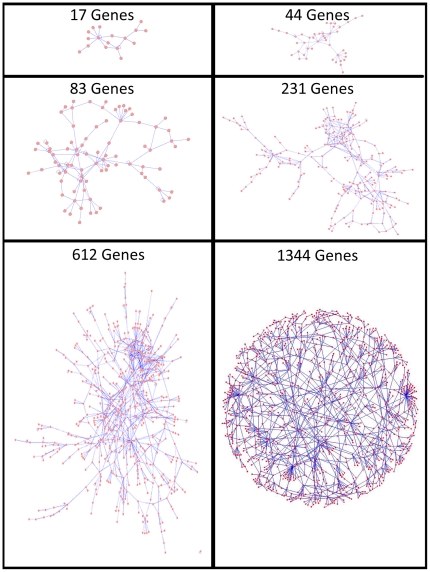
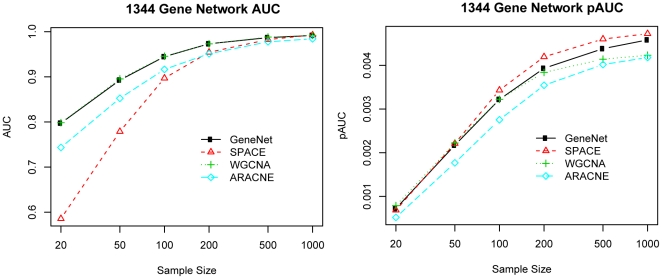
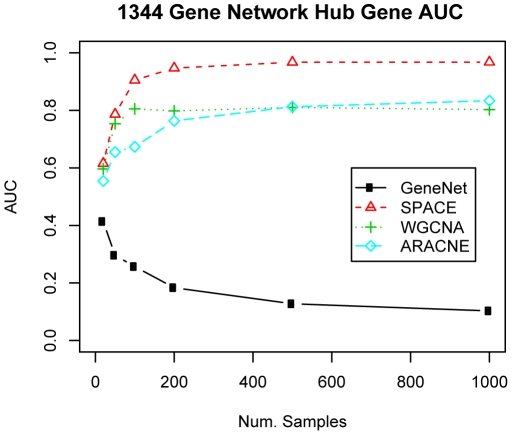
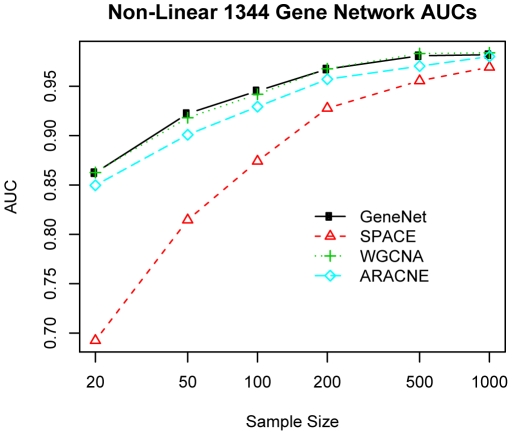
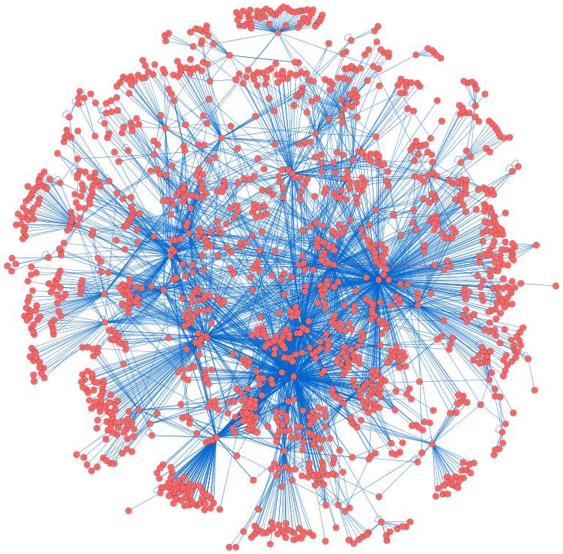
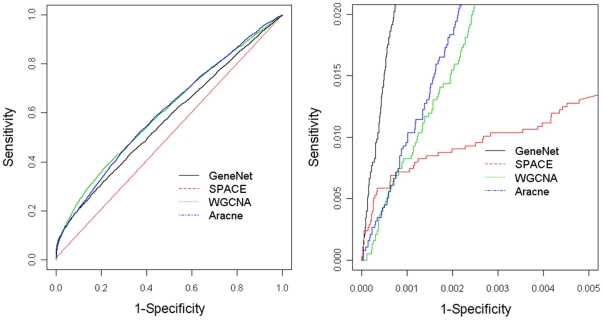
Verification
Claims the paper makes
The claims and statistics of this paper haven’t been checked yet.
Run the check — free, no account needed. It reads the open-access text and checks the sources it cites.
Claims other papers make about this one
Each is checked against this paper’s own text: does it say what the citing paper says it does?
The source backs part of the claim, not all of it — or backs it for a different population, condition or comparison.
In the citing paper
“At currently available sample sizes, networks are most reproducible at a module level35,38,39, then at the hub gene level41,223 and, last, at the level of precise gene connectivity rankings or precise module memberships of genes40,49.”
From Systems biology and gene networks in neurodevelopmental and neurodegenerative disorders (2015) · cites this paper as [39]
Experimental — accuracy not yet measuredThe source backs part of the claim, not all of it — or backs it for a different population, condition or comparison.
In the citing paper
“weighted networks constructed with the topological overlap of correlation (for example, by weighted gene co-expression network analysis (WGCNA)42,44) have similar sensitivity and specificity for detecting true network structure for experiments involving monotonic relationships as do networks constructed with nonlinear association measures such as mutual information (for example, by the Algorithm”
From Systems biology and gene networks in neurodevelopmental and neurodegenerative disorders (2015) · cites this paper as [39]
Experimental — accuracy not yet measuredThe cited source says what the claim attributes to it.
In the citing paper
“A comparison between these tools and others, including WGCNA, showed that WGCNA and ARACNE perform best at defining the network structure of Escherichia coli [130], for which a well-defined regulatory network was used as a gold standard [131].”
From Gene co-expression analysis for functional classification and gene–disease predictions (2017) · cites this paper as [130]
The check wasn’t confident either way, so it gives no verdict — never disputed.
In the citing paper
“Each of the methods detects specific module changes by design, but they can also detect modular changes that they were not specifically designed for and may outperform other tools in the identification of these changes [130].”
From Gene co-expression analysis for functional classification and gene–disease predictions (2017) · cites this paper as [130]
Experimental — accuracy not yet measuredThe check wasn’t confident either way, so it gives no verdict — never disputed.
In the citing paper
“Network analyses of AD brain tissue demonstrate the most reproducibility at the module level, followed by the hub protein level, and then finally at the level of precise protein connectivity rankings and module protein membership [61, 89–94].”
From Systems-based proteomics to resolve the biology of Alzheimer’s disease beyond amyloid and tau (2021) · cites this paper as [91]
Experimental — accuracy not yet measured
Self-check
Percentages, sums and reported differences re-computed from the paper’s own numbers.
The self-check needs the paper’s full text.
Citations
Cites
Cytoscape: A software Environment for integrated models of biomolecular interaction networks
Shannon, P., Markiel, A., Ozier, O., Baliga, N. S., Wang, J. T., Ramage, D., Amin, N., Schwikowski, B., & Ideker, T. (2003) · Genome Research · doi:10.1101/gr.1239303 · Cited by 51,888
WGCNA: an R package for weighted correlation network analysis
Langfelder, P., & Horvath, S. (2008) · BMC Bioinformatics · doi:10.1186/1471-2105-9-559 · Cited by 27,252
DAVID: Database for Annotation, Visualization, and Integrated Discovery
Dennis, G., Sherman, B. T., Hosack, D. A., Yang, J., Gao, W., Lane, H. C., & Lempicki, R. A. (2003) · Genome Biology · doi:10.1186/gb-2003-4-5-p3 · Cited by 9,327
A General Framework for Weighted Gene Co-Expression Network Analysis
Zhang, B., & Horvath, S. (2005) · Statistical Applications in Genetics and Molecular Biology · doi:10.2202/1544-6115.1128 · Cited by 5,684
A generalized inverse for matrices
Penrose, R. (1955) · Mathematical Proceedings of the Cambridge Philosophical Society · doi:10.1017/s0305004100030401 · Cited by 4,611
A Bayesian Method for the Induction of Probabilistic Networks from Data
Cooper, G. F., & Herskovits, E. H. (1992) · Machine Learning · doi:10.1023/a:1022649401552 · Cited by 4,241
Margolin, A. A., Nemenman, I., Basso, K., Wiggins, C., Stolovitzky, G., Favera, R. D., & Califano, A. (2006) · BMC Bioinformatics · doi:10.1186/1471-2105-7-s1-s7 · Cited by 2,420
A Gene-Coexpression Network for Global Discovery of Conserved Genetic Modules
Stuart, J. M., Segal, E., Koller, D., & Kim, S. K. (2003) · Science · doi:10.1126/science.1087447 · Cited by 2,276
Margolin, A. A., Nemenman, I. M., Basso, K., Wiggins, C. H., Stolovitzky, G. A., Favera, R. D., & Califano, A. (2006) · BMC Bioinformatics · doi:10.7916/d8g15zbp · Cited by 2,260
Causal Protein-Signaling Networks Derived from Multiparameter Single-Cell Data
Sachs, K., Perez, O. D., Pe’er, D., Lauffenburger, D. A., & Nolan, G. P. (2005) · Science · doi:10.1126/science.1105809 · Cited by 1,785
Segal, E., Shapira, M., Regev, A., Pe’er, D., Botstein, D., Koller, D., & Friedman, N. (2003) · Nature Genetics · doi:10.1038/ng1165 · Cited by 1,678
Reverse engineering of regulatory networks in human B cells
Basso, K., Margolin, A. A., Stolovitzky, G. A., Klein, U., Dalla‐Favera, R., & Califano, A. (2005) · Nature Genetics · doi:10.1038/ng1532 · Cited by 1,408
Inferring Cellular Networks Using Probabilistic Graphical Models
Friedman, N. (2004) · Science · doi:10.1126/science.1094068 · Cited by 1,211
The bayes net toolbox for matlab
Murphy, K. (2001) · Cited by 1,014
An empirical Bayes approach to inferring large-scale gene association networks
Schäfer, J., & Strimmer, K. (2004) · Bioinformatics · doi:10.1093/bioinformatics/bti062 · Cited by 801
Revealing modular organization in the yeast transcriptional network
Ihmels, J., Friedlander, G., Bergmann, S., Sarig, O., Ziv, Y., & Barkai, N. (2002) · Nature Genetics · doi:10.1038/ng941 · Cited by 690
A Probabilistic Functional Network of Yeast Genes
Lee, I., Date, S. V., Adai, A. T., & Marcotte, E. M. (2004) · Science · doi:10.1126/science.1099511 · Cited by 684
Partial Correlation Estimation by Joint Sparse Regression Models
Peng, J., Wang, P., Zhou, N., & Zhu, J. (2009) · Journal of the American Statistical Association · doi:10.1198/jasa.2009.0126 · Cited by 676
Analysis of oncogenic signaling networks in glioblastoma identifies ASPM as a molecular target
Horvath, S., Zhang, B., Carlson, M., Lu, K. V., Zhu, S., Felciano, R. M., Laurance, M. F., Zhao, W., Qi, S., Chen, Z., et al. (2006) · Proceedings of the National Academy of Sciences · doi:10.1073/pnas.0608396103 · Cited by 641
Human protein reference database as a discovery resource for proteomics
Peri, S. (2003) · Nucleic Acids Research · doi:10.1093/nar/gkh070 · Cited by 611
Human protein reference database--2006 update
Mishra, G. (2005) · Nucleic Acids Research · doi:10.1093/nar/gkj141 · Cited by 601
Conservation and evolution of gene coexpression networks in human and chimpanzee brains
Oldham, M. C., Horvath, S., & Geschwind, D. H. (2006) · Proceedings of the National Academy of Sciences · doi:10.1073/pnas.0605938103 · Cited by 566
Husmeier, D. (2003) · Bioinformatics · doi:10.1093/bioinformatics/btg313 · Cited by 536
Multivariate Dependencies: Models, Analysis and Interpretation.
Murphy, S. A., Cox, D. R., & Wermouth, N. (1998) · Biometrics · doi:10.2307/2534028 · Cited by 494
Integrating Genetic and Network Analysis to Characterize Genes Related to Mouse Weight
Ghazalpour, A., Doss, S., Zhang, B., Wang, S., Plaisier, C., Castellanos, R., Brozell, A., Schadt, E. E., Drake, T. A., Lusis, A. J., et al. (2006) · PLoS Genetics · doi:10.1371/journal.pgen.0020130 · Cited by 462
Salgado, H. (2006) · Nucleic Acids Research · doi:10.1093/nar/gkj156 · Cited by 368
Carlson, M. R. J., Zhang, B., Fang, Z., Mischel, P. S., Horvath, S., & Nelson, S. F. (2006) · BMC Genomics · doi:10.1186/1471-2164-7-40 · Cited by 346
Carter, S. L., Brechbühler, C. M., Griffin, M., & Bond, A. T. (2004) · Bioinformatics · doi:10.1093/bioinformatics/bth234 · Cited by 344
Werhli, A. V., Grzegorczyk, M. A., & Husmeier, D. (2006) · Bioinformatics · doi:10.1093/bioinformatics/btl391 · Cited by 338
Faith, J. J., Driscoll, M. E., Fusaro, V. A., Cosgrove, E. J., Hayete, B., Juhn, F., Schneider, S. J., & Gardner, T. S. (2007) · Nucleic Acids Research · doi:10.1093/nar/gkm815 · Cited by 259
Ruan, J., Dean, A. K., & Zhang, W. (2010) · BMC Systems Biology · doi:10.1186/1752-0509-4-8 · Cited by 245
Mason, M. J., Fan, G., Plath, K., Zhou, Q., & Horvath, S. (2009) · BMC Genomics · doi:10.1186/1471-2164-10-327 · Cited by 243 · cited 1×
“These co-expression-based methods have been used in several studies and have shown their usefulness in interpreting biological results and identifying important gene modules [6,20,22–24].”
MethodMani, K. M., Lefèbvre, C., Wang, K., Lim, W. K., Basso, K., Dalla‐Favera, R., & Califano, A. (2008) · Molecular Systems Biology · doi:10.1038/msb.2008.2 · Cited by 205
Arabidopsis gene co-expression network and its functional modules
Mao, L., Hemert, J. L. V., Dash, S., & Dickerson, J. A. (2009) · BMC Bioinformatics · doi:10.1186/1471-2105-10-346 · Cited by 200
Learning Causal Bayesian Network Structures From Experimental Data
Ellis, B., & Wong, W. H. (2008) · Journal of the American Statistical Association · doi:10.1198/016214508000000193 · Cited by 181
B-COURSE: A WEB-BASED TOOL FOR BAYESIAN AND CAUSAL DATA ANALYSIS
Myllymäki, P. J., Silander, T., TIRRI, H., & Uronen, P. (2002) · International Journal of Artificial Intelligence Tools · doi:10.1142/s0218213002000940 · Cited by 159
An Integrative -omics Approach to Identify Functional Sub-Networks in Human Colorectal Cancer
Nibbe, R. K., Koyutürk, M., & Chance, M. R. (2010) · PLoS Computational Biology · doi:10.1371/journal.pcbi.1000639 · Cited by 156
Model-based cluster analysis of microarray gene-expression data
Pan, W., Lin, J., & Le, C. T. (2002) · Genome biology · doi:10.1186/gb-2002-3-2-research0009 · Cited by 128
VisANT: an integrative framework for networks in systems biology
Hu, Z., Snitkin, E. S., & DeLisi, C. (2008) · Briefings in Bioinformatics · doi:10.1093/bib/bbn020 · Cited by 120
A Network of Genetic Events Sufficient to Convert Normal Human Cells to a Tumorigenic State
Kendall, S., Linardic, C. M., Adam, S. J., & Counter, C. M. (2005) · Cancer Research · doi:10.1158/0008-5472.can-05-1543 · Cited by 108
Chen, X., Chen, M., & Ning, K. (2006) · Bioinformatics · doi:10.1093/bioinformatics/btl491 · Cited by 54
Self-citationCorrelation signature of the macroscopic states of the gene regulatory network in cancer
Slavov, N., & Dawson, K. A. (2009) · Proceedings of the National Academy of Sciences · doi:10.1073/pnas.0810803106 · Cited by 49
Multivariate dependencies models, analysis and interpretation
Cox, D. R., & Wermuth, N. (1996) · Cited by 39
Learning Bayesian networks for discrete data
Liang, F., & Zhang, J. (2008) · Computational Statistics & Data Analysis · doi:10.1016/j.csda.2008.10.007 · Cited by 25
Exploring Pathways from Gene Co-expression to Network Dynamics
Li, H., Sun, Y., & Zhan, M. (2009) · Methods in molecular biology · doi:10.1007/978-1-59745-243-4_12 · Cited by 24
Alvarez, A. A., & WOOLF, P. J. (2011) · BMC Systems Biology · doi:10.1186/1752-0509-5-86 · Cited by 6
Cited by
Sorted by citations
Integrative functional genomic analyses implicate specific molecular pathways and circuits in autism
Parikshak, N. N., Luo, R., Zhang, A., Won, H., Lowe, J. K., Chandran, V., Horvath, S., & Geschwind, D. H. (2013) · Cell · doi:10.1016/j.cell.2013.10.031 · Cited by 1,039
Gene co-expression analysis for functional classification and gene–disease predictions
van Dam, S., Võsa, U., van der Graaf, A., Franke, L., & de Magalhães, J. P. (2017) · Briefings in Bioinformatics · doi:10.1093/bib/bbw139 · Cited by 995
Unmasking Clever Hans predictors and assessing what machines really learn
Lapuschkin, S., Wäldchen, S., Binder, A., Montavon, G., Samek, W., & Müller, K.-R. (2019) · Nature Communications · doi:10.1038/s41467-019-08987-4 · Cited by 1,047
Aging effects on DNA methylation modules in human brain and blood tissue
Horvath, S., Zhang, Y., Langfelder, P., Kahn, R. S., Boks, M. P., van Eijk, K. R., van den Berg, L. H., & Ophoff, R. A. (2012) · Genome biology · doi:10.1186/gb-2012-13-10-r97 · Cited by 652
From big data analysis to personalized medicine for all: challenges and opportunities
Alyass, A., Turcotte, M., & Meyre, D. (2015) · BMC Medical Genomics · doi:10.1186/s12920-015-0108-y · Cited by 575
Metadata
- Authors
- Allen, J. D., Xie, Y., Chen, M., Girard, L., & Xiao, G.
- Affiliations
- The University of Texas Southwestern Medical Center (US)
- Harold C. Simmons Comprehensive Cancer Center (US)
- Corresponding author
- Xiao, Guanghua
- Venue
- PLoS ONE
- Publisher
- Public Library of Science (PLoS)
- Published
- 2012-01-17
- Volume
- 7
- Issue
- 1
- Pages
- e29348
- ISSN
- 1932-6203 (ISSN-L)
- PMC
- PMC3260142
- OpenAlex
- W2061971803
- Cited by
- 186
- References
- 46
- Citations by year
- 2025: 4 · 2024: 6 · 2023: 1 · 2022: 4 · 2021: 13 · 2020: 11 · 2019: 17 · 2018: 15 · 2017: 22 · 2016: 20 · 2015: 25 · 2014: 15 · 2013: 24 · 2012: 9
- FWCI
- 9.38
- Type
- journal article
- Language
- en
- Open access
- gold
- doi.org
- Locations
- PLoS ONE (publishedVersion, cc-by)
- Europe PMC (PubMed Central) (publishedVersion, cc-by)
- PubMed Central (publishedVersion, cc-by)
- PubMed (publishedVersion)
- RePEc: Research Papers in Economics (submittedVersion)
- DOAJ (DOAJ: Directory of Open Access Journals) (submittedVersion)
- Figshare (submittedVersion, cc-by)
- Funders
- National Science Foundation (0907562)
- National Institutes of Health (RR024982)
- National Institute on Drug Abuse (R33DA027592, R21DA027592)
- National Cancer Institute ((P50-CA70907, R01CA152301, P50CA070907)
- National Center for Research Resources (UL1RR024982)
- Topics
- Life Sciences › Biochemistry, Genetics and Molecular Biology › Molecular Biology › Gene Regulatory Network Analysis
- Life Sciences › Biochemistry, Genetics and Molecular Biology › Molecular Biology › Bioinformatics and Genomic Networks
- Life Sciences › Biochemistry, Genetics and Molecular Biology › Molecular Biology › Microbial Metabolic Engineering and Bioproduction
- Keywords
- gene regulatory networks, network inference, weighted gene co-expression network analysis, ARACNE, hub genes, sensitivity and specificity, Escherichia coli, method comparison
- MeSH terms
- Algorithms, Escherichia coli, Reproducibility of Results, Computational Biology, Protein Interaction Mapping, Escherichia coli Proteins, Gene Regulatory Networks, Protein Interaction Maps
About these checks
Registry, retraction, Cites and statistics results are computed, not judged, with one exception: a printed reference that no index lists is read once by a model before it counts as a citation error. Claims are extracted by a model and kept only when their quote appears verbatim in the text; each cited source is then checked, with a model’s help, for whether it says what the claim relies on. Those verdicts can be wrong — read the claim’s quote and the cited source before relying on one.
Statistics and arithmetic are recomputed, not judged.
Confidence bands are shown only for fields calibrated on our annotated test set. None is calibrated yet, so no band is shown.
What counts as a claim ›How we measure confidence ›How we check this ›
Are you an author, or do you see a problem with this page? Request a review
