

The DOI matches its Crossref record; 62 of the 62 references it cites were found in a registry or an index.
Isoform Diversity and Regulation in Peripheral and Central Neurons Revealed through RNA-Seq
Open accessAbstract
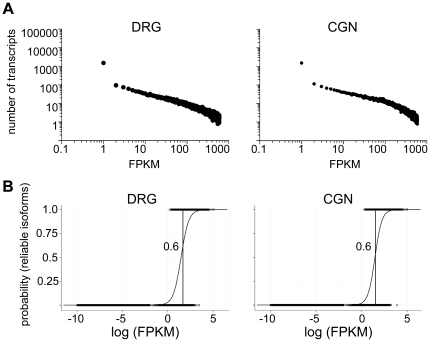
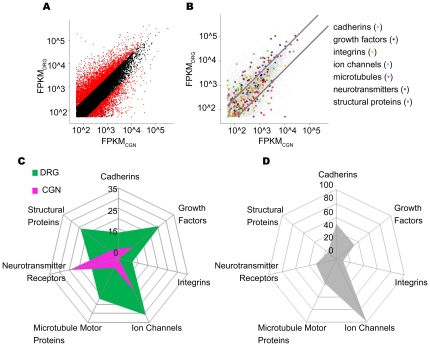
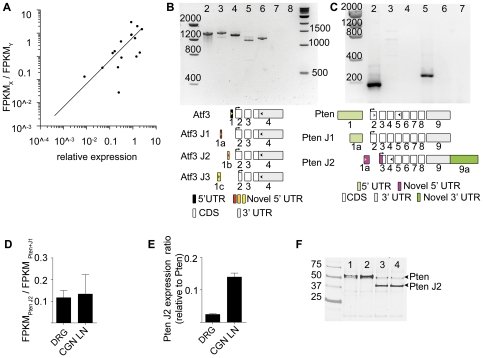
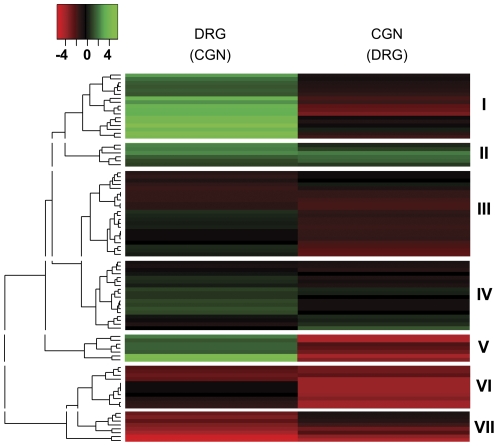
To fully understand cell type identity and function in the nervous system there is a need to understand neuronal gene expression at the level of isoform diversity. Here we applied Next Generation Sequencing of the transcriptome (RNA-Seq) to purified sensory neurons and cerebellar granular neurons (CGNs) grown on an axonal growth permissive substrate. The goal of the analysis was to uncover neuronal type specific isoforms as a prelude to understanding patterns of gene expression underlying their intrinsic growth abilities. Global gene expression patterns were comparable to those found for other cell types, in that a vast majority of genes were expressed at low abundance. Nearly 18% of gene loci produced more than one transcript. More than 8000 isoforms were differentially expressed, either to different degrees in different neuronal types or uniquely expressed in one or the other. Sensory neurons expressed a larger number of genes and gene isoforms than did CGNs. To begin to understand the mechanisms responsible for the differential gene/isoform expression we identified transcription factor binding sites present specifically in the upstream genomic sequences of differentially expressed isoforms, and analyzed the 3' untranslated regions (3' UTRs) for microRNA (miRNA) target sites. Our analysis defines isoform diversity for two neuronal types with diverse axon growth capabilities and begins to elucidate the complex transcriptional landscape in two neuronal populations.
Overview
The claims and statistics of this paper haven’t been checked yet.
Run the check — free, no account needed. It reads the open-access text and checks the sources it cites.
Integrity signals
Registry
Cites
Statistics
Figures
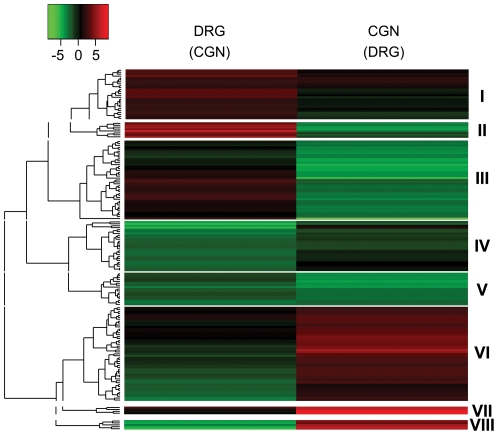
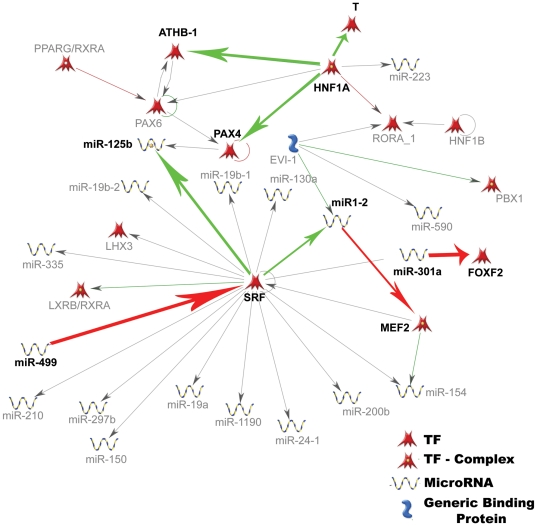
Verification
Claims the paper makes
The claims and statistics of this paper haven’t been checked yet.
Run the check — free, no account needed. It reads the open-access text and checks the sources it cites.
Claims other papers make about this one
Each is checked against this paper’s own text: does it say what the citing paper says it does?
The cited source doesn’t support the claim as written.
In the citing paper
“Therefore, genes expressed at FPKM values Ͼ0.1 are expressed at statistically significant levels (Ͼ99% confidence)”
From An RNA-Sequencing Transcriptome and Splicing Database of Glia, Neurons, and Vascular Cells of the Cerebral Cortex (2014) · cites this paper as Lerch et al., 2012
Checked by a reasoning model — may be wrong.
Experimental — accuracy not yet measured
Self-check
Percentages, sums and reported differences re-computed from the paper’s own numbers.
The self-check needs the paper’s full text.
Citations
Cites
Analysis of Relative Gene Expression Data Using Real-Time Quantitative PCR and the 2−ΔΔCT Method
Livak, K. J., & Schmittgen, T. D. (2001) · Methods · doi:10.1006/meth.2001.1262 · Cited by 180,860
Bartel (2004) · doi:10.1016/s0092-8674(04)00045-5 · Cited by 34,714
Ultrafast and memory-efficient alignment of short DNA sequences to the human genome.
Langmead, B., Trapnell, C., Pop, M., & Salzberg, S. L. (2009) · Genome Biology · doi:10.1186/gb-2009-10-3-r25 · Cited by 21,849
Trapnell, C., Williams, B. A., Pertea, G., Mortazavi, A., Kwan, G., van Baren, M. J., Salzberg, S. L., Wold, B. J., & Pachter, L. (2010) · Nature Biotechnology · doi:10.1038/nbt.1621 · Cited by 15,556
Mapping and quantifying mammalian transcriptomes by RNA-Seq
Mortazavi, A., Williams, B. A., McCue, K., Schaeffer, L., & Wold, B. (2008) · Nature Methods · doi:10.1038/nmeth.1226 · Cited by 13,696
RNA-Seq: a revolutionary tool for transcriptomics
Wang, Z., Gerstein, M., & Snyder, M. (2009) · Nature Reviews Genetics · doi:10.1038/nrg2484 · Cited by 13,174
Lewis, B. P., Burge, C. B., & Bartel, D. P. (2005) · Cell · doi:10.1016/j.cell.2004.12.035 · Cited by 11,855
TopHat: discovering splice junctions with RNA-Seq
Trapnell, C., Pachter, L. S., & Salzberg, S. L. (2009) · Bioinformatics · doi:10.1093/bioinformatics/btp120 · Cited by 11,682
A ceRNA Hypothesis: The Rosetta Stone of a Hidden RNA Language?
Salmena, L., Poliseno, L., Tay, Y., Kats, L., & Pandolfi, P. P. (2011) · Cell · doi:10.1016/j.cell.2011.07.014 · Cited by 7,262
RNA-seq: An assessment of technical reproducibility and comparison with gene expression arrays
Marioni, J. C., Mason, C. E., Mane, S. M., Stephens, M., & Gilad, Y. (2008) · Genome Research · doi:10.1101/gr.079558.108 · Cited by 2,771
Cited by
Sorted by citations
Zhang, Y., Chen, K., Sloan, S. A., Bennett, M. L., Scholze, A. R., O'Keeffe, S., Phatnani, H. P., Guarnieri, P., Caneda, C., Ruderisch, N., et al. (2014) · The Journal of Neuroscience · doi:10.1523/jneurosci.1860-14.2014 · Cited by 4,875
“…assess the accuracy and reliability of our RNA-Seq experiments, we applied a widely used procedure to determine the threshold for reliable FPKM estimation based on optimizing the intersection of falsepositive and false-negative rates (Ramskold et al., 2009; Lerch et al., 2012; Chen et al., 2013).”
BackgroundMethodInfluentialEvolution to the rescue: using comparative genomics to understand long non-coding RNAs
Ulitsky, I. (2016) · Nature Reviews Genetics · doi:10.1038/nrg.2016.85 · Cited by 548
Immune Cytokines and Their Receptors in Inflammatory Pain
Cook, A. D., Christensen, A. D., Tewari, D., McMahon, S. B., & Hamilton, J. A. (2018) · Trends in Immunology · doi:10.1016/j.it.2017.12.003 · Cited by 275
Transcriptome Analysis of the Human Striatum in Tourette Syndrome
Lennington, J. B., Coppola, G., Kataoka-Sasaki, Y., Fernandez, T. V., Palejev, D., Li, Y., Huttner, A., Pletikos, M., Sestan, N., Leckman, J. F., et al. (2016) · Biological Psychiatry · doi:10.1016/j.biopsych.2014.07.018 · Cited by 211
Zhu, Y., Lyapichev, K. A., Lee, D. H., Motti, D., Ferraro, N. M., Zhang, Y., Yahn, S. L., Soderblom, C., Zha, J., Bethea, J. R., et al. (2017) · Journal of Neuroscience · doi:10.1523/jneurosci.2751-16.2017 · Cited by 130
Self-citationHolland, S. M., Collura, K. M., Ketschek, A., Noma, K., Ferguson, T. A., Jin, Y., Gallo, G., & Thomas, G. M. (2015) · Proceedings of the National Academy of Sciences · doi:10.1073/pnas.1514123113 · Cited by 123
Defining the nociceptor transcriptome
Thakur, M., Crow, M., Richards, N., Davey, G. I. J., Levine, E. H., Kelleher, J. H., Agley, C. C., Denk, F., Harridge, S. D. R., & McMahon, S. B. (2014) · Frontiers in Molecular Neuroscience · doi:10.3389/fnmol.2014.00087 · Cited by 120
Schneider, R., Li, Y., Meyer, A., & Gunter, H. M. (2014) · Molecular Ecology · doi:10.1111/mec.12851 · Cited by 98
Herman, P. E., Papatheodorou, A., Bryant, S. A., Waterbury, C. K. M., Herdy, J. R., Arcese, A. A., Buxbaum, J. D., Smith, J. J., Morgan, J. R., & Bloom, O. (2018) · Scientific Reports · doi:10.1038/s41598-017-18757-1 · Cited by 68
Hyperactivated Stat3 boosts axon regeneration in the CNS
Mehta, S. T., Luo, X., Park, K. K., Bixby, J. L., & Lemmon, V. (2016) · Experimental Neurology · doi:10.1016/j.expneurol.2016.03.004 · Cited by 66
Self-citationCooke, P., Janowitz, H. N., & Dougherty, S. (2022) · Frontiers in Cellular Neuroscience · doi:10.3389/fncel.2022.872501 · Cited by 61
Spliced genes in muscle from Nelore Cattle and their association with carcass and meat quality
Silva, D. B. D. S., Fonseca, L. F. S., Pinheiro, D. G., Magalhães, A. F. B., Muniz, M. M. M., Ferro, J. A., Baldi, F. S., Chardulo, L. A. L., Schnabel, R. D., Taylor, J. F., et al. (2020) · Scientific Reports · doi:10.1038/s41598-020-71783-4 · Cited by 54
Lerch, J. K., Martinez‐Ondaro, Y., Bixby, J. L., & Lemmon, V. (2014) · Molecular and Cellular Neuroscience · doi:10.1016/j.mcn.2014.02.002 · Cited by 50
Self-citationChemical Interrogation of the Neuronal Kinome Using a Primary Cell-Based Screening Assay
Al‐Ali, H., Schürer, S. C., Lemmon, V., & Bixby, J. L. (2013) · ACS Chemical Biology · doi:10.1021/cb300584e · Cited by 39
Self-citationMolecular Control of Axon Growth
Blackmore, M. G. (2012) · International review of neurobiology · doi:10.1016/b978-0-12-398309-1.00004-4 · Cited by 39
Collura, K. M., Niu, J., Sanders, S. S., Montersino, A., Holland, S. M., & Thomas, G. M. (2020) · Journal of Biological Chemistry · doi:10.1074/jbc.ra120.013815 · Cited by 37
Transcriptome profile of the human placenta
Majewska, M., Lipka, A., Paukszto, Ł., Jastrzebski, J., Myszczyński, K., Gowkielewicz, M., Jóźwik, M., & Majewski, M. K. (2017) · Functional & Integrative Genomics · doi:10.1007/s10142-017-0555-y · Cited by 35
Slepak, T. I., Salay, L. D., Lemmon, V., & Bixby, J. L. (2012) · Cytoskeleton · doi:10.1002/cm.21021 · Cited by 33
Self-citationLaForce, G. R., Farr, J. S., Liu, J., Akesson, C., Gümüş, E., Pinkard, O. W., Miranda, H. C., Johnson, K., Sweet, T. J., Ji, P., et al. (2022) · Neuron · doi:10.1016/j.neuron.2022.01.018 · Cited by 31
Lentiviral Vector-Mediated RNA Silencing in the Central Nervous System
Hutson, T. H., Foster, E., Moon, L. D. F., & Yáñez‐Muñoz, R. J. (2013) · Human Gene Therapy Methods · doi:10.1089/hgtb.2013.016 · Cited by 32
Transcriptomic Approaches to Neural Repair
Dulin, J. N., Antunes‐Martins, A., Chandran, V., Costigan, M., Lerch, J. K., Willis, D. E., & Tuszynski, M. H. (2015) · Journal of Neuroscience · doi:10.1523/jneurosci.2599-15.2015 · Cited by 30
Self-citationOf contigs and quagmires: next‐generation sequencing pitfalls associated with transcriptomic studies
DeWoody, J. A., Abts, K. C., Fahey, A. L., Ji, Y., Kimble, S. J. A., Marra, N. J., Wijayawardena, B. K., & Willoughby, J. R. (2013) · Molecular Ecology Resources · doi:10.1111/1755-0998.12107 · Cited by 24
Phenotypic screening with primary neurons to identify drug targets for regeneration and degeneration
Cooper, D. J., Zunino, G., Bixby, J. L., & Lemmon, V. (2016) · Molecular and Cellular Neuroscience · doi:10.1016/j.mcn.2016.07.001 · Cited by 24
Self-citationIdentification of a Sacral, Visceral Sensory Transcriptome in Embryonic and Adult Mice
Anttila, C. J. A., Mason, E. A., Wells, C. A., Aronow, B. J., Osborne, P. B., & Keast, J. R. (2020) · eNeuro · doi:10.1523/eneuro.0397-19.2019 · Cited by 24
Identification of mi RNA s involved in DRG neurite outgrowth and their putative targets
Motti, D., Lerch, J. K., Danzi, M. C., Gans, J., Kuo, F., Slepak, T. I., Bixby, J. L., & Lemmon, V. (2017) · FEBS Letters · doi:10.1002/1873-3468.12718 · Cited by 22
Self-citationSlippery signaling: Palmitoylation-dependent control of neuronal kinase localization and activity
Montersino, A., & Thomas, G. M. (2015) · Molecular Membrane Biology · doi:10.1080/09687688.2016.1182652 · Cited by 19
Shin, J. E., Ha, H., Cho, E. H., Kim, Y. K., & Cho, Y. (2018) · The Journal of Comparative Neurology · doi:10.1002/cne.24404 · Cited by 16
Hernandez, L. M., Montersino, A., Niu, J., Guo, S., Faezov, B., Sanders, S. S., Dunbrack, R. L., & Thomas, G. M. (2023) · Journal of Biological Chemistry · doi:10.1016/j.jbc.2023.104965 · Cited by 15
Identification of potential therapeutic targets in a model of neuropathic pain
Raju, H. B., Englander, Z. A., Capobianco, E., Tsinoremas, N. F., & Lerch, J. K. (2014) · Frontiers in Genetics · doi:10.3389/fgene.2014.00131 · Cited by 15
Self-citationQuach, T., Lerch, J. K., Honnorat, J., Khanna, R., & Duchemin, A. (2016) · World Journal of Psychiatry · doi:10.5498/wjp.v6.i1.18 · Cited by 15
Self-citationmRNA isoform balance in neuronal development and disease
LaForce, G. R., Philippidou, P., & Schaffer, A. E. (2022) · Wiley Interdisciplinary Reviews - RNA · doi:10.1002/wrna.1762 · Cited by 15
Pathway Analysis of the Human Brain Transcriptome in Disease
Kavanagh, T., Mills, J. D., Kim, W. S., Halliday, G. M., & Janitz, M. (2012) · Journal of Molecular Neuroscience · doi:10.1007/s12031-012-9940-0 · Cited by 13
Lee, S. J., Kwon, S., Gatti, J. R., Korcari, E., Gresser, T. E., Felix, P. C., Keep, S. G., Pasquale, K. C., Bai, T., Blanchett-Anderson, S., et al. (2017) · PLoS ONE · doi:10.1371/journal.pone.0188540 · Cited by 12
Endogenous Glycoprotein GPM6a Is Involved in Neurite Outgrowth in Rat Dorsal Root Ganglion Neurons
Aparicio, G. I., León, A., Fuster, R. G., Ravenscraft, B., Monje, P. V., & Scorticati, C. (2023) · Biomolecules · doi:10.3390/biom13040594 · Cited by 11
isoTarget: A Genetic Method for Analyzing the Functional Diversity of Splicing Isoforms In Vivo
Liu, H., Pizzano, S., Li, R., Zhao, W., Veling, M. W., Hu, Y., Yang, L., & Ye, B. (2020) · Cell Reports · doi:10.1016/j.celrep.2020.108361 · Cited by 11
Lemmon, V., Danzi, M. C., Motti, D., Avison, D., & Bixby, J. L. (2015) · Neural Regeneration Research · doi:10.4103/1673-5374.169637 · Cited by 8
Self-citationSelective neuronal vulnerability to deficits in RNA processing
Zuniga, G., & Frost, B. E. (2023) · Progress in Neurobiology · doi:10.1016/j.pneurobio.2023.102500 · Cited by 8
Cell type-specific transcriptome profiling in mammalian brains
Cui, F. (2016) · Frontiers in bioscience · doi:10.2741/4434 · Cited by 7
ExTraMapper: exon- and transcript-level mappings for orthologous gene pairs
Chakraborty, A., Ay, F., & Davuluri, R. V. (2021) · Bioinformatics · doi:10.1093/bioinformatics/btab393 · Cited by 5
Lowell, J. A., O’Neill, N., Danzi, M. C., Al‐Ali, H., Bixby, J. L., & Lemmon, V. (2021) · SLAS DISCOVERY · doi:10.1177/24725552211026270 · Cited by 5
Self-citationAl‐Ali, H., Lemmon, V., & Bixby, J. L. (2016) · Methods in molecular biology · doi:10.1007/978-1-4939-3816-2_37 · Cited by 5
Self-citationc-Jun in neurodegeneration: A key transcriptional regulator with therapeutic implications
Khan, F. A., Khan, H., Awan, U. A., Nurahmat, M., Nabijan, M., Abduwaki, M., & Dong, J. (2026) · Molecular Therapy — Nucleic Acids · doi:10.1016/j.omtn.2026.102874 · Cited by 4
High Content Screening of Mammalian Primary Cortical Neurons
Motti, D., Blackmore, M. G., Bixby, J. L., & Lemmon, V. (2017) · Methods in molecular biology · doi:10.1007/978-1-4939-7357-6_17 · Cited by 2
Self-citationBirth of a Regulatory Long Non-coding RNA/Gene, linc-UR-UB
Delihas, N. (2021) · Frontiers in Genetics · doi:10.3389/fgene.2021.661425 · Cited by 2
Oh, S. (2015) · Communications for Statistical Applications and Methods · doi:10.5351/csam.2015.22.2.181 · Cited by 1
Hernandez, L. M., Montersino, A., Niu, J., Guo, S., & Thomas, G. M. (2020) · bioRxiv (Cold Spring Harbor Laboratory) · doi:10.1101/2020.11.16.385971 · Cited by 1
Application of Next-Generation Sequencing of Nuclear Genes for Mitochondrial Disorders
Vasta, V., & Hahn, S. H. (2013) · Springer eBooks · doi:10.1007/978-1-4614-7001-4_12
Oh, S., & Kim, C. S. (2016) · Journal of the Korean Data and Information Science Society · doi:10.7465/jkdi.2016.27.1.225
Axonal Regeneration in the Sensory Dorsal Column Pathway
Hagg, T. (2015) · Elsevier eBooks · doi:10.1016/b978-0-12-801732-6.00018-5
Multiscale analysis of transcriptome : methodological and algorithmic developments
Liehrmann, A. (2023) · theses.fr (ABES) · doi:10.70675/bcfe650ez1176z4db0zb5aczb48c0eae17b0
Metadata
- Authors
- Lerch, J. K., Kuo, F., Motti, D., Morris, R., Bixby, J. L., & Lemmon, V. P.
- Affiliations
- University of Miami (US)
- Corresponding author
- Bixby, John L.
- Lemmon, Vance P.
- Venue
- PLoS ONE
- Publisher
- Public Library of Science (PLoS)
- Published
- 2012-01-17
- Volume
- 7
- Issue
- 1
- Pages
- e30417
- ISSN
- 1932-6203 (ISSN-L)
- PMC
- PMC3260295
- OpenAlex
- W2064384407
- Cited by
- 50
- References
- 62
- Citations by year
- 2026: 1 · 2023: 4 · 2022: 3 · 2021: 3 · 2020: 5 · 2018: 3 · 2017: 5 · 2016: 7 · 2015: 6 · 2014: 6 · 2013: 4 · 2012: 3
- FWCI
- 2.44
- Type
- journal article
- Language
- en
- Open access
- gold
- doi.org
- Locations
- PLoS ONE (publishedVersion, cc-by)
- Europe PMC (PubMed Central) (publishedVersion, cc-by)
- PubMed Central (publishedVersion, cc-by)
- PubMed (publishedVersion)
- DOAJ (DOAJ: Directory of Open Access Journals) (submittedVersion)
- Figshare (submittedVersion, cc-by)
- Funders
- National Institutes of Health (W81XWH, HD057632)
- National Institute of Neurological Disorders and Stroke (NS059866, R01NS059866)
- Eunice Kennedy Shriver National Institute of Child Health and Human Development (R01HD057632, HD057632)
- Topics
- Life Sciences › Biochemistry, Genetics and Molecular Biology › Molecular Biology › RNA Research and Splicing
- Life Sciences › Biochemistry, Genetics and Molecular Biology › Molecular Biology › Genomics and Phylogenetic Studies
- Life Sciences › Biochemistry, Genetics and Molecular Biology › Molecular Biology › Single-cell and spatial transcriptomics
- Keywords
- alternative splicing, isoform diversity, sensory neurons, neuronal gene expression, axon growth, transcription factor binding sites, microRNA binding sites, 3' untranslated region, cell type-specific gene expression, transcriptome
- MeSH terms
- Animals, Binding Sites, Cells, Cultured, Central Nervous System, Cerebellum, Ganglia, Spinal, Gene Expression Regulation, Mice, Inbred C57BL, Neurons, Sensory Receptor Cells, Transcription Factors, Cluster Analysis, Logistic Models, Open Reading Frames, Peripheral Nervous System, Protein Isoforms, 5' Untranslated Regions, Gene Expression Profiling, Transcription Initiation Site, MicroRNAs, Mice, Gene Regulatory Networks, High-Throughput Nucleotide Sequencing, Transcriptome
About these checks
Registry, retraction, Cites and statistics results are computed, not judged, with one exception: a printed reference that no index lists is read once by a model before it counts as a citation error. Claims are extracted by a model and kept only when their quote appears verbatim in the text; each cited source is then checked, with a model’s help, for whether it says what the claim relies on. Those verdicts can be wrong — read the claim’s quote and the cited source before relying on one.
Statistics and arithmetic are recomputed, not judged.
Confidence bands are shown only for fields calibrated on our annotated test set. None is calibrated yet, so no band is shown.
What counts as a claim ›How we measure confidence ›How we check this ›
Are you an author, or do you see a problem with this page? Request a review
