

Characterizing Dynamic Interactions between Ultradian Glucocorticoid Rhythmicity and Acute Stress Using the Phase Response Curve
Open accessThe DOI matches its Crossref record; 26 of the 26 references it cites were found in a registry or an index.
Abstract
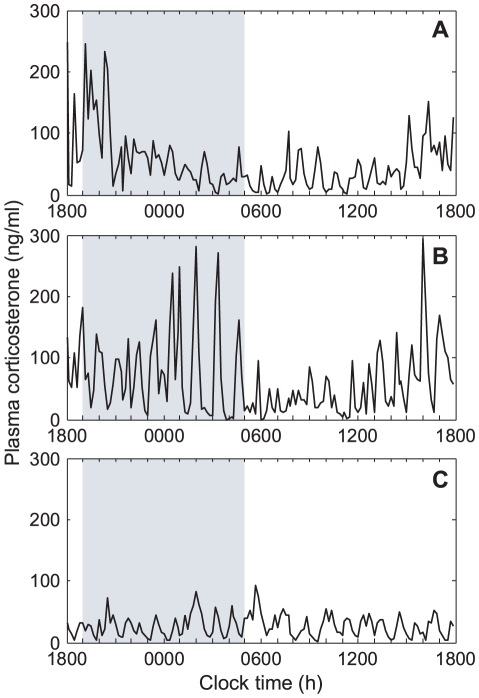
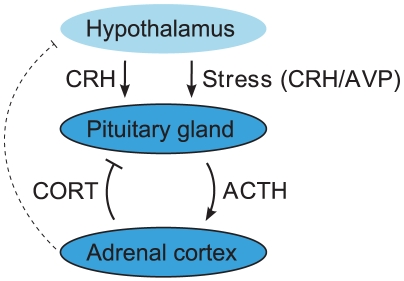
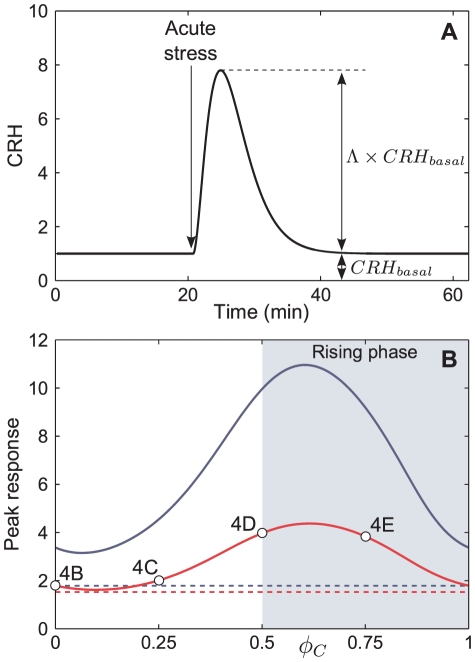
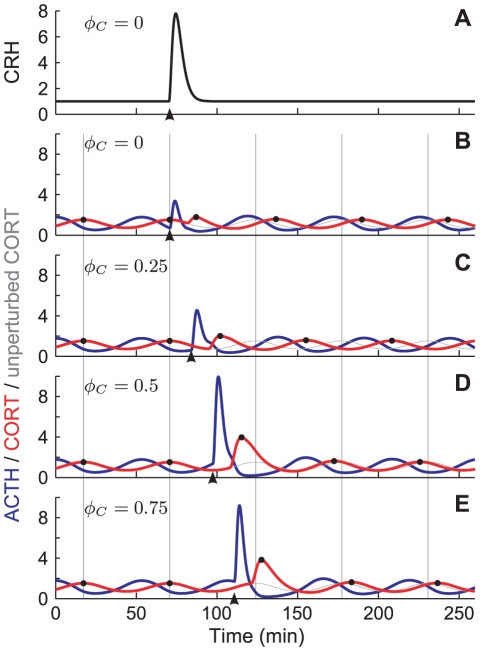
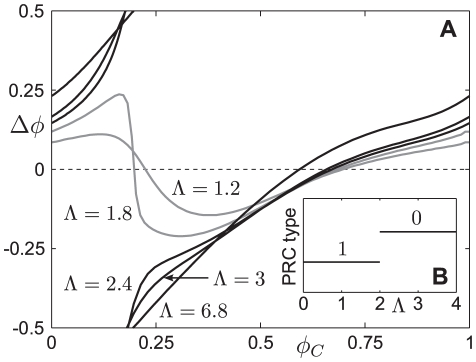
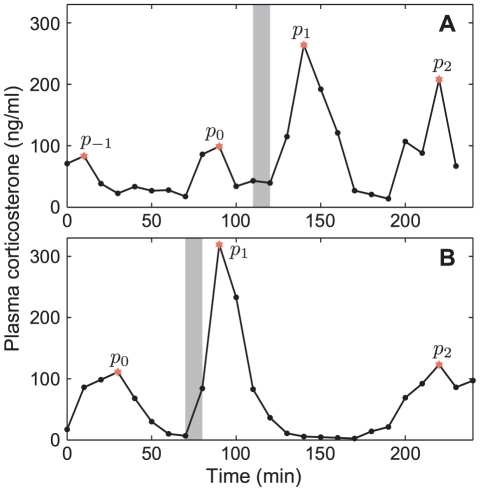
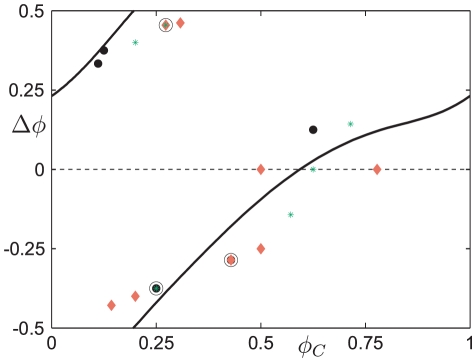
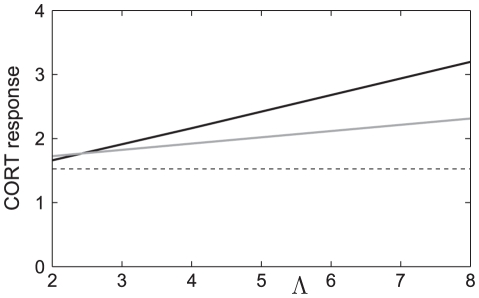
The hypothalamic-pituitary-adrenal (HPA) axis is a dynamic oscillatory hormone signalling system that regulates the pulsatile secretion of glucocorticoids from the adrenal glands. In addition to regulation of basal levels of glucocorticoids, the HPA axis provides a rapid hormonal response to stress that is vitally important for homeostasis. Recently it has become clear that glucocorticoid pulses encode an important biological signal that regulates receptor signalling both in the central nervous system and in peripheral tissues. It is therefore important to understand how stressful stimuli disrupt the pulsatile dynamics of this system. Using a computational model that incorporates the crucial feed-forward and feedback components of the axis, we provide novel insight into experimental observations that the size of the stress-induced hormonal response is critically dependent on the timing of the stress. Further, we employ the theory of Phase Response Curves to show that an acute stressor acts as a phase-resetting mechanism for the ultradian rhythm of glucocorticoid secretion. Using our model, we demonstrate that the magnitude of an acute stress is a critical factor in determining whether the system resets via a Type 1 or Type 0 mechanism. By fitting our model to our in vivo stress-response data, we show that the glucocorticoid response to an acute noise stress in rats is governed by a Type 0 phase-resetting curve. Our results provide additional evidence for the concept of a deterministic sub-hypothalamic oscillator regulating the ultradian glucocorticoid rhythm, which constitutes a highly responsive peripheral hormone system that interacts dynamically with hypothalamic inputs to regulate the overall hormonal response to stress.
Overview
The claims and statistics of this paper haven’t been checked yet.
Free: it reads the open-access text and checks the first 5 claims that cite a source we can check. Create a free account to check every claim.
Integrity signals
Registry
Cites
Statistics
Figures
Verification
Claims the paper makes
The claims and statistics of this paper haven’t been checked yet.
Free: it reads the open-access text and checks the first 5 claims that cite a source we can check. Create a free account to check every claim.
Claims other papers make about this one
Each is checked against this paper’s own text: does it say what the citing paper says it does?
The cited source says what the claim attributes to it.
In the citing paper
“the timing of an incoming stressor, relative to the phase of an endogenous pulse of CORT, has been shown to govern the amplitude of the subsequent stress response as well as the timing of subsequent pulses [1,12].”
From Rapid intra-adrenal feedback regulation of glucocorticoid synthesis (2015) · cites this paper as [12]
The cited source says what the claim attributes to it.
In the citing paper
“The secretion of cortisol has been studied in many cases revealing both circadian and ultradian oscillations in the concentration [8, 9, 10, 16, 41].”
From Patient specific modeling of the HPA axis related to clinical diagnosis of depression (2017) · cites this paper as [41]
Self-check
Percentages, sums and reported differences re-computed from the paper’s own numbers.
The self-check needs the paper’s full text.
Citations
Cites
Physiology and neurobiology of stress and adaptation: central role of the brain
McEwen, B. S. (2007) · Physiological Reviews · doi:10.1152/physrev.00041.2006 · Cited by 5,429 · cited 1×
“range of physiological processes, including metabolic, immunological and cognitive function [1].”
BackgroundStress and the brain: from adaptation to disease
de Kloet, E. R., Joëls, M., & Holsboer, F. (2005) · Nature Reviews Neuroscience · doi:10.1038/nrn1683 · Cited by 4,621
The Geometry of Biological Time
Winfree, A. T. (1980) · doi:10.1007/978-3-662-22492-2 · Cited by 3,613
From Clocks to Chaos: The Rhythms of Life
Glass, L., & Mackey, M. C. (1988) · Princeton University Press eBooks · doi:10.1515/9780691221793 · Cited by 1,251
The Geometry of Biological Time
Winfree, A. T. (2001) · Interdisciplinary Applied Mathematics · doi:10.1007/978-1-4757-3484-3 · Cited by 1,220
From Clocks to Chaos: The Rhythms of Life
Glass, L., Mackey, M. C., & Zweifel, P. F. (1989) · Physics Today · doi:10.1063/1.2811091 · Cited by 1,132
Regulation of ACTH Secretion: Variations on a Theme of B
DALLMAN, M. F., AKANA, S. F., CASCIO, C. S., DARLINGTON, D. N., JACOBSON, L., & LEVIN, N. (1987) · Proceedings of the 1986 Laurentian Hormone Conference · doi:10.1016/b978-0-12-571143-2.50010-1 · Cited by 655 · cited 1×
“In addition to these feed-forward processes, the model also takes into account negative feedback by CORT (mediated by GR) at the level of the pituitary [14,15].”
BackgroundOn the Phase Reduction and Response Dynamics of Neural Oscillator Populations
Brown, E., Moehlis, J., & Holmes, P. (2004) · Neural Computation · doi:10.1162/089976604322860668 · Cited by 510
The crucial role of pulsatile activity of the HPA axis for continuous dynamic equilibration
Lightman, S. L., & Conway-Campbell, B. L. (2010) · Nature Reviews Neuroscience · doi:10.1038/nrn2914 · Cited by 390
Self-citationUltradian hormone stimulation induces glucocorticoid receptor-mediated pulses of gene transcription
Stavreva, D. A., Wiench, M., John, S., Conway-Campbell, B. L., McKenna, M. A., Pooley, J. R., Johnson, T. A., Voss, T. C., Lightman, S. L., & Hager, G. L. (2009) · Nature Cell Biology · doi:10.1038/ncb1922 · Cited by 375
Self-citation
Cited by
Sheng, J. A., Bales, N. J., Myers, S. A., Bautista, A. I., Roueinfar, M., Hale, T. M., & Handa, R. J. (2021) · Frontiers in Behavioral Neuroscience · doi:10.3389/fnbeh.2020.601939 · Cited by 418
“Moreover, when high levels of CRH were infused, the ultradian pattern was disrupted and corticosterone oscillations were dampened, further suggesting a dose-dependent effect of CRH on the patterns of GC secretion (Rankin et al., 2012).”
BackgroundSpiga, F., Walker, J. J., Terry, J. R., & Lightman, S. L. (2014) · Comprehensive Physiology · doi:10.1002/cphy.c140003 · Cited by 267
“In contrast, the axis is inhibited and unable to respond when the stress is applied during the falling phase of a pulse (154,214).”
Self-citationMolecular mechanisms in the regulation of adult neurogenesis during stress
Egeland, M., Zunszain, P. A., & Pariante, C. M. (2015) · Nature Reviews Neuroscience · doi:10.1038/nrn3855 · Cited by 203
Kalafatakis, K., Russell, G. M., Harmer, C. J., Munafo, M. R., Marchant, N., Wilson, A., Brooks, J. C., Durant, C., Thakrar, J., Murphy, P., et al. (2018) · Proceedings of the National Academy of Sciences · doi:10.1073/pnas.1714239115 · Cited by 119
Self-citationGibbison, B., Angelini, G. D., & Lightman, S. L. (2013) · British Journal of Anaesthesia · doi:10.1093/bja/aet077 · Cited by 87
Self-citation
Metadata
- Authors
- Rankin, J., Walker, J. J., Windle, R., Lightman, S. L., & Terry, J. R.
- Affiliations
- Institut national de recherche en sciences et technologies du numérique (FR)
- University of Bristol (GB)
- University of Nottingham (GB)
- Corresponding author
- Terry, John R.
- Venue
- PLoS ONE
- Publisher
- Public Library of Science (PLoS)
- Published
- 2012-02-21
- Volume
- 7
- Issue
- 2
- Pages
- e30978
- ISSN
- 1932-6203 (ISSN-L)
- PMC
- PMC3283588
- OpenAlex
- W2048952883
- Cited by
- 60
- References
- 26
- Citations by year
- 2026: 3 · 2025: 1 · 2024: 2 · 2023: 1 · 2022: 5 · 2021: 5 · 2020: 3 · 2019: 5 · 2018: 7 · 2017: 4 · 2016: 8 · 2015: 4 · 2014: 9 · 2013: 2 · 2012: 1
- FWCI
- 2.14
- Type
- journal article
- Language
- en
- Open access
- gold
- doi.org
- Locations
- PLoS ONE (publishedVersion, cc-by)
- Europe PMC (PubMed Central) (publishedVersion, cc-by)
- PubMed Central (publishedVersion, cc-by)
- PubMed (publishedVersion)
- DOAJ (DOAJ: Directory of Open Access Journals) (submittedVersion, cc-by-sa)
- University of Birmingham Research Portal (University of Birmingham) (submittedVersion)
- Explore Bristol Research (submittedVersion)
- Funders
- Wellcome Trust (074112)
- Medical Research Council (MR/J008893/1)
- Engineering and Physical Sciences Research Council (EP/E032249/1)
- Topics
- Life Sciences › Neuroscience › Behavioral Neuroscience › Stress Responses and Cortisol
- Life Sciences › Neuroscience › Endocrine and Autonomic Systems › Circadian rhythm and melatonin
- Health Sciences › Medicine › Endocrinology, Diabetes and Metabolism › Adrenal Hormones and Disorders
- Keywords
- hypothalamic-pituitary-adrenal axis, acute stress response, phase response curve, phase resetting, noise stress
- MeSH terms
- Activity Cycles, Animals, Corticosterone, Corticotropin-Releasing Hormone, Female, Glucocorticoids, Hypothalamo-Hypophyseal System, Male, Models, Biological, Oscillometry, Pituitary-Adrenal System, Stress, Psychological, Time Factors, Reproducibility of Results, Rats
About these checks
Registry, retraction, Cites and statistics results are computed, not judged, with one exception: a printed reference that no index lists is read once by a model before it counts as a citation error. Claims are extracted by a model and kept only when their quote appears verbatim in the text; each cited source is then checked, with a model’s help, for whether it says what the claim relies on. Those verdicts can be wrong — read the claim’s quote and the cited source before relying on one.
Statistics and arithmetic are recomputed, not judged.
Confidence bands are shown only for fields calibrated on our annotated test set. None is calibrated yet, so no band is shown.
What counts as a claim ›How we measure confidence ›How we check this ›
Are you an author, or do you see a problem with this page? Request a review
Data sources
Bibliographic data: Semantic Scholar, OpenAlex, Crossref.
Contains information from the Semantic Scholar Academic Graph Datasets, made available under the ODC Attribution License (ODC-BY 1.0).
Semantic Scholar’s data is described in: Kinney, R., et al. (2023). The Semantic Scholar Open Data Platform. arXiv:2301.10140.
