

Characterizing Dynamic Interactions between Ultradian Glucocorticoid Rhythmicity and Acute Stress Using the Phase Response Curve
Open accessThe DOI matches its Crossref record; 26 of the 26 references it cites were found in a registry or an index.
Abstract
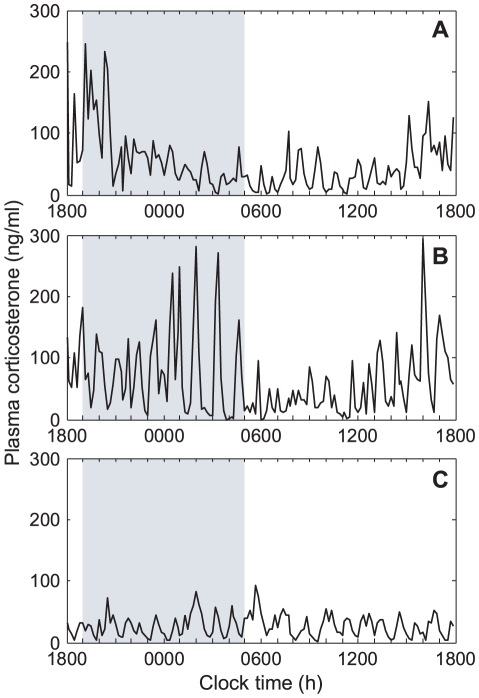
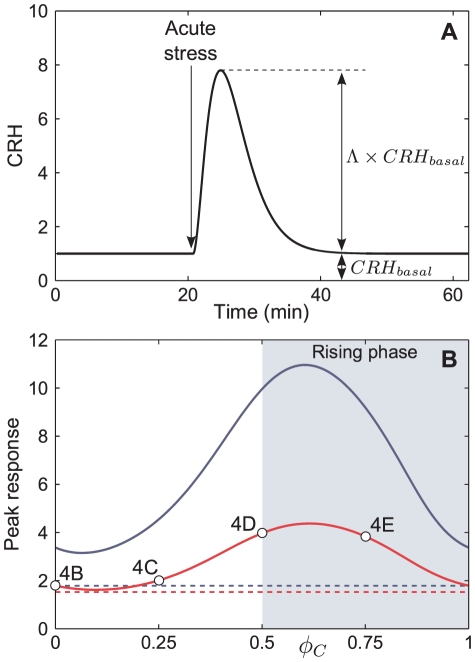
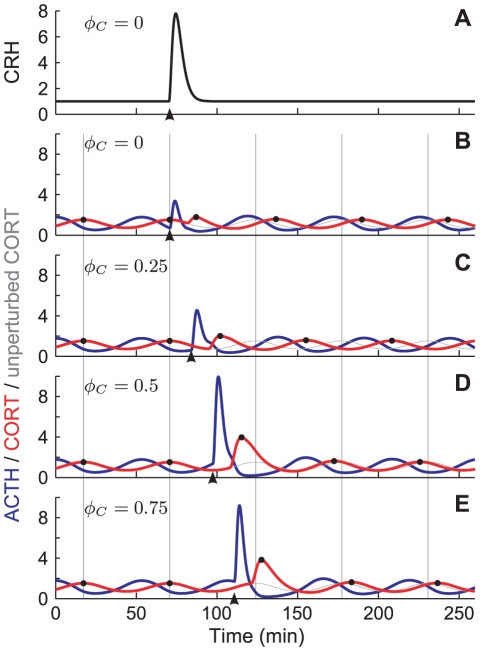
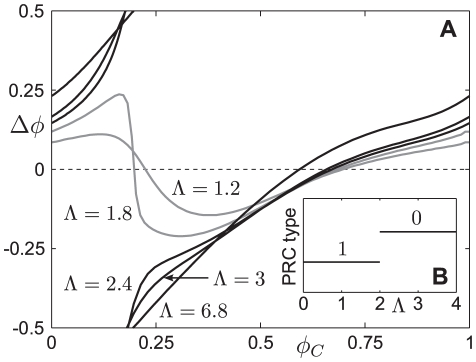
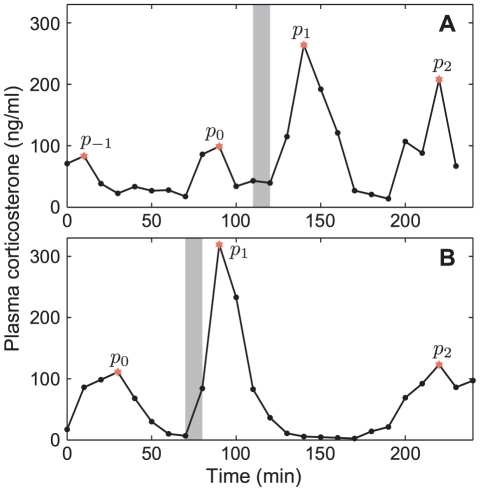
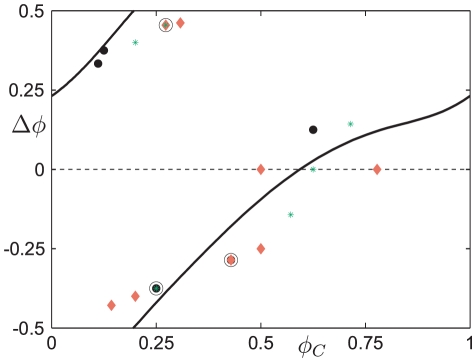
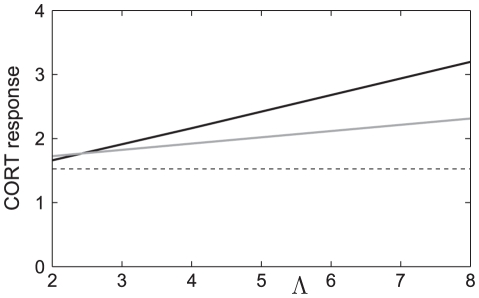
The hypothalamic-pituitary-adrenal (HPA) axis is a dynamic oscillatory hormone signalling system that regulates the pulsatile secretion of glucocorticoids from the adrenal glands. In addition to regulation of basal levels of glucocorticoids, the HPA axis provides a rapid hormonal response to stress that is vitally important for homeostasis. Recently it has become clear that glucocorticoid pulses encode an important biological signal that regulates receptor signalling both in the central nervous system and in peripheral tissues. It is therefore important to understand how stressful stimuli disrupt the pulsatile dynamics of this system. Using a computational model that incorporates the crucial feed-forward and feedback components of the axis, we provide novel insight into experimental observations that the size of the stress-induced hormonal response is critically dependent on the timing of the stress. Further, we employ the theory of Phase Response Curves to show that an acute stressor acts as a phase-resetting mechanism for the ultradian rhythm of glucocorticoid secretion. Using our model, we demonstrate that the magnitude of an acute stress is a critical factor in determining whether the system resets via a Type 1 or Type 0 mechanism. By fitting our model to our in vivo stress-response data, we show that the glucocorticoid response to an acute noise stress in rats is governed by a Type 0 phase-resetting curve. Our results provide additional evidence for the concept of a deterministic sub-hypothalamic oscillator regulating the ultradian glucocorticoid rhythm, which constitutes a highly responsive peripheral hormone system that interacts dynamically with hypothalamic inputs to regulate the overall hormonal response to stress.
Overview
The claims and statistics of this paper haven’t been checked yet.
Free: it reads the open-access text and checks the first 5 claims that cite a source we can check. Create a free account to check every claim.
Integrity signals
Registry
Cites
Statistics
Figures
Verification
Claims the paper makes
The claims and statistics of this paper haven’t been checked yet.
Free: it reads the open-access text and checks the first 5 claims that cite a source we can check. Create a free account to check every claim.
Claims other papers make about this one
Each is checked against this paper’s own text: does it say what the citing paper says it does?
The cited source says what the claim attributes to it.
In the citing paper
“the timing of an incoming stressor, relative to the phase of an endogenous pulse of CORT, has been shown to govern the amplitude of the subsequent stress response as well as the timing of subsequent pulses [1,12].”
From Rapid intra-adrenal feedback regulation of glucocorticoid synthesis (2015) · cites this paper as [12]
The cited source says what the claim attributes to it.
In the citing paper
“The secretion of cortisol has been studied in many cases revealing both circadian and ultradian oscillations in the concentration [8, 9, 10, 16, 41].”
From Patient specific modeling of the HPA axis related to clinical diagnosis of depression (2017) · cites this paper as [41]
Self-check
Percentages, sums and reported differences re-computed from the paper’s own numbers.
The self-check needs the paper’s full text.
Citations
Cites
Physiology and neurobiology of stress and adaptation: central role of the brain
McEwen, B. S. (2007) · Physiological Reviews · doi:10.1152/physrev.00041.2006 · Cited by 5,429 · cited 1×
“range of physiological processes, including metabolic, immunological and cognitive function [1].”
BackgroundStress and the brain: from adaptation to disease
de Kloet, E. R., Joëls, M., & Holsboer, F. (2005) · Nature Reviews Neuroscience · doi:10.1038/nrn1683 · Cited by 4,621
The Geometry of Biological Time
Winfree, A. T. (1980) · doi:10.1007/978-3-662-22492-2 · Cited by 3,613
From Clocks to Chaos: The Rhythms of Life
Glass, L., & Mackey, M. C. (1988) · Princeton University Press eBooks · doi:10.1515/9780691221793 · Cited by 1,251
The Geometry of Biological Time
Winfree, A. T. (2001) · Interdisciplinary Applied Mathematics · doi:10.1007/978-1-4757-3484-3 · Cited by 1,220
From Clocks to Chaos: The Rhythms of Life
Glass, L., Mackey, M. C., & Zweifel, P. F. (1989) · Physics Today · doi:10.1063/1.2811091 · Cited by 1,132
Regulation of ACTH Secretion: Variations on a Theme of B
DALLMAN, M. F., AKANA, S. F., CASCIO, C. S., DARLINGTON, D. N., JACOBSON, L., & LEVIN, N. (1987) · Proceedings of the 1986 Laurentian Hormone Conference · doi:10.1016/b978-0-12-571143-2.50010-1 · Cited by 655 · cited 1×
“In addition to these feed-forward processes, the model also takes into account negative feedback by CORT (mediated by GR) at the level of the pituitary [14,15].”
BackgroundOn the Phase Reduction and Response Dynamics of Neural Oscillator Populations
Brown, E., Moehlis, J., & Holmes, P. (2004) · Neural Computation · doi:10.1162/089976604322860668 · Cited by 510
The crucial role of pulsatile activity of the HPA axis for continuous dynamic equilibration
Lightman, S. L., & Conway-Campbell, B. L. (2010) · Nature Reviews Neuroscience · doi:10.1038/nrn2914 · Cited by 390
Self-citationUltradian hormone stimulation induces glucocorticoid receptor-mediated pulses of gene transcription
Stavreva, D. A., Wiench, M., John, S., Conway-Campbell, B. L., McKenna, M. A., Pooley, J. R., Johnson, T. A., Voss, T. C., Lightman, S. L., & Hager, G. L. (2009) · Nature Cell Biology · doi:10.1038/ncb1922 · Cited by 375
Self-citation
Cited by
Sheng, J. A., Bales, N. J., Myers, S. A., Bautista, A. I., Roueinfar, M., Hale, T. M., & Handa, R. J. (2021) · Frontiers in Behavioral Neuroscience · doi:10.3389/fnbeh.2020.601939 · Cited by 418
“Moreover, when high levels of CRH were infused, the ultradian pattern was disrupted and corticosterone oscillations were dampened, further suggesting a dose-dependent effect of CRH on the patterns of GC secretion (Rankin et al., 2012).”
BackgroundSpiga, F., Walker, J. J., Terry, J. R., & Lightman, S. L. (2014) · Comprehensive Physiology · doi:10.1002/cphy.c140003 · Cited by 267
“In contrast, the axis is inhibited and unable to respond when the stress is applied during the falling phase of a pulse (154,214).”
Self-citationMolecular mechanisms in the regulation of adult neurogenesis during stress
Egeland, M., Zunszain, P. A., & Pariante, C. M. (2015) · Nature Reviews Neuroscience · doi:10.1038/nrn3855 · Cited by 203
Kalafatakis, K., Russell, G. M., Harmer, C. J., Munafo, M. R., Marchant, N., Wilson, A., Brooks, J. C., Durant, C., Thakrar, J., Murphy, P., et al. (2018) · Proceedings of the National Academy of Sciences · doi:10.1073/pnas.1714239115 · Cited by 119
Self-citationGibbison, B., Angelini, G. D., & Lightman, S. L. (2013) · British Journal of Anaesthesia · doi:10.1093/bja/aet077 · Cited by 87
Self-citationAltered ultradian cortisol rhythmicity as a potential neurobiologic substrate for chronic insomnia
Vargas, I., Vgontzas, A. N., Abelson, J. L., Faghih, R. T., Morales, K. H., & Perlis, M. L. (2018) · Sleep Medicine Reviews · doi:10.1016/j.smrv.2018.03.003 · Cited by 82
“, whether the stressor occurs during the upward or downward phase of an ultradian pulse) [56], whereas CRH response does not necessarily vary by pulse phase [57].”
BackgroundDeng, Q., Riquelme, D., Trinh, L., Low, M. J., Tomić, M., Stojilkovic, S., & Aguilera, G. (2015) · Endocrinology · doi:10.1210/en.2015-1265 · Cited by 77
Craddock, T. J. A., Fritsch, P., Rice, M. A., del Rosario, R. M., Miller, D. B., Fletcher, M. A., Klimas, N. G., & Broderick, G. (2014) · PLoS ONE · doi:10.1371/journal.pone.0084839 · Cited by 75
“[22], have shown natural oscillatory rhythms in the HPA axis [19–21].”
BackgroundRapid intra-adrenal feedback regulation of glucocorticoid synthesis
Walker, J. J., Spiga, F., Gupta, R., Zhao, Z., Lightman, S. L., & Terry, J. R. (2015) · Journal of The Royal Society Interface · doi:10.1098/rsif.2014.0875 · Cited by 70
Self-citationRussell, G. M., Kalafatakis, K., & Lightman, S. L. (2015) · Journal of Neuroendocrinology · doi:10.1111/jne.12247 · Cited by 68
Self-citationRhythmicity matters: Circadian and ultradian patterns of HPA axis activity
Focke, C. M. B., & Iremonger, K. J. (2019) · Molecular and Cellular Endocrinology · doi:10.1016/j.mce.2019.110652 · Cited by 69
Circadian rhythms and the HPA axis: A systems view
Androulakis, I. P. (2021) · WIREs Mechanisms of Disease · doi:10.1002/wsbm.1518 · Cited by 55
Hippocampal Fast Glutamatergic Transmission Is Transiently Regulated by Corticosterone Pulsatility
Sarabdjitsingh, R. A., Pasricha, N., Smeets, J. A. S., Kerkhofs, A., Mikasová, L., Karst, H., Groc, L., & Joëls, M. (2016) · PLoS ONE · doi:10.1371/journal.pone.0145858 · Cited by 40
Patient specific modeling of the HPA axis related to clinical diagnosis of depression
Bangsgaard, E. O., & Ottesen, J. T. (2017) · Mathematical Biosciences · doi:10.1016/j.mbs.2016.10.007 · Cited by 34
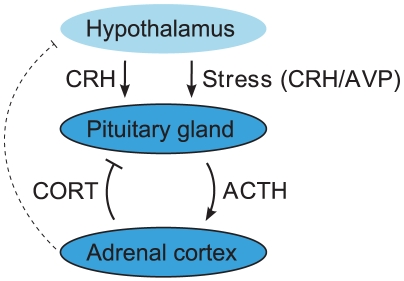
“[18, 30, 41] The anatomy of the HPA axis is illustrated in Figure 1(a).”
Backgroundden Boon, F. S., & Sarabdjitsingh, R. A. (2017) · Best Practice & Research Clinical Endocrinology & Metabolism · doi:10.1016/j.beem.2017.09.001 · Cited by 29
MECHANISMS IN ENDOCRINOLOGY: Does circadian and ultradian glucocorticoid exposure affect the brain?
Kalafatakis, K., Russell, G. M., & Lightman, S. L. (2018) · European Journal of Endocrinology · doi:10.1530/eje-18-0853 · Cited by 37
Self-citationLightman, S., & Terry, J. R. (2014) · The Lancet Diabetes & Endocrinology · doi:10.1016/s2213-8587(13)70182-7 · Cited by 28
Self-citationAchieving Remission in Gulf War Illness: A Simulation-Based Approach to Treatment Design
Craddock, T. J. A., del Rosario, R. M., Rice, M., Zysman, J., FLETCHER, M. A., Klimas, N. G., & Broderick, G. (2015) · PLoS ONE · doi:10.1371/journal.pone.0132774 · Cited by 29
Bolíbar, M., Belvis, F. X., Jódar, P., Vives, A., Méndez-Rivero, F., Bartoll, X., Pozo, Ó. J., Gomez‐Gómez, À., Padrosa, E., Benach, J., et al. (2021) · Frontiers in Public Health · doi:10.3389/fpubh.2021.649447 · Cited by 39
“To a large extent, this is because work-related stress factors are likely to have long-term effects, and the accurate representation of chronic stress levels in these samples is more difficult because of the following: they are subject to the circadian rhythm of cortisol and therefore suffer from poor long-term resolu…”
BackgroundKim, L. U., D'Orsogna, M. R., & Chou, T. (2016) · Biology Direct · doi:10.1186/s13062-016-0117-6 · Cited by 32
“Models of HPA dynamics [13, 14, 16, 17, 26] are typically expressed in terms of 98 ordinary differential equations (ODEs): 99”
BackgroundMethodFifty Years of Advances in Neuroendocrinology
Russell, J. A. (2018) · Brain and Neuroscience Advances · doi:10.1177/2398212818812014 · Cited by 30
“Instead, the ultradian rhythms arise from delays in the feed-forward action of ACTH on glucocorticoid synthesis in the adrenal and the negative feedback action of glucocorticoid on the anterior pituitary corticotrophs (Rankin et al., 2012).”
BackgroundGlucocorticoid-Mediated Developmental Programming of Vertebrate Stress Responsivity
Gans, I. M., & Coffman, J. A. (2021) · Frontiers in Physiology · doi:10.3389/fphys.2021.812195 · Cited by 32
Colombetti, G., & Zavala, E. (2019) · Biology & Philosophy · doi:10.1007/s10539-019-9699-6 · Cited by 33
den Boon, F. S., de Vries, T., Baelde, M., Joëls, M., & Karst, H. (2019) · Endocrinology · doi:10.1210/en.2018-00767 · Cited by 25
Leng, G., & MacGregor, D. J. (2018) · Mathematical Biosciences · doi:10.1016/j.mbs.2018.07.008 · Cited by 22
“Two hypothalamic factors regulate ACTH secretion, CRH and vasopressin, and both of these are stimulatory (through separate receptors).”
BackgroundInfluentialIntegrated Inflammatory Stress (ITIS) Model
Bangsgaard, E. O., Hjorth, P. G., Olufsen, M. S., Mehlsen, J., & Ottesen, J. T. (2017) · Bulletin of Mathematical Biology · doi:10.1007/s11538-017-0293-2 · Cited by 24
Stanojević, A., Marković, V., Čupić, Ž., Kolar-Anic, L. Z., & Vukojević, V. B. (2018) · Current Opinion in Chemical Engineering · doi:10.1016/j.coche.2018.04.003 · Cited by 22
Is a blunted cortisol response to stress a premorbid risk for insomnia?
Reffi, A. N., Cheng, P., Kalmbach, D. A., Jovanović, T., Norrholm, S. D., Roth, T. G., & Drake, C. L. (2022) · Psychoneuroendocrinology · doi:10.1016/j.psyneuen.2022.105873 · Cited by 18
Mbiydzenyuy, N. E., Hemmings, S. M. J., Shabangu, T. W., & Qulu-Appiah, L. (2024) · Heliyon · doi:10.1016/j.heliyon.2024.e27501 · Cited by 22
Misaligned hormonal rhythmicity: Mechanisms of origin and their clinical significance
Zavala, E. (2022) · Journal of Neuroendocrinology · doi:10.1111/jne.13144 · Cited by 17
“For example, computationally-derived phaseresponse curves have shown that the magnitude of hormonal responses are critically dependent on the timing of the perturbation.(24,26) Mathematical modelling has also suggested a trade-off between the HPA axis responses to frequent acute stressors and fitness adaptations allow…”
BackgroundArias, F. J. C., Aenlle, K. K., Abreu, M. M., Holschbach, M., Michalovicz, L. T., Kelly, K. A., Klimas, N. G., O'Callaghan, J. P., & Craddock, T. J. A. (2021) · International Journal of Molecular Sciences · doi:10.3390/ijms22168546 · Cited by 15
Can side effects of steroid treatments be minimized by the temporal aspects of delivery method?
Russell, G. M., & Lightman, S. L. (2014) · Expert Opinion on Drug Safety · doi:10.1517/14740338.2014.965141 · Cited by 12
“stress, although individual responses vary in a pulse phase dependant manner, it is more important to look at the average response over the entire pulse, which is significantly greater than that which occurs following constant glucocorticoid infusions at exactly the same overall dose, while the increased response in a…”
BackgroundSelf-citationModeling pulsativity in the hypothalamic–pituitary–adrenal hormonal axis
Churilov, A. N., & MILTON, J. G. (2022) · Scientific Reports · doi:10.1038/s41598-022-12513-w · Cited by 16
“It is seen that (12) can be integrated independently of (11).”
BackgroundMajor depressive disorder and bistability in an HPA-CNS toggle switch
Mizrachi, B. R., Tendler, A., Karin, O., Milo, T., Haran, D., Mayo, A., & Alon, U. S. (2023) · PLoS Computational Biology · doi:10.1371/journal.pcbi.1011645 · Cited by 13
“Cortisol inhibits hypothalamic activity through MR and GR receptors, whereas it inhibits the pituitary activity through GR receptors only [33,38].”
BackgroundA Novel Automated System Yields Reproducible Temporal Feeding Patterns in Laboratory Rodents
Tilston, T. W., Brown, R. D., Wateridge, M. J., Arms-Williams, B., Walker, J. J., Sun, Y., & Wells, T. (2019) · Journal of Nutrition · doi:10.1093/jn/nxz116 · Cited by 10
“Although this has no significant effect on circadian timing, it is possible that these additional timelocked events act to phase-reset ultradian activity, as occurs with acute psychological stimulation (43), the influence of this additional triggering enduring into the nonfeeding light phase.”
BackgroundSelf-citationCheng, X., D'Orsogna, M. R., & Chou, T. (2021) · Computational and Structural Biotechnology Journal · doi:10.1016/j.csbj.2020.10.035 · Cited by 9
Oyola, M. G., Malysz, A. M., Mani, S. K., & Handa, R. J. (2015) · Elsevier eBooks · doi:10.1016/b978-0-12-802114-9.00013-5 · Cited by 7
Iijima, N., Miyamoto, S., Matsumoto, K. T., Takumi, K., Ueta, Y., & Ozawa, H. (2017) · Histochemistry and Cell Biology · doi:10.1007/s00418-017-1576-2 · Cited by 6
“Adrenocortical hormone is known to show an oscillation in blood levels over a short periods of time, although a more constant level is maintained over a long periods of time (Lightman and Conway-Campbell 2010; Walker et al. 2010; Spiga et al. 2011; Rankin et al. 2012).”
BackgroundDynamics of the HPA Axis: A Systems Modeling Approach
Terry, J. R., Walker, J. J., Spiga, F., & Lightman, S. L. (2016) · Computational Neuroendocrinology · doi:10.1002/9781119159438.ch8 · Cited by 5
Self-citationSpiga, F., & Lightman, S. L. (2019) · Elsevier eBooks · doi:10.1016/b978-0-12-813983-7.00008-2 · Cited by 7
Self-citationThe Vertebrate Brain Stem as the Primary Site of Behavior Command: Insights from an Amphibian
Coddington, E. J. (2016) · Elsevier eBooks · doi:10.1016/b978-0-12-803592-4.00025-0 · Cited by 3
A moving target: Taking aim at the regulatory dynamics of illness
Broderick, G. (2012) · Brain Behavior and Immunity · doi:10.1016/j.bbi.2012.06.013 · Cited by 2
“The first simple mathematical descriptions of the HPA axis date back several decades (Sharma and Gabrilove, 1975), and more sophisticated representations capturing pulsatile behavior have recently been published (Rankin et al., 2012).”
BackgroundPhase response to arbitrary perturbations: Geometric insights and resetting surfaces
Lee, K. H., Broderick, N. G. R., Krauskopf, B., & Osinga, H. M. (2024) · Discrete and Continuous Dynamical Systems - B · doi:10.3934/dcdsb.2024140 · Cited by 3
Spiga, F., Pooley, J. R., Russell, G. M., & Lightman, S. L. (2017) · Elsevier eBooks · doi:10.1016/b978-0-12-802175-0.00043-7 · Cited by 2
Self-citationJohnson, C., Taranets, R. M., Vasylyeva, N., & Chugunova, M. (2020) · Understanding complex systems · doi:10.1007/978-3-030-50302-4_8 · Cited by 1
Rivers, C. A., Abdulqayoom, H., Kershaw, Y. M., Troy, O. R., Zhao, Z., Conway-Campbell, B. L., & Lightman, S. L. (2025) · Endocrinology · doi:10.1210/endocr/bqaf140 · Cited by 2
Self-citationLombard, B., Upton, T. J., Gibbison, B., Henley, D., Russell, G. M., Terry, J. R., Lightman, S. L., & Zavala, E. (2026) · Journal of Neuroendocrinology · doi:10.1111/jne.70264 · Cited by 1
Self-citationGlucocorticoid Replacement in Man
Russell, G. M., Løvås, K., & Lightman, S. L. (2016) · Elsevier eBooks · doi:10.1016/b978-0-12-803592-4.00078-x · Cited by 3
Self-citationFast dynamics in the HPA axis: Insight from mathematical and experimental studies
Walker, J. J., & Romanò, N. (2022) · Current Opinion in Endocrine and Metabolic Research · doi:10.1016/j.coemr.2022.100403 · Cited by 6
Self-citationMultiscale Equation-Based Models: Insights for Inflammation and Physiological Variability
Scheff, J. D., Calvano, S. E., & Androulakis, I. P. (2013) · Springer eBooks · doi:10.1007/978-1-4614-8008-2_7 · Cited by 1
“[63].”
Dynamics of the HPA axis: A systems modelling approach
Terry, J., Walker, J. J., Spiga, F., & Lightman, S. L. (2016) · Explore Bristol Research
Self-citationDynamic responses of the adrenal steroidogenic regulatory network
Spiga, F., Zavala, E., Walker, J. J., Zhao, Z., Terry, J. R., & Lightman, S. L. (2018) · Yearbook of pediatric endocrinology · doi:10.1530/ey.15.8.4
Self-citationKim, L. U., Chou, T., & D'Orsogna, M. R. (2016) · Biophysical Journal · doi:10.1016/j.bpj.2015.11.2545
Multiscale Equation-Based Models: Insights for Inflammation and Physiological Variability
Scheff, J. D., Calvano, S. E., & Androulakis, I. P. (2020) · Springer eBooks · doi:10.1007/978-3-030-56510-7_7 · Cited by 1
The canonical HPA axis contributes to locomotion during photoadaptation but is not requiredPreprint
Lee, H. B., Thi, V. H. D., Boyum, G. E., Modhurima, R., Hall, E. M., Green, I. K., Cervantes, E., Shams, S., & Clark, K. J. (2022) · bioRxiv (Cold Spring Harbor Laboratory) · doi:10.1101/2022.05.14.491921
153Modeling pulsatile and diurnal rhythmicity of free and total cortisol
Churilov, A. N., & MILTON, J. G. (2026) · De Gruyter eBooks · doi:10.1515/9783112216620-013
Röblitz, S. (2026) · Journal of Molecular Endocrinology · doi:10.1530/jme-25-0211
Metadata
- Authors
- Rankin, J., Walker, J. J., Windle, R., Lightman, S. L., & Terry, J. R.
- Affiliations
- Institut national de recherche en sciences et technologies du numérique (FR)
- University of Bristol (GB)
- University of Nottingham (GB)
- Corresponding author
- Terry, John R.
- Venue
- PLoS ONE
- Publisher
- Public Library of Science (PLoS)
- Published
- 2012-02-21
- Volume
- 7
- Issue
- 2
- Pages
- e30978
- ISSN
- 1932-6203 (ISSN-L)
- PMC
- PMC3283588
- OpenAlex
- W2048952883
- Cited by
- 60
- References
- 26
- Citations by year
- 2026: 3 · 2025: 1 · 2024: 2 · 2023: 1 · 2022: 5 · 2021: 5 · 2020: 3 · 2019: 5 · 2018: 7 · 2017: 4 · 2016: 8 · 2015: 4 · 2014: 9 · 2013: 2 · 2012: 1
- FWCI
- 2.14
- Type
- journal article
- Language
- en
- Open access
- gold
- doi.org
- Locations
- PLoS ONE (publishedVersion, cc-by)
- Europe PMC (PubMed Central) (publishedVersion, cc-by)
- PubMed Central (publishedVersion, cc-by)
- PubMed (publishedVersion)
- DOAJ (DOAJ: Directory of Open Access Journals) (submittedVersion, cc-by-sa)
- University of Birmingham Research Portal (University of Birmingham) (submittedVersion)
- Explore Bristol Research (submittedVersion)
- Funders
- Wellcome Trust (074112)
- Medical Research Council (MR/J008893/1)
- Engineering and Physical Sciences Research Council (EP/E032249/1)
- Topics
- Life Sciences › Neuroscience › Behavioral Neuroscience › Stress Responses and Cortisol
- Life Sciences › Neuroscience › Endocrine and Autonomic Systems › Circadian rhythm and melatonin
- Health Sciences › Medicine › Endocrinology, Diabetes and Metabolism › Adrenal Hormones and Disorders
- Keywords
- hypothalamic-pituitary-adrenal axis, acute stress response, phase response curve, phase resetting, noise stress
- MeSH terms
- Activity Cycles, Animals, Corticosterone, Corticotropin-Releasing Hormone, Female, Glucocorticoids, Hypothalamo-Hypophyseal System, Male, Models, Biological, Oscillometry, Pituitary-Adrenal System, Stress, Psychological, Time Factors, Reproducibility of Results, Rats
About these checks
Registry, retraction, Cites and statistics results are computed, not judged, with one exception: a printed reference that no index lists is read once by a model before it counts as a citation error. Claims are extracted by a model and kept only when their quote appears verbatim in the text; each cited source is then checked, with a model’s help, for whether it says what the claim relies on. Those verdicts can be wrong — read the claim’s quote and the cited source before relying on one.
Statistics and arithmetic are recomputed, not judged.
Confidence bands are shown only for fields calibrated on our annotated test set. None is calibrated yet, so no band is shown.
What counts as a claim ›How we measure confidence ›How we check this ›
Are you an author, or do you see a problem with this page? Request a review
Data sources
Bibliographic data: Semantic Scholar, OpenAlex, Crossref.
Contains information from the Semantic Scholar Academic Graph Datasets, made available under the ODC Attribution License (ODC-BY 1.0).
Semantic Scholar’s data is described in: Kinney, R., et al. (2023). The Semantic Scholar Open Data Platform. arXiv:2301.10140.
