

The DOI matches its Crossref record; 68 of the 68 references it cites were found in a registry or an index.
Liver-Specific Expression of Transcriptionally Active SREBP-1c Is Associated with Fatty Liver and Increased Visceral Fat Mass
Open accessAbstract
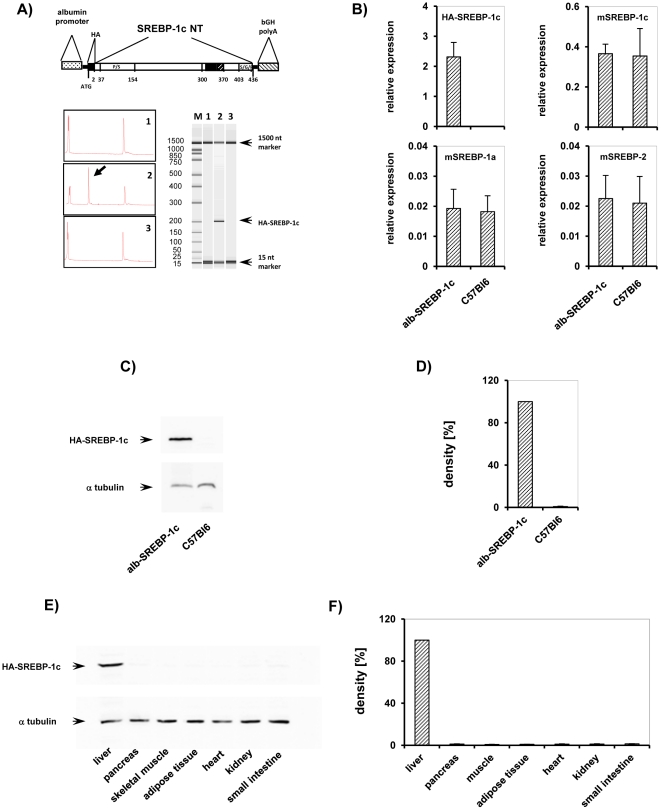
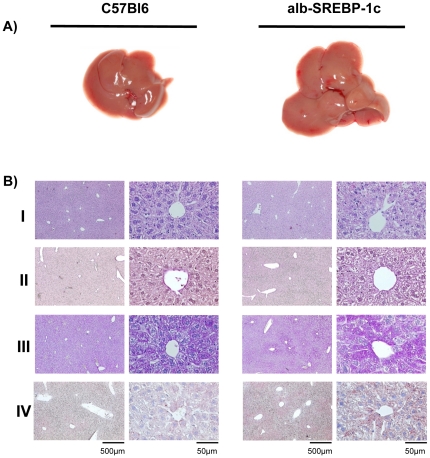
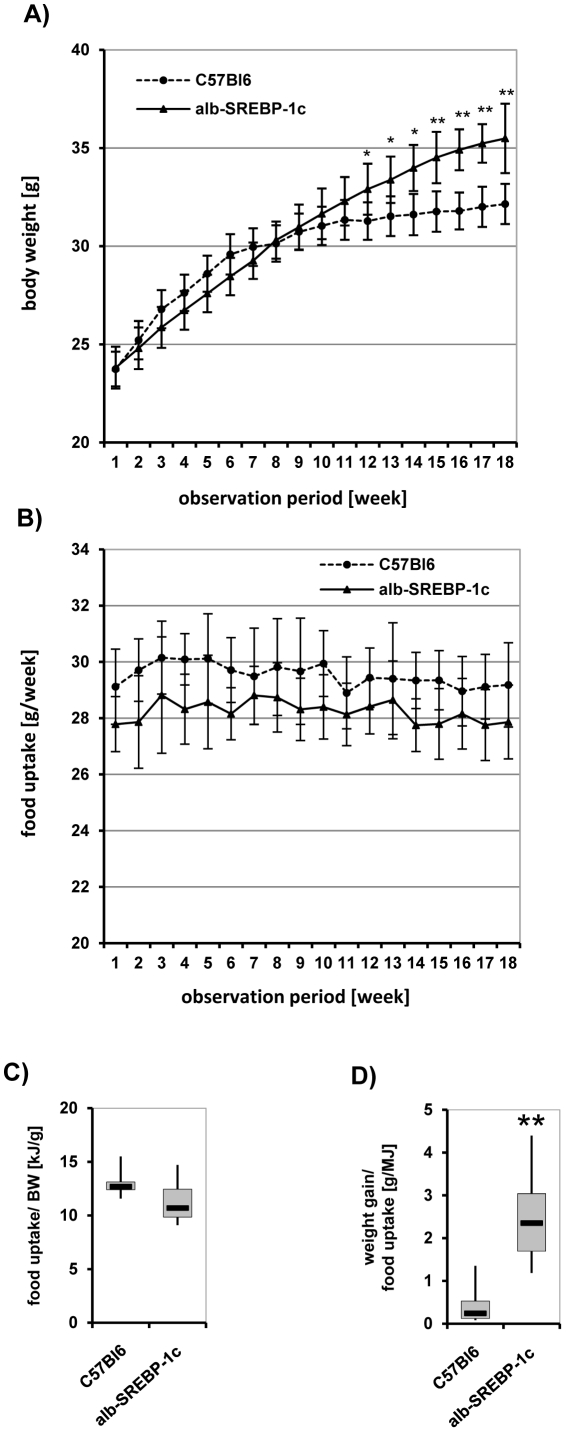
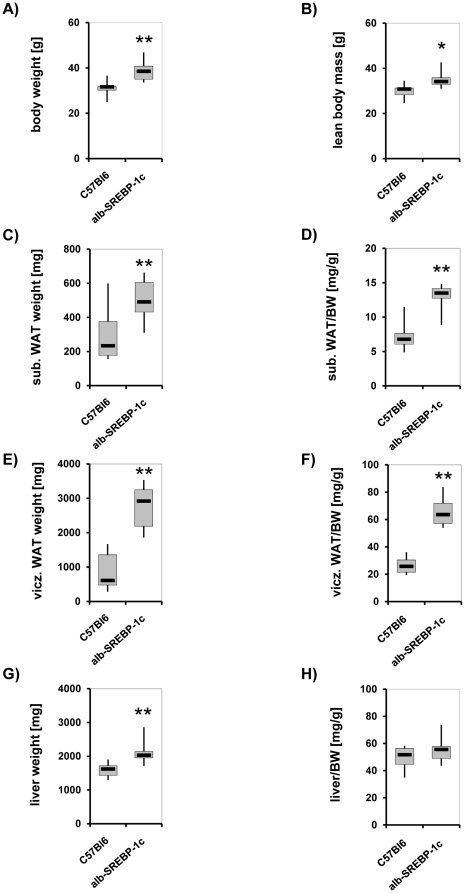
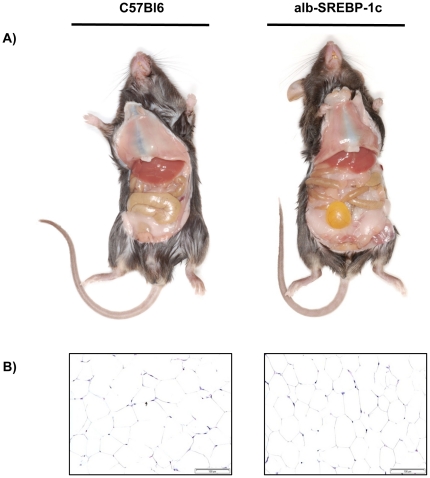
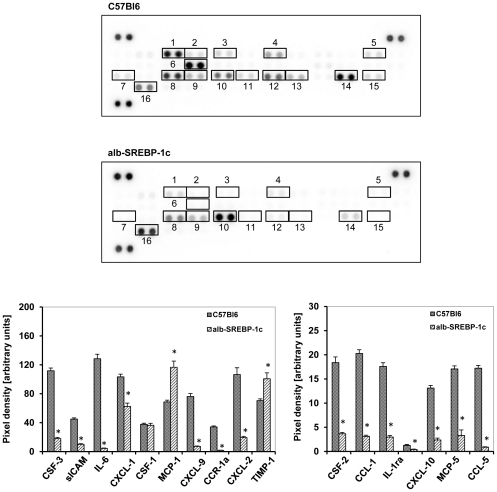
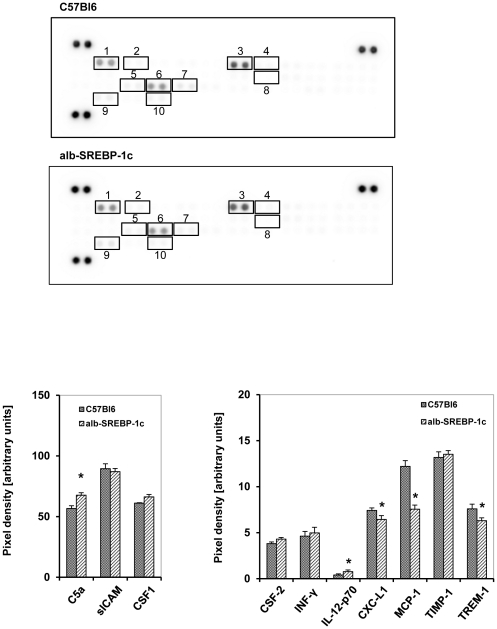
The pathogenesis of fatty liver is not understood in detail, but lipid overflow as well as de novo lipogenesis (DNL) seem to be the key points of hepatocyte accumulation of lipids. One key transcription factor in DNL is sterol regulatory element-binding protein (SREBP)-1c. We generated mice with liver-specific over-expression of mature human SREBP-1c under control of the albumin promoter and a liver-specific enhancer (alb-SREBP-1c) to analyze systemic perturbations caused by this distinct alteration. SREBP-1c targets specific genes and causes key enzymes in DNL and lipid metabolism to be up-regulated. The alb-SREBP-1c mice developed hepatic lipid accumulation featuring a fatty liver by the age of 24 weeks under normocaloric nutrition. On a molecular level, clinical parameters and lipid-profiles varied according to the fatty liver phenotype. The desaturation index was increased compared to wild type mice. In liver, fatty acids (FA) were increased by 50% (p<0.01) and lipid composition was shifted to mono unsaturated FA, whereas lipid profile in adipose tissue or serum was not altered. Serum analyses revealed a ∼2-fold (p<0.01) increase in triglycerides and free fatty acids, and a ∼3-fold (p<0.01) increase in insulin levels, indicating insulin resistance; however, no significant cytokine profile alterations have been determined. Interestingly and unexpectedly, mice also developed adipositas with considerably increased visceral adipose tissue, although calorie intake was not different compared to control mice. In conclusion, the alb-SREBP-1c mouse model allowed the elucidation of the systemic impact of SREBP-1c as a central regulator of lipid metabolism in vivo and also demonstrated that the liver is a more active player in metabolic diseases such as visceral obesity and insulin resistance.
Overview
The claims and statistics of this paper haven’t been checked yet.
Run the check — free, no account needed. It reads the open-access text and checks the sources it cites.
Integrity signals
Registry
Cites
Statistics
Figures
Verification
Claims the paper makes
The claims and statistics of this paper haven’t been checked yet.
Run the check — free, no account needed. It reads the open-access text and checks the sources it cites.
Claims other papers make about this one
Each is checked against this paper’s own text: does it say what the citing paper says it does?
In the citing paper
“In experimental models of obesity, metabolic defects involving substrate partitioning and energy expenditure may manifest without (or before) increased food intake, demonstrating the conceptual plausibility of this fundamental feature of the CIM (60, 112–114).”
From The carbohydrate-insulin model: A physiological perspective on the obesity pandemic (2021) · cites this paper as [114]
Self-check
Percentages, sums and reported differences re-computed from the paper’s own numbers.
The self-check needs the paper’s full text.
Citations
Cites
SREBPs: activators of the complete program of cholesterol and fatty acid synthesis in the liver
Horton, J. D., Goldstein, J. L., & Brown, M. S. (2002) · Journal of Clinical Investigation · doi:10.1172/jci15593 · Cited by 4,794
SREBPs: activators of the complete program of cholesterol and fatty acid synthesis in the liver
Horton, J. D., Goldstein, J. L., & Brown, M. S. (2002) · Journal of Clinical Investigation · doi:10.1172/jci0215593 · Cited by 4,092
Inflammatory Mechanisms in Obesity
Gregor, M. F., & Hotamisligil, G. S. (2011) · Annual Review of Immunology · doi:10.1146/annurev-immunol-031210-101322 · Cited by 3,754 · cited 1×
“Obesity and ectopic hepatic lipid accumulation are thought to be accompanied by increased inflammation and circulating inflammatory parameters [37,38].”
BackgroundDonnelly, K. L., Smith, C. I., Schwarzenberg, S. J., Jessurun, J., Boldt, M. D., & Parks, E. J. (2005) · Journal of Clinical Investigation · doi:10.1172/jci23621 · Cited by 3,604 · cited 3×
“Liver-specific overespression of human SREBP-1c influences parameters of systemic insulin sensitivity Excess intracellular hepatic lipid accumulation can affect insulin sensitivity in human studies and mouse models [2,3,21].”
BackgroundDiet-induced insulin resistance in mice lacking adiponectin/ACRP30
Maeda, N., Shimomura, I., Kishida, K., Nishizawa, H., Matsuda, M., Nagaretani, H., Furuyama, N., Kondo, H., Takahashi, M., Arita, Y., et al. (2002) · Nature Medicine · doi:10.1038/nm724 · Cited by 2,112
Horton, J. D., Shah, N. A., Warrington, J. A., Anderson, N. N., Park, S. W., Brown, M. S., & Goldstein, J. L. (2003) · Proceedings of the National Academy of Sciences · doi:10.1073/pnas.1534923100 · Cited by 1,270
Postic, C., & Girard, J. R. (2008) · Journal of Clinical Investigation · doi:10.1172/jci34275 · Cited by 1,242 · cited 1×
“Liver-specific overespression of human SREBP-1c influences parameters of systemic insulin sensitivity Excess intracellular hepatic lipid accumulation can affect insulin sensitivity in human studies and mouse models [2,3,21].”
BackgroundYokoyama, C., Wang, X., Briggs, M. R., Admon, A., Wu, J., Hua, X., Goldstein, J. L., & Brown, M. S. (1993) · Cell · doi:10.1016/s0092-8674(05)80095-9 · Cited by 975
Unger, R. H. (2002) · Annual Review of Medicine · doi:10.1146/annurev.med.53.082901.104057 · Cited by 875 · cited 1×
“This lipid overload has destructive effects on cell functionality and viability, as initially pronounced by Unger in the ‘‘lipoptoxicity hypothesis’’ [1].”
BackgroundFructose consumption as a risk factor for non-alcoholic fatty liver disease
Ouyang, X., Cirillo, P., Sautin, Y. Y., McCall, S. J., Bruchette, J. L., Diehl, A. M., Johnson, R. J., & Abdelmalek, M. F. (2008) · Journal of Hepatology · doi:10.1016/j.jhep.2008.02.011 · Cited by 862
Cited by
Sorted by citations
Non-alcoholic fatty liver disease and obesity: Biochemical, metabolic and clinical presentations
Milić, S. (2014) · World Journal of Gastroenterology · doi:10.3748/wjg.v20.i28.9330 · Cited by 619
De novo lipogenesis in the liver in health and disease: more than just a shunting yard for glucose
Sanders, F., & Griffin, J. L. (2015) · Biological reviews/Biological reviews of the Cambridge Philosophical Society · doi:10.1111/brv.12178 · Cited by 585
“The role of SREBP1c in the pathogenesis of NAFLD is further supported by mouse studies where the transcriptionally active form of SREBP1c is expressed in a liver-specific manner and leads to a consequent accumulation of hepatic lipid droplets (Knebel et al., 2012).”
BackgroundWang, G.-X., Zhao, X.-Y., Meng, Z., Kern, M., Dietrich, A., Chen, Z., Cozacov, Z., Zhou, D., Okunade, A. L., Su, X., et al. (2014) · Nature Medicine · doi:10.1038/nm.3713 · Cited by 514
Regulation and Metabolic Significance of De Novo Lipogenesis in Adipose Tissues
Song, Z., Xiaoli, A. M., & Yang, F. (2018) · Nutrients · doi:10.3390/nu10101383 · Cited by 487
“For example, pathological increase of SREBP-1c or genetic overexpression of SREBP-1c in the liver causes fatty liver [55,56].”
BackgroundBadmus, O. O., Hillhouse, S. A., Anderson, C. D., Hinds, T. D., & Stec, D. E. (2022) · Clinical Science · doi:10.1042/cs20220572 · Cited by 407
“Hepatocyte-specific overexpression of SREBP-1c results in the upregulation of key enzymes in de novo lipogenesis resulting in hepatic lipid accumulation [67].”
Background
Metadata
- Authors
- Knebel, B., Haas, J., Hartwig, S., Jacob, S., Köllmer, C., Nitzgen, U., Muller–Wieland, D., & Kotzka, J.
- Affiliations
- Deutsches Diabetes-Zentrum e.V. (DE)
- Asklepios Klinik St. Georg (DE)
- Venue
- PLoS ONE
- Publisher
- Public Library of Science (PLoS)
- Published
- 2012-02-21
- Volume
- 7
- Issue
- 2
- Pages
- e31812
- ISSN
- 1932-6203 (ISSN-L)
- PMC
- PMC3283692
- OpenAlex
- W2015190417
- Cited by
- 162
- References
- 68
- Citations by year
- 2026: 7 · 2025: 8 · 2024: 12 · 2023: 12 · 2022: 12 · 2021: 11 · 2020: 14 · 2019: 11 · 2018: 17 · 2017: 12 · 2016: 11 · 2015: 9 · 2014: 13 · 2013: 9 · 2012: 4
- FWCI
- 8.35
- Type
- journal article
- Language
- en
- Open access
- gold
- doi.org
- Locations
- PLoS ONE (publishedVersion, cc-by)
- Europe PMC (PubMed Central) (publishedVersion, cc-by)
- PubMed Central (publishedVersion, cc-by)
- PubMed (publishedVersion)
- DOAJ (DOAJ: Directory of Open Access Journals) (submittedVersion, cc-by-sa)
- Topics
- Health Sciences › Medicine › Hepatology › Liver Disease Diagnosis and Treatment
- Life Sciences › Biochemistry, Genetics and Molecular Biology › Biochemistry › Lipid metabolism and biosynthesis
- Life Sciences › Biochemistry, Genetics and Molecular Biology › Cancer Research › Cancer, Lipids, and Metabolism
- Keywords
- SREBP-1c, hepatic steatosis, visceral fat, de novo lipogenesis, hepatic lipid accumulation, insulin resistance, transgenic mouse model, fatty acid composition, triglycerides, free fatty acids, lipid metabolism, metabolic disorders
- MeSH terms
- Fatty Acid Elongases, Acetyltransferases, Animals, Body Composition, Fatty Acids, Fatty Liver, Gene Expression Regulation, Humans, Insulin, Insulin Resistance, Liver, Male, Mice, Transgenic, Organ Specificity, Organ Size, Phenotype, Stearoyl-CoA Desaturase, Transcription, Genetic, Cytokines, Protein Structure, Tertiary, Adipocytes, Intra-Abdominal Fat, Adiposity, Lipogenesis, Mice, Sterol Regulatory Element Binding Protein 1
About these checks
Registry, retraction, Cites and statistics results are computed, not judged, with one exception: a printed reference that no index lists is read once by a model before it counts as a citation error. Claims are extracted by a model and kept only when their quote appears verbatim in the text; each cited source is then checked, with a model’s help, for whether it says what the claim relies on. Those verdicts can be wrong — read the claim’s quote and the cited source before relying on one.
Statistics and arithmetic are recomputed, not judged.
Confidence bands are shown only for fields calibrated on our annotated test set. None is calibrated yet, so no band is shown.
What counts as a claim ›How we measure confidence ›How we check this ›
Are you an author, or do you see a problem with this page? Request a review
