

Capsule Independent Uptake of the Fungal Pathogen Cryptococcus neoformans into Brain Microvascular Endothelial Cells
Open accessThe DOI matches its Crossref record; 42 of the 42 references it cites were found in a registry or an index.
Abstract
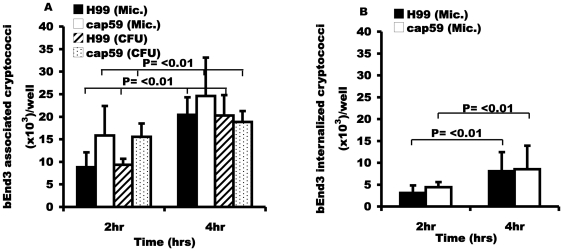
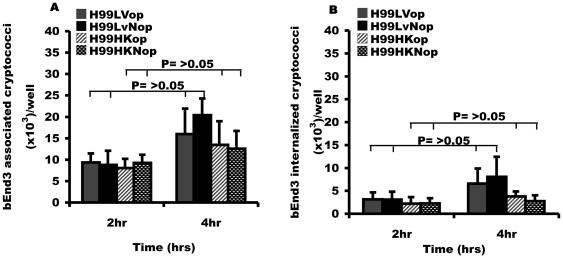
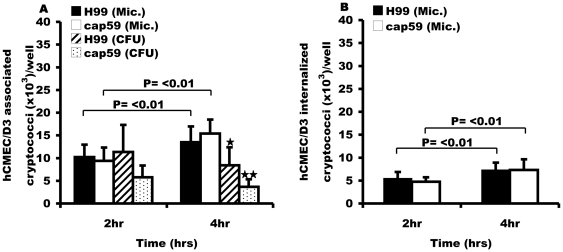
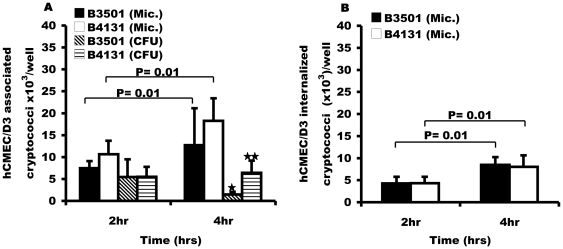
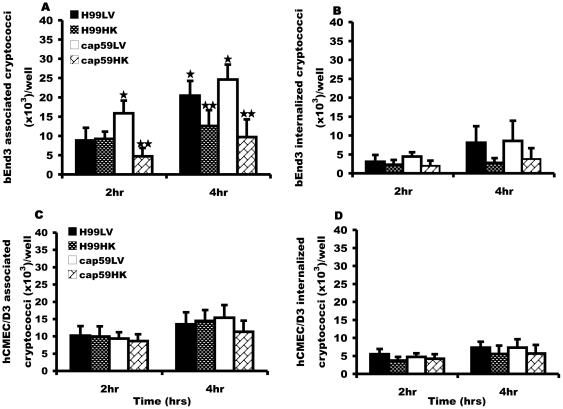
Cryptococcosis is a life-threatening fungal disease with a high rate of mortality among HIV/AIDS patients across the world. The ability to penetrate the blood-brain barrier (BBB) is central to the pathogenesis of cryptococcosis, but the way in which this occurs remains unclear. Here we use both mouse and human brain derived endothelial cells (bEnd3 and hCMEC/D3) to accurately quantify fungal uptake and survival within brain endothelial cells. Our data indicate that the adherence and internalisation of cryptococci by brain microvascular endothelial cells is an infrequent event involving small numbers of cryptococcal yeast cells. Interestingly, this process requires neither active signalling from the fungus nor the presence of the fungal capsule. Thus entry into brain microvascular endothelial cells is most likely a passive event that occurs following 'trapping' within capillary beds of the BBB.
Overview
The claims and statistics of this paper haven’t been checked yet.
Free: it reads the open-access text and checks the first 5 claims that cite a source we can check. Create a free account to check every claim.
Integrity signals
Registry
Cites
Statistics
Figures
Verification
Claims the paper makes
The claims and statistics of this paper haven’t been checked yet.
Free: it reads the open-access text and checks the first 5 claims that cite a source we can check. Create a free account to check every claim.
Claims other papers make about this one
Each is checked against this paper’s own text: does it say what the citing paper says it does?
In the citing paper
“Adherence of C. neoformans to endothelial cells occurs independently of capsule expression and is mediated by hyaluronic acid (HA) [136–139].”
From Mechanisms of fungal dissemination (2021) · cites this paper as [137]
Self-check
Percentages, sums and reported differences re-computed from the paper’s own numbers.
The self-check needs the paper’s full text.
Citations
Cites
Park, B. J., Wannemuehler, K. A., Marston, B. J., Govender, N., Pappas, P. G., & Chiller, T. M. (2009) · AIDS · doi:10.1097/qad.0b013e328322ffac · Cited by 2,014 · cited 2×
“Globally, fatalities due to cryptococcal meningitis were recently estimated at over 600,000 cases per year of which 504000 (81%) occur in SubSaharan Africa [2].”
BackgroundCryptococcosis in the era of AIDS--100 years after the discovery of Cryptococcus neoformans
Mitchell, T. G., & Perfect, J. R. (1995) · Clinical Microbiology Reviews · doi:10.1128/cmr.8.4.515 · Cited by 1,213 · cited 1×
“HIV/AIDS is the major predisposing condition for cryptococcosis with 10–15% HIV patients acquiring cryptococcal infection, although prolonged glucocorticosteroid therapy and solid organ transplantation are increasingly becoming important [8,9].”
BackgroundKidd, S. E., Hagen, F., Tscharke, R. L., Huynh, M., Bartlett, K. H., Fyfe, M., MacDougall, L., Boekhout, T., Kwon-Chung, K. J., & Meyer, W. (2004) · Proceedings of the National Academy of Sciences · doi:10.1073/pnas.0402981101 · Cited by 756 · cited 1×
“gattii [3–7].”
Mechanisms of microbial traversal of the blood–brain barrier
Kim, K. S. (2008) · Nature Reviews Microbiology · doi:10.1038/nrmicro1952 · Cited by 466 · cited 12×
“These findings support recent observations in a mouse cryptococcosis model, which suggest that transmission across the BBB is a nonspecific event dependent on trapping of cryptococci in narrow brain capillaries followed by phagocytosis into brain microvascular endothelial cells [32].”
BackgroundInfluentialNeofytos, D., Fishman, J. A., Horn, D., Anaissie, E., Chang, C.-H., Olyaei, A., Pfaller, M., Steinbach, W. J., Webster, K. M., & Marr, K. A. (2010) · Transplant Infectious Disease · doi:10.1111/j.1399-3062.2010.00492.x · Cited by 454 · cited 1×
“HIV/AIDS is the major predisposing condition for cryptococcosis with 10–15% HIV patients acquiring cryptococcal infection, although prolonged glucocorticosteroid therapy and solid organ transplantation are increasingly becoming important [8,9].”
BackgroundSerologic Evidence for Cryptococcus neoformans Infection in Early Childhood
Goldman, D. L., Khine, H., Abadi, J., Lindenberg, D. J., Pirofski, L.-A., Niang, R., & Casadevall, A. (2001) · Pediatrics · doi:10.1542/peds.107.5.e66 · Cited by 413 · cited 2×
“Opsonisation Antibodies to Cryptococcus have been reported to exist in circulation as early as childhood [34].”
BackgroundEvidence of a Role for Monocytes in Dissemination and Brain Invasion by Cryptococcus neoformans
Charlier, C., Nielsen, K., Daou, S., Brigitte, M., Chretien, F., & Dromer, F. (2009) · Infection and Immunity · doi:10.1128/iai.01065-08 · Cited by 362 · cited 2×
“neoformans may occur via infected phagocytes [21,39] or transcellularly through adherence and phagocytosis by the brain microvascular endothelial cells [22,32].”
BackgroundBicanic, T., & Harrison, T. S. (2004) · British Medical Bulletin · doi:10.1093/bmb/ldh043 · Cited by 361
Byrnes, E. J., Li, W., Lewit, Y., Ma, H., Voelz, K., Ren, P., Carter, D. A., Chaturvedi, V., Bildfell, R. J., May, R. C., et al. (2010) · PLoS Pathogens · doi:10.1371/journal.ppat.1000850 · Cited by 330 · cited 1×
“gattii [3–7].”
Self-citationKambugu, A., Meya, D. B., Rhein, J., O’Brien, M., Janoff, E. N., Ronald, A. R., Kamya, M. R., Mayanja‐Kizza, H., Sande, M. A., Bohjanen, P. R., et al. (2008) · Clinical Infectious Diseases · doi:10.1086/587667 · Cited by 300 · cited 1×
“40% in rich and poor settings respectively [12–17] Dissemination to the brain requires that C.”
BackgroundBrown, R. C., Morris, A. P., & O'Neil, R. G. (2007) · Brain Research · doi:10.1016/j.brainres.2006.10.083 · Cited by 291 · cited 1×
“The BBB is made of microvascular endothelial cells supported by astrocytic foot processes, pericytes and neuronal processes [19].”
BackgroundChang, Y. C., Stins, M. F., McCaffery, M. J., Miller, G. F., Pare, D. R., Dam, T., Paul-Satyasee, M., Kim, K. S., & Kwon-Chung, K. J. (2004) · Infection and Immunity · doi:10.1128/iai.72.9.4985-4995.2004 · Cited by 278 · cited 1×
“In support of this model, Chang et al used electron microscopy to demonstrate that cryptococcal yeast cells could adhere to and become internalised by brain microvascular endothelial cells [23].”
MethodSpread of Cryptococcus gattii into Pacific Northwest Region of the United States
Datta, K., Bartlett, K. H., Baer, R., Byrnes, E., Galanis, E., Heitman, J., Hoang, L., Leslie, M. J., MacDougall, L., Magill, S. S., et al. (2009) · Emerging Infectious Diseases · doi:10.3201/eid1508.081384 · Cited by 270 · cited 1×
“gattii [3–7].”
Zaragoza, O., Chrisman, C. J., Castelli, M. V., Frases, S., Cuenca-Estrella, M., Rodríguez-Tudela, J. L., & Casadevall, A. (2008) · Cellular Microbiology · doi:10.1111/j.1462-5822.2008.01186.x · Cited by 250 · cited 1×
“the interaction between cryptococci and infected hosts [40,41].”
BackgroundCryptococcosis in the era of AIDS 100 years after the discovery of Cryptococcus neoformans
Tomecki, K. J. (1997) · Journal of the American Academy of Dermatology · doi:10.1016/s0190-9622(97)80336-2 · Cited by 239
Cryptococcus: from human pathogen to model yeast.
Heitman, J., Kozel, T. R., Kwon-Chung, K. J., Perfect, J. R., & Casadevall, A. (2010) · Cited by 226
Shi, M., Li, S. S., Zheng, C., Jones, G. J., Kim, K. S., Zhou, H., Kubes, P., & Mody, C. H. (2010) · Journal of Clinical Investigation · doi:10.1172/jci41963 · Cited by 222 · cited 5×
“These findings support recent observations in a mouse cryptococcosis model, which suggest that transmission across the BBB is a nonspecific event dependent on trapping of cryptococci in narrow brain capillaries followed by phagocytosis into brain microvascular endothelial cells [32].”
BackgroundResultInfluentialCharlier, C., Chrétien, F., Baudrimont, M., Mordelet, E., Lortholary, O., & Dromer, F. (2005) · The American Journal of Pathology · doi:10.1016/s0002-9440(10)62265-1 · Cited by 215 · cited 2×
“Cryptococcus – endothelial cell interaction studies have yielded conflicting results regarding how capsule impacts on cryptococcal binding and uptake by BMEC [27,29–31,42].”
BackgroundResultMwaba, P., Mwansa, J., Chintu, C., Pobee, J., Scarborough, M., Portsmouth, S., & Zumla, A. (2001) · Postgraduate Medical Journal · doi:10.1136/pgmj.77.914.769 · Cited by 198 · cited 1×
“40% in rich and poor settings respectively [12–17] Dissemination to the brain requires that C.”
BackgroundCellular Elements of the Blood-Brain Barrier
Correale, J., & Villa, A. (2009) · Neurochemical Research · doi:10.1007/s11064-009-0081-y · Cited by 194 · cited 1×
“Brain microvascular endothelial cells form strong tight junctions, which present a formidable barrier to any invading pathogens [18–20].”
BackgroundNussbaum, J. C., Jackson, A., Namarika, D., Phulusa, J., Kenala, J., Kanyemba, C., Jarvis, J. N., Jaffar, S., Hosseinipour, M. C., Kamwendo, D., et al. (2010) · Clinical Infectious Diseases · doi:10.1086/649861 · Cited by 194 · cited 1×
“40% in rich and poor settings respectively [12–17] Dissemination to the brain requires that C.”
BackgroundByrnes III, E. J., Bildfell, R. J., Frank, S. A., Mitchell, T. G., Marr, K. A., & Heitman, J. (2009) · The Journal of Infectious Diseases · doi:10.1086/597306 · Cited by 193 · cited 1×
“gattii [3–7].”
Boulware, D. R., Bonham, S. C., Meya, D. B., Wiesner, D. L., Park, G. S., Kambugu, A., Janoff, E. N., & Bohjanen, P. R. (2010) · The Journal of Infectious Diseases · doi:10.1086/655785 · Cited by 191 · cited 1×
“40% in rich and poor settings respectively [12–17] Dissemination to the brain requires that C.”
BackgroundChen, S. H. M., Stins, M. F., Huang, S.-H., Chen, Y. H., Kwon-Chung, K. J., Chang, Y., Kim, K. S., Suzuki, K., & Jong, A. Y. (2003) · Journal of Medical Microbiology · doi:10.1099/jmm.0.05230-0 · Cited by 189 · cited 1×
“Capsule associated structural changes such as phenotypic switching (rough to smooth) have been reported to enhance crossing of the blood-brain barrier [27–31], but a recent study using intravital real time imaging demonstrated that encapsulated and acapsular strains of C.”
ResultChapter 5 Virulence in Cryptococcus Species
Ma, H., & May, R. C. (2009) · Advances in applied microbiology · doi:10.1016/s0065-2164(08)01005-8 · Cited by 170 · cited 1×
“Presumably crossing the BBB intact thus requires one or more of the virulence factors used by cryptococci to resist phagosomal killing [43], explaining why heat-killed cryptococci can enter endothelial cells but are not seen to transmigrate.”
BackgroundSelf-citationSantangelo, R., Zoellner, H., Sorrell, T., Wilson, C., Donald, C., Djordjevic, J., Shounan, Y., & Wright, L. (2004) · Infection and Immunity · doi:10.1128/iai.72.4.2229-2239.2004 · Cited by 169 · cited 1×
“neoformans may occur via infected phagocytes [21,39] or transcellularly through adherence and phagocytosis by the brain microvascular endothelial cells [22,32].”
BackgroundCryptococcus neoformans: Morphogenesis, infection, and evolution
Lin, X. (2009) · Infection, Genetics and Evolution · doi:10.1016/j.meegid.2009.01.013 · Cited by 165 · cited 1×
“Cryptococcal infection can potentially occur in any part of the human body (reviewed in [1]), although central nervous system (CNS) cryptococcosis accounts for most clinical presentation.”
BackgroundMukherjee, S., Lee, S. C., & Casadevall, A. (1995) · Infection and Immunity · doi:10.1128/iai.63.2.573-579.1995 · Cited by 153 · cited 1×
“complement mediated opsonisation [35–37].”
Traversal of Candida albicans across Human Blood-Brain Barrier In Vitro
Jong, A. Y., Stins, M. F., Huang, S.-H., Chen, S. H. M., & Kim, K. S. (2001) · Infection and Immunity · doi:10.1128/iai.69.7.4536-4544.2001 · Cited by 142 · cited 1×
“After infection, the non-adherent yeast cells were removed by washing four times with sterile PBS and the extracellular adherent yeast cells stained for 10–15 min with 20 mg/ml calcoflour white (adapted from [33]) at room temperature.”
MethodFries, B. C., Taborda, C. P., Serfass, E., & Casadevall, A. (2001) · Journal of Clinical Investigation · doi:10.1172/jci13407 · Cited by 111 · cited 2×
“Cryptococcus – endothelial cell interaction studies have yielded conflicting results regarding how capsule impacts on cryptococcal binding and uptake by BMEC [27,29–31,42].”
BackgroundResultIbrahim, A. S., Filler, S. G., Alcouloumre, M. S., Kozel, T. R., Edwards, J. E., & Ghannoum, M. A. (1995) · Infection and Immunity · doi:10.1128/iai.63.11.4368-4374.1995 · Cited by 83 · cited 1×
“Cryptococcus – endothelial cell interaction studies have yielded conflicting results regarding how capsule impacts on cryptococcal binding and uptake by BMEC [27,29–31,42].”
BackgroundSyme, R. M., Bruno, T. F., Kozel, T. R., & Mody, C. H. (1999) · Infection and Immunity · doi:10.1128/iai.67.9.4620-4627.1999 · Cited by 77 · cited 1×
“the interaction between cryptococci and infected hosts [40,41].”
BackgroundNew insights on the pathogenesis of invasive Cryptococcus neoformans infection
Eisenman, H. C., Casadevall, A., & McClelland, E. E. (2007) · Current Infectious Disease Reports · doi:10.1007/s11908-007-0070-8 · Cited by 74 · cited 1×
“Several pathogen-generated microbial factors including urease, laccase, capsule and hyaluronic acid have been implicated in modulating the Cryptococcus – blood-brain barrier interaction [24,25].”
BackgroundHuang, S.-H., Long, M., Wu, C.-H., Kwon-Chung, K. J., Chang, Y. C., Chi, F., Lee, S., & Jong, A. (2011) · Journal of Biological Chemistry · doi:10.1074/jbc.m111.219378 · Cited by 69 · cited 1×
“Several pathogen-generated microbial factors including urease, laccase, capsule and hyaluronic acid have been implicated in modulating the Cryptococcus – blood-brain barrier interaction [24,25].”
BackgroundHuffnagle, G. B., & McNeil, L. K. (1999) · Journal of NeuroVirology · doi:10.3109/13550289909029748 · Cited by 64 · cited 1×
“The fungal yeast cells may stay dormant in the host, and can potentially disseminate to all body organs but there is a high propensity of dissemination to the brain [10].”
BackgroundPhenotypic switching in Cryptococcus neoformans
Guerrero, A., Jain, N., Goldman, D. L., & Fries, B. C. (2006) · Microbiology · doi:10.1099/mic.0.28451-0 · Cited by 47
Bolaños, B., & Mitchell, T. G. (1989) · Journal of Leukocyte Biology · doi:10.1002/jlb.46.6.521 · Cited by 46 · cited 1×
“complement mediated opsonisation [35–37].”
Cryptococcus gattii outbreak expands into the Northwestern United States with fatal consequences
Byrnes, E. J., & Heitman, J. (2009) · F1000 Biology Reports · doi:10.3410/b1-62 · Cited by 45 · cited 1×
“gattii [3–7].”
Phenotypic switching and its implications for the pathogenesis of Cryptococcus neoformans
Jain, N., Guerrero, A., & Fries, B. C. (2006) · FEMS Yeast Research · doi:10.1111/j.1567-1364.2006.00039.x · Cited by 38 · cited 2×
“Cryptococcus – endothelial cell interaction studies have yielded conflicting results regarding how capsule impacts on cryptococcal binding and uptake by BMEC [27,29–31,42].”
BackgroundResultJesus, M. D., Chow, S.-K., Cordero, R. J. B., Frasés, S., & Casadevall, A. (2010) · Eukaryotic Cell · doi:10.1128/ec.00268-09 · Cited by 36 · cited 1×
“neoformans H99 and its isogenic acapsular derivative, cap59 [38].”
BackgroundManagement of Cryptococcal Meningitis in AIDS: The Need for Specific Studies in Developing Countries
Lortholary, O. (2007) · Clinical Infectious Diseases · doi:10.1086/518583 · Cited by 31 · cited 1×
“40% in rich and poor settings respectively [12–17] Dissemination to the brain requires that C.”
BackgroundVecchiarelli, A., Pietrella, D., Bistoni, F., Kozel, T. R., & Casadevall, A. (2002) · Immunology · doi:10.1046/j.1365-2567.2002.01419.x · Cited by 14 · cited 1×
“complement mediated opsonisation [35–37].”
Research works printed but not linked: 1
- Chang YC Stins MF McCaffery MJ Miller GF Pare DR 2004 Cryptococcal yeast cells invade the central nervous system via transcellular penetration of the blood-brain barrier. Infect Immun 72 9 4985 4995 15321990 PMC517459 · DOI · Paper page
Cited by
Trojan Horse Transit Contributes to Blood-Brain Barrier Crossing of a Eukaryotic Pathogen
Santiago-Tirado, F. H., Onken, M. D., Cooper, J. A., Klein, R. S., & Doering, T. L. (2017) · mBio · doi:10.1128/mbio.02183-16 · Cited by 238
“manner, consistent with earlier results (20, 21); this was enhanced by the presence of”
MethodResultVu, K., Tham, R., Uhrig, J. P., Thompson, G. R., Na Pombejra, S., Jamklang, M., Bautos, J. M., & Gelli, A. (2014) · mBio · doi:10.1128/mbio.01101-14 · Cited by 159
Fu, M. S., Coelho, C., De Leon-Rodriguez, C. M., Rossi, D. C. P., Camacho, E., Jung, E. H., Kulkarni, M., & Casadevall, A. (2018) · PLOS Pathogens · doi:10.1371/journal.ppat.1007144 · Cited by 138
The Intracellular Life of Cryptococcus neoformans
Coelho, C., Bocca, A. L., & Casadevall, A. (2014) · Annual Review of Pathology: Mechanisms of Disease · doi:10.1146/annurev-pathol-012513-104653 · Cited by 130
“However, alternative mechanisms of penetration into the brain are possible, such as active penetration of endothelial cells, by either a transcellular or paracellular mechanism (64, 109), and C.”
BackgroundMechanisms of fungal dissemination
Strickland, A. B., & Shi, M. (2021) · Cellular and Molecular Life Sciences · doi:10.1007/s00018-020-03736-z · Cited by 127
Metadata
- Authors
- Sabiiti, W., & May, R. C.
- Affiliations
- University of Birmingham (GB)
- Corresponding author
- May, Robin C.
- Venue
- PLoS ONE
- Publisher
- Public Library of Science (PLoS)
- Published
- 2012-04-17
- Volume
- 7
- Issue
- 4
- Pages
- e35455
- ISSN
- 1932-6203 (ISSN-L)
- PMC
- PMC3328471
- OpenAlex
- W2047962623
- Cited by
- 31
- References
- 42
- Citations by year
- 2026: 1 · 2025: 1 · 2024: 2 · 2023: 2 · 2022: 1 · 2021: 3 · 2019: 2 · 2018: 1 · 2017: 5 · 2016: 2 · 2015: 4 · 2014: 2 · 2013: 2 · 2012: 3
- FWCI
- 2.63
- Type
- journal article
- Language
- en
- Open access
- gold
- doi.org
- Locations
- PLoS ONE (publishedVersion, cc-by)
- Europe PMC (PubMed Central) (publishedVersion, cc-by)
- PubMed Central (publishedVersion, cc-by)
- PubMed (publishedVersion)
- St George's Online Research Archive (St George's University of London) (acceptedVersion)
- DOAJ (DOAJ: Directory of Open Access Journals) (submittedVersion, cc-by-sa)
- University of Birmingham Research Portal (University of Birmingham) (submittedVersion, other-oa)
- Funders
- Wellcome Trust (088148MF)
- Lister Institute of Preventive Medicine
- Darwin Trust of Edinburgh
- Topics
- Health Sciences › Medicine › Infectious Diseases › Fungal Infections and Studies
- Life Sciences › Neuroscience › Neurology › Barrier Structure and Function Studies
- Life Sciences › Immunology and Microbiology › Microbiology › Bacterial Infections and Vaccines
- Keywords
- Cryptococcus neoformans, cryptococcosis, blood-brain barrier, brain microvascular endothelial cells, fungal capsule, passive uptake, yeast adherence, HIV/AIDS, fungal pathogenesis
- MeSH terms
- Animals, Blood-Brain Barrier, Brain, Capillaries, Cell Line, Cryptococcus neoformans, Endocytosis, Endothelium, Vascular, Humans, Endothelial Cells, Mice
About these checks
Registry, retraction, Cites and statistics results are computed, not judged, with one exception: a printed reference that no index lists is read once by a model before it counts as a citation error. Claims are extracted by a model and kept only when their quote appears verbatim in the text; each cited source is then checked, with a model’s help, for whether it says what the claim relies on. Those verdicts can be wrong — read the claim’s quote and the cited source before relying on one.
Statistics and arithmetic are recomputed, not judged.
Confidence bands are shown only for fields calibrated on our annotated test set. None is calibrated yet, so no band is shown.
What counts as a claim ›How we measure confidence ›How we check this ›
Are you an author, or do you see a problem with this page? Request a review
Data sources
Bibliographic data: Semantic Scholar, OpenAlex, Crossref.
Contains information from the Semantic Scholar Academic Graph Datasets, made available under the ODC Attribution License (ODC-BY 1.0).
Semantic Scholar’s data is described in: Kinney, R., et al. (2023). The Semantic Scholar Open Data Platform. arXiv:2301.10140.
