

New Dromaeosaurids (Dinosauria: Theropoda) from the Lower Cretaceous of Utah, and the Evolution of the Dromaeosaurid Tail
Open accessThe DOI matches its Crossref record; 82 of the 83 references it cites were found in a registry or an index.
Abstract
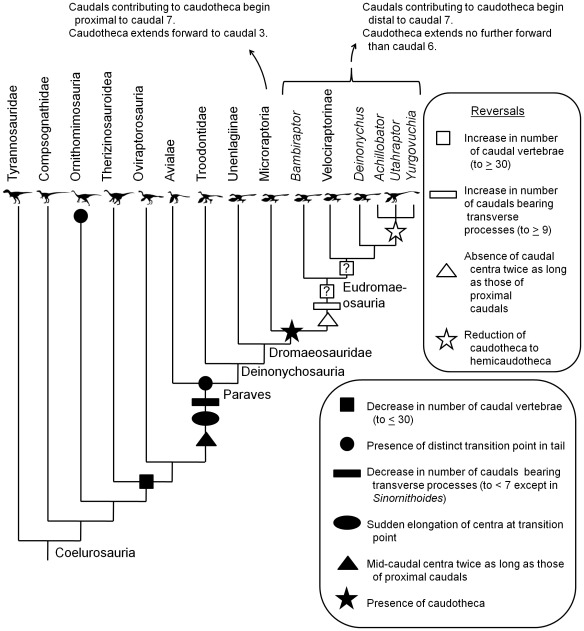
BACKGROUND: The Yellow Cat Member of the Cedar Mountain Formation (Early Cretaceous, Barremian?--Aptian) of Utah has yielded a rich theropod fauna, including the coelurosaur Nedcolbertia justinhofmanni, the therizinosauroid Falcarius utahensis, the troodontid Geminiraptor suarezarum, and the dromaeosaurid Utahraptor ostrommaysorum. Recent excavation has uncovered three new dromaeosaurid specimens. One specimen, which we designate the holotype of the new genus and species Yurgovuchia doellingi, is represented by a partial axial skeleton and a partial left pubis. A second specimen consists of a right pubis and a possibly associated radius. The third specimen consists of a tail skeleton that is unique among known Cedar Mountain dromaeosaurids. METHODOLOGY/PRINCIPAL FINDINGS: Y. doellingi resembles Utahraptor ostrommaysorum in that its caudal prezygapophyses are elongated but not to the degree present in most dromaeosaurids. The specimen represented by the right pubis exhibits a pronounced pubic tubercle, a velociraptorine trait that is absent in Y. doellingi. The specimen represented by the tail skeleton exhibits the extreme elongation of the caudal prezygapophyses that is typical of most dromaeosaurids. Here we perform a phylogenetic analysis to determine the phylogenetic position of Y. doellingi. Using the resulting phylogeny as a framework, we trace changes in character states of the tail across Coelurosauria to elucidate the evolution of the dromaeosaurid tail. CONCLUSIONS/SIGNIFICANCE: The new specimens add to the known diversity of Dromaeosauridae and to the known diversity within the Yellow Cat paleofauna. Phylogenetic analysis places Y. doellingi in a clade with Utahraptor, Achillobator, and Dromaeosaurus. Character state distribution indicates that the presence of intermediate-length caudal prezygapophyses in that clade is not an evolutionarily precursor to extreme prezygapophyseal elongation but represents a secondary shortening of caudal prezygapophyses. It appears to represent part of a trend within Dromaeosauridae that couples an increase in tail flexibility with increasing size.
Overview
The claims and statistics of this paper haven’t been checked yet.
Free: it reads the open-access text and checks the first 5 claims that cite a source we can check. Create a free account to check every claim.
Integrity signals
Registry
Cites
Statistics
Figures
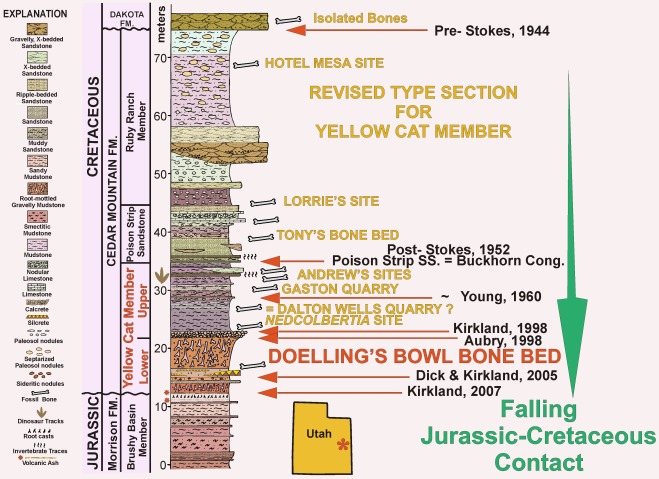
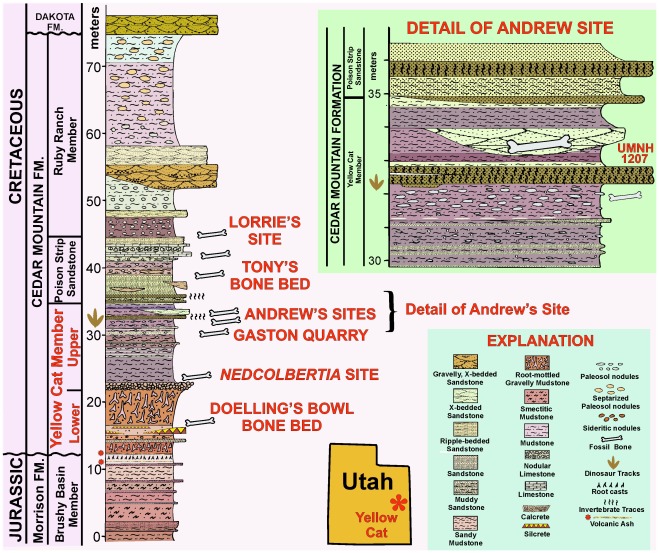
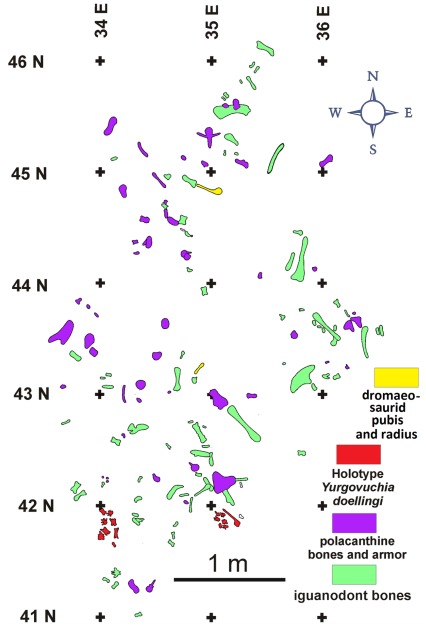
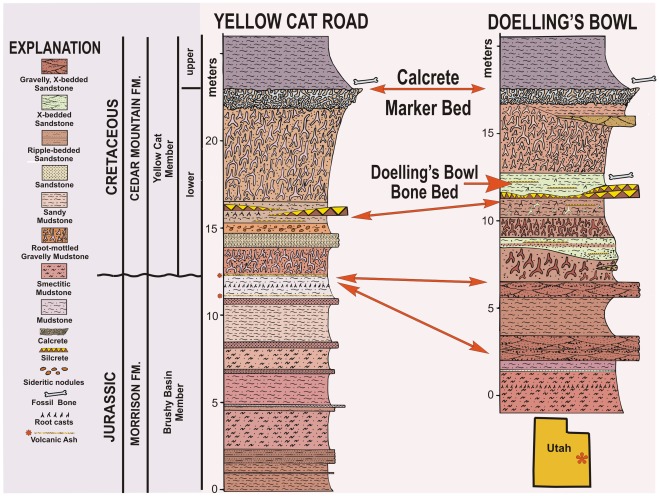
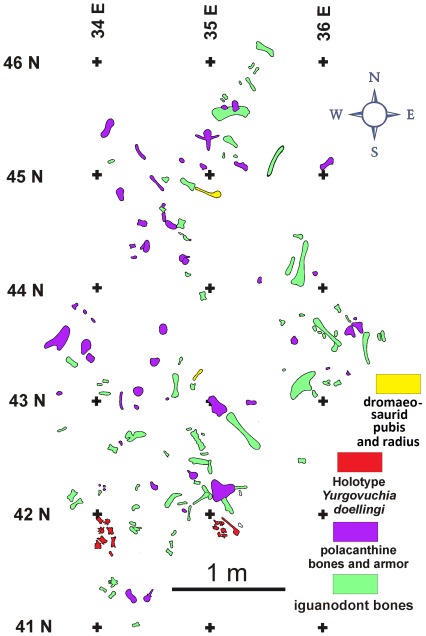
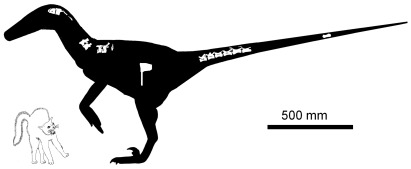
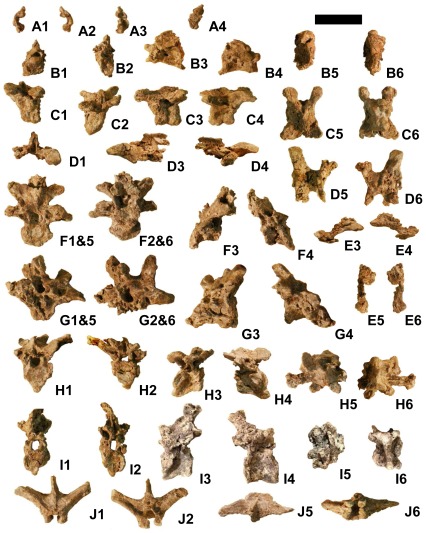
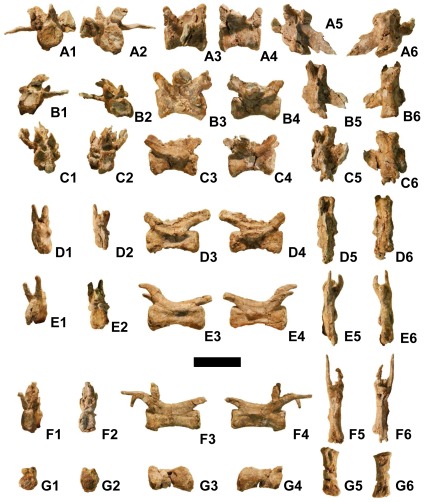
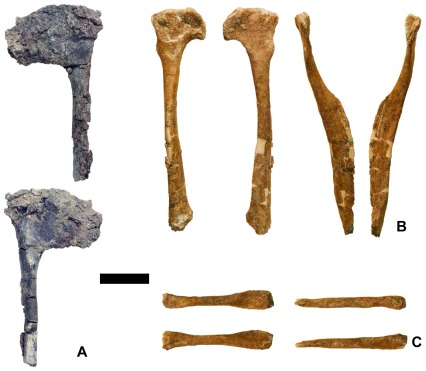
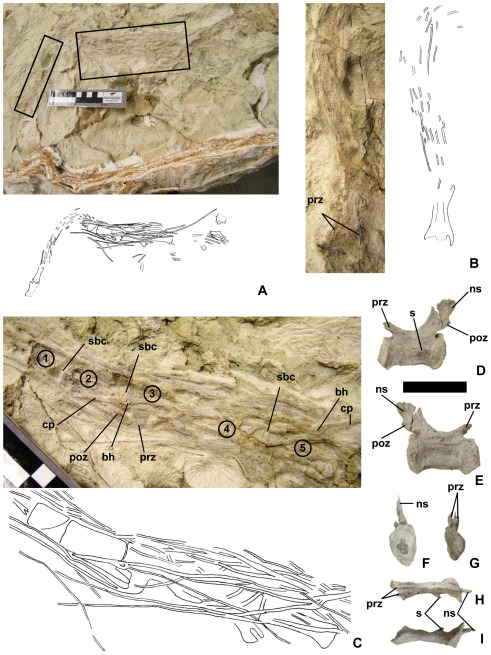
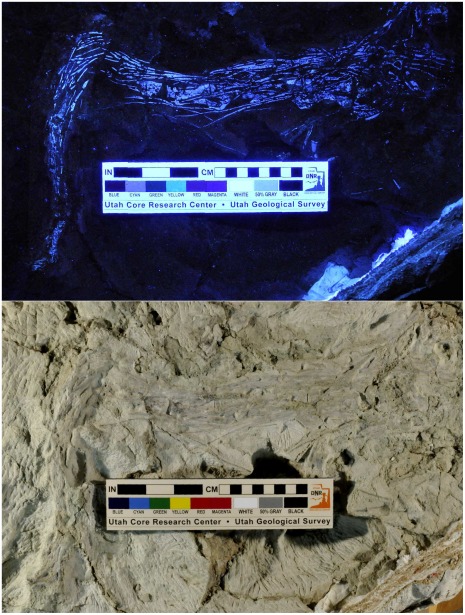
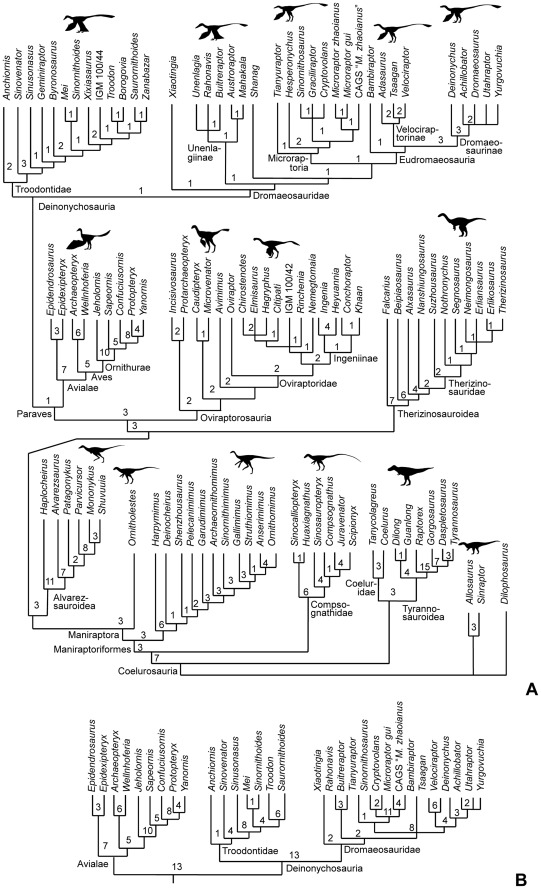
Verification
Claims the paper makes
The claims and statistics of this paper haven’t been checked yet.
Free: it reads the open-access text and checks the first 5 claims that cite a source we can check. Create a free account to check every claim.
Claims other papers make about this one
Each is checked against this paper’s own text: does it say what the citing paper says it does?
The cited source doesn’t support the claim as written.
In the citing paper
“The basic dromaeosaurid topology is maintained in this study, with unenlagiines and microraptorines at earlier diverging positions ( contra [67]) and eudromaeosaurians at later diverging ones [1, 2, 15, 17, 28, 30, 32].”
From Potential for Powered Flight Neared by Most Close Avialan Relatives, but Few Crossed Its Thresholds (2020) · cites this paper as [28]
Checked by a reasoning model — may be wrong.
Experimental — accuracy not yet measuredThe source backs part of the claim, not all of it — or backs it for a different population, condition or comparison.
In the citing paper
“As originally suggested by Senter et al. [28], we recover the largest microraptorine, Tianyuraptor , as the earliest diverging member of Microraptorinae under both XIW and EW results but contrary to its previously suggested eudromaeosaurian affinity [32].”
From Potential for Powered Flight Neared by Most Close Avialan Relatives, but Few Crossed Its Thresholds (2020) · cites this paper as [28]
Experimental — accuracy not yet measuredThe cited source says what the claim attributes to it.
In the citing paper
“All extended implied weighting (XIW) and equal weighting (EW) topologies support the monophyly of each of the traditionally recognized paravian clades: Paraves comprises Deinonychosauria and Avialae as in [2, 25-28] and Deinonychosauria comprises Dromaeosauridae and Troodontidae as in [2, 4, 28, 32, 33]”
From Potential for Powered Flight Neared by Most Close Avialan Relatives, but Few Crossed Its Thresholds (2020) · cites this paper as [28]
The check wasn’t confident either way, so it gives no verdict — never disputed.
In the citing paper
“As in Senter et al. (2012) and Cau (2018) our trees pair unenlagiines and halszkaraptorines, but uniquely places this Unenlagiidae sister to the dromaeosaurid plus troodontid clade.”
From A new paravian dinosaur from the Late Jurassic of North America supports a late acquisition of avian flight (2019) · cites this paper as Senter et al. (2012)
Experimental — accuracy not yet measured
Self-check
Percentages, sums and reported differences re-computed from the paper’s own numbers.
The self-check needs the paper’s full text.
Citations
Cites
Harland, W. B. (1982) · Cambridge University Press eBooks · Cited by 3,901
(2005) · Cambridge University Press eBooks · doi:10.1017/cbo9780511536045 · Cited by 3,005
Saurischian monophyly and the origin of birds
Gauthier, J. (1986) · The Academy · doi:10.5281/zenodo.16171435 · Cited by 1,294
Report on British fossil reptiles, part II
Owen, R. P. (1842) · Medical Entomology and Zoology · Cited by 904
British Association for the Advancement of Science
Leake, C. D. (1960) · Science · doi:10.1126/science.132.3433.1023 · Cited by 750
Principal characters of American Jurassic dinosaurs, Part III
Marsh, O. C. (1880) · American Journal of Science · doi:10.2475/ajs.s3-19.111.253 · Cited by 643
I. On the classification of the fossil animals commonly named Dinosauria
Seeley, H. G. (1888) · Proceedings of the Royal Society of London · doi:10.1098/rspl.1887.0117 · Cited by 638 · cited 2×
“Yurgovuchia Doellingi: Systematic Paleontology Systematic hierarchy: Dinosauria Owen, 1841 [77] Saurischia Seeley, 1887 [78] Theropoda Marsh, 1881 [79] Coelurosauria von Huene, 1914 [80] Dromaeosauridae Colbert and Russell, 1969 [27] Yurgovuchia gen. nov. urn:lsid:zoobank.org:act:110C8550-8718-40C6-8AA8- 8A534A33535B…”
Brochu, C. A. (1996) · Journal of Vertebrate Paleontology · doi:10.1080/02724634.1996.10011283 · Cited by 555
The smallest known non-avian theropod dinosaur
Xu, X., Zhou, Z., & Wang, X. (2000) · Nature · doi:10.1038/35047056 · Cited by 539 · cited 6×
“The family is known from the Lower and Upper Cretaceous of North and South America [5,6,11,16,19,24,27,29,30] and Asia [10,12,14,15,17,18,20–22,25,28,31] and from the Upper Cretaceous of Europe [8,13], Africa [32], and Madagascar [7].”
BackgroundInfluentialFour-winged dinosaurs from China
Xu, X., Zhou, Z., Wang, X., Kuang, X., Zhang, F., & Du, X. (2003) · Nature · doi:10.1038/nature01342 · Cited by 485 · cited 10×
“As in most dromaeosaurids [6,7,9,10,15,29,86], but in contrast to velociraptorines [38], a pubic tubercle is absent.”
BackgroundInfluential
Research works printed but not linked: 22
- Harris JD (1998) Large, Early Cretaceous theropods in North America. N Mex Mus Nat Hist Sci Bull 14: 225-228.
- Kirkland JI, Britt BB, Whittle CH, Madsen SK, Burge DL (1998) A small coelurosaurian theropod from the Yellow Cat Member of the Cedar Mountain Formation (Lower Cretaceous, Barremian) of eastern Utah. N Mex Mus Nat Hist Sci Bull 14: 239-248.
- Kirkland JI, Burge D, Gaston R (1993) A large dromaeosaur (Theropoda) from the Lower Cretaceous of eastern Utah. Hunteria 2(10): 1-16.
- Le Loeuff J, Buffetaut E (1998) A new dromaeosaurid theropod from the Upper Cretaceous of southern France. Oryctos 1: 105-112.
- Perle A, Norell MA, Clark LM (1999) A new maniraptoran theropod- Achillobator giganticus (Dromaeosauridae)-from the Upper Cretaceous of Burkhant, Mongolia. Contrib Dept Geol Natl Univ Mong 101: 1-105.
- Colbert EH, Russell DA (1969) The small Cretaceous dinosaur Dromaeosaurus. Am Mus Novit 2380: 1-49.
- Ostrom JH (1969) Osteology of Deinonychus antirrhopus, an unusual theropod dinosaur from the Lower Cretaceous of Montana. Bull Peabody Mus Nat Hist 30: 1-165.
- Senter P, Barsbold R, Britt BB, Burnham DA (2004) Systematics and evolution of Dromaeosauridae (Dinosauria, Theropoda). Bull Gunma Mus Nat Hist 8: 1-20.
- Kirkland JI, Britt BB, Burge DL, Carpenter K, Cifelli R, et al. (1997) Lower to middle Cretaceous dinosaur faunas of the central Colorado Plateau: A key to understanding 35 million years of tectonics, sedimentology, evolution, and biogeography: Brigham Young Univ Geol Stud 42(2): 69-103.
- Tidwell VC, Carpenter K, Meyer S (2001) New titanosauriform (Sauropoda) from the Poison Strip Member of the Cedar Mountain Formation (Lower Cretaceous), Utah. In: Tanke DH & Carpenter K, editors, Mesozoic vertebrate life Bloomington, Indiana, Indiana University Press. pp 139-165.
- Kirkland JI, Madsen SK (2007) The Lower Cretaceous Cedar Mountain Formation, eastern Utah: The view up an always interesting learning curve, in Lund WR (ed.) Field guide to geological excursions in southern Utah, Geological Society of America Rocky Mountain Section 2007 Annual Meeting, Grand Junction Geological Society, Ut Geol Assoc Publ 35:1-108. CD-ROM.
- Aubrey WM (1998) A newly discovered, widespread fluvial facies and unconformity marking the Upper Jurassic/Lower Cretaceous boundary, Colorado Plateau. In: Carpenter K, Chure D, Kirkland JI, editors. The Upper Jurassic Morrison Formation-an interdisciplinary study, part I. Mod Geol 22: 209-233.
- Kirkland JI, Cifelli R, Britt BB, Burge DL, DeCourten F, et al. (1999) Distribution of vertebrate faunas in the Cedar Mountain Formation, east- central Utah. In: Gillette D, editor. Vertebrate Paleontology in Utah. Utah Geol Surv Misc Publ 99-1: 201-217.
- Tidwell WD (1996) Cretaceous floras of east-central Utah and western Colorado-a review. In: Herendeen PS, Johnson K, Tidwell WD, Ash SR, eds. Guidebook for Paleozoic, Mesozoic, and Cenozoic excursion of Utah and Colorado: The Fifth Annual Paleobotanical Conference. pp 57-72.
- Tidwell WD (1998) Common fossil plants of western North America, Second Edition. Washington DC: Smithsonian Institution Press.
- M.S. Thesis. Rapid City: South Dakota School of Mines.
- Doelling HH (2003) Geology of Arches National Park. In: Sprinkel DA, Chidsey TC Jr, Anderson PB, editors. Geology of Utah's parks and monuments. Salt Lake City: Utah Geological Association pp 11-36.
- Achenbach J (2003) A new generation of scientists brings dinosaurs back to life. Natl Geogr 203(3): 2-33.
- Norell MA, Makovicky PJ (1999) Important features of the dromaeosaurid skeleton II: information from newly collected specimens of Velociraptor mongoliensis. Am Mus Novit 3282: pp 1-45.
- Burnham DA (2004) New information on Bambiraptor feinbergi (Theropoda: Dromaeosauridae) from the Late Cretaceous of Montana. In: Currie PJ, Koppelhaus EB, Shugar MA, Wright JL, editors. Feathered dragons. Bloomington: Indiana University Press 67-111.
- Wellnhofer P (1993) Das siebte Exemplar von Archaeopteryx aus den Solnhofener Schichten. Archaeopteryx 11: 1-47.
- Kobayashi Y, Barsbold R (2005) Anatomy of Harpymimus okladnikovi Barsbold and Perle 1984 (Dinosauria; Theropoda) of Mongolia. In: Carpenter K, ed. Carnivorous dinosaurs. Bloomington: Indiana University Press. pp 97-126.
Cited by
An integrative approach to understanding bird origins
Xu, X., Zhou, Z., Dudley, R., Mackem, S., Chuong, C.-M., Erickson, G. M., & Varricchio, D. J. (2014) · Science · doi:10.1126/science.1253293 · Cited by 319
“Many recent studies suggest that Rahonavis, other unenlagiids, and Anchiornis and its kin are deinonychosaurs (16, 17, 22, 44, 45).”
BackgroundPotential for Powered Flight Neared by Most Close Avialan Relatives, but Few Crossed Its Thresholds
Pei, R., Pittman, M., Goloboff, P. A., Dececchi, T. A., Habib, M. B., Kaye, T. G., Larsson, H. C. E., Norell, M. A., Brusatte, S. L., & Xu, X. (2020) · Current Biology · doi:10.1016/j.cub.2020.06.105 · Cited by 137
“, Acheroraptor, Yurgovuchia, Dakotaraptor and Yiwere also adopted from non-TWiG datasets [28, 30, 32, 33].”
InfluentialHind Wings in Basal Birds and the Evolution of Leg Feathers
Zheng, X., Zhou, Z., Wang, X., Zhang, F., Zhang, X., Wang, Y., Wei, G., Wang, S., & Xu, X. (2013) · Science · doi:10.1126/science.1228753 · Cited by 119
“S9 and S10), the versions differing only in the placement of Archaeopteryx (4, 54-60).”
BackgroundPennaraptoran Theropod Dinosaurs Past Progress and New Frontiers
Pittman, M., & Xu, X. (2020) · Bulletin of the American Museum of Natural History · doi:10.1206/0003-0090.440.1.1 · Cited by 94
Hartman, S., Mortimer, M., Wahl, W. R., Lomax, D. R., Lippincott, J., & Lovelace, D. M. (2019) · PeerJ · doi:10.7717/peerj.7247 · Cited by 86
“, 2014b), a dromaeosaurid (Senter et al., 2012), and a scansoriopterygid relative (Lefèvre et al.”
BackgroundInfluentialMosaic evolution in an asymmetrically feathered troodontid dinosaur with transitional features
Xu, X., Currie, P., Pittman, M., Xing, L., Meng, Q., Lü, J., Hu, D., & Yu, C. (2017) · Nature Communications · doi:10.1038/ncomms14972 · Cited by 86
New Specimens of Anchiornis huxleyi(Theropoda: Paraves) from the Late Jurassic of Northeastern China
Pei, R., Li, Q., Meng, Q., Norell, M. A., & Gao, K.-Q. (2017) · Bulletin of the American Museum of Natural History · doi:10.1206/0003-0090-411.1.1 · Cited by 70
“…and Sues, 1998; Xu et al., 1999; Hwang et al., 2002; Makovicky et al., 2003; Xu and Norell, 2004; Makovicky et al., 2005; Novas and Pol, 2005; Norell et al., 2006; Turner et al., 2007, 2012; Hu et al., 2009; Senter et al., 2012; Brusatte et al., 2014; Foth et al., 2014; Lü and Brusatte, 2015).”
BackgroundPrimitive Wing Feather Arrangement in Archaeopteryx lithographica and Anchiornis huxleyi
Longrich, N. R., Vinther, J., Meng, Q., Li, Q., & Russell, A. P. (2012) · Current Biology · doi:10.1016/j.cub.2012.09.052 · Cited by 72
Royo‐Torres, R., Upchurch, P., Kirkland, J. I., DeBlieux, D. D., Foster, J. R., Cobos, A., & Alcalá, L. (2017) · Scientific Reports · doi:10.1038/s41598-017-14677-2 · Cited by 70
Self-citationGianechini, F. A., Makovicky, P. J., Apesteguía, S., & Cerda, I. (2018) · PeerJ · doi:10.7717/peerj.4558 · Cited by 65
“A similar position for the transition point in the caudal series is observed in Rahonavis (Forster et al., 1998), other dromaeosaurids such as Deinonychus (Ostrom, 1969) and troodontids such as Sinornithoides, Mei and Daliansaurus (Currie & Dong, 2001; Gao et al., 2012; Shen et al., 2017a); whereas in microraptorines,…”
BackgroundInfluentialCau, A., Brougham, T., & Naish, D. (2015) · PeerJ · doi:10.7717/peerj.1032 · Cited by 64
Paravian Phylogeny and the Dinosaur-Bird Transition: An Overview
Agnolin, F. L., Motta, M. J., Brissón Egli, F., Lo Coco, G., & Novas, F. E. (2019) · Frontiers in Earth Science · doi:10.3389/feart.2018.00252 · Cited by 48
“…argued that Anchiornis might be the basalmost troodontid, the interpretation followed by most authors (e.g., Gao et al., 2012; Lee and Worthy, 2012; Senter et al., 2012; Turner et al., 2012; Xu et al., 2012; Godefroit et al., 2013a; Tsuihiji et al., 2014, 2016; Brusatte et al., 2015; Averianov and…”
BackgroundLongrich, N. R., Barnes, K., Clark, S., & Millar, L. (2013) · Bulletin of the Peabody Museum of Natural History · doi:10.3374/014.054.0102 · Cited by 66
“The tree is broadly consistent with previously published topologies (Osmólska et al. 2004; Xu et al. 2007; Longrich, Currie and Dong 2010; Fanti et al. 2012; Senter et al. 2012; Turner et al. 2012).”
ResultShake a Tail Feather: The Evolution of the Theropod Tail into a Stiff Aerodynamic Surface
Pittman, M., Gatesy, S. M., Upchurch, P., Goswami, A., & Hutchinson, J. R. (2013) · PLoS ONE · doi:10.1371/journal.pone.0063115 · Cited by 61
“Some dromaeosaurids such as Utahraptor (BYU 15465, Table S2 in File S1) appear to have secondarily shortened their prezygapophyses and chevrons, producing a more mobile tail that was suggested to have been a response to the biomechanical demands of a larger body size [83].”
BackgroundThe Lower Cretaceous in east-central Utah—The Cedar Mountain Formation and its bounding strata
Kirkland, J. I., Suarez, M. B., Suarez, C., & Hunt-Foster, R. (2016) · Geology of the Intermountain West · doi:10.31711/giw.v3.pp101-228 · Cited by 63
Self-citationCurrie, P. J., & Evans, D. C. (2019) · The Anatomical Record · doi:10.1002/ar.24241 · Cited by 61
“Early Cretaceous dromaeosaurids from North America include D. antirrhopus Ostrom, 1969, Utahraptor ostrommaysorum Kirkland et al., 1993, and Yurgovuchia doellingi Senter et al., 2012.”
BackgroundA new troodontid dinosaur from the Lower Cretaceous Yixian Formation of Liaoning Province, China
SHEN, C., LÜ, J., LIU, S., KUNDRÁT, M., BRUSATTE, S. L., & GAO, H. (2017) · Acta Geologica Sinica - English Edition · doi:10.1111/1755-6724.13307 · Cited by 49
“The deinonychosaurian-avialan group is referred to as Paraves (Xu et al., 2002; Hu et al., 2009; Senter et al., 2012; Turner et al., 2012; Godefroit et al., 2013b; Xu et al., 2014).”
Feduccia, A. (2013) · The Auk · doi:10.1525/auk.2013.130.1.1 · Cited by 44
Dragon Tails: Convergent Caudal Morphology in Winged Archosaurs
Persons, W. S., & Currie, P. J. (2012) · Acta Geologica Sinica - English Edition · doi:10.1111/1755-6724.12009 · Cited by 44
Xing, L., Lockley, M. G., Yang, G. S., Xu, X., Cao, J., Klein, H., Persons, W. S., Shen, H.-J., & Zheng, X.-M. (2015) · Palaeoworld · doi:10.1016/j.palwor.2015.04.004 · Cited by 25
Motta, M. J., Brissón Egli, F., & Novas, F. E. (2018) · Cretaceous Research · doi:10.1016/j.cretres.2017.09.004 · Cited by 24
Delcourt, R., & Grillo, O. N. (2014) · Revista Brasileira de Paleontologia · doi:10.4072/rbp.2014.3.03 · Cited by 26
“Among deinonychosaurian taxa, dromaeosaurids in general have short and box-shaped anterior caudal centra with a subquadrangular cross-section (Senter et al., 2012).”
BackgroundJasinski, S. E., Sullivan, R. M., & Dodson, P. (2020) · Scientific Reports · doi:10.1038/s41598-020-61480-7 · Cited by 26
Xu, X., & Pol, D. (2013) · Journal of Systematic Palaeontology · doi:10.1080/14772019.2013.764357 · Cited by 23
“On the other hand, Archaeopteryx lacks many features seen in other basal avialans (Figs 2, 3A, B), including the scansoriopterygids, considered to be more basal than Archaeopteryx within Avialae in many studies (Zhang et al. 2008; Choiniere et al. 2010; Senter et al. 2012): a large premaxilla; a highly positioned exte…”
BackgroundPereira, P. V. L. G. D. C., Ribeiro, T. B., Brusatte, S. L., Candeiro, C. R. D. A., Marinho, T. D. S., & Bergqvist, L. P. (2020) · Cretaceous Research · doi:10.1016/j.cretres.2020.104517 · Cited by 22
Martharaptor greenriverensis, a New Theropod Dinosaur from the Lower Cretaceous of Utah
Senter, P., Kirkland, J. I., & DeBlieux, D. D. (2012) · PLoS ONE · doi:10.1371/journal.pone.0043911 · Cited by 19
“The Cedar Mountain Formation (Lower Cretaceous) of Utah, USA, preserves a rich theropod paleofauna.”
BackgroundMethodResultInfluentialSelf-citationReorganization of the theropod wrist preceded the origin of avian flight
Napoli, J. G., Fabbri, M., Ruebenstahl, A. A., O’Connor, J. K., Bhullar, B.-A. S., & Norell, M. A. (2025) · Nature · doi:10.1038/s41586-025-09232-3 · Cited by 17
“No definitive resolution of the phylogenetic relationships of compsognathids has been published, and we follow Senter et al. 59 in considering the large-bodied Sinocalliopteryx and Huaxiagnathus to form a clade with each other to the exclusion of all other compsognathids.”
Meso, J. G., Qin, Z., Pittman, M., Canale, J. I., Salgado, L., & Díaz, V. D. (2021) · Cretaceous Research · doi:10.1016/j.cretres.2021.104830 · Cited by 19
Wang, S., Tan, Q., Zhang, Q., Steigler, J., Zhang, H., & Tan, L. (2021) · Cladistics · doi:10.1111/cla.12467 · Cited by 14
Charophytes from the Upper Berriasian of the Western Interior Basin of the United States
Martín‐Closas, C., Sames, B., & Schudack, M. (2013) · Cretaceous Research · doi:10.1016/j.cretres.2013.08.009 · Cited by 14
Longrich, N. R., Martill, D. M., & Jacobs, M. L. (2021) · Cretaceous Research · doi:10.1016/j.cretres.2021.105123 · Cited by 13
The Fossil Record of Mesozoic and Paleocene Pennaraptorans
Pittman, M., O'Connor, J. K., Tse, E., Makovicky, P. J., Field, D. J., Ma, W., Turner, A. H., Norell, M. A., Pei, R., & Xu, X. (2020) · Biodiversity Heritage Library (Smithsonian Institution) · doi:10.17863/cam.59245 · Cited by 17
Craniodental and Postcranial Characters of Non-Avian Dinosauria Often Imply Different Trees
Li, Y., Ruta, M., & Wills, M. A. (2019) · Systematic Biology · doi:10.1093/sysbio/syz077 · Cited by 12
The first giant raptor (Theropoda: Dromaeosauridae) from the Hell Creek Formation
(2015) · Paleontological Contributions · doi:10.17161/paleo.1808.18764 · Cited by 10
Jasinski, S. E., Sullivan, R. M., Carter, A. M., Johnson, E. H., Dalman, S. G., Zariwala, J., & Currie, P. J. (2022) · The Anatomical Record · doi:10.1002/ar.25103 · Cited by 8
“Early Cretaceous North American dromaeosaurids include Deinonychus antirrhopus, Utahraptor ostrommaysi, and Yurgovuchia doellingi (e.g., Brinkman et al., 1998; Kirkland et al., 1993; Ostrom, 1969; Senter et al., 2012).”
BackgroundWang, X., Cau, A., Guo, B., Ma, F., Qing, G., & Liu, Y. (2022) · Scientific Reports · doi:10.1038/s41598-022-24602-x · Cited by 10
Enigmatic didactyl tracks from the Jurassic of Iran
Xing, L., Abbassi, N., & Lockley, M. G. (2017) · Historical Biology · doi:10.1080/08912963.2017.1339700 · Cited by 6
“…other unenlagiids, as well as Anchiornis and its close relatives belong to deinonychosaurs (Makovicky et al. 2005; Hu et al. 2009; Xu et al. 2011; Senter et al. 2012; Turner et al. 2012), while others have suggested that these taxa are basal avialans (Novas & Puertat 1997; Forster et al. 1998;…”
BackgroundLi, Y., Li, X., Chen, J., & Reisz, R. R. (2023) · Cretaceous Research · doi:10.1016/j.cretres.2023.105711 · Cited by 6
Martin, D., Currie, P. J., & Kundrát, M. (2023) · Acta Zoologica · doi:10.1111/azo.12467 · Cited by 6
Milàn, J., Chiappe, L. M., Loope, D. B., Kirkland, J. I., & Lockley, M. G. (2015) · Annales Societatis Geologorum Poloniae/Rocznik Polskiego Towarzystwa Geologicznego · doi:10.14241/asgp.2015.034 · Cited by 6
“…and Martharaptor greenriverensis, a large allosauroid, basal macronarian and titansauriform sauro pods, polacanthid ankylosaurs, and prim i tive iguanodonts such as Iguanacolosus fortis and Hippodraco scutodens (Kirkland et al., 2005, 2012; Mc Don ald et al., 2010; Senter et al., 2010, 2012).”
BackgroundSelf-citationPhylogenetic relationships of Unenlagiidae among Paraves (Dinosauria)
Motta, M. J., Agnolín, F. L., Egli, F. B., Rozadilla, S., & Novas, F. E. (2025) · Journal of Systematic Palaeontology · doi:10.1080/14772019.2025.2529608 · Cited by 4
Yun, C. (2025) · Lethaia · doi:10.18261/let.58.1.3 · Cited by 5
Caldwell, H. R., Bedolla, E., & Varricchio, D. J. (2024) · Journal of Vertebrate Paleontology · doi:10.1080/02724634.2025.2493166 · Cited by 3
“A fully fused axis is present in the holotype specimens for Yurgovuchia doellingi (Senter et al., 2012) and Gobivenator mongoliensis (Tsuihiji et al., 2014).”
Moutrille, L., Cau, A., Chinzorig, T., Escuillié, F., Tsogtbaatar, K., Ganzorig, B., Mallet, C., & Godefroit, P. (2025) · Historical Biology · doi:10.1080/08912963.2025.2530148 · Cited by 4
“…(Norell & Makovicky, 1999); an abbreviated second phalanx of the third finger (Norell & Makovicky, 1999; Ostrom, 1969), high arching of the dorsal margin of the manual unguals (Senter et al., 2012), and a strongly caudoven-trally oriented pubis (Norell & Makovicky, 1999; Turner et al., 2021).”
InfluentialPei, R., & Xu, X. (2022) · Geological Society London Special Publications · doi:10.1144/sp521-2021-179 · Cited by 3
Independent assembly of the flight apparatus in a non-avian dinosaur clade
Wang, X., Ji, Y., Cau, A., Kundrát, M., Liu, Y., Wang, Y., & Ji, Q. (2026) · Nature Communications · doi:10.1038/s41467-026-77804-6 · Cited by 2
“The number of caudal vertebrae is uncertain due to the extensive covering of the caudotheca which extends to the anteriormost caudal vertebrae as in other microraptorines 27 .”
InfluentialA new theropod dinosaur from the Lower Cretaceous Longjiang Formation of Inner Mongolia (China)
Wang, X., Cau, A., Wang, Z., Yu, K., Wu, W., Wang, Y., & Liu, Y. (2023) · Cretaceous Research · doi:10.1016/j.cretres.2023.105605 · Cited by 2
Feathered dinosaurs reconsidered: New insights from baraminology and ethnotaxonomy
MCLAIN, M. A., Petrone, M., & Speights, M. (2018) · Proceedings of the International Conference on Creationism/Proceedings of the ... International Conference on Creationism · doi:10.15385/jpicc.2018.8.1.37 · Cited by 2
Díaz, V. D., van Bijlert, P. A., Sellers, W. I., Wedel, M., & Schwarz, D. (2025) · Royal Society Open Science · doi:10.1098/rsos.250851 · Cited by 1
Motta, M. J., Rolando, A. M. A., Rozadilla, S., Agnolín, F. L., Egli, F. B., Álvarez-Herrera, G. P., Chimento, N. R., Coco, G. L., Tsuihiji, T., Manabe, M., et al. (2026) · Journal of Vertebrate Paleontology · doi:10.1080/02724634.2026.2656456 · Cited by 1
“The presence of carotid process on posterior cervical vertebrae was proposed as a synapomorphy of Paraves (Brusatte et al., 2014; Pei et al., 2020; Senter et al., 2012), and this condition has been recorded in unenlagiids, such as Austroraptor and Buitreraptor , and now also in Kank .”
(Invited) Humeral Bone Strength and Flight in Eumaniraptoran Dinosaurs
Lee, S. A., & Thomas, J. D. (2021) · ECS Transactions · doi:10.1149/10412.0003ecst · Cited by 1
McFeeters, B. D. (2015) · Carleton University's Institutional Repository (MacOdrum Library, Carleton University) · doi:10.22215/etd/2015-11213 · Cited by 1
Dinosaurs and The Origin of Birds
Clark, J. M. (2013) · Wiley eBooks · doi:10.1002/9780470015902.a0003322.pub2
Milén, J., Chiappe, L. M., Loope, B., Kirkland, J. I., & Lockley, M. G. (2015)
Self-citationda Costa, T. V. V., & David, N. (2019) · The Bulletin of zoological nomenclature · doi:10.21805/bzn.v76.a028
“…used a different spelling for the specific epithet of the species, U. ostrommaysorum, without any comment or explanation, as did the works of Senter et al. (2012a), Senter et al. (2012b), and Milàn et al. (2015), of which J. I. Kirkland was a co-author, again without any comment or…”
MethodOswald, T., Boisvert, C., D’Amore, D. C., & Curtice, B. D. (2025) · Journal of the Arizona-Nevada Academy of Science · doi:10.2181/036.050.0204
Ling-Qi, Z., Lamanna, M. C., Poust, A. W., Li, D., You, H., & O'Connor, J. K. (2026) · Annals of Carnegie Museum · doi:10.2992/007.092.0201
Metadata
- Authors
- Senter, P., Kirkland, J. I., DeBlieux, D. D., Madsen, S., & Toth, N.
- Affiliations
- Fayetteville State University (US)
- Utah Geological Survey (US)
- Natural History Museum of Utah (US)
- Corresponding author
- Senter, Phil
- ORCID
- Kirkland, James I.
- Venue
- PLoS ONE
- Publisher
- Public Library of Science (PLoS)
- Published
- 2012-05-15
- Volume
- 7
- Issue
- 5
- Pages
- e36790
- ISSN
- 1932-6203 (ISSN-L)
- PMC
- PMC3352940
- OpenAlex
- W2167644451
- Cited by
- 65
- References
- 83
- Citations by year
- 2026: 3 · 2025: 6 · 2024: 1 · 2023: 3 · 2022: 3 · 2021: 3 · 2020: 6 · 2019: 8 · 2018: 2 · 2017: 6 · 2016: 1 · 2015: 11 · 2014: 2 · 2013: 7 · 2012: 3
- FWCI
- 5.44
- Type
- journal article
- Language
- en
- Update notices
- correction (2012-09-06)
- Open access
- gold
- doi.org
- Locations
- PLoS ONE (publishedVersion, cc-by)
- Europe PMC (PubMed Central) (publishedVersion, cc-by)
- PubMed Central (publishedVersion, cc-by)
- PubMed (publishedVersion)
- DigitalCommons@Fayetteville State University (Fayetteville State University) (submittedVersion)
- DOAJ (DOAJ: Directory of Open Access Journals) (submittedVersion, cc-by-sa)
- Figshare (submittedVersion, cc-by)
- Topics
- Physical Sciences › Earth and Planetary Sciences › Paleontology › Paleontology and Evolutionary Biology
- Physical Sciences › Earth and Planetary Sciences › Paleontology › Evolution and Paleontology Studies
- Life Sciences › Agricultural and Biological Sciences › Ecology, Evolution, Behavior and Systematics › Fossil Insects in Amber
- Keywords
- Dromaeosauridae, pubic tubercle, Cedar Mountain Formation, phylogenetic analysis, character state evolution
- MeSH terms
- Animals, Biological Evolution, Phylogeny, Dinosaurs
About these checks
Registry, retraction, Cites and statistics results are computed, not judged, with one exception: a printed reference that no index lists is read once by a model before it counts as a citation error. Claims are extracted by a model and kept only when their quote appears verbatim in the text; each cited source is then checked, with a model’s help, for whether it says what the claim relies on. Those verdicts can be wrong — read the claim’s quote and the cited source before relying on one.
Statistics and arithmetic are recomputed, not judged.
Confidence bands are shown only for fields calibrated on our annotated test set. None is calibrated yet, so no band is shown.
What counts as a claim ›How we measure confidence ›How we check this ›
Are you an author, or do you see a problem with this page? Request a review
Data sources
Bibliographic data: Semantic Scholar, OpenAlex, Crossref.
Contains information from the Semantic Scholar Academic Graph Datasets, made available under the ODC Attribution License (ODC-BY 1.0).
Semantic Scholar’s data is described in: Kinney, R., et al. (2023). The Semantic Scholar Open Data Platform. arXiv:2301.10140.
