

The DOI matches its Crossref record; 44 of the 44 references it cites were found in a registry or an index.
From Single Molecule Fluctuations to Muscle Contraction: A Brownian Model of A.F. Huxley's Hypotheses
Open accessAbstract
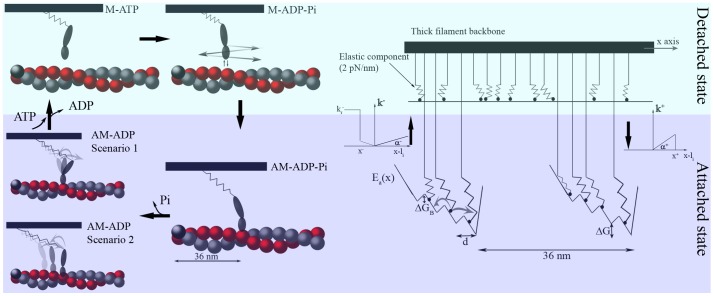
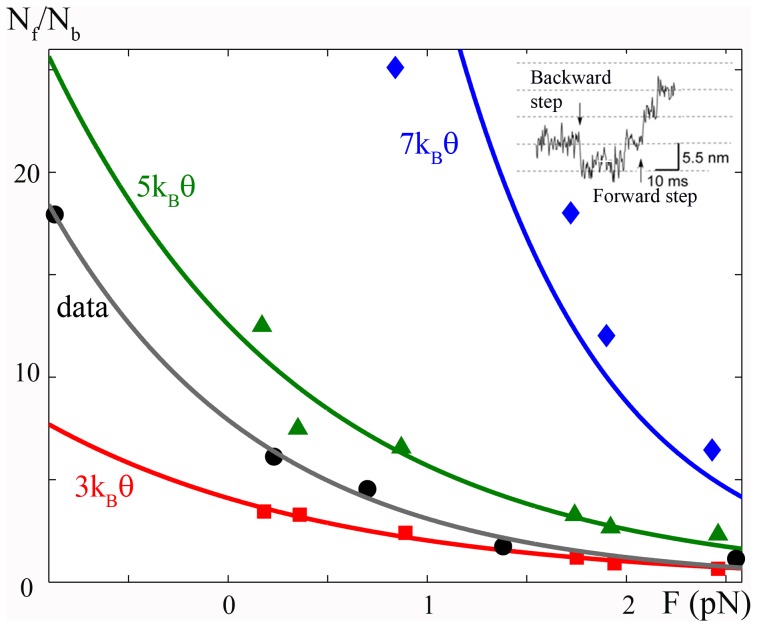
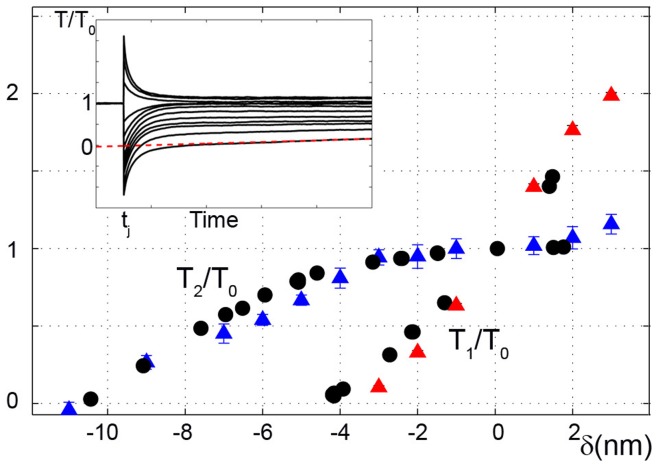
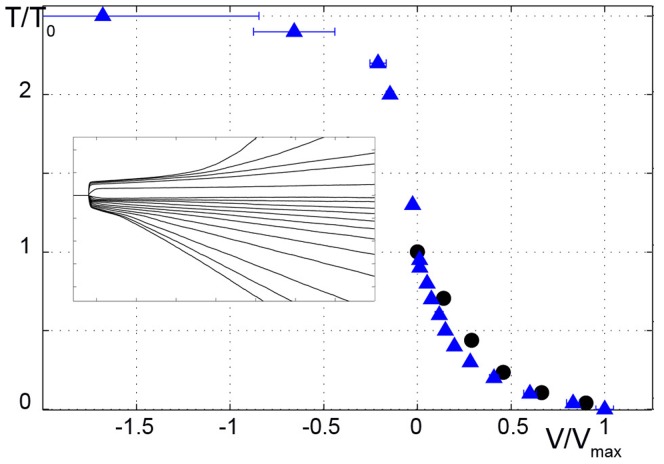
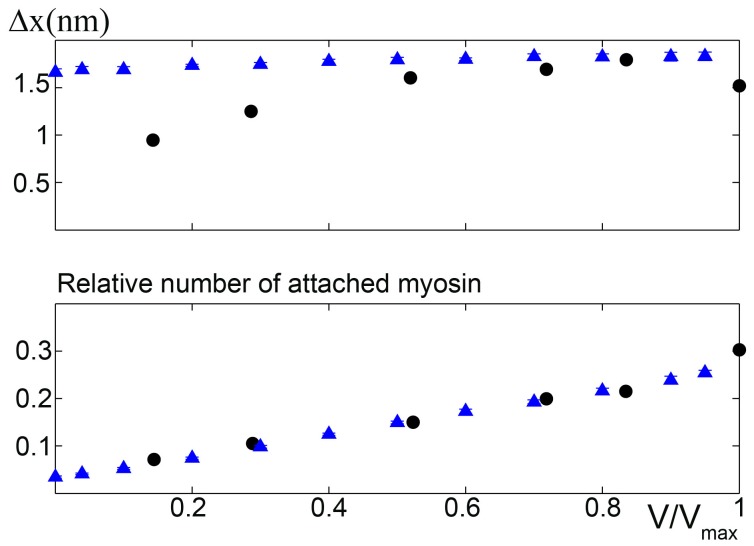
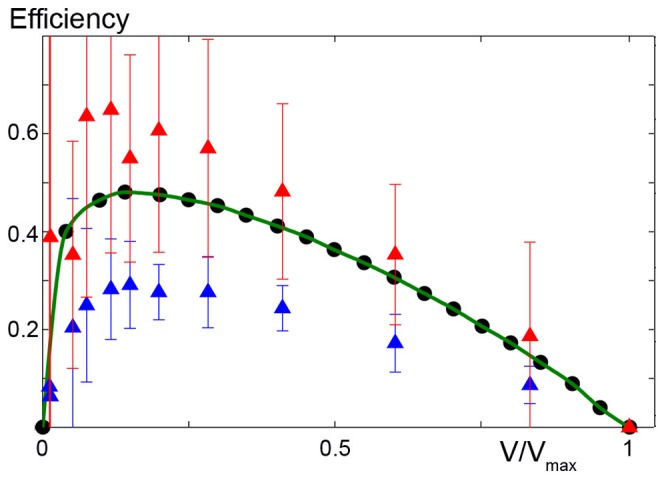
Muscular force generation in response to external stimuli is the result of thermally fluctuating, cyclical interactions between myosin and actin, which together form the actomyosin complex. Normally, these fluctuations are modelled using transition rate functions that are based on muscle fiber behaviour, in a phenomenological fashion. However, such a basis reduces the predictive power of these models. As an alternative, we propose a model which uses direct single molecule observations of actomyosin fluctuations reported in the literature. We precisely estimate the actomyosin potential bias and use diffusion theory to obtain a brownian ratchet model that reproduces the complete cross-bridge cycle. The model is validated by simulating several macroscopic experimental conditions, while its interpretation is compatible with two different force-generating scenarios.
Overview
The claims and statistics of this paper haven’t been checked yet.
Run the check — free, no account needed. It reads the open-access text and checks the sources it cites.
Integrity signals
Registry
Cites
Statistics
Figures
Verification
Claims the paper makes
The claims and statistics of this paper haven’t been checked yet.
Run the check — free, no account needed. It reads the open-access text and checks the sources it cites.
Claims other papers make about this one
Each is checked against this paper’s own text: does it say what the citing paper says it does?
In the citing paper
“In the classic example of muscle contraction as biomolecular machines, the release of chemical energy is often accompanied by thermal fluctuation, which can transform muscular force generated in response to external stimuli through cyclical interactions between myosin and actin.539”
From Protein Ensembles: How Does Nature Harness Thermodynamic Fluctuations for Life? The Diverse Functional Roles of Conformational Ensembles in the Cell (2016) · cites this paper as [539]
Self-check
Percentages, sums and reported differences re-computed from the paper’s own numbers.
The self-check needs the paper’s full text.
Citations
Cites
Handbook of Stochastic Methods
Gardiner, C. W. (1983) · Springer series in synergetics · doi:10.1007/978-3-662-02377-8 · Cited by 6,085
Handbook of Stochastic Methods for Physics, Chemistry and the Natural Sciences
Gardiner, C. W. (1985) · Springer series in synergetics · doi:10.1007/978-3-662-02452-2 · Cited by 3,748
The heat of shortening and the dynamic constants of muscle
Hill, A. V. (1938) · Proceedings of the Royal Society of London. Series B - Biological Sciences · doi:10.1098/rspb.1938.0050 · Cited by 3,669
Handbook of Stochastic Methods
Gardiner, C. W. (2004) · Springer series in synergetics · doi:10.1007/978-3-662-05389-8 · Cited by 3,468
Mechanics of Motor Proteins and the Cytoskeleton
Howard, & Clark (2002) · Applied Mechanics Reviews · doi:10.1115/1.1451234 · Cited by 2,909
Muscle Structure and Theories of Contraction
Huxley, A. F. (1957) · Progress in Biophysics and Biophysical Chemistry · doi:10.1016/s0096-4174(18)30128-8 · Cited by 2,318
Proposed Mechanism of Force Generation in Striated Muscle
Huxley, A. F., & Simmons, R. M. (1971) · Nature · doi:10.1038/233533a0 · Cited by 2,276
Three-dimensional structure of myosin subfragment-1: a molecular motor
Rayment, I., Rypniewski, W. R., Schmidt‐Bäse, K., Smith, R., Tomchick, D. R., Benning, M. M., Winkelmann, D. A., Wesenberg, G. E., & Holden, H. M. (1993) · Science · doi:10.1126/science.8316857 · Cited by 2,054
Single myosin molecule mechanics: piconewton forces and nanometre steps
Finer, J. T., Simmons, R. M., & Spudich, J. A. (1994) · Nature · doi:10.1038/368113a0 · Cited by 1,945
The Mechanism of Muscular Contraction
Huxley, H. E. (1969) · Science · doi:10.1126/science.164.3886.1356 · Cited by 1,945
Jülicher, F., Ajdari, A., & Prost, J. (1997) · Reviews of Modern Physics · doi:10.1103/revmodphys.69.1269 · Cited by 1,841
Structure of the actin-myosin complex and its implications for muscle contraction
Rayment, I., Holden, H. M., Whittaker, M., Yohn, C. B., Lorenz, M., Holmes, K. C., & Milligan, R. A. (1993) · Science · doi:10.1126/science.8316858 · Cited by 1,815
Magnasco, M. O. (1993) · Physical Review Letters · doi:10.1103/physrevlett.71.1477 · Cited by 1,214
Tension responses to sudden length change in stimulated frog muscle fibres near slack length
Ford, L. E., Huxley, A. F., & Simmons, R. M. (1977) · The Journal of Physiology · doi:10.1113/jphysiol.1977.sp011911 · Cited by 859
Video imaging of walking myosin V by high-speed atomic force microscopy
Kodera, N., Yamamoto, D., Ishikawa, R., & Ando, T. (2010) · Nature · doi:10.1038/nature09450 · Cited by 836
Structural Mechanism of Muscle Contraction
Geeves, M. A., & Holmes, K. C. (1999) · Annual Review of Biochemistry · doi:10.1146/annurev.biochem.68.1.687 · Cited by 781
Force measurements by micromanipulation of a single actin filament by glass needles
Kishino, A., & Yanagida, T. (1988) · Nature · doi:10.1038/334074a0 · Cited by 682
Self-citationMovement and force produced by a single myosin head
Molloy, J. E., Burns, J. E., Kendrick‐Jones, J., Tregear, R. T., & White, D. C. S. (1995) · Nature · doi:10.1038/378209a0 · Cited by 600
A single myosin head moves along an actin filament with regular steps of 5.3 nanometres
Kitamura, K., Tokunaga, M., Iwane, A. H., & Yanagida, T. (1999) · Nature · doi:10.1038/16403 · Cited by 524
Self-citationKinetic Characterization of Heat Bath and the Energetics of Thermal Ratchet Models
Sekimoto, K. (1997) · Journal of the Physical Society of Japan · doi:10.1143/jpsj.66.1234 · Cited by 454
Asymmetric pumping of particles
Prost, J., Chauwin, J.-F., Peliti, L., & Ajdari, A. (1994) · Physical Review Letters · doi:10.1103/physrevlett.72.2652 · Cited by 443
Spudich, J. A. (1994) · Nature · doi:10.1038/372515a0 · Cited by 431
Piazzesi, G., Reconditi, M., Linari, M., Lucii, L., Bianco, P., Brunello, E., Decostre, V., Stewart, A., Gore, D. B., Irving, T. C., et al. (2007) · Cell · doi:10.1016/j.cell.2007.09.045 · Cited by 320
Sub-piconewton force fluctuations of actomyosin in vitro
Ishijima, A., Doi, T., Sakurada, K., & Yanagida, T. (1991) · Nature · doi:10.1038/352301a0 · Cited by 273
Self-citationParmeggiani, A., Jülicher, F., Ajdari, A., & Prost, J. (1999) · Physical review. E, Statistical physics, plasmas, fluids, and related interdisciplinary topics · doi:10.1103/physreve.60.2127 · Cited by 270
A model of crossbridge action: the effects of ATP, ADP and Pi
Pate, E., & Cooke, R. (1989) · Journal of Muscle Research and Cell Motility · doi:10.1007/bf01739809 · Cited by 255
Piazzesi, G., & Lombardi, V. (1995) · Biophysical Journal · doi:10.1016/s0006-3495(95)80374-7 · Cited by 204
Nonlinear Elasticity and an 8-nm Working Stroke of Single Myosin Molecules in Myofilaments
Kaya, M., & Higuchi, H. (2010) · Science · doi:10.1126/science.1191484 · Cited by 183
Molecular model of muscle contraction
Duke, T. (1999) · Proceedings of the National Academy of Sciences · doi:10.1073/pnas.96.6.2770 · Cited by 182
The mechanism of muscular contraction. Science 164:1356-1366, 1969.
Huxley, H. E. (2002) · PubMed · Cited by 153
Mechanism of force generation by myosin heads in skeletal muscle
Piazzesi, G., Reconditi, M., Linari, M., Lucii, L., Sun, Y., Narayanan, T., Boesecke, P., Lombardi, V., & Irving, M. (2002) · Nature · doi:10.1038/415659a · Cited by 150
The size and the speed of the working stroke of muscle myosin and its dependence on the force
Piazzesi, G., Lucii, L., & Lombardi, V. (2002) · The Journal of Physiology · doi:10.1113/jphysiol.2002.028969 · Cited by 128
Filament compliance and tension transients in muscle
Huxley, A. F., & Tideswell, S. (1996) · Journal of Muscle Research and Cell Motility · doi:10.1007/bf00123366 · Cited by 111
Towards a Unified Theory of Muscle Contraction. I: Foundations
Smith, D. A., Geeves, M. A., Sleep, J., & Mijailovich, S. M. (2008) · Annals of Biomedical Engineering · doi:10.1007/s10439-008-9536-6 · Cited by 87
Hopkins, S. C., Sabido-David, C., van der Heide, U. A., Ferguson, R. E., Brandmeier, B., Dale, R. E., Kendrick‐Jones, J., Corrie, J. E. T., Trentham, D. R., Irving, M., et al. (2002) · Journal of Molecular Biology · doi:10.1016/s0022-2836(02)00189-4 · Cited by 80
Actomyosin-ADP States, Interhead Cooperativity, and the Force-Velocity Relation of Skeletal Muscle
Månsson, A. (2010) · Biophysical Journal · doi:10.1016/j.bpj.2009.12.4285 · Cited by 74
Motion of myosin head domains during activation and force development in skeletal muscle
Reconditi, M., Brunello, E., Linari, M., Bianco, P., Narayanan, T., Panine, P., Piazzesi, G., Lombardi, V., & Irving, M. (2011) · Proceedings of the National Academy of Sciences · doi:10.1073/pnas.1018330108 · Cited by 72
Brownian search-and-catch mechanism for myosin-VI steps
Iwaki, M., Iwane, A. H., Shimokawa, T., Cooke, R., & Yanagida, T. (2009) · Nature Chemical Biology · doi:10.1038/nchembio.171 · Cited by 66
Self-citationTakano, M., Terada, T. P., & Sasai, M. (2010) · Proceedings of the National Academy of Sciences · doi:10.1073/pnas.0911830107 · Cited by 55
Site-Directed Spectroscopic Probes of Actomyosin Structural Dynamics
Thomas, D. D., Kast, D. J. E., & Korman, V. L. (2009) · Annual Review of Biophysics · doi:10.1146/annurev.biophys.35.040405.102118 · Cited by 53
Kitamura, K., Tokunaga, M., Esaki, S., Iwane, A. H., & Yanagida, T. (2005) · BIOPHYSICS · doi:10.2142/biophysics.1.1 · Cited by 52
Self-citationEstimation of cross-bridge stiffness from maximum thermodynamic efficiency
Barclay, C. J. (1998) · Journal of Muscle Research and Cell Motility · doi:10.1023/a:1005409708838 · Cited by 37
Muscle contraction: A mechanical perspective
Marcucci, L., & Truskinovsky, L. (2010) · The European Physical Journal E · doi:10.1140/epje/i2010-10641-0 · Cited by 22
Self-citationPiazzesi, G., & Lombardi, V. (1996) · Journal of Muscle Research and Cell Motility · doi:10.1007/bf00140323 · Cited by 18
Cited by
Sorted by citations
The impact of atypical sensory processing on social impairments in autism spectrum disorder
Thye, M. D., Bednarz, H. M., Herringshaw, A. J., Sartin, E. B., & Kana, R. K. (2018) · Developmental Cognitive Neuroscience · doi:10.1016/j.dcn.2017.04.010 · Cited by 513
Nassar, W., El‐Ansary, M., Sabry, D., Mostafa, M. A., Fayad, T., Kotb, E., Temraz, M., Saad, A.-N., Essa, W. A., & Adel, H. (2016) · Biomaterials Research · doi:10.1186/s40824-016-0068-0 · Cited by 525
Wei, G., Xi, W., Nussinov, R., & Ma, B. (2016) · Chemical Reviews · doi:10.1021/acs.chemrev.5b00562 · Cited by 436
Smith, R. C., Boules, S., Mattiuz, S., Youssef, M., Tobe, R. H., Sershen, H. W., Lajtha, Á., Nolan, K. A., Amiaz, R., & Davis, J. M. (2015) · Schizophrenia Research · doi:10.1016/j.schres.2015.06.011 · Cited by 198
Natural antifouling compound production by microbes associated with marine macroorganisms — A review
Satheesh, S., Ba-Akdah, M. A., & Al-Sofyani, A. (2016) · Electronic Journal of Biotechnology · doi:10.1016/j.ejbt.2016.02.002 · Cited by 169
Metadata
- Authors
- Marcucci, L., & Yanagida, T.
- Affiliations
- The University of Osaka (JP)
- RIKEN (JP)
- Corresponding author
- Marcucci, Lorenzo
- ORCID
- Marcucci, Lorenzo
- Venue
- PLoS ONE
- Publisher
- Public Library of Science (PLoS)
- Published
- 2012-07-16
- Volume
- 7
- Issue
- 7
- Pages
- e40042
- ISSN
- 1932-6203 (ISSN-L)
- PMC
- PMC3397984
- OpenAlex
- W2100332633
- Cited by
- 115
- References
- 44
- Citations by year
- 2025: 1 · 2024: 1 · 2023: 2 · 2021: 21 · 2020: 10 · 2019: 13 · 2018: 10 · 2017: 22 · 2016: 16 · 2015: 8 · 2014: 5 · 2013: 4 · 2012: 2
- FWCI
- 3.91
- Type
- journal article
- Language
- en
- Open access
- gold
- doi.org
- Locations
- PLoS ONE (publishedVersion, cc-by)
- Europe PMC (PubMed Central) (publishedVersion, cc-by)
- PubMed Central (publishedVersion, cc-by)
- PubMed (publishedVersion)
- Padua Research Archive (University of Padova) (submittedVersion, cc-by)
- RePEc: Research Papers in Economics (submittedVersion)
- DOAJ (DOAJ: Directory of Open Access Journals) (submittedVersion, cc-by-sa)
- Figshare (submittedVersion, cc-by)
- Funders
- Ministry of Education, Culture, Sports, Science and Technology
- Topics
- Health Sciences › Medicine › Cardiology and Cardiovascular Medicine › Cardiomyopathy and Myosin Studies
- Physical Sciences › Physics and Astronomy › Statistical and Nonlinear Physics › Advanced Thermodynamics and Statistical Mechanics
- Physical Sciences › Physics and Astronomy › Statistical and Nonlinear Physics › stochastic dynamics and bifurcation
- Keywords
- muscle contraction, actomyosin, cross-bridge cycling, Huxley model, potential bias, diffusion theory, actin-myosin interaction, muscle force production
- MeSH terms
- Actomyosin, Diffusion, Models, Biological, Muscle Contraction, Sarcomeres, Temperature, Thermodynamics
About these checks
Registry, retraction, Cites and statistics results are computed, not judged, with one exception: a printed reference that no index lists is read once by a model before it counts as a citation error. Claims are extracted by a model and kept only when their quote appears verbatim in the text; each cited source is then checked, with a model’s help, for whether it says what the claim relies on. Those verdicts can be wrong — read the claim’s quote and the cited source before relying on one.
Statistics and arithmetic are recomputed, not judged.
Confidence bands are shown only for fields calibrated on our annotated test set. None is calibrated yet, so no band is shown.
What counts as a claim ›How we measure confidence ›How we check this ›
Are you an author, or do you see a problem with this page? Request a review
