

Distinct Neural Activity Associated with Focused-Attention Meditation and Loving-Kindness Meditation
Open accessThe DOI matches its Crossref record; 62 of the 62 references it cites were found in a registry or an index.
Abstract
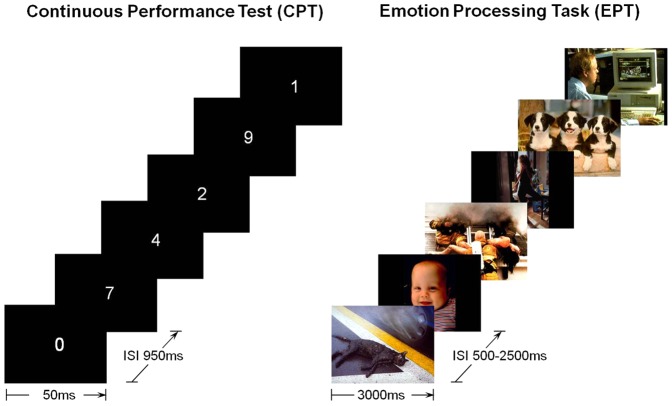
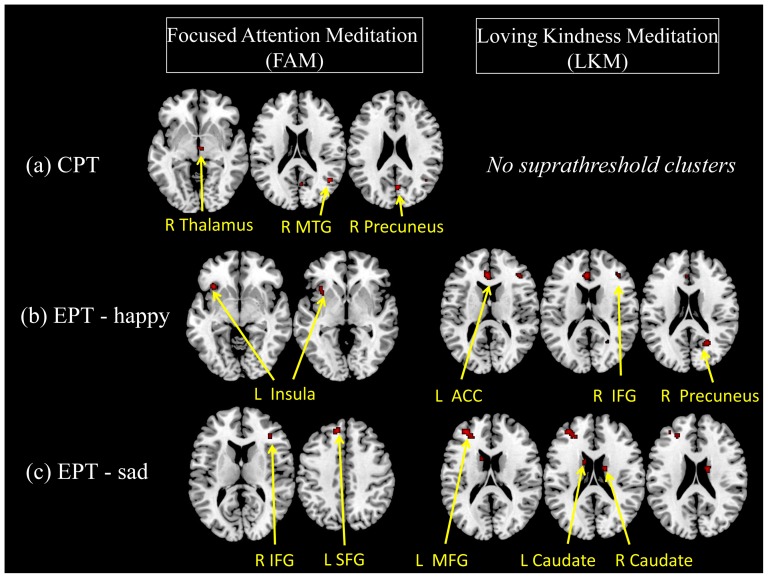
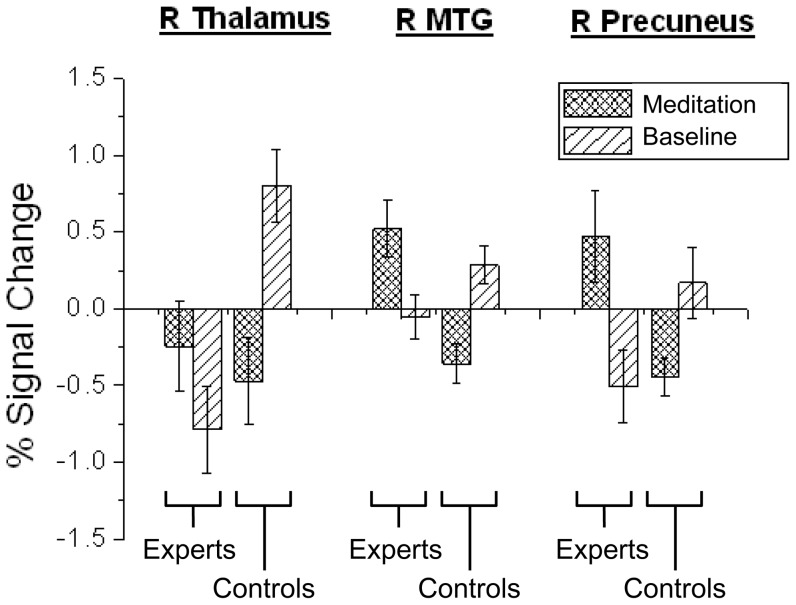
This study examined the dissociable neural effects of ānāpānasati (focused-attention meditation, FAM) and mettā (loving-kindness meditation, LKM) on BOLD signals during cognitive (continuous performance test, CPT) and affective (emotion-processing task, EPT, in which participants viewed affective pictures) processing. Twenty-two male Chinese expert meditators (11 FAM experts, 11 LKM experts) and 22 male Chinese novice meditators (11 FAM novices, 11 LKM novices) had their brain activity monitored by a 3T MRI scanner while performing the cognitive and affective tasks in both meditation and baseline states. We examined the interaction between state (meditation vs. baseline) and expertise (expert vs. novice) separately during LKM and FAM, using a conjunction approach to reveal common regions sensitive to the expert meditative state. Additionally, exclusive masking techniques revealed distinct interactions between state and group during LKM and FAM. Specifically, we demonstrated that the practice of FAM was associated with expertise-related behavioral improvements and neural activation differences in attention task performance. However, the effect of state LKM meditation did not carry over to attention task performance. On the other hand, both FAM and LKM practice appeared to affect the neural responses to affective pictures. For viewing sad faces, the regions activated for FAM practitioners were consistent with attention-related processing; whereas responses of LKM experts to sad pictures were more in line with differentiating emotional contagion from compassion/emotional regulation processes. Our findings provide the first report of distinct neural activity associated with forms of meditation during sustained attention and emotion processing.
Overview
The claims and statistics of this paper haven’t been checked yet.
Free: it reads the open-access text and checks the first 5 claims that cite a source we can check. Create a free account to check every claim.
Integrity signals
Registry
Cites
Statistics
Figures
Verification
Claims the paper makes
The claims and statistics of this paper haven’t been checked yet.
Free: it reads the open-access text and checks the first 5 claims that cite a source we can check. Create a free account to check every claim.
Claims other papers make about this one
Each is checked against this paper’s own text: does it say what the citing paper says it does?
The cited source doesn’t support the claim as written.
In the citing paper
“Buddhist meditation practices have been found to be associated with increases in activation in the dACC both during meditation45,65,76,78,86 and during tasks.70,80,81,87–89”
From Awakening is not a metaphor: the effects of Buddhist meditation practices on basic wakefulness (2014) · cites this paper as [81]
Checked by a reasoning model — may be wrong.
Experimental — accuracy not yet measuredThe cited source says what the claim attributes to it.
In the citing paper
“Buddhist meditation practices have been found to be associated with increased activity in the DLPFC, both during meditation45,65,76–79 and during tasks,67,70,80,81 as well as larger frontal gray matter volumes.66,82,83”
From Awakening is not a metaphor: the effects of Buddhist meditation practices on basic wakefulness (2014) · cites this paper as [81]
The cited source says what the claim attributes to it.
In the citing paper
“The practice of LKM, which involves cultivation of a state of universal love and compassion towards self and other beings with a desire to relieve their pain and suffering [20, 22], can attenuate the emotional impact by sharpening one's ability to downregulate the negative emotions (e.g., sadness) triggered by distressful experience and restore the emotional balance.”
From Potential therapeutic effects of meditation for treating affective dysregulation (2014) · cites this paper as [22]
Self-check
Percentages, sums and reported differences re-computed from the paper’s own numbers.
The self-check needs the paper’s full text.
Citations
Cites
The assessment and analysis of handedness: The Edinburgh inventory
Oldfield, R. C. (1971) · Neuropsychologia · doi:10.1016/0028-3932(71)90067-4 · Cited by 35,900 · cited 1×
“>.10. All participants (experts and novices) were right-handed according to the Edinburgh Handedness Inventory”
MethodDevelopment and validation of brief measures of positive and negative affect: The PANAS scales.
Watson, D., Clark, L. A., & Tellegen, A. (1988) · Journal of Personality and Social Psychology · doi:10.1037/0022-3514.54.6.1063 · Cited by 32,433 · cited 2×
“The CAS is culturally adapted to be linguistically and structurally equivalent to the Positive and Negative Affect Schedule (PANAS) [27].”
BackgroundControl of goal-directed and stimulus-driven attention in the brain
Corbetta, M., & Shulman, G. L. (2002) · Nature Reviews Neuroscience · doi:10.1038/nrn755 · Cited by 12,881 · cited 1×
“responding to randomly presented target stimulus; [37].”
Mindfulness-based interventions in context: Past, present, and future
Kabat-Zinn, J. (2003) · Clinical Psychology: Science and Practice · doi:10.1093/clipsy.bpg016 · Cited by 8,615
Mindfulness-based interventions in context: Past, present, and future.
Kabat-Zinn, J. (2003) · Clinical Psychology: Science and Practice · doi:10.1093/clipsy/bpg016 · Cited by 8,612
Parallel organization of functionally segregated circuits linking basal ganglia and cortex
Alexander, G. E., DeLong, M. R., & Strick, P. L. (1986) · Annual Review of Neuroscience · doi:10.1146/annurev.ne.09.030186.002041 · Cited by 8,527 · cited 1×
“An increase in negative affect has been associated with increases in right-sided activation in the orbitofrontal and dorsolateral prefrontal cortices [57], regions that are closely connected to the right caudate [58].”
BackgroundThe precuneus: a review of its functional anatomy and behavioural correlates
Cavanna, A. E., & Trimble, M. R. (2006) · Brain · doi:10.1093/brain/awl004 · Cited by 5,128 · cited 2×
“states of consciousness, such as sleep [39].”
BackgroundFunctional neuroanatomy of emotion: A meta-analysis of emotion activation studies in PET and fMRI
Phan, K. L., Wager, T., Taylor, S. F., & Liberzon, I. (2002) · NeuroImage · doi:10.1006/nimg.2002.1087 · Cited by 3,502 · cited 1×
“caudate and the putamen, are involved in the production of negative emotions [55,56].”
BackgroundThe functional architecture of human empathy
Decety, J., & Jackson, P. L. (2004) · Behavioral and Cognitive Neuroscience Reviews · doi:10.1177/1534582304267187 · Cited by 3,407 · cited 1×
“Since activity of the left caudate and MFG of LKM experts were negatively correlated with the arousal level of the sad pictures seen in this study, taken into the consideration of the roles played by the caudate and the lateral prefrontal cortex as discussed above, we suggest that LKM might be related to higher emotio…”
ResultForman, S. D., Cohen, J. D., Fitzgerald, M., Eddy, W. F., Mintun, M. A., & Noll, D. C. (1995) · Magnetic Resonance in Medicine · doi:10.1002/mrm.1910330508 · Cited by 3,202 · cited 1×
“05 [28].”
Research works printed but not linked: 2
- [31]Ogg RJ, Zou P, Allen DN, Hutchins SB, Dutkiewicz RM, et al (2008) Neural correlates of a clinical continuous performance test. Magnetic resonance imaging 26: 504– 512. 18068933
- [40]Phillips ML, Drevets WC, Rauch SL, Lane R (2003) Neurobiology of emotion perception I: The neural basis of normal emotion perception. Biol Psychiatry 54: 504– 514. 12946879
Cited by
Items 101–161 of 161
Mystical Love: The Universal Solvent
Laughlin, C. D., & Takahashi, M. (2020) · Anthropology of Consciousness · doi:10.1111/anoc.12120 · Cited by 7
Estimating size of opalfish from otoliths: implications for analyses of New Zealand sea lion diet
Lalas, C., McConnell, H., & Meynier, L. (2013) · New Zealand Journal of Marine and Freshwater Research · doi:10.1080/00288330.2013.816326 · Cited by 4
Deo, G., Kumar, I. R., Srinivasan, T. M., & Kushwah, K. K. (2015) · European Journal of Integrative Medicine · doi:10.1016/j.eujim.2015.08.004 · Cited by 7
“The result of such attention induces clarity, calmness and stability of mind [7,8].”
BackgroundKaryotaki, M., Drigas, A. S., & Skianis, C. A. (2024) · Sustainability · doi:10.3390/su16072913 · Cited by 14
Deo, G., Kumar, I. R., Srinivasan, T., & Kushwah, K. K. (2015) · Journal of Complementary and Integrative Medicine · doi:10.1515/jcim-2015-0050 · Cited by 7
Mindfulness and Meditation Training
Verhaeghen, P. (2016) · Springer eBooks · doi:10.1007/978-3-319-42662-4_12 · Cited by 4
Miller‐Perrin, C., & Krumrei-Mancuso, E. J. (2014) · Springer eBooks · doi:10.1007/978-94-017-9436-7_2 · Cited by 4
LOOP Meditation: Enhancing Novice's VR Meditation Experience with Physical Movement
Fu, S., Qiang, L., & Zeng, W. (2023) · International Symposium on Visual Information Communication and Interaction (VINCI) · doi:10.1145/3615522.3615538 · Cited by 3
“This method places a strong emphasis on shifting one’s attention back to a particular experience, especially persistent attention to breathing [4, 11, 22].”
MethodYoga as Advanced Cognitive Training: How Kirtan Kriya In Kundalini Yoga Changes the PTSD Brain
Chou, Y. (2019) · Journal of Yoga and Physiotherapy · doi:10.19080/jyp.2019.07.555722 · Cited by 3
Miller‐Perrin, C., & Krumrei-Mancuso, E. J. (2014) · Springer eBooks · doi:10.1007/978-94-017-9436-7_4 · Cited by 3
Augmenting brain function with meditation: can detachment coincide with empathy?
Telles, S., Singh, N., & Balkrishna, A. (2015) · Frontiers in Systems Neuroscience · doi:10.3389/fnsys.2015.00141 · Cited by 3
“A study was designed to examine the effects of focusedattention meditation (FAM) and loving-kindness meditation (LKM) during the performance of cognitive and affective tasks (Lee et al., 2012).”
BackgroundReflections Regarding Open-Access Journals and Social Justice
Lara‐Alecio, R. (2016) · Journal of Childhood & Developmental Disorders · doi:10.4172/2472-1786.100016 · Cited by 3
Guidotti, R., Gratta, C. D., Perrucci, M. G., Romani, G. L., & Raffone, A. (2017) · World Congress on Medical Physics and Biomedical Engineering, September 7 - 12, 2009, Munich, Germany · doi:10.1007/978-981-10-5122-7_6 · Cited by 3
Goodman, R. J., Plonski, P. E., & Savery, L. (2018) · Elsevier eBooks · doi:10.1016/b978-0-12-809837-0.00009-x · Cited by 6
The Effect of Anapanasati Meditation on Depression: A Randomized Control Trial
Sivaramappa, B., Deshpande, S., Joint Director, V., Kumar, P. V. G., & Nagendra, H. R. (2018) · Journal of Ayurvedic and Herbal Medicine · doi:10.31254/jahm.2018.4301 · Cited by 2
Konseling Spiritual Bagi Pasien Pecandu Narkoba Di Rumah Sakit Jiwa Tampan Pekanbaru
Zatrahadi, M. F., Firman, F., & Yusuf, A. M. (2021) · Jurnal Administrasi Pendidikan & Konseling Pendidikan · doi:10.24014/japkp.v2i2.15304 · Cited by 17
Gordon, W. V. (2017) · Nottingham Trent University's Institutional Repository (Nottingham Trent Repository) · Cited by 6
Gaspary, J. F. P., Edgar, A. L., Gaspary, F. P., Lopes, E. G., & Lopes, L. F. D. (2025) · EXPLORE · doi:10.1016/j.explore.2025.103274 · Cited by 2
Assessing pain in rabbits: how well does the Rabbit Grimace Scale work in the veterinary practice?
Shaw, D., Parkes, J., & Reynolds, H. (2020) · The Veterinary Nurse · doi:10.12968/vetn.2020.11.6.282 · Cited by 2
Mercadillo, R. E., & Garza‐Villarreal, E. A. (2023) · Frontiers in Psychology · doi:10.3389/fpsyg.2023.1141829 · Cited by 2
“It elicits neural activation associated with maintaining attention and controlling bottom–up processes (Lee et al., 2012), so that it may contribute to reducing pain-related psychological effects and sympathetic reactivity related to anxiety and depression.”
BackgroundMekelburg, A., Maliske, L., Kirby, J. N., Kanske, P., & Förster, K. (2025) · Journal of Affective Disorders · doi:10.1016/j.jad.2025.05.006 · Cited by 2
Herbivore-associated microorganisms in the modulation of plant responses: An overview
Koduru, S. K. (2020) · Elsevier eBooks · doi:10.1016/b978-0-12-821406-0.00020-5 · Cited by 2
Mindfulness and Meditation Training
Verhaeghen, P. (2020) · Springer eBooks · doi:10.1007/978-3-030-39292-5_17 · Cited by 3
Britton, W. B., & Lindahl, J. R. (2015) · Oxford University Press eBooks · doi:10.1093/obo/9780199828340-0169 · Cited by 2
Laracy, J. R., & Mattheiss, S. R. (2024) · Integratus · doi:10.1521/intg.2024.2.2.106 · Cited by 1
Halverson, K., & Petersen, E. (2024) · Forum Pedagogiczne · doi:10.21697/fp.2024.1.7 · Cited by 3
Baten, C., Keller, A. S., Miller, C. H., & Sacchet, M. D. (2026) · Neuroscience & Biobehavioral Reviews · doi:10.1016/j.neubiorev.2026.106709 · Cited by 4
Low voltage nanosecond electroporation for breast cancer treatment: an in vitro study
Harper, J. D., Xiao, F., Venkatraman, G., Camarillo, I. G., & Sundararajan, R. (2014) · Elsevier eBooks · doi:10.1533/9781908818294.185 · Cited by 2
Reducing public stigma toward bipolar disorder: II. Mechanisms of stigma reduction
Na, J. J., Kim, H. J., & Mikami, A. Y. (2025) · Journal of Affective Disorders · doi:10.1016/j.jad.2025.120009 · Cited by 3
Shonin, E. (2015) · Nottingham Trent University's Institutional Repository (Nottingham Trent Repository) · Cited by 2
Favre, P., Kanske, P., Engen, H. G., & Singer, T. (2020) · PsyArXiv (OSF Preprints) · doi:10.31234/osf.io/n7hdj · Cited by 1
Cognitive and Affective Mindfulness Scale-Revised (CAMS-R)
Feldman, G. C., Westine, M., Edelman, A., Higgs, M., Renna, M. E., & Greeson, J. M. (2025) · Springer eBooks · doi:10.1007/978-3-031-47219-0_19 · Cited by 1
Lee, T. M. C., Ho, N. S. P., Yin, J., Lee, C.-F., Chan, C. C. H., & So, K. (2013) · Annals of traditional chinese medicine · doi:10.1142/9789814425674_0010
Self-citationFritzges, J. L. (2015) · ScholarWorks (Walden University)
Scientific Underpinnings and Evidence Pertaining to Mindfulness
Dobkin, P. L., & Hassed, C. S. (2016) · Springer eBooks · doi:10.1007/978-3-319-31066-4_2
Tang, R. (2017) · Open Scholarship Institutional Repository (Washington University in St. Louis) · doi:10.7936/k7rf5tf6
“Furthermore, studies specifically targeting older adults with emotional problems have demonstrated similar benefits after an 8-week standardized MBSR program (O’Connor, Piet, & Hougaard, 2014; Lenze et al., 2014).”
BackgroundInfluentialBolognino, S. J. (2018) · Louisiana State University · doi:10.31390/gradschool_dissertations.4621
“Loving-kindness is a feeling of unconditional love, expressed universally towards all beings, and the desire for all beings to be happy and free from suffering (Lee et al., 2012) or a feeling of loving acceptance cultivated towards all beings (Salzberg, 1995).”
The Embodied Mind and the Mind-Suffused Body: Human Nature and the Question of Physicalism
Jones, J. W. (2019) · Oxford University Press eBooks · doi:10.1093/oso/9780190927387.003.0003
Living Religion: On the Possibility of a Spiritual Sense
Jones, J. W. (2019) · Oxford University Press eBooks · doi:10.1093/oso/9780190927387.003.0006
Meaning-Making: An Embodied-Relational Approach
Jones, J. W. (2019) · Oxford University Press eBooks · doi:10.1093/oso/9780190927387.003.0004
Conclusion: Embodying Religion
Jones, J. W. (2019) · Oxford University Press eBooks · doi:10.1093/oso/9780190927387.003.0007
Jones, J. W. (2019) · Oxford University Press eBooks · doi:10.1093/oso/9780190927387.003.0002
Targeting YY1 in cancer through histone acetylation
Barrero, M. J. (2021) · Elsevier eBooks · doi:10.1016/b978-0-12-821909-6.00008-0 · Cited by 1
Favre, P., Kanske, P., Engen, H. G., & Singer, T. (2020) · PsyArXiv (OSF Preprints) · doi:10.31234/osf.io/6zx3k
Jones, J. W. (2019) · Oxford University Press eBooks · doi:10.1093/oso/9780190927387.003.0005
Jones, J. W. (2019) · Oxford University Press eBooks · doi:10.1093/oso/9780190927387.003.0001
Gregory, K. L., Newbegin, G., & Schofield, M. J. (2014) · Wiley eBooks · doi:10.1002/9781394259311.ch8
Jones, J. W. (2019) · Oxford University Press eBooks · doi:10.1093/oso/9780190927387.002.0006
Jones, J. W. (2019) · Oxford University Press eBooks · doi:10.1093/oso/9780190927387.002.0008
Jones, J. W. (2019) · Oxford University Press eBooks · doi:10.1093/oso/9780190927387.002.0004
Jones, J. W. (2019) · Oxford University Press eBooks · doi:10.1093/oso/9780190927387.002.0003
Meditation Research: Issues and Limitations
Roy, S. (2023) · Journal of Applied Consciousness Studies · doi:10.4103/jacs.jacs_53_22
Research Progress on Loving-Kindness Meditation in Psychological Intervention
孙, 永. (2025) · Advances in Psychology · doi:10.12677/ap.2025.157399
Tarrant, J., Viczko, J., & Mendoza, G. (2026) · Mindfulness · doi:10.1007/s12671-026-02942-3
“More broadly, the absence of robust cognitive and neuro-physiological effects is consistent with the possibility that compassion-and loving-kindness-based practices preferentially influence affective rather than attentional domains (Lee et al., 2012; Valk et al., 2017).”
Animal-Centered Mettā Meditation: an Autoethnographic Study
Collado, E. B. (2025) · Journal of Dharma Studies · doi:10.1007/s42240-025-00236-w
“It also can increase positive emotions, empathy, compassion, and altruism (Alba, 2013 ; Aspy & Proeve, 2017; Hutcherson et al., 2008 ; Kirby & Laczko, 2017 ; Lee et al., 2012 ; Luberto et al., 2018 ; Stefan & Hofmann, 2019 ).”
Dalpatadu, K. P. C., Galappatthy, P., Katulanda, P., & Jayasinghe, S. (2022) · Figshare · doi:10.6084/m9.figshare.21251648
Dalpatadu, K. P. C., Galappatthy, P., Katulanda, P., & Jayasinghe, S. (2022) · Figshare · doi:10.6084/m9.figshare.21251654
Dalpatadu, K. P. C., Galappatthy, P., Katulanda, P., & Jayasinghe, S. (2022) · Figshare · doi:10.6084/m9.figshare.21251651
Dalpatadu, K. P. C., Galappatthy, P., Katulanda, P., & Jayasinghe, S. (2022) · Figshare · doi:10.6084/m9.figshare.21251645
Lyon, A. (2026) · Philosophical Psychology · doi:10.1080/09515089.2026.2659495
“…has been implicated in affect regulation, positive self-relevant emotional processing, subjective happiness, and rostral ACC activity associated with loving-kindness meditation (Bush et al., 2000; Dockstader et al., 2014; Lee et al., 2012; Matsunaga et al., 2016; Rolls, 2019; Stevens et al., 2011).”
Metadata
- Authors
- Lee, T. M. C., Leung, M.-K., Hou, W.-K., Tang, J. C. Y., Yin, J., So, K.-F., Lee, C.-F., & Chan, C. C. H.
- Affiliations
- University of Hong Kong (HK)
- Hong Kong Polytechnic University (HK)
- Corresponding author
- Lee, Tatia M. C.
- Chan, Chetwyn C. H.
- Venue
- PLoS ONE
- Publisher
- Public Library of Science (PLoS)
- Published
- 2012-08-15
- Volume
- 7
- Issue
- 8
- Pages
- e40054
- ISSN
- 1932-6203 (ISSN-L)
- PMC
- PMC3419705
- OpenAlex
- W2065199505
- Cited by
- 162
- References
- 62
- Citations by year
- 2026: 3 · 2025: 11 · 2024: 4 · 2023: 5 · 2022: 15 · 2021: 9 · 2020: 13 · 2019: 24 · 2018: 13 · 2017: 13 · 2016: 11 · 2015: 20 · 2014: 13 · 2013: 8
- FWCI
- 14.87
- Type
- journal article
- Language
- en
- Open access
- gold
- doi.org
- Locations
- PLoS ONE (publishedVersion, cc-by)
- PubMed Central (publishedVersion, cc-by)
- PubMed (publishedVersion)
- DOAJ (DOAJ: Directory of Open Access Journals) (submittedVersion, cc-by-sa)
- Figshare (submittedVersion, cc-by)
- The HKU Scholars Hub (University of Hong Kong) (submittedVersion, cc-by-nc-nd)
- PolyU Institutional Research Archive (Hong Kong Polytechnic University) (submittedVersion, cc-by)
- Funders
- University of Hong Kong
- Topics
- Social Sciences › Psychology › Clinical Psychology › Mindfulness and Compassion Interventions
- Life Sciences › Neuroscience › Cognitive Neuroscience › Mind wandering and attention
- Social Sciences › Arts and Humanities › Religious studies › Indian and Buddhist Studies
- Keywords
- focused attention meditation, loving-kindness meditation, metta, sustained attention, emotional processing, emotional pictures, neural correlates of meditation, emotional contagion, compassion, emotion regulation
- MeSH terms
- Adult, Aged, Attention, Behavior, Brain, Brain Mapping, Cognition, Emotions, Empathy, Humans, Image Processing, Computer-Assisted, Love, Magnetic Resonance Imaging, Male, Middle Aged, Models, Neurological, Surveys and Questionnaires, Meditation
About these checks
Registry, retraction, Cites and statistics results are computed, not judged, with one exception: a printed reference that no index lists is read once by a model before it counts as a citation error. Claims are extracted by a model and kept only when their quote appears verbatim in the text; each cited source is then checked, with a model’s help, for whether it says what the claim relies on. Those verdicts can be wrong — read the claim’s quote and the cited source before relying on one.
Statistics and arithmetic are recomputed, not judged.
Confidence bands are shown only for fields calibrated on our annotated test set. None is calibrated yet, so no band is shown.
What counts as a claim ›How we measure confidence ›How we check this ›
Are you an author, or do you see a problem with this page? Request a review
Data sources
Bibliographic data: Semantic Scholar, OpenAlex, Crossref.
Contains information from the Semantic Scholar Academic Graph Datasets, made available under the ODC Attribution License (ODC-BY 1.0).
Semantic Scholar’s data is described in: Kinney, R., et al. (2023). The Semantic Scholar Open Data Platform. arXiv:2301.10140.
