

Distinct Neural Activity Associated with Focused-Attention Meditation and Loving-Kindness Meditation
Open accessThe DOI matches its Crossref record; 62 of the 62 references it cites were found in a registry or an index.
Abstract
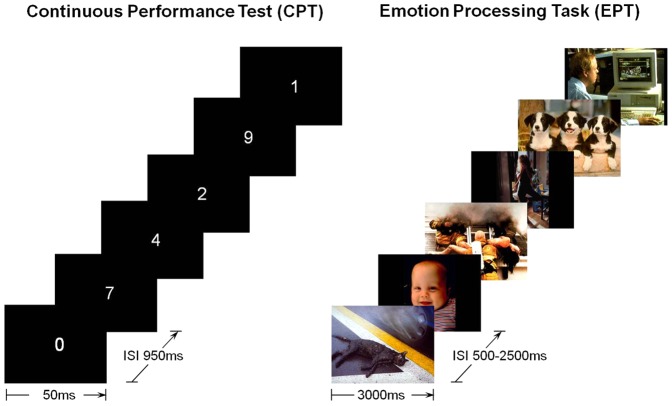
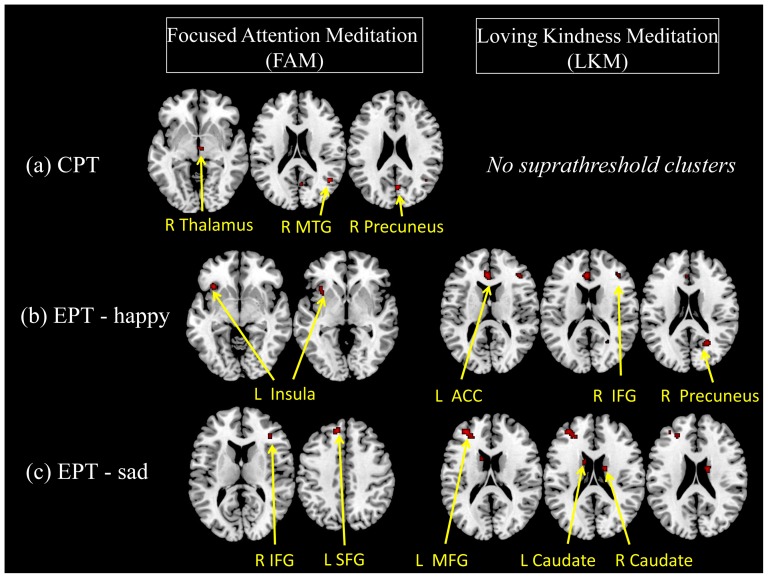
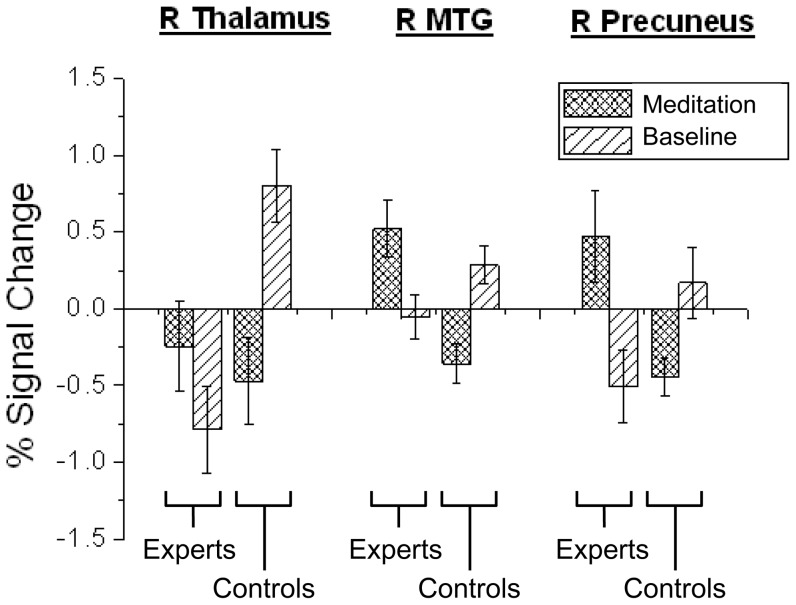
This study examined the dissociable neural effects of ānāpānasati (focused-attention meditation, FAM) and mettā (loving-kindness meditation, LKM) on BOLD signals during cognitive (continuous performance test, CPT) and affective (emotion-processing task, EPT, in which participants viewed affective pictures) processing. Twenty-two male Chinese expert meditators (11 FAM experts, 11 LKM experts) and 22 male Chinese novice meditators (11 FAM novices, 11 LKM novices) had their brain activity monitored by a 3T MRI scanner while performing the cognitive and affective tasks in both meditation and baseline states. We examined the interaction between state (meditation vs. baseline) and expertise (expert vs. novice) separately during LKM and FAM, using a conjunction approach to reveal common regions sensitive to the expert meditative state. Additionally, exclusive masking techniques revealed distinct interactions between state and group during LKM and FAM. Specifically, we demonstrated that the practice of FAM was associated with expertise-related behavioral improvements and neural activation differences in attention task performance. However, the effect of state LKM meditation did not carry over to attention task performance. On the other hand, both FAM and LKM practice appeared to affect the neural responses to affective pictures. For viewing sad faces, the regions activated for FAM practitioners were consistent with attention-related processing; whereas responses of LKM experts to sad pictures were more in line with differentiating emotional contagion from compassion/emotional regulation processes. Our findings provide the first report of distinct neural activity associated with forms of meditation during sustained attention and emotion processing.
Overview
The claims and statistics of this paper haven’t been checked yet.
Free: it reads the open-access text and checks the first 5 claims that cite a source we can check. Create a free account to check every claim.
Integrity signals
Registry
Cites
Statistics
Figures
Verification
Claims the paper makes
The claims and statistics of this paper haven’t been checked yet.
Free: it reads the open-access text and checks the first 5 claims that cite a source we can check. Create a free account to check every claim.
Claims other papers make about this one
Each is checked against this paper’s own text: does it say what the citing paper says it does?
The cited source doesn’t support the claim as written.
In the citing paper
“Buddhist meditation practices have been found to be associated with increases in activation in the dACC both during meditation45,65,76,78,86 and during tasks.70,80,81,87–89”
From Awakening is not a metaphor: the effects of Buddhist meditation practices on basic wakefulness (2014) · cites this paper as [81]
Checked by a reasoning model — may be wrong.
Experimental — accuracy not yet measuredThe cited source says what the claim attributes to it.
In the citing paper
“Buddhist meditation practices have been found to be associated with increased activity in the DLPFC, both during meditation45,65,76–79 and during tasks,67,70,80,81 as well as larger frontal gray matter volumes.66,82,83”
From Awakening is not a metaphor: the effects of Buddhist meditation practices on basic wakefulness (2014) · cites this paper as [81]
The cited source says what the claim attributes to it.
In the citing paper
“The practice of LKM, which involves cultivation of a state of universal love and compassion towards self and other beings with a desire to relieve their pain and suffering [20, 22], can attenuate the emotional impact by sharpening one's ability to downregulate the negative emotions (e.g., sadness) triggered by distressful experience and restore the emotional balance.”
From Potential therapeutic effects of meditation for treating affective dysregulation (2014) · cites this paper as [22]
Self-check
Percentages, sums and reported differences re-computed from the paper’s own numbers.
The self-check needs the paper’s full text.
Citations
Cites
The assessment and analysis of handedness: The Edinburgh inventory
Oldfield, R. C. (1971) · Neuropsychologia · doi:10.1016/0028-3932(71)90067-4 · Cited by 35,900 · cited 1×
“>.10. All participants (experts and novices) were right-handed according to the Edinburgh Handedness Inventory”
MethodDevelopment and validation of brief measures of positive and negative affect: The PANAS scales.
Watson, D., Clark, L. A., & Tellegen, A. (1988) · Journal of Personality and Social Psychology · doi:10.1037/0022-3514.54.6.1063 · Cited by 32,433 · cited 2×
“The CAS is culturally adapted to be linguistically and structurally equivalent to the Positive and Negative Affect Schedule (PANAS) [27].”
BackgroundControl of goal-directed and stimulus-driven attention in the brain
Corbetta, M., & Shulman, G. L. (2002) · Nature Reviews Neuroscience · doi:10.1038/nrn755 · Cited by 12,881 · cited 1×
“responding to randomly presented target stimulus; [37].”
Mindfulness-based interventions in context: Past, present, and future
Kabat-Zinn, J. (2003) · Clinical Psychology: Science and Practice · doi:10.1093/clipsy.bpg016 · Cited by 8,615
Mindfulness-based interventions in context: Past, present, and future.
Kabat-Zinn, J. (2003) · Clinical Psychology: Science and Practice · doi:10.1093/clipsy/bpg016 · Cited by 8,612
Parallel organization of functionally segregated circuits linking basal ganglia and cortex
Alexander, G. E., DeLong, M. R., & Strick, P. L. (1986) · Annual Review of Neuroscience · doi:10.1146/annurev.ne.09.030186.002041 · Cited by 8,527 · cited 1×
“An increase in negative affect has been associated with increases in right-sided activation in the orbitofrontal and dorsolateral prefrontal cortices [57], regions that are closely connected to the right caudate [58].”
BackgroundThe precuneus: a review of its functional anatomy and behavioural correlates
Cavanna, A. E., & Trimble, M. R. (2006) · Brain · doi:10.1093/brain/awl004 · Cited by 5,128 · cited 2×
“states of consciousness, such as sleep [39].”
BackgroundFunctional neuroanatomy of emotion: A meta-analysis of emotion activation studies in PET and fMRI
Phan, K. L., Wager, T., Taylor, S. F., & Liberzon, I. (2002) · NeuroImage · doi:10.1006/nimg.2002.1087 · Cited by 3,502 · cited 1×
“caudate and the putamen, are involved in the production of negative emotions [55,56].”
BackgroundThe functional architecture of human empathy
Decety, J., & Jackson, P. L. (2004) · Behavioral and Cognitive Neuroscience Reviews · doi:10.1177/1534582304267187 · Cited by 3,407 · cited 1×
“Since activity of the left caudate and MFG of LKM experts were negatively correlated with the arousal level of the sad pictures seen in this study, taken into the consideration of the roles played by the caudate and the lateral prefrontal cortex as discussed above, we suggest that LKM might be related to higher emotio…”
ResultForman, S. D., Cohen, J. D., Fitzgerald, M., Eddy, W. F., Mintun, M. A., & Noll, D. C. (1995) · Magnetic Resonance in Medicine · doi:10.1002/mrm.1910330508 · Cited by 3,202 · cited 1×
“05 [28].”
Research works printed but not linked: 2
- [31]Ogg RJ, Zou P, Allen DN, Hutchins SB, Dutkiewicz RM, et al (2008) Neural correlates of a clinical continuous performance test. Magnetic resonance imaging 26: 504– 512. 18068933
- [40]Phillips ML, Drevets WC, Rauch SL, Lane R (2003) Neurobiology of emotion perception I: The neural basis of normal emotion perception. Biol Psychiatry 54: 504– 514. 12946879
Cited by
Fox, K. C. R., Nijeboer, S., Dixon, M. L., Floman, J. L., Ellamil, M., Rumak, S. P., Sedlmeier, P., & Christoff, K. (2014) · Neuroscience & Biobehavioral Reviews · doi:10.1016/j.neubiorev.2014.03.016 · Cited by 804
Fox, K. C. R., Dixon, M. L., Nijeboer, S., Girn, M., Floman, J. L., Lifshitz, M., Ellamil, M., Sedlmeier, P., & Christoff, K. (2016) · Neuroscience & Biobehavioral Reviews · doi:10.1016/j.neubiorev.2016.03.021 · Cited by 656
Effect of kindness-based meditation on health and well-being: A systematic review and meta-analysis.
Galante, J., Galante, I., Bekkers, M.-J., & Gallacher, J. (2014) · Journal of Consulting and Clinical Psychology · doi:10.1037/a0037249 · Cited by 380
“…effects with other types of meditation (Barnhofer, Chittka, Nightingale, Visser, & Crane, 2010; Brewer et al., 2011) but may have less effect on tasks that demand focused attention (Lee et al., 2012) and more effect on tasks that require emotional processing (Desbordes, Negi, Pace, et al., 2012).”
BackgroundInfluentialNanoparticles applied to plant science: A review
Capaldi Arruda, S. C., Diniz Silva, A. L., Moretto Galazzi, R., Antunes Azevedo, R., & Zezzi Arruda, M. A. (2015) · Talanta · doi:10.1016/j.talanta.2014.08.050 · Cited by 353
Nair, P. M. G., & Chung, I. M. (2014) · Chemosphere · doi:10.1016/j.chemosphere.2014.03.056 · Cited by 303
“In accordance with our study, Lee et al. (2012) has reported that Phaseolus radiatus exposed to 3 mg L 1 of citrate showed similar growth rate as compared to the control.”
ResultShonin, E., Van Gordon, W., Compare, A., Zangeneh, M., & Griffiths, M. D. (2015) · Mindfulness · doi:10.1007/s12671-014-0368-1 · Cited by 268
The effect of loving-kindness meditation on positive emotions: a meta-analytic review
Zeng, X., Chiu, C. P. K., Wang, R., Oei, T. P. S., & Leung, F. Y. K. (2015) · Frontiers in Psychology · doi:10.3389/fpsyg.2015.01693 · Cited by 258
The meditative mind: a comprehensive meta-analysis of MRI studies.
Boccia, M., Piccardi, L., & Guariglia, P. (2015) · BioMed Research International · doi:10.1155/2015/419808 · Cited by 187
“, 2012 [93] 44 EPT-happy in FAM >5 years FAM/LKM”
BackgroundInfluentialMindfulness in cultural context
Kirmayer, L. J. (2015) · Transcultural Psychiatry · doi:10.1177/1363461515598949 · Cited by 190
“Other types of meditation may have specific effects on perceptual, social cognitive, and affect regulatory systems (Kozhevnikov, Louchakova, Josipovic, & Motes, 2009; Lee et al., 2012; MacLean et al., 2010).”
BackgroundEtemadian, Y., Ghaemi, V., Shaviklo, A. R., Pourashouri, P., Mahoonak, A. S., & Rafipour, F. (2020) · Journal of Cleaner Production · doi:10.1016/j.jclepro.2020.123219 · Cited by 174
What Is Meditation? Proposing an Empirically Derived Classification System
Matko, K., & Sedlmeier, P. (2019) · Frontiers in Psychology · doi:10.3389/fpsyg.2019.02276 · Cited by 145
“, 2012), attention (Lee et al., 2012), affect (May et al.”
Awakening is not a metaphor: the effects of Buddhist meditation practices on basic wakefulness
Britton, W. B., Lindahl, J. R., Cahn, B. R., Davis, J. H., & Goldman, R. E. (2014) · Annals of the New York Academy of Sciences · doi:10.1111/nyas.12279 · Cited by 134
Verhaeghen, P. (2020) · Mindfulness · doi:10.1007/s12671-020-01532-1 · Cited by 170
Humans perceive flicker artifacts at 500 Hz
Davis, J., Hsieh, Y.-H., & Lee, H. (2015) · Scientific Reports · doi:10.1038/srep07861 · Cited by 166
Dispositional Mindfulness Co-Varies with Smaller Amygdala and Caudate Volumes in Community Adults
Taren, A. A., Creswell, J. D., & Gianaros, P. J. (2013) · PLoS ONE · doi:10.1371/journal.pone.0064574 · Cited by 124
“Lee et al. (2012) [75] note that during lovingkindness meditation, novices show decreased activation in right caudate at baseline compared to experts while viewing sad pictures.”
BackgroundThe embodied mind: A review on functional genomic and neurological correlates of mind-body therapies
Muehsam, D. J., Lutgendorf, S. K., Mills, P. J., Rickhi, B., Chevalier, G., Bat, N., Chopra, D., & Gurfein, B. T. (2016) · Neuroscience & Biobehavioral Reviews · doi:10.1016/j.neubiorev.2016.12.027 · Cited by 145
Al‐Huqail, A. A., Hatata, M. M., AL‐Huqail, A. A., & Ibrahim, M. M. (2017) · Saudi Journal of Biological Sciences · doi:10.1016/j.sjbs.2017.08.013 · Cited by 116
Ramasubramanian, S. (2017) · International Journal of Adolescence and Youth · doi:10.1080/02673843.2016.1175361 · Cited by 112
“Mindfulness training has been adopted across a variety of disciplines such as neuroscience, psychology, medicine, nursing, management and business (Ball, Foust, & Rochester, 2014; Kearney et al., 2014; lee et al., 2012).”
BackgroundBehl, T., Kaur, I., Sehgal, A., Singh, S., Sharma, N., Bhatia, S., Al‐Harrasi, A., & BUNGAU, S. G. (2021) · Chemosphere · doi:10.1016/j.chemosphere.2021.132533 · Cited by 119
Mindfulness training and the cultivation of secure, satisfying couple relationships.
Atkinson, B. J. (2013) · Couple and Family Psychology: Research and Practice · doi:10.1037/cfp0000002 · Cited by 103
“In a similar study examining neural processing while viewing expressions of emotion, experienced practitioners of both loving–kindness meditation and focused attention meditation showed differences in empathy-related brain activity compared with novices (Lee et al., 2012).”
An Integrated Approach to Neuro-development, Neuroplasticity and Cognitive Improvement
Drigas, A. S., Karyotaki, M., & Skianis, C. A. (2018) · International Journal of Recent Contributions from Engineering Science & IT (iJES) · doi:10.3991/ijes.v6i3.9034 · Cited by 171
Britton, W. B., Davis, J. H., Loucks, E. B., Peterson, B., Cullen, B. H., Reuter, L., Rando, A., Rahrig, H., Lipsky, J., & Lindahl, J. R. (2018) · Behaviour Research and Therapy · doi:10.1016/j.brat.2017.09.010 · Cited by 100
“While compassion and loving-kindness meditation have been categorized as different styles of meditation from FA or OM (Lee et al., 2012), traditionally the brahmavih aras are often used as a means to cultivate concentration in the style of FA (Buddhaghosa, 1976).”
Prpa, M., Tatar, K., Françoise, J., Riecke, B., Schiphorst, T., & Pasquier, P. (2018) · Proceedings of the 2018 Designing Interactive Systems Conference · doi:10.1145/3196709.3196765 · Cited by 100
“A growing number of mindfulness-based designs revolve around the practice of focused-attention meditation (FAM) [37, 38].”
MethodInfluentialGanesan, S., Beyer, E., Moffat, B. A., Dam, N. T. V., Lorenzetti, V., & Zalesky, A. (2022) · Neuroscience & Biobehavioral Reviews · doi:10.1016/j.neubiorev.2022.104846 · Cited by 106
Heuschkel, K., & Kuypers, K. P. C. (2020) · Frontiers in Psychiatry · doi:10.3389/fpsyt.2020.00224 · Cited by 86
Kong, F., Wang, X., Song, Y., & Liu, J. (2016) · Social Neuroscience · doi:10.1080/17470919.2015.1092469 · Cited by 85
“…OFC (Luders et al., 2009; Zeidan et al., 2011), PHG (Lazar et al., 2000; Leung et al., 2013; Murakami et al., 2012), and IFG (Ding et al., 2015; Hasenkamp, Wilson-Mendenhall, Duncan, & Barsalou, 2012; Lee et al., 2012; Manna et al., 2010; Mascaro, Rilling, Negi, & Raison, 2013; Tang et al., 2013).”
Wong, N. M. L., Liu, H.-L., Lin, C., Huang, C.-M., Wai, Y.-Y., Lee, S.-H., & Lee, T. M. C. (2016) · Psychological Medicine · doi:10.1017/s0033291716001033 · Cited by 81
“The functional brain activations of 47 subjects were measured while they were performing the emotionprocessing task (EPT; Lee et al. 2012) in the scanner.”
MethodSelf-citationBOLD signal and functional connectivity associated with loving kindness meditation
Garrison, K. A., Scheinost, D., Constable, R. T., & Brewer, J. A. (2014) · Brain and Behavior · doi:10.1002/brb3.219 · Cited by 78
“For example, a recent study (Lee et al. 2012) reported that loving kindness meditation led to changes in the neural response to viewing emotional faces, in brain regions implicated in emotion processing, including the left ventral anterior cingulate cortex, right inferior frontal gyrus (IFG), and right precuneus for h…”
BackgroundNeural Plastic Effects of Cognitive Training on Aging Brain
Leung, N. T. Y., Tam, H. M. K., Chu, L. W., Kwok, T. C. Y., Chan, F., Lam, L. C. W., Woo, J., & Lee, T. M. C. (2015) · Neural Plasticity · doi:10.1155/2015/535618 · Cited by 73
“[6] have identified distinct patterns of neural activation associated with different forms of meditation practice, namely, focused-attention meditation (FAM) and loving-kindness meditation (LKM), during the performance of the sustained attention task.”
Self-citationBuddhist emptiness theory: Implications for psychology.
Gordon, W. V., Shonin, E., & Griffiths, M. D. (2017) · Psychology of Religion and Spirituality · doi:10.1037/rel0000079 · Cited by 90
What Do Meditators Do When They Meditate? Proposing a Novel Basis for Future Meditation Research
Matko, K., Ott, U., & Sedlmeier, P. (2021) · Mindfulness · doi:10.1007/s12671-021-01641-5 · Cited by 61
Hsu, W. (2013) · International Journal of Neural Systems · doi:10.1142/s012906571350007x · Cited by 59
Mitigating Students’ Anxiety: The Role of Resilience and Mindfulness Among Chinese EFL Learners
Shen, Y. (2022) · Frontiers in Psychology · doi:10.3389/fpsyg.2022.940443 · Cited by 71
Man, I. S. C., Shao, R., Hou, W. K., Li, S. X., Liu, F. Y., Lee, M., Wing, Y. K., Yau, S., & Lee, T. M. C. (2022) · Frontiers in Neuroendocrinology · doi:10.1016/j.yfrne.2022.101050 · Cited by 69
“Overlapping brain centers such as the prefrontal-limbic circuitries orchestrate both biological and emotional responses to stress, providing the neural bases for their tight interactions (Kern et al., 2008; Fanselow and Dong, 2010; Flandreau et al., 2012; Lee et al., 2012).”
Self-citationMindfulness and Attention: Current State-of-Affairs and Future Considerations
Prakash, R. S., Fountain‐Zaragoza, S., Kramer, A. F., Samimy, S., & Wegman, J. (2020) · Journal of Cognitive Enhancement · doi:10.1007/s41465-019-00144-5 · Cited by 73
Iinuma, Y., Hirayama, Y., Yokoyama, N., Otani, T., Nitta, K., Hashidate, H., Yoshida, M., Iida, H., Masui, D., & Manabe, S. (2013) · Journal of Pediatric Surgery · doi:10.1016/j.jpedsurg.2013.03.067 · Cited by 55
Cebolla, A., Campos, D., Galiana, L., Oliver, A., Tomás, J. M., Feliu‐Soler, A., Soler, J., García‐Campayo, J., Demarzo, M., & Baños, R. (2017) · Consciousness and Cognition · doi:10.1016/j.concog.2017.01.012 · Cited by 67
“…shows differential effects of these practices on attention, conflict monitoring, and creativity, revealing that different kinds of meditations are associated with different neural structures and different patterns of electroencephalographic activity (Lee et al., 2012; Lippelt et al., 2014).”
BackgroundInfluentialCotier, F. A., Zhang, R., & Lee, T. M. C. (2017) · Scientific Reports · doi:10.1038/s41598-017-00678-8 · Cited by 54
Self-citationBrown, K. W., Berry, D. R., Eichel, K., Михайловна, Б. П., Rahrig, H., & Britton, W. B. (2022) · Psychophysiology · doi:10.1111/psyp.14024 · Cited by 54
Short Meditation Trainings Enhance Non-REM Sleep Low-Frequency Oscillations
Dentico, D., Ferrarelli, F., Riedner, B. A., Smith, R., Zennig, C., Lutz, A., Tononi, G., & Davidson, R. J. (2016) · PLoS ONE · doi:10.1371/journal.pone.0148961 · Cited by 57
“Moreover, given recent work revealed domainspecific plastic changes in neural activity induced by different meditation practices [14], we will also explore the possibility of region-specific activation for each meditation style.”
BackgroundChan, S. C. C., Chan, C. C. H., Derbie, A. Y., Hui, I. S. Y., Tan, D. G. H., Pang, M. Y. C., Lau, S. C. L., & Fong, K. N. K. (2017) · Journal of Alzheimer s Disease · doi:10.3233/jad-170024 · Cited by 42
“Benefits broughtbymind-bodypracticeshavebeendocu-mentedsuchasenhancingmentalhealth[17],and global [18, 19] and specific cognitive function such as attention [20, 21] and spatial working memory [6, 22].”
Self-citationShao, R., Keuper, K., Geng, X., & Lee, T. M. C. (2016) · eBioMedicine · doi:10.1016/j.ebiom.2016.06.018 · Cited by 37
“Published by Elsevier B.V a b s t r a c t a r t i c l e i n f o”
BackgroundSelf-citationMeditation-induced neuroplastic changes in amygdala activity during negative affective processing
Leung, M.-K., Lau, W. K., Chan, C. C. H., Wong, S. S. Y., Fung, A. L. C., & Lee, T. M. C. (2017) · Social Neuroscience · doi:10.1080/17470919.2017.1311939 · Cited by 41
“Among the different forms of meditation, compassion meditation is the one that focuses more on voluntary affective regulation, which is supported by a neural basis (Lee et al., 2012).”
BackgroundSelf-citationKeng, S., & Tan, H. H. (2017) · Behaviour Research and Therapy · doi:10.1016/j.brat.2017.11.005 · Cited by 52
Visible-light reduced silver nanoparticles’ toxicity in Allium cepa test system
de Souza, I. R., Silva, L. R., Fernandes, L. D. S. P., Salgado, L. D., de Assis, H. C. S., Firak, D. S., Bach-Toledo, L., Santos-Filho, R., Voigt, C. L., Barros, A. C., et al. (2019) · Environmental Pollution · doi:10.1016/j.envpol.2019.113551 · Cited by 37
Murphy, A. (2016) · Contemporary Buddhism · doi:10.1080/14639947.2016.1228324 · Cited by 46
“These results inferred that these two different forms of meditation practices have a differentiating effect on neural activity within distinct regions of the brain (Lee et al. 2012).”
BackgroundCognitive and Affective Mindfulness Scale-Revised (CAMS-R)
Feldman, G., Westine, M., Edelman, A., Higgs, M., Renna, M., & Greeson, J. (2022) · Handbook of Assessment in Mindfulness Research · doi:10.1007/978-3-030-77644-2_19-1 · Cited by 31
Effect of anapanasati meditation technique through electrophotonic imaging parameters: A pilot study
Deo, G., Itagi, R., Thaiyar, M., & Kuldeep, K. (2015) · International Journal of Yoga · doi:10.4103/0973-6131.158474 · Cited by 30
“Theravada School of Buddhism.[4] It is an initial part of Vipassana (psycho‐physiological) meditation.”
Functional Connectivity of Prefrontal Cortex in Various Meditation Techniques – A Mini-Review
Rathore, M., Verma, M., Nirwan, M., Trivedi, S., & Pai, V. (2022) · International Journal of Yoga · doi:10.4103/ijoy.ijoy_88_22 · Cited by 45
“In contrast, control responses were more consistent with the distinction between emotional contagion and compassion/emotional regulation processes.[19] Leung et al.”
ResultDoes Meditation Alter Brain Responses to Negative Stimuli? A Systematic Review
Magalhães, A. A., Oliveira, L., Pereira, M. G., & Menezes, C. B. (2018) · Frontiers in Human Neuroscience · doi:10.3389/fnhum.2018.00448 · Cited by 35
“The remaining studies included healthy samples (Taylor et al., 2011; Allen et al., 2012; Desbordes et al., 2012; Froeliger et al., 2012; Lee et al., 2012; Lutz et al., 2016; Laneri et al., 2017) except for one study, which did not provide the samples’ health status (Farb et al.”
BackgroundMethodResultInfluentialYang, H., Koh, E., & Kang, Y. (2021) · Biomolecules · doi:10.3390/biom11050708 · Cited by 37
Perkins, N., Sehmbi, T., & Smith, P. A. (2022) · Mindfulness · doi:10.1007/s12671-022-01925-4 · Cited by 47
Chacón‐Madrid, K., & Arruda, M. A. Z. (2018) · Journal of Analytical Atomic Spectrometry · doi:10.1039/c8ja00254a · Cited by 28
Ramos-Zayas, Y., Franco-Molina, M. Á., Hernádez-Granados, A. J., Zárate-Triviño, D. G., Coronado-Cerda, E. E., Mendoza-Gamboa, E., Zapata‐Benavides, P., Romero, R. R., Santana-Krímskaya, S. E., Taméz-Guerra, R. S., et al. (2018) · Immunopharmacology and Immunotoxicology · doi:10.1080/08923973.2018.1533969 · Cited by 28
Bendera, M., Ekesi, S., Ndung’u, M., Srinivasan, R., & Torto, B. (2015) · Die Naturwissenschaften · doi:10.1007/s00114-015-1297-0 · Cited by 27
Guidotti, R., Gratta, C. D., Perrucci, M. G., Romani, G. L., & Raffone, A. (2021) · Brain Sciences · doi:10.3390/brainsci11081086 · Cited by 32
“In addition, the white matter fractional anisotropy of ACC has been shown to increase in short-term meditators, suggesting an increased communication efficiency and an improvement of attention monitoring skills [55].”
BackgroundAn updated classification of meditation methods using principles of taxonomy and systematics
Nash, J., & Newberg, A. B. (2023) · Frontiers in Psychology · doi:10.3389/fpsyg.2022.1062535 · Cited by 32
“CoNS researchers have been able to distinguish affect from other mental states by its distinct and measurable subjective and neurobiological correlates (e.g., Davidson and Irwin, 1999; Lutz et al., 2004, 2008; Hanson and Mendius, 2009; Davidson, 2010; Travis and Shear, 2010; Lee et al., 2012; Leung et al., 2013; Masca…”
BackgroundFahmy, R., Wasfi, M., Mamdouh, R., Moussa, K., Wahba, A., Schmitgen, M. M., Kubera, K. M., Wolf, N. D., Sambataro, F., & Wolf, R. C. (2019) · European Neuropsychopharmacology · doi:10.1016/j.euroneuro.2019.03.002 · Cited by 27
Religiosity and Meditation Practice: Exploring Their Explanatory Power on Psychological Adjustment
Montero‐Marín, J., Pérez-Yus, M. C., Cebolla, A., Soler, J., Demarzo, M., & García‐Campayo, J. (2019) · Frontiers in Psychology · doi:10.3389/fpsyg.2019.00630 · Cited by 32
“Previous research has shown that FA, OM, and CM might have distinct effects on attention, conflict monitoring and creativity, with different neural structures and electroencephalographic patterns being activated (Lee et al., 2012; Tang and Posner, 2013; Lippelt et al., 2014).”
BackgroundIsham, A., Elf, P., & Jackson, T. P. (2022) · Frontiers in Psychology · doi:10.3389/fpsyg.2022.1051478 · Cited by 27
“, 2018), object, or bodily sensation (Lee et al., 2012).”
Mindfulness to performance enhancement: a systematic review of neural correlates
Bondár, R. Z., Bertollo, M., di Fronso, S., & Robazza, C. (2021) · International Review of Sport and Exercise Psychology · doi:10.1080/1750984x.2021.1949742 · Cited by 28
“…al., 2012; Pozuelos et al., 2019; Saunders et al., 2016) and fi ve fMRI studies (Doll et al., 2016; Haase et al., 2015, 2016; Lebares et al., 2019; Lee et al., 2012) implemented a mindfulness-based protocol in non-meditators and measured neural activity during cognitive performance-oriented tasks…”
BackgroundInfluentialA Meta-analysis of Structural and Functional Brain Abnormalities in Early-Onset Schizophrenia
Ioakeimidis, V., Haenschel, C., Yarrow, K., Kyriakopoulos, M., & Dima, D. (2020) · Schizophrenia Bulletin Open · doi:10.1093/schizbullopen/sgaa016 · Cited by 23
Living Religion: Embodiment, Theology, and the Possibility of a Spiritual Sense
Jones, J. W. (2019) · doi:10.1093/oso/9780190927387.001.0001 · Cited by 41
Xingbiao, W., Xue, Y., Sanqing, Y., Zhiyong, H., & Yanhe, M. (2015) · Journal of Petroleum Science and Engineering · doi:10.1016/j.petrol.2015.06.020 · Cited by 18
Favre, P., Kanske, P., Engen, H. G., & Singer, T. (2021) · NeuroImage · doi:10.1016/j.neuroimage.2021.118132 · Cited by 26
“Indeed, in cross-sectional tudies the participants were either experts in focused attention mediation ( > five years) ( Lee et al., 2012 ) or Zen meditation ( > 1000 hours) Taylor et al., 2011 ) or Yoga (5.7 years on average) ( Froeliger et al., 012 ), while longitudinal studies focused on both the…”
BackgroundResultInfluentialMindfulness, cognition, and long-term meditators: Toward a science of advanced meditation
Ehmann, S., Sezer, I., Treves, I. N., Gabrieli, J. D. E., & Sacchet, M. D. (2025) · Imaging Neuroscience · doi:10.1162/imag.a.82 · Cited by 35
“Attention-based styles engage attentional-and emotion-processing areas, LKM involves the activation of emotion, affiliation, reward, and self-referential processing areas ( Engen & Singer, 2015; Lee et al., 2012), and Zen practice alters mental self-processing ( Taylor et al., 2011).”
InfluentialThe Development of the Difficulties During Meditation Involving Immeasurable Attitudes Scale
Zeng, X., Wang, R., Chan, V. Y. L., Oei, T. P. S., & Leung, F. Y. K. (2018) · Mindfulness · doi:10.1007/s12671-018-1051-8 · Cited by 17
“In a previous study, meditation novices were instructed to have a rest between two sequent meditation practices to ensure the effect of the FIM (Lee et al. 2012).”
MethodPotential therapeutic effects of meditation for treating affective dysregulation
Leung, N. T. Y., Lo, M. M., & Lee, T. M. C. (2014) · Evidence-based Complementary and Alternative Medicine · doi:10.1155/2014/402718 · Cited by 14
Self-citationMindfulness as a Promoter of Adaptive Development in Adolescence
Amada, N. M., & Shane, J. (2018) · Adolescent Research Review · doi:10.1007/s40894-018-0096-1 · Cited by 23
A Pontine Region is a Neural Correlate of the Human Affective Processing Network
Lee, T. M. C., Sun, D., Wong, N. M. L., Shao, R., Men, W., Ge, J., So, K., Gao, J., & Chan, C. C. H. (2015) · EBioMedicine · doi:10.1016/j.ebiom.2015.10.020 · Cited by 14
Self-citationLalas, C., & Webster, T. A. (2013) · Marine Biology · doi:10.1007/s00227-013-2366-6 · Cited by 14
Frontal alpha asymmetry during prayerful and resting states: An EEG study in Catholic sisters
Barcelona, J., FAHLMAN, M. M., Churakova, Y., Canjels, R., Mallare, J., & van den Heuvel, M. I. (2020) · International Journal of Psychophysiology · doi:10.1016/j.ijpsycho.2020.04.019 · Cited by 16
Sik, H. H., Gao, J., Fan, J., Wu, B. W. Y., Leung, H. K., & Hung, Y. S. (2017) · Journal of Visualized Experiments · doi:10.3791/55455 · Cited by 13
Impact of Spiritual Meditation on Drug Addiction Recovery and Wellbeing: A Systematic Review
Kadri, R., Husain, R., & Omar, S. H. S. (2020) · International Journal of Human and Health Sciences (IJHHS) · doi:10.31344/ijhhs.v4i4.208 · Cited by 17
Chau, B. K. H., Keuper, K., Lo, M., So, K., Chan, C. C. H., & Lee, T. M. C. (2018) · Brain and Neuroscience Advances · doi:10.1177/2398212818771822 · Cited by 15
“To evaluate changes in affective and non-affective processing, all of the participants underwent the Emotional Processing Task (EPT) and the Stroop interference task before and after they received the MED or RLX.”
MethodSelf-citationAtypical Anxiety-Related Amygdala Reactivity and Functional Connectivity in Sant Mat Meditation
Chen, C., Chen, Y., Chen, K.-L., & Cheng, Y. (2018) · Frontiers in Behavioral Neuroscience · doi:10.3389/fnbeh.2018.00298 · Cited by 14
Singh, D., Nagendra, H. R., Budhi, R. B., & Visweswaraiah, N. K. (2019) · Progress in brain research · doi:10.1016/bs.pbr.2018.10.029 · Cited by 15
Compassion Fatigue in the Animal Care Community
Stoewen, D. L. (2022) · Springer eBooks · doi:10.1007/978-3-031-10330-8_3 · Cited by 14
Calm Abiding: The Lived Experience of the Practice of Long-Term Meditation
Shaner, L., Kelly, L., Rockwell, D., & Curtis, D. (2015) · Journal of Humanistic Psychology · doi:10.1177/0022167815594556 · Cited by 16
“Recent studies have examined meditation and specific traits such as loving-kindness and compassion (Davidson et al., 2003; Giordano & Engebretson, 2006; Lee et al., 2012; Lutz et al., 2008) as well as work that explores calmness and emotional control (Gootjes, Franken, & Van Strien, 2011; Luders et al.”
BackgroundOzuna, C. V., & Barro, F. (2017) · Food and Chemical Toxicology · doi:10.1016/j.fct.2017.06.037 · Cited by 11
Mindfulness and hemodynamics in asians: a literature review
Choo, C. C., Lee, J. J. W., Kuek, J. H. L., Ang, K. K., Yu, J. H., Ho, C. S. H., & Ho, R. (2019) · Asian Journal of Psychiatry · doi:10.1016/j.ajp.2019.07.035 · Cited by 12
Ducasse, D., Gordon, W. V., Brand‐Arpon, V., Courtet, P., & Olié, É. (2019) · European Archives of Psychiatry and Clinical Neuroscience · doi:10.1007/s00406-019-01029-6 · Cited by 11
“, feeling love for other living beings [42]) and compassion (i.”
BackgroundMas‐Cuesta, L., Baltruschat, S., Cándido, A., Verdejo-Lucas, C., Catena-Verdejo, E., & Catena, A. (2024) · Behavioural Brain Research · doi:10.1016/j.bbr.2024.114859 · Cited by 13
“It has been observed that both expert meditators and people who had received a mindfulness-based intervention showed lower activation of the caudate when presented with negative images [81,82].”
Enhanced amygdala–cortical functional connectivity in meditators
Leung, M.-K., Chan, C. C. H., Yin, J., Lee, C.-F., So, K., & Lee, T. M. C. (2015) · Neuroscience Letters · doi:10.1016/j.neulet.2015.01.052 · Cited by 10
Self-citationA Review of Yoga and Meditation Neuroimaging Studies in Healthy Subjects
Hazari, N., & Sarkar, S. (2014) · Alternative and Complementary Therapies · doi:10.1089/act.2014.20109 · Cited by 12
Woodruff, C. C., & Stevens, L. C. (2018) · Elsevier eBooks · doi:10.1016/b978-0-12-809837-0.00011-8 · Cited by 14
Effect of anapanasati meditation on anxiety: a randomized control trial
Sivaramappa, B., Deshpande, S., Kumar, P. V. G., & Nagendra, H. R. (2019) · Annals of Neurosciences · doi:10.5214/ans.0972.7531.260107 · Cited by 11
“The previous studies on Anapansati meditation have shown that the stress parameter activation coefficient and health parameter integral area as measured by Electro Photonic Imaging (EPI) technique have reduced significantly with meditation [19] and also Anapanasati meditation was closely associated to attention task p…”
MethodPandey, P., Gupta, P., Chaudhary, S., Miyapuram, K. P., & Lomas, D. (2022) · IEEE Region 10 Symposium (TENSYMP) · doi:10.1109/tensymp54529.2022.9864414 · Cited by 10
Dalpatadu, C., Galappatthy, P., Katulanda, P., & Jayasinghe, S. (2022) · Trials · doi:10.1186/s13063-022-06771-2 · Cited by 10
“In a study that assessed neural activity associated with “Anapanasathi” meditation and love and kindness meditation (Metta), it was noted that after 30 min of meditation, significant changes in functional MRI signals were observed in the right middle frontal gyrus, left inferior parietal lobe, bilateral middle tempora…”
BackgroundChaudhary, I. S., Shyi, G. C. ‐., & Huang, S.-T. T. (2023) · Frontiers in Psychology · doi:10.3389/fpsyg.2023.1136983 · Cited by 10
A Study of Student Counselors’ Experiences with Meditation
Gutiérrez, D., Merrill, E., Conley, A. H., & Young, M. E. (2019) · Counseling and Values · doi:10.1002/cvj.12114 · Cited by 7
Ehmann, S., Sezer, I., Keller, A. S., Treves, I. N., & Sacchet, M. D. (2025) · NeuroImage · doi:10.1016/j.neuroimage.2025.121602 · Cited by 12
Sustratos psiconeurobiológicos de la meditación y la conciencia plena
Guillén, J. M. B. (2014) · Psiquiatría Biológica · doi:10.1016/j.psiq.2014.05.002 · Cited by 17
May, C. J., Johnson, K., & Weyker, J. R. (2015) · Springer eBooks · doi:10.1007/978-3-319-22255-4_5 · Cited by 6
“…have begun to directly examine the relative effects of these two types of meditation (Barnhofer, Chittka, Nightingale, Visser, & Crane, 2010 ; Crane, Jandric, Barnhofer, & Williams, 2010 ; Feldman, Greeson, & Senville, 2010 ; Lee et al., 2012 ; May, Weyker, Spengel, Finkler, & Hendrix, 2014 ).”
Effect of anapanasati meditation on verbal aggression: A randomized controlled trial
Sivaramappa, B., Deshpande, S., Kumar, P. V. G., & Nagendra, H. R. (2019) · Complementary Therapies in Clinical Practice · doi:10.1016/j.ctcp.2019.06.004 · Cited by 9
González, R. R., Himelreichs, J. F., Cruzat, F., Asencio, G., Oyarzún‐Ruiz, P., & Hernández‐Miranda, E. (2015) · Aquaculture · doi:10.1016/j.aquaculture.2015.07.024 · Cited by 5
Rahimtoroghi, E., & Kasra, M. (2021) · Iranian Polymer Journal · doi:10.1007/s13726-021-00916-x · Cited by 6
Bashir, K., Edstrom, S. B., Barlow, S. J., Gainer, D. M., & Lewis, J. D. (2025) · Brain and Behavior · doi:10.1002/brb3.70372 · Cited by 6
“In LTPs, increased activity was noted during meditation while viewing happy faces in the right IFG relative to controls (Lee et al. 2012).”
InfluentialThe mind’s abyss: Exploring the adverse effects of distinct forms of meditation
Szaszkó, B., & Tran, U. S. (2025) · Academia Mental Health and Well-Being · doi:10.20935/mhealthwellb7666 · Cited by 8
Liu, P., Li, B., Liu, J., Yang, X., Li, Y., Li, Y., & Lu, J. (2025) · BMC Psychology · doi:10.1186/s40359-025-03151-8 · Cited by 8
Metadata
- Authors
- Lee, T. M. C., Leung, M.-K., Hou, W.-K., Tang, J. C. Y., Yin, J., So, K.-F., Lee, C.-F., & Chan, C. C. H.
- Affiliations
- University of Hong Kong (HK)
- Hong Kong Polytechnic University (HK)
- Corresponding author
- Lee, Tatia M. C.
- Chan, Chetwyn C. H.
- Venue
- PLoS ONE
- Publisher
- Public Library of Science (PLoS)
- Published
- 2012-08-15
- Volume
- 7
- Issue
- 8
- Pages
- e40054
- ISSN
- 1932-6203 (ISSN-L)
- PMC
- PMC3419705
- OpenAlex
- W2065199505
- Cited by
- 162
- References
- 62
- Citations by year
- 2026: 3 · 2025: 11 · 2024: 4 · 2023: 5 · 2022: 15 · 2021: 9 · 2020: 13 · 2019: 24 · 2018: 13 · 2017: 13 · 2016: 11 · 2015: 20 · 2014: 13 · 2013: 8
- FWCI
- 14.87
- Type
- journal article
- Language
- en
- Open access
- gold
- doi.org
- Locations
- PLoS ONE (publishedVersion, cc-by)
- PubMed Central (publishedVersion, cc-by)
- PubMed (publishedVersion)
- DOAJ (DOAJ: Directory of Open Access Journals) (submittedVersion, cc-by-sa)
- Figshare (submittedVersion, cc-by)
- The HKU Scholars Hub (University of Hong Kong) (submittedVersion, cc-by-nc-nd)
- PolyU Institutional Research Archive (Hong Kong Polytechnic University) (submittedVersion, cc-by)
- Funders
- University of Hong Kong
- Topics
- Social Sciences › Psychology › Clinical Psychology › Mindfulness and Compassion Interventions
- Life Sciences › Neuroscience › Cognitive Neuroscience › Mind wandering and attention
- Social Sciences › Arts and Humanities › Religious studies › Indian and Buddhist Studies
- Keywords
- focused attention meditation, loving-kindness meditation, metta, sustained attention, emotional processing, emotional pictures, neural correlates of meditation, emotional contagion, compassion, emotion regulation
- MeSH terms
- Adult, Aged, Attention, Behavior, Brain, Brain Mapping, Cognition, Emotions, Empathy, Humans, Image Processing, Computer-Assisted, Love, Magnetic Resonance Imaging, Male, Middle Aged, Models, Neurological, Surveys and Questionnaires, Meditation
About these checks
Registry, retraction, Cites and statistics results are computed, not judged, with one exception: a printed reference that no index lists is read once by a model before it counts as a citation error. Claims are extracted by a model and kept only when their quote appears verbatim in the text; each cited source is then checked, with a model’s help, for whether it says what the claim relies on. Those verdicts can be wrong — read the claim’s quote and the cited source before relying on one.
Statistics and arithmetic are recomputed, not judged.
Confidence bands are shown only for fields calibrated on our annotated test set. None is calibrated yet, so no band is shown.
What counts as a claim ›How we measure confidence ›How we check this ›
Are you an author, or do you see a problem with this page? Request a review
Data sources
Bibliographic data: Semantic Scholar, OpenAlex, Crossref.
Contains information from the Semantic Scholar Academic Graph Datasets, made available under the ODC Attribution License (ODC-BY 1.0).
Semantic Scholar’s data is described in: Kinney, R., et al. (2023). The Semantic Scholar Open Data Platform. arXiv:2301.10140.
