

A Systematic Review of Comparative Efficacy of Treatments and Controls for Depression
Open accessThe DOI matches its Crossref record; 41 of the 41 references it cites were found in a registry or an index.
Abstract
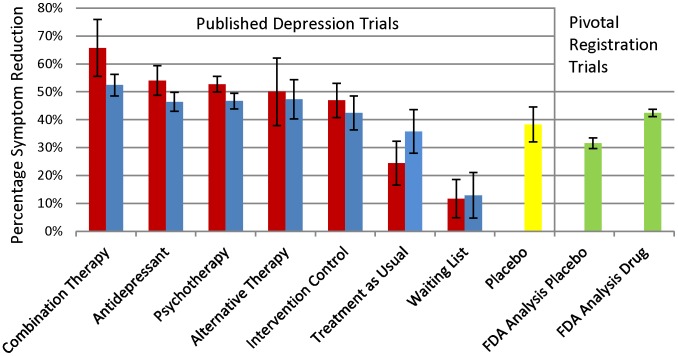
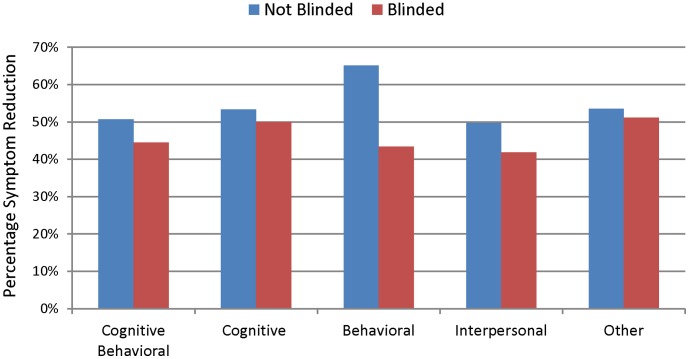
BACKGROUND: Although previous meta-analyses have examined effects of antidepressants, psychotherapy, and alternative therapies for depression, the efficacy of these treatments alone and in combination has not been systematically compared. We hypothesized that the differences between approved depression treatments and controls would be small. METHODS AND FINDINGS: The authors first reviewed data from Food and Drug Administration Summary Basis of Approval reports of 62 pivotal antidepressant trials consisting of data from 13,802 depressed patients. This was followed by a systematic review of data from 115 published trials evaluating efficacy of psychotherapies and alternative therapies for depression. The published depression trials consisted of 10,310 depressed patients. We assessed the percentage symptom reduction experienced by the patients based on treatment assignment. Overall, antidepressants led to greater symptom reduction compared to placebo among both unpublished FDA data and published trials (F = 38.5, df = 239, p<0.001). In the published trials we noted that the magnitude of symptom reduction with active depression treatments compared to controls was significantly larger when raters evaluating treatment effects were un-blinded compared to the trials with blinded raters (F = 2.17, df = 313, p<0.05). In the blinded trials, the combination of antidepressants and psychotherapy provided a slight advantage over antidepressants (p = 0.027) and psychotherapy (p = 0.022) alone. The magnitude of symptom reduction was greater with psychotherapies compared to placebo (p = 0.019), treatment-as-usual (p = 0.012) and waiting-list (p<0.001). Differences were not seen with psychotherapy compared to antidepressants, alternative therapies or active intervention controls. CONCLUSIONS: In conclusion, the combination of psychotherapy and antidepressants for depression may provide a slight advantage whereas antidepressants alone and psychotherapy alone are not significantly different from alternative therapies or active intervention controls. These data suggest that type of treatment offered is less important than getting depressed patients involved in an active therapeutic program. Future research should consider whether certain patient profiles might justify a specific treatment modality.
Overview
The claims and statistics of this paper haven’t been checked yet.
Free: it reads the open-access text and checks the first 5 claims that cite a source we can check. Create a free account to check every claim.
Integrity signals
Registry
Cites
Statistics
Figures
Verification
Claims the paper makes
The claims and statistics of this paper haven’t been checked yet.
Free: it reads the open-access text and checks the first 5 claims that cite a source we can check. Create a free account to check every claim.
Claims other papers make about this one
Each is checked against this paper’s own text: does it say what the citing paper says it does?
The cited source says what the claim attributes to it.
In the citing paper
“There are well-established treatments for primary depression and anxiety in the general population, which include psychological therapies, and, in particular, targeted cognitive behavioral therapy (CBT) (51–53), as well as antidepressant medication (52), the latter with some recent controversy regarding strength of efficacy (54–56).”
From The 2023 Impact of Inflammatory Bowel Disease in Canada: Mental Health and Inflammatory Bowel Disease (2023) · cites this paper as [52]
Self-check
Percentages, sums and reported differences re-computed from the paper’s own numbers.
The self-check needs the paper’s full text.
Citations
Cites
Diagnostic and Statistical Manual of Mental Disorders
Williams, J. B. W., & First, M. (2013) · Encyclopedia of Social Work · doi:10.1093/acrefore/9780199975839.013.104 · Cited by 109,519
Research Diagnostic Criteria: Rationale and Reliability
Spitzer, R. L. (1978) · Archives of General Psychiatry · doi:10.1001/archpsyc.1978.01770300115013 · Cited by 6,951 · cited 2×
“We specifically evaluated if the precursors of DSM-III, notably Research Diagnostic Criteria (RDC) [24] or Feighner Criteria [25] were used during diagnosis.”
MethodDiagnostic Criteria for Use in Psychiatric Research
Feighner, J. P. (1972) · Archives of General Psychiatry · doi:10.1001/archpsyc.1972.01750190059011 · Cited by 5,715 · cited 1×
“We specifically evaluated if the precursors of DSM-III, notably Research Diagnostic Criteria (RDC) [24] or Feighner Criteria [25] were used during diagnosis.”
MethodDiagnostic and Statistical Manual of Mental Disorders
Siegel, L. J., & Fletcher‐Janzen, E. (2014) · Encyclopedia of Special Education · doi:10.1002/9781118660584.ese0728 · Cited by 3,423
Selective publication of antidepressant trials and its influence on apparent efficacy
Turner, E. H., Matthews, A. M., Linardatos, E., Tell, R. A., & Rosenthal, R. (2008) · New England Journal of Medicine · doi:10.1056/nejmsa065779 · Cited by 2,435 · cited 1×
“to submit information on all of the trials they conducted, these data should be free of publication and author bias [3].”
BackgroundAntidepressant Drug Effects and Depression Severity: A Patient-Level Meta-analysis
Fournier, J. C., DeRubeis, R. J., Hollon, S. D., Dimidjian, S., Amsterdam, J. D., Shelton, R. C., & Fawcett, J. (2010) · JAMA · doi:10.1001/jama.2009.1943 · Cited by 2,009
Cooney, G. M., Dwan, K., Greig, C. A., Lawlor, D. A., Rimer, J., Waugh, F. R., McMurdo, M., & Mead, G. E. (2013) · Cochrane Database of Systematic Reviews · doi:10.1002/14651858.cd004366.pub6 · Cited by 1,834
Persuasion and Healing: A Comparative Study of Psychotherapy
Frank, J. D. (1961) · Cited by 1,391
Psychotherapy for depression in adults: A meta-analysis of comparative outcome studies.
Cuijpers, P., van Straten, A., Andersson, G., & van Oppen, P. (2008) · Journal of Consulting and Clinical Psychology · doi:10.1037/a0013075 · Cited by 1,050 · cited 1×
“We began by reviewing several meta-analyses designed to evaluate efficacy outcomes between psychotherapy and other treatments and controls for depression including other psychotherapies, alternative therapies, combination therapies, antidepressants, and placebos or active intervention controls [8,16,,26,27,28,29].”
MethodSome implicit common factors in diverse methods of psychotherapy.
Rosenzweig, S. (1936) · American Journal of Orthopsychiatry · doi:10.1111/j.1939-0025.1936.tb05248.x · Cited by 1,042 · cited 1×
“Although such non-specific effects have been noted with comparisons of different psychotherapies for over 70 years [35,36], our study is the first to note such outcome similarities across such a diverse group of treatments and controls for depression.”
Result
Research works printed but not linked: 2
- [13]National Collaborating Centre for Mental Health, The Royal College of Psychiatrists (2010) Depression: The NICE Guideline on the Treatment and Management of Depression in Adults. Updated edition. London: The British Psychological Society & The Royal College of Psychiatrists. 705 p.
- [21]American Psychiatric Assocation (1968) Diagnostic and Statistical Manual of Mental Disorders (2nd ed.). Washington, DC.
Cited by
Items 101–200 of 287
Voderholzer, U., & Barton, B. B. (2016) · Verhaltenstherapie · doi:10.1159/000446674 · Cited by 22
“Allerdings können die sehr guten Akuteffekte antidepressiver Therapieverfahren zu einem erheblichen Teil durch Placeboeffekte erklärt werden – dies gilt sowohl für Antidepressiva als auch für die Psychotherapie [Khan et al., 2012; Kirsch, 2016].”
BackgroundThe Role of Patient Experience and its Influence on Adherence to Antidepressant Treatment
Johnston, B. J. (2013) · Journal of Psychosocial Nursing and Mental Health Services · doi:10.3928/02793695-20130930-04 · Cited by 20
Der Placeboeffekt in der antidepressiven Behandlung
Kirsch, I. (2016) · Verhaltenstherapie · doi:10.1159/000443542 · Cited by 19
Self-citationBurning issues in the meta-analysis of pharmaceutical trials for depression
Fountoulakis, K. Ν., Samara, M. T., & Siamouli, M. (2013) · Journal of Psychopharmacology · doi:10.1177/0269881113504014 · Cited by 17
“meta-analysis is a good example of how misleading such data could be and how misleading could be the erroneous utilization of meta-analytical techniques and the breaking of the basic rules of systematic reviews and meta-analysis (Khan et al., 2012).”
BackgroundSuggestibility as a predictor of response to antidepressants: A preliminary prospective trial
Nitzan, U., Chalamish, Y., Krieger, I., Erez, H. B., Braw, Y., & Lichtenberg, P. (2015) · Journal of Affective Disorders · doi:10.1016/j.jad.2015.06.028 · Cited by 19
“Expectation of a therapeutic response, central to understanding the placebo effect, is relevant to the effect of standard pharmacological therapies as well (Khan et al., 2012; Sinyor et al., 2010).”
BackgroundSelf-citationNajafzadeh, M., Garces, J. A., & Maciel, A. (2017) · PharmacoEconomics · doi:10.1007/s40273-017-0587-0 · Cited by 26
“These results intuitively make sense because the impact of the IDgenetix test on the efficacy of guided treatment exceeds that of many expensive medications or other interventions that need to be used for extended periods [2].”
BackgroundA qualitative examination of the implementation of a perinatal collaborative care program
Taple, B. J., Haldar, S., Tandon, S. D., Reddy, M. C., Mohr, D. C., & Miller, E. S. (2022) · Primary Health Care Research & Development · doi:10.1017/s146342362200038x · Cited by 18
“Previous studies have demonstrated that the combination of psychotherapy andmedication treating depression may confer benefit (Khan et al., 2012; Cuijpers et al., 2014; Kamenov et al., 2017).”
BackgroundTestosterone Replacement Therapy in the Treatment of Depression
Anderson, D. J., Vazirnia, P., Loehr, C. A., Sternfels, W., Hasoon, J. J., Viswanath, O., Kaye, A. D., & Urits, I. (2022) · Health Psychology Research · doi:10.52965/001c.38956 · Cited by 21
Adding cognitive therapy to antidepressant medications decreases suicidal ideation
Khazanov, G. K., Xu, C., Hollon, S. D., DeRubeis, R. J., & Thase, M. E. (2020) · Journal of Affective Disorders · doi:10.1016/j.jad.2020.12.032 · Cited by 18
“The combination of psychotherapy and medications tends to produce better outcomes for depression over medications alone (Cuijpers et al., 2009; Khan et al., 2012); however, the magnitude of the effect is modest and the extent to which it extends to suicidal ideation is unclear.”
BackgroundZheng, Y., Pan, L., He, J., Yan, J., Xia, Y., Lin, C., Chen, X., Zhao, Q., Zeng, Q., Julikezi, M., et al. (2023) · Behavioural Brain Research · doi:10.1016/j.bbr.2023.114548 · Cited by 17
Use of Selective Serotonin Reuptake Inhibitors in the Treatment of Burning Mouth Syndrome
Fleuret, C., Toux, G. L., Morvan, J., Ferreira, F., Chastaing, M., Guillet, G., & Misery, L. (2014) · Dermatology · doi:10.1159/000357353 · Cited by 16
Andrews, P. W., Maslej, M. M., Thomson, J. A., & Hollon, S. D. (2020) · Clinical Psychology Review · doi:10.1016/j.cpr.2020.101927 · Cited by 17
Waller, K. L., Kaprio, J. A., Korhonen, T., Tuulio‐Henriksson, A., & Kujala, U. M. (2016) · Journal of Affective Disorders · doi:10.1016/j.jad.2016.04.036 · Cited by 18
“A recent systematic review on the effect of different treatments for depression concluded that antidepressants or psychotherapy alone are not significantly different from alternative therapies, such as exercise, or active intervention controls (Khan et al., 2012).”
BackgroundReplication target selection in clinical psychology: A Bayesian and qualitative reevaluation.
Pittelkow, M.-M., Hoekstra, R., Karsten, J., & van Ravenzwaaij, D. (2021) · Clinical Psychology Science and Practice · doi:10.1037/cps0000013 · Cited by 20
Fansi, A. K., Jehanno, C., Lapalme, M., Drapeau, M., & Bouchard, S. (2016) · Santé mentale au Québec · doi:10.7202/1036098ar · Cited by 26
Barriers affecting the oral health of people diagnosed with depression: A systematic review
Stepović, M., Stajić, D., Pavlović, Z. R., Maričić, M., & Sekulić, M. (2020) · Slovenian Journal of Public Health · doi:10.2478/sjph-2020-0034 · Cited by 15
“The treatment of depression could be improved by investing more resources (11), and adopting an interdisciplinary approach to this condition (12, 13).”
BackgroundZhang, J., Zhang, Z., Zhang, J., Zheng, Z., Yao, Z., Qu, S., & Huang, Y. (2019) · Evidence-based Complementary and Alternative Medicine · doi:10.1155/2019/3424698 · Cited by 14
“Although antidepressants instantly increase levels of monoamines between synapse clefts, it takes weeks until symptoms alleviation [1, 2].”
Zhang, J., Zhang, Z., Zhang, J., Zheng, Z., Yao, Z., Qu, S., & Huang, Y. (2019) · Neural Plasticity · doi:10.1155/2019/7492306 · Cited by 16
Oren‐Yagoda, R., Björgvinsson, Þ., & Aderka, I. M. (2017) · Psychotherapy Research · doi:10.1080/10503307.2017.1292066 · Cited by 16
Schwarzkopf, L., Dorscht, L., Kraus, L., & Luttenberger, K. (2021) · BMC Health Services Research · doi:10.1186/s12913-021-07153-1 · Cited by 15
“Recent systematic reviews suggest that it might be the most important step to get patients involved into a therapeutic program as differences between the different approaches are small [14].”
BackgroundMaeng, D. D., Cornell, A. E., & Nasra, G. S. (2019) · Journal of Occupational and Environmental Medicine · doi:10.1097/jom.0000000000001678 · Cited by 11
Velehorschi, C., Bleau, P., Vermani, M., Furtado, M., & Klassen, L. J. (2014) · Psychiatry Research · doi:10.1016/s0165-1781(14)70004-6 · Cited by 16
Adtani, P., Malathi, N., Ranganathan, K., Lokeswari, S., & Punnoose, A. M. (2018) · Translational Research in Oral Oncology · doi:10.1177/2057178x18764471 · Cited by 11
Antidepressant use in pregnancy: are we closer to consensus?
Campagne, D. M. (2018) · Archives of Women s Mental Health · doi:10.1007/s00737-018-0906-2 · Cited by 15
Holper, L., & Hengartner, M. P. (2020) · BMC Psychiatry · doi:10.1186/s12888-020-02839-y · Cited by 16
Andrews, P. W., Altman, M., Ševčíková, M., & Cacciatore, J. (2021) · Evolution and Human Behavior · doi:10.1016/j.evolhumbehav.2021.03.007 · Cited by 12
Depression, Chemical Imbalances, and Feminism
Schultz, W., & Hunter, N. (2016) · Journal of Feminist Family Therapy · doi:10.1080/08952833.2016.1235523 · Cited by 14
Shaygan, M., Negad, S. S., & Motazedian, S. (2021) · The Journal of Positive Psychology · doi:10.1080/17439760.2021.1913636 · Cited by 12
Montesano, A., Medina, J. C., Paz, C., García‐Mieres, H., Niño‐Robles, N., García‐Grau, E., Cañete, J., Garcia-Gutierrez, A., Alabèrnia-Segura, M., & Feixas, G. (2021) · Trials · doi:10.1186/s13063-021-05809-1 · Cited by 12
L'approche transdiagnostique en psychopathologie
der Linden, M. V. (2016) · Dunod eBooks · doi:10.3917/dunod.mones.2016.01.0009 · Cited by 15
Vollmer, L. L., Schmeltzer, S. N., Ahlbrand, R., & Sah, R. (2015) · Physiology & Behavior · doi:10.1016/j.physbeh.2015.03.012 · Cited by 11
Nocebo as a source of bias in the assessment of treatment effect
Wartolowska, K. A. (2019) · F1000Research · doi:10.12688/f1000research.17611.1 · Cited by 33
The Experiences of Ghanaian Midwives on the Use of Nonadjustable Delivery Beds: A Qualitative Study
Dartey, A. F., Dzansi, G., Atachie, C., Sunnu, E., & Nyande, F. K. (2021) · SAGE Open Nursing · doi:10.1177/23779608211038204 · Cited by 9
“Khan et al. (2012), reported that the sample size in a qualitative study is based on saturation, which was achieved after 20 semistructured interviews.”
BackgroundLevitt, H. M., Grabowski, L. M., Minami, T., & Morrill, Z. (2023) · Counselling Psychology Quarterly · doi:10.1080/09515070.2023.2191171 · Cited by 9
Reducing suicidal ideation by biofeedback-guided respiration – heart rate coherence
Jelinek, H. F., & Khandoker, A. H. (2020) · Digital Psychiatry · doi:10.1080/2575517x.2020.1732733 · Cited by 10
“trate on psychotherapy and medication [4,5].”
Newton, H., Busch, S. H., Brunette, M. F., Maust, D. T., O’Malley, A. J., & Meara, E. R. (2021) · Medicine · doi:10.1097/md.0000000000026539 · Cited by 11
“Those that did report reported much lower rates of remission than found in clinical trials (median 8%).([29,30]) Counts and colleagues suggested that poor performance could be explained by poor patient follow-up.”
BackgroundEffet placebo et antidépresseurs : une revue de la littérature éclairée par la psychanalyse
Keller, P.-H., Giroux-Gonon, A., & Gonon, F. (2013) · L Évolution Psychiatrique · doi:10.1016/j.evopsy.2013.02.004 · Cited by 10
The Chemical Imbalance Hypothesis: An Evaluation of the Evidence
Schultz, W. (2015) · Ethical Human Psychology and Psychiatry · doi:10.1891/1559-4343.17.1.60 · Cited by 8
Medina, J. C., Paz, C., García‐Mieres, H., Niño‐Robles, N., Herrera, J. E., Feixas, G., & Montesano, A. (2022) · Journal of Psychiatric Research · doi:10.1016/j.jpsychires.2022.06.034 · Cited by 14
Are antidepressants clinically useful? Conclusion of a decade of debate
Fountoulakis, K. Ν., & Möller, H. (2014) · World Psychiatry · doi:10.1002/wps.20112 · Cited by 9
“During the last decade, a number of meta-analyses have questioned the clinical usefulness of antidepressants, and exposed a significant publication bias and low effect size in comparison to placebo (1-9).”
BackgroundSugarman, M. A. (2016) · Journal of Mental Health · doi:10.3109/09638237.2016.1139071 · Cited by 11
“Khan et al. (2012) found no significant differences between psychotherapy, antidepressants and alternative therapies, such as exercise and acupuncture, and argued that simply enrolling patients in an active therapeutic program may be more important than the specific type of intervention.”
BackgroundPlasticity-augmented psychotherapy for refractory depressive and anxiety disorders
Choi, K., & Kim, Y. (2016) · Progress in Neuro-Psychopharmacology and Biological Psychiatry · doi:10.1016/j.pnpbp.2016.04.003 · Cited by 8
Evidence for the treatment of moderate depression: a systematic review
Aherne, D., Fitzgerald, A., Aherne, C., Fitzgerald, N., Slattery, M., & Whelan, N. (2017) · Irish Journal of Psychological Medicine · doi:10.1017/ipm.2017.10 · Cited by 10
Zarazúa, S., Vicente-Martínez, J. G., Pinos‐Rodríguez, J. M., & Arévalo-Villalobos, J. I. (2024) · Basic & Clinical Pharmacology & Toxicology · doi:10.1111/bcpt.14089 · Cited by 8
“54”
Rheuma und Psyche – Eine Kurzübersicht
Linsmayer, D., Neidlinger, P.-K., & Braus, D. F. (2019) · Der Orthopäde · doi:10.1007/s00132-019-03812-8 · Cited by 8
Zagorscak, P., Heinrich, M., Bohn, J., Stein, J., & Knaevelsrud, C. (2019) · Brain and Behavior · doi:10.1002/brb3.1484 · Cited by 8
George, D. R., Studebaker, B. M., Sterling, P., Wright, M. S., & Cain, C. (2023) · Journal of Medical Humanities · doi:10.1007/s10912-023-09795-0 · Cited by 10
“Boosting serotonin for someone suffering from depression is nothing more than a wild guess; indeed, for most people, psychopharmacology is roughly as effective as placebo (Khan et al. 2012; Stone et al. 2022).”
Reyes, A. A., & Chandler, D. J. (2023) · Neuroglia · doi:10.3390/neuroglia4020007 · Cited by 10
Let’s talk about depression: social workers’ use of chemical imbalance explanations
Acker, J. K., & Warner, L. A. (2020) · Social Work in Mental Health · doi:10.1080/15332985.2019.1700872 · Cited by 12
Ganz, A. B., Rolnik, B. M., Chakraborty, M., Wilson, J., Tau, C., Sharp, M. H., Reber, D. D., Slavich, G. M., & Snyder, M. P. (2022) · Journal of Psychiatric Research · doi:10.1016/j.jpsychires.2022.02.034 · Cited by 6
“Furthermore, even patients who receive combination treatment with both medication and psychotherapy exhibit an average symptom reduction of only 55–65% (Khan et al., 2012; Kudlow et al., 2014).”
BackgroundDiet, Microbiome, and Neuropsychiatric Disorders
Javitt, G. A., & Javitt, D. C. (2018) · Elsevier eBooks · doi:10.1016/b978-0-12-811440-7.00013-2 · Cited by 8
Asian American mental health help-seeking: An Asian value-informed health belief model.
Ahn, L. H., Tran, A. G. T. T., Lam, C. K., & Yoo, H. C. (2024) · Asian American Journal of Psychology · doi:10.1037/aap0000351 · Cited by 8
Tsang, V. W. L., Lin, M. C., Choles, C. M., & Kryskow, P. (2025) · Journal of Occupational and Environmental Medicine · doi:10.1097/jom.0000000000003352 · Cited by 9
“6,7 For 11 – 14 Much of the cost and disability associated with depression is accounted for by treatment resistance, which some estimate may be as high as 55% of patients with depression.”
Differential Placebo Responses for Pharmacotherapy and Neurostimulation in Late-Life Depression
Wathra, R. A., Mulsant, B. H., Reynolds, C. F., Lenze, E. J., Karp, J. F., Daskalakis, Z. J., & Blumberger, D. M. (2022) · Neuromodulation Technology at the Neural Interface · doi:10.1016/j.neurom.2021.10.019 · Cited by 5
Pizzicato, L. N., Xie, R. Z., Yang, Y., Grabner, M., & Chapman, R. H. (2023) · Journal of Managed Care & Specialty Pharmacy · doi:10.18553/jmcp.2023.29.6.614 · Cited by 8
Szulęcka, B. (2024) · Social Science & Medicine · doi:10.1016/j.socscimed.2024.116649 · Cited by 9
Die dunkle Seite der Intervention - was hat Placebo mit Psychotherapie zu tun?
Rief, W., & Gaab, J. (2016) · Verhaltenstherapie · doi:10.1159/000443975 · Cited by 5
“Dieser positive Eindruck wird aber realistischer – und wahrscheinlich auch weniger enthusiastisch –, wenn man die Überschätzung der Psychotherapieeffekte in der Forschung [Cuijpers et al., 2010], den bedeutsamen Effekt der Nicht-Verblindung auf das Ergebnis in Psychotherapiestudien [Khan et al., 2012], die kleinen Wir…”
BackgroundHughes, S., Rondeau, M., Shannon, S. M., Sharp, J. L., Ivins, G., Lee, J., Taylor, I., & Bendixsen, B. H. (2020) · Community Mental Health Journal · doi:10.1007/s10597-020-00666-9 · Cited by 6
Henrich, L., Wilhelm, M., Lange, P., & Rief, W. (2023) · Trials · doi:10.1186/s13063-023-07557-w · Cited by 4
“Discussion Studies and clinical trials on anti-depressant treatments have shown that placebo arms reveal impressive results rivaling those found in the verum arms [2, 4, 5, 78].”
BackgroundResultMontarolo, F., Rominto, A. M., Berrino, L., Bertolotto, A., Laezza, F., Tempia, F., & Hoxha, E. (2025) · Translational Psychiatry · doi:10.1038/s41398-025-03361-z · Cited by 5
Effectiveness of Outpatient Rational Emotive Behavior Therapy Over One Decade
David, D., Cîmpean, A., Costescu, C. A., Digiuseppe, R. A., Doyle, K. A., Hickey, M., & David, D. (2021) · American Journal of Psychotherapy · doi:10.1176/appi.psychotherapy.20200009 · Cited by 8
Nishioka, G., Yashima, H., Kiuchi, Y., Nakamura, S., Oyamada, H., Ishii, M., & Kudo, I. (2013) · Human Psychopharmacology Clinical and Experimental · doi:10.1002/hup.2347 · Cited by 5
“Third, several meta-analyses reported inability of blinding and placebo controls (Turner et al., 2008, Khan et al., 2012), but our open nature of the clinical observation had a limitation.”
BackgroundThe Triumph of the DSM and Patient-Centered Psychiatry
Carta, M. G., & Angermeyer, M. C. (2014) · Culture Medicine and Psychiatry · doi:10.1007/s11013-014-9411-x · Cited by 4
“…concludes that antidepressants alone and psychotherapy alone are not significantly different from alternative therapies or active intervention controls and the type of treatment offered is less important than involving depressed patients in an active therapeutic program (Khan et al. 2012).”
BackgroundUse of deep brain stimulation for major affective disorders
Mi, K. (2016) · Experimental and Therapeutic Medicine · doi:10.3892/etm.2016.3622 · Cited by 8
“For major depression, only a small number of patients respond positively to treatment with drugs and/or psychotherapies, in the form of ‘cognitive therapy’ (3).”
How Online Tests Contribute to the Support System for People With Cognitive and Mental Disabilities
Li, Q., Lee, J., Zhang, C., & Reinecke, K. (2021) · International ACM SIGACCESS Conference on Computers and Accessibility (ASSETS) · doi:10.1145/3441852.3471229 · Cited by 7
“3% (adolescents) Commonly treated with antidepressant medications and psychological therapies [49].”
BackgroundIslam, M. R., & Shafique, A. (2017) · Open Journal of Depression · doi:10.4236/ojd.2017.61002 · Cited by 5
“Once MDD is accurately diagnosed, any treatment option is not generally known to be more effective than getting depressed patients involved in an active therapeutic program (Khan et al., 2012).”
BackgroundMöller, H. ‐. (2014) · Springer eBooks · doi:10.1007/978-3-319-04627-3_2 · Cited by 7
Sylvain, C., Durand, M., & Maillette, P. (2017) · Journal of Occupational Rehabilitation · doi:10.1007/s10926-017-9744-8 · Cited by 6
Integrative mental health in 2015
Glick, R. M. (2015) · Advances in Integrative Medicine · doi:10.1016/j.aimed.2015.02.002 · Cited by 4
Placebos, caring, and healing in rheumatology
Dieppe, P. A., Marsden, D., & Goldingay, S. (2015) · Elsevier eBooks · doi:10.1016/b978-0-323-09138-1.00263-1 · Cited by 3
Is a Combination of Pharmacotherapy and Psychotherapy Superior to Each Alone?
Choi, K., & Kim, Y. (2017) · Springer eBooks · doi:10.1007/978-981-10-6577-4_21 · Cited by 4
Integrated Approaches for Treatment-Resistant Psychiatric Disorders
Park, S., & Kim, Y. (2018) · Springer eBooks · doi:10.1007/978-981-10-4358-1_6 · Cited by 3
Immunomodulatory T cell death associated gene-8 (TDAG8) receptor in depression-associated behaviors
McMurray, K. M. J., Vollmer, L. L., Ahlbrand, R., Thomas, J. D., Winter, A. S., Lewkowich, I. P., & Sah, R. (2019) · Physiology & Behavior · doi:10.1016/j.physbeh.2019.112598 · Cited by 3
“Current pharmaceutical treatments, such as monoamine reuptake inhibitors, have a delayed onset of treatment effect and lack efficacy in a large proportion of patients[4-6].”
BackgroundBusari, A. O. (2015) · American Journal of Medicine and Medical Sciences · Cited by 6
Anxiety and Depression in Patients with Chronic Pain
Charles, S., Carayannopoulos, A. G., & Pathak, S. (2019) · Springer eBooks · doi:10.1007/978-3-030-12281-2_15 · Cited by 3
Treatments for depression: Side-effects, adverse events and health risks
Kirsch, I., Ness, A., & Appleton, K. M. (2019) · Journal of Affective Disorders · doi:10.1016/j.jad.2019.08.018 · Cited by 3
Self-citationSpulber, S. D., Elberling, F., Ceccatelli, S., Gärde, M., Tiger, M., & Lundberg, J. (2023) · medRxiv · doi:10.1101/2023.09.29.23294935 · Cited by 3
A content-general adaptation for tribal value-acquisition
Carruthers, P. (2025) · Evolution and Human Behavior · doi:10.1016/j.evolhumbehav.2025.106791 · Cited by 2
Treating Maternal Depression: Considerations for the Well-Being of the Mother and Child
Brummelte, S. (2018) · Policy Insights from the Behavioral and Brain Sciences · doi:10.1177/2372732217740594 · Cited by 2
THE RELATIONSHIP BETWEEN VITAMIN D DEFICIENCY WITH DEPRESSION AND ADDICTION: REVIEW ARTICLE
Khatib, A. J. A., & Rawashdeh, W. S. (2014) · European Scientific Journal ESJ · Cited by 4
A single index model for longitudinal outcomes to optimize individual treatment decision rules
Yao, L., & Tarpey, T. (2022) · Stat · doi:10.1002/sta4.493 · Cited by 3
“However, researchers found the effects of antidepressants were overestimated, that is, the magnitude of symptom reduction with antidepressants was about only 40% (Khan et al., 2012).”
BackgroundExplaining Depression in Clinical Settings: Shortcomings and Dangers of Simplified Analogies
Schultz, W. (2017) · Ethical Human Psychology and Psychiatry · doi:10.1891/1559-4343.19.1.51 · Cited by 3
“Along similar lines, Khan et al. (2012) compared the outcomes of blinded versus unblinded raters in studies examining comparative efficacy between antidepressants and psychotherapy.”
ResultFowers, B. J., Novak, L. F., Calder, A. J., & Sommer, R. K. (2022) · Theory & Psychology · doi:10.1177/09593543221115372 · Cited by 2
“For example, in the case of depression, systematic reviews have found that, despite the substantial positive overall effect for psychotherapies, no modality of treatment is effective for even half the participants in randomized controlled trials focused on relatively homogenous symptom profiles (Khan et al., 2012).”
BackgroundAssociation Between Social Support and PHQ-4 Scores at a Student-Run Free Clinic
Kunta, A., Katoju, S. V., Barnes, L., Nguyen, O. T., Daga, A., Cartagena, G., Motwani, K., & Feller, D. B. (2023) · Journal of Student-Run Clinics · doi:10.59586/jsrc.v9i1.345 · Cited by 2
Case-based learning: safe withdrawal and tapering of antidepressants
(2023) · Pharmaceutical journal/The pharmaceutical journal · doi:10.1211/pj.2023.1.196471 · Cited by 2
Depression and Anxiety in College Students
Chaudhary, A. K. (2020) · Springer eBooks · doi:10.1007/978-3-030-56309-7_4 · Cited by 3
Guanine-Based Purines as an Innovative Target to Treat Major Depressive Disorder
Almeida, R. F., Ferreira, T. P., David, C. V. C., Silva, P. C. A. E., dos Santos, S. A., Rodrigues, A. L. S., & Elisabetsky, E. (2021) · Frontiers in Pharmacology · doi:10.3389/fphar.2021.652130 · Cited by 3
“GUO protects against a wide range of deleterious Frontiers in Pharmacology | www.frontiersin.org April 2021 | Volume 12 | Article 6521302 effects in various animal models of neurological disorders (Sopko et al., 2008; Khan et al., 2012).”
BackgroundResponse to letter from Lipsitz et al.
Khan, A., Faucett, J., & Brown, W. A. (2014) · Journal of Psychiatric Research · doi:10.1016/j.jpsychires.2014.06.016 · Cited by 2
Self-citationHarnessing placebo effects to regulate emotionsPreprint
Guevarra, D. A., Kross, E. F., & Moser, J. S. (2022) · PsyArXiv (OSF Preprints) · doi:10.31234/osf.io/7c8z2 · Cited by 2
Carruthers, P. (2024) · Oxford University Press eBooks · doi:10.1093/oso/9780198906131.003.0003 · Cited by 2
Nitzan, U., Grossman‐Giron, A., Sedoff, O., Maoz, H., Arad, O., Tilbor, E., Dror, C., & Bitan, D. T. (2024) · Psychopharmacology · doi:10.1007/s00213-024-06593-x · Cited by 1
“Similarly, the therapeutic alliance between research personnel and the and between therapists and patients are an important factor in determining expectancy levels regarding treatment and placebo response(Kirsch 2004; Khan et al. 2012; Williams et al. 2012; Leuchter et al. 2014).”
BackgroundPlacebo Effects in the Treatment of Depression—Implications for the Psychedelic Renaissance
Ansari, M., Elliot, S. I., Holmes, S. E., & Sanacora, G. (2025) · Neurologic Clinics · doi:10.1016/j.ncl.2025.08.009 · Cited by 1
Adam, B., Ibrahim, K., Stevenson, F. A., & Leydon, G. (2025) · Research in Social and Administrative Pharmacy · doi:10.1016/j.sapharm.2025.12.012 · Cited by 1
Carruthers, P. (2026) · Cambridge University Press eBooks · doi:10.1017/9781009506076 · Cited by 1
Provider Type Market Share for Treatment of Depression in a Large Commercially Insured Population
Glassman, J. R., Nikolov, M. C., Song, S., & Kaplan, R. M. (2026) · Psychiatric Services · doi:10.1176/appi.ps.20240585 · Cited by 1
Antidepressant or antidepressant plus placebo effect?
Montgomery, S. (2015) · World Psychiatry · doi:10.1002/wps.20244 · Cited by 1
“The comparison of Khan et al (2) of the symptom reduction data reported in non-pharmaceutical industry studies with the data submitted by pharmaceutical companies to the U.S. Food and Drug Administration (FDA) finds few substantive differences.”
BackgroundBasi, S. (2013) · Summit (Simon Fraser University) · Cited by 2
Are Both Antidepressant Drug Effects and Test Scores Unspecific?
Aursnes, I. (2014) · Journal of Diagnostic Techniques and Biomedical Analysis · doi:10.4172/2327-4638.1000102 · Cited by 1
White Paper: Brain Scan Research
Hunter, N., & Schultz, W. (2016) · Ethical Human Psychology and Psychiatry · doi:10.1891/1559-4343.18.1.9 · Cited by 1
Quelle place pour le placebo dans les essais cliniques en psychiatrie ?
Cermolacce, M., Belzeaux-R, R., Adida, M., Micoulaud‐Franchi, J., Fakra, É., & Azorin, J. (2016) · L Encéphale · doi:10.1016/s0013-7006(17)30049-0 · Cited by 2
Metadata
- Authors
- Khan, A., Faucett, J., Lichtenberg, P., Kirsch, I., & Brown, W. A.
- Affiliations
- Duke University (US)
- Northwest Clinical Research Center (US)
- Hebrew University of Jerusalem (IL)
- Beth Israel Deaconess Medical Center (US)
- Tufts University (US)
- Corresponding author
- Khan, Arif
- Venue
- PLoS ONE
- Publisher
- Public Library of Science (PLoS)
- Published
- 2012-07-30
- Volume
- 7
- Issue
- 7
- Pages
- e41778
- ISSN
- 1932-6203 (ISSN-L)
- PMC
- PMC3408478
- OpenAlex
- W2146409144
- Cited by
- 288
- References
- 41
- Citations by year
- 2026: 8 · 2025: 11 · 2024: 20 · 2023: 23 · 2022: 19 · 2021: 25 · 2020: 22 · 2019: 24 · 2018: 21 · 2017: 26 · 2016: 23 · 2015: 23 · 2014: 27 · 2013: 13 · 2012: 2
- FWCI
- 2.38
- Type
- journal article
- Language
- en
- Open access
- gold
- doi.org
- Locations
- PLoS ONE (publishedVersion, cc-by)
- Europe PMC (PubMed Central) (publishedVersion, cc-by)
- PubMed Central (publishedVersion, cc-by)
- PubMed (publishedVersion)
- Digital Access to Scholarship at Harvard (DASH) (Harvard University) (submittedVersion, cc-by)
- DOAJ (DOAJ: Directory of Open Access Journals) (submittedVersion, cc-by-sa)
- Figshare (submittedVersion, cc-by)
- Topics
- Health Sciences › Medicine › Pharmacology (medical) › Treatment of Major Depression
- Social Sciences › Psychology › Clinical Psychology › Psychotherapy Techniques and Applications
- Health Sciences › Medicine › Psychiatry and Mental health › Mental Health Treatment and Access
- Keywords
- depression, antidepressants, psychotherapy, combination therapy, complementary and alternative medicine, treatment efficacy, blinding, symptom relief
- MeSH terms
- Complementary Therapies, Antidepressive Agents, Combined Modality Therapy, Depression, Double-Blind Method, Humans, Psychotherapy, Randomized Controlled Trials as Topic, Treatment Outcome
About these checks
Registry, retraction, Cites and statistics results are computed, not judged, with one exception: a printed reference that no index lists is read once by a model before it counts as a citation error. Claims are extracted by a model and kept only when their quote appears verbatim in the text; each cited source is then checked, with a model’s help, for whether it says what the claim relies on. Those verdicts can be wrong — read the claim’s quote and the cited source before relying on one.
Statistics and arithmetic are recomputed, not judged.
Confidence bands are shown only for fields calibrated on our annotated test set. None is calibrated yet, so no band is shown.
What counts as a claim ›How we measure confidence ›How we check this ›
Are you an author, or do you see a problem with this page? Request a review
Data sources
Bibliographic data: Semantic Scholar, OpenAlex, Crossref.
Contains information from the Semantic Scholar Academic Graph Datasets, made available under the ODC Attribution License (ODC-BY 1.0).
Semantic Scholar’s data is described in: Kinney, R., et al. (2023). The Semantic Scholar Open Data Platform. arXiv:2301.10140.
