

A Systematic Review of Comparative Efficacy of Treatments and Controls for Depression
Open accessThe DOI matches its Crossref record; 41 of the 41 references it cites were found in a registry or an index.
Abstract
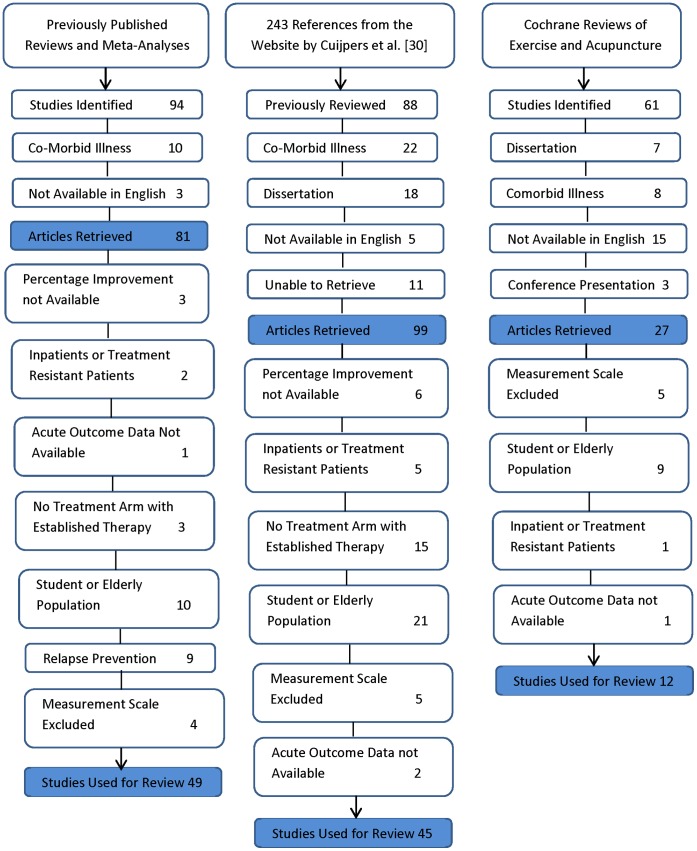
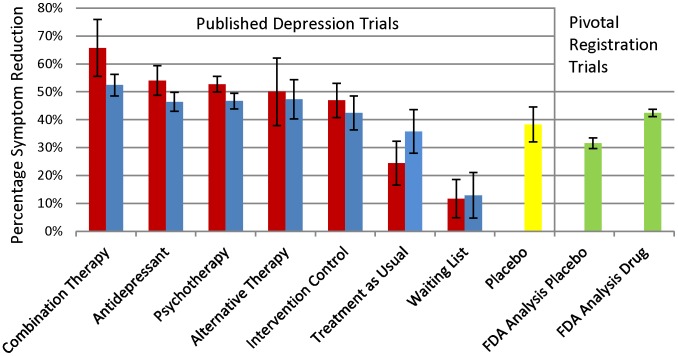
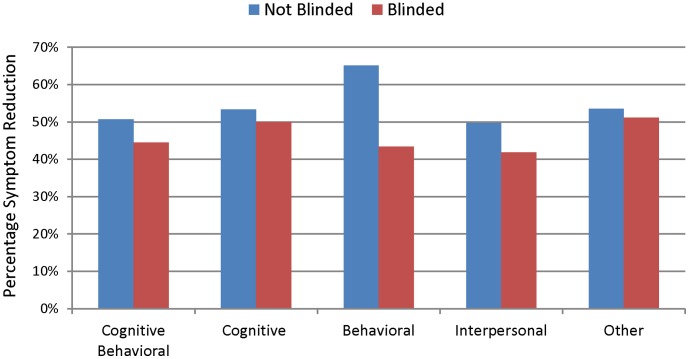
BACKGROUND: Although previous meta-analyses have examined effects of antidepressants, psychotherapy, and alternative therapies for depression, the efficacy of these treatments alone and in combination has not been systematically compared. We hypothesized that the differences between approved depression treatments and controls would be small. METHODS AND FINDINGS: The authors first reviewed data from Food and Drug Administration Summary Basis of Approval reports of 62 pivotal antidepressant trials consisting of data from 13,802 depressed patients. This was followed by a systematic review of data from 115 published trials evaluating efficacy of psychotherapies and alternative therapies for depression. The published depression trials consisted of 10,310 depressed patients. We assessed the percentage symptom reduction experienced by the patients based on treatment assignment. Overall, antidepressants led to greater symptom reduction compared to placebo among both unpublished FDA data and published trials (F = 38.5, df = 239, p<0.001). In the published trials we noted that the magnitude of symptom reduction with active depression treatments compared to controls was significantly larger when raters evaluating treatment effects were un-blinded compared to the trials with blinded raters (F = 2.17, df = 313, p<0.05). In the blinded trials, the combination of antidepressants and psychotherapy provided a slight advantage over antidepressants (p = 0.027) and psychotherapy (p = 0.022) alone. The magnitude of symptom reduction was greater with psychotherapies compared to placebo (p = 0.019), treatment-as-usual (p = 0.012) and waiting-list (p<0.001). Differences were not seen with psychotherapy compared to antidepressants, alternative therapies or active intervention controls. CONCLUSIONS: In conclusion, the combination of psychotherapy and antidepressants for depression may provide a slight advantage whereas antidepressants alone and psychotherapy alone are not significantly different from alternative therapies or active intervention controls. These data suggest that type of treatment offered is less important than getting depressed patients involved in an active therapeutic program. Future research should consider whether certain patient profiles might justify a specific treatment modality.
Overview
The claims and statistics of this paper haven’t been checked yet.
Free: it reads the open-access text and checks the first 5 claims that cite a source we can check. Create a free account to check every claim.
Integrity signals
Registry
Cites
Statistics
Figures
Verification
Claims the paper makes
The claims and statistics of this paper haven’t been checked yet.
Free: it reads the open-access text and checks the first 5 claims that cite a source we can check. Create a free account to check every claim.
Claims other papers make about this one
Each is checked against this paper’s own text: does it say what the citing paper says it does?
The cited source says what the claim attributes to it.
In the citing paper
“There are well-established treatments for primary depression and anxiety in the general population, which include psychological therapies, and, in particular, targeted cognitive behavioral therapy (CBT) (51–53), as well as antidepressant medication (52), the latter with some recent controversy regarding strength of efficacy (54–56).”
From The 2023 Impact of Inflammatory Bowel Disease in Canada: Mental Health and Inflammatory Bowel Disease (2023) · cites this paper as [52]
Self-check
Percentages, sums and reported differences re-computed from the paper’s own numbers.
The self-check needs the paper’s full text.
Citations
Cites
Diagnostic and Statistical Manual of Mental Disorders
Williams, J. B. W., & First, M. (2013) · Encyclopedia of Social Work · doi:10.1093/acrefore/9780199975839.013.104 · Cited by 109,519
Research Diagnostic Criteria: Rationale and Reliability
Spitzer, R. L. (1978) · Archives of General Psychiatry · doi:10.1001/archpsyc.1978.01770300115013 · Cited by 6,951 · cited 2×
“We specifically evaluated if the precursors of DSM-III, notably Research Diagnostic Criteria (RDC) [24] or Feighner Criteria [25] were used during diagnosis.”
MethodDiagnostic Criteria for Use in Psychiatric Research
Feighner, J. P. (1972) · Archives of General Psychiatry · doi:10.1001/archpsyc.1972.01750190059011 · Cited by 5,715 · cited 1×
“We specifically evaluated if the precursors of DSM-III, notably Research Diagnostic Criteria (RDC) [24] or Feighner Criteria [25] were used during diagnosis.”
MethodDiagnostic and Statistical Manual of Mental Disorders
Siegel, L. J., & Fletcher‐Janzen, E. (2014) · Encyclopedia of Special Education · doi:10.1002/9781118660584.ese0728 · Cited by 3,423
Selective publication of antidepressant trials and its influence on apparent efficacy
Turner, E. H., Matthews, A. M., Linardatos, E., Tell, R. A., & Rosenthal, R. (2008) · New England Journal of Medicine · doi:10.1056/nejmsa065779 · Cited by 2,435 · cited 1×
“to submit information on all of the trials they conducted, these data should be free of publication and author bias [3].”
BackgroundAntidepressant Drug Effects and Depression Severity: A Patient-Level Meta-analysis
Fournier, J. C., DeRubeis, R. J., Hollon, S. D., Dimidjian, S., Amsterdam, J. D., Shelton, R. C., & Fawcett, J. (2010) · JAMA · doi:10.1001/jama.2009.1943 · Cited by 2,009
Cooney, G. M., Dwan, K., Greig, C. A., Lawlor, D. A., Rimer, J., Waugh, F. R., McMurdo, M., & Mead, G. E. (2013) · Cochrane Database of Systematic Reviews · doi:10.1002/14651858.cd004366.pub6 · Cited by 1,834
Persuasion and Healing: A Comparative Study of Psychotherapy
Frank, J. D. (1961) · Cited by 1,391
Psychotherapy for depression in adults: A meta-analysis of comparative outcome studies.
Cuijpers, P., van Straten, A., Andersson, G., & van Oppen, P. (2008) · Journal of Consulting and Clinical Psychology · doi:10.1037/a0013075 · Cited by 1,050 · cited 1×
“We began by reviewing several meta-analyses designed to evaluate efficacy outcomes between psychotherapy and other treatments and controls for depression including other psychotherapies, alternative therapies, combination therapies, antidepressants, and placebos or active intervention controls [8,16,,26,27,28,29].”
MethodSome implicit common factors in diverse methods of psychotherapy.
Rosenzweig, S. (1936) · American Journal of Orthopsychiatry · doi:10.1111/j.1939-0025.1936.tb05248.x · Cited by 1,042 · cited 1×
“Although such non-specific effects have been noted with comparisons of different psychotherapies for over 70 years [35,36], our study is the first to note such outcome similarities across such a diverse group of treatments and controls for depression.”
Result
Research works printed but not linked: 2
- [13]National Collaborating Centre for Mental Health, The Royal College of Psychiatrists (2010) Depression: The NICE Guideline on the Treatment and Management of Depression in Adults. Updated edition. London: The British Psychological Society & The Royal College of Psychiatrists. 705 p.
- [21]American Psychiatric Assocation (1968) Diagnostic and Statistical Manual of Mental Disorders (2nd ed.). Washington, DC.
Cited by
Items 201–287 of 287
Explaining Depression in Clinical Settings: Shortcomings and Dangers of Simplified Etiologies
Schultz, W. (2017) · Ethical Human Psychology and Psychiatry · doi:10.1891/1559-4343.19.2.124 · Cited by 1
“In addition to finding no difference between antidepressant treatment and psychotherapy, (Khan et al., 2012) found that there was no significant difference between combined therapy (antidepressant plus psychotherapy) and psychotherapy alone.”
BackgroundResultBiološke osnove placebo-učinka
Šaravanja, N., & Ivanec, D. (2020) · Journal of Applied Health Sciences · doi:10.24141/1/6/2/10 · Cited by 1
Predicting Outcomes of Cognitive Behavioral Therapy for Depression Using Data Driven Approaches
Tyszczuk, L., Levita, L., Delgadillo, J., Haihong, Z., & Arvaneh, M. (2023) · Asia-Pacific Signal and Information Processing Association Annual Summit and Conference (APSIPA ASC) · doi:10.1109/apsipaasc58517.2023.10317344 · Cited by 1
“In a review on treatment efficacy for depression, Khan et al. highlight the need for better understanding of how different patient profiles may respond to different treatment methods, and how the heterogeneity of depression needs to be untangled to determine which treatment will work for whom [23].”
BackgroundElevations in depression and anxiety symptoms prior to discharge from partial hospitalization
Bockhorst, J. L., Hudson, C. C., Björgvinsson, Þ., & Beard, C. (2024) · Cognitive Behaviour Therapy · doi:10.1080/16506073.2024.2400258 · Cited by 1
“…that demonstrates a decline in symptoms over the course of psychotherapy, especially cognitive behavioral therapy (e.g. Hofmann et al., 2012; Khan et al., 2012; Norton & Price, 2007); however, these studies examine linear changes in symptoms, which precludes the identification of other…”
Advances in ESM-Derived Feedback Integrated into Psychotherapy
Hall, M., Servaas, M. N., & Riese, H. (2025) · CBT: science into practice · doi:10.1007/978-3-031-90428-8_8 · Cited by 1
Berger, D. (2015) · F1000Research · doi:10.12688/f1000research.6954.1 · Cited by 2
IsHak, W. W., Vilhauer, J. S., Kwock, R., Wu, F., Gohar, S. M., Collison, K. L., Thomas, S., Naghdechi, L., & Elashoff, D. A. (2016) · International Neuropsychiatric Disease Journal · doi:10.9734/indj/2016/26203 · Cited by 1
“Such studies have gone so far as to posit alliance as a potential explanation for placebo effects in medication trials [22,23,13].”
BackgroundBraus, D. F. (2016) · Der Diabetologe · doi:10.1007/s11428-016-0116-3 · Cited by 1
“Eine Metaanalyse zur vergleichendenWirksamkeit von Interventionen bei akuter Depression erbrachte eindeutig: Es darf nicht abgewartetwerden,Hauptsache ist, überhaupt erst einmal mit der Behandlung zu beginnen [13].”
BackgroundSouza, F. J. F. D. B., de Lima, G. F., Tibola, F., Lucca, G., & Madeira, K. (2018) · Jornal Brasileiro de Psiquiatria · doi:10.1590/0047-2085000000189 · Cited by 6
Winter, L., Moriarty, H., & Robinson, K. M. (2019) · Frontiers in Neurology · doi:10.3389/fneur.2019.00190 · Cited by 2
Clinical Placebo Can Be Defined Positively: Implications for Informed Consent
Gold, A., & Lichtenberg, P. (2015) · The American Journal of Bioethics · doi:10.1080/15265161.2015.1074305 · Cited by 1
Self-citationEditorial: Reframing the placebo effect. The importance of meaning
Perkins, R. E., & Repper, J. (2021) · Mental Health and Social Inclusion · doi:10.1108/mhsi-08-2021-095 · Cited by 1
Do antidepressant medications work?
Casey, D. (2013) · Europe PMC (PubMed Central)
Greetfeld, M., Voderholzer, U., & Berger, M. (2015) · Elsevier eBooks · doi:10.1016/b978-3-437-22107-1.50374-5
Is the Efficacy of Antidepressants Truly a Myth?
Linde, K., & Sigterman, K. E. (2012) · Global Advances in Health and Medicine · doi:10.7453/gahmj.2012.1.5.003
Leidig, S. (2014) · Universitätsbibliothek der FU Berlin Hochschulschriftenstelle u. Dokumentenserver · doi:10.17169/refubium-4252 · Cited by 1
Chronic Pulmonary Diseases Across the Life Span
Dempsey, A. G., Duncan, C. L., & Kania, K. M. (2014) · Springer eBooks · doi:10.1007/978-0-387-09817-3_20
Moore, A. B., & Komesaroff, P. A. (2012) · Australian journal of acupuncture and Chinese medicine.
Olson, W. J. (2014) · Scholars' Bank (University of Oregon)
Hauptsache überhaupt erstmal behandeln
Greetfeld, M. (2013) · InFo Neurologie + Psychiatrie · doi:10.1007/s15005-013-0096-4
Functional characterization of Phosphodiesterase-4A in behavior and obesity
Hansen, R. (2014) · The Research Repository @ WVU (West Virginia University) · doi:10.33915/etd.583
“Thus depression typically requires much experimentation and combination-adjunctive therapy (Khan et al. 2012).”
BackgroundFancourt, D. E. (2016) · UCL Discovery (University College London) · Cited by 2
Prinzipien der Methodik empirischer Forschung in der Psychiatrie
Möller, H., & Broich, K. (2017) · Springer eBooks · doi:10.1007/978-3-662-49295-6_18
Ein Blick in die Zukunft der Psychiatrie
von Kieseritzky, K. (2017) · DNP - Der Neurologe und Psychiater · doi:10.1007/s15202-017-1734-3
“Die Evidenz für die Wirksamkeit von Psychotherapie bei psychiatrischen Erkrankungen wie Depression und Angststörungen ist vielfach erbracht worden [7, 8].”
BackgroundOnwuka, A. J. (2017) · Deep Blue (University of Michigan)
Pedersen, E. R., Kandrack, R., Danz, M., Motala, A., Booth, M. J., Larkin, J., & Hempel, S. (2018) · Rand health quarterly · doi:10.7249/rhq-09-01-06
Breaking the Depression Deadlock- Rethinking Depression Globally
Celie, J. E., Moloney, P., & Verhaeghe, P. (2018) · Journal of Mental Disorders and Treatment · doi:10.4172/2471-271x.1000167 · Cited by 1
“Other angles of analysis or interpretation almost seem entirely redundant [4,7,17,59-61,65-68].”
BackgroundEfficacy of antidepressants: Ten years of meta-analysis Kirša and associate
Kostic, M. V., & Mandić-Maravić, V. (2017) · Psihijatrija danas · doi:10.5937/psihdan1702091k
Are They Real? Examining the Regulatory Effects of Non-Deceptive Placebos on Emotional Distress
Guevarra, D. A. (2019) · Deep Blue (University of Michigan)
Vezmar, M., Čolović, O., Mešković, D., Paunovic, M., & Dukanac, V. (2020) · International Journal of Social Psychiatry · doi:10.1177/0020764020938413
“…of pharmacotherapy (Cuijpers et al., 2008) as well as combination of psychotherapy and pharmacotherapy, and it gives better results comparing to monotherapy (psychotherapy or pharmacotherapy; Bellino et al., 2006; Cuijpers et al., 2009; Khan et al., 2012; Lenze et al., 2002; Vitiello, 2009).”
ResultThe role of depression in HIV transmission among people who inject drugs in Vietnam
Levintow, S. N. (2020) · Carolina Digital Repository (University of North Carolina at Chapel Hill) · doi:10.17615/cqjf-5825
Montesano, A., Medina, J. C., Paz, C., García‐Mieres, H., Niño‐Robles, N., García‐Grau, E., Cañete, J., Garcia-Gutierrez, A., Alabèrnia-Segura, M., & Feixas, G. (2021) · Research Square · doi:10.21203/rs.3.rs-371513/v1
PELANDA, J. D. C., Herrera, A. M. C., García, I. D.-T., Burgess, K., Aduan, F. E., Koo, A. P., Hamze, A. K., Lamônica, A., Pereira, B. L. D., Abreu, C. S., et al. (2021) · Principles and Practice of Clinical Research Journal · doi:10.21801/ppcrj.2021.73.1 · Cited by 1
“Even though, this study would still be relevant because it would add evidence regarding additional interventions for the treatment of depression, a highly variable response condition (Khan et al. 2012).”
BackgroundEl rol del placebo frente a los antidepresivos y aportes a la relación médico-paciente
Felipe León, C., Daniela Silva, E., & José Villagrán, L. (2021) · Revista chilena de neuro-psiquiatría · doi:10.4067/s0717-92272021000400334 · Cited by 1
“(27) en una revisión sistemática, se observa que los antidepresivos funcionan sólo ligeramente mejor que el placebo.”
Yuhong, W. (2021) · Biomedical Journal of Scientific & Technical Research · doi:10.26717/bjstr.2021.40.006446
The Explanation of Disordered Eating: A Metatheoretical Approach
Hawkins-Elder, H. (2021) · Open Access Victoria University of Wellington | Te Herenga Waka (Figshare) · doi:10.26686/wgtn.16895614.v1 · Cited by 5
Wright, A. J. (2020) · Wiley eBooks · doi:10.1002/9781119687245.refs
ОСОБЛИВОСТІ ВИВЧЕННЯ ЕФЕКТИВНОСТІ АНТИДЕПРЕСАНТІВ НА ОСНОВІ МЕТА-АНАЛІЗІВ
Венгер, О. П., & Grinko, N. (2022) · Вісник соціальної гігієни та організації охорони здоров я України · doi:10.11603/1681-2786.2021.4.12862
Proceedings of the 2017 ISNR Conference: Plenary Presentations
International Society for Neurofeedback and Research (ISNR) (2017) · NeuroRegulation · doi:10.15540/nr.4.3-4.146
Publication Bias and Psychotherapy
Haushofer, J. (2017) · AEA Randomized Controlled Trials · doi:10.1257/rct.2574
Gronowicz, G. (2016) · CRC Press eBooks · doi:10.1201/b19687-7
Prinzipien der Methodik empirischer Forschung in der Psychiatrie
Möller, H., & Broich, K. (2015) · Springer eBooks · doi:10.1007/978-3-642-45028-0_18-1
Publication Bias and Psychotherapy
Haushofer, J. (2017) · AEA Randomized Controlled Trials · doi:10.1257/rct.2574-1.0
Greetfeld, M., Voderholzer, U., & Berger, M. (2018) · Elsevier eBooks · doi:10.1016/b978-3-437-24950-1.00098-6
Exploring the role of health apps in supporting young people with depression: a mixed methods study
Martinengo, L. (2021) · DR-NTU (Nanyang Technological University) · doi:10.32657/10356/157124
Westas, M. (2022) · Linköping University medical dissertations · doi:10.3384/9789179293796
The serotonin theory of depression: how the media got it all wrong
(2022) · Pharmaceutical journal/The pharmaceutical journal · doi:10.1211/pj.2022.1.153955 · Cited by 1
Machine learning and depression
Wang, Y. (2021) · The Meducator · doi:10.35493/medu.40.18
Irving Kirsch opens a window on antidepressant medications
Chen, E., Oliver, A. K., & Raz, A. (2023) · American Journal of Clinical Hypnosis · doi:10.1080/00029157.2022.2121678
“Psychotherapy works just as well as antidepressants, but a combination of psychotherapy and antidepressants is not additive (Khan et al., 2012).”
BackgroundA Study of Prevalence of Depression, Anxiety, and Stress Among Malaysian Female Inmates
Raji, N. A. A., Ahmad, N. S., Raji, N. H. A., Saputra, J., & Samah, N. F. A. (2023) · Advances in human resources management and organizational development book series · doi:10.4018/978-1-6684-6543-1.ch011
Henrich, L., Wilhelm, M., Lange, P., & Rief, W. (2023) · Research Square · doi:10.21203/rs.3.rs-3040396/v1
Pittelkow, M.-M. (2023) · University of Groningen research database (University of Groningen / Centre for Information Technology) · doi:10.33612/diss.762945985
Aspekte psychischer Gesundheit in der Präventionsarbeit mit Pflegebedürftigen
Wollesen, B., Mack, M., Krafft, J., Krell‐Roesch, J., & Voelcker‐Rehage, C. (2023) · Springer eBooks · doi:10.1007/978-3-662-67020-0_11
Belmaker, R. H., & Lichtenberg, P. (2023) · Springer eBooks · doi:10.1007/978-3-031-40371-2_1
Self-citationBelmaker, R. H., & Lichtenberg, P. (2023) · Springer eBooks · doi:10.1007/978-3-031-40371-2_17
Self-citationFeliciano, L., Renn, B. N., & Segal, D. L. (2018) · Wiley eBooks · doi:10.1002/9781394258970.ch8 · Cited by 2
Addictions, concepts généraux, évaluation et facteurs de vulnérabilité
Graziani, P., & Romo, L. (2023) · Elsevier eBooks · doi:10.1016/b978-2-294-77964-0.00001-5
Carruthers, P. (2024) · Oxford University Press eBooks · doi:10.1093/oso/9780198906131.002.0003
Carruthers, P. (2024) · Oxford University Press eBooks · doi:10.1093/oso/9780198906131.003.0002 · Cited by 1
Carruthers, P. (2024) · Oxford University Press eBooks · doi:10.1093/oso/9780198906131.002.0004
Carruthers, P. (2024) · Oxford University Press eBooks · doi:10.1093/oso/9780198906131.003.0007
Feelings Versus Representations of Value
Carruthers, P. (2024) · Oxford University Press eBooks · doi:10.1093/oso/9780198906131.003.0005
Indicatives Versus Imperatives
Carruthers, P. (2024) · Oxford University Press eBooks · doi:10.1093/oso/9780198906131.003.0006
Carruthers, P. (2024) · Oxford University Press eBooks · doi:10.1093/oso/9780198906131.003.0008
Carruthers, P. (2024) · Oxford University Press eBooks · doi:10.1093/oso/9780198906131.002.0006
Carruthers, P. (2024) · Oxford University Press eBooks · doi:10.1093/oso/9780198906131.003.0001
Traditional Critiques Critiqued
Carruthers, P. (2024) · Oxford University Press eBooks · doi:10.1093/oso/9780198906131.003.0004
Unveiling the Neuroscientific Underpinnings of Mood and Anxiety Disorders
Institut Pasteur, U. P. C., & Lledo, P. (2023) · Annals of Depression and Anxiety · doi:10.26420/anndepressanxiety.2023.1120
Kirsch, I., & Yapko, M. D. (2024) · American Journal of Clinical Hypnosis · doi:10.1080/00029157.2024.2343624 · Cited by 1
Self-citationCoët, A., Blampied, F. M., & Rucklidge, J. J. (2025) · Journal of Affective Disorders Reports · doi:10.1016/j.jadr.2025.100913
Decoding Babel: “Ungrieved Futility” and the Unrecognized Order of the Depression Research Field
Cooper, M. (2024) · International Journal of Transpersonal Studies · doi:10.24972/ijts.2024.43.1-2.200
Nguyen, O. T., Merlo, L. J., Turner, K. L., Hong, Y., Tabriz, A. A., Hanna, K., & Meese, K. A. (2025) · Journal of Healthcare Management · doi:10.1097/jhm-d-24-00002 · Cited by 2
Depression and Psychotherapy for Adults in Long-Term Care Facilities
Watts, J. (2015) · ScholarWorks (Walden University)
Schwarzkopf, L., Dorscht, L., Kraus, L., & Luttenberger, K. (2021) · Figshare · doi:10.6084/m9.figshare.16879987
Ngondza, B. P., M’Bondoukwé, N. P., Ditombi, B. M., Mayandza, C., Mabika, D. A. M., Boulingui, C. M., Mawili-Mboumba, D. P., Kombila, M., & Bouyou-Akotet, M. K. (2025) · Transactions of the Royal Society of Tropical Medicine and Hygiene · doi:10.1093/trstmh/traf125
Norton, J. L., Jaussent, I., Edouard, E., Boubert, L., Mura, T., & Akbaraly, T. N. (2026) · Journal of Affective Disorders · doi:10.1016/j.jad.2025.121125 · Cited by 1
Yoga for Anxiety and Depression: An Umbrella Review of Meta-Analytic Evidence
Giridharan, S., Pandiyan, B., & Godbole, M. (2026) · International Journal of Health Sciences and Research · doi:10.52403/ijhsr.20260206
Facteurs psychosociaux influençant l’observance thérapeutique des adultes atteints de drépanocytose
Doglioni, D. O. (2021) · theses.fr (ABES) · doi:10.70675/9897b5b1z2953z487cza41aza3d226b9216f · Cited by 1
Sunzeri, F. (2026) · Springer eBooks · doi:10.1007/978-3-032-14465-2_16
Perspective on Treatment of Depression
Sunzeri, F. (2026) · Springer eBooks · doi:10.1007/978-3-032-14465-2_15
Jeyagurunathan, A., Abdin, E., Khalid, M. I. S. M., Ting, L. Y., Sambasivam, R., Zhang, Y., Xinyi, K., Mark, L. F. E., Ting, T. C. C., Basu, S., et al. (2026) · BMC Psychiatry · doi:10.1186/s12888-026-08249-w
“Mainly the violence, particularly psychological abuse and physical abuse, may continue after separation through ongoing contact related to caregiving responsibilities, financial arrangements, or shared social networks which is common in Asian family contexts [59, 60].”
L'approche transdiagnostique en psychopathologie
der Linden, M. V. (2026) · Dunod eBooks · doi:10.3917/dunod.mones.2026.01.0016
Metadata
- Authors
- Khan, A., Faucett, J., Lichtenberg, P., Kirsch, I., & Brown, W. A.
- Affiliations
- Duke University (US)
- Northwest Clinical Research Center (US)
- Hebrew University of Jerusalem (IL)
- Beth Israel Deaconess Medical Center (US)
- Tufts University (US)
- Corresponding author
- Khan, Arif
- Venue
- PLoS ONE
- Publisher
- Public Library of Science (PLoS)
- Published
- 2012-07-30
- Volume
- 7
- Issue
- 7
- Pages
- e41778
- ISSN
- 1932-6203 (ISSN-L)
- PMC
- PMC3408478
- OpenAlex
- W2146409144
- Cited by
- 288
- References
- 41
- Citations by year
- 2026: 8 · 2025: 11 · 2024: 20 · 2023: 23 · 2022: 19 · 2021: 25 · 2020: 22 · 2019: 24 · 2018: 21 · 2017: 26 · 2016: 23 · 2015: 23 · 2014: 27 · 2013: 13 · 2012: 2
- FWCI
- 2.38
- Type
- journal article
- Language
- en
- Open access
- gold
- doi.org
- Locations
- PLoS ONE (publishedVersion, cc-by)
- Europe PMC (PubMed Central) (publishedVersion, cc-by)
- PubMed Central (publishedVersion, cc-by)
- PubMed (publishedVersion)
- Digital Access to Scholarship at Harvard (DASH) (Harvard University) (submittedVersion, cc-by)
- DOAJ (DOAJ: Directory of Open Access Journals) (submittedVersion, cc-by-sa)
- Figshare (submittedVersion, cc-by)
- Topics
- Health Sciences › Medicine › Pharmacology (medical) › Treatment of Major Depression
- Social Sciences › Psychology › Clinical Psychology › Psychotherapy Techniques and Applications
- Health Sciences › Medicine › Psychiatry and Mental health › Mental Health Treatment and Access
- Keywords
- depression, antidepressants, psychotherapy, combination therapy, complementary and alternative medicine, treatment efficacy, blinding, symptom relief
- MeSH terms
- Complementary Therapies, Antidepressive Agents, Combined Modality Therapy, Depression, Double-Blind Method, Humans, Psychotherapy, Randomized Controlled Trials as Topic, Treatment Outcome
About these checks
Registry, retraction, Cites and statistics results are computed, not judged, with one exception: a printed reference that no index lists is read once by a model before it counts as a citation error. Claims are extracted by a model and kept only when their quote appears verbatim in the text; each cited source is then checked, with a model’s help, for whether it says what the claim relies on. Those verdicts can be wrong — read the claim’s quote and the cited source before relying on one.
Statistics and arithmetic are recomputed, not judged.
Confidence bands are shown only for fields calibrated on our annotated test set. None is calibrated yet, so no band is shown.
What counts as a claim ›How we measure confidence ›How we check this ›
Are you an author, or do you see a problem with this page? Request a review
Data sources
Bibliographic data: Semantic Scholar, OpenAlex, Crossref.
Contains information from the Semantic Scholar Academic Graph Datasets, made available under the ODC Attribution License (ODC-BY 1.0).
Semantic Scholar’s data is described in: Kinney, R., et al. (2023). The Semantic Scholar Open Data Platform. arXiv:2301.10140.
