

The DOI matches its Crossref record; 72 of the 73 references it cites were found in a registry or an index, and 1 are not checked yet.
Age differences in intra-individual variability in simple and choice reaction time: systematic review and meta-analysis.
Open accessAbstract
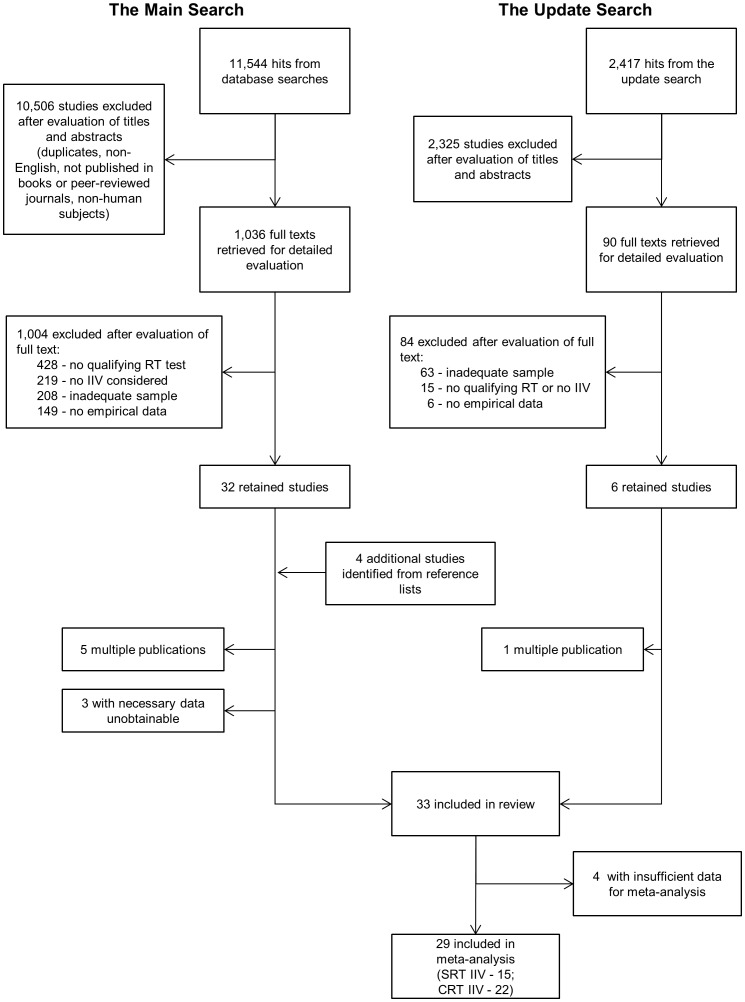
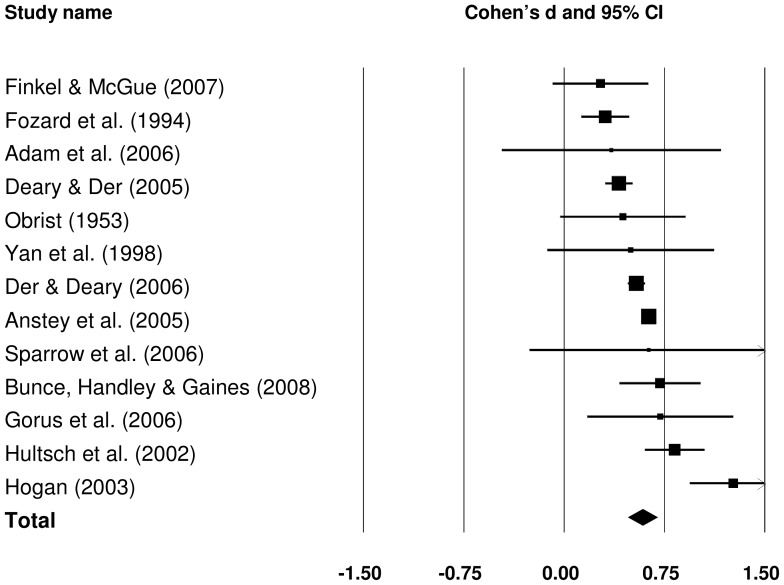
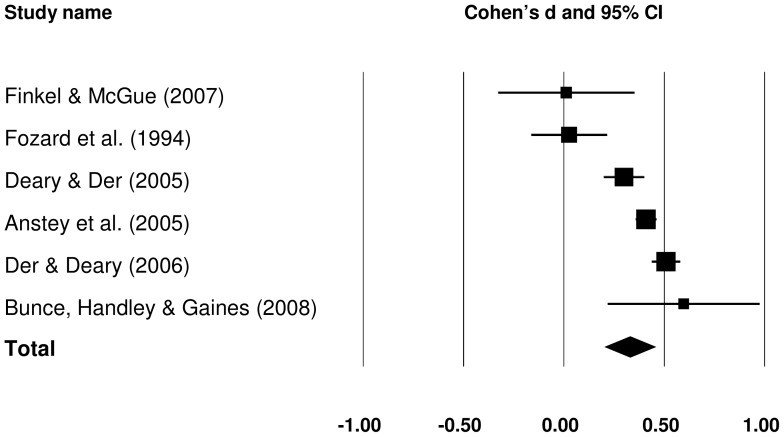
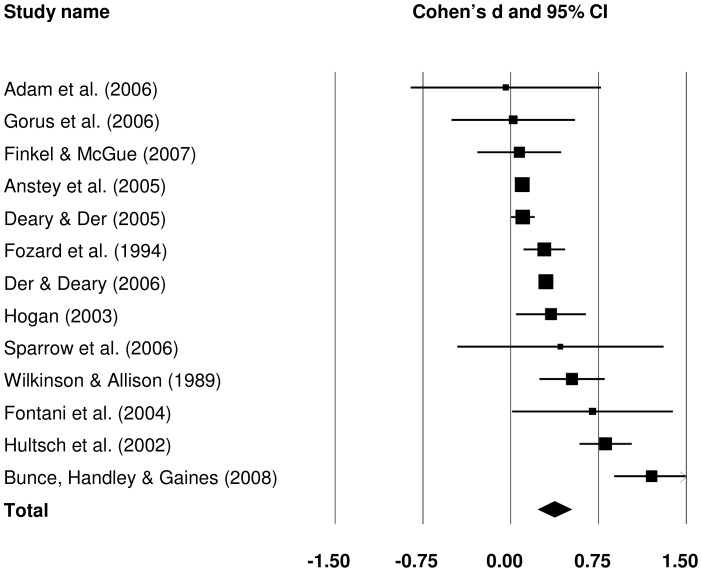
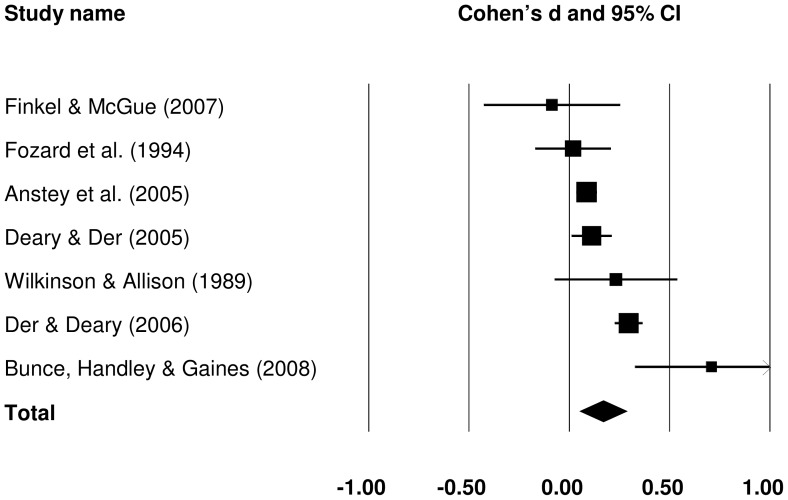
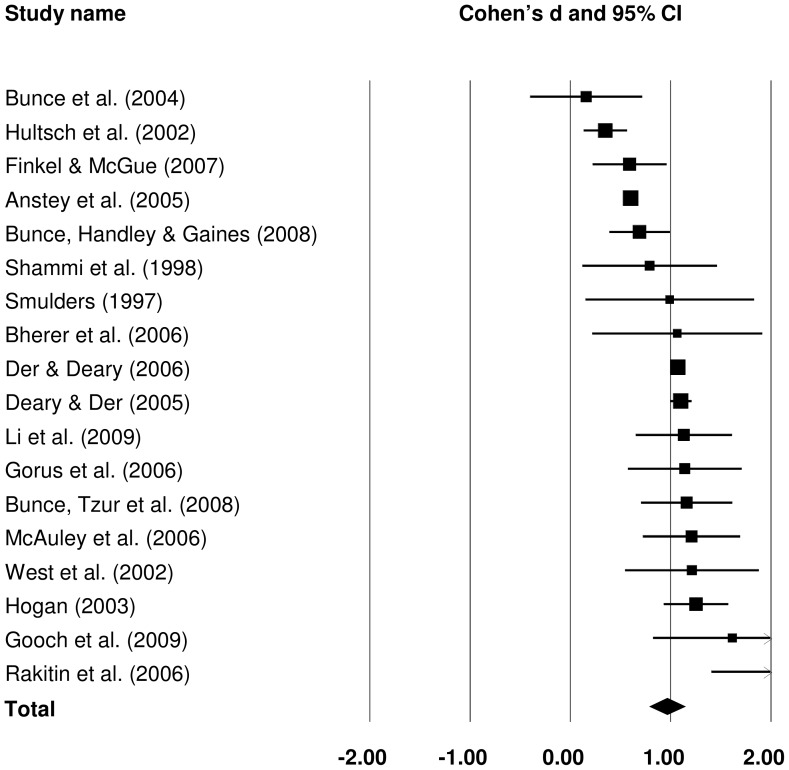
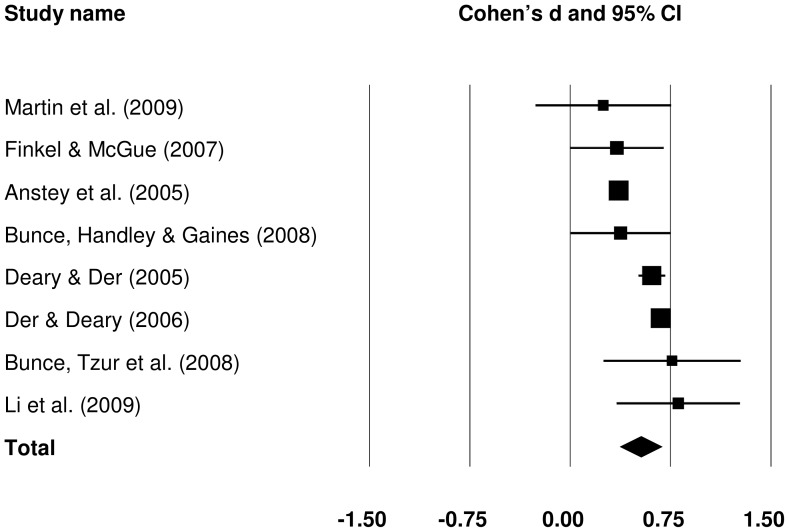
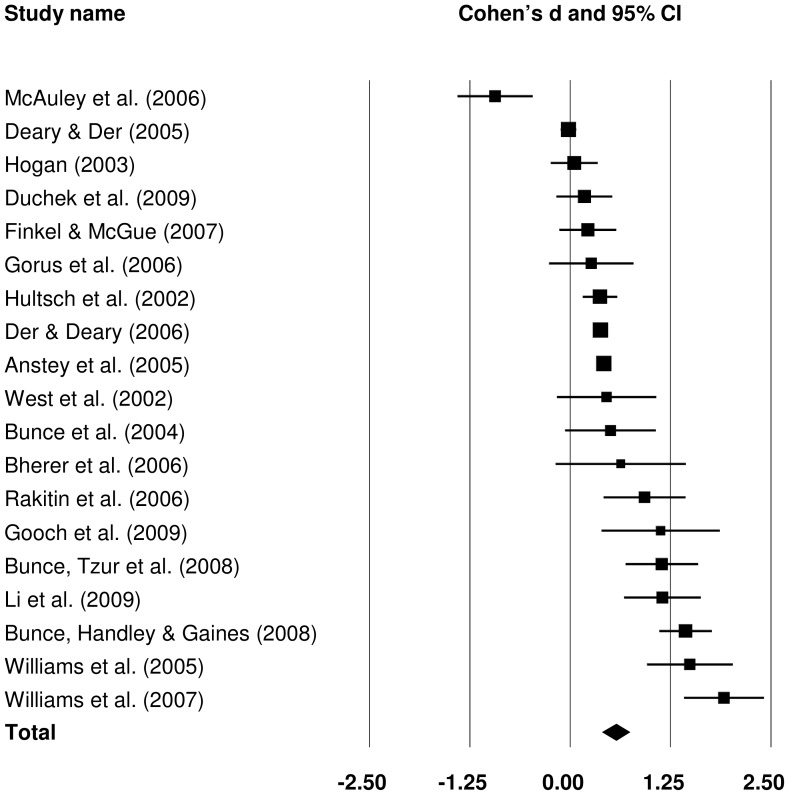
BACKGROUND: Intra-individual variability in reaction time (RT IIV) is considered to be an index of central nervous system functioning. Such variability is elevated in neurodegenerative diseases or following traumatic brain injury. It has also been suggested to increase with age in healthy ageing. OBJECTIVES: To investigate and quantify age differences in RT IIV in healthy ageing; to examine the effect of different tasks and procedures; to compare raw and mean-adjusted measures of RT IIV. DATA SOURCES: Four electronic databases: PsycINFO, Medline, Web of Science and EMBASE, and hand searching of reference lists of relevant studies. STUDY ELIGIBILITY: English language journal articles, books or book chapters, containing quantitative empirical data on simple and/or choice RT IIV. Samples had to include younger (under 60 years) and older (60 years and above) human adults. STUDY APPRAISAL AND SYNTHESIS: Studies were evaluated in terms of sample representativeness and data treatment. Relevant data were extracted, using a specially-designed form, from the published report or obtained directly from the study authors. Age-group differences in raw and RT-mean-adjusted measures of simple and choice RT IIV were quantified using random effects meta-analyses. RESULTS: Older adults (60+ years) had greater RT IIV than younger (20-39) and middle-aged (40-59) adults. Age effects were larger in choice RT tasks than in simple RT tasks. For all measures of RT IIV, effect sizes were larger for the comparisons between older and younger adults than between older and middle-aged adults, indicating that the age-related increases in RT IIV are not limited to old age. Effect sizes were also larger for raw than for RT-mean-adjusted RT IIV measures. CONCLUSIONS: RT IIV is greater among older adults. Some (but not all) of the age-related increases in RT IIV are accounted for by the increased RT means.
Overview
The claims and statistics of this paper haven’t been checked yet.
Run the check — free, no account needed. It reads the open-access text and checks the sources it cites.
Integrity signals
Registry
Cites
Statistics
Figures
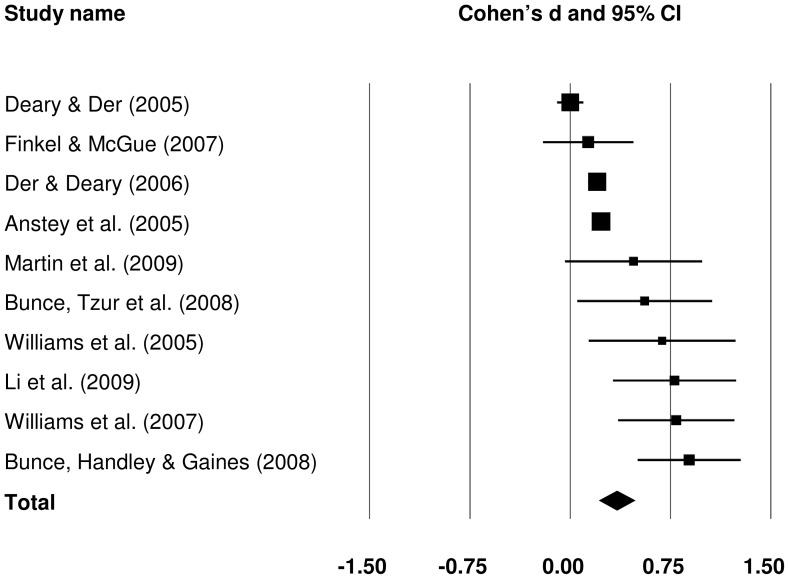
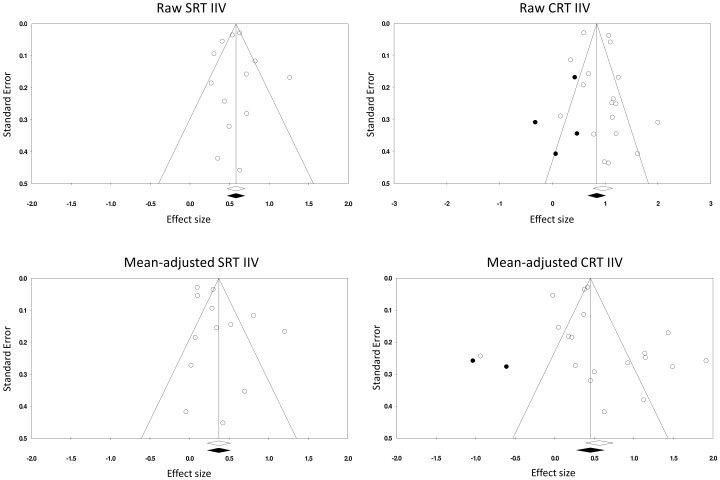
Verification
Claims the paper makes
The claims and statistics of this paper haven’t been checked yet.
Run the check — free, no account needed. It reads the open-access text and checks the sources it cites.
Claims other papers make about this one
Each is checked against this paper’s own text: does it say what the citing paper says it does?
The cited source says what the claim attributes to it.
In the citing paper
“However, in contrast to previous studies (Dykiert et al., 2012a), older participants in the current study showed reduced CVs.”
From Age-related slowing of response selection and production in a visual choice reaction time task (2015) · cites this paper as Dykiert et al., 2012a
The cited source says what the claim attributes to it.
In the citing paper
“In contrast to previous studies (Dykiert et al., 2012a), we did not observe an increase in the CV of trial-to-trial RT variance with age.”
From Age-related slowing of response selection and production in a visual choice reaction time task (2015) · cites this paper as Dykiert et al., 2012a
The cited source says what the claim attributes to it.
In the citing paper
“As in previous studies (Deary and Der, 2005; Der and Deary, 2006; Dykiert et al., 2012a), we found significant increases in SRT variance with age.”
From Factors influencing the latency of simple reaction time (2015) · cites this paper as Dykiert et al., 2012a
The cited source says what the claim attributes to it.
In the citing paper
“We also found significant age-related increases in SRT variance, and, in Experiment 2, increases in the CV as well, consistent with previous reports (Dykiert et al., 2012a).”
From Factors influencing the latency of simple reaction time (2015) · cites this paper as Dykiert et al., 2012a
The check wasn’t confident either way, so it gives no verdict — never disputed.
In the citing paper
“The rate of age-related SRT slowing that we observed (mean 0.50 ms/year) was similar to that of Dykiert et al. (2012a), but considerably less than the slowing observed in other SRT studies (Deary and Der, 2005; Reeves et al., 2007; Vincent et al., 2008; Deary et al., 2011).”
From Factors influencing the latency of simple reaction time (2015) · cites this paper as Dykiert et al. (2012a)
Experimental — accuracy not yet measured
Self-check
Percentages, sums and reported differences re-computed from the paper’s own numbers.
The self-check needs the paper’s full text.
Citations
Cites
Preferred Reporting Items for Systematic Reviews and Meta-Analyses: the PRISMA statement
Moher, D., Liberati, A., Tetzlaff, J., Altman, D. G., & for the PRISMA Group (2009) · BMJ · doi:10.1136/bmj.b2535 · Cited by 83,823
Preferred Reporting Items for Systematic Reviews and Meta-Analyses: The PRISMA Statement
Moher, D., Liberati, A., Tetzlaff, J., Altman, D. G., & The PRISMA Group (2009) · PLoS Medicine · doi:10.1371/journal.pmed.1000097 · Cited by 64,042
Preferred reporting items for systematic reviews and meta-analyses: the PRISMA Statement.
(2009) · PubMed Central · Cited by 44,859
Wang, G., Ma, R., Qiao, G., Wada, K., Aizawa, Y., & Satoh, T. (2015) · Integrative Medicine International · doi:10.1159/000368408 · Cited by 18,762
Borenstein, M., Hedges, L. V., Higgins, J. P. T., & Rothstein, H. R. (2009) · doi:10.1002/9780470743386 · Cited by 14,225
Duval, S., & Tweedie, R. (2000) · Biometrics · doi:10.1111/j.0006-341x.2000.00455.x · Cited by 14,099
Borenstein, M., Hedges, L. V., Higgins, J. P. T., & Rothstein, H. R. (2021) · doi:10.1002/9781119558378 · Cited by 9,799
The file drawer problem and tolerance for null results.
Rosenthal, R. (1979) · Psychological Bulletin · doi:10.1037/0033-2909.86.3.638 · Cited by 9,068
Cohen, J. (1992) · Psychological Bulletin · doi:10.1037//0033-2909.112.1.155 · Cited by 8,771
A Nonparametric “Trim and Fill” Method of Accounting for Publication Bias in Meta-Analysis
Duval, S., & Tweedie, R. (2000) · Journal of the American Statistical Association · doi:10.1080/01621459.2000.10473905 · Cited by 2,955
Research works printed but not linked: 3
- [18]Brebner JT, Welford AT (1980) Introduction: an historical background sketch. In Reaction times Welford AT, editor. Academic Press, New York 1– 23.
- [19]Lahtela K, Niemi P, Kuusela V (1985) Adult visual choice-reaction time, age, sex, and preparedness. Scandinavian Journal of Psychology 26: 357– 362. 4089563
- [30]Hogan MJ (2003) Average speed or variable speed–what do older adults really need? Irish Journal of Psychology 24: 161– 183.
Cited by
Sorted by citations
Hallmarks of Brain Aging: Adaptive and Pathological Modification by Metabolic States
Mattson, M. P., & Arumugam, T. V. (2018) · Cell Metabolism · doi:10.1016/j.cmet.2018.05.011 · Cited by 1,242
Factors influencing the latency of simple reaction time
Woods, D. L., Wyma, J. M., Yund, E. W., Herron, T. J., & Reed, B. (2015) · Frontiers in Human Neuroscience · doi:10.3389/fnhum.2015.00131 · Cited by 336
“As in previous studies (Deary and Der, 2005; Der and Deary, 2006; Dykiert et al., 2012a), we found significant increases in SRT variance with age.”
BackgroundMethodResultInfluentialNeural variability: friend or foe?
Dinstein, I., Heeger, D. J., & Behrmann, M. (2015) · Trends in Cognitive Sciences · doi:10.1016/j.tics.2015.04.005 · Cited by 266
Castelli, V., Benedetti, E., Antonosante, A., Catanesi, M., Pitari, G., Ippoliti, R., Cimini, A., & d’Angelo, M. (2019) · Frontiers in Molecular Neuroscience · doi:10.3389/fnmol.2019.00132 · Cited by 224
Age-related slowing of response selection and production in a visual choice reaction time task
Woods, D. L., Wyma, J. M., Yund, E. W., Herron, T. J., & Reed, B. (2015) · Frontiers in Human Neuroscience · doi:10.3389/fnhum.2015.00193 · Cited by 130
“These results also agree with some previous studies (Deary and Der, 2005), Frontiers in Human Neuroscience | www.frontiersin.org 7 April 2015 | Volume 9 | Article 193 but conflict with others (Houx and Jolles, 1993; Dykiert et al., 2012b).”
BackgroundMethodResultInfluentialHaynes, B. I., Bauermeister, S., & Bunce, D. J. (2017) · Journal of the International Neuropsychological Society · doi:10.1017/s1355617717000236 · Cited by 117
Age differences in sustained attention tasks: A meta-analysis
Vallesi, A., Tronelli, V., Lomi, F., & Pezzetta, R. (2021) · Psychonomic Bulletin & Review · doi:10.3758/s13423-021-01908-x · Cited by 104
Henderson, J. M., & Luke, S. G. (2014) · Journal of Experimental Psychology Human Perception & Performance · doi:10.1037/a0036330 · Cited by 103
To what extent does attention underlie language in aphasia?
Villard, S., & Kiran, S. (2016) · Aphasiology · doi:10.1080/02687038.2016.1242711 · Cited by 95
Williams, D. P., Thayer, J. F., & Koenig, J. (2016) · Psychophysiology · doi:10.1111/psyp.12739 · Cited by 105
Consistency of attentional control as an important cognitive trait: A latent variable analysis
Nash Unsworth, A. (2015) · Intelligence · doi:10.1016/j.intell.2015.01.005 · Cited by 90
Phillips, M., Rogers, P. J., Haworth, J., Bayer, A. J., & Tales, A. (2013) · PLoS ONE · doi:10.1371/journal.pone.0065712 · Cited by 85
Li, S., Blythe, P. T., Guo, W., & Namdeo, A. K. (2019) · Transportation Planning and Technology · doi:10.1080/03081060.2019.1609221 · Cited by 75
Intermittent Hypoxia Training for Treating Mild Cognitive Impairment: A Pilot Study
Wang, H., Shi, X., Schenck, H., Hall, J. R., Ross, S. E., Kline, G. P., Chen, S., Mallet, R. T., & Chen, P. (2020) · American Journal of Alzheimer s Disease & Other Dementias® · doi:10.1177/1533317519896725 · Cited by 73
Neuronal induction of BNIP3-mediated mitophagy slows systemic aging in Drosophila
Schmid, E. T., Pyo, J.-H., & Walker, D. W. (2022) · Nature Aging · doi:10.1038/s43587-022-00214-y · Cited by 74
White Matter and Cognitive Decline in Aging: A Focus on Processing Speed and Variability
Nilsson, J., Thomas, A. J., O'Brien, J. T., & Gallagher, P. (2014) · Journal of the International Neuropsychological Society · doi:10.1017/s1355617713001458 · Cited by 70
Li, S., Blythe, P. T., Guo, W., Namdeo, A. K., Edwards, S. J., Goodman, P. S., & Hill, G. A. (2019) · Transportation Research Part F Traffic Psychology and Behaviour · doi:10.1016/j.trf.2019.10.009 · Cited by 55
Morrison, S., Armitano‐Lago, C., Raffaele, C. T., Deutsch, S. I., Neumann, S. A., Caracci, H., & Urbano, M. R. (2018) · Experimental Brain Research · doi:10.1007/s00221-018-5300-9 · Cited by 59
When I’m 64: Age-Related Variability in Over 40,000 Online Cognitive Test Takers
LaPlume, A. A., Anderson, N. D., McKetton, L., Levine, B., & Troyer, A. K. (2021) · The Journals of Gerontology Series B · doi:10.1093/geronb/gbab143 · Cited by 52
Piumatti, G., Moore, S. C., Berridge, D. M., Sarkar, C., & Gallacher, J. (2018) · Journal of Public Health · doi:10.1093/pubmed/fdx186 · Cited by 51
Cognitive Intra-individual Variability in HIV: an Integrative Review
Vance, D. E., Bene, V. A. D., Sandson, J., Billings, R., Triebel, K. L., Buchholz, A. S., Rubin, L. H., Woods, S. P., Li, W., & Fazeli, P. L. (2021) · Neuropsychology Review · doi:10.1007/s11065-021-09528-x · Cited by 48
Driver Intention Recognition: State-of-the-Art Review
Vellenga, K., Steinhauer, H. J., Karlsson, A., Falkman, G., Rhodin, A., & Koppisetty, A. C. (2022) · IEEE Open Journal of Intelligent Transportation Systems · doi:10.1109/ojits.2022.3197296 · Cited by 54
Prioritizing attention on a reaction time task improves postural control and reaction time
Jehu, D. A., Desponts, A., Paquet, N., & Lajoie, Y. (2014) · International Journal of Neuroscience · doi:10.3109/00207454.2014.907573 · Cited by 47
A comparative study of visual reaction time in table tennis players and healthy controls.
Bhabhor, M., Vidja, K., Bhanderi, P., Dodhia, S., Kathrotia, R., & Joshi, V. (2013) · PubMed · Cited by 46
Use of a robotic device to measure age-related decline in finger proprioception
Ingemanson, M. L., Rowe, J. B., Chan, V., Wolbrecht, E. T., Cramer, S. C., & Reinkensmeyer, D. J. (2015) · Experimental Brain Research · doi:10.1007/s00221-015-4440-4 · Cited by 45
Daamen, M., Bäuml, J., Scheef, L., Sorg, C., Busch, B., Baumann, N., Bartmann, P., Dieter Wolke, C., Wohlschläger, A. M., & Boecker, H. (2014) · Human Brain Mapping · doi:10.1002/hbm.22691 · Cited by 47
Simon, E. B., Vallat, R., Rossi, A., & Walker, M. P. (2022) · PLoS Biology · doi:10.1371/journal.pbio.3001733 · Cited by 48
Abdelkarim, D., Zhao, Y., Turner, M. P., Sivakolundu, D. K., Lu, H., & Bart Rypma, A. (2019) · Neuroscience & Biobehavioral Reviews · doi:10.1016/j.neubiorev.2019.09.005 · Cited by 47
Wong, G. C., & Chow, H. (2022) · Journal of Alzheimer s Disease · doi:10.3233/jad-220203 · Cited by 41
Comparison of Reaction Time Between eSports Players of Different Genres and Sportsmen
Bickmann, P., Wechsler, K., Rudolf, K., Tholl, C., Froböse, I., & Grieben, C. (2021) · International Journal of eSports Research · doi:10.4018/ijer.20210101.oa1 · Cited by 43
Bunce, D. J., Bielak, A. A. M., Cherbuin, N., Batterham, P. J., Wen, W. X., Sachdev, P. S., & Anstey, K. J. (2013) · Journal of the International Neuropsychological Society · doi:10.1017/s1355617713000830 · Cited by 39
Felice, S. D., & Holland, C. (2018) · Frontiers in Psychology · doi:10.3389/fpsyg.2018.01973 · Cited by 39
Gilmour, G., Porcelli, S., Bertaina‐Anglade, V., Arce, E., Dukart, J., Hayen, A., Lobo, A., López‐Antón, R., Pich, E. M., Pemberton, D. J., et al. (2018) · Neuroscience & Biobehavioral Reviews · doi:10.1016/j.neubiorev.2018.09.025 · Cited by 39
Intra-individual Variability in Women with Breast Cancer
Bernstein, L. J., Catton, P. A., & Tannock, I. F. (2014) · Journal of the International Neuropsychological Society · doi:10.1017/s1355617714000125 · Cited by 37
Thalamic functional connectivity and its association with behavioral performance in older age
Goldstone, A., Mayhew, S. D., Hale, J. R., Wilson, R. S., & Bagshaw, A. P. (2018) · Brain and Behavior · doi:10.1002/brb3.943 · Cited by 34
Li, X., Han, T., Zou, X., Zhang, H., Feng, W., Wang, H., Shen, Y., Zhang, L., & Fang, G. (2021) · European Journal of Applied Physiology · doi:10.1007/s00421-021-04746-w · Cited by 36
Hsieh, S.-S., Chang, Y.-K., Fang, C.-L., & Hung, T.-M. (2016) · Journal of Sport and Exercise Psychology · doi:10.1123/jsep.2015-0282 · Cited by 34
Ali, S., Kerns, K. A., Mulligan, B. P., Olson, H. C., & Astley, S. J. (2017) · Child Neuropsychology · doi:10.1080/09297049.2017.1302579 · Cited by 34
Alterations in Executive Functions with Aging
Stuss, D. T., & Craik, F. I. M. (2019) · Cambridge University Press eBooks · doi:10.1017/9781108554350.012 · Cited by 33
Aschenbrenner, A. J., Hassenstab, J. J., Morris, J. C., Cruchaga, C., & Jackson, J. J. (2023) · Neuropsychology · doi:10.1037/neu0000905 · Cited by 32
Occhialini, M., Bernardini, G., Ferracuti, F., Iarlori, S., D’Orazio, M., & Longhi, S. (2016) · Fire Safety Journal · doi:10.1016/j.firesaf.2016.03.003 · Cited by 31
Between-session and within-session intra-individual variability in attention in aphasia
Villard, S., & Kiran, S. (2017) · Neuropsychologia · doi:10.1016/j.neuropsychologia.2017.12.005 · Cited by 31
Nucleus accumbens and caudate atrophy predicts longer action selection times in young and old adults
Boisgontier, M. P., van Ruitenbeek, P., Leunissen, I., Chalavi, S., Sunaert, S. G., Levin, O., & Swinnen, S. P. (2016) · Human Brain Mapping · doi:10.1002/hbm.23333 · Cited by 30
Hudec, K. L., Alderson, R. M., Patros, C. H. G., Lea, S. E., Tarle, S. J., & Kasper, L. J. (2015) · Research in Developmental Disabilities · doi:10.1016/j.ridd.2015.07.012 · Cited by 28
Functional exercise capacity, strength, balance and motion reaction time in Barth syndrome
Hornby, B., McClellan, R., Buckley, L. P., Carson, K., Gooding, T., & Vernon, H. J. (2019) · Orphanet Journal of Rare Diseases · doi:10.1186/s13023-019-1006-8 · Cited by 28
Reduced modulation of BOLD variability as a function of cognitive load in healthy aging
Rieck, J. R., DeSouza, B., Baracchini, G., & Grady, C. L. (2022) · Neurobiology of Aging · doi:10.1016/j.neurobiolaging.2022.01.010 · Cited by 29
Morcelli, M. H., Rossi, D. M., Karuka, A. H., Crozara, L. F., Hallal, C. Z., Marques, N. R., Gonçalves, M., & Navega, M. T. (2016) · Physiotherapy Theory and Practice · doi:10.3109/09593985.2015.1091870 · Cited by 27
Response Time Consistency Is an Indicator of Executive Control Rather than Global Cognitive Ability
Vasquez, B. P., Binns, M. A., & Anderson, N. D. (2017) · Journal of the International Neuropsychological Society · doi:10.1017/s1355617717001266 · Cited by 27
Movement Path Tortuosity in Free Ambulation: Relationships to Age and Brain Disease
Kearns, W. D., Fozard, J. L., & Nams, V. O. (2016) · IEEE Journal of Biomedical and Health Informatics · doi:10.1109/jbhi.2016.2517332 · Cited by 26
Neural correlates of individual differences in fixation duration during natural reading
Henderson, J. M., Choi, W., Luke, S. G., & Schmidt, J. (2017) · Quarterly Journal of Experimental Psychology · doi:10.1080/17470218.2017.1329322 · Cited by 27
Blomkvist, A. W., Eika, F., Rahbek, M. T., Eikhof, K. D., Hansen, M. D., Søndergaard, M., Ryg, J., Andersen, S., & Jørgensen, M. G. (2017) · PLoS ONE · doi:10.1371/journal.pone.0189598 · Cited by 25
Effects of age on attention level: changes in performance between the ages of 12 and 90
Lufi, D., & Haimov, I. (2018) · Aging Neuropsychology and Cognition · doi:10.1080/13825585.2018.1546820 · Cited by 25
Electrophysiological Correlates of Response Time Variability During a Sustained Attention Task
Machida, K., Murias, M., & Johnson, K. A. (2019) · Frontiers in Human Neuroscience · doi:10.3389/fnhum.2019.00363 · Cited by 27
The relation between falls risk and movement variability in Parkinson’s disease
Morrison, S., Moxey, J. R., Reilly, N., Russell, D. M., Thomas, K. M., & Grunsfeld, A. A. (2021) · Experimental Brain Research · doi:10.1007/s00221-021-06113-9 · Cited by 24
Reißig, P., Garry, M. I., Summers, J. J., & Hinder, M. R. (2014) · Neuropsychological Rehabilitation · doi:10.1080/09602011.2014.922889 · Cited by 24
van Duijvenbode, N., Didden, R., Korzilius, H. P. L. M., & Engels, R. C. M. E. (2015) · Journal of Intellectual Disability Research · doi:10.1111/jir.12244 · Cited by 25
Modelling personality, plasticity and predictability in shelter dogs
Goold, C. M., & Newberry, R. C. (2017) · Royal Society Open Science · doi:10.1098/rsos.170618 · Cited by 25
Does Diet Have a Role in the Treatment of Alzheimer's Disease?
Thelen, M., & Brown‐Borg, H. M. (2020) · Frontiers in Aging Neuroscience · doi:10.3389/fnagi.2020.617071 · Cited by 24
Heterogeneous Indicators of Cognitive Performance and Performance Variability Across the Lifespan
Rutter, L. A., Vahia, I. V., Forester, B. P., Ressler, K. J., & Germine, L. T. (2020) · Frontiers in Aging Neuroscience · doi:10.3389/fnagi.2020.00062 · Cited by 22
Roles and Mechanisms of Astragaloside IV in Combating Neuronal Aging
Zaman, Q., Zhang, D., Obireddy, S. R., Wong, W., & Lai, W. (2022) · Aging and Disease · doi:10.14336/ad.2022.0126 · Cited by 22
Increased variability in reaction time is associated with amyloid beta pathology at age 70
Lu, K., Nicholas, J. M., James, S., Lane, C., Parker, T. D., Keshavan, A., Keuss, S. E., Buchanan, S. M., Murray‐Smith, H., Cash, D. M., et al. (2020) · Alzheimer s & Dementia Diagnosis Assessment & Disease Monitoring · doi:10.1002/dad2.12076 · Cited by 22
Osmon, D. C., Kazakov, D., Santos, O. A., & Kassel, M. T. (2018) · Neuropsychology Review · doi:10.1007/s11065-018-9382-8 · Cited by 23
The 3-Second Rule in Hereditary Pure Cerebellar Ataxia: A Synchronized Tapping Study
Matsuda, S., Matsumoto, H., Furubayashi, T., Hanajima, R., Tsuji, S., Ugawa, Y., & Terao, Y. (2015) · PLoS ONE · doi:10.1371/journal.pone.0118592 · Cited by 21
Executive functions and intraindividual variability following concussion
Karr, J. E., García-Barrera, M. A., & Areshenkoff, C. N. (2013) · Journal of Clinical and Experimental Neuropsychology · doi:10.1080/13803395.2013.863833 · Cited by 26
Daily Stress Processes as Contributors to and Targets for Promoting Cognitive Health in Later Life
Stawski, R. S., Cerino, E. S., Witzel, D. D., & MacDonald, S. W. S. (2018) · Psychosomatic Medicine · doi:10.1097/psy.0000000000000643 · Cited by 21
EEG-ERP dynamics in a visual Continuous Performance Test
Karamacoska, D., Barry, R. J., Blasio, F. M. D., & Steiner, G. Z. (2019) · International Journal of Psychophysiology · doi:10.1016/j.ijpsycho.2019.08.013 · Cited by 20
Jørgensen, M. G., Paramanathan, S., Ryg, J., Masud, T., & Andersen, S. (2015) · BMC Geriatrics · doi:10.1186/s12877-015-0080-6 · Cited by 19
Preserved Discrimination Performance and Neural Processing during Crossmodal Attention in Aging
Mishra, J., & Gazzaley, A. H. (2013) · PLoS ONE · doi:10.1371/journal.pone.0081894 · Cited by 20
Trenado, C., González-Ramírez, A., Lizárraga-Cortés, V., Pedroarena‐Leal, N., Manjarrez, E., & Ruge, D. (2019) · Frontiers in Neuroscience · doi:10.3389/fnins.2018.00850 · Cited by 20
Reaction time and intelligence: Comparing associations based on two response modes
Nissan, J. J., Liewald, D. C. M., & Deary, I. J. (2013) · Intelligence · doi:10.1016/j.intell.2013.08.002 · Cited by 19
Self-citationAita, S. L., Bene, V. A. D., Knapp, D., Demming, C. E., Ikonomou, V. C., Owen, T., Campbell, I., Wagaman, B., Borgogna, N. C., Caron, J. E., et al. (2024) · Neuropsychology Review · doi:10.1007/s11065-024-09654-2 · Cited by 21
Associations between reaction time measures and white matter hyperintensities in very old age
Haynes, B. I., Bunce, D. J., Kochan, N. A., Wen, W. X., Brodaty, H., & Sachdev, P. S. (2017) · Neuropsychologia · doi:10.1016/j.neuropsychologia.2017.01.021 · Cited by 18
Efficiency of attentional processes in bilingual speakers with aphasia
Dash, T., Masson‐Trottier, M., & Ansaldo, A. I. (2020) · Aphasiology · doi:10.1080/02687038.2020.1719970 · Cited by 17
Vakani, K., Ratto, M., Sandford-James, A., Antonova, E., & Kumari, V. (2023) · European Psychiatry · doi:10.1192/j.eurpsy.2023.25 · Cited by 18
Age Differences in Reaction Times and a Neurophysiological Marker of Cholinergic Activity
Young-Bernier, M., Tanguay, A. F. N., Tremblay, F., & Davidson, P. S. R. (2015) · Canadian Journal on Aging / La Revue canadienne du vieillissement · doi:10.1017/s0714980815000409 · Cited by 18
Prestimulus delta and theta contributions to equiprobable Go/NoGo processing in healthy ageing
Blasio, F. M. D., & Barry, R. J. (2018) · International Journal of Psychophysiology · doi:10.1016/j.ijpsycho.2018.05.005 · Cited by 20
McCormick, E. M., & Kievit, R. (2023) · Journal of Neuroscience · doi:10.1523/jneurosci.1042-22.2023 · Cited by 18
Neural Bases of Age-Related Sensorimotor Slowing in the Upper and Lower Limbs
Marušič, U., Peskar, M., de Pauw, K., Omejc, N., Drevenšek, G., Rojc, B., Pišot, R., & Kavcic, V. (2022) · Frontiers in Aging Neuroscience · doi:10.3389/fnagi.2022.819576 · Cited by 15
Reaction time variability and brain white matter integrity.
Booth, T., Dykiert, D., Corley, J., Gow, A. J., Morris, Z., Maniega, S. M., Royle, N. A., Hernández, M. V., Starr, J. M., Penke, L., et al. (2019) · Neuropsychology · doi:10.1037/neu0000483 · Cited by 19
Self-citationDynamic Adjustments of Midfrontal Control Signals in Adults and Adolescents
Gyurkovics, M., & Levita, L. (2020) · Cerebral Cortex · doi:10.1093/cercor/bhaa258 · Cited by 19
Yamamoto, R., Akizuki, K., Yamaguchi, K., Yabuki, J., & Kaneno, T. (2022) · Scientific Reports · doi:10.1038/s41598-022-14975-4 · Cited by 14
Research status of visuospatial dysfunction and spatial navigation
Bao, R., Chang, S., Liu, R., Wang, Y., & Guan, Y. (2025) · Frontiers in Aging Neuroscience · doi:10.3389/fnagi.2025.1609620 · Cited by 14
Chaku, N., Yan, R., Kelly, D. P., Zhang, Z., Lopez‐Duran, N. L., Weigard, A. S., & Beltz, A. M. (2023) · Research on Child and Adolescent Psychopathology · doi:10.1007/s10802-023-01071-y · Cited by 17
Zappelli, E., Daniele, S., Ceccarelli, L., Vergassola, M., Ragni, L., Mangano, G., & Martini, C. (2022) · European Journal of Neuroscience · doi:10.1111/ejn.15783 · Cited by 12
Does within-person variability predict errors in healthy adults aged 18–90?
Haynes, B. I., Bauermeister, S., & Bunce, D. J. (2016) · Quarterly Journal of Experimental Psychology · doi:10.1080/17470218.2016.1204328 · Cited by 13
MacPherson, S. E., Gillebert, C. R., Robinson, G. A., & Vallesi, A. (2019) · Frontiers in Psychology · doi:10.3389/fpsyg.2019.00432 · Cited by 13
Gaynor, A. M., Ahsan, A., Jung, D., Schofield, E., Li, Y., Ryan, E., Ahles, T. A., & Root, J. C. (2022) · Journal of Cancer Survivorship · doi:10.1007/s11764-022-01232-w · Cited by 12
Polyoxidovanadates as a pharmacological option against brain aging
Díaz, A., Vázquez‐Roque, R. A., Carreto-Meneses, K., Moroni-González, D., Moreno-Rodríguez, J. A., & Treviño, S. (2023) · Journal of Chemical Neuroanatomy · doi:10.1016/j.jchemneu.2023.102256 · Cited by 11
Toward a cross-cultural understanding of intraindividual variability metrics
Scott, B. M., Royall, D. R., Benge, J. F., & Hilsabeck, R. C. (2024) · Journal of Clinical and Experimental Neuropsychology · doi:10.1080/13803395.2024.2328870 · Cited by 11
Burnett, J., Cobden, A. L., Burmester, A., Akhlaghi, H., D, J. F. D., & Caeyenberghs, K. (2025) · Cortex · doi:10.1016/j.cortex.2025.04.011 · Cited by 12
Bene, V. A. D., Aita, S. L., Fonseca, L. M., Borgogna, N. C., Buchholz, A. S., Woods, S. P., Schretlen, D. J., Kiselica, A. M., Webber, T. A., Schmitter‐Edgecombe, M., et al. (2025) · The Clinical Neuropsychologist · doi:10.1080/13854046.2025.2574463 · Cited by 11
Program of Seven 45-min Dry Immersion Sessions Improves Choice Reaction Time in Parkinson’s Disease
Meigal, A. Y., Tretjakova, O., Gerasimova-Meigal, L. I., & Sayenko, I. (2021) · Frontiers in Physiology · doi:10.3389/fphys.2020.621198 · Cited by 11
Ribeiro, M. J., & Castelo-Branco, M. S. (2022) · eLife · doi:10.7554/elife.75722 · Cited by 12
Coupling of motor oscillators – What really happens when you chew gum and walk?
Samulski, B., Prebor, J., Armitano‐Lago, C., & Morrison, S. (2019) · Neuroscience Letters · doi:10.1016/j.neulet.2019.01.016 · Cited by 11
The neural–vascular basis of age‐related processing speed decline
Zhao, Y., Liu, P., Turner, M. P., Abdelkarim, D., Lu, H., & Bart Rypma, A. (2021) · Psychophysiology · doi:10.1111/psyp.13845 · Cited by 11
Li, C., Gheorghe, D. A., Gallacher, J., & Bauermeister, S. (2020) · Evidence-Based Mental Health · doi:10.1136/ebmental-2020-300147 · Cited by 10
Caravaglios, G., Castro, G., Muscoso, E. G., Crivelli, D., & Balconi, M. (2016) · Clinical EEG and Neuroscience · doi:10.1177/1550059416676144 · Cited by 12
Lu, H., Chan, S. S. M., & Lam, L. C. W. (2016) · Geriatrics · doi:10.3390/geriatrics1020013 · Cited by 10
Yao, L., Shono, Y., Nowinski, C. J., Dworak, E. M., Kaat, A. J., Chen, S., Lovett, R., Ho, E., Curtis, L. M., Wolf, M. U., et al. (2024) · Frontiers in Psychiatry · doi:10.3389/fpsyt.2023.1297952 · Cited by 9
Hintz, F., Dijkhuis, M., Hoff, V. V. '., Huijsmans, M. K., Kievit, R., McQueen, J. M., & Meyer, A. S. (2025) · Brain Research · doi:10.1016/j.brainres.2025.149502 · Cited by 10
Metadata
- Authors
- Dykiert, D., Der, G., Starr, J. M., & Deary, I. J.
- Affiliations
- University of Edinburgh (GB)
- MRC/CSO Social and Public Health Sciences Unit (GB)
- Corresponding author
- Dykiert, Dominika
- Venue
- PLoS ONE
- Publisher
- Public Library of Science (PLoS)
- Published
- 2012-10-11
- Volume
- 7
- Issue
- 10
- Pages
- e45759
- ISSN
- 1932-6203 (ISSN-L)
- PMC
- PMC3469552
- OpenAlex
- W2114369674
- Cited by
- 218
- References
- 73
- Citations by year
- 2026: 14 · 2025: 27 · 2024: 17 · 2023: 17 · 2022: 25 · 2021: 15 · 2020: 12 · 2019: 18 · 2018: 11 · 2017: 15 · 2016: 15 · 2015: 15 · 2014: 9 · 2013: 8
- FWCI
- 0.81
- Type
- journal article
- Language
- en
- Open access
- gold
- doi.org
- Locations
- PLoS ONE (publishedVersion, cc-by)
- PubMed Central (publishedVersion, cc-by)
- PubMed (publishedVersion)
- ENLIGHTEN (Jurnal Bimbingan dan Konseling Islam) (acceptedVersion)
- Edinburgh Research Explorer (University of Edinburgh) (acceptedVersion, other-oa)
- RePEc: Research Papers in Economics (submittedVersion)
- DOAJ (DOAJ: Directory of Open Access Journals) (submittedVersion, cc-by-sa)
- Figshare (submittedVersion, cc-by)
- Funders
- University of Edinburgh (G0700704/84698)
- Centre for Cognitive Ageing and Cognitive Epidemiology (G0700704/84698)
- Directorate for Biological Sciences
- Medical Research Council (G0700704)
- Engineering and Physical Sciences Research Council
- Biotechnology and Biological Sciences Research Council (G0700704/84698)
- Economic and Social Research Council
- Topics
- Life Sciences › Neuroscience › Cognitive Neuroscience › Neural and Behavioral Psychology Studies
- Social Sciences › Psychology › Experimental and Cognitive Psychology › Cognitive Functions and Memory
- Social Sciences › Psychology › Developmental and Educational Psychology › Aging and Gerontology Research
- Keywords
- within-person variability, reaction time, age differences, healthy aging, older adults, choice reaction time, simple reaction time, central nervous system function, cognitive aging
- MeSH terms
- Adolescent, Adult, Aged, Aged, 80 and over, Aging, Choice Behavior, Female, Humans, Male, Middle Aged, Reaction Time, Publication Bias
About these checks
Registry, retraction, Cites and statistics results are computed, not judged, with one exception: a printed reference that no index lists is read once by a model before it counts as a citation error. Claims are extracted by a model and kept only when their quote appears verbatim in the text; each cited source is then checked, with a model’s help, for whether it says what the claim relies on. Those verdicts can be wrong — read the claim’s quote and the cited source before relying on one.
Statistics and arithmetic are recomputed, not judged.
Confidence bands are shown only for fields calibrated on our annotated test set. None is calibrated yet, so no band is shown.
What counts as a claim ›How we measure confidence ›How we check this ›
Are you an author, or do you see a problem with this page? Request a review
