

Associations between Pathogens in the Upper Respiratory Tract of Young Children: Interplay between Viruses and Bacteria
Open accessThe DOI matches its Crossref record; 43 of the 43 references it cites were found in a registry or an index.
Abstract
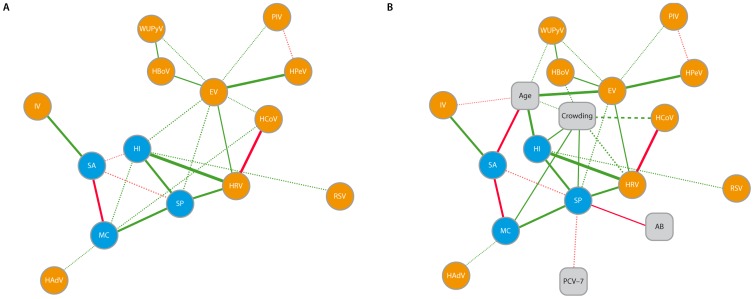
BACKGROUND: High rates of potentially pathogenic bacteria and respiratory viruses can be detected in the upper respiratory tract of healthy children. Investigating presence of and associations between these pathogens in healthy individuals is still a rather unexplored field of research, but may have implications for interpreting findings during disease. METHODOLOGY/PRINCIPAL FINDINGS: We selected 986 nasopharyngeal samples from 433 6- to 24-month-old healthy children that had participated in a randomized controlled trial. We determined the presence of 20 common respiratory viruses using real-time PCR. Streptococcus pneumoniae, Haemophilus influenzae, Moraxella catarrhalis and Staphylococcus aureus were identified by conventional culture methods. Information on risk factors was obtained by questionnaires. We performed multivariate logistic regression analyses followed by partial correlation analysis to identify the overall pattern of associations. S. pneumoniae colonization was positively associated with the presence of H. influenzae (adjusted odds ratio 1.60, 95% confidence interval 1.18-2.16), M. catarrhalis (1.78, 1.29-2.47), human rhinoviruses (1.63, 1.19-2.22) and enteroviruses (1.97, 1.26-3.10), and negatively associated with S. aureus presence (0.59, 0.35-0.98). H. influenzae was positively associated with human rhinoviruses (1.63, 1.22-2.18) and respiratory syncytial viruses (2.78, 1.06-7.28). M. catarrhalis colonization was positively associated with coronaviruses (1.99, 1.01-3.93) and adenoviruses (3.69, 1.29-10.56), and negatively with S. aureus carriage (0.42, 0.25-0.69). We observed a strong positive association between S. aureus and influenza viruses (4.87, 1.59-14.89). In addition, human rhinoviruses and enteroviruses were positively correlated (2.40, 1.66-3.47), as were enteroviruses and human bocavirus, WU polyomavirus, parainfluenza viruses, and human parechovirus. A negative association was observed between human rhinoviruses and coronaviruses. CONCLUSIONS/SIGNIFICANCE: Our data revealed high viral and bacterial prevalence rates and distinct bacterial-bacterial, viral-bacterial and viral-viral associations in healthy children, hinting towards the complexity and potential dynamics of microbial communities in the upper respiratory tract. This warrants careful consideration when associating microbial presence with specific respiratory diseases.
Overview
The claims and statistics of this paper haven’t been checked yet.
Free: it reads the open-access text and checks the first 5 claims that cite a source we can check. Create a free account to check every claim.
Integrity signals
Registry
Cites
Statistics
Figures
Verification
Claims the paper makes
The claims and statistics of this paper haven’t been checked yet.
Free: it reads the open-access text and checks the first 5 claims that cite a source we can check. Create a free account to check every claim.
Claims other papers make about this one
Each is checked against this paper’s own text: does it say what the citing paper says it does?
The source backs part of the claim, not all of it — or backs it for a different population, condition or comparison.
In the citing paper
“These studies have reported an overall detection rate of 67% for respiratory viruses in healthy asymptomatic children, including human rhinovirus (HRV), human bocavirus, polyomaviruses, human adenovirus and human coronavirus31,53.”
From The microbiota of the respiratory tract: gatekeeper to respiratory health (2017) · cites this paper as [53]
Experimental — accuracy not yet measuredThe cited source says what the claim attributes to it.
In the citing paper
“In addition to bacterial inhabitants, PCR-based studies suggest the extensive presence of viral pathogens in the URT.”
From The microbiota of the respiratory tract: gatekeeper to respiratory health (2017) · cites this paper as [53]
The cited source says what the claim attributes to it.
In the citing paper
“H. influenzae was positively associated with hRV and RSV;”
From Respiratory viral infection-induced microbiome alterations and secondary bacterial pneumonia. (2018) · cites this paper as [112]
In the citing paper
“Another study examining the presence of 20 respiratory viruses by PCR panel and prevalence of bacterial carriage in the nasopharynx of children found a strong positive association between S. aureus colonization and influenza virus (112).”
From Respiratory viral infection-induced microbiome alterations and secondary bacterial pneumonia. (2018) · cites this paper as [112]
In the citing paper
“Moreover, S. pneumoniae colonization was positively associated with the presence of hRV and enteroviruses;”
From Respiratory viral infection-induced microbiome alterations and secondary bacterial pneumonia. (2018) · cites this paper as [112]
1 more claim about this paper
Create a free account to see every claim other papers make about this one.
Self-check
Percentages, sums and reported differences re-computed from the paper’s own numbers.
The self-check needs the paper’s full text.
Citations
Cites
Models for Longitudinal Data: A Generalized Estimating Equation Approach
Zeger, S. L., Liang, K.-Y., & Albert, P. S. (1988) · Biometrics · doi:10.2307/2531734 · Cited by 4,505 · cited 1×
“We verified our primary analyses using a repeated measurements model taking more than one measurement per child into account using generalized linear models with an autoregressive correlation structure [19].”
MethodReview: a gentle introduction to imputation of missing values.
Donders, A. R. T., van der Heijden, G. J. M. G., Stijnen, T., & Moons, K. G. M. (2006) · Journal of Clinical Epidemiology · doi:10.1016/j.jclinepi.2006.01.014 · Cited by 2,582
Integration of biological networks and gene expression data using Cytoscape
Cline, M. S., Smoot, M., Cerami, E., Kuchinsky, A., Landys, N., Workman, C., Christmas, R., Avila-Campilo, I., Creech, M., Gross, B., et al. (2007) · Nature Protocols · doi:10.1038/nprot.2007.324 · Cited by 2,507 · cited 1×
“This analysis was performed in software package R 2.7 (function cor2por [package for R; available at: http://cran.r-project.org/ web/packages/corpcor/index.html]) and visualized using the complex network analysis in Cytoscape (version 2.7) [20] .”
MethodInfluentialStreptococcus pneumoniae colonisation: the key to pneumococcal disease
Bogaert, D., de Groot, R., & Hermans, P. (2004) · The Lancet Infectious Diseases · doi:10.1016/s1473-3099(04)00938-7 · Cited by 1,929 · cited 4×
“A balance in its polymicrobial composition and diversity is assumed to be important for maintenance of a healthy state [4],[6].”
BackgroundInfluentialSelf-citationMicrobial community structure and its functional implications
Fuhrman, J. A. (2009) · Nature · doi:10.1038/nature08058 · Cited by 1,382 · cited 1×
“The latter enables a helicopter-view of possible interrelations between microbes in a complex community, simultaneously correcting for the influence of important epidemiologic and environmental determinants [21].”
BackgroundSequence-based identification of microbial pathogens: a reconsideration of Koch's postulates
Fredericks, D. N., & Relman, D. A. (1996) · Clinical Microbiology Reviews · doi:10.1128/cmr.9.1.18 · Cited by 944 · cited 1×
“Koch's original postulates, designed to link one causative microbe to one specific disease, have been subject to reconsideration since they were formulated in 1884 [1] [2] [3] .”
BackgroundWhat are the consequences of the disappearing human microbiota?
Blaser, M. J., & Falkow, S. (2009) · Nature Reviews Microbiology · doi:10.1038/nrmicro2245 · Cited by 855 · cited 1×
“In a balanced state, this bacterial ecosystem is assumed to be beneficial for health, for example by stimulating the immune system and functioning as a protective barrier against invading pathogens [7].”
BackgroundShifting the balance: antibiotic effects on host–microbiota mutualism
Willing, B. P., Russell, S. L., & Finlay, B. B. (2011) · Nature Reviews Microbiology · doi:10.1038/nrmicro2536 · Cited by 747 · cited 1×
“Research on microbiota of the intestinal tract has made clear that symbiotic bacteria are co-dependent because of shared metabolic pathways [33].”
BackgroundIntestinal Microbiota Promote Enteric Virus Replication and Systemic Pathogenesis
Kuss, S. K., Best, G. T., Etheredge, C. A., Pruijssers, A. J., Frierson, J. M., Hooper, L. V., Dermody, T. S., & Pfeiffer, J. K. (2011) · Science · doi:10.1126/science.1211057 · Cited by 629 · cited 1×
“For example, interdependence between viruses and bacteria occurring in the gut was recently described: some viruses cover themselves with molecules from bacterial residents to make a viral infection possible [37],[38].”
BackgroundColonisation by Streptococcus pneumoniae and Staphylococcus aureus in healthy children
Bogaert, D., van Belkum, A., Sluijter, M., Luijendijk, A., de Groot, R., Rümke, H., Verbrugh, H., & Hermans, P. (2004) · The Lancet · doi:10.1016/s0140-6736(04)16357-5 · Cited by 592 · cited 1×
“aureus during nasopharyngeal carriage was confirmed in the present study [12],[25],[26].”
ResultSelf-citation
Cited by
Items 101–200 of 208
Influenza vaccines to control influenza-associated bacterial infection: where do we stand?
Christopoulou, I., Roose, K., Ibañez, L. I., & Saelens, X. (2014) · Expert Review of Vaccines · doi:10.1586/14760584.2015.957191 · Cited by 25
“aureus and influenza viruses in nasopharyngeal swabs of children under 2 years of age [34].”
Ballarini, S., Rossi, G. A., Principi, N., & Esposito, S. (2021) · Microorganisms · doi:10.3390/microorganisms9020448 · Cited by 28
“Although there are several observations suggesting that specific taxa enrichment or reduction could be potentially associated with disease inception, it is still too early to fully define a healthy respiratory microbiota and to identify species that can help to preserve the homeostasis, as well as to confirm the causa…”
BackgroundSempere, J., Llamosí, M., Román, F., Lago, D., González‐Camacho, F., Pérez-García, C., Yuste, J., & Domenech, M. (2022) · Scientific Reports · doi:10.1038/s41598-022-10609-x · Cited by 24
Zash, R., Shapiro, R., Leidner, J., Wester, C. W., McAdam, A. J., Hodinka, R. L., Thior, I., Moffat, C., Makhema, J. M., McIntosh, K., et al. (2015) · Paediatrics and International Child Health · doi:10.1179/2046905515y.0000000038 · Cited by 22
Launes, C., Armero, G., Antón, A., Hernández, L., Gimferrer, L., Cisneros, C., Jordán, I., & Muñoz‐Almagro, C. (2015) · Clinical Microbiology and Infection · doi:10.1016/j.cmi.2015.04.021 · Cited by 21
“The role of HRV when it is detected in acutely ill children is still being discussed because it shows long viral persistence in respiratory tract in many cases [8], and in addition, it is also detected in asymptomatic children [9,10].”
BackgroundInfluenza-associated bacterial pneumonia; managing and controlling infection on two fronts
Campigotto, A. J., & Mubareka, S. (2014) · Expert Review of Anti-infective Therapy · doi:10.1586/14787210.2015.981156 · Cited by 26
Brotons, P., Bassat, Q., Lanaspa, M., Henares, D., Pérez-Argüello, A., Madrid, L., Balcells, R., Acácio, S., Andres-Franch, M., Marcos, M. Á., et al. (2017) · PLoS ONE · doi:10.1371/journal.pone.0184762 · Cited by 25
Risk factors for acquisition of meningococcal carriage in the African meningitis belt
Cooper, L., Robson, A., Trotter, C. L., Aseffa, A., Collard, J., Daugla, D. M., Diallo, A., Hodgson, A., Jusot, J., Omotara, B. A., et al. (2019) · Tropical Medicine & International Health · doi:10.1111/tmi.13203 · Cited by 21
“A sore throat could be due to an initial inflammation of the pharynx from meningococcal colonisation or could be caused by a concurrent unrelated infection that predisposes an individual to acquisition [15].”
BackgroundDE LASTOURS, V., MALOSH, R., RAMADUGU, K., SRINIVASAN, U., DAWID, S., OHMIT, S., & FOXMAN, B. (2016) · Epidemiology and Infection · doi:10.1017/s0950268816001473 · Cited by 20
“Sa colonization is also increased by concurrent influenza infection [18].”
BackgroundResultInfluentialHong, S., Li, D., Wei, Y., Zheng, Y., Cai, J., Zheng, H., Zhang, X., Deng, Y., Han, D., Wang, J., et al. (2023) · Heliyon · doi:10.1016/j.heliyon.2023.e22302 · Cited by 24
“Several studies have proposed that pathogens could interfere with each other, the detailed interactions between pathogens were still unclear [21,36].”
BackgroundGenetic diversity of Pneumocystis jirovecii in colonized Cuban infants and toddlers
Monroy-Vaca, E. X., de Armas, Y., Zaragozí, M. T. I., Dı́az, R., Toraño, G., Vega, D., Lam, I. Á., Calderón, E. J., & Stensvold, C. R. (2014) · Infection Genetics and Evolution · doi:10.1016/j.meegid.2013.12.024 · Cited by 20
Etiology of Childhood Pneumonia: What We Know, and What We Need to Know!
Mathew, J. L. (2017) · The Indian Journal of Pediatrics · doi:10.1007/s12098-017-2486-y · Cited by 22
“pneumoniae, H. influenzae, S. aureus, Mycoplasma etc) are also found in the nasopharynx of normal children; who get colonized in early life without suffering from an infection [29] [30] [31] [32] .”
BackgroundAs, L., Azizov, I., & Kozlov, R. S. (2021) · Russian Rhinology · doi:10.17116/rosrino20212901123 · Cited by 22
Upper airway viruses and bacteria and clinical outcomes in children with cough
O’Grady, K.-A. F., Grimwood, K., Sloots, T. P., Whiley, D. M., Acworth, J., Phillips, N. T., Marchant, J. M., Goyal, V., & Chang, A. B. (2016) · Pediatric Pulmonology · doi:10.1002/ppul.23527 · Cited by 20
“[32] [33] [34] [35] Hence, associating M. catarrhalis in the upper airways with respiratory disease is complex and its individual association with symptoms in ARI is not well studied.”
BackgroundAsymptomatic Viral Presence in Early Life Precedes Recurrence of Respiratory Tract Infections
Zuurbier, R. P., Bogaert, D., Piters, W. A. A. D. S., Arp, K., Chu, M. L. J. N., Sanders, E. A. M., & van Houten, M. A. (2022) · The Pediatric Infectious Disease Journal · doi:10.1097/inf.0000000000003732 · Cited by 18
Self-citationStarkhammar, M., Georén, S. K., Dahlén, S., Cardell, L., & Mikael Adner, A. (2015) · Respiratory Research · doi:10.1186/s12931-015-0292-5 · Cited by 18
“TLR3 are known to identify viruses like RSV and HRV, whereas TLR4 recognizes bacteria like Haemophilius influenza.”
BackgroundInfluentialMicrobial and Immune Regulation of the Gut-Lung Axis during Viral-Bacterial Coinfection
Lane, S., Hilliam, Y., & Bomberger, J. M. (2022) · Journal of Bacteriology · doi:10.1128/jb.00295-22 · Cited by 19
Greene, C., Marks, L. R., Hu, J. C., Reddinger, R. M., Mandell, L. M., Roche-Håkansson, H., King-Lyons, N. D., Connell, T. D., & Håkansson, A. (2016) · Infection and Immunity · doi:10.1128/iai.01478-15 · Cited by 20
Role of the Airway Microbiome in Respiratory Infections and Asthma in Children
Dinwiddie, D. L., Denson, J. L., & Kennedy, J. L. (2018) · Pediatric Allergy Immunology and Pulmonology · doi:10.1089/ped.2018.0958 · Cited by 18
Moreno‐Pérez, D., Martín, A. A., García, A. T., Montaner, A. E., Mulet, J. F., García‐García, J. J., Moreno, A., Rodrigo, C., & Saavedra‐Lozano, J. (2015) · Anales de Pediatría · doi:10.1016/j.anpedi.2014.12.002 · Cited by 17
Penela‐Sánchez, D., González-de-Audicana, J., Armero, G., Henares, D., Esteva, C., de Sevilla, M. F., Ricart, S., Jordán, I., Brotons, P., Cabrerizo, M., et al. (2021) · Viruses · doi:10.3390/v13102059 · Cited by 18
“Regarding RV, RV has been positively associated with S. pneumoniae and H. influenzae colonisation in healthy infants, and RSV with H. influenzae [15,16].”
BackgroundExploring the Human Virome: Composition, Dynamics, and Implications for Health and Disease
Bhagchandani, T., Nikita, N., Verma, A., & Tandon, R. (2023) · Current Microbiology · doi:10.1007/s00284-023-03537-0 · Cited by 25
Consonni, A., Miglietti, M., Luca, C. M. G. D., Cazzaniga, F. A., Ciullini, A., Dellarole, I. L., Bufano, G., Fonzo, A. D., Giaccone, G., Baggi, F., et al. (2022) · Brain Sciences · doi:10.3390/brainsci12111579 · Cited by 15
Metagenomic profiling of nasopharyngeal samples from adults with acute respiratory infection
Sandybayev, N. T., Beloussov, V., Strochkov, V. M., Solomadin, M., Granica, J., & Yegorov, S. (2024) · Royal Society Open Science · doi:10.1098/rsos.240108 · Cited by 15
Lee, S. J., Lee, S. H., Ha, E. K., Sheen, Y. H., Sung, M., Jung, Y.-H., Lee, K. S., Jee, H. M., & Han, M. Y. (2017) · Allergy Asthma & Respiratory Disease · doi:10.4168/aard.2017.5.6.320 · Cited by 14
“나이에 따라 면역 반응이 다르기에 호흡기 바이러스 반응에도 차이가 날 수 있다.(3) 어린 연령에 RS바이러스와 면역 시스템에 대한 연구에 따르면, 어머니에게서 아기에게로 넘어간 IgG는 1개월에 73% 정도 양성이고 3개월이면 6%로 떨어진다.”
Woodall, C. A., Thornton, H. V., Anderson, E. C., Ingle, S. M., Muir, P., Vipond, B., Longhurst, D., Leeming, J. P., Beck, C. R., & Hay, A. D. (2021) · Microbiology Spectrum · doi:10.1128/spectrum.00164-21 · Cited by 15
Determining the microbiological cause of a chest infection
Clark, J. E. (2014) · Archives of Disease in Childhood · doi:10.1136/archdischild-2013-305742 · Cited by 15
Andrade, D. C., Borges, I. C., Bouzas, M. L., Oliveira, J. R., Fukutani, K. F., Queiroz, A. T. L., de Oliveira, C. I., Barral, A. M. P., Weyenbergh, J. V., & Nascimento-Carvalho, C. M. (2017) · Vaccine · doi:10.1016/j.vaccine.2017.06.048 · Cited by 13
Olwagen, C. P., Adrian, P. V., Nunes, M. C., & Madhi, S. A. (2018) · Vaccine · doi:10.1016/j.vaccine.2018.04.068 · Cited by 15
Endemic Non–SARS-CoV-2 Human Coronaviruses in a Community-Based Australian Birth Cohort
Grimwood, K., Lambert, S. B., & Ware, R. S. (2020) · PEDIATRICS · doi:10.1542/peds.2020-009316 · Cited by 17
Siddik, A. B., Tanvir, N. A., Bhuyan, G. S., Alam, M. S., Islam, M. Z., Bulbul, M. R. H., Moniruzzaman, M., Halder, C. E., Rahman, T., Endtz, H. P., et al. (2023) · PLoS neglected tropical diseases · doi:10.1371/journal.pntd.0011189 · Cited by 20
Korona‐Głowniak, I., Niedzielski, A., Kosikowska, U., Grzegorczyk, A., & Malm, A. (2014) · Epidemiology and Infection · doi:10.1017/s0950268814001460 · Cited by 15
Severe influenza andS. aureuspneumonia: For whom the bell tolls?
Papanicolaou, G. A. (2013) · Virulence · doi:10.4161/viru.26957 · Cited by 16
“Recent studies on bacterial–bacterial, viral–bacterial, and viral–viral associations in healthy children hint on the complexity and potential dynamics of microbial communities in the upper respiratory tract of children.(32) The work of Kobayashi et al.”
BackgroundNasopharyngeal Colonization with Streptococcus pneumoniae
Short, K. R., & Diavatopoulos, D. A. (2015) · Elsevier eBooks · doi:10.1016/b978-0-12-410530-0.00015-6 · Cited by 20
Takashima, M., Grimwood, K., Sly, P. D., Lambert, S. B., & Ware, R. S. (2022) · Journal of Clinical Virology · doi:10.1016/j.jcv.2022.105249 · Cited by 11
Panel 4: Report of the Microbiology Panel
Barenkamp, S. J., Chonmaitree, T., Håkansson, A., Heikkinen, T., King, S., Nokso‐Koivisto, J., Novotny, L. A., Patel, J. A., Pettigrew, M. M., & Swords, W. E. (2017) · Otolaryngology · doi:10.1177/0194599816639028 · Cited by 12
“Van den Bergh et al described distinct bacterial-bacterial, viral-bacterial, and viral-viral associations in 986 nasopharyngeal samples from asymptomatic children.(31) Pettigrew et al reported increased AOM risk with high RSV viral load plus Spn or NTHi and with bocavirus and NTHi.”
BackgroundRamirez, M. (2014) · Elsevier eBooks · doi:10.1016/b978-0-12-397169-2.00086-x · Cited by 10
Moreno‐Pérez, D., Martín, A. A., García, A. T., Montaner, A. E., Mulet, J. F., García, J. J. G., Moreno, A., Rodrigo, C., & Saavedra‐Lozano, J. (2015) · Anales de Pediatría (English Edition) · doi:10.1016/j.anpede.2015.08.002 · Cited by 10
Andrade, D. C., Borges, I. C., Bouzas, M. L., Oliveira, J. R., Käyhty, H. M., Ruuskanen, O., & Nascimento-Carvalho, C. M. (2018) · Scandinavian Journal of Infectious Diseases · doi:10.1080/23744235.2018.1463451 · Cited by 12
“Although bacterial competition commonly occur in the nasopharynx [28,29], it has been reported that strains of M.”
BackgroundDano, I. D., Ousmane, S., Moumouni, K., Lagaré, A., Issa, I., & Testa, J. (2019) · Pan African Medical Journal · doi:10.11604/pamj.2019.33.239.15945 · Cited by 10
“pneumonia seemed to increase in the presence of particular respiratory viruses [14].”
BackgroundResultInfluentialPoint-of-care testing for community-acquired pneumonia
Drancourt, M., Gaydos, C. A., Summersgill, J. T., & Raoult, D. (2013) · The Lancet Infectious Diseases · doi:10.1016/s1473-3099(13)70165-8 · Cited by 9
Moraxella catarrhalis, Kingella, and Other Gram-Negative Cocci
Murphy, T. F. (2015) · Elsevier eBooks · doi:10.1016/b978-1-4557-4801-3.00215-0 · Cited by 13
Microbiota and Alzheimer’s disease: mechanistic insights from a multi-organ perspective
Liao, J., Mou, H., Luo, S., Shen, L., & Jiao, B. (2026) · Translational Neurodegeneration · doi:10.1186/s40035-026-00541-9 · Cited by 11
“…Porphyromonas [342, 343] Fungi: Ascomycetes and Streptomyces [344] Eukaryotic viruses: human bocavirus, rhinovirus, and WU polyomavirus [345] Chlamydia pneumoniae infection increases the risk of AD by more than five times [346] Bordetella pertussis infection in mice is linked to Aβ…”
Gisselsson‐Solén, M., Henriksson, G., Hermansson, A., & Melhus, Å. (2014) · Acta Oto-Laryngologica · doi:10.3109/00016489.2014.950326 · Cited by 8
“Only two other studies [16,17], both based on the same Dutch vaccination trial with 1005 children, have reported the effect of PCV7 on all major AOM pathogens.”
ResultBirindwa, A. M., Gonzales‐Siles, L., Nordén, R., Geravandi, S., Manegabe, J. T., MULAKWA, L. M., Mushobekwa, S. S., Andersson, R., & Skovbjerg, S. (2020) · PLoS ONE · doi:10.1371/journal.pone.0240922 · Cited by 9
Khan, T., Das, R. S., Chaudhary, A., Chatterjee, J., & Bhattacharya, S. (2021) · Pneumonia · doi:10.1186/s41479-021-00088-5 · Cited by 7
“Rhinovirus has been the most frequently identified virus in asymptomatic children, also found in a healthy control group of a childhood pneumonia study in Asia, Africa and South America [2, 41, 42].”
BackgroundInfluentialAbdulgader, S. M., Robberts, F. J. L., Ramjith, J., Nduru, P. M., Dube, F. S., Gardner‐Lubbe, S., Zar, H. J., & Nicol, M. P. (2019) · Frontiers in Genetics · doi:10.3389/fgene.2019.00198 · Cited by 11
Effects of 10-valent pneumococcal conjugate (PCV10) vaccination on the nasopharyngeal microbiome
Salgado, V. R., Fukutani, K. F., Fukutani, E. R., Lima, J. V., Rossi, E. A., Barral, A. M. P., de Oliveira, C. I., Nascimento-Carvalho, C. M., Weyenbergh, J. V., & Queiroz, A. T. L. (2019) · Vaccine · doi:10.1016/j.vaccine.2019.11.079 · Cited by 9
Shi, J. H., Han, S., Zhang, Y., Lu, X., Gan, Y., Tong, N., Ma, L., Zhuan, H., Dai, Y., Ji, Y., et al. (2025) · BMC Infectious Diseases · doi:10.1186/s12879-025-11232-7 · Cited by 7
Jullien, S., Sharma, R., Mynak, M. L., Henares, D., Muñoz‐Almagro, C., & Bassat, Q. (2020) · BMC Infectious Diseases · doi:10.1186/s12879-020-05674-4 · Cited by 9
Jinhage, M., Hermansson, A., & Gisselsson‐Solén, M. (2021) · International Journal of Pediatric Otorhinolaryngology · doi:10.1016/j.ijporl.2021.110848 · Cited by 6
Principle and application of co-occurrence networks for freshwater ecosystem assessment
Wan, L., Chen, Z., Jia, G., Lihui, T., Lijuan, R., Boping, H., & Wu, Q. L. (2022) · Journal of Lake Sciences · doi:10.18307/2022.0601 · Cited by 6
INFLAMMATORY DISEASES OF THE MIDDLE EAR IN CHILDREN
Karpova, E. P., & Burlakova, K. Y. (2017) · Meditsinskiy sovet = Medical Council · doi:10.21518/2079-701x-2017-9-65-69 · Cited by 6
Jiang, Y., Lu, J., Tan, Z., Wan, H., Tang, M., Li, J., Zhou, T., & Tang, W. (2025) · Frontiers in Public Health · doi:10.3389/fpubh.2025.1614985 · Cited by 5
Casna, M., Davies‐Barrett, A. M., & Schrader, S. A. (2023) · World Archaeology · doi:10.1080/00438243.2024.2425814 · Cited by 5
“At first, these findings may seem surprising: however, we argue that when interpreting results it is important to consider the complex and multifaceted aetiologies of respiratory diseases, which are often polygenic in nature (Huertas and Palange 2011; Pokorski 2017; van den Bergh et al. 2012).”
The nasopharyngeal virome in adults with acute respiratory infectionPreprint
Sandybayev, N. T., Beloussov, V., Strochkov, V. M., Solomadin, M., Granica, J., & Yegorov, S. (2023) · bioRxiv (Cold Spring Harbor Laboratory) · doi:10.1101/2023.08.21.554191 · Cited by 5
Cleary, D. W., Anderson, R., Jones, J., Gladstone, R. A., Osman, K. L., Devine, V. T., Morris, D. E., Lister, A. J. J., Gomer, S., Hocknell, R. E., et al. (2025) · Pneumonia · doi:10.1186/s41479-025-00174-y · Cited by 4
Epidemiological and immunological insights into respiratory infections in post-COVID-19
Wang, Z., Li, Y., Cai, J., Sun, Y., Maimaiti, M., Liu, Y., Yang, C., Liu, W., Li, S., Ren, Y., et al. (2026) · Frontiers in Cellular and Infection Microbiology · doi:10.3389/fcimb.2025.1634415 · Cited by 4
Ulanova, M., Tsang, R. S. W., Goldfarb, D. A., Smieja, M., Huska, B., Luinstra, K., & Saux, N. L. (2024) · International Journal of Circumpolar Health · doi:10.1080/22423982.2024.2371111 · Cited by 5
“%) and depend on dynamic interactions among H. influenzae , respiratory viruses and other bacterial species in the local microbiota [29,33,34].”
BackgroundDynamics of nasopharyngeal pneumococcal carriage during the course of viral bronchiolitis
Faber, T. E., Schuurs, T. A., Veeger, N. J. G. M., Hennus, M. P., & Bont, L. (2016) · Pediatric Pulmonology · doi:10.1002/ppul.23390 · Cited by 6
Severe bronchiolitis profiling as the first step towards prevention of asthma
Orzołek, I., Ambrożej, D., Makrinioti, H., Zhu, Z., Jartti, T. T., & Feleszko, W. (2023) · Allergologia et Immunopathologia · doi:10.15586/aei.v51i3.788 · Cited by 4
Bioactive Molecules of the Human Microbiome
Pauer, H., Glatthardt, T., Ferreira, N. V., Ferreira, R. B. R., & Antunes, L. C. M. (2019) · Elsevier eBooks · doi:10.1016/b978-0-12-815249-2.00012-9 · Cited by 8
Research progress on microecology and childhood respiratory infections via the lung-gut axis
He, Z., Wang, Z., Yin, J., & Wang, Q. (2025) · Frontiers in Pediatrics · doi:10.3389/fped.2025.1509333 · Cited by 5
Yao, X. H., Zou, X., & Cao, B. (2025) · Advanced Genetics · doi:10.1002/ggn2.202500022 · Cited by 5
Niu, D., Lv, Q., Bai, Y., Zhang, Z., Zhang, R., Gao, Y., Xu, Z., Wang, H., Zhang, X., Sha, F., et al. (2025) · BMC Infectious Diseases · doi:10.1186/s12879-025-12350-y · Cited by 4
Mattila, S., Sarlin, S., Heikkilä, R., Leinonen, E., Nurmi, V., Riikonen, J., Paalanne, N., Honkila, M., Huhtamäki, H., Pokka, T. M.-L., et al. (2023) · Acta Paediatrica · doi:10.1111/apa.16672 · Cited by 3
Kikuchi, K. (2016) · Journal of Bacteriology & Mycology Open Access · doi:10.15406/jbmoa.2016.03.00071 · Cited by 3
“5-31% of cases of endocarditis including caused by fastidious or uncultured microorganisms such as Bartonella, Coxiella, Mycoplasma, Histoplasma, or Troperyma whipplei, as causative pathogens, with blood culture sterilized by antimicrobial treatment before diagnosis of endocarditis, and non-infection endocarditis asso…”
BackgroundModern approaches to the treatment of sore throat
Ovchinnikov, A. Y., Miroshnichenko, N. A., & Екатеринчев, В. А. (2020) · Meditsinskiy sovet = Medical Council · doi:10.21518/2079-701x-2020-6-31-34 · Cited by 3
The upper respiratory tract microbiome and its role in human health: barrier function
Starikova, E. V., Galeeva, J. S., & Ilina, E. N. (2022) · PULMONOLOGIYA · doi:10.18093/0869-0189-2022-32-6-876-884 · Cited by 3
Abbott, P., Frede, C., Hu, W. C. Y., Lujic, S., Trankle, S. A., Campbell, L., Gunasekera, H., Walsh, R., Leach, A. J., Morris, P. S., et al. (2023) · PLoS ONE · doi:10.1371/journal.pone.0280926 · Cited by 4
“It is known that AOM is usually associated with viral upper respiratory tract infections [12, 26].”
BackgroundDokter, E. M. J., Slikboer, K. M. A., van der Zanden, L. F. M., Rahamat-Langendoen, J. C., Henriet, S., Feitz, W., Kortmann, B., Roeleveld, N., & van Rooij, I. A. L. M. (2018) · The Pediatric Infectious Disease Journal · doi:10.1097/inf.0000000000002064 · Cited by 2
A case of asymptomatic SARS-CoV-2 infection followed by secondary community acquired pneumonia
Chen, J., Tian, C., Cheng, X., Wang, R., Zhou, H., & Zeng, X. (2020) · Quantitative Imaging in Medicine and Surgery · doi:10.21037/qims-20-847 · Cited by 2
“aureus colonization and influenza virus infection (6).”
The early-life microbiome: the key to respiratory health?
de Koff, E. M., Pattaroni, C., Marsland, B. J., & Bogaert, D. (2019) · European Respiratory Society eBooks · doi:10.1183/2312508x.10015818 · Cited by 3
Self-citation(2008) · Nursing Children and Young People · doi:10.7748/paed.20.9.31.s27 · Cited by 2
Information content of high-order associations of the human gut microbiota network
Viles, W. D., Madan, J. C., Li, H., Karagas, M. R., & Hoen, A. G. (2021) · The Annals of Applied Statistics · doi:10.1214/21-aoas1449 · Cited by 1
“[10, 11] Associations have commonly been estimated with pairwise correlation [12, 13], despite its technical limitations [14, 15], or by partial correlation through generalized linear models [16] including logistic regression [17].”
MethodBerdnikova, N. G., Klimova, O. Y., Tsyganko, D. V., & Екатеринчев, В. А. (2017) · Meditsinskiy sovet = Medical Council · doi:10.21518/2079-701x-2017-11-64-70 · Cited by 2
Evidence for respiratory viruses interactions in asymptomatic preschool-aged children
Douros, K., Kotzia, D., Kottaridi, C., Giotas, A., Boutopoulou, B., Bozas, E., Matziou, V., Priftis, K. N., & Papaevangelou, V. (2018) · Allergologia et Immunopathologia · doi:10.1016/j.aller.2018.07.005 · Cited by 2
Dei-Dzeha, M. S., Dayie, N. T. K. D., Atiase, Y., Baah, B. B., Tetteh‐Quarcoo, P. B., Osei, M., Semevor, G. O., Okyere, I., Kotey, F. C. N., & Donkor, E. S. (2024) · BMC Research Notes · doi:10.1186/s13104-024-07003-3 · Cited by 2
Reiné, J., King, L. A., Singh, Y., Piters, W. A. A. D. S., Carniel, B. F., Solórzano, C., Mitsi, E., Pojar, S., Nikolaou, E., German, E. L., et al. (2026) · Cell Reports · doi:10.1016/j.celrep.2026.117346 · Cited by 2
Self-citationImpact of Respiratory Viral Codetections on RSV Disease Burden in Young Children in Primary Care
Duijst, L., Sankatsing, V. D. V., Rizzo, C., Baglivo, F., Button, E., Carballal-Mariño, M., Garcés‐Sánchez, M., Hagemann, C., de Lusignan, S., Martyn, O., et al. (2026) · Influenza and Other Respiratory Viruses · doi:10.1111/irv.70272 · Cited by 1
Gerritsen, J., & Younes, J. A. (2017) · Wageningen Academic Publishers eBooks · doi:10.3920/978-90-8686-839-1_13 · Cited by 1
Björnsdóttir, B., Hernandez, U. B., Haraldsson, Á., & Thors, V. S. (2023) · Pathogens · doi:10.3390/pathogens12040517 · Cited by 1
“The prevalence of nasopharyngeal carriage of the studied bacteria in our study was somewhat lower than many studies have reported [7,28,29].”
ResultPitt, S. J. (2017) · Wiley eBooks · doi:10.1002/9781118745847.ch3 · Cited by 1
Respiratory Tract Infections: Aspects of Aetiology, Virulence, and Communicable Disease Control
Ahl, J. (2013) · Lund University Publications (Lund University)
Al-Mendalawi, M. (2015) · Annals of Thoracic Medicine · doi:10.4103/1817-1737.167077
“This warrants careful consideration when associating microbial presence with specifi c respiratory diseases.[2] In Bubshait et al.”
BackgroundNavarro-Torné, A. (2016) · TDX (Tesis Doctorals en Xarxa)
Viral/bacterial respiratory tract co-infections in children
Brealey, J. C. (2017) · The University of Queensland · doi:10.14264/uql.2017.568 · Cited by 1
“Some evidence suggests that, counter-intuitively, antibiotic usage may select for colonisation by these bacteria during health (5), although other studies have detected decreases in potentially pathogenic bacteria after antibiotic use (15, 21).”
InfluentialEvaluation of Viral Diagnostics on rEspiratory iNfections in ChildrEn
Wishaupt, J. O. (2012) · doi:10.1186/isrctn13015410
Combinatorial Algorithms in Machine Learning
Shaw, P. M. (2018) · International Conference on Artificial Intelligence for Industries (AI4I) · doi:10.1109/ai4i.2018.8665720
“Jöreskog and Sörbom found that polychoric correlations [11] were the most consistent [12].”
BackgroundDISTRIBUTION OF THE CAUSATIVE AGENTS OF RESPIRATORY TRACT INFECTIONS IN CHILDREN
Mishyna, М. М., Gonchar, М. О., Логвінова, О. Л., Isaieva, H. O., & Basiuk, M. A. (2020) · Inter Collegas · doi:10.35339/ic.7.1.38-44
The development of the respiratory microbiota in infants and children
Powell, E. A. (2019) · doi:10.25560/82376
Rogers, G. B. (2018) · European Respiratory Society eBooks · doi:10.1183/2312508x.10015617
Hamman, B. (2020) · SUNScholar (Stellenbosch University)
Elimination and irrigation therapy to optimize the state of the nasal microbiome in children
Chelpachenko, O. E., Danilova, E. I., & In, C. (2021) · Meditsinskiy sovet = Medical Council · doi:10.21518/2079-701x-2021-1-50-58
Yadav, M., & Bhambi, M. (2021) · Elsevier eBooks · doi:10.1016/b978-0-12-819265-8.00078-4
Mahdavinia, M., & Schleimer, R. P. (2022) · Springer eBooks · doi:10.1007/978-981-16-0784-4_13
Respiratory viruses in infancy and rapid RSV diagnostics
Zuurbier, R. P. (2023) · Utrecht University Repository (Utrecht University) · doi:10.33540/1723
Respiratory microbiome and respiratory infections
Zou, X., Mu, Y., Ni, Y., & Cao, B. (2025) · Chinese Science Bulletin (Chinese Version) · doi:10.1360/tb-2024-0689
“体内研究也显示 , 呼吸道病毒感染会促进成人 和儿童病原体定植 [112,113] .”
Mushunje, P. K., Sovershaeva, E., Olwagen, C. P., Madhi, S. A., Odland, J. Ø., Ferrand, R. A., Nicol, M. P., Abotsi, R. E., & Dube, F. S. (2025) · Scientific Reports · doi:10.1038/s41598-025-23693-6
“Moreover, HRV has been the most frequently detected virus in studies of children with pneumonia in Asia, Africa and South America 64–66 .”
Metadata
- Authors
- van den Bergh, M. R., Biesbroek, G., Rossen, J. W. A., de Steenhuijsen Piters, W. A. A., Bosch, A. A. T. M., van Gils, E. J. M., Wang, X., Boonacker, C. W. B., Veenhoven, R. H., Bruin, J. P., Bogaert, D., & Sanders, E. A. M.
- Affiliations
- University Medical Center Utrecht (NL)
- Elisabeth-TweeSteden Ziekenhuis (NL)
- Spaarne Ziekenhuis (NL)
- Corresponding author
- Bogaert, Debby
- Venue
- PLoS ONE
- Publisher
- Public Library of Science (PLoS)
- Published
- 2012-10-17
- Volume
- 7
- Issue
- 10
- Pages
- e47711
- ISSN
- 1932-6203 (ISSN-L)
- PMC
- PMC3474735
- OpenAlex
- W1985164700
- Cited by
- 208
- References
- 43
- Citations by year
- 2026: 7 · 2025: 9 · 2024: 4 · 2023: 11 · 2022: 10 · 2021: 21 · 2020: 10 · 2019: 14 · 2018: 18 · 2017: 22 · 2016: 21 · 2015: 23 · 2014: 25 · 2013: 11 · 2012: 1
- FWCI
- 14.55
- Type
- journal article
- Language
- en
- Open access
- gold
- doi.org
- Locations
- PLoS ONE (publishedVersion, cc-by)
- Europe PMC (PubMed Central) (publishedVersion, cc-by)
- PubMed Central (publishedVersion, cc-by)
- PubMed (publishedVersion)
- University of Groningen research database (University of Groningen / Centre for Information Technology) (publishedVersion, cc-by)
- Figshare (submittedVersion, cc-by)
- DOAJ (DOAJ: Directory of Open Access Journals) (submittedVersion, cc-by-sa)
- University of Groningen research database (University of Groningen / Centre for Information Technology) (submittedVersion, cc-by)
- Funders
- Pfizer
- GlaxoSmithKline
- ZonMw (91610121, 91209010)
- Nederlandse Organisatie voor Wetenschappelijk Onderzoek
- Topics
- Health Sciences › Medicine › Epidemiology › Respiratory viral infections research
- Health Sciences › Medicine › Epidemiology › Pneumonia and Respiratory Infections
- Health Sciences › Medicine › Pediatrics, Perinatology and Child Health › Pediatric health and respiratory diseases
- Keywords
- upper respiratory tract colonization, young children, respiratory viruses, respiratory tract bacteria, Streptococcus pneumoniae, Haemophilus influenzae, Moraxella catarrhalis, Staphylococcus aureus, human rhinovirus, enterovirus, respiratory syncytial virus, influenza virus, adenovirus, coronavirus, co-infection, healthy children, nasopharynx
- MeSH terms
- Bacteria, Child, Preschool, Female, Humans, Infant, Male, Nasopharynx, Respiratory System, Respiratory Tract Infections, Risk Factors, Viruses, Colony Count, Microbial, Odds Ratio, Microbial Interactions
About these checks
Registry, retraction, Cites and statistics results are computed, not judged, with one exception: a printed reference that no index lists is read once by a model before it counts as a citation error. Claims are extracted by a model and kept only when their quote appears verbatim in the text; each cited source is then checked, with a model’s help, for whether it says what the claim relies on. Those verdicts can be wrong — read the claim’s quote and the cited source before relying on one.
Statistics and arithmetic are recomputed, not judged.
Confidence bands are shown only for fields calibrated on our annotated test set. None is calibrated yet, so no band is shown.
What counts as a claim ›How we measure confidence ›How we check this ›
Are you an author, or do you see a problem with this page? Request a review
Data sources
Bibliographic data: Semantic Scholar, OpenAlex, Crossref.
Contains information from the Semantic Scholar Academic Graph Datasets, made available under the ODC Attribution License (ODC-BY 1.0).
Semantic Scholar’s data is described in: Kinney, R., et al. (2023). The Semantic Scholar Open Data Platform. arXiv:2301.10140.
