

The DOI matches its Crossref record; 42 of the 42 references it cites were found in a registry or an index.
Re-Evaluation of a Bacterial Antifreeze Protein as an Adhesin with Ice-Binding Activity
Abstract
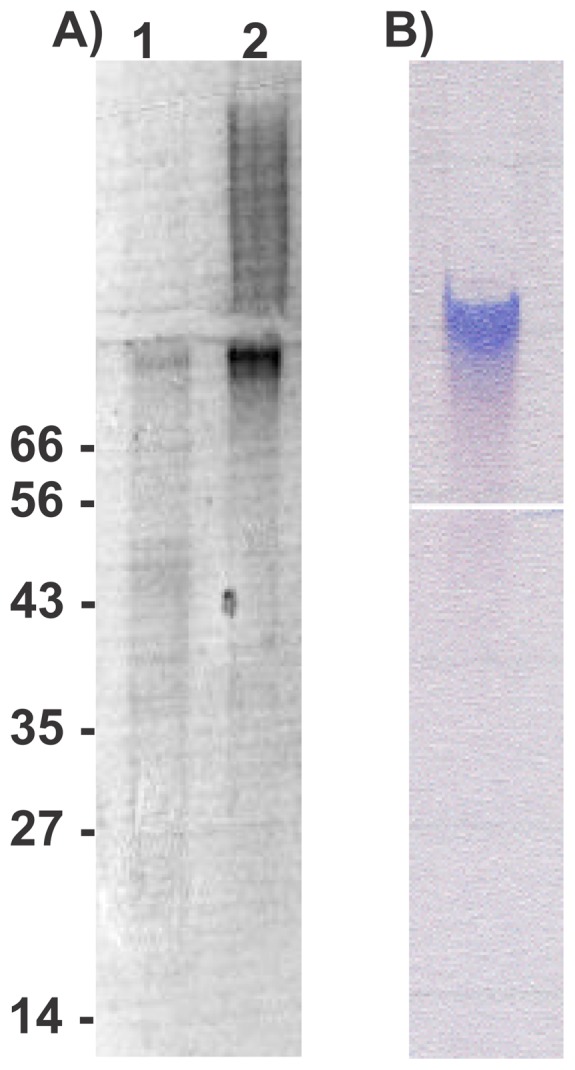
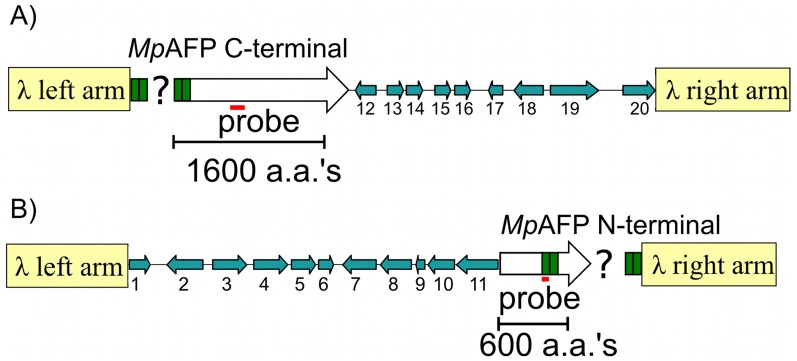
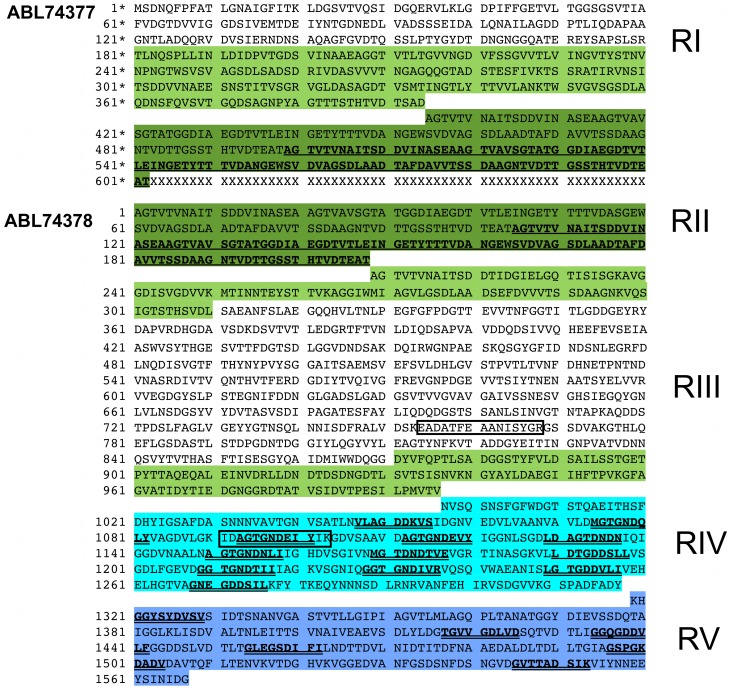
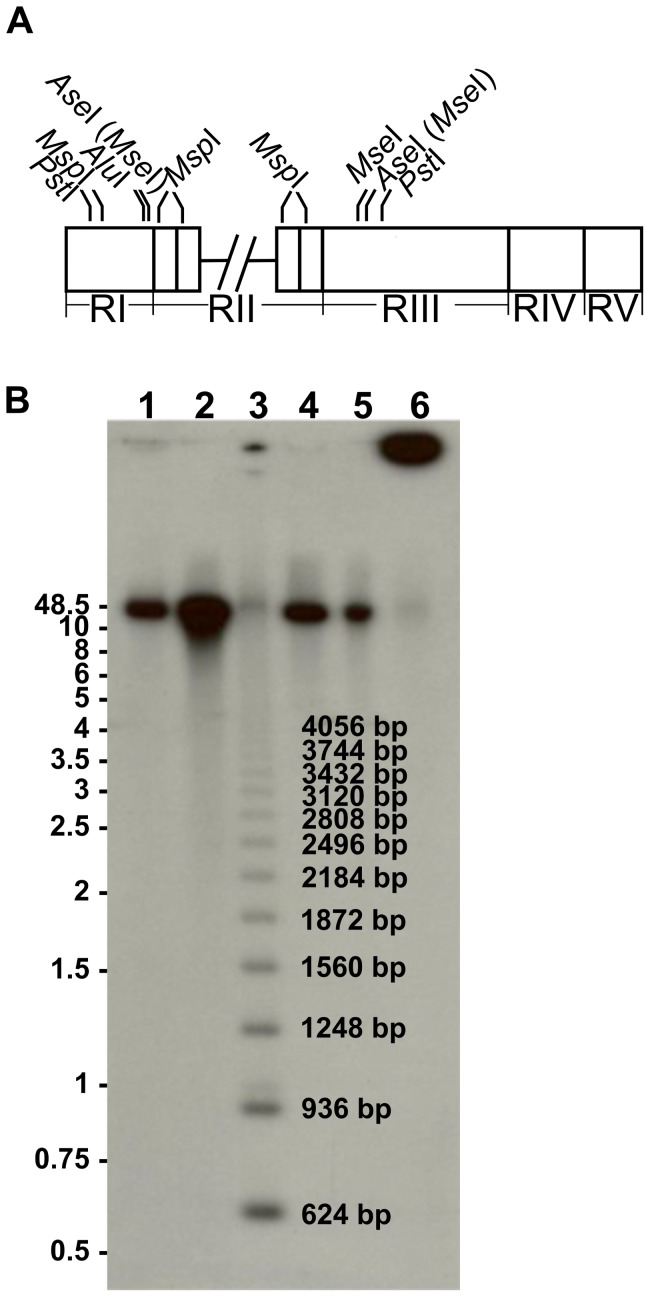
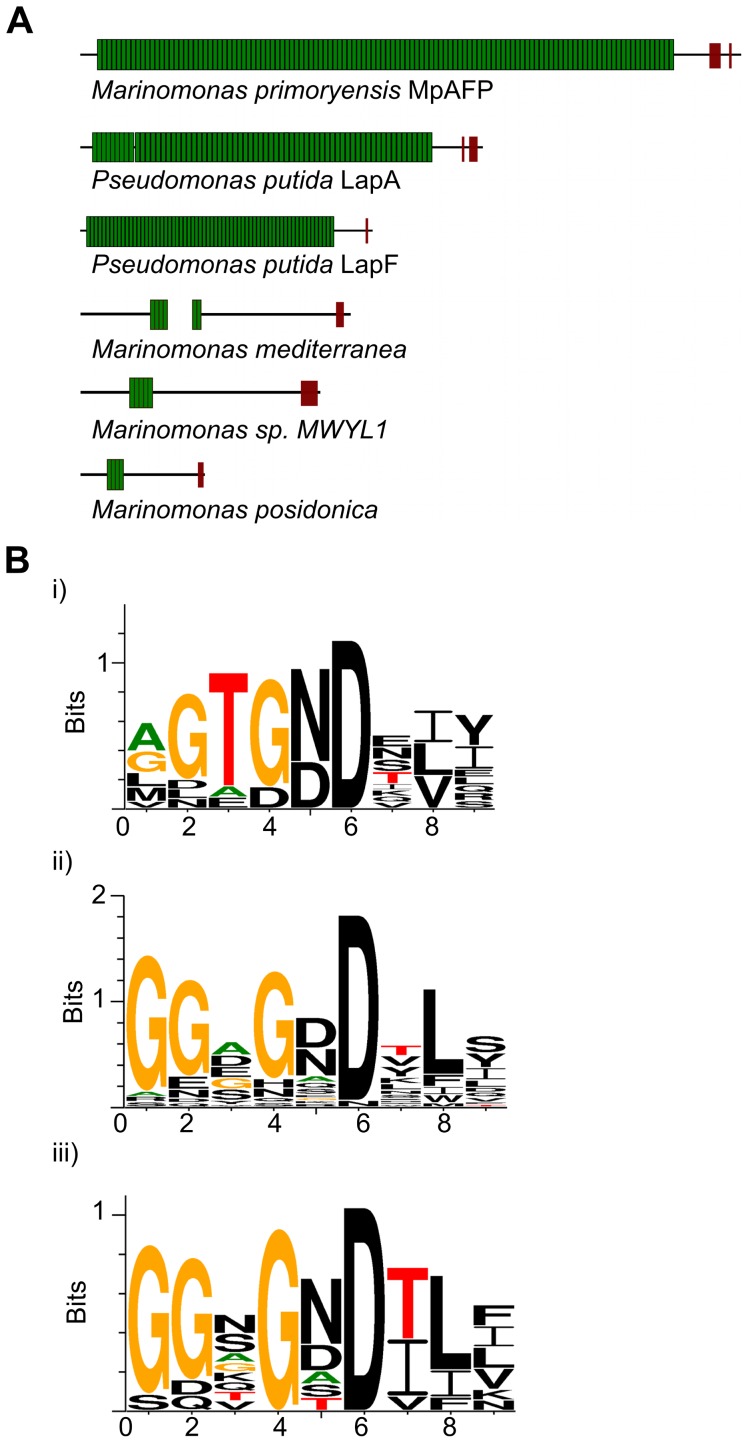
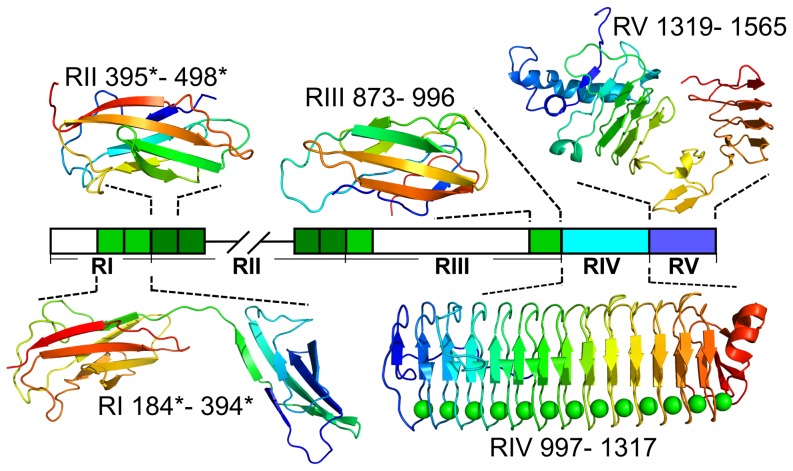
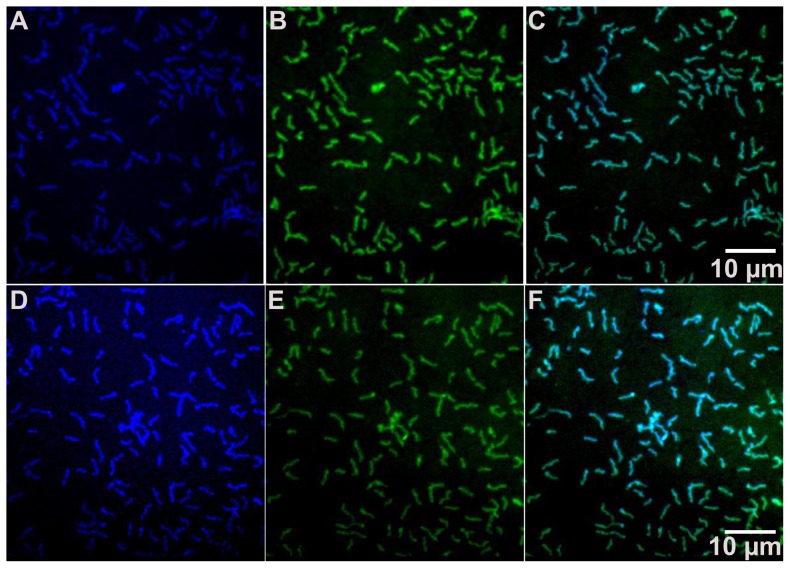
A novel role for antifreeze proteins (AFPs) may reside in an exceptionally large 1.5-MDa adhesin isolated from an Antarctic Gram-negative bacterium, Marinomonas primoryensis. MpAFP was purified from bacterial lysates by ice adsorption and gel electrophoresis. We have previously reported that two highly repetitive sequences, region II (RII) and region IV (RIV), divide MpAFP into five distinct regions, all of which require mM Ca(2+) levels for correct folding. Also, the antifreeze activity is confined to the 322-residue RIV, which forms a Ca(2+)-bound beta-helix containing thirteen Repeats-In-Toxin (RTX)-like repeats. RII accounts for approximately 90% of the mass of MpAFP and is made up of ∼120 tandem 104-residue repeats. Because these repeats are identical in DNA sequence, their number was estimated here by pulsed-field gel electrophoresis. Structural homology analysis by the Protein Homology/analogY Recognition Engine (Phyre2) server indicates that the 104-residue RII repeat adopts an immunoglobulin beta-sandwich fold that is typical of many secreted adhesion proteins. Additional RTX-like repeats in RV may serve as a non-cleavable signal sequence for the type I secretion pathway. Immunodetection shows both repeated regions are uniformly distributed over the cell surface. We suggest that the development of an AFP-like domain within this adhesin attached to the bacterial outer surface serves to transiently bind the host bacteria to ice. This association would keep the bacteria within the upper reaches of the water column where oxygen and nutrients are potentially more abundant. This novel envirotactic role would give AFPs a third function, after freeze avoidance and freeze tolerance: that of transiently binding an organism to ice.
Overview
The claims and statistics of this paper haven’t been checked yet.
Run the check — free, no account needed. It reads the open-access text and checks the sources it cites.
Integrity signals
Registry
Cites
Statistics
Figures
Verification
Claims the paper makes
The claims and statistics of this paper haven’t been checked yet.
Run the check — free, no account needed. It reads the open-access text and checks the sources it cites.
Claims other papers make about this one
Each is checked against this paper’s own text: does it say what the citing paper says it does?
In the citing paper
“Guo et al. (86,87) identified a 37 kbp repeat in the Marinomonas primoryensis ice binding protein (MpIBP) but were unable to sequence through the region with PacBio sequencing.”
From Tandem repeats lead to sequence assembly errors and impose multi-level challenges for genome and protein databases (2019) · cites this paper as [87]
In the citing paper
“When submitting the protein sequence, they deposited two sequences, one for the amino terminal side of the repeats and one for the carboxy terminal side of the repeats.”
From Tandem repeats lead to sequence assembly errors and impose multi-level challenges for genome and protein databases (2019) · cites this paper as [87]
In the citing paper
“Based on pulsed-field gel electrophoresis they estimated that is contained about 120 copies of a 104 amino acid.”
From Tandem repeats lead to sequence assembly errors and impose multi-level challenges for genome and protein databases (2019) · cites this paper as [87]
Self-check
Percentages, sums and reported differences re-computed from the paper’s own numbers.
The self-check needs the paper’s full text.
Citations
Cites
Protein structure prediction on the Web: a case study using the Phyre server
Kelley, L. A., & Sternberg, M. J. E. (2009) · Nature Protocols · doi:10.1038/nprot.2009.2 · Cited by 4,154
Protein homology detection by HMM–HMM comparison
Söding, J. (2004) · Bioinformatics · doi:10.1093/bioinformatics/bti125 · Cited by 2,473
Pankov, R. G., & Yamada, K. M. (2002) · Journal of Cell Science · doi:10.1242/jcs.00059 · Cited by 2,055
Adsorption inhibition as a mechanism of freezing resistance in polar fishes.
Raymond, J. A., & DeVries, A. L. (1977) · Proceedings of the National Academy of Sciences · doi:10.1073/pnas.74.6.2589 · Cited by 862
Type 1 pilus-mediated bacterial invasion of bladder epithelial cells
Martinez, J. J. (2000) · The EMBO Journal · doi:10.1093/emboj/19.12.2803 · Cited by 758
Freezing Resistance in Some Antarctic Fishes
DeVries, A. L., & Wohlschlag, D. E. (1969) · Science · doi:10.1126/science.163.3871.1073 · Cited by 690
C-Cadherin Ectodomain Structure and Implications for Cell Adhesion Mechanisms
Boggon, T. J., Murray, J., Chappuis-Flament, S., Wong, E., Gumbiner, B. M., & Shapiro, L. S. (2002) · Science · doi:10.1126/science.1071559 · Cited by 683
Bork, P., Holm, L., & Sander, C. (1994) · Journal of Molecular Biology · doi:10.1006/jmbi.1994.1582 · Cited by 674
Pili in Gram-negative and Gram-positive bacteria — structure, assembly and their role in disease
Proft, T., & Baker, E. N. (2008) · Cellular and Molecular Life Sciences · doi:10.1007/s00018-008-8477-4 · Cited by 576
Antifreeze Proteins of Teleost Fishes
Fletcher, G. L., Hew, C. L., & Davies, P. L. (2001) · Annual Review of Physiology · doi:10.1146/annurev.physiol.63.1.359 · Cited by 508
Self-citation
Research works printed but not linked: 2
- S Orkin, 1990, Molecular-Cloning - a Laboratory Manual, 2nd Edition - Sambrook,J, Fritsch,Ef, Maniatis,T, Nature, 343, 604
- JE Hixson, 1990, Short Protocols in Molecular-Biology - Ausubel,Fm, Brent,R, Kingston,Re, Moore,Dd, Seidman,Jg, Smith,Ja, Struhl,K, Wangiverson,P, Bonitz,Sg, Am J Hum Biol, 2, 172
Cited by
Ice-Binding Proteins and Their Function
Bar Dolev, M., Braslavsky, I., & Davies, P. L. (2016) · Annual Review of Biochemistry · doi:10.1146/annurev-biochem-060815-014546 · Cited by 426
Self-citationTørresen, O. K., Star, B., Mier, P., Andrade-Navarro, M. A., Bateman, A., Jarnot, P., Gruca, A., Grynberg, M., Kajava, A. V., Promponas, V. J., et al. (2019) · Nucleic Acids Research · doi:10.1093/nar/gkz841 · Cited by 347
Structure of a 1.5-MDa adhesin that binds its Antarctic bacterium to diatoms and ice
Guo, S., Stevens, C. A., Vance, T. D. R., Olijve, L. L. C., Graham, L. A., Campbell, R. L., Yazdi, S. R., Escobedo, C., Bar-Dolev, M., Yashunsky, V., et al. (2017) · Science Advances · doi:10.1126/sciadv.1701440 · Cited by 107
Self-citationCa2+-stabilized adhesin helps an Antarctic bacterium reach out and bind ice.
Vance, T. D. R., Olijve, L. L. C., Campbell, R. L., Voets, I. K., Davies, P. L., & Guo, S. (2014) · Bioscience Reports · doi:10.1042/bsr20140083 · Cited by 40
Self-citation
Metadata
- Authors
- Guo, S., Garnham, C. P., Whitney, J. C., Graham, L. A., & Davies, P. L.
- Venue
- PLoS ONE
- Publisher
- Public Library of Science (PLoS)
- Published
- 2012-11-07
- Volume
- 7
- Issue
- 11
- Pages
- e48805
- ISSN
- 1932-6203
- PMC
- PMC3492233
- Cited by
- 67
- References
- 42
- Language
- en
About these checks
Registry, retraction, Cites and statistics results are computed, not judged, with one exception: a printed reference that no index lists is read once by a model before it counts as a citation error. Claims are extracted by a model and kept only when their quote appears verbatim in the text; each cited source is then checked, with a model’s help, for whether it says what the claim relies on. Those verdicts can be wrong — read the claim’s quote and the cited source before relying on one.
Statistics and arithmetic are recomputed, not judged.
Confidence bands are shown only for fields calibrated on our annotated test set. None is calibrated yet, so no band is shown.
What counts as a claim ›How we measure confidence ›How we check this ›
Are you an author, or do you see a problem with this page? Request a review
How to cite
Cite CoChat for the checks on this page, and the paper for its own findings.
- This page
- CoChat. (2026). Citation check: Re-Evaluation of a Bacterial Antifreeze Protein as an Adhesin with Ice-Binding Activity. https://app.cochat.ai/papers/10.1371/journal.pone.0048805
- The paper
- Guo, S., Garnham, C. P., Whitney, J. C., Graham, L. A., & Davies, P. L. (2012). Re-Evaluation of a Bacterial Antifreeze Protein as an Adhesin with Ice-Binding Activity. PLoS ONE. https://doi.org/10.1371/journal.pone.0048805
Data sources
Bibliographic data: Semantic Scholar, OpenAlex, Crossref.
Contains information from the Semantic Scholar Academic Graph Datasets, made available under the ODC Attribution License (ODC-BY 1.0).
Semantic Scholar’s data is described in: Kinney, R., et al. (2023). The Semantic Scholar Open Data Platform. arXiv:2301.10140.
