

Decreased Functional Brain Connectivity in Adolescents with Internet Addiction
Open accessThe DOI matches its Crossref record; 88 of the 88 references it cites were found in a registry or an index.
Abstract
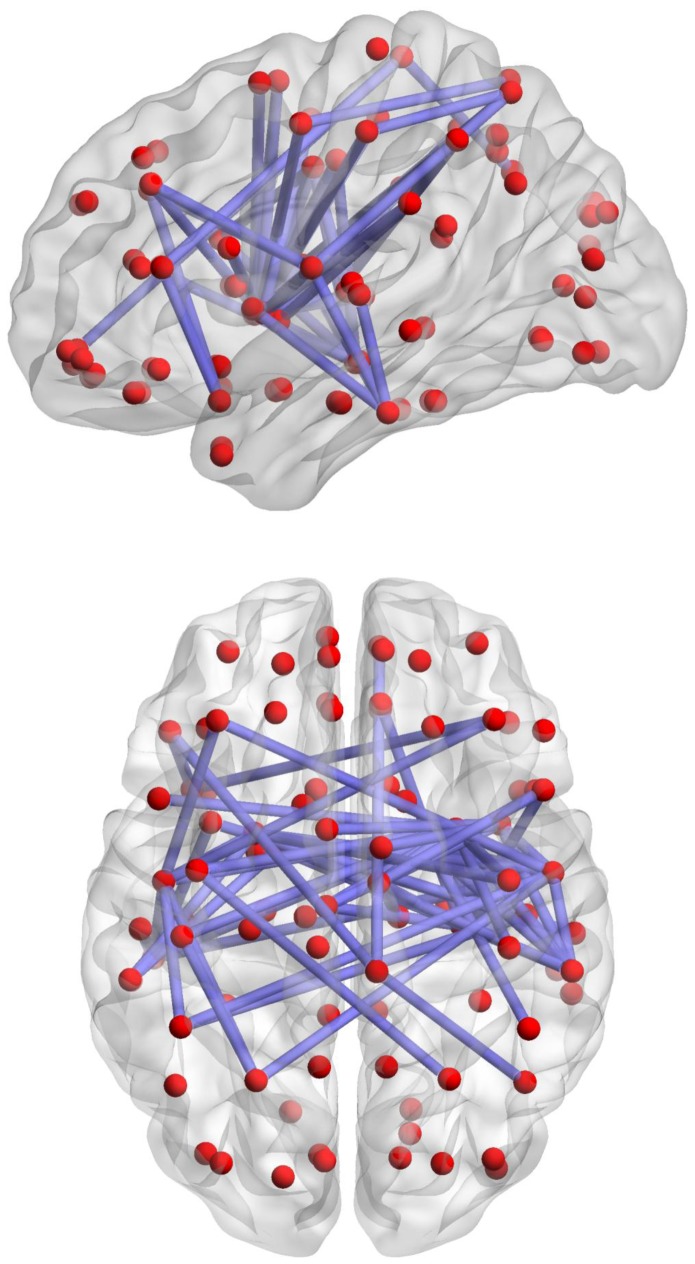
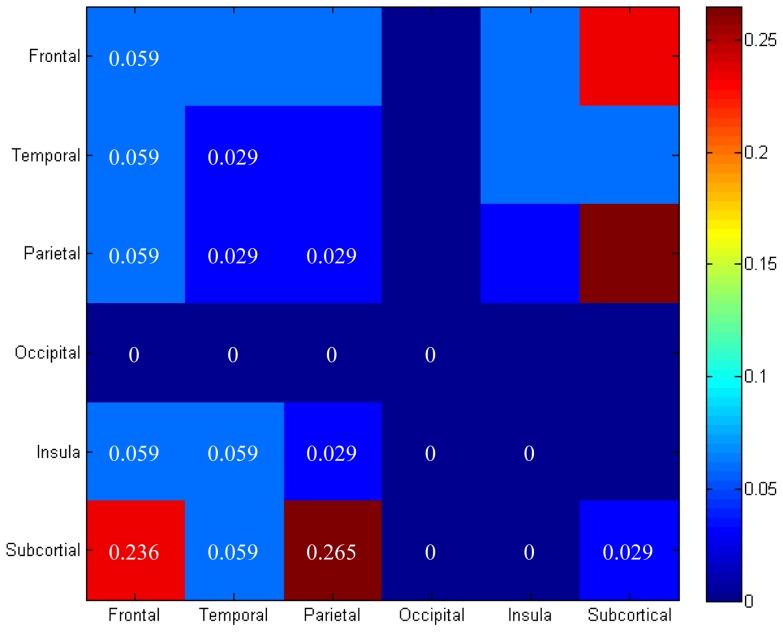
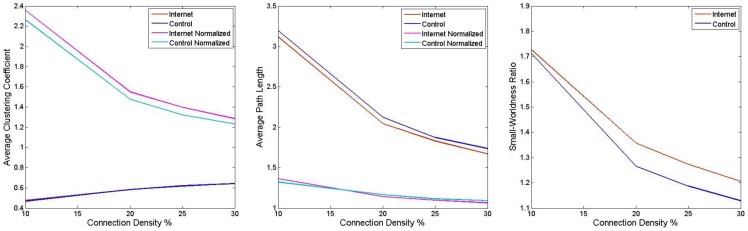
BACKGROUND: Internet addiction has become increasingly recognized as a mental disorder, though its neurobiological basis is unknown. This study used functional neuroimaging to investigate whole-brain functional connectivity in adolescents diagnosed with internet addiction. Based on neurobiological changes seen in other addiction related disorders, it was predicted that connectivity disruptions in adolescents with internet addiction would be most prominent in cortico-striatal circuitry. METHODS: Participants were 12 adolescents diagnosed with internet addiction and 11 healthy comparison subjects. Resting-state functional magnetic resonance images were acquired, and group differences in brain functional connectivity were analyzed using the network-based statistic. We also analyzed network topology, testing for between-group differences in key graph-based network measures. RESULTS: Adolescents with internet addiction showed reduced functional connectivity spanning a distributed network. The majority of impaired connections involved cortico-subcortical circuits (∼24% with prefrontal and ∼27% with parietal cortex). Bilateral putamen was the most extensively involved subcortical brain region. No between-group difference was observed in network topological measures, including the clustering coefficient, characteristic path length, or the small-worldness ratio. CONCLUSIONS: Internet addiction is associated with a widespread and significant decrease of functional connectivity in cortico-striatal circuits, in the absence of global changes in brain functional network topology.
Overview
The claims and statistics of this paper haven’t been checked yet.
Free: it reads the open-access text and checks the first 5 claims that cite a source we can check. Create a free account to check every claim.
Integrity signals
Registry
Cites
Statistics
Figures
Verification
Claims the paper makes
The claims and statistics of this paper haven’t been checked yet.
Free: it reads the open-access text and checks the first 5 claims that cite a source we can check. Create a free account to check every claim.
Claims other papers make about this one
Each is checked against this paper’s own text: does it say what the citing paper says it does?
The cited source says what the claim attributes to it.
In the citing paper
“Based on models of drug, alcohol, and gambling addictions, characteristic traits of internet addiction include fixation with playing online games, repeated failed attempts at cessation, increased negative affect, neglecting significant relationships or activities, and the development of tolerance and withdrawal symptoms [30,35,36].”
Self-check
Percentages, sums and reported differences re-computed from the paper’s own numbers.
The self-check needs the paper’s full text.
Citations
Cites
Tzourio-Mazoyer, N., Landeau, B., Papathanassiou, D., Crivello, F., Etard, O., Delcroix, N., Mazoyer, B., & Joliot, M. (2002) · NeuroImage · doi:10.1006/nimg.2001.0978 · Cited by 16,319 · cited 1×
“Finally, the residuals of this regression were extracted from 90 brain regions (nodes) based on the Automated Anatomical Labeling (AAL) atlas [40], and pair-wise associations were calculated resulting in a 90 by 90 connectivity matrix per each subject.”
MethodComplex brain networks: graph theoretical analysis of structural and functional systems
Bullmore, E., & Sporns, O. (2009) · Nature Reviews Neuroscience · doi:10.1038/nrn2575 · Cited by 11,820 · cited 2×
“We also conducted an analysis of network topological disturbances [28] to assess whether any between-group differences in connectivity strength were further associated with a global reconfiguration of functional interactions [26], as has been reported in many other psychiatric disorders [29,30].”
BackgroundMethodComplex network measures of brain connectivity: Uses and interpretations
Rubinov, M., & Sporns, O. (2010) · NeuroImage · doi:10.1016/j.neuroimage.2009.10.003 · Cited by 11,522
KAUFMAN, J., BIRMAHER, B., BRENT, D., RAO, U., FLYNN, C., MORECI, P., WILLIAMSON, D., & RYAN, N. (1997) · Journal of the American Academy of Child & Adolescent Psychiatry · doi:10.1097/00004583-199707000-00021 · Cited by 10,148 · cited 1×
“The diagnosis of internet addiction was established using the Young Internet Addiction Scale (YIAS), which consists of 20 items, each based on a 5-point Likert scale evaluating the degree of problems caused by internet use [32], and the Kiddie-Schedule for Affective Disorders and SchizophreniaPresent and Lifetime Vers…”
MethodPower, J. D., Barnes, K. A., Snyder, A. Z., Schlaggar, B. L., & Petersen, S. E. (2012) · NeuroImage · doi:10.1016/j.neuroimage.2011.10.018 · Cited by 7,429 · cited 1×
“emerged as an important confound in functional neuroimaging [38,88].”
BackgroundSpontaneous fluctuations in brain activity observed with functional magnetic resonance imaging
Fox, M. D., & Raichle, M. E. (2007) · Nature Reviews Neuroscience · doi:10.1038/nrn2201 · Cited by 6,700 · cited 1×
“Resting-state measures are reliable [19,20], under genetic control [21–23], and thought to index an intrinsic property of brain functional organization [24], subject to certain caveats [25].”
BackgroundNonparametric permutation tests for functional neuroimaging: A primer with examples
Nichols, T. E., & Holmes, A. P. (2002) · Human Brain Mapping · doi:10.1002/hbm.1058 · Cited by 6,256
Thresholding of statistical maps in functional neuroimaging using the false discovery rate
Genovese, C. R., Lazar, N. A., & Nichols, T. (2002) · NeuroImage · doi:10.1006/nimg.2001.1037 · Cited by 4,923 · cited 5×
“The false discovery rate (FDR) [51] was used to correct for multiple comparisons across the family of network densities and regions.”
MethodInfluentialConsistent resting-state networks across healthy subjects
Damoiseaux, J. S., Rombouts, S. A. R. B., Barkhof, F., Scheltens, P., Stam, C. J., Smith, S. M., & Beckmann, C. F. (2006) · Proceedings of the National Academy of Sciences · doi:10.1073/pnas.0601417103 · Cited by 4,326 · cited 1×
“Resting-state measures are reliable [19,20], under genetic control [21–23], and thought to index an intrinsic property of brain functional organization [24], subject to certain caveats [25].”
BackgroundDPARSF: a MATLAB toolbox for “pipeline” data analysis of resting-state fMRI
Yan (2010) · Frontiers in System Neuroscience · doi:10.3389/fnsys.2010.00013 · Cited by 3,475
Cited by
Items 101–175 of 175
Tseng, Y., Su, Y.-K., Chou, W., Miyakoshi, M., Tsai, C., Li, C.-J., Lee, S.-Y., & Wang, L. (2024) · IEEE Transactions on Neural Systems and Rehabilitation Engineering · doi:10.1109/tnsre.2024.3363756 · Cited by 17
“…in IA and IGD using resting fMRI, revealing impaired connections in cortico-subcortical circuits, including the prefrontal and parietal cortices [71], interhemispheric functional connectivity in the prefrontal lobe [72], the reward system and executive control network [73], the frontal-parietal…”
MethodWang, S., Geng, F., Gu, M., Gu, J., Shi, Y., Yang, Y., Zhang, L., Li, M., Xia, L., & Liu, H. (2024) · BMC Psychiatry · doi:10.1186/s12888-024-06224-x · Cited by 16
Influence of internet addiction on academic, sportive, and recreative activities in adolescents
Koca, T. T., & Berk, E. (2018) · Journal of Public Health · doi:10.1007/s10389-018-0965-x · Cited by 17
“Similar findings were obtained in adolescents with IA (Hong et al. 2013a, b).”
ResultSong, H. (2022) · Frontiers in Psychiatry · doi:10.3389/fpsyt.2022.846995 · Cited by 15
“Although excessive Internet use is known to damage brain function, including inhibitory control and neural connectivity (55, 56), a similar finding was not reported in the current study.”
ResultCyber Hygiene as an Effective Psychological Measure in the Prevention of Cyber Addictions
Gulyamov, S. S., & Rodionov, A. A. (2024) · Psychology and Law · doi:10.17759/psylaw.2024140206 · Cited by 21
Brain Function Network and Young Adult Smokers: A Graph Theory Analysis Study
Tan, Y. H. V., Chen, J., Liao, W., & Qian, Z. (2019) · Frontiers in Psychiatry · doi:10.3389/fpsyt.2019.00590 · Cited by 12
Ray, D., Roy, D., Sindhu, B., Sharan, P., & Banerjee, A. (2017) · Frontiers in Psychology · doi:10.3389/fpsyg.2017.01627 · Cited by 12
“This shift of the reference frame from brain regions to the whole brain (see Figure 1B, Hong et al., 2013) is an acknowledgment of the fact that different aspects of a particular brain function are sub served in distinct brain areas but the overall performance is dependent on integration among the…”
BackgroundInteraction of Person-Affect-Cognition-Execution (I-PACE) Model on Addictive Behavior
Kumalaratih, E., & Margono, H. M. (2023) · Jurnal Psikiatri Surabaya · doi:10.20473/jps.v12i1.28893 · Cited by 15
Kuriki, S., Higuchi, S., Nakayama, H., Mihara, S., Okazaki, Y., Ono, Y., & Kobayashi, H. (2020) · PLoS ONE · doi:10.1371/journal.pone.0233780 · Cited by 13
“Those altered connectivity links included: cortico-subcortical circuits with reduced values of functional connectivity, in which the putamen was most extensively involved [45]; disrupted long-range connections in the frontal, parietal, and occipital lobes having negative and positive functional-connectivity difference…”
BackgroundInternet Addiction: The Making of a New Addiction
Bergmark, K. H., Stensson, E., & Bergmark, A. (2016) · DiVA (Stockholm University) · Cited by 13
Influence of screen time on diet quality and academic achievement: a mediation analysis
Visier‐Alfonso, M. E., Garrido‐Miguel, M., Álvarez‐Bueno, C., Sánchez‐López, M., Hernández‐Luengo, M., & Martínez‐Vizcaíno, V. (2023) · Journal of Public Health · doi:10.1007/s10389-023-02125-7 · Cited by 16
“While some empirical studies have found a reduction in brain connectivity related to screen time (Hong et al. 2013; Horowitz-Kraus and Hutton 2018; Takeuchi et al. 2015), others have reported positive or null effects (Adelantado-Renau et al. 2019), possibly because screen-related sedentary behavior…”
STRUCTURAL BRAIN NETWORK ABNORMALITIES IN SUBJECTS WITH INTERNET ADDICTION
Lee, M., Min, A., Hwang, Y. H., Kim, D. Y., Han, B. S., & Seo, H. S. (2017) · Journal of Mechanics in Medicine and Biology · doi:10.1142/s0219519417400310 · Cited by 10
Behaviors Associated with Internet Use in Military Medical Students and Residents
Schmidt, G. L., Valdez, M. M., Farrell, M. E., Bishop, F. M., Klam, W. P., & Doan, A. P. (2019) · Military Medicine · doi:10.1093/milmed/usz043 · Cited by 11
Functional Imaging of Internet Gaming Disorder
Ko, C., Liu, G., & Yen, J. (2015) · Studies in neuroscience, psychology and behavioral economics · doi:10.1007/978-3-319-07242-5_3 · Cited by 12
A Taxonomy of Neuroscientific Strategies Based on Interaction Orders
Neri, M., Brovelli, A., Castro, S., Fraisopi, F., Gatica, M., Herzog, R. A., Mediano, P. A. M., Mindlin, I., Petri, G., Bor, D., et al. (2025) · European Journal of Neuroscience · doi:10.1111/ejn.16676 · Cited by 15
Differentiated Intervention Model for Internet Addiction in Adolescents
Vl, M., & Merkurieva, Y. A. (2020) · Counseling Psychology and Psychotherapy · doi:10.17759/cpp.2020280309 · Cited by 12
Dong, N., Zhou, Y., Lei, L.-J., Lee, T. M. C., & Lam, C. L. M. (2025) · International Journal of Clinical and Health Psychology · doi:10.1016/j.ijchp.2025.100589 · Cited by 9
“…network (DMN) and salience network (SN) were also related to SMA, based on the evidence found among adolescents with internet addiction (Chang & Lee, 2024; Darnai et al., 2019), symptoms of internet addiction (Hong et al., 2013; Wang et al., 2017) and heavy video consumption (Song et al., 2023).”
Evert, L. S., Tereshchenko, S. Y., Зайцева, О. И., Semenova, N. B., & Валерьевна, Ш. М. (2021) · Bulletin of Siberian Medicine · doi:10.20538/1682-0363-2020-4-189-197 · Cited by 17
Petro, N. M., Picci, G., Webert, L. K., Schantell, M. D., Son, J. J., Ward, T. W., McDonald, K. M., Livermore, C. L., Killanin, A. D., Rice, D. L., et al. (2024) · Developmental Cognitive Neuroscience · doi:10.1016/j.dcn.2024.101479 · Cited by 16
“…in sensory and association brain regions (Achterberg et al., 2022; Paulus et al., 2019), and decreased grey matter volume in regions central to reward and social-affective processing (e.g., ventral striatum, amygdala, orbitofrontal cortex; He et al., 2017; Hong et al., 2013; Zhou et al., 2011).”
Hsu, W.-Y., Chang, S., Chiu, N., Lin, S. S. J., & Tseng, Y.-H. (2015) · Psychopathology · doi:10.1159/000441477 · Cited by 6
Xu, W., Ying, F., Luo, Y., Zhang, X., & Li, Z. (2020) · Brain Imaging and Behavior · doi:10.1007/s11682-020-00379-3 · Cited by 6
“2011), internet addiction (Hong et al. 2013), or depressive symptoms (Hanson et al.”
BackgroundWang, H., Sun, Y., Lv, J., & Bo, S. (2019) · Brain and Behavior · doi:10.1002/brb3.1218 · Cited by 6
Park, J. J., Lacadie, C. M., Zhao, Y., & Potenza, M. N. (2026) · NeuroImage · doi:10.1016/j.neuroimage.2026.121829 · Cited by 5
“…the internet (PUI) and problematic smartphone use (PSU), including the default mode, salience, frontoparietal, visual attention, and cognitive control networks (Áfra et al., 2024; Ahn et al., 2021; Hong et al., 2013; Liu et al., 2022; Wadsley and Ihssen, 2023; Wang et al., 2017; Wang et al., 2019).”
White matter-based brain network topological properties associated with individual impulsivity
Jung, W. H., & Kim, E. (2023) · Scientific Reports · doi:10.1038/s41598-023-49168-0 · Cited by 6
“For local topological properties, we corrected the significance for the number of nodes using a less stringent false positive adjustment (i.e., p < (1/90) = 0.011) as reported in previous studies 69–71 .”
MethodInfluentialJung, W. H., & Kim, E. (2023) · Frontiers in Psychology · doi:10.3389/fpsyg.2023.1210652 · Cited by 4
“Following previous studies (Lynall et al., 2010; Hong et al., 2013; Jung et al., 2016), for the regional parameter (i.”
MethodBan, M., Zhan, Z., Wang, D., He, J., Zhu, X., & Yuan, F. (2022) · Addiction Biology · doi:10.1111/adb.13246 · Cited by 4
“tion, the adolescents with Internet addiction were found decreased brain functional connectivity in prefrontal network.(55) As hypothesized, individuals with BQD showed impaired activation in MSFG and IOFG within PFC, which implied the dysfunction of prefrontal area in”
BackgroundProblematic internet use and shyness among Chinese adolescents: a moderated mediation model
Sun, H., & Yu, Y. (2024) · Frontiers in Psychology · doi:10.3389/fpsyg.2024.1439692 · Cited by 7
Adolescents’ Internet Addiction: Influence Factors, Risks and Neuroscience Connectivity
Lu, R. (2023) · Journal of Education Humanities and Social Sciences · doi:10.54097/ehss.v8i.4293 · Cited by 6
Age-related intrinsic functional connectivity underlying emotion utilization
He, H., Lin, W., Yang, J., Chen, Y., Tan, S.-P., & Guan, Q. (2023) · Cerebral Cortex · doi:10.1093/cercor/bhad023 · Cited by 5
The Relationship between Sleep Quality and Smartphone Addiction among Adolescents
Kurudirek, F., Baş, N. G., & Arıkan, D. (2024) · Sağlık Bilimleri Üniversitesi Hemşirelik Dergisi · doi:10.48071/sbuhemsirelik.1385723 · Cited by 3
Guo, W., Zhang, W., Zhang, J., Li, Z., & Zhu, W. (2023) · Psychiatry Research Neuroimaging · doi:10.1016/j.pscychresns.2023.111731 · Cited by 5
Erdem, A. (2022) · Ahmet Keleşoğlu Eğitim Fakültesi Dergisi · doi:10.38151/akef.2022.20 · Cited by 7
Bauernhofer, K., Papousek, I., Fink, A., Unterrainer, H., & Weiss, E. M. (2015) · Neuropsychiatrie · doi:10.1007/s40211-015-0164-8 · Cited by 4
Translating Neuroscience into Counseling Practice
Gonçalves, Ó. F., & Perrone, K. M. (2016) · Canadian Journal of Counselling and Psychotherapy · Cited by 4
Rettew, D. C., Althoff, R. R., & Hudziak, J. J. (2018) · Elsevier eBooks · doi:10.1016/b978-0-323-54854-0.00012-6 · Cited by 4
Different brain networks underlying intelligence in Autism Spectrum DisordersPreprint
Pua, E. P. K., Malpas, C. B., Bowden, S. C., & Seal, M. L. (2017) · bioRxiv (Cold Spring Harbor Laboratory) · doi:10.1101/143891 · Cited by 3
Clicks and Cravings: The Psychology of Smartphone and Social Media Addiction
Sowmya, D. S., Anokha, V., & Nithya, L. (2025) · Advances in human and social aspects of technology book series · doi:10.4018/979-8-3693-8804-4.ch008 · Cited by 2
Cribado e intervención breve digital en el uso problemático de Internet: Programa piensaTIC
Salabert, J. D., & Torres, M. I. G. (2019) · Escritos de Psicología / Psychological Writings · doi:10.24310/espsiescpsi.v12i2.9984 · Cited by 8
“Existe alguna evidencia de que el trastorno de adicción a Internet podría verse asociado a disfuncionalidades de tipo neurológico como reducciones en las vías de la materia blanca (Lin et al., 2012) y disminución de la conectividad funcional en circuitos cortico-estriatales (Hong et al., 2013).”
BackgroundPaulino, S., Mesquita, B., Fraga, A. M., Gomes, H. S., & Madeira, L. (2023) · Cyberpsychology Journal of Psychosocial Research on Cyberspace · doi:10.5817/cp2023-1-3 · Cited by 3
An Examination of Why Smartphone Use Gradually Leads to Addiction
Park, J. J. (2024) · Communications in computer and information science · doi:10.1007/978-3-031-61963-2_40 · Cited by 2
Functional brain network properties correlate with individual risk tolerance in young adults
Jung, W. H. (2024) · Heliyon · doi:10.1016/j.heliyon.2024.e35873 · Cited by 4
“Based on previous research findings [60 – 62], it was inferred that there would be a relationship between risk tolerance and the network topology of the brain network.”
Jenaabadi, H., & Fatehrad, G. (2015) · Modern Applied Science · doi:10.5539/mas.v9n8p49 · Cited by 4
The trends and issues in neuroimaging studies of counseling and psychotherapy (1992-2014)
Suh, J.-E., Kim, C.-D., & 최경환 (2015) · Korea Journal of Counseling · doi:10.15703/kjc.16.2.201504.27 · Cited by 2
Self-citationMedical students’ awareness of Personal Digital Assistant Devices’ impact on their health
Altwaijri, W. A., Almunyif, R. M., Alotaibi, G. H., Alowais, L. A., Wasim, S., & Alyabsi, M. S. (2021) · Journal of Family Medicine and Primary Care · doi:10.4103/jfmpc.jfmpc_2038_20 · Cited by 3
Kamenskaya, V. G., & Татьянина, Е. В. (2024) · Experimental Psychology (Russia) · doi:10.17759/exppsy.2024170203 · Cited by 4
Leal, R. B. R., Faria, Í. S., Alves, I. M., Soares, A. C., & Triani, G. R. (2025) · STUDIES IN HEALTH SCIENCES · doi:10.54022/shsv6n3-023 · Cited by 2
Ünsal, F., & Korkmaz, Z. (2026) · Psikiyatride Guncel Yaklasimlar - Current Approaches in Psychiatry · doi:10.18863/pgy.1644556 · Cited by 6
Paige, K. J., Angstadt, M., Martz, M. E., Hyde, L. W., Heitzeg, M. M., Sripada, C., & Kardan, O. (2026) · Biological Psychiatry Cognitive Neuroscience and Neuroimaging · doi:10.1016/j.bpsc.2026.03.012 · Cited by 1
Mancini, M., Mattei, E., Censi, F., Calcagnini, G., Bozzali, M., & Conforto, S. (2015) · International IEEE/EMBS Conference on Neural Engineering · doi:10.1109/ner.2015.7146806 · Cited by 1
Bioalkanes and Bioalkenes: An Ecofriendly and Alternate Fuel in Bioenergy Research
Gujjala, L. K. S., Kumar, S., Rajak, R. C., & Banerjee, R. (2017) · Biofuel and biorefinery technologies · doi:10.1007/978-3-319-67678-4_13 · Cited by 1
Atadokht, A., & Ebadi, M. (2023) · The Neuroscience Journal of Shefaye Khatam · doi:10.61186/shefa.11.2.41 · Cited by 3
Tereshchenko, S. Y., Evert, L. S., & Kostyuchenko, Y. R. (2024) · Meditsinskiy sovet = Medical Council · doi:10.21518/ms2023-491 · Cited by 2
The Use of the Smartphone, A Nice Paradox: Functional and Dysfunctional at the Same Time
Vaccaro, M. (2020) · Ergonomics International Journal · doi:10.23880/eoij-16000230
Como desenvolver uma personalidade curiosa na criança
Rodrigues, F. D. A. A. (2021) · Ciencia Latina Revista Científica Multidisciplinar · doi:10.37811/cl_rcm.v5i5.1022 · Cited by 1
Magnetic Resonance Imaging as a Translational Research Tool for Major Depression
Lai, C. (2022) · Neuromethods · doi:10.1007/978-1-0716-2083-0_12 · Cited by 1
Stensson, E. (2015) · DiVA (Stockholm University) · Cited by 3
Denti, E. (2017) · theses.fr (ABES) · doi:10.70675/c13e7384z582fz475cza4d5z060b057976fe · Cited by 1
Impaired resting-state functional connectivity of frontostriatal regions in internet game over-user
HEE, K. J., & Kang, E. (2017) · 한국심리학회지: 인지 및 생물 · doi:10.22172/cogbio.2017.29.1.004
Functional Imaging Study of Internet Gaming Disorder
Ko, C., & Yen, J. (2017) · Studies in neuroscience, psychology and behavioral economics · doi:10.1007/978-3-319-46276-9_4
Brain Imaging of Ketamine Abusers
Liao, Y., & Hao, W. (2020) · Springer eBooks · doi:10.1007/978-981-15-2902-3_2
Prawiroharjo, P., Edison, R. E., Ellydar, H., Pratama, P., Suaidy, S. E. I., Amani, N. Z., Carissima, D., & Hatta, G. F. (2020) · bioRxiv (Cold Spring Harbor Laboratory) · doi:10.1101/2020.12.23.424123
RELATIONSHIP OF CYBER-ADDICTION WITH ALEXITHYMIA IN YOUNG MEN
Асєєва, Ю. (2020) · Men’s Health Gender and Psychosomatic Medicine · doi:10.37321/ujmh.2020.1-2-11
Evert, L. S., Potupchik, T. V., & Kostyuchenko, Y. R. (2022) · Бюллетень Восточно-Сибирского научного центра Сибирского отделения Российской академии медицинских наук · doi:10.29413/abs.2022-7.2.25 · Cited by 2
Theron, F. H., Rosenstein, D. A., & McCoubrey, D. (2022) · Elsevier eBooks · doi:10.1016/b978-0-323-91709-4.00004-4
Scientific and theoretical aspects of the cyber addiction phenomenon
Asieieva, Y. (2023) · Primedia eLaunch LLC eBooks · doi:10.36074/madrcsce-monograph.2023.1
ADOLESCENTS’ INTERNET ADDICTION: INFLUENCE FACTORS, RISKS AND NEUROSCIENCE CONNECTIVITY
Lu, R. (2023) · International Journal of Education Humanities and Social Science · doi:10.54922/ijehss.2023.0488
Adult ADHD and internet addiction among undergraduate medical college students
Afshan, N., Bodepudi, S., Benerji, T., Kodali, M., & Parvathaneni, K. M. (2023) · IP Indian Journal of Neurosciences · doi:10.18231/j.ijn.2023.006 · Cited by 1
Mohan, S., & Ponnusamy, P. (2023) · International Journal of Indian Psychology · doi:10.25215/1104.133 · Cited by 1
Petro, N. M., Webert, L. K., McDonald, K. M., Son, J. J., Ward, T. W., Rice, D. L., Ende, G. C., Coutant, A. T., Steiner, E. L., Livermore, C. L., et al. (2026) · Developmental Cognitive Neuroscience · doi:10.1016/j.dcn.2026.101735
“Of note, other types of problematic internet use have been related to differences in frontal cortical thickness (Hong, Kim, et al., 2013), function (Ko et al., 2014; B. Li et al., 2014), and striatal connectivity (Hong, Zalesky, et al., 2013; B. Li et al., 2014; Lin et al., 2015).”
Digital Detoxing Among Students: A Systematic Review
Thakur, K. (2026) · International Journal of Latest Technology in Engineering Management & Applied Science · doi:10.51583/ijltemas.2026.150600138
Risk of social networks addiction and emotional dependence in a sample of university students
Klimenko, O., Hernández-Flórez, N., & Vásquez-Tobón, D. (2026) · CES Psicología · doi:10.21615/cesp.7953
Brain wiring and neuronal dynamics : advances in MR imaging of focal epilepsy
Besseling, R. M. H. (2014) · Research Publications (Maastricht University) · doi:10.26481/dis.20140404rb
Metadata
- Authors
- Hong, S.-B., Zalesky, A., Cocchi, L., Fornito, A., Choi, E.-J., Kim, H.-H., Suh, J.-E., Kim, C.-D., Kim, J.-W., & Yi, S.-H.
- Affiliations
- Seoul National University (KR)
- The University of Melbourne (AU)
- The University of Queensland (AU)
- Corresponding author
- Yi, Soon-Hyung
- Venue
- PLoS ONE
- Publisher
- Public Library of Science (PLoS)
- Published
- 2013-02-25
- Volume
- 8
- Issue
- 2
- Pages
- e57831
- ISSN
- 1932-6203 (ISSN-L)
- PMC
- PMC3581468
- OpenAlex
- W2065953611
- Cited by
- 175
- References
- 88
- Citations by year
- 2026: 5 · 2025: 7 · 2024: 12 · 2023: 20 · 2022: 13 · 2021: 6 · 2020: 10 · 2019: 13 · 2018: 10 · 2017: 16 · 2016: 14 · 2015: 23 · 2014: 21 · 2013: 5
- FWCI
- 11.52
- Type
- journal article
- Language
- en
- Open access
- gold
- doi.org
- Locations
- PLoS ONE (publishedVersion, cc-by)
- Europe PMC (PubMed Central) (publishedVersion, other-oa)
- PubMed Central (publishedVersion, cc-by)
- PubMed (publishedVersion)
- DOAJ (DOAJ: Directory of Open Access Journals) (submittedVersion, cc-by-sa)
- Figshare (submittedVersion, cc-by)
- Minerva Access (University of Melbourne) (submittedVersion, cc-by)
- Minerva Access (University of Melbourne) (submittedVersion)
- Funders
- National Research Foundation
- Seoul National University
- National Research Foundation of Korea
- Medical Research Council
- National Health and Medical Research Council (454797)
- Topics
- Life Sciences › Neuroscience › Cognitive Neuroscience › Functional Brain Connectivity Studies
- Social Sciences › Sociology and Political Science › Impact of Technology on Adolescents
- Social Sciences › Psychology › Experimental and Cognitive Psychology › Mental Health Research Topics
- Keywords
- internet addiction, adolescents, brain functional connectivity, corticostriatal circuits, putamen, prefrontal cortex, parietal cortex, network topology, small-worldness, network-based statistics, resting-state fMRI
- MeSH terms
- Adolescent, Brain, Brain Mapping, Cerebral Cortex, Corpus Striatum, Female, Humans, Functional Laterality, Male, Neural Pathways, Behavior, Addictive, Internet, Functional Neuroimaging
About these checks
Registry, retraction, Cites and statistics results are computed, not judged, with one exception: a printed reference that no index lists is read once by a model before it counts as a citation error. Claims are extracted by a model and kept only when their quote appears verbatim in the text; each cited source is then checked, with a model’s help, for whether it says what the claim relies on. Those verdicts can be wrong — read the claim’s quote and the cited source before relying on one.
Statistics and arithmetic are recomputed, not judged.
Confidence bands are shown only for fields calibrated on our annotated test set. None is calibrated yet, so no band is shown.
What counts as a claim ›How we measure confidence ›How we check this ›
Are you an author, or do you see a problem with this page? Request a review
Data sources
Bibliographic data: Semantic Scholar, OpenAlex, Crossref.
Contains information from the Semantic Scholar Academic Graph Datasets, made available under the ODC Attribution License (ODC-BY 1.0).
Semantic Scholar’s data is described in: Kinney, R., et al. (2023). The Semantic Scholar Open Data Platform. arXiv:2301.10140.
