

The DOI matches its Crossref record; 32 of the 35 references it cites were found in a registry or an index.
A Systematic Review of PTSD Prevalence and Trajectories in DSM-5 Defined Trauma Exposed Populations: Intentional and Non-Intentional Traumatic Events
Open accessAbstract
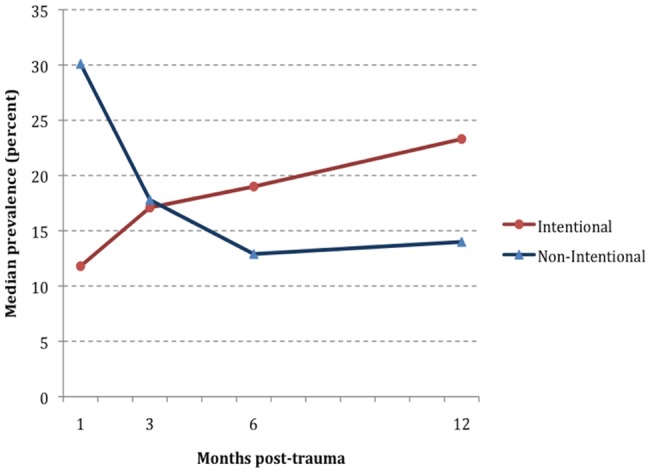
OBJECTIVE: We conducted a systematic review of the literature to explore the longitudinal course of PTSD in DSM-5-defined trauma exposed populations to identify the course of illness and recovery for individuals and populations experiencing PTSD. METHODS: We reviewed the published literature from January 1, 1998 to December 31, 2010 for longitudinal studies of directly exposed trauma populations in order to: (1) review rates of PTSD in the first year after a traumatic event; (2) examine potential types of proposed DSM-5 direct trauma exposure (intentional and non-intentional); and (3) identify the clinical course of PTSD (early onset, later onset, chronicity, remission, and resilience). Of the 2537 identified articles, 58 articles representing 35 unique subject populations met the proposed DSM-5 criteria for experiencing a traumatic event, and assessed PTSD at two or more time points within 12 months of the traumatic event. RESULTS: The mean prevalence of PTSD across all studies decreases from 28.8% (range =3.1-87.5%) at 1 month to 17.0% (range =0.6-43.8%) at 12 months. However, when traumatic events are classified into intentional and non-intentional, the median prevalences trend down for the non-intentional trauma exposed populations, while the median prevalences in the intentional trauma category steadily increase from 11.8% to 23.3%. Across five studies with sufficient data, 37.1% of those exposed to intentional trauma develop PTSD. Among those with PTSD, about one third (34.8%) remit after 3 months. Nearly 40% of those with PTSD (39.1%) have a chronic course, and only a very small fraction (3.5%) of new PTSD cases appears after three months. CONCLUSIONS: Understanding the trajectories of PTSD over time, and how it may vary by type of traumatic event (intentional vs. non-intentional) will assist public health planning and treatment.
Overview
The claims and statistics of this paper haven’t been checked yet.
Run the check — free, no account needed. It reads the open-access text and checks the sources it cites.
Integrity signals
Registry
Cites
Statistics
Figures
Verification
Claims the paper makes
The claims and statistics of this paper haven’t been checked yet.
Run the check — free, no account needed. It reads the open-access text and checks the sources it cites.
Claims other papers make about this one
Each is checked against this paper’s own text: does it say what the citing paper says it does?
The source backs part of the claim, not all of it — or backs it for a different population, condition or comparison.
In the citing paper
“Differences in trajectories were observed for different types of trauma: whereas PTSD prevalence decreased over time for non-violent traumas (20.1% at month 1 and 14.0% at month 12), the median prevalence increased from 11.8% at month 1 to 23.3% at month 12 for violent traumas.”
From PTSD in the Year Following Sexual Assault: A Meta-Analysis of Prospective Studies (2023) · cites this paper as Santiago et al., 2013
Experimental — accuracy not yet measuredThe cited source says what the claim attributes to it.
In the citing paper
“a past review of mixed traumas which indicated that the prevalence of PTSD stabilizes after three months exposure (Santiago et al., 2013).”
From PTSD in the Year Following Sexual Assault: A Meta-Analysis of Prospective Studies (2023) · cites this paper as Santiago et al., 2013
The cited source says what the claim attributes to it.
In the citing paper
“they reported decreases in the median prevalence of PTSD between 1 month (28.8%) and 3 months (17.8%) post-trauma, followed by a stabilization in prevalence through 12 months (17.0%; Santiago et al., 2013).”
From PTSD in the Year Following Sexual Assault: A Meta-Analysis of Prospective Studies (2023) · cites this paper as Santiago et al., 2013
The cited source says what the claim attributes to it.
In the citing paper
“First, although the Santiago and Hiller reviews found that large reductions in PTSD symptomatology occurred between 1 and 3 months post-trauma, neither statistically determined if there was a time point at which the average rate of recovery slowed (Hiller et al., 2016; Santiago et al., 2013).”
From PTSD in the Year Following Sexual Assault: A Meta-Analysis of Prospective Studies (2023) · cites this paper as Santiago et al., 2013
The cited source says what the claim attributes to it.
In the citing paper
“in the first month post-trauma, PTSD prevalence was 74.58% following sexual assault in the current analysis. In prior meta-analyses, one-month PTSD prevalence was 28.8% following mixed trauma exposure (Santiago et al., 2013) and 21.3% following childhood trauma (Hiller et al., 2016).”
From PTSD in the Year Following Sexual Assault: A Meta-Analysis of Prospective Studies (2023) · cites this paper as Santiago et al., 2013
The cited source says what the claim attributes to it.
In the citing paper
“PTSD prevalence at the twelfth month post-trauma was 41.5% following sexual assault in this study, as compared to prior meta-analyses, which found 17.0% following mixed trauma exposure (Santiago et al., 2013) and 10.9% following childhood trauma (Hiller et al., 2016).”
From PTSD in the Year Following Sexual Assault: A Meta-Analysis of Prospective Studies (2023) · cites this paper as Santiago et al., 2013
The cited source says what the claim attributes to it.
In the citing paper
“there is evidence that the course of PTSD differs by trauma type (Santiago et al., 2013).”
From PTSD in the Year Following Sexual Assault: A Meta-Analysis of Prospective Studies (2023) · cites this paper as Santiago et al., 2013
Self-check
Percentages, sums and reported differences re-computed from the paper’s own numbers.
The self-check needs the paper’s full text.
Citations
Cites
Posttraumatic Stress Disorder in the National Comorbidity Survey
Kessler, R. C. (1995) · Archives of General Psychiatry · doi:10.1001/archpsyc.1995.03950240066012 · Cited by 10,379 · cited 1×
“These prevalences are similar to previously published rates across different types of traumatic events [14,15,21,22].”
Result60,000 Disaster Victims Speak: Part I. An Empirical Review of the Empirical Literature, 1981–2001
Norris, F. H., Friedman, M. J., Watson, P. J., Byrne, C. M., Diaz, E., & Kaniasty, K. (2002) · Psychiatry: Interpersonal and Biological Processes · doi:10.1521/psyc.65.3.207.20173 · Cited by 3,128 · cited 1×
“Psychiatric epidemiology studies consistently report a lifetime prevalence of PTSD of approximately 8% [15,16,17], however, post-disaster rates of PTSD vary widely [27,28,29], and are similar to those found here.”
Self-citationTrauma and Posttraumatic Stress Disorder in the Community: The 1996 Detroit Area Survey of Trauma
Breslau, N., Kessler, R. C., Chilcoat, H. D., Schultz, L. R., Davis, G. C., & Andreski, P. (1998) · Archives of General Psychiatry · doi:10.1001/archpsyc.55.7.626 · Cited by 2,407 · cited 3×
“We chose 1998 to begin our review in order to update the literature since the review by Breslau et al (1998).”
BackgroundMethodResultTolin, D. F., & Foa, E. B. (2006) · Psychological Bulletin · doi:10.1037/0033-2909.132.6.959 · Cited by 2,197 · cited 1×
“Psychiatric epidemiology studies consistently report a lifetime prevalence of PTSD of approximately 8% [15,16,17], however, post-disaster rates of PTSD vary widely [27,28,29], and are similar to those found here.”
Milliken, C. S., Auchterlonie, J. L., & Hoge, C. W. (2007) · JAMA · doi:10.1001/jama.298.18.2141 · Cited by 1,640 · cited 1×
“[10,11], again finding substantial variability across different populations, traumatic events and community contexts.”
BackgroundNorris, F. H., Friedman, M. J., & Watson, P. (2002) · Psychiatry · doi:10.1521/psyc.65.3.240.20169 · Cited by 1,183
Self-citationLooking for resilience: Understanding the longitudinal trajectories of responses to stress
Norris, F. H., Tracy, M., & Galea, S. (2009) · Social Science & Medicine · doi:10.1016/j.socscimed.2009.03.043 · Cited by 655 · cited 1×
“Studies using DSM-IV criteria have followed subjects to examine the epidemiology of PTSD after disasters [3,4,5,6], other traumatic events [7,8,9], and military deployment”
MethodThe cross-cultural validity of posttraumatic stress disorder: implications for DSM-5
Hinton, D. E., & Lewis‐Fernández, R. (2010) · Depression and Anxiety · doi:10.1002/da.20753 · Cited by 500 · cited 1×
“In addition, studies of different disaster types and across cultures may yield different PTSD trajectories [24,25,26].”
BackgroundLange, A., Rietdijk, D., Hudcovicova, M., van de Ven, J.-P., Schrieken, B., & Emmelkamp, P. M. G. (2003) · Journal of Consulting and Clinical Psychology · doi:10.1037/0022-006x.71.5.901 · Cited by 495
The Human Capacity to Thrive in the Face of Potential Trauma
Bonanno, G. A., & Mancini, A. D. (2008) · PEDIATRICS · doi:10.1542/peds.2007-1648 · Cited by 477 · cited 1×
“Studies using DSM-IV criteria have followed subjects to examine the epidemiology of PTSD after disasters [3,4,5,6], other traumatic events [7,8,9], and military deployment”
Method
Research works printed but not linked: 1
- M Matthieu, 2006, Treatment of human-caused trauma: attrition in the adult outcomes research, J Interpers Violence, 21, 1654, 10.1177/0886260506294243 · DOI
Cited by
Sorted by citations
Items 401–466 of 466
Caldas, S. V., Contractor, A. A., Koh, S., & Wang, L. (2020) · Journal of Psychopathology and Behavioral Assessment · doi:10.1007/s10862-020-09800-z · Cited by 24
Nizon, D., Decouvelaere, A., Lusven, M., El‐Hage, W., Kazour, F., Gohier, B., & Madieta, L. (2026) · European Journal of Psychotraumatology · doi:10.1080/20008066.2026.2737597
Böge, J., Gabriel, C., Sitarski, E., Böge, I., & Fegert, J. M. (2026) · European Child & Adolescent Psychiatry · doi:10.1007/s00787-026-03202-4
Wailling, J., Middleton, L., Cameron, G., & Berry, C. (2026) · Health Expectations · doi:10.1111/hex.70897
“First, perceived intentionality increases the likelihood of post‐traumatic stress over time [65].”
Kołecka, A. M., Borchet, J., & Bieleninik, Ł. (2026) · Journal of Pediatric Nursing · doi:10.1016/j.pedn.2026.10.007
Green, W., Raut, S. B., James, F. L. J., Benedek, D. M., Ursano, R. J., Capaldi, V. F., & Johnson, L. R. (2026) · Harvard Review of Psychiatry · doi:10.1097/hrp.0000000000000478
Self-citationXavier, M., Mocaiber, I., Fernandes, O., Portugal, L. C. L., Machado, A. V., Volchan, E., Berger, W., Muchaluat-Saade, D. C., David, I. A., Gonçalves, R., et al. (2026) · European Journal of Psychotraumatology · doi:10.1080/20008066.2026.2715185
“Although resilience is the most frequent outcome after trauma exposure, a significant subset of individuals develop posttraumatic stress disorder (PTSD) (Santiago et al., 2013).”
Armstrong, S. B., Levin, A. W., Sepeda, N. D., Shaub, H., Hunter, T., Douglas, A., Lancelotta, R., & Davis, A. K. (2026) · Communications Medicine · doi:10.1038/s43856-026-01767-4 · Cited by 1
Rethinking mental disorders in COVID-19: evidence from prepandemic longitudinal data
Czepiel, D., van der Ven, E., Sijbrandij, M., & Hoek, H. W. (2026) · Current Opinion in Psychiatry · doi:10.1097/yco.0000000000001103
“Because the pandemic lacked a direct interpersonal threat or intent to harm, pandemic-related following interpersonal and intentional traumatic events than nonintentional ones [57].”
van Schie, K., Kessler, H., & Engelhard, I. M. (2026) · Journal of Traumatic Stress · doi:10.1002/jts.70104
Shin, D., So, B., Chae, J., Ham, B., & Lee, S. H. (2026) · Psychiatry Investigation · doi:10.30773/pi.2026.0026
Brähmer, S. F., Iffland, B., Bertino, M., Drießen, M., Boettcher, J., & Steuwe, C. (2026) · BMC Psychology · doi:10.1186/s40359-026-04738-5
“Post-traumatic stress disorder (PTSD) affects 1.3–8.8% of the global population [1, 2] and takes a chronic or recurrent course in almost 40% of the cases [3, 4] .”
InfluentialOlorunlambe, W., & Jud, A. (2026) · Transcultural Psychiatry · doi:10.1177/13634615261436997 · Cited by 2
“…further established links between decreased mental health and lowered psychosocial functioning in children affected by terrorist con fl icts (Betancourt et al., 20100, 2013; Neria et al., 2011; Nordanger et al., 2013; Pereda, 2013; Santiago et al., 2013; Slone & Mann, 2016; Trickey et al., 2012).”
Trauma- and violence-informed care for the 2SLGBTQIA+ population: A concept analysis.
Baker, L. M., Jackson, K. T., & Elliott, R. A. (2026) · Nursing Outlook · doi:10.1016/j.outlook.2026.102786
Ndiaye, S. M., Pouabizan, M. K., Sow, E. H. M., Dembélé, S. D., Diagne, F. M., Fane, A., & Lo, M. (2026) · European Journal of Trauma & Dissociation · doi:10.1016/j.ejtd.2026.100701
Wagner, A., Sherman, A. D. F., Febres‐Cordero, S., Grant, S., Nemeth, J. K., Szczech, M., Cimino, A. N., Lawrence, C., Kim, S., Chedekel, M., et al. (2026) · International Journal of Environmental Research and Public Health · doi:10.3390/ijerph23050578
“Violence exposure is strongly associated with post-traumatic stress, particularly when the violence is interpersonal or intentional [9–11].”
Protocol for a feasibility study of a peer support program for trauma survivors
Wasilewski, M. B., Reis, L., Ahmed, Y. H. E., Alitawi, R., Hitzig, S. L., Mayo, A. L., Vogt, K., McFarlan, A., Haas, B., Kuluski, K., et al. (2026) · Pilot and Feasibility Studies · doi:10.1186/s40814-026-01820-y
“Although women experience traumatic lower-extremity and pelvic injuries only half as frequently as men, they are associated with significantly worse health outcomes including poorer physical and sexual functioning and a decreased sense of well-being [58].”
Investigating the Role of Dissociative Experiences in Source Monitoring
Schlesselmann, A. J., Pijnenborg, G. H. M., & Huntjens, R. J. C. (2026) · Imagination Cognition and Personality · doi:10.1177/02762366261437052
Sexual Torture in Palestinian Male Detainees: Epidemiology, Impacts and Outcomes
Sehwail, M. A., Rasras, K., Sehwail, W., Pérez‐Sales, P., Galán-Santamarina, A., & Budian, R. C. (2026) · Healthcare · doi:10.3390/healthcare14081105
“While the literature suggests that PTSD is considered ‘long-term’ after 3.5 years, we opted for a more restrictive criterion and defined it as seven years, double the typical threshold for ‘chronic’ PTSD [54–56].”
InfluentialPost-traumatic phenomena secondary to snakebite envenomation: a psychiatric clinical perspective
Millán-González, R., & Gutiérrez, J. M. (2026) · Toxicon · doi:10.1016/j.toxicon.2026.109117
Shorter Oxford Textbook of Psychiatry
Harrison, P., Cowen, P., Fazel, M., & Bhui, K. (2026) · Oxford University Press eBooks · doi:10.1093/med/9780192871053.001.0001
Accelerated Brain Aging in Young Women with Posttraumatic Stress Disorder
Joo, Y., Yoon, S., Jeong, H., Lee, H., Kim, Y., Jin, Y., Song, H., Kim, S. J., & Lyoo, I. (2026) · Experimental Neurobiology · doi:10.5607/en26007
“Moreover, the trajectory of PTSD is influenced by trauma type, with intimate partner violence (IPV) representing one of the most prevalent and severe exposures [23-25].”
Jetly, R., Frewen, P., Lieberman, J. M., Kearney, B. E., Al-Shamali, H. F., Bhat, V., Lanius, R. A., & Nicholson, A. A. (2026) · Journal of Military Veteran and Family Health · doi:10.3138/jmvfh-2025-0024 · Cited by 1
Chimed‐Ochir, U., Connell, C. M., Lang, J. M., Randall, K. G., Kinniburgh, K. M., & Cooper, D. K. (2025) · Journal of Clinical Child & Adolescent Psychology · doi:10.1080/15374416.2025.2585443
“Trajectories of PTS following exposure to PTEs are highly heterogeneous, including resilience, recovery, chronic impairment, and delayed onset patterns (Bonanno & Mancini, 2012; Perkonigg et al., 2005; Santiago et al., 2013).”
Persson, M. L., Willert, M. V., Kyndi, M., & Dalgaard, V. L. (2025) · Occupational and Environmental Medicine · doi:10.1136/oemed-2025-110412
“Studies have shown that the type of trauma and accompanying physical injury might predict severity of PTSD symptoms, 37–40 which could not be examined in the present study.”
Traumatic Birth and Chronology of Losses
Barazi, F., & Shlomo, I. B. (2025) · British Journal of Healthcare and Medical Research · doi:10.14738/bjhr.1206.19562
Shahedifar, N., Razzaghi, A., Asgharijafarabadi, M., Farahbakhsh, M., Bazargan-Hejazi, S., Golestani, M., Gheshlaghi, L., & Sadeghi-Bazargani, H. (2025) · medRxiv · doi:10.1101/2025.09.06.25334907
“The PTSD prevalence was 30.1% and 14.0% one month and one year post trauma among survivors of unintentional traumas [37], and 18.4% of RTI patients fulfilled the criteria for PTSD within 6 months [38].”
InfluentialSiderides, C., Cebeci, C., Riccardi, J., McKenzie, K., McFadden, N. R., Robitsek, R. J., Laskowski, R. A., & Bliton, J. (2025) · The Journal of Trauma: Injury, Infection, and Critical Care · doi:10.1097/ta.0000000000004785
Bedard‐Gilligan, M. A., Stappenbeck, C. A., Ojalehto, H. J., Dworkin, E. R., Cadigan, J. M., Simpson, T. L., & Kaysen, D. L. (2025) · Behaviour Research and Therapy · doi:10.1016/j.brat.2025.104847
Traumatic Exposure and PTSD Symptoms in a Sample From a Tertiary Pain Clinic
Åkerblom, S., Nordin, L., & Zhao, X. (2025) · Pain Practice · doi:10.1111/papr.70049
Earle, E. A., Siegel, A. N., Tissera, T., Hernandez, K. M., Bartolomeo, A. A. D., Ip, J., & Fitzpatrick, S. (2025) · Journal of Trauma & Dissociation · doi:10.1080/15299732.2025.2503713 · Cited by 1
“…A stressors as well, given that traumatic events that are both interpersonal and intentional (e.g., assaults, domestic violence) pose a higher risk and severity of PTSD than non-interpersonal, unintentional events (e.g., an accident, combat exposure; Ozer et al., 2003; Santiago et al., 2013).”
InfluentialAgarwal, T. M., Varghese, J., El-Menyar, A., Abualjoud, A. M., Salvador, J. A., Al-Hassani, A., & Al-Thani, H. (2025) · Qatar medical journal · doi:10.5339/qmj.2025.17
“22,23 However, research has revealed an interesting finding that individuals who experience violent injuries exhibit a greater predisposition to develop depression than PTSD, both at baseline and an eight-month period following the injury.”
Robinson, M., McGlinchey, E., Ardila, Y. A., Guillen, F., Acosta, N., Gomez, J., Bloch, N. I., Hanna, D., Akle, V., & Armour, C. (2025) · Journal of Psychopathology and Behavioral Assessment · doi:10.1007/s10862-025-10203-1
“Indeed, the distribution of Case and Control group assignment is broadly in line with prevalence estimates suggesting up to one third of trauma exposed samples experiencing probable PTSD (Santiago et al., 2013).”
Undset, A., Jensen, T. K., Birkeland, M. S., Meiser-Stedman, R., Dyb, G., & Blix, I. (2025) · European Journal of Psychotraumatology · doi:10.1080/20008066.2025.2459462
A culturally congruent approach to trauma symptoms detection in first-episode psychosis
Ntlantsana, V., Chhagan, U., Karim, E., Paruk, S., Tomita, A., & Chiliza, B. (2024) · South African Journal of Psychiatry · doi:10.4102/sajpsychiatry.v30i0.2260
“22,23 While PTSD rates are known to be high in populations with psychosis, as a comorbid condition, it remains largely undetected in clinical practice, thus negatively impacting on outcomes in this group of patients.”
BackgroundNicholson, A. A., Ros, T., Jetly, R., Hosseiny, F., & Lanius, R. A. (2024) · Journal of Military Veteran and Family Health · doi:10.3138/jmvfh-0718-0035
Nicholson, A. A., Ros, T., Jetly, R., Hosseiny, F., & Lanius, R. A. (2024) · Journal of Military Veteran and Family Health · doi:10.3138/jmvfh-0718-0014
Jacob, L. M. D. S., & Jacob, I. M. A. (2024) · RECIMA21 - Revista Científica Multidisciplinar · doi:10.47820/recima21.v5i1.5593 · Cited by 1
Fierdepied, S., Motreff, Y., Pirard, P., & Baubet, T. (2024) · Neuropsychiatrie de l'enfance et de l'adolescence · doi:10.1016/j.neurenf.2024.06.002
Fierdepied, S., Pirard, P., Motreff, Y., & Baubet, T. (2024) · Annales Médico-psychologiques, revue psychiatrique · doi:10.1016/j.amp.2024.03.011
Fierdepied, S., Motreff, Y., Pirard, P., & Baubet, T. (2024) · Psychologie Francaise · doi:10.1016/j.psfr.2024.03.002
Growth Through Positive Values Change: Experiences from Northern Ireland
Comeau, T., Lee, J. W., Cox, E., Simms, J., & Fitzpatrick, M. R. (2024) · International Journal of Applied Positive Psychology · doi:10.1007/s41042-024-00160-7
“Intentional trauma, such as murder or rape, is more likely to result in PTSD symptoms than traumas such as car accidents or natural disasters (Santiago et al., 2013 ).”
Moal, M., & Soubelet, A. (2024) · Neuropsychiatrie de l Enfance et de l Adolescence · doi:10.1016/j.neurenf.2024.03.005 · Cited by 1
Suindrayasa, I. M., & Manangkot, M. V. (2023) · Journal of A Sustainable Global South · doi:10.24843/jsgs.2023.v07.i02.p06
“This traumatic experience can result in anxiety disorders that make the sufferer remember the traumatic event [12].”
Zeamer, A. L., Salive, M.-C., An, X., House, S. L., Beaudoin, F. L., Stevens, J. S., Zeng, D., Neylan, T. C., Clifford, G. D., Linnstaedt, S. D., et al. (2023) · medRxiv · doi:10.1101/2023.03.01.23286577
Assessment and Clinical Decision-Making with Adult Survivors of Interpersonal Violence
Liebman, R. E., Buren, B. R. V., & Grasso, D. J. (2021) · Handbook of Interpersonal Violence and Abuse Across the Lifespan · doi:10.1007/978-3-319-62122-7_175-1
Balancing Vulnerability and Resilience in Damage Prognostication.
Weiss, K. J., & Gutman, A. R. (2021) · PubMed · doi:10.29158/jaapl.200108-20
“Of those who experience potentially traumatic events, many do not show posttraumatic symptoms, while others are affected severely and may have a chronic course.(8) In the middle are those who have symptoms that dissipate variably.”
BackgroundPerícia psiquiátrica administrativa e TEPT: um relato de caso
Valença, A. M., de Moraes, T. D., Telles, L. E. D. B., da Silva, A. D., & Barros, A. (2020) · Debates em Psiquiatria · doi:10.25118/2763-9037.2020.v10.30
Davies, M., Hogan, N., Knapp, M., Mcdaid, D., & Brewin, C. (2020) · medRxiv · doi:10.1101/2020.06.26.20141051
“The model was further simplified to ignore the risk of relapse because gains from CBT tend to be maintained following a single trauma (Brewin et al., 2010a; Santiago et al., 2013).”
BackgroundMeer dan PTSS: verhalen van moeders over de impact van trauma op hun kinderen en gezinnen
Coulter, S., & Mooney, S. (2019) · Gezinstherapie Wereldwijd · doi:10.1007/s12440-019-00106-5
Stefano, C. D., Akodad, H., Gauducheau, H., Reuter, P., Ricard, J.-D., Pétrovic, T., Adnet, F., Truchot, J., & Lapostolle, F. (2019) · Nursing Outlook · doi:10.1016/j.outlook.2019.02.004 · Cited by 1
Agtarap, S. (2017) · doi:10.12794/metadc1011751
“2 health dysfunction, with results showing that the majority of people tend to be resilient in the face of both emotional and physical trauma (Bonanno, 2004; Hanks et al., 2016; Santiago et al., 2013; Stewart & Yuen, 2011).”
InfluentialBehavioural Neurology of Personality Disorders: A Bi-dimensional Model
Mansour, K. (2017) · doi:10.4172/2378-5756.1000401
“This supports the assumption that the social developmental axis can be central in human development [287-291].”
BackgroundCognitive Behavioral Psychotherapy as Therapy to Adults with Post-Traumatic Stress Disorder
Khalifeh, A. (2017) · American Journal of Applied Psychology · doi:10.11648/j.ajap.20170606.15
“sexual violence, terrorist attack, serious accident, natural disaster and motor vehicle accidents [5] [6].”
BackgroundBouarab, C. (2016) · theses.fr (ABES) · doi:10.70675/4375f6f7ze057z49c3zbd9dz2eccabd80b7b
“Formulé autrement, ce sont donc de 80 à 90% des sujets qui ne vont pas développer de TSPT (Kessler et al., 1995, 2005; Olaya et al., 2015; Santiago et al., 2013).”
Williams, J. S. (2016) · University of North Texas Digital Library (University of North Texas) · doi:10.12794/metadc862793
Frías, Á., Martínez, B., Palma, C., & Farriols, N. (2016) · Nordic Psychology · doi:10.1080/19012276.2016.1162106 · Cited by 2
“%) of new PTSD cases appeared after three months (Peleg & Shalev, 2006; Santiago et al., 2013).”
BackgroundThe Supporting Literature and Methods of the Civilian Prisoner of War Study
Doolan, D. M., Willetts, J., Eckfield, M. B., & Halifax, E. (2016) · doi:10.15344/2394-4978/2016/164
“A systematic review of Post-Traumatic Stress Disorder (PTSD) studies found that the trajectory of PTSD among populations varies depending on whether or not the cause of the traumatic event was unintentional or intentional [16].”
BackgroundPTSD: epidemiology, co-morbidity and treatment
Rogers, P., Hennah, N. J., Collingbourne, A., & Gournay, K. (2014) · doi:10.12968/bjmh.2014.3.6.258
Endrass, T., & Riesel, A. (2022) · Was ist eigentlich …? · doi:10.1007/978-3-662-65740-9
Strengths-Based and Mutual Aid Approaches in Social Work and Psychodrama
Giacomucci, S. (2021) · Psychodrama in Counselling, Coaching and Education · doi:10.1007/978-981-33-6342-7_9 · Cited by 2
“Compared to less than a 25% of developing PTSD after a traumatic event (Breslau, Davis, Andreski, & Peterson, 1991; Kessler et al, 1995; Santiago et al, 2013), these statistics of post-traumatic growth are very hopeful.”
BackgroundAcute Stress Disorder and Post-traumatic Stress Disorder in Individuals Suffering from Burn Injury
Smith, B. W., & Meyer, W. J. (2020) · Springer eBooks · doi:10.1007/978-3-030-34511-2_1
Psychische Folgen von Traumatisierungen
Smith, E., & Habel, U. (2018) · Springer eBooks · doi:10.1007/978-3-662-54980-3_31
Winham, K. M. (2015) · ThinkIR: The University of Louisville's Institutional Repository (University of Louisville) · doi:10.18297/etd/2081
“…the recent publication of the DSM-5, little research has yet to examine its factor structure other than to compare criteria and prevalence of PTSD with the new diagnostic criteria (Carmassi et al., 2013; Elhai et al., 2012; Friedman et al., 2011; Kilpatrick et al., 2013; Santiago et al., 2013).”
BackgroundFord, J. D., Grasso, D. J., Elhai, J. D., & Courtois, C. A. (2015) · Elsevier eBooks · doi:10.1016/b978-0-12-801288-8.00004-2
Development of a Scale to Measure Victim Reliance on a Perpetrator
Griffith, E. L. (2021) · doi:10.12794/metadc1833522
Metadata
- Authors
- Santiago, P. N., Ursano, R. J., Gray, C. L., Pynoos, R. S., Spiegel, D., Lewis-Fernandez, R., Friedman, M. J., & Fullerton, C. S.
- Affiliations
- Uniformed Services University of the Health Sciences (US)
- University of California, Los Angeles (US)
- Stanford Medicine (US)
- United States Department of Veterans Affairs (US)
- Corresponding author
- Santiago, Patcho N.
- ORCID
- Venue
- PLoS ONE
- Publisher
- Public Library of Science (PLoS)
- Published
- 2013-04-11
- Volume
- 8
- Issue
- 4
- Pages
- e59236
- ISSN
- 1932-6203 (ISSN-L)
- PMC
- PMC3623968
- OpenAlex
- W2035901807
- Cited by
- 536
- References
- 35
- Citations by year
- 2026: 34 · 2025: 50 · 2024: 50 · 2023: 41 · 2022: 50 · 2021: 51 · 2020: 53 · 2019: 44 · 2018: 35 · 2017: 43 · 2016: 35 · 2015: 27 · 2014: 15 · 2013: 6
- FWCI
- 4.08
- Type
- journal article
- Language
- en
- Open access
- gold
- doi.org
- Licence
- Locations
- PLoS ONE (publishedVersion, public-domain)
- Europe PMC (PubMed Central) (publishedVersion, other-oa)
- PubMed Central (publishedVersion, public-domain)
- PubMed (publishedVersion)
- RePEc: Research Papers in Economics (submittedVersion)
- DOAJ (DOAJ: Directory of Open Access Journals) (submittedVersion, cc-by-sa)
- eScholarship (California Digital Library) (submittedVersion)
- eScholarship (California Digital Library) (submittedVersion, public-domain)
- Columbia Academic Commons (Columbia University)
- Topics
- Social Sciences › Psychology › Clinical Psychology › Posttraumatic Stress Disorder Research
- Social Sciences › Psychology › Clinical Psychology › Child Abuse and Trauma
- Social Sciences › Psychology › Clinical Psychology › Migration, Health and Trauma
- Keywords
- post-traumatic stress disorder, PTSD prevalence, PTSD trajectories, chronic PTSD, PTSD remission, resilience
- MeSH terms
- Epilepsy, Post-Traumatic, Humans, Longitudinal Studies, Time Factors, Wounds and Injuries, Prevalence, Diagnostic and Statistical Manual of Mental Disorders, PubMed
About these checks
Registry, retraction, Cites and statistics results are computed, not judged, with one exception: a printed reference that no index lists is read once by a model before it counts as a citation error. Claims are extracted by a model and kept only when their quote appears verbatim in the text; each cited source is then checked, with a model’s help, for whether it says what the claim relies on. Those verdicts can be wrong — read the claim’s quote and the cited source before relying on one.
Statistics and arithmetic are recomputed, not judged.
Confidence bands are shown only for fields calibrated on our annotated test set. None is calibrated yet, so no band is shown.
What counts as a claim ›How we measure confidence ›How we check this ›
Are you an author, or do you see a problem with this page? Request a review
