

The DOI matches its Crossref record; 42 of the 42 references it cites were found in a registry or an index.
FNDC5/Irisin Is Not Only a Myokine but Also an Adipokine
Open accessAbstract
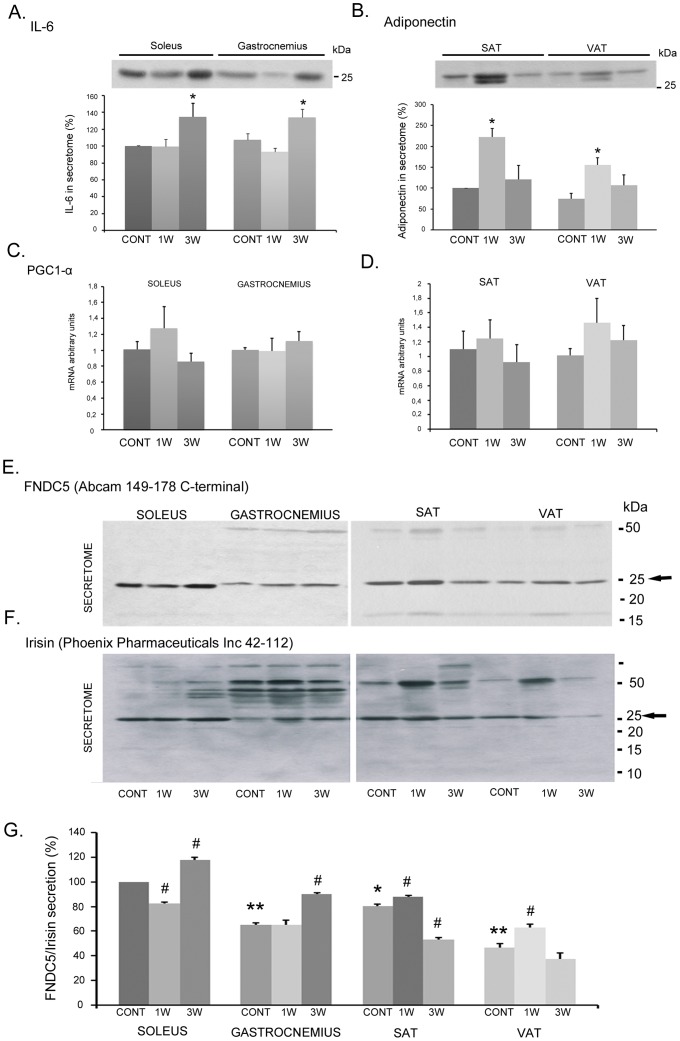
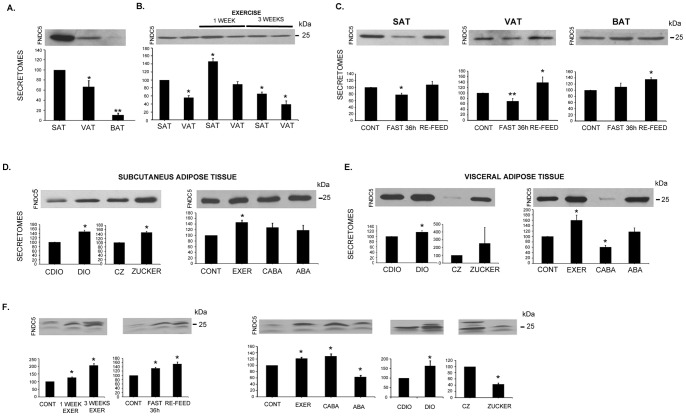
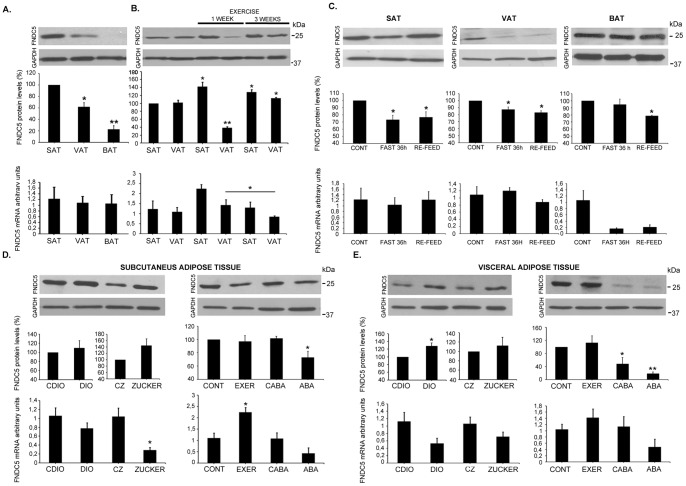
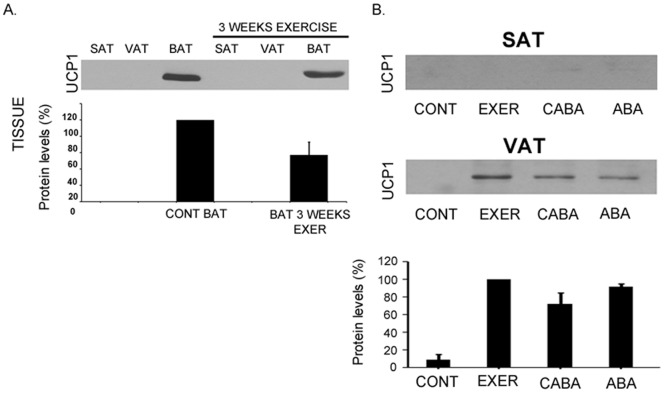
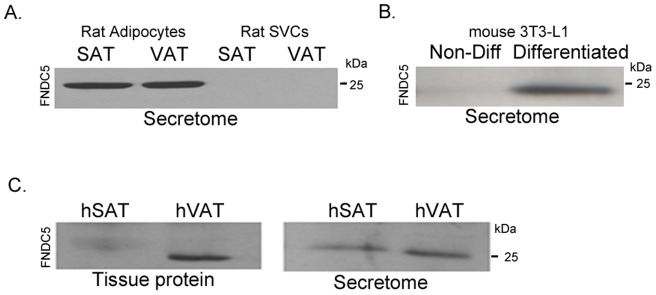
Exercise provides clear beneficial effects for the prevention of numerous diseases. However, many of the molecular events responsible for the curative and protective role of exercise remain elusive. The recent discovery of FNDC5/irisin protein that is liberated by muscle tissue in response to exercise might be an important finding with regard to this unsolved mechanism. The most striking aspect of this myokine is its alleged capacity to drive brown-fat development of white fat and thermogenesis. However, the nature and secretion form of this new protein is controversial. The present study reveals that rat skeletal muscle secretes a 25 kDa form of FNDC5, while the 12 kDa/irisin theoretical peptide was not detected. More importantly, this study is the first to reveal that white adipose tissue (WAT) also secretes FNDC5; hence, it may also behave as an adipokine. Our data using rat adipose tissue explants secretomes proves that visceral adipose tissue (VAT), and especially subcutaneous adipose tissue (SAT), express and secrete FNDC5. We also show that short-term periods of endurance exercise training induced FNDC5 secretion by SAT and VAT. Moreover, we observed that WAT significantly reduced FNDC5 secretion in fasting animals. Interestingly, WAT of obese animals over-secreted this hormone, which might suggest a type of resistance. Because 72% of circulating FNDC5/irisin was previously attributed to muscle secretion, our findings suggest a muscle-adipose tissue crosstalk through a regulatory feedback mechanism.
Overview
The claims and statistics of this paper haven’t been checked yet.
Run the check — free, no account needed. It reads the open-access text and checks the sources it cites.
Integrity signals
Registry
Cites
Statistics
Figures
Verification
Claims the paper makes
The claims and statistics of this paper haven’t been checked yet.
Run the check — free, no account needed. It reads the open-access text and checks the sources it cites.
Claims other papers make about this one
Each is checked against this paper’s own text: does it say what the citing paper says it does?
The cited source says what the claim attributes to it.
In the citing paper
“However, it is important to note that irisin is not a protein exclusively secreted by muscle tissue.”
From Physical Exercise-Induced Myokines and Muscle-Adipose Tissue Crosstalk: A Review of Current Knowledge and the Implications for Health and Metabolic Diseases (2018) · cites this paper as Roca-Rivada et al., 2013
The cited source says what the claim attributes to it.
In the citing paper
“He also found that both tissues secreted FNDC5/irisin under the stimulus of endurance training.”
From Physical Exercise-Induced Myokines and Muscle-Adipose Tissue Crosstalk: A Review of Current Knowledge and the Implications for Health and Metabolic Diseases (2018) · cites this paper as Roca-Rivada et al., 2013
The cited source says what the claim attributes to it.
In the citing paper
“The study presented by Arturo Roca-Rivada et al. was a pioneer in showing that WAT also secretes FNDC5, the precursor of irisin, indicating that it is not only a myokine but also an adipokine (Roca-Rivada et al., 2013).”
From Physical Exercise-Induced Myokines and Muscle-Adipose Tissue Crosstalk: A Review of Current Knowledge and the Implications for Health and Metabolic Diseases (2018) · cites this paper as Roca-Rivada et al., 2013
The cited source says what the claim attributes to it.
In the citing paper
“Furthermore, the secretion of FNDC-5 is around 40% higher in slow-oxidative fibre-type muscle (i.e. soleus) than in fast-glycolytic fibre-type muscle (i.e. gastrocnemius) [47].”
In the citing paper
“Irisin is mainly secreted by skeletal muscle cells, although some secretion was also reported in WAT [204] and, to a lesser extent, in BAT [204,205].”
From Mitochondrial Uncoupling: A Key Controller of Biological Processes in Physiology and Diseases (2019) · cites this paper as [204]
Self-check
Percentages, sums and reported differences re-computed from the paper’s own numbers.
The self-check needs the paper’s full text.
Citations
Cites
1 retracted
Wenz, T., Rossi, S. G., Rotundo, R. L., Spiegelman, B. M., & Moraes, C. T. (2009) · Proceedings of the National Academy of Sciences · doi:10.1073/pnas.0911570106 · Cited by 600
RetractedA PGC1-α-dependent myokine that drives brown-fat-like development of white fat and thermogenesis
Boström, P., Wu, J., Jedrychowski, M. P., Korde, A., Ye, L., Lo, J. C., Rasbach, K. A., Boström, E. A., Choi, J. H., Long, J. Z., et al. (2012) · Nature · doi:10.1038/nature10777 · Cited by 4,810
Identification and Importance of Brown Adipose Tissue in Adult Humans
Cypess, A. M., Lehman, S., Williams, G., Tal, I., Rodman, D., Goldfine, A. B., Kuo, F. C., Palmer, E. L., Tseng, Y.-H., Doria, A., et al. (2009) · New England Journal of Medicine · doi:10.1056/nejmoa0810780 · Cited by 4,399
A Cold-Inducible Coactivator of Nuclear Receptors Linked to Adaptive Thermogenesis
Puigserver, P., Wu, Z., Park, C. W., Graves, R., Wright, M., & Spiegelman, B. M. (1998) · Cell · doi:10.1016/s0092-8674(00)81410-5 · Cited by 3,864
Functional Brown Adipose Tissue in Healthy Adults
Virtanen, K. A., Lidell, M. E., Orava, J., Heglind, M., Westergren, R., Niemi, T., Taittonen, M., Laine, J., Savisto, N.-J., Enerbäck, S., et al. (2009) · New England Journal of Medicine · doi:10.1056/nejmoa0808949 · Cited by 3,058
Muscles, exercise and obesity: skeletal muscle as a secretory organ
Pedersen, B. K., & Febbraio, M. A. (2012) · Nature Reviews Endocrinology · doi:10.1038/nrendo.2012.49 · Cited by 2,909
Muscle as an Endocrine Organ: Focus on Muscle-Derived Interleukin-6
Pedersen, B. K., & Febbraio, M. A. (2008) · Physiological Reviews · doi:10.1152/physrev.90100.2007 · Cited by 2,388
Subcutaneous and visceral adipose tissue: Structural and functional differences
Ibrahim, M. M. (2010) · Obesity Reviews · doi:10.1111/j.1467-789x.2009.00623.x · Cited by 2,238
High Incidence of Metabolically Active Brown Adipose Tissue in Healthy Adult Humans
Saito, M., Okamatsu-Ogura, Y., Matsushita, M., Watanabe, K., Yoneshiro, T., Nio-Kobayashi, J., Iwanaga, T., Miyagawa, M., Kameya, T., Nakada, K., et al. (2009) · Diabetes · doi:10.2337/db09-0530 · Cited by 1,848
Unexpected evidence for active brown adipose tissue in adult humans
Nedergaard, J., Bengtsson, T., & Cannon, B. (2007) · American Journal of Physiology-Endocrinology and Metabolism · doi:10.1152/ajpendo.00691.2006 · Cited by 1,824
Cited by
Sorted by citations
Pathophysiology of type 2 diabetes mellitus
Galicia-Garcia, U., Benito-Vicente, A., Jebari, S., Larrea-Sebal, A., Siddiqi, H., Uribe, K. B., Ostolaza, H., & Martín, C. (2020) · International Journal of Molecular Sciences · doi:10.3390/ijms21176275 · Cited by 3,360
“Finally, irisin is an exercise-regulated myokine, which improves glucose tolerance [66] secreted by skeletal muscle [67] and adipose tissue [57] in response to exercise [68].”
BackgroundKalinkovich, A., & Livshits, G. (2017) · Ageing Research Reviews · doi:10.1016/j.arr.2016.09.008 · Cited by 882
Irisin and FGF21 are cold-induced endocrine activators of brown fat function in humans
Lee, P., Linderman, J. D., Smith, S., Brychta, R. J., Wang, J., Idelson, C., Perron, R. M., Werner, C. D., Phan, G. Q., Kammula, U. S., et al. (2014) · Cell Metabolism · doi:10.1016/j.cmet.2013.12.017 · Cited by 802
“As irisin levels were higher in shivering subjects, we hypothesize muscle to be the main contributor to the observed irisin rise, although adiposederived irisin cannot be excluded (Roca-Rivada et al., 2013).”
Physiology and role of irisin in glucose homeostasis
Perakakis, N., Triantafyllou, G. A., Fernández-Real, J. M., Huh, J. Y., Park, K. H., Seufert, J., & Mantzoros, C. S. (2017) · Nature Reviews Endocrinology · doi:10.1038/nrendo.2016.221 · Cited by 621
The myokine irisin increases cortical bone mass
Colaianni, G., Cuscito, C., Mongelli, T., Pignataro, P., Buccoliero, C., Liu, P., Lü, P., Sartini, L., Comite, M. D., Mori, G., et al. (2015) · Proceedings of the National Academy of Sciences · doi:10.1073/pnas.1516622112 · Cited by 521
“5A); this is in line with previous studies (21).”
Result
Metadata
- Authors
- Roca-Rivada, A., Castelao, C., Senin, L. L., Landrove, M. O., Baltar, J., Crujeiras, A. B., Seoane, L. M., Casanueva, F. F., & Pardo, M.
- Affiliations
- Instituto de Salud Carlos III (ES)
- Complejo Hospitalario Universitario de Santiago (ES)
- Corresponding author
- Pardo, María
- Venue
- PLoS ONE
- Publisher
- Public Library of Science (PLoS)
- Published
- 2013-04-11
- Volume
- 8
- Issue
- 4
- Pages
- e60563
- ISSN
- 1932-6203 (ISSN-L)
- PMC
- PMC3623960
- OpenAlex
- W2008675205
- Cited by
- 612
- References
- 42
- Citations by year
- 2026: 12 · 2025: 35 · 2024: 45 · 2023: 46 · 2022: 51 · 2021: 65 · 2020: 45 · 2019: 42 · 2018: 44 · 2017: 52 · 2016: 55 · 2015: 56 · 2014: 44 · 2013: 19
- FWCI
- 40.28
- Type
- journal article
- Language
- en
- Open access
- gold
- doi.org
- Locations
- PLoS ONE (publishedVersion, cc-by)
- Europe PMC (PubMed Central) (publishedVersion, other-oa)
- PubMed Central (publishedVersion, cc-by)
- PubMed (publishedVersion)
- LA Referencia (Red Federada de Repositorios Institucionales de Publicaciones Científicas) (submittedVersion, other-oa)
- DOAJ (DOAJ: Directory of Open Access Journals) (submittedVersion, cc-by-sa)
- RUNA. Repositorio Institucional del Sergas (Servicio Gallego de Salud (SERGAS)) (submittedVersion, cc-by)
- Funders
- Instituto de Salud Carlos III (CB06/03, FISP10/00537)
- Servicio Gallego de Salud
- Topics
- Health Sciences › Medicine › Physiology (medical) › Adipose Tissue and Metabolism
- Health Sciences › Medicine › Endocrinology, Diabetes and Metabolism › Adipokines, Inflammation, and Metabolic Diseases
- Health Sciences › Medicine › Physiology (medical) › Exercise and Physiological Responses
- Keywords
- FNDC5, irisin, adipokines, myokines, white adipose tissue, visceral adipose tissue, subcutaneous adipose tissue, skeletal muscle, endurance training, fasting, obesity, thermogenesis, secretome
- MeSH terms
- Animals, Fibronectins, Humans, Male, Physical Conditioning, Animal, Immunoblotting, Rats, Sprague-Dawley, Muscle, Skeletal, 3T3-L1 Cells, Mice, Rats, Adipose Tissue, White, Adipokines, Real-Time Polymerase Chain Reaction
About these checks
Registry, retraction, Cites and statistics results are computed, not judged, with one exception: a printed reference that no index lists is read once by a model before it counts as a citation error. Claims are extracted by a model and kept only when their quote appears verbatim in the text; each cited source is then checked, with a model’s help, for whether it says what the claim relies on. Those verdicts can be wrong — read the claim’s quote and the cited source before relying on one.
Statistics and arithmetic are recomputed, not judged.
Confidence bands are shown only for fields calibrated on our annotated test set. None is calibrated yet, so no band is shown.
What counts as a claim ›How we measure confidence ›How we check this ›
Are you an author, or do you see a problem with this page? Request a review
