

Can Taichi Reshape the Brain? A Brain Morphometry Study
Open accessThe DOI matches its Crossref record; 76 of the 78 references it cites were found in a registry or an index.
Abstract
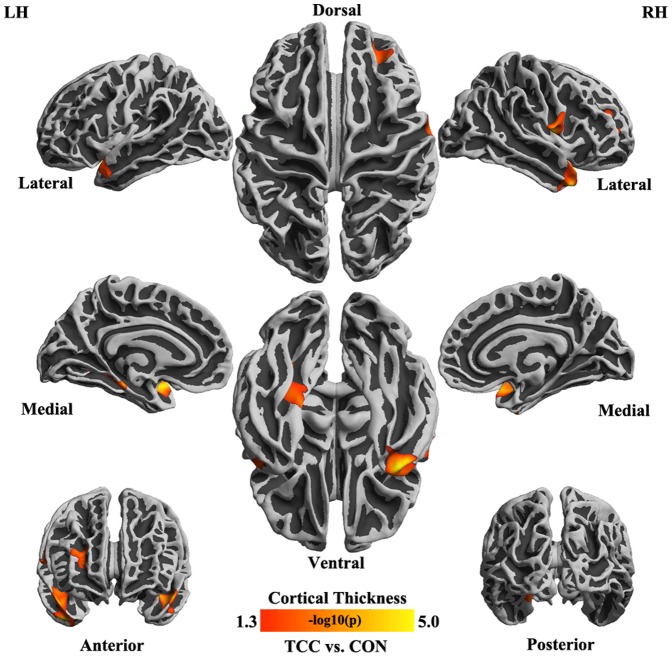
Although research has provided abundant evidence for Taichi-induced improvements in psychological and physiological well-being, little is known about possible links to brain structure of Taichi practice. Using high-resolution MRI of 22 Tai Chi Chuan (TCC) practitioners and 18 controls matched for age, sex and education, we set out to examine the underlying anatomical correlates of long-term Taichi practice at two different levels of regional specificity. For this purpose, parcel-wise and vertex-wise analyses were employed to quantify the difference between TCC practitioners and the controls based on cortical surface reconstruction. We also adopted the Attention Network Test (ANT) to explore the effect of TCC on executive control. TCC practitioners, compared with controls, showed significantly thicker cortex in precentral gyrus, insula sulcus and middle frontal sulcus in the right hemisphere and superior temporal gyrus and medial occipito-temporal sulcus and lingual sulcus in the left hemisphere. Moreover, we found that thicker cortex in left medial occipito-temporal sulcus and lingual sulcus was associated with greater intensity of TCC practice. These findings indicate that long-term TCC practice could induce regional structural change and also suggest TCC might share similar patterns of neural correlates with meditation and aerobic exercise.
Overview
The claims and statistics of this paper haven’t been checked yet.
Free: it reads the open-access text and checks the first 5 claims that cite a source we can check. Create a free account to check every claim.
Integrity signals
Registry
Cites
Statistics
Figures


Verification
Claims the paper makes
The claims and statistics of this paper haven’t been checked yet.
Free: it reads the open-access text and checks the first 5 claims that cite a source we can check. Create a free account to check every claim.
Claims other papers make about this one
Each is checked against this paper’s own text: does it say what the citing paper says it does?
The source backs part of the claim, not all of it — or backs it for a different population, condition or comparison.
In the citing paper
“Several studies reported that different meditation techniques require different cognitive processes and thus produce different neural effects [55, 56].”
From The meditative mind: a comprehensive meta-analysis of MRI studies. (2015) · cites this paper as [56]
Experimental — accuracy not yet measured
Self-check
Percentages, sums and reported differences re-computed from the paper’s own numbers.
The self-check needs the paper’s full text.
Citations
Cites
Desikan, R. S., Ségonne, F., Fischl, B., Quinn, B. T., Dickerson, B. C., Blacker, D., Buckner, R. L., Dale, A. M., Maguire, R. P., Hyman, B. T., et al. (2006) · NeuroImage · doi:10.1016/j.neuroimage.2006.01.021 · Cited by 13,324 · cited 1×
“Parcel-wise analysis The cortical surface was parcellated into 74 and 34 parcellation elements (parcels) for each hemisphere defined by the DesikanKilliany atlas [40,41] and Destrieux atlas [42] to explore the largescale structural changes, respectively.”
MethodCortical Surface-Based Analysis
Dale, A. M., Fischl, B., & Sereno, M. I. (1999) · NeuroImage · doi:10.1006/nimg.1998.0395 · Cited by 10,910
Measuring the thickness of the human cerebral cortex from magnetic resonance images
Fischl, B., & Dale, A. M. (2000) · Proceedings of the National Academy of Sciences · doi:10.1073/pnas.200033797 · Cited by 5,818 · cited 2×
“Finally, the cortical thickness at that location of the vertex is the mean of these two values [34].”
BackgroundMethodAutomatically Parcellating the Human Cerebral Cortex
Fischl, B. (2004) · Cerebral Cortex · doi:10.1093/cercor/bhg087 · Cited by 4,253 · cited 1×
“Parcel-wise analysis The cortical surface was parcellated into 74 and 34 parcellation elements (parcels) for each hemisphere defined by the DesikanKilliany atlas [40,41] and Destrieux atlas [42] to explore the largescale structural changes, respectively.”
MethodTesting the efficiency and independence of attentional networks
Fan, J., McCandliss, B. D., Sommer, T., Raz, A., & Posner, M. I. (2002) · Journal of Cognitive Neuroscience · doi:10.1162/089892902317361886 · Cited by 3,717 · cited 1×
“Before MRI sessions, the participants completed an Attention Network Test (ANT), which is considered as the flanker test to measure different behavioral aspects of attention including alerting, orienting and executive attention based on the Attention Network theory [25].”
MethodBe smart, exercise your heart: Exercise effects on brain and cognition
Hillman, C. H., Erickson, K. I., & Kramer, A. F. (2008) · Nature Reviews Neuroscience · doi:10.1038/nrn2298 · Cited by 3,563 · cited 3×
“Moreover, a large number of studies demonstrate an important role of BA9 in for exercise-related improvement of executive function in adolescents and the elderly [1].”
BackgroundNeural systems supporting interoceptive awareness
Critchley, H. D., Wiens, S., Rotshtein, P., Öhman, A., & Dolan, R. J. (2004) · Nature Neuroscience · doi:10.1038/nn1176 · Cited by 3,406 · cited 1×
“Greater right insula grey matter correlates with increased accuracy in the subjective sense of the inner body, and with negative emotional experience [61].”
BackgroundSpecification of Cerebral Cortical Areas
Rakic, P. (1988) · Science · doi:10.1126/science.3291116 · Cited by 3,127 · cited 1×
“It is suggested that cortical thickness is related to the number or density of cells in a column [72–74], which might help to explain the detailed change of thickness in cellular level.”
BackgroundAutomatic parcellation of human cortical gyri and sulci using standard anatomical nomenclature
Destrieux, C., Fischl, B., Dale, A., & Halgren, E. (2010) · NeuroImage · doi:10.1016/j.neuroimage.2010.06.010 · Cited by 2,956 · cited 1×
“Parcel-wise analysis The cortical surface was parcellated into 74 and 34 parcellation elements (parcels) for each hemisphere defined by the DesikanKilliany atlas [40,41] and Destrieux atlas [42] to explore the largescale structural changes, respectively.”
MethodA hybrid approach to the skull stripping problem in MRI
Ségonne, F., Dale, A. M., Busa, E., Glessner, M., Salat, D., Hahn, H. K., & Fischl, B. (2004) · NeuroImage · doi:10.1016/j.neuroimage.2004.03.032 · Cited by 2,212 · cited 1×
“Brain tissues were then extracted using a hybrid watershed/surface deformation procedure [30] and automatically segmented into the cerebrospinal fluid (CSF), white matter (WM) and deep gray matter (GM) volumetric structures [29].”
Method
Research works printed but not linked: 1
- Sandlund ES, Norlander T (2000) The effects of Tai Chi Chuan relaxation and exercise on stress responses and well being: An overview of research. Int J Stress Manage 7: 139– 149. · doi:10.1023/a:1009536319034
Cited by
Items 101–168 of 168
Peng, W., Zhao, R., Huang, Z.-Q., Zhou, J., Sun, Q., Li, Z., Li, X., Yu, J., Wang, N., & Chen, Z. (2024) · The American Journal of Chinese Medicine · doi:10.1142/s0192415x24500861 · Cited by 9
Jia, S., Wang, H., Chu, D., Yao, J., Wang, H., Chen, W.-J., Zhang, D., & Zhang, W. (2025) · Frontiers in Public Health · doi:10.3389/fpubh.2025.1670168 · Cited by 8
“…that after 12 weeks of Tai Chi training, participants showed increased activity in the prefrontal cortex, especially the dorsolateral prefrontal cortex, which is closely related to executive control and impulse suppression, and executive dysfunction is a typical feature of internet addicts (61).”
He, T., & Hu, Z. (2022) · Neuroreport · doi:10.1097/wnr.0000000000001766 · Cited by 8
Association of Tai Chi and Square Dance with Cognitive Function in Chinese Older Adults
Zhao, X., Liu, D., & Wang, J. (2024) · Healthcare · doi:10.3390/healthcare12181878 · Cited by 7
Postural Responses to Sudden Horizontal Perturbations in Tai Chi Practitioners
Sever, J., Babič, J., Kozinc, Ž., & Šarabon, N. (2021) · International Journal of Environmental Research and Public Health · doi:10.3390/ijerph18052692 · Cited by 7
“areas) have been reported in Tai Chi practitioners [43].”
BackgroundPothier, K., & Bherer, L. (2016) · Springer eBooks · doi:10.1007/978-3-319-42662-4_14 · Cited by 7
Wu, M., Liu, H., Huang, J., Liu, W., Liu, Z., & Xu, Y. (2023) · BMJ Open · doi:10.1136/bmjopen-2023-076196 · Cited by 6
“25 Anodal tDCS of the DLPFC significantly improves memory performance in patients with MCI, possibly by enhancing synaptic plasticity within the prefrontal cortex to improve prefrontal cortical function, enabling memory compensation.”
BackgroundYang, B. T., Miao, R., Tian, Z., Wang, T., Zhu, F., Li, T., Li, W., & Wu, J. (2024) · Heliyon · doi:10.1016/j.heliyon.2024.e36736 · Cited by 6
“Both TCC and Baduanjin have been reported to improve cognitive function [8 – 10].”
BackgroundT’ai Chi and Qigong : Validated Health Benefits
Horowitz, S. (2014) · Alternative and Complementary Therapies · doi:10.1089/act.2014.20505 · Cited by 6
Tang, Z., Zhu, Z. A., Zhang, X., & He, Y. (2022) · Hong Kong Journal of Occupational Therapy · doi:10.1177/15691861221090551 · Cited by 6
“Studies have shown that TC and aerobic exercise may have similar neurological patterns (Wei et al., 2013), causing changes in regional structure, and that long-term practice of TC and Bdj has better cognitive function (Chen et al., 2020; X. Wang, Wu, Ye, Wang, & Zheng, 2021).”
BackgroundJor’dan, A. J., Manor, B. D., Hausdorff, J. M., Lipsitz, L. A., Habtemariam, D. A., Novak, V., & Wayne, P. M. (2018) · PubMed · Cited by 6
Energy Practices and Mindfulness Meditation
Anālayo, B., Steffens-Dhaussy, C., Gallo, F. P., & Scott, D. (2022) · Mindfulness · doi:10.1007/s12671-022-01923-6 · Cited by 5
“The beneficial effects of qìgōng (氣功) and tàijíquán (太 極拳) practices have become an intriguing dimension of contemporary research in cognitive psychology, at times examined in tandem with mindfulness-related practices (e.g., Abbott & Lavretsky 2013; Caldwell et al. 2011; Chen et al. 2021; Chow et al. 2012; Lee et al.…”
BackgroundXie, Y., Cai, K., Dai, J., & Wei, G. (2023) · Brain Sciences · doi:10.3390/brainsci13040691 · Cited by 5
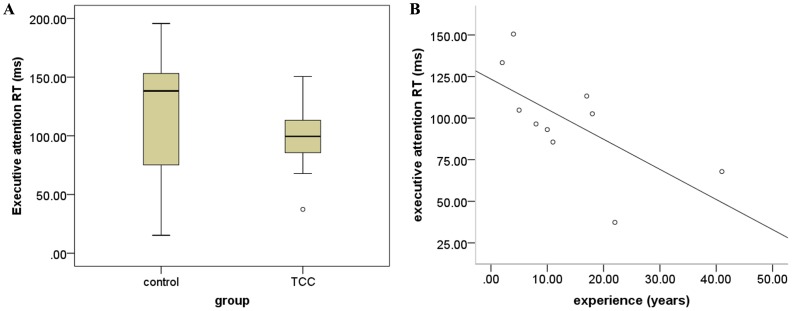
“Our previous study demonstrated that TCC practitioners showed shorter reaction times (RT) in a flanker test than the control group [9].”
ResultSelf-citationDry eye disease and psychosomatics—benefits of mind-body therapy for dry eye disease
Zhao, C., & Li, X. (2025) · Frontiers in Medicine · doi:10.3389/fmed.2025.1600258 · Cited by 5
Tan, S., Liu, X., ZhiXiong, Y. A. N., Yang, Z., Tan, Y., Wei, G., & Zuo, X. (2015) · Chinese Science Bulletin (Chinese Version) · doi:10.1360/n972015-01146 · Cited by 4
Self-citationEditorial: Brain-Mind-Body Practice and Health
Wei, G., Si, G., & Tang, Y. (2017) · Frontiers in Psychology · doi:10.3389/fpsyg.2017.01886 · Cited by 4
“…of human studies emerged to demonstrate the association between “brain-mind-body practice and health” (Lustig et al., 2009; Bezzola et al., 2011; Wei et al., 2013, 2014), which is of great implication for understanding basic scientific issue “mind and body” and providing efficient strategy…”
BackgroundSelf-citationZhan, S., Wu, S., Ma, Q., Hu, C., Hu, H., & Wang, M. (2026) · Age and Ageing · doi:10.1093/ageing/afag095 · Cited by 3
Byun, K. (2023) · Exercise Science · doi:10.15857/ksep.2023.32.1.11 · Cited by 3
Redução do estresse e ansiedade na escola por meio do Tai Chi Chuan
Machado, R. S., & Mello‐Carpes, P. B. (2018) · Revista Ciência em Extensão · doi:10.23901/1679-4605.2018v14n3p50-63 · Cited by 3
Patwardhan, B., Mutalik, G., & Tillu, G. S. (2015) · Elsevier eBooks · doi:10.1016/b978-0-12-801282-6.00006-1 · Cited by 3
Zhang, J., Liu, Y., Li, Z., Bian, Y., Zhou, Q., Shan, C., & Qi, R. (2022) · Journal of Acupuncture and Tuina Science · doi:10.1007/s11726-022-1341-5 · Cited by 3
“The cortex of the precentral gyrus of the right hemisphere and the superior temporal gyrus of the left hemisphere is thicker in the Tai Ji Quan participants who have trained for a long time, and some brain regions show functional differentiation and integration compared with those who have not participated in Tai Ji Q…”
BackgroundWhat are the optimal mind-body therapies for cancer-related pain? A network meta-analysis
He, X.-Y., Liang, G., Zou, Z., Yu, S., Lin, Y.-T., Wang, Y., Li, Y., Wang, Y., & Hou, X. (2025) · Translational Exercise Biomedicine · doi:10.1515/teb-2025-0009 · Cited by 2
fNIRS cortical activation in Tai Chi observational learning
Yang, S., He, S., & Shi, B. (2026) · Frontiers in Psychology · doi:10.3389/fpsyg.2026.1710673 · Cited by 2
Yoga and Aging: Neurobiological Benefits
Afonso, R. F., Santaella, D. F., & Kozasa, E. H. (2020) · Advances in medical diagnosis, treatment, and care (AMDTC) book series · doi:10.4018/978-1-7998-3254-6.ch018 · Cited by 2
Xue, C., Li, Y., Zhong, D., Li, J., Zheng, Z. S., & Jin, R. (2022) · PubMed Central · doi:10.7507/1001-5515.202105003 · Cited by 2
O’Shea, J. (2017) · Dance Research Journal · doi:10.1017/s0149767717000328 · Cited by 2
Effects of Tai Chi on attentional bias in men with methamphetamine use disorder
Zhang, L., Li, Y., Wang, L., Zhang, X., Sun, Y., He, S. J., & Zhu, W. (2026) · npj Science of Learning · doi:10.1038/s41539-026-00426-6 · Cited by 1
“Long-term Tai Chi has been associated with greater prefrontal cortical thickness and improved executive/attentional performance, and short-term programs increase task-evokedPFCoxygenationandfunctionalconnectivity 14 – 16 .”
Bing, Z., Ling, N., Fangfang, W., Li, W., Zhang, X., Xiaohua, G., Nedelská, Z., Chen, F., Kun, W., Zhu, B., et al. (2017) · Journal of Biomedical Research · doi:10.7555/jbr.31.20160135 · Cited by 1
“significantly thicker cortex([10]), and regional functional homogeneity change([11]).”
BackgroundLee, L., Lin, H., Tsai, N., Yen, Y., Lu, C., Lui, C., Chung, H.-M., Tsai, K., Hsu, S., & Tsui, H.-W. (2018) · Journal of Medical and Biological Engineering · doi:10.1007/s40846-018-0460-4 · Cited by 1
Cognitive enhancements of elderly Tai Chi Chuan practitioners
Willmott, J. P. (2017) · University of Bedfordshire Repository (University of Bedfordshire) · Cited by 1
Shu, W., & Kim, S. (2024) · Research Square · doi:10.21203/rs.3.rs-4455613/v1 · Cited by 1
Exercise and emotion regulation
Zhang, Y. (2024) · Otago University Research Archive (University of Otago) · Cited by 1
Effect of Tai Chi Exercise Combined with Mental Imagery in Improving Balance
Alsubiheen, A. M. (2015) · The Scholars Repository - LLU (Loma Linda University)
Romero, J. B., & Díaz, L. M. (2014) · EUG Institutional Repository
Integrative Medicine in Rehabilitation
Yeh, T.-S. (2017) · Elsevier eBooks · doi:10.1016/b978-0-323-47904-2.00018-0
Exercise is positively associated with cognitive Function:The role of exercise modalities
Wang, C., Chu, C.-H., Wu, C.-H., Cho, Y.-M., & Chang, Y.-K. (2017) · IJASS(International Journal of Applied Sports Sciences) · doi:10.24985/ijass.2017.29.2.105
CiteSpace Visualizations of Studies on Tai Chi Practice and Mental Health
Han, B., Wang, J., & Zhan, L. (2018) · Wiley eBooks · doi:10.1002/9781119362081.ch15
Tillu, G. S., & Patwardhan, B. (2016) · Elsevier eBooks · doi:10.1016/b978-0-12-801814-9.00014-3
Tai Chi : Proses Belajar Otak dan Kehidupan
Maramis, M. M. (2015) · Universitas Airlangga Repository (Universitas Airlangga)
Yoga and Aging: Neurobiological Benefits
Afonso, R. F., Santaella, D. F., & Kozasa, E. H. (2022) · IGI Global eBooks · doi:10.4018/978-1-6684-5295-0.ch070
Non Drug Treatment of Alzheimer’s Disease
靳, 云. (2020) · Advances in Clinical Medicine · doi:10.12677/acm.2020.104085
Wan, R., Shi, J., Hu, K., Wang, Y., Jiang, X., Yan, W., Cao, M., & Wang, Y. (2022) · Figshare · doi:10.6084/m9.figshare.21621905
Kong, J., Huang, Y., Liu, J., Yu, S., Cheng, M. S., Chen, H., Wilson, G., Harvey, W. F., Li, W., & Wang, C. (2021) · Figshare · doi:10.6084/m9.figshare.13620005
Yan, J. H., Wang, Y., & Ren, J. (2025) · European Journal of Medical and Health Sciences · doi:10.24018/ejmed.2025.7.4.2393
“In terms of increasing the cortical volumes in the frontal, temporal, or other regions and improving cognitive functions, Tai Chi practice shares similar purposes with meditation and aerobic exercises [160], [161].”
Trends in physical education and sport
(2025) · Trends in physical education and sport · doi:10.31489/3081-0531
Wan, R., Shi, J., Hu, K., Wang, Y., Jiang, X., Yan, W., Cao, M., & Wang, Y. (2022) · Figshare · doi:10.6084/m9.figshare.21621908
Wan, R., Shi, J., Hu, K., Wang, Y., Jiang, X., Yan, W., Cao, M., & Wang, Y. (2022) · Figshare · doi:10.6084/m9.figshare.21621899
Wan, R., Shi, J., Hu, K., Wang, Y., Jiang, X., Yan, W., Cao, M., & Wang, Y. (2022) · Figshare · doi:10.6084/m9.figshare.21621902
Contemplations into Respiration: Effects of breathing and meditative movement on body and mind
Gerritsen, R. J. S., Band, G. P. H., Lafeber, J., van den Beukel, N., van Voskuilen, B., & Hoogland, R. (2023) · Leiden Repository (Leiden University)
Revisión sistemática: Relación entre la actividad física y la plasticidad cerebral
Mora, M. L. M. (2020) · Repositorio Institucional - IBERO
Niu, Y., Zhang, Q., Liu, Q., & Wang, M. (2026) · Frontiers in Public Health · doi:10.3389/fpubh.2026.1799937
“Interventions such as Tai Chi are increasingly recognized for their capacity to modulate neural excitability and structural connectivity, which are essential for delaying the progression of MCI (53).”
InfluentialDuan, X., Wang, X., Song, Q., Yin, Z., & Mao, D. (2026) · Brain Research · doi:10.1016/j.brainres.2026.150333
Wang, N., & Yang, Z. (2026) · Frontiers in Public Health · doi:10.3389/fpubh.2026.1791759
“Neuroimaging studies have demonstrated that mind-body practices like Tai Chi are associated with structural and functional changes in brain regions involved in attention, including the anterior cingulate cortex and dorsolateral prefrontal cortex (34).”
Self-citationNeuroanatomical differences in early bilingual and monolingual childrenPreprint
Coutinho, M. R., & Eden, G. F. (2026) · bioRxiv (Cold Spring Harbor Laboratory) · doi:10.64898/2026.05.08.722956
“…vertex-wise information to average parcel values comes with a loss of information (Fürtjes et al., 2023) and studies reporting on between-group comparison using both vertex/voxel-wise and parcel-wise approaches simultaneously have documented this (Perlman et al., 2017; Wei et al., 2013, 2020).”
Zhu, J., Huang, L., Wang, S., Gao, J., Yang, L., Lin, M., Ma, C., Yin, X., Liang, S., Liu, Z., et al. (2026) · Neural Regeneration Research · doi:10.4103/nrr.nrr-d-25-01364
Xie, Q., Li, Y., Zheng, N., Zhang, Q., Wang, X., Luo, J., Zhang, Y., Tao, J., & Huang, J. (2026) · Journal of NeuroEngineering and Rehabilitation · doi:10.1186/s12984-026-02054-y
“Potential neurophysiological substrates for these benefits include enhanced sensorimotor integration and increased cortical thickness [4], greater muscle activation [5], and elevated neural excitability in stroke patients [6].”
Self-citationTaiji as a Health-Promoting Mind–Body Exercise: Linking Movement, Learning, and Cognitive Health
Sim, S. K. (2026) · Malaysian Journal of Medical Sciences · doi:10.21315/mjms-05-2026-363
“…have confirmed increased functional connectivity and greater grey matter volume in brain regions linked to learning and memory, attention, and executive functions, particularly the hippocampus, amygdala, and cingulate cortex within the limbic system, after 12 weeks of Taiji practice (11–12).”
li, Z., Vartanov, A., Liu, H., Zhang, S., & Zhang, R. (2026) · Acta Psychologica · doi:10.1016/j.actpsy.2026.107823
Wang, X., Ding, B., Lu, M., & Tian, Y. (2026) · Trends in physical education and sport · doi:10.31489/3081-0531/2026-2-3(5)/25-32
“However, most existing studies have focused on traditional barehanded Tai Chi and general cognitive outcomes, with relatively limited attention to specific domains such as impulsivity and inhibitory control [12, 13].”
Wang, X., Ding, B., Lu, M., & Tian, Y. (2026) · Trends in physical education and sport · doi:10.31489/3081-0531/2026-3-5/25-31
(2020) · The Journal of the International Society of Chinese Health Practices
葛利坤, Gao-Xia, W. E. I., Chongjing, L. U. O., Jingshu, X. I. N. G., & Zuo, X. (2026) · China Scientific Data · doi:10.11922/11-6035.csd.2026.0014.en
Self-citationShi, J., Hu, Z.-Y., Wen, Y.-R., Wang, Y.-F., Lin, Y.-Y., Zhao, H.-Z., Lin, Y.-T., & Wang, Y.-L. (2022) · doi:10.3389/fnins.2022.1046518.s003
Wen, Y.-R., Shi, J., Wang, Y.-F., Lin, Y.-Y., Hu, Z.-Y., Lin, Y.-T., Wang, X.-Q., & Wang, Y.-L. (2022) · doi:10.3389/fnagi.2022.921069.s001
Wang, X.-Q., Xiong, H.-Y., Du, S.-H., Yang, Q.-H., & Hu, L. (2022) · doi:10.3389/fnagi.2022.935925.s001
Zhu, P.-A., Kan, N., Guo, J., Liu, H., Sun, Y., & Ma, Y. (2026) · Pain Research and Management · doi:10.1155/prm/9436329
Metadata
- Authors
- Wei, G.-X., Xu, T., Fan, F.-M., Dong, H.-M., Jiang, L.-L., Li, H.-J., Yang, Z., Luo, J., & Zuo, X.-N.
- Affiliations
- Chinese Academy of Sciences (CN)
- Corresponding author
- Luo, Jing
- Zuo, Xi-Nian
- Venue
- PLoS ONE
- Publisher
- Public Library of Science (PLoS)
- Published
- 2013-04-09
- Volume
- 8
- Issue
- 4
- Pages
- e61038
- ISSN
- 1932-6203 (ISSN-L)
- PMC
- PMC3621760
- OpenAlex
- W2086825712
- Cited by
- 152
- References
- 78
- Citations by year
- 2026: 13 · 2025: 9 · 2024: 10 · 2023: 8 · 2022: 22 · 2021: 11 · 2020: 12 · 2019: 5 · 2018: 15 · 2017: 14 · 2016: 6 · 2015: 15 · 2014: 8 · 2013: 4
- FWCI
- 29.01
- Type
- journal article
- Language
- en
- Open access
- gold
- doi.org
- Locations
- PLoS ONE (publishedVersion, cc-by)
- Europe PMC (PubMed Central) (publishedVersion, other-oa)
- PubMed Central (publishedVersion, cc-by)
- PubMed (publishedVersion)
- Institutional Repository of Institute of Psychology, Chinese Academy of Sciences (Institute of Psychology, Chinese Academy of Sciences) (submittedVersion)
- DOAJ (DOAJ: Directory of Open Access Journals) (submittedVersion, cc-by-sa)
- Funders
- National Natural Science Foundation of China (81171409, 91132728, 81220108014, KSCX2-EW-J-8, 31200794, KSZD-EW-TZ-002, 81030028)
- Chinese Academy of Sciences (KSZD-EW-TZ-002, KSCX2-EWJ-8, 81220108014, 81171409, Y2CX112006)
- Institute of Psychology, Chinese Academy of Sciences
- National Institute of Mental Health (R01MH139349)
- Topics
- Social Sciences › Safety Research › Martial Arts: Techniques, Psychology, and Education
- Life Sciences › Neuroscience › Neurology › Transcranial Magnetic Stimulation Studies
- Social Sciences › Psychology › Clinical Psychology › Mindfulness and Compassion Interventions
- Keywords
- Tai Chi, brain morphometry, cortical thickness, long-term practice, executive function, Attention Network Test, meditation, aerobic exercise, precentral gyrus, superior temporal gyrus
- MeSH terms
- Brain Mapping, Cerebral Cortex, Female, Humans, Image Processing, Computer-Assisted, Magnetic Resonance Imaging, Male, Middle Aged, Psychological Tests, Exercise, Case-Control Studies, Meditation, Tai Ji
About these checks
Registry, retraction, Cites and statistics results are computed, not judged, with one exception: a printed reference that no index lists is read once by a model before it counts as a citation error. Claims are extracted by a model and kept only when their quote appears verbatim in the text; each cited source is then checked, with a model’s help, for whether it says what the claim relies on. Those verdicts can be wrong — read the claim’s quote and the cited source before relying on one.
Statistics and arithmetic are recomputed, not judged.
Confidence bands are shown only for fields calibrated on our annotated test set. None is calibrated yet, so no band is shown.
What counts as a claim ›How we measure confidence ›How we check this ›
Are you an author, or do you see a problem with this page? Request a review
Data sources
Bibliographic data: Semantic Scholar, OpenAlex, Crossref.
Contains information from the Semantic Scholar Academic Graph Datasets, made available under the ODC Attribution License (ODC-BY 1.0).
Semantic Scholar’s data is described in: Kinney, R., et al. (2023). The Semantic Scholar Open Data Platform. arXiv:2301.10140.
