

Can Taichi Reshape the Brain? A Brain Morphometry Study
Open accessThe DOI matches its Crossref record; 76 of the 78 references it cites were found in a registry or an index.
Abstract
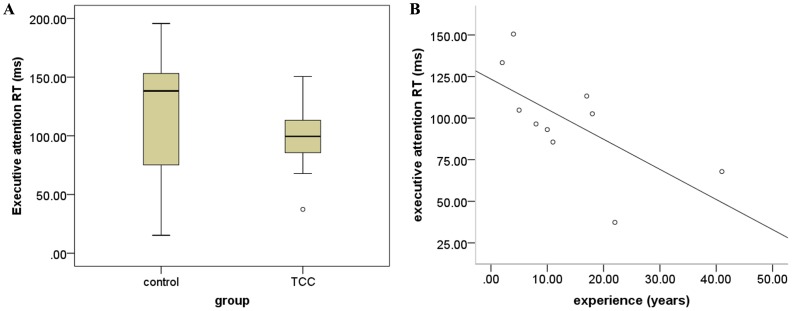
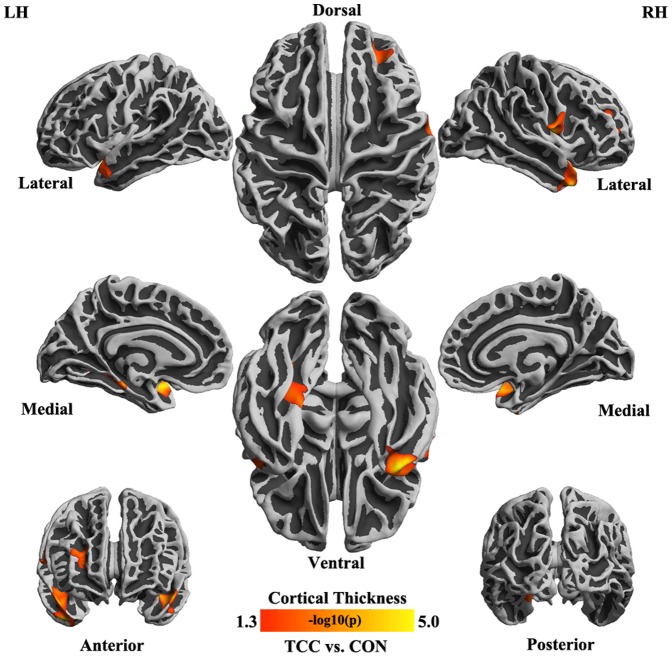
Although research has provided abundant evidence for Taichi-induced improvements in psychological and physiological well-being, little is known about possible links to brain structure of Taichi practice. Using high-resolution MRI of 22 Tai Chi Chuan (TCC) practitioners and 18 controls matched for age, sex and education, we set out to examine the underlying anatomical correlates of long-term Taichi practice at two different levels of regional specificity. For this purpose, parcel-wise and vertex-wise analyses were employed to quantify the difference between TCC practitioners and the controls based on cortical surface reconstruction. We also adopted the Attention Network Test (ANT) to explore the effect of TCC on executive control. TCC practitioners, compared with controls, showed significantly thicker cortex in precentral gyrus, insula sulcus and middle frontal sulcus in the right hemisphere and superior temporal gyrus and medial occipito-temporal sulcus and lingual sulcus in the left hemisphere. Moreover, we found that thicker cortex in left medial occipito-temporal sulcus and lingual sulcus was associated with greater intensity of TCC practice. These findings indicate that long-term TCC practice could induce regional structural change and also suggest TCC might share similar patterns of neural correlates with meditation and aerobic exercise.
Overview
The claims and statistics of this paper haven’t been checked yet.
Free: it reads the open-access text and checks the first 5 claims that cite a source we can check. Create a free account to check every claim.
Integrity signals
Registry
Cites
Statistics
Figures


Verification
Claims the paper makes
The claims and statistics of this paper haven’t been checked yet.
Free: it reads the open-access text and checks the first 5 claims that cite a source we can check. Create a free account to check every claim.
Claims other papers make about this one
Each is checked against this paper’s own text: does it say what the citing paper says it does?
The source backs part of the claim, not all of it — or backs it for a different population, condition or comparison.
In the citing paper
“Several studies reported that different meditation techniques require different cognitive processes and thus produce different neural effects [55, 56].”
From The meditative mind: a comprehensive meta-analysis of MRI studies. (2015) · cites this paper as [56]
Experimental — accuracy not yet measured
Self-check
Percentages, sums and reported differences re-computed from the paper’s own numbers.
The self-check needs the paper’s full text.
Citations
Cites
Desikan, R. S., Ségonne, F., Fischl, B., Quinn, B. T., Dickerson, B. C., Blacker, D., Buckner, R. L., Dale, A. M., Maguire, R. P., Hyman, B. T., et al. (2006) · NeuroImage · doi:10.1016/j.neuroimage.2006.01.021 · Cited by 13,324 · cited 1×
“Parcel-wise analysis The cortical surface was parcellated into 74 and 34 parcellation elements (parcels) for each hemisphere defined by the DesikanKilliany atlas [40,41] and Destrieux atlas [42] to explore the largescale structural changes, respectively.”
MethodCortical Surface-Based Analysis
Dale, A. M., Fischl, B., & Sereno, M. I. (1999) · NeuroImage · doi:10.1006/nimg.1998.0395 · Cited by 10,910
Measuring the thickness of the human cerebral cortex from magnetic resonance images
Fischl, B., & Dale, A. M. (2000) · Proceedings of the National Academy of Sciences · doi:10.1073/pnas.200033797 · Cited by 5,818 · cited 2×
“Finally, the cortical thickness at that location of the vertex is the mean of these two values [34].”
BackgroundMethodAutomatically Parcellating the Human Cerebral Cortex
Fischl, B. (2004) · Cerebral Cortex · doi:10.1093/cercor/bhg087 · Cited by 4,253 · cited 1×
“Parcel-wise analysis The cortical surface was parcellated into 74 and 34 parcellation elements (parcels) for each hemisphere defined by the DesikanKilliany atlas [40,41] and Destrieux atlas [42] to explore the largescale structural changes, respectively.”
MethodTesting the efficiency and independence of attentional networks
Fan, J., McCandliss, B. D., Sommer, T., Raz, A., & Posner, M. I. (2002) · Journal of Cognitive Neuroscience · doi:10.1162/089892902317361886 · Cited by 3,717 · cited 1×
“Before MRI sessions, the participants completed an Attention Network Test (ANT), which is considered as the flanker test to measure different behavioral aspects of attention including alerting, orienting and executive attention based on the Attention Network theory [25].”
MethodBe smart, exercise your heart: Exercise effects on brain and cognition
Hillman, C. H., Erickson, K. I., & Kramer, A. F. (2008) · Nature Reviews Neuroscience · doi:10.1038/nrn2298 · Cited by 3,563 · cited 3×
“Moreover, a large number of studies demonstrate an important role of BA9 in for exercise-related improvement of executive function in adolescents and the elderly [1].”
BackgroundNeural systems supporting interoceptive awareness
Critchley, H. D., Wiens, S., Rotshtein, P., Öhman, A., & Dolan, R. J. (2004) · Nature Neuroscience · doi:10.1038/nn1176 · Cited by 3,406 · cited 1×
“Greater right insula grey matter correlates with increased accuracy in the subjective sense of the inner body, and with negative emotional experience [61].”
BackgroundSpecification of Cerebral Cortical Areas
Rakic, P. (1988) · Science · doi:10.1126/science.3291116 · Cited by 3,127 · cited 1×
“It is suggested that cortical thickness is related to the number or density of cells in a column [72–74], which might help to explain the detailed change of thickness in cellular level.”
BackgroundAutomatic parcellation of human cortical gyri and sulci using standard anatomical nomenclature
Destrieux, C., Fischl, B., Dale, A., & Halgren, E. (2010) · NeuroImage · doi:10.1016/j.neuroimage.2010.06.010 · Cited by 2,956 · cited 1×
“Parcel-wise analysis The cortical surface was parcellated into 74 and 34 parcellation elements (parcels) for each hemisphere defined by the DesikanKilliany atlas [40,41] and Destrieux atlas [42] to explore the largescale structural changes, respectively.”
MethodA hybrid approach to the skull stripping problem in MRI
Ségonne, F., Dale, A. M., Busa, E., Glessner, M., Salat, D., Hahn, H. K., & Fischl, B. (2004) · NeuroImage · doi:10.1016/j.neuroimage.2004.03.032 · Cited by 2,212 · cited 1×
“Brain tissues were then extracted using a hybrid watershed/surface deformation procedure [30] and automatically segmented into the cerebrospinal fluid (CSF), white matter (WM) and deep gray matter (GM) volumetric structures [29].”
MethodAerobic Exercise Training Increases Brain Volume in Aging Humans
Colcombe, S. J., Erickson, K. I., Scalf, P. E., Kim, J. S., Prakash, R., McAuley, E., Elavsky, S., Marquez, D. X., Hu, L., & Kramer, A. F. (2006) · The Journals of Gerontology Series A: Biological Sciences and Medical Sciences · doi:10.1093/gerona/61.11.1166 · Cited by 2,134 · cited 2×
“[1,51,52] suggested that other forms of yoga and meditation would likely have a similar impact on cortical structure, although each tradition would be expected to have a slightly different pattern of cortical thickening based on the specific mental exercise involved.”
BackgroundMindfulness practice leads to increases in regional brain gray matter density
Hölzel, B. K., Carmody, J., Vangel, M., Congleton, C., Yerramsetti, S. M., Gard, T., & Lazar, S. W. (2011) · Psychiatry Research: Neuroimaging · doi:10.1016/j.pscychresns.2010.08.006 · Cited by 1,914 · cited 1×
“The most interesting findings of the present study were that the differences in these brain regions were remarkably consistent with previous studies of brain structural measures in meditation practice [46–48].”
ResultFischl, B., Liu, A., & Dale, A. M. (2001) · IEEE Transactions on Medical Imaging · doi:10.1109/42.906426 · Cited by 1,751 · cited 1×
“produced by transforming a tessellation of a triangular mesh over the GM-WM boundary of each hemispheric volume [29], which was further corrected for topological defects in the surface to achieve a spherical topology [31,32].”
MethodMeditation experience is associated with increased cortical thickness
Lazar, S. W., Kerr, C. E., Wasserman, R. H., Gray, J. R., Greve, D. N., Treadway, M. T., McGarvey, M., Quinn, B. T., Dusek, J. A., Benson, H., et al. (2005) · NeuroReport · doi:10.1097/01.wnr.0000186598.66243.19 · Cited by 1,698 · cited 1×
“[46] compared cortical thickness of 20 insight meditation practitioners with 9 years of average meditation experience and 15 matched controls.”
BackgroundPlasticity in gray and white: neuroimaging changes in brain structure during learning
Zatorre, R. J., Fields, R. D., & Johansen-Berg, H. (2012) · Nature Neuroscience · doi:10.1038/nn.3045 · Cited by 1,685 · cited 2×
“As for the neurogenesis, some studies have demonstrated that the changes in the size and number of neurons are a minor factor in MRI changes, particularly those found outside the hippocampus in association with learning [69].”
BackgroundResultHan, X., Jovicich, J., Salat, D., van der Kouwe, A., Quinn, B., Czanner, S., Busa, E., Pacheco, J., Albert, M., Killiany, R., et al. (2006) · NeuroImage · doi:10.1016/j.neuroimage.2006.02.051 · Cited by 1,508
Cellular networks underlying human spatial navigation
Ekstrom, A. D., Kahana, M. J., Caplan, J. B., Fields, T. A., Isham, E. A., Newman, E. L., & Fried, I. (2003) · Nature · doi:10.1038/nature01964 · Cited by 1,425 · cited 1×
“sulcus and lingual sulcus corresponds approximately to BA 36, which is reported to be activated in retrieving spatial information [63,64].”
BackgroundBlack, J. E., Isaacs, K. R., Anderson, B. J., Alcantara, A. A., & Greenough, W. T. (1990) · Proceedings of the National Academy of Sciences · doi:10.1073/pnas.87.14.5568 · Cited by 1,161 · cited 1×
“[24] using an experimental design, which revealed that participants in the TCC program experienced a significant improvement in tasks including components of executive function from baseline to 12 months.”
MethodRakic, P. (1995) · Trends in Neurosciences · doi:10.1016/0166-2236(95)93934-p · Cited by 1,047 · cited 1×
“It is suggested that cortical thickness is related to the number or density of cells in a column [72–74], which might help to explain the detailed change of thickness in cellular level.”
BackgroundA new view of pain as a homeostatic emotion
(Bud) Craig, A. (2003) · Trends in Neurosciences · doi:10.1016/s0166-2236(03)00123-1 · Cited by 1,023 · cited 1×
“Insula is also believed to process convergent information to produce an emotionally relevant context for sensory experience such as pain, happiness and sadness and integrate information relating to bodily states into higher-order cognitive and emotional processes in functional imaging studies [62].”
BackgroundGeometrically Accurate Topology-Correction of Cortical Surfaces Using Nonseparating Loops
Segonne, F., Pacheco, J., & Fischl, B. (2007) · IEEE Transactions on Medical Imaging · doi:10.1109/tmi.2006.887364 · Cited by 992
Activation of human primary motor cortex during action observation: A neuromagnetic study
Hari, R., Forss, N., Avikainen, S., Kirveskari, E., Salenius, S., & Rizzolatti, G. (1998) · Proceedings of the National Academy of Sciences · doi:10.1073/pnas.95.25.15061 · Cited by 965 · cited 1×
“The precentral sulcus, located approximately in primary motor cortex, is responsible for observation and execution of motor tasks and important for highly automatic circuitry because it mediates visuomotor actions [54].”
BackgroundGrön, G., Wunderlich, A. P., Spitzer, M., Tomczak, R., & Riepe, M. W. (2000) · Nature Neuroscience · doi:10.1038/73980 · Cited by 685 · cited 1×
“sulcus and lingual sulcus corresponds approximately to BA 36, which is reported to be activated in retrieving spatial information [63,64].”
BackgroundSwain, R. A., Harris, A. B., Wiener, E. C., Dutka, M. V., Morris, H. D., Theien, B. E., Konda, S., Engberg, K., Lauterbur, P. C., & Greenough, W. T. (2003) · Neuroscience · doi:10.1016/s0306-4522(02)00664-4 · Cited by 655 · cited 1×
“It is well documented in animals involved in chronic exercise that exercise increases the vascular volume fraction in rat cortex, especially in motor cortex [70,71].”
BackgroundThe Parahippocampus Subserves Topographical Learning in Man
Aguirre, G. K., Detre, J. A., Alsop, D. C., & D'Esposito, M. (1996) · Cerebral Cortex · doi:10.1093/cercor/6.6.823 · Cited by 622
Investigation of mindfulness meditation practitioners with voxel-based morphometry
Hölzel, B. K., Ott, U., Gard, T., Hempel, H., Weygandt, M., Morgen, K., & Vaitl, D. (2008) · Social Cognitive and Affective Neuroscience · doi:10.1093/scan/nsm038 · Cited by 542 · cited 1×
“[49] found that meditation practitioners had a significantly higher concentration of grey matter in inferior temporal gyrus and right anterior insula in a sample of 20 meditation practitioners relative to 20 controls, which also overlapped with the main results of current study.”
ResultPhysical activity predicts gray matter volume in late adulthood: The Cardiovascular Health Study
Erickson, K. I., Raji, C. A., Lopez, O. L., Becker, J. T., Rosano, C., Newman, A. B., Gach, H. M., Thompson, P. M., Ho, A. J., & Kuller, L. H. (2010) · Neurology · doi:10.1212/wnl.0b013e3181f88359 · Cited by 508
Zuo, X.-N., Xu, T., Jiang, L., Yang, Z., Cao, X.-Y., He, Y., Zang, Y.-F., Castellanos, F. X., & Milham, M. P. (2013) · NeuroImage · doi:10.1016/j.neuroimage.2012.10.017 · Cited by 505 · cited 1×
“html) [26].”
Self-citationMotor Learning-Dependent Synaptogenesis Is Localized to Functionally Reorganized Motor Cortex
Kleim, J. A., Barbay, S., Cooper, N. R., Hogg, T. M., Reidel, C. N., Remple, M. S., & Nudo, R. J. (2002) · Neurobiology of Learning and Memory · doi:10.1006/nlme.2000.4004 · Cited by 485 · cited 2×
“For instance, motor skill learning is found to be associated with synaptogenesis and changes in dendritic spine morphology [66,67].”
BackgroundLuders, E., Toga, A. W., Lepore, N., & Gaser, C. (2009) · NeuroImage · doi:10.1016/j.neuroimage.2008.12.061 · Cited by 469 · cited 1×
“As a matter of fact, quite a few studies have failed to detect a significant correlation between practice duration (months or years) and brain structures [59,75].”
BackgroundHogstrom, L. J., Westlye, L. T., Walhovd, K. B., & Fjell, A. M. (2013) · Cerebral Cortex · doi:10.1093/cercor/bhs231 · Cited by 458
Methodology of brain perfusion imaging
Barbier, E. L., Lamalle, L., & Décorps, M. (2001) · Journal of Magnetic Resonance Imaging · doi:10.1002/jmri.1073 · Cited by 404 · cited 1×
“This issue is undoubtedly associated with a number of physical (for example, cardiovascular disease, colon and breast cancer, and obesity) and mental (for example, depression and anxiety) disorders [3].”
BackgroundCortical thickness and pain sensitivity in zen meditators.
Grant, J. A., Courtemanche, J., Duerden, E. G., Duncan, G. H., & Rainville, P. (2010) · Emotion · doi:10.1037/a0018334 · Cited by 395 · cited 1×
“The most interesting findings of the present study were that the differences in these brain regions were remarkably consistent with previous studies of brain structural measures in meditation practice [46–48].”
ResultWeinstein, A. M., Voss, M. W., Prakash, R. S., Chaddock, L., Szabo, A., White, S. M., Wojcicki, T. R., Mailey, E., McAuley, E., Kramer, A. F., et al. (2012) · Brain, Behavior, and Immunity · doi:10.1016/j.bbi.2011.11.008 · Cited by 335
Exercise induces angiogenesis but does not alter movement representations within rat motor cortex
Kleim, J. A., Cooper, N. R., & VandenBerg, P. M. (2002) · Brain Research · doi:10.1016/s0006-8993(02)02239-4 · Cited by 315 · cited 1×
“It is well documented in animals involved in chronic exercise that exercise increases the vascular volume fraction in rat cortex, especially in motor cortex [70,71].”
BackgroundVaynman, S., & Gomez‐Pinilla, F. (2006) · Journal of Neuroscience Research · doi:10.1002/jnr.20979 · Cited by 299 · cited 1×
“It is also possible that human evolution, which has been shaped by an active lifestyle, will be maladapted by the sedentary behaviors of today [4,5].”
Background12-month Tai Chi training in the elderly: its effect on health fitness
LAN, C., LAI, J.-S., CHEN, S.-Y., & WONG, M.-K. (1998) · Medicine & Science in Sports & Exercise · doi:10.1097/00005768-199803000-00003 · Cited by 288
China's transition: The effect of rapid urbanization on adult occupational physical activity
Monda, K. L., Gordon-Larsen, P., Stevens, J., & Popkin, B. M. (2007) · Social Science & Medicine · doi:10.1016/j.socscimed.2006.10.019 · Cited by 273
Increased default mode network connectivity associated with meditation
Jang, J. H., Jung, W. H., Kang, D.-H., Byun, M. S., Kwon, S. J., Choi, C.-H., & Kwon, J. S. (2011) · Neuroscience Letters · doi:10.1016/j.neulet.2010.10.056 · Cited by 260 · cited 1×
“[46,59,60].”
The Functional Effects of Physical Exercise Training in Frail Older People: A Systematic Review
Chin A Paw, M. J. M., van Uffelen, J. G. Z., Riphagen, I., & van Mechelen, W. (2008) · Sports Medicine · doi:10.2165/00007256-200838090-00006 · Cited by 256 · cited 1×
“As estimated, almost 150 million people practice TCC around the world for its physical health benefits [8,9] including increasing muscle strength [10], flexibility [11], and balance and motor control [12], reducing risks of falling”
BackgroundLong-term meditation is associated with increased gray matter density in the brain stem
Vestergaard-Poulsen, P., van Beek, M., Skewes, J., Bjarkam, C. R., Stubberup, M., Bertelsen, J., & Roepstorff, A. (2009) · NeuroReport · doi:10.1097/wnr.0b013e328320012a · Cited by 235
Adult hippocampal neurogenesis and voluntary running activity: Circadian and dose‐dependent effects
Holmes, M. M., Galea, L. A. M., Mistlberger, R. E., & Kempermann, G. (2004) · Journal of Neuroscience Research · doi:10.1002/jnr.20039 · Cited by 233
The effect of meditation on brain structure: cortical thickness mapping and diffusion tensor imaging
Kang, D.-H., Jo, H. J., Jung, W. H., Kim, S. H., Jung, Y.-H., Choi, C.-H., Lee, U. S., An, S. C., Jang, J. H., & Kwon, J. S. (2013) · Social Cognitive and Affective Neuroscience · doi:10.1093/scan/nss056 · Cited by 224 · cited 1×
“Moreover, Kang and his colleagues observed that superior frontal cortex, temporal pole and interior temporal cortex were thicker in meditators compared to the controls [50].”
ResultWorking memory capacity and attention network test performance
Redick, T. S., & Engle, R. W. (2006) · Applied Cognitive Psychology · doi:10.1002/acp.1224 · Cited by 220 · cited 2×
“Undoubtedly, our findings lend support to his explanation for the inconsistent results [76].”
BackgroundResultAerobic Fitness and Executive Control of Relational Memory in Preadolescent Children
CHADDOCK, L., HILLMAN, C. H., BUCK, S. M., & COHEN, N. J. (2011) · Medicine & Science in Sports & Exercise · doi:10.1249/mss.0b013e3181e9af48 · Cited by 207 · cited 1×
“This region serves as the highest cortical area responsible for motor planning, organization, and regulation and also plays an important role in the integration of emotion and cognition, and executive function [57,58].”
BackgroundA Review of Clinical Trials of Tai Chi and Qigong in Older Adults
Rogers, C. E., Larkey, L. K., & Keller, C. (2009) · Western Journal of Nursing Research · doi:10.1177/0193945908327529 · Cited by 204 · cited 1×
“Additionally, some studies highlight the mental benefits that practicing TCC may achieve when used as an intervention tool, such as its positive effects on mood [16], selfefficacy [15], stress [17,18] and quality of life [19].”
BackgroundTai Chi Chuan to improve muscular strength and endurance in elderly individuals: A pilot study
Lan, C., Lai, J.-S., Chen, S.-Y., & Wong, M.-K. (2000) · Archives of Physical Medicine and Rehabilitation · doi:10.1016/s0003-9993(00)90042-x · Cited by 197 · cited 1×
“As estimated, almost 150 million people practice TCC around the world for its physical health benefits [8,9] including increasing muscle strength [10], flexibility [11], and balance and motor control [12], reducing risks of falling”
BackgroundChange in perceived psychosocial status following a 12‐week Tai Chi exercise programme
Taylor‐Piliae, R. E., Haskell, W. L., Waters, C. M., & Froelicher, E. S. (2006) · Journal of Advanced Nursing · doi:10.1111/j.1365-2648.2006.03809.x · Cited by 187 · cited 2×
“Additionally, some studies highlight the mental benefits that practicing TCC may achieve when used as an intervention tool, such as its positive effects on mood [16], selfefficacy [15], stress [17,18] and quality of life [19].”
BackgroundCaldwell, K., Harrison, M., Adams, M., & Travis Triplett, N. (2009) · Journal of Bodywork and Movement Therapies · doi:10.1016/j.jbmt.2007.12.001 · Cited by 187 · cited 1×
“Additionally, some studies highlight the mental benefits that practicing TCC may achieve when used as an intervention tool, such as its positive effects on mood [16], selfefficacy [15], stress [17,18] and quality of life [19].”
BackgroundEffect of 4- and 8-wk Intensive Tai Chi Training on Balance Control in the Elderly
TSANG, W. W. N., & HUI-CHAN, C. W. Y. (2004) · Medicine & Science in Sports & Exercise · doi:10.1249/01.mss.0000121941.57669.bf · Cited by 168 · cited 1×
“Currently, although TCC practice is reported to decrease falling and increase balancing in the elderly in clinical intervention trials, no related brain research has disclosed the underlying neural correlates [55].”
BackgroundThe Effectiveness of Tai Chi Exercise in Improving Aerobic Capacity: An Updated Meta-Analysis
Taylor-Piliae, R. E. (2008) · Medicine and Sport Science · doi:10.1159/000134283 · Cited by 145
Challenges Inherent to T'ai Chi Research: Part II—Defining the Intervention and Optimal Study Design
Wayne, P. M., & Kaptchuk, T. J. (2008) · The Journal of Alternative and Complementary Medicine · doi:10.1089/acm.2007.7170b · Cited by 143
A methodology for analyzing curvature in the developing brain from preterm to adult
Pienaar, R., Fischl, B., Caviness, V., Makris, N., & Grant, P. E. (2008) · International Journal of Imaging Systems and Technology · doi:10.1002/ima.20138 · Cited by 139
Physically Active Subjects Should Be the Control Group
BOOTH, F. W., & LEES, S. J. (2006) · Medicine & Science in Sports & Exercise · doi:10.1249/01.mss.0000205117.11882.65 · Cited by 124 · cited 1×
“It is also possible that human evolution, which has been shaped by an active lifestyle, will be maladapted by the sedentary behaviors of today [4,5].”
BackgroundKolb, B. E., Cioe, J. D. D., & Comeau, W. L. (2008) · Neurobiology of Learning and Memory · doi:10.1016/j.nlm.2008.04.012 · Cited by 123 · cited 2×
“For instance, motor skill learning is found to be associated with synaptogenesis and changes in dendritic spine morphology [66,67].”
BackgroundPhysical Activity and Cognition in Older Adults: The Potential of Tai Chi Chuan
Chang, Y.-K., Nien, Y.-H., Tsai, C.-L., & Etnier, J. L. (2010) · Journal of Aging and Physical Activity · doi:10.1123/japa.18.4.451 · Cited by 122 · cited 2×
“It has been hypothesized that TCC practitioners improved their cognitive processing ability, especially executive function, by controlling breath, focusing on concentration, mindfulness, and inhibiting distractions from surroundings regularly[20].”
BackgroundLee, J. K., Lee, J.-M., Kim, J. S., Kim, I. Y., Evans, A. C., & Kim, S. I. (2006) · NeuroImage · doi:10.1016/j.neuroimage.2005.12.044 · Cited by 108
Taylor, D., Hale, L., Schluter, P., Waters, D. L., Binns, E. E., McCracken, H., McPherson, K., & Wolf, S. L. (2012) · Journal of the American Geriatrics Society · doi:10.1111/j.1532-5415.2012.03928.x · Cited by 105 · cited 1×
“indicated in previous studies of TCC on other physical properties [44,45].”
ResultThe Effectiveness of Tai Chi Exercise in Improving Aerobic Capacity: A Meta-Analysis
Taylor-Piliae, R. E., & Froelicher, E. S. (2004) · The Journal of Cardiovascular Nursing · doi:10.1097/00005082-200401000-00009 · Cited by 91 · cited 1×
“We suppose this findings is helpful to explain why practicing TCC can improve balance and prevent falls [56].”
ResultLearning-Related Gray and White Matter Changes in Humans: An Update
Taubert, M., Villringer, A., & Ragert, P. (2012) · The Neuroscientist · doi:10.1177/1073858411419048 · Cited by 90 · cited 1×
“One explanation for these various morphological alternations might relate to the formation of new connections by dendritic spine growth (synaptogenesis) and proliferation of glial cells (gliogenesis), which reflected remodeling of neuronal processes, rather than neurogenesis [68].”
BackgroundEffectiveness of tai chi for Parkinson's disease: A critical review
Lee, M. S., Lam, P., & Ernst, E. (2008) · Parkinsonism & Related Disorders · doi:10.1016/j.parkreldis.2008.02.003 · Cited by 82 · cited 1×
“There has been a proliferation of research interest on the effect of TCC on physical, mental and social function over the past decades (see the reviews [7,11,18,20–22].”
BackgroundHuman cerebral cortex: A system for the integration of volume- and surface-based representations
Makris, N., Kaiser, J. R., Haselgrove, C., Seidman, L. J., Biederman, J., Boriel, D., Valera, E. M., Papadimitriou, G., Fischl, B. R., Caviness, V. S., et al. (2006) · NeuroImage · doi:10.1016/j.neuroimage.2006.04.220 · Cited by 79
Rejbi, I. B. C., Trabelsi, Y., CHOUCHENE, TURKIA, B., & Saad, H. B. (2010) · International Journal of COPD · doi:10.2147/copd.s7955 · Cited by 77 · cited 1×
“indicated in previous studies of TCC on other physical properties [44,45].”
ResultWang, W. C., Zhang, A. L., Rasmussen, B., Lin, L.-W., Dunning, T., Kang, S. W., Park, B.-J., & Lo, S. K. (2009) · Journal of Acupuncture and Meridian Studies · doi:10.1016/s2005-2901(09)60052-2 · Cited by 75 · cited 1×
“There has been a proliferation of research interest on the effect of TCC on physical, mental and social function over the past decades (see the reviews [7,11,18,20–22].”
BackgroundDechamps, A., Onifade, C., Décamps, A., & Bourdel‐Marchasson, I. (2009) · Journal of Aging and Physical Activity · doi:10.1123/japa.17.2.236 · Cited by 72
Bernal-Rusiel, J. L., Atienza, M., & Cantero, J. L. (2010) · NeuroImage · doi:10.1016/j.neuroimage.2010.03.074 · Cited by 63 · cited 3×
“05) by using random field theory as implemented in Matlab-based functions in FreeSurfer [43].”
MethodInfluentialMatthews, M. M., & Williams, H. G. (2008) · PubMed · Cited by 60
Zuo, X.-N., & Xing, X.-X. (2011) · PLoS ONE · doi:10.1371/journal.pone.0026703 · Cited by 49 · cited 1×
“Specifically, individual MR images were first denoised by using a spatially adaptive non-local means filter [27,28] and corrected for intensity variations due to MR inhomogeneities [29].”
MethodSelf-citationXing, X.-X., Zhou, Y.-L., Adelstein, J. S., & Zuo, X.-N. (2011) · Magnetic Resonance Imaging · doi:10.1016/j.mri.2011.02.007 · Cited by 40 · cited 1×
“Specifically, individual MR images were first denoised by using a spatially adaptive non-local means filter [27,28] and corrected for intensity variations due to MR inhomogeneities [29].”
MethodSelf-citationTaiji for Individuals with Parkinson Disease and their Support Partners: Program Evaluation
Klein, P. J., & Rivers, L. (2006) · Neurology Report · doi:10.1097/01.npt.0000282146.18446.f1 · Cited by 33 · cited 1×
“[7], deceasing factors such as pain [13], blood pressure, Parkinson disease symptoms [14] and cardiovascular diseases (CVDS) symptoms [15].”
BackgroundWong, M., & Lan, C. (2008) · KARGER eBooks · doi:10.1159/000134291 · Cited by 29 · cited 1×
“As estimated, almost 150 million people practice TCC around the world for its physical health benefits [8,9] including increasing muscle strength [10], flexibility [11], and balance and motor control [12], reducing risks of falling”
BackgroundTai Chi Exercise and the Improvement of Mental and Physical Health among College Students
Wang, Y. '. (2008) · KARGER eBooks · doi:10.1159/000134294 · Cited by 27 · cited 1×
“[7], deceasing factors such as pain [13], blood pressure, Parkinson disease symptoms [14] and cardiovascular diseases (CVDS) symptoms [15].”
BackgroundThe Effectiveness of Tai Chi Exercise in Improving Aerobic Capacity: A Meta-Analysis
Taylor-Piliae, R. E., & Froelicher, E. S. (2004) · Holistic Nursing Practice · doi:10.1097/00004650-200409000-00008 · Cited by 23
Clinical Implications of Tai Chi Interventions: A Review
Zhu, W., Guan, S., & Yang, Y. (2010) · American Journal of Lifestyle Medicine · doi:10.1177/1559827610368777 · Cited by 22 · cited 2×
“Most importantly, because of its low- to- moderate intensity characteristics and slow and relaxed nature, TCC is suited for persons of all ages, including both older adults and individuals with chronic diseases [7].”
BackgroundQuantitative Comparison of Two Cortical Surface Extraction Methods Using MRI Phantoms
Eskildsen, S. F., & Østergaard, L. R. (2007) · Springer eBooks · doi:10.1007/978-3-540-75757-3_50 · Cited by 17 · cited 1×
“This measure is in agreement with surface area derived from post-mortem studies and has been validated on several brain phantoms and compared with other surface-based analysis packages [37–39].”
MethodHigh-resolution intersubject averaging and a coordinate system for the cortical surface
Fischl, B., Sereno, M. I., Tootell, R. B. H., & Dale, A. M. (1999) · Human Brain Mapping · doi:10.1002/(sici)1097-0193(1999)8:4<272::aid-hbm10>3.0.co;2-4 · cited 1×
“Finally, each subject’s surface mesh was inflated into a sphere to compute a smooth, invertible deformation of the resulting spherical mesh to a common spherical coordinate system that aligned the cortical folding patterns across subjects [29,33].”
Method
Research works printed but not linked: 1
- Sandlund ES, Norlander T (2000) The effects of Tai Chi Chuan relaxation and exercise on stress responses and well being: An overview of research. Int J Stress Manage 7: 139– 149. · doi:10.1023/a:1009536319034
Cited by
Fox, K. C. R., Nijeboer, S., Dixon, M. L., Floman, J. L., Ellamil, M., Rumak, S. P., Sedlmeier, P., & Christoff, K. (2014) · Neuroscience & Biobehavioral Reviews · doi:10.1016/j.neubiorev.2014.03.016 · Cited by 804
A research agenda for aging in China in the 21st century
Fang, E. F., Scheibye-Knudsen, M., Jahn, H. J., Li, J., Ling, L., Guo, H., Zhu, X., Preedy, V., Lu, H., Bohr, V. A., et al. (2015) · Ageing Research Reviews · doi:10.1016/j.arr.2015.08.003 · Cited by 721
Zuo, X.-N., & Xing, X.-X. (2014) · Neuroscience & Biobehavioral Reviews · doi:10.1016/j.neubiorev.2014.05.009 · Cited by 660
Self-citationThe Effect of Diaphragmatic Breathing on Attention, Negative Affect and Stress in Healthy Adults
Ma, X., Yue, Z.-Q., Gong, Z.-Q., Zhang, H., Duan, N.-Y., Shi, Y.-T., Wei, G.-X., & Li, Y.-F. (2017) · Frontiers in Psychology · doi:10.3389/fpsyg.2017.00874 · Cited by 509
“Moreover, specific changes, such as an increased cortical thickness (Wei et al., 2013), prefrontalhippocampus functional connectivity (Tao et al.”
BackgroundSelf-citationBreath of Life: The Respiratory Vagal Stimulation Model of Contemplative Activity
Gerritsen, R. J. S., & Band, G. P. H. (2018) · Frontiers in Human Neuroscience · doi:10.3389/fnhum.2018.00397 · Cited by 342
“The frontal end stations of CAN also show predicted structural changes: PFC gray matter density is increased by diverse meditation styles and mind-body exercises (Lazar et al., 2005; Luders et al., 2009, 2012a; Lutz et al., 2015; Hölzel et al., 2011a; Froeliger et al., 2012; Tang et al., 2015; Wei et al., 2013; Yin et…”
Background
Metadata
- Authors
- Wei, G.-X., Xu, T., Fan, F.-M., Dong, H.-M., Jiang, L.-L., Li, H.-J., Yang, Z., Luo, J., & Zuo, X.-N.
- Affiliations
- Chinese Academy of Sciences (CN)
- Corresponding author
- Luo, Jing
- Zuo, Xi-Nian
- Venue
- PLoS ONE
- Publisher
- Public Library of Science (PLoS)
- Published
- 2013-04-09
- Volume
- 8
- Issue
- 4
- Pages
- e61038
- ISSN
- 1932-6203 (ISSN-L)
- PMC
- PMC3621760
- OpenAlex
- W2086825712
- Cited by
- 152
- References
- 78
- Citations by year
- 2026: 13 · 2025: 9 · 2024: 10 · 2023: 8 · 2022: 22 · 2021: 11 · 2020: 12 · 2019: 5 · 2018: 15 · 2017: 14 · 2016: 6 · 2015: 15 · 2014: 8 · 2013: 4
- FWCI
- 29.01
- Type
- journal article
- Language
- en
- Open access
- gold
- doi.org
- Locations
- PLoS ONE (publishedVersion, cc-by)
- Europe PMC (PubMed Central) (publishedVersion, other-oa)
- PubMed Central (publishedVersion, cc-by)
- PubMed (publishedVersion)
- Institutional Repository of Institute of Psychology, Chinese Academy of Sciences (Institute of Psychology, Chinese Academy of Sciences) (submittedVersion)
- DOAJ (DOAJ: Directory of Open Access Journals) (submittedVersion, cc-by-sa)
- Funders
- National Natural Science Foundation of China (81171409, 91132728, 81220108014, KSCX2-EW-J-8, 31200794, KSZD-EW-TZ-002, 81030028)
- Chinese Academy of Sciences (KSZD-EW-TZ-002, KSCX2-EWJ-8, 81220108014, 81171409, Y2CX112006)
- Institute of Psychology, Chinese Academy of Sciences
- National Institute of Mental Health (R01MH139349)
- Topics
- Social Sciences › Safety Research › Martial Arts: Techniques, Psychology, and Education
- Life Sciences › Neuroscience › Neurology › Transcranial Magnetic Stimulation Studies
- Social Sciences › Psychology › Clinical Psychology › Mindfulness and Compassion Interventions
- Keywords
- Tai Chi, brain morphometry, cortical thickness, long-term practice, executive function, Attention Network Test, meditation, aerobic exercise, precentral gyrus, superior temporal gyrus
- MeSH terms
- Brain Mapping, Cerebral Cortex, Female, Humans, Image Processing, Computer-Assisted, Magnetic Resonance Imaging, Male, Middle Aged, Psychological Tests, Exercise, Case-Control Studies, Meditation, Tai Ji
About these checks
Registry, retraction, Cites and statistics results are computed, not judged, with one exception: a printed reference that no index lists is read once by a model before it counts as a citation error. Claims are extracted by a model and kept only when their quote appears verbatim in the text; each cited source is then checked, with a model’s help, for whether it says what the claim relies on. Those verdicts can be wrong — read the claim’s quote and the cited source before relying on one.
Statistics and arithmetic are recomputed, not judged.
Confidence bands are shown only for fields calibrated on our annotated test set. None is calibrated yet, so no band is shown.
What counts as a claim ›How we measure confidence ›How we check this ›
Are you an author, or do you see a problem with this page? Request a review
Data sources
Bibliographic data: Semantic Scholar, OpenAlex, Crossref.
Contains information from the Semantic Scholar Academic Graph Datasets, made available under the ODC Attribution License (ODC-BY 1.0).
Semantic Scholar’s data is described in: Kinney, R., et al. (2023). The Semantic Scholar Open Data Platform. arXiv:2301.10140.
