

The DOI matches its Crossref record; 2 of the 2 references it cites were found in a registry or an index.
The Importance of the Secure Base Effect for Domestic Dogs – Evidence from a Manipulative Problem-Solving Task
Overview
The claims and statistics of this paper haven’t been checked yet.
Run the check — free, no account needed. It reads the open-access text and checks the sources it cites.
Integrity signals
Registry
Cites
Statistics
Figures
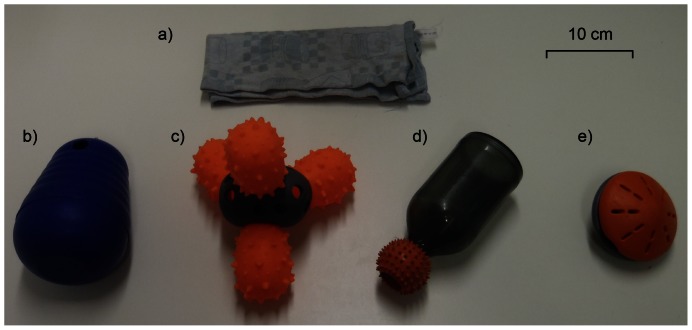
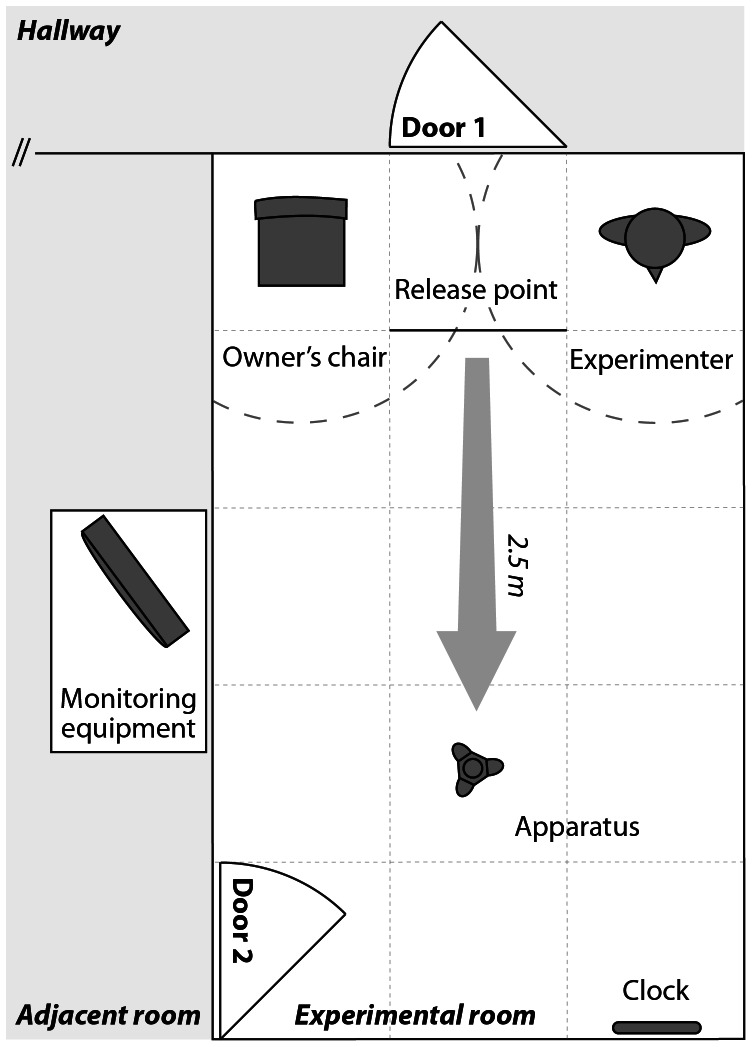
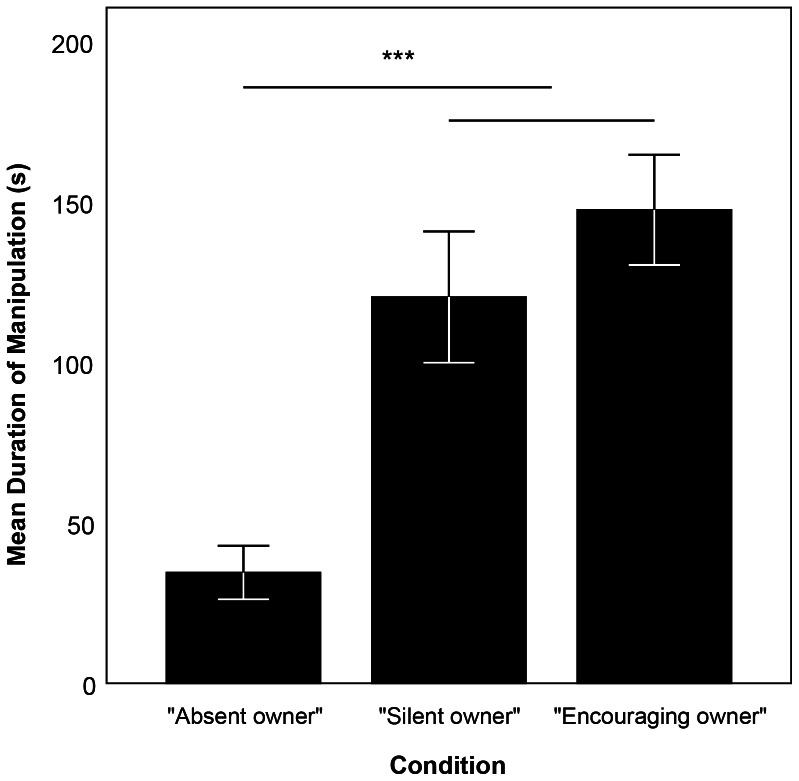
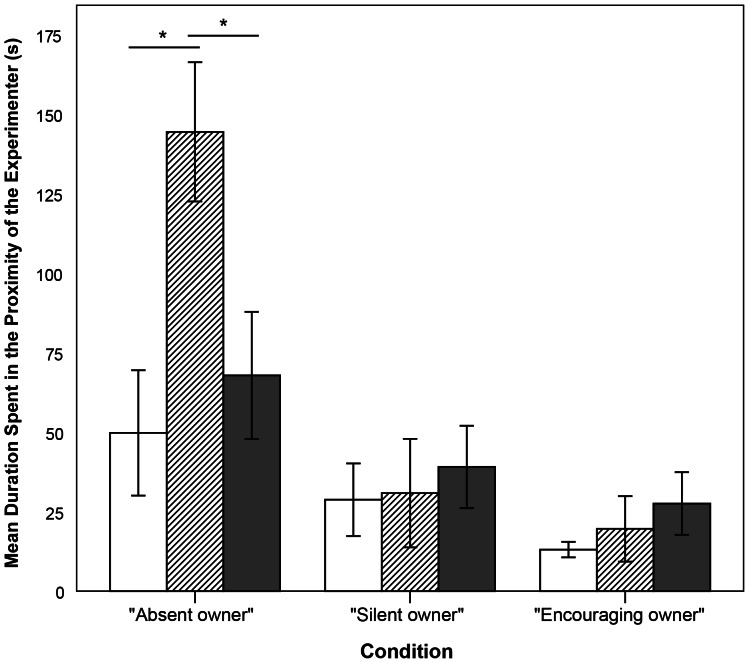
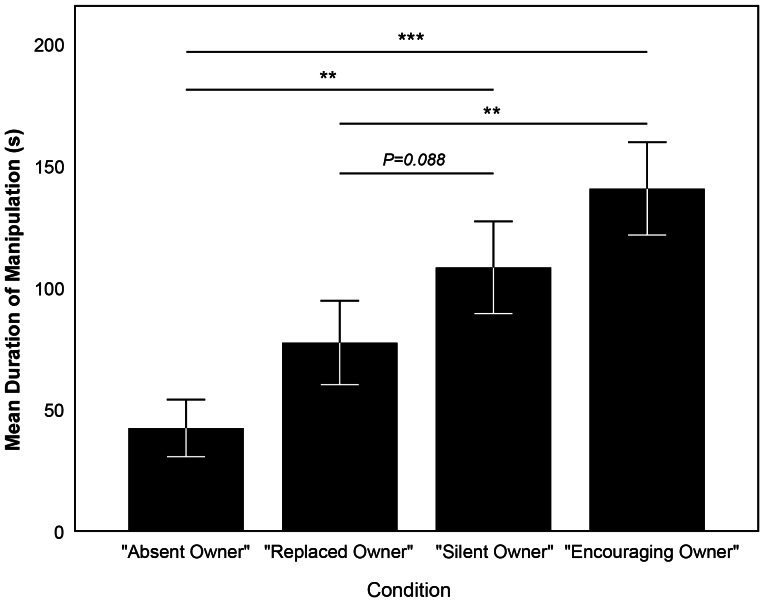
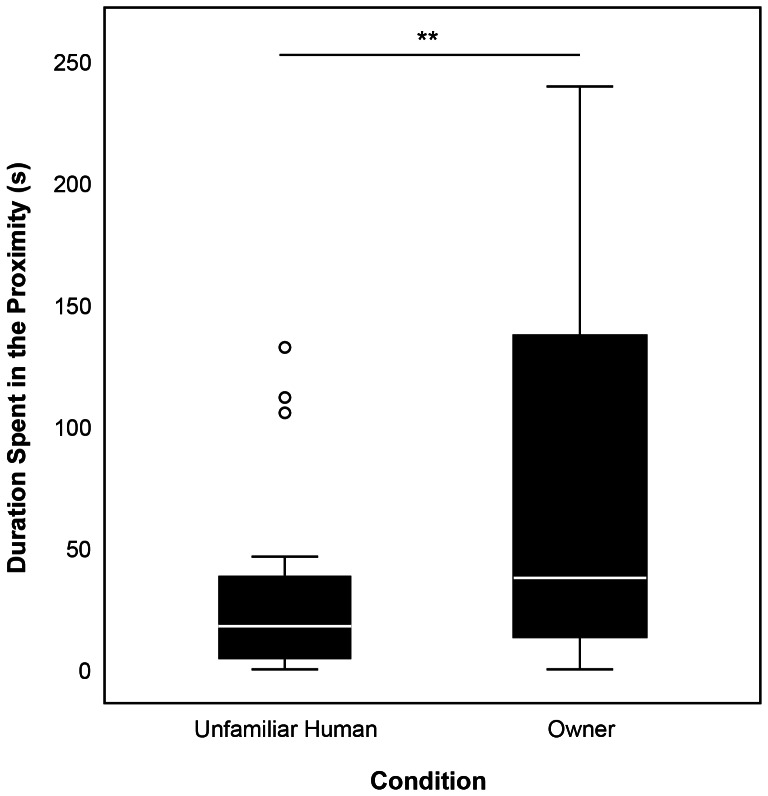
Verification
Claims the paper makes
The claims and statistics of this paper haven’t been checked yet.
Run the check — free, no account needed. It reads the open-access text and checks the sources it cites.
Claims other papers make about this one
Each is checked against this paper’s own text: does it say what the citing paper says it does?
The source backs part of the claim, not all of it — or backs it for a different population, condition or comparison.
In the citing paper
“both dogs and cats form infant-like attachment bonds with humans, who are for them a source of protection and reassurance [24,186,188,189].”
From The Complexity of the Human–Animal Bond: Empathy, Attachment and Anthropomorphism in Human–Animal Relationships and Animal Hoarding (2022) · cites this paper as [188]
Experimental — accuracy not yet measured
Self-check
Percentages, sums and reported differences re-computed from the paper’s own numbers.
The self-check needs the paper’s full text.
Citations
Cites
Ainsworth, M. S. (1989) · American Psychologist · doi:10.1037/0003-066x.44.4.709 · Cited by 3,231
The Infant's Response to Entrapment between Contradictory Messages in Face-to-Face Interaction
Tronick, E., Als, H., Adamson, L., Wise, S., & Brazelton, T. B. (1978) · Journal of the American Academy of Child Psychiatry · doi:10.1016/s0002-7138(09)62273-1 · Cited by 1,880
Research works printed but not linked: 18
- J Bowlby, 1958, The nature of the child's tie to his mother, Int J Psycho-Anal, 39, 350
- Bowlby J (1969) Attachment and Loss: Vol. 1. Attachment. New York: Basic Books.
- Cassidy J (1999) The nature of the child's ties. In: Cassidy J, Shaver PR, editors. Handbook of attachment: Theory, research and clinical applications. New York: Guilford Press. pp. 3–20.
- DW Rajecki, 1978, Toward a general theory of infantile attachment: A Comparative review of aspects of the social bond, Behav Brain Sci, 3, 417, 10.1017/S0140525X00075816 · DOI · Paper page
- P Savolainen, 2002, Genetic evidence for an East Asian origin of domestic dogs, Science, 298, 1610, 10.1126/science.1073906 · DOI · Paper page
- J Archer, 1997, Why do people love their pets, Evol Hum Behav, 18, 237, 10.1016/S0162-3095(99)80001-4 · DOI · Paper page
- Askew HR (1996) Treatments of behaviour problems in dog and cat. A guide for the small animal veterinarian. Oxford: Blackwell Science. 9 pp.
- Ainsworth MDS, Wittig BA (1969) Attachment and exploratory behavior of one-year olds in a strange situation. In: Foss BM, editor. Determinants of infant behavior (Vol. 4). London: Methuen. pp. 111–136.
- J Topál, 1998, Attachment behavior in dogs (Canis familiaris): A new application of Ainsworth's (1969) Strange Situation Test, J Comp Psychol, 112, 219, 10.1037/0735-7036.112.3.219 · DOI · Paper page
- E Prato-Previde, 2003, Is the dog-human relationship an attachment bond? An observational study using Ainsworth's Strange Situation, Behaviour, 140, 225, 10.1163/156853903321671514 · DOI · Paper page
- R Palmer, 2008, A counterbalanced version of Ainsworth's Strange Situation Procedure reveals secure-base effects in dog-human relationships, Appl Anim Behav Sci, 109, 306, 10.1016/j.applanim.2007.04.002 · DOI
- L Matas, 1978, Continuity of adaptation in the second year: The relationship between quality of attachment and later competence, Child Dev, 49, 547, 10.2307/1128221 · DOI
- J Mesman, 2009, The many faces of the Still-Face Paradigm: A review and meta-analysis, Dev Rev, 29, 120, 10.1016/j.dr.2009.02.001 · DOI
- M Gácsi, 2001, Attachment behavior of adult dogs (Canis familiaris) living at rescue centers: Forming new bonds, J Comp Psychol, 115, 423, 10.1037/0735-7036.115.4.423 · DOI
- SS Feldman, 1975, Attachment behavior: A validation study in two age groups, Child Dev, 46, 319, 10.2307/1128124 · DOI
- M Gácsi, 2009, Does the owner provide a secure base? Behavioral and heart rate response to a threatening stranger and to separation in dogs, J Vet Behav, 4, 90, 10.1016/j.jveb.2008.09.042 · DOI
- K Kotrschal, 2009, Dyadic relationships and operational performance of male and female owners and their male dogs, Behav Process, 81, 383, 10.1016/j.beproc.2009.04.001 · DOI
- TF Pettijohn, 1977, Alleviation of separation distress in 3 breeds of young dogs, Dev Psychobiol, 10, 373, 10.1002/dev.420100413 · DOI
Cited by
Sorted by citations
Baby schema in human and animal faces induces cuteness perception and gaze allocation in children
Borgi, M., Cogliati-Dezza, I., Brelsford, V., Meints, K., & Cirulli, F. (2014) · Frontiers in Psychology · doi:10.3389/fpsyg.2014.00411 · Cited by 243
Prato-Previde, E., Basso Ricci, E., & Colombo, E. S. (2022) · Animals · doi:10.3390/ani12202835 · Cited by 121
Metadata
- Authors
- Horn, L., Huber, L., & Range, F.
- Venue
- PLoS ONE
- Publisher
- Public Library of Science (PLoS)
- Published
- 2013-05-29
- Volume
- 8
- Issue
- 5
- Pages
- e65296
- ISSN
- 1932-6203
- PMC
- PMC3667003
- Cited by
- 129
- References
- 2
- Language
- en
About these checks
Registry, retraction, Cites and statistics results are computed, not judged, with one exception: a printed reference that no index lists is read once by a model before it counts as a citation error. Claims are extracted by a model and kept only when their quote appears verbatim in the text; each cited source is then checked, with a model’s help, for whether it says what the claim relies on. Those verdicts can be wrong — read the claim’s quote and the cited source before relying on one.
Statistics and arithmetic are recomputed, not judged.
Confidence bands are shown only for fields calibrated on our annotated test set. None is calibrated yet, so no band is shown.
What counts as a claim ›How we measure confidence ›How we check this ›
Are you an author, or do you see a problem with this page? Request a review
