

The DOI matches its Crossref record; 47 of the 47 references it cites were found in a registry or an index.
Effects of Maternal Obstructive Sleep Apnoea on Fetal Growth: A Prospective Cohort Study
Open accessAbstract
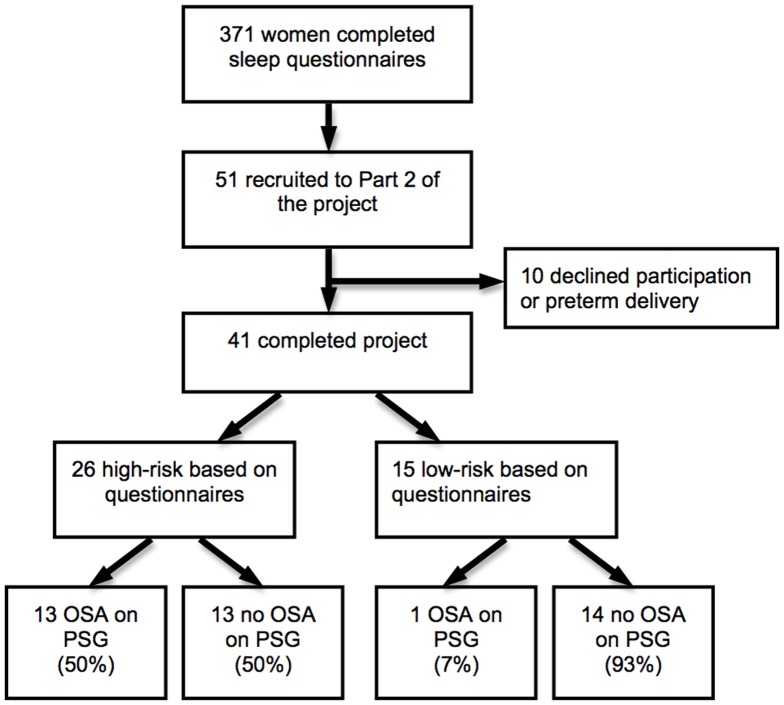
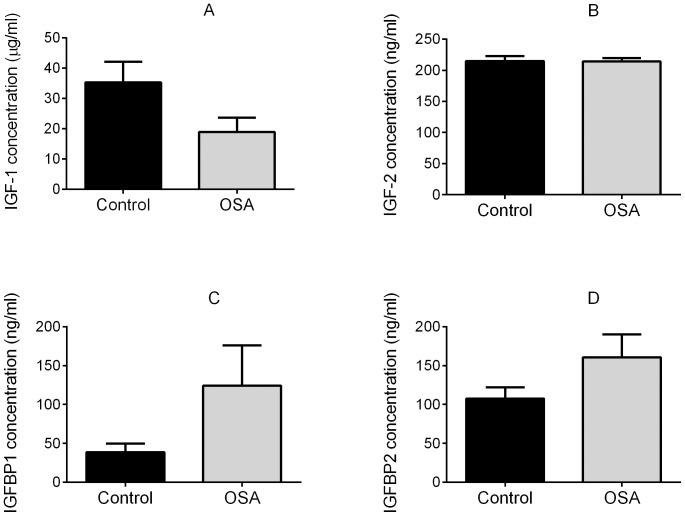
OBJECTIVE: The objective of this study is to determine whether obstructive sleep apnea (OSA) is associated with reduced fetal growth, and whether nocturnal oxygen desaturation precipitates acute fetal heart rate changes. STUDY DESIGN: We performed a prospective observational study, screening 371 women in the second trimester for OSA symptoms. 41 subsequently underwent overnight sleep studies to diagnose OSA. Third trimester fetal growth was assessed using ultrasound. Fetal heart rate monitoring accompanied the sleep study. Cord blood was taken at delivery, to measure key regulators of fetal growth. RESULTS: Of 371 women screened, 108 (29%) were high risk for OSA. 26 high risk and 15 low risk women completed the longitudinal study; 14 had confirmed OSA (cases), and 27 were controls. The median (interquartile range) respiratory disturbance index (number of apnoeas, hypopnoeas or respiratory related arousals/hour of sleep) was 7.9 (6.1-13.8) for cases and 2.2 (1.3-3.5) for controls (p<0.001). Impaired fetal growth was observed in 43% (6/14) of cases, vs 11% (3/27) of controls (RR 2.67; 1.25-5.7; p = 0.04). Using logistic regression, only OSA (OR 6; 1.2-29.7, p = 0.03) and body mass index (OR 2.52; 1.09-5.80, p = 0.03) were significantly associated with impaired fetal growth. After adjusting for body mass index on multivariate analysis, the association between OSA and impaired fetal growth was not appreciably altered (OR 5.3; 0.93-30.34, p = 0.06), although just failed to achieve statistical significance. Prolonged fetal heart rate decelerations accompanied nocturnal oxygen desaturation in one fetus, subsequently found to be severely growth restricted. Fetal growth regulators showed changes in the expected direction- with IGF-1 lower, and IGFBP-1 and IGFBP-2 higher- in the cord blood of infants of cases vs controls, although were not significantly different. CONCLUSION: OSA may be associated with reduced fetal growth in late pregnancy. Further evaluation is warranted to establish whether OSA may be an important contributor to adverse perinatal outcome, including stillbirth.
Overview
The claims and statistics of this paper haven’t been checked yet.
Run the check — free, no account needed. It reads the open-access text and checks the sources it cites.
Integrity signals
Registry
Cites
Statistics
Figures
Verification
Claims the paper makes
The claims and statistics of this paper haven’t been checked yet.
Run the check — free, no account needed. It reads the open-access text and checks the sources it cites.
Claims other papers make about this one
Each is checked against this paper’s own text: does it say what the citing paper says it does?
In the citing paper
“The effects of SDB on early reproductive outcomes, including fertility, fecundity, and conception are not well understood and the majority of studies disproportionately address complications of established pregnancies, fetal or neonatal outcomes [8,9].”
From Pregnancy outcomes in infertility patients diagnosed with sleep disordered breathing with wireless wearable sensors (2022) · cites this paper as [8]
Self-check
Percentages, sums and reported differences re-computed from the paper’s own numbers.
The self-check needs the paper’s full text.
Citations
Cites
(2007) · Cited by 6,530
McNicholas, W. T., Strohl, K. P., White, D. P., Levy, P. A., Schmidt, W., Wheatley, J. R., Redline, S. S., Carley, D. W., Buysse, D. J., Young, T. B., et al. (1999) · PubMed · Cited by 3,665
Adult Obstructive Sleep Apnea Task Force of the American Academy of Sleep Medicine, Epstein, L. J., Kristo, D., Strollo, P. J., Friedman, N., Malhotra, A., Patil, S. P., Ramar, K., Rogers, R., Schwab, R. J., et al. (2009) · Journal of Clinical Sleep Medicine · doi:10.5664/jcsm.27497 · Cited by 3,360
Using the Berlin Questionnaire To Identify Patients at Risk for the Sleep Apnea Syndrome
Netzer, N. C., Stoohs, R. A., Netzer, C. M., Clark, K., & Strohl, K. P. (1999) · Annals of Internal Medicine · doi:10.7326/0003-4819-131-7-199910050-00002 · Cited by 2,973
Major risk factors for stillbirth in high-income countries: a systematic review and meta-analysis
Flenady, V., Koopmans, L., Middleton, P., Frøen, J. F., Smith, G. C., Gibbons, K., Coory, M., Gordon, A., Ellwood, D., McIntyre, H. D., et al. (2011) · The Lancet · doi:10.1016/s0140-6736(10)62233-7 · Cited by 1,247
Intrauterine growth restriction
Resnik, R. (2002) · Obstetrics & Gynecology · doi:10.1016/s0029-7844(01)01780-x · Cited by 1,022
Yokoe, T., Minoguchi, K., Matsuo, H., Oda, N., Minoguchi, H., Yoshino, G., Hirano, T., & Adachi, M. (2003) · Circulation · doi:10.1161/01.cir.0000052627.99976.18 · Cited by 961
Maternal and fetal risk factors for stillbirth: population based study
Gardosi, J., Madurasinghe, V., Williams, M., Malik, A., & Francis, A. (2013) · BMJ · doi:10.1136/bmj.f108 · Cited by 941
The AASM Manual for the Scoring of Sleep and Associated Events : Rules
Iber, C. (2007) · Medical Entomology and Zoology · Cited by 929
Research works printed but not linked: 3
- J Gardosi, Customised Weight Centile Calculator – GROW-Centile v.5.12/6.2 2009, Gestation Network
- 2001, Int J Gynecol Obstet, Int J Gynecol Obstet, 72, 85
- N Bardien, 2012, Decline in growth trajectory between 28 and 36 weeks gestation is associated with ultrasound evidence of placental insufficiency: a prospective cohort study., J Paediatr Child Health, 48
Cited by
Sorted by citations
Lu, Q., Zhang, X., Wang, Y., Li, J., Xu, Y., Song, X., Su, S., Zhu, X., Vitiello, M. V., Shi, J., et al. (2021) · Sleep Medicine Reviews · doi:10.1016/j.smrv.2021.101436 · Cited by 311
Warland, J., Dorrian, J., Morrison, J. L., & O'Brien, L. M. (2018) · Sleep Medicine Reviews · doi:10.1016/j.smrv.2018.03.004 · Cited by 224
Liu, L., Su, G., Wang, S., & Zhu, B. (2019) · Sleep and Breathing · doi:10.1007/s11325-018-1714-7 · Cited by 124
Sleep Position, Fetal Growth Restriction, and Late-Pregnancy Stillbirth
Gordon, A., Raynes‐Greenow, C. H., Bond, D. M., Morris, J. M., Rawlinson, W. D., & Jeffery, H. E. (2015) · Obstetrics and Gynecology · doi:10.1097/aog.0000000000000627 · Cited by 109
Predictors of sleep-disordered breathing in pregnancy
Louis, J. M., Koch, M. A., Reddy, U. M., Silver, R. M., Parker, C. B., Facco, F. L., Redline, S., Nhan-Chang, C.-L., Chung, J. H., Pien, G. W., et al. (2018) · American Journal of Obstetrics and Gynecology · doi:10.1016/j.ajog.2018.01.031 · Cited by 106
Metadata
- Authors
- Fung, A. M., Wilson, D. L., Lappas, M., Howard, M., Barnes, M., O'Donoghue, F., Tong, S., Esdale, H., Fleming, G., & Walker, S. P.
- Affiliations
- Mercy Hospital for Women (AU)
- Austin Hospital (AU)
- The University of Melbourne (AU)
- Corresponding author
- Walker, Susan P.
- Venue
- PLoS ONE
- Publisher
- Public Library of Science (PLoS)
- Published
- 2013-07-24
- Volume
- 8
- Issue
- 7
- Pages
- e68057
- ISSN
- 1932-6203 (ISSN-L)
- PMC
- PMC3722214
- OpenAlex
- W2022586858
- Cited by
- 119
- References
- 47
- Citations by year
- 2026: 4 · 2025: 9 · 2024: 9 · 2023: 7 · 2022: 12 · 2021: 9 · 2020: 12 · 2019: 9 · 2018: 12 · 2017: 5 · 2016: 10 · 2015: 10 · 2014: 8 · 2013: 3
- FWCI
- 7.18
- Type
- journal article
- Language
- en
- Open access
- gold
- doi.org
- Locations
- PLoS ONE (publishedVersion, cc-by)
- Europe PMC (PubMed Central) (publishedVersion, cc-by)
- PubMed Central (publishedVersion, cc-by)
- PubMed (publishedVersion)
- Minerva Access (University of Melbourne) (submittedVersion, cc-by)
- DOAJ (DOAJ: Directory of Open Access Journals) (submittedVersion, cc-by-sa)
- Funders
- Austin Medical Research Foundation
- Topics
- Health Sciences › Medicine › Physiology (medical) › Obstructive Sleep Apnea Research
- Health Sciences › Medicine › Obstetrics and Gynecology › Pregnancy and preeclampsia studies
- Health Sciences › Medicine › Obstetrics and Gynecology › Maternal and Perinatal Health Interventions
- Keywords
- obstructive sleep apnea, fetal growth restriction, fetal growth, nocturnal hypoxemia, fetal heart rate decelerations, body mass index, insulin-like growth factor I, IGFBP-1, IGFBP-2, cord blood biomarkers, pregnancy complications, respiratory disturbance index, fetal hypoxia, macrosomia
- MeSH terms
- Adult, Female, Heart Rate, Fetal, Humans, Pregnancy, Pregnancy Complications, Prospective Studies, Sleep Apnea, Obstructive, Fetal Development
About these checks
Registry, retraction, Cites and statistics results are computed, not judged, with one exception: a printed reference that no index lists is read once by a model before it counts as a citation error. Claims are extracted by a model and kept only when their quote appears verbatim in the text; each cited source is then checked, with a model’s help, for whether it says what the claim relies on. Those verdicts can be wrong — read the claim’s quote and the cited source before relying on one.
Statistics and arithmetic are recomputed, not judged.
Confidence bands are shown only for fields calibrated on our annotated test set. None is calibrated yet, so no band is shown.
What counts as a claim ›How we measure confidence ›How we check this ›
Are you an author, or do you see a problem with this page? Request a review
