

Characterization of Specific Immune Responses to Different Aspergillus Antigens during the Course of Invasive Aspergillosis in Hematologic Patients
Open accessThe DOI matches its Crossref record; 25 of the 25 references it cites were found in a registry or an index.
Abstract
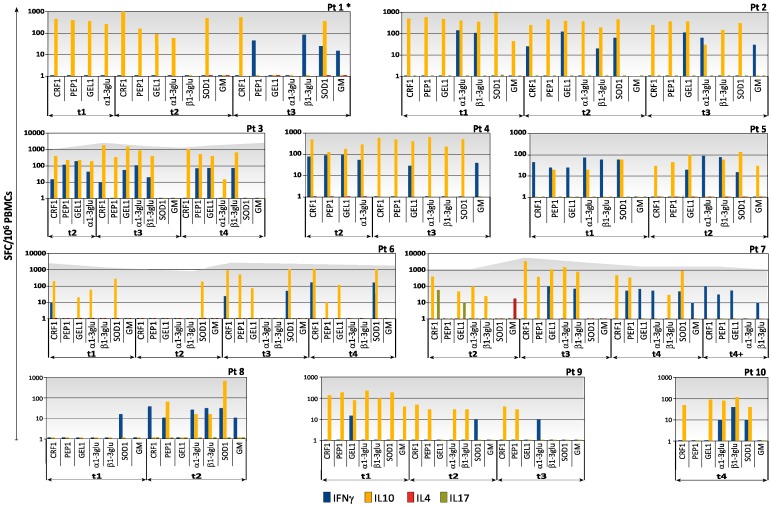
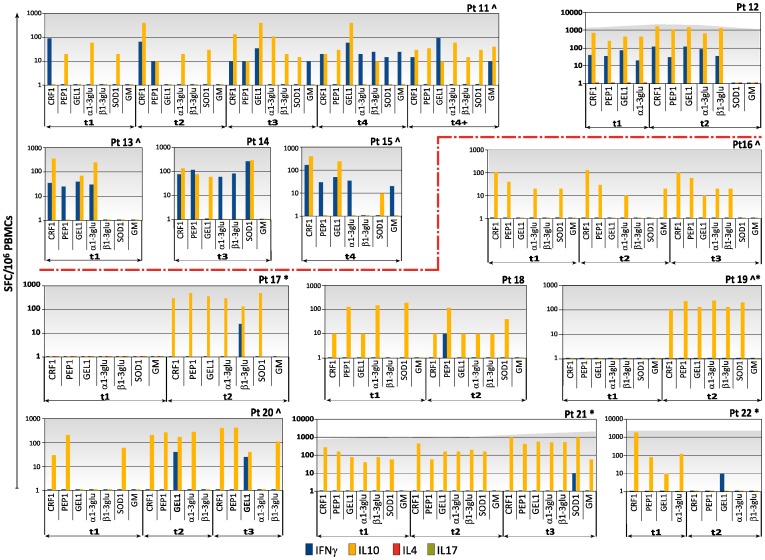
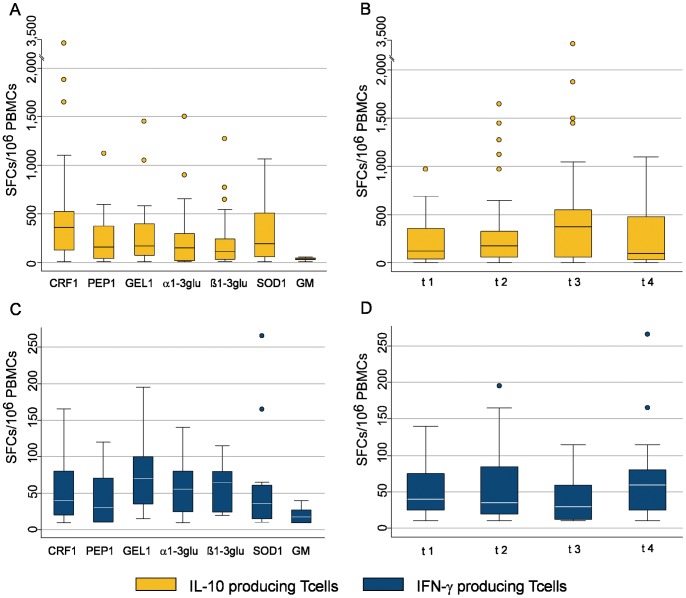
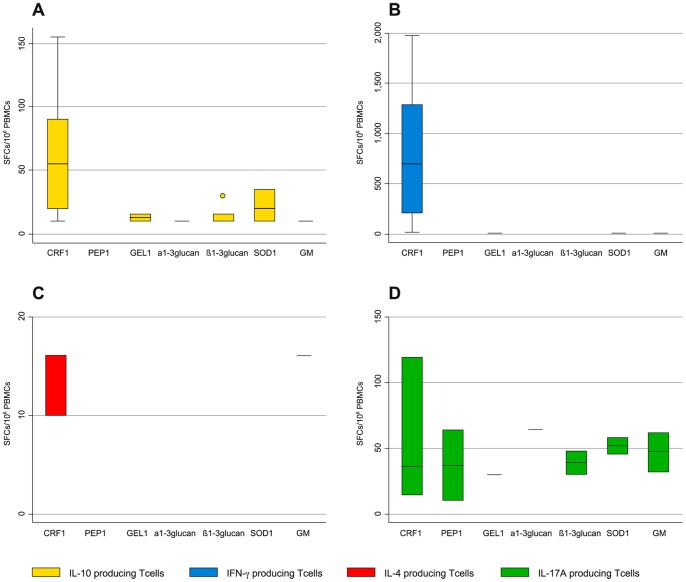
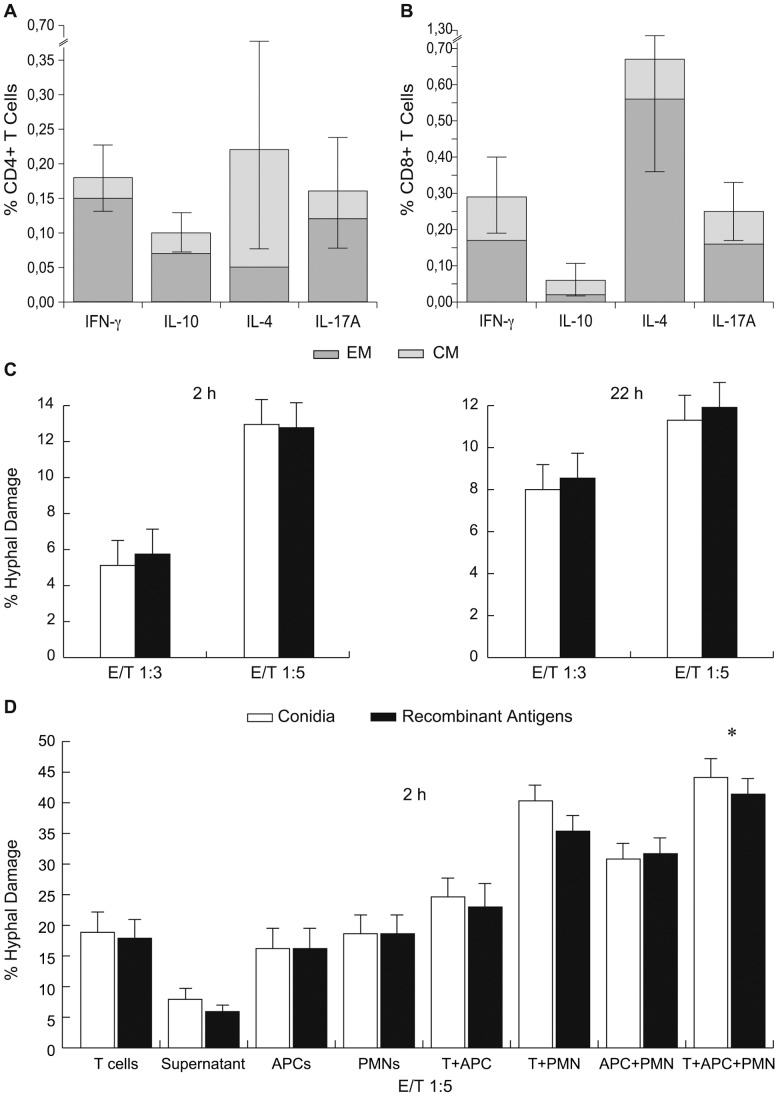
Several studies in mouse model of invasive aspergillosis (IA) and in healthy donors have shown that different Aspergillus antigens may stimulate different adaptive immune responses. However, the occurrence of Aspergillus-specific T cells have not yet been reported in patients with the disease. In patients with IA, we have investigated during the infection: a) whether and how specific T-cell responses to different Aspergillus antigens occur and develop; b) which antigens elicit the highest frequencies of protective immune responses and, c) whether such protective T cells could be expanded ex-vivo. Forty hematologic patients have been studied, including 22 patients with IA and 18 controls. Specific T cells producing IL-10, IFN-γ, IL-4 and IL-17A have been characterized through enzyme linked immunospot and cytokine secretion assays on 88 peripheral blood (PB) samples, by using the following recombinant antigens: GEL1p, CRF1p, PEP1p, SOD1p, α1-3glucan, β1-3glucan, galactomannan. Specific T cells were expanded through short term culture. Aspergillus-specific T cells producing non-protective interleukin-10 (IL-10) and protective interferon-gamma (IFN-γ) have been detected to all the antigens only in IA patients. Lower numbers of specific T cells producing IL-4 and IL-17A have also been shown. Protective T cells targeted predominantly Aspergillus cell wall antigens, tended to increase during the IA course and to be associated with a better clinical outcome. Aspergillus-specific T cells could be successfully generated from the PB of 8 out of 8 patients with IA and included cytotoxic subsets able to lyse Aspergillus hyphae. Aspergillus specific T-cell responses contribute to the clearance of the pathogen in immunosuppressed patients with IA and Aspergillus cell wall antigens are those mainly targeted by protective immune responses. Cytotoxic specific T cells can be expanded from immunosuppressed patients even during the infection by using the above mentioned antigens. These findings may be exploited for immunotherapeutic purposes in patients with IA.
Overview
The claims and statistics of this paper haven’t been checked yet.
Free: it reads the open-access text and checks the first 5 claims that cite a source we can check. Create a free account to check every claim.
Integrity signals
Registry
Cites
Statistics
Figures
Verification
Claims the paper makes
The claims and statistics of this paper haven’t been checked yet.
Free: it reads the open-access text and checks the first 5 claims that cite a source we can check. Create a free account to check every claim.
Claims other papers make about this one
Each is checked against this paper’s own text: does it say what the citing paper says it does?
The cited source says what the claim attributes to it.
In the citing paper
“and IFN-γ-producing T cells correlated with protection and favorable outcomes (308, 313)”
From Aspergillus fumigatus and Aspergillosis in 2019 (2019) · cites this paper as [313]
In the citing paper
“Likewise, Aspergillus-specific T cells are generated in patients with IPA in response to specific antigens, and IFN-γ-producing T cells correlated with protection and favorable outcomes (308, 313)”
From Aspergillus fumigatus and Aspergillosis in 2019 (2019) · cites this paper as [313]
Self-check
Percentages, sums and reported differences re-computed from the paper’s own numbers.
The self-check needs the paper’s full text.
Citations
Cites
De Pauw, B., Walsh, T. J., Donnelly, J. P., Stevens, D. A., Edwards, J. E., Calandra, T., Pappas, P. G., Maertens, J., Lortholary, O., Kauffman, C. A., et al. (2008) · Clinical Infectious Diseases · doi:10.1086/588660 · Cited by 4,917
Self-citationRomani, L. (2011) · Nature Reviews Immunology · doi:10.1038/nri2939 · Cited by 1,793
Self-citationRomani, L. (2004) · Nature Reviews Immunology · doi:10.1038/nri1255 · Cited by 758 · cited 1×
“In mouse model of invasive aspergillosis (IA), previous studies have reported that adaptive immunity contribute to the defence of the host against fungi of the genus Aspergillus and that Aspergillusspecific T cells producing interferon-gamma (IFN-c) may result protective, while those producing interleukin-10 (IL-10) m…”
BackgroundSelf-citationCaillot, D., Couaillier, J.-F., Bernard, A., Casasnovas, O., Denning, D. W., Mannone, L., Lopez, J., Couillault, G., Piard, F., Vagner, O., et al. (2001) · Journal of Clinical Oncology · doi:10.1200/jco.2001.19.1.253 · Cited by 587 · cited 1×
“Phases of Invasive Aspergillosis Based on the kinetics of radiologic signs of pulmonary IA on HRCT [12,13], the infection course has been divided into four phases, defined from t1 to t4, and corresponding to the number of days elapsed from the radiological diagnosis of IA (t1, from the radiologic disclosure of the inf…”
BackgroundPerruccio, K., Tosti, A., Burchielli, E., Topini, F., Ruggeri, L., Carotti, A., Capanni, M., Urbani, E., Mancusi, A., Aversa, F., et al. (2005) · Blood · doi:10.1182/blood-2005-05-1775 · Cited by 391 · cited 1×
“In mouse model of invasive aspergillosis (IA), previous studies have reported that adaptive immunity contribute to the defence of the host against fungi of the genus Aspergillus and that Aspergillusspecific T cells producing interferon-gamma (IFN-c) may result protective, while those producing interleukin-10 (IL-10) m…”
BackgroundSelf-citationExtrathymic T-cell differentiation in vitro
Pawelec, G. (2004) · Nature Reviews Immunology · doi:10.1038/nri1257-c1 · Cited by 362
Polysaccharide processing and presentation by the MHCII pathway
Cobb, B. A., Wang, Q., Tzianabos, A. O., & Kasper, D. L. (2004) · Cell · doi:10.1016/j.cell.2004.05.001 · Cited by 340 · cited 1×
“The recognition of polysaccharides is probably mediated by specific T cells through the class II major histocompatibility complex (MHC) on APCs, as previously reported for other infectious agents showing glycoantigens, such as Staphylococcus aureus, Streptococcus pneumoniae and Bacteroides fragilis [14,15].”
BackgroundHebart, H., Bollinger, C., Fisch, P., Sarfati, J., Meisner, C., Baur, M., Loeffler, J., Monod, M., Latgé, J.-P., & Einsele, H. (2002) · Blood · doi:10.1182/blood-2002-01-0265 · Cited by 257
Self-citationKarlsson, A. C., Martin, J. N., Younger, S. R., Bredt, B. M., Epling, L., Ronquillo, R., Varma, A., Deeks, S. G., McCune, J. M., Nixon, D. F., et al. (2003) · Journal of Immunological Methods · doi:10.1016/j.jim.2003.09.001 · Cited by 223 · cited 1×
“By expanding previous findings, so far obtained only in healthy donors [19–21], we have expanded Aspergillus-specific T cells from PB of patients with IA using a mixture of recombinant antigens different from CRF1p, and found that such cells may induce direct lysis of Aspergillus hyphae, comparable to those obtained b…”
ResultBozza, S., Clavaud, C., Giovannini, G., Fontaine, T., Beauvais, A., Sarfati, J., D'Angelo, C., Perruccio, K., Bonifazi, P., Zagarella, S., et al. (2009) · The Journal of Immunology · doi:10.4049/jimmunol.0900961 · Cited by 176 · cited 4×
“These findings confirm that CD8+ T cells contribute to the immune response to filamentous fungi [7,16], and are in line with those reports showing that Aspergillus fumigatus is a weak inducer of IL-4 and IL-17A responses [5,17].”
BackgroundMethodResultSelf-citation
Cited by
Aspergillus fumigatus and Aspergillosis in 2019
Latgé, J.-P., & Chamilos, G. (2019) · Clinical Microbiology Reviews · doi:10.1128/cmr.00140-18 · Cited by 1,400
Self-citationHeldt, S., Prattes, J., Eigl, S., Spiess, B., Flick, H., Rabensteiner, J., Johnson, G., Prüller, F., Wölfler, A., Niedrist, T., et al. (2018) · Journal of Infection · doi:10.1016/j.jinf.2018.05.001 · Cited by 110
Adel, M., Conti, G. O., Dadar, M., Mahjoub, M., Copat, C., & Ferrante, M. (2016) · Food and Chemical Toxicology · doi:10.1016/j.fct.2016.09.002 · Cited by 100
Immune Correlates of Protection in Human Invasive Aspergillosis
Camargo, J. F., & Husain, S. (2014) · Clinical Infectious Diseases · doi:10.1093/cid/ciu337 · Cited by 99
Improving outcome of fungal diseases – Guiding experts and patients towards excellence
Cornely, O. A., Lass‐Flörl, C., Lagrou, K., Arsic‐Arsenijevic, V., & Hoenigl, M. (2017) · Mycoses · doi:10.1111/myc.12628 · Cited by 74
Stuehler, C., Kuenzli, E., Jaeger, V. K., Baettig, V., Ferracin, F., Rajacic, Z., Kaiser, D., Bernardini, C., Forrer, P., Weisser, M., et al. (2015) · Journal of Infectious Diseases · doi:10.1093/infdis/jiv143 · Cited by 70
Arias, M. A., Santiago, L., Vidal‐García, M., Redrado, S., Lanuza, P. M., Comas, L., Domingo, M. P., Rezusta, A., & Gálvez, E. M. (2018) · Frontiers in Immunology · doi:10.3389/fimmu.2018.02549 · Cited by 75
“Concerning humans, it was found low frequency of IL17 producing cells and high frequency of IFNγ producing cells after Ag-stimulation of PBMCs from healthy donors (22) or from patients with IA (23).”
BackgroundJolink, H., de Boer, R., Hombrink, P., Jonkers, R. E., van Dissel, J. T., Falkenburg, J. H. F., & Heemskerk, M. H. M. (2017) · Journal of Infection · doi:10.1016/j.jinf.2016.10.010 · Cited by 65
“Appearance of Aspergillus-specific T-cells is correlated with regression of aspergillus lesions.(7,8) Two studies of T-cell responses in humans(20) and in mice(21) with corneal infections caused by Aspergillus, showing induction of both IFNg and IL-17 producing T-cells at the site of infection, supporting the hypothes…”
BackgroundGonçalves, S. M., Lagrou, K., Rodrigues, C. S., Campos, C. F., Bernal‐Martínez, L., Rodrigues, F. J. S., Silvestre, R., Alcázar‐Fuoli, L., Maertens, J. A., Cunha, C., et al. (2017) · Frontiers in Microbiology · doi:10.3389/fmicb.2017.02362 · Cited by 63
“fumigatus antigens have also been exploited as a potential immunodiagnostic approach (Potenza et al., 2013).”
BackgroundSelf-citationLópez-García, M., Romero‐González, R., Lacasaña, M., & Frenich, A. G. (2017) · Journal of Pharmaceutical and Biomedical Analysis · doi:10.1016/j.jpba.2017.08.026 · Cited by 60
Interplay of Cytokines and Chemokines in Aspergillosis
Shankar, J., Thakur, R., Clemons, K. V., & Stevens, D. A. (2024) · Journal of Fungi · doi:10.3390/jof10040251 · Cited by 59
“However, the precise function of IL-17 in the context of IA is unclear [22,60,135,136], which we will discuss in more detail subsequently.”
BackgroundMucorales-Specific T Cells in Patients with Hematologic Malignancies
Potenza, L., Vallerini, D., Barozzi, P., Riva, G., Gilioli, A., Forghieri, F., Candoni, A., Cesaro, S., Quadrelli, C., Maertens, J. A., et al. (2016) · PLoS ONE · doi:10.1371/journal.pone.0149108 · Cited by 55
“Similarly, in the setting of IA, healthy subjects display higher frequencies of specific T cells producing IFN-γ to Aspergillus antigens when compared to IA patients [19, 24 – 26].”
InfluentialSelf-citationStuehler, C., Nowakowska, J., Bernardini, C., Topp, M. S., Battegay, M., Passweg, J., & Khanna, N. (2015) · The Journal of Infectious Diseases · doi:10.1093/infdis/jiu607 · Cited by 48
“outcome in patients with invasive aspergillosis [8, 12].”
BackgroundPerspectives on invasive amphibians in Brazil
Forti, L. R., Becker, C. G., Tacioli, L., Pereira, V. R., Santos, A. C. F. A., Oliveira, I., Haddad, C. F. B., & Toledo, L. F. (2017) · PLoS ONE · doi:10.1371/journal.pone.0184703 · Cited by 54
Vaccine immunity against fungal infections
Nanjappa, S. G., & Klein, B. S. (2014) · Current Opinion in Immunology · doi:10.1016/j.coi.2014.01.014 · Cited by 47
Heldt, S., Eigl, S., Prattes, J., Flick, H., Rabensteiner, J., Prüller, F., Niedrist, T., Neumeister, P., Wölfler, A., Strohmaier, H., et al. (2017) · Mycoses · doi:10.1111/myc.12679 · Cited by 47
IL-10 overexpression predisposes to invasive aspergillosis by suppressing antifungal immunity
Cunha, C., Gonçalves, S. M., Duarte‐Oliveira, C., Leite, L., Lagrou, K., Marques, A., Lupiañez, C. B., Mesquita, I., Gaifem, J., Barbosa, A. M., et al. (2017) · Journal of Allergy and Clinical Immunology · doi:10.1016/j.jaci.2017.02.034 · Cited by 49
“Although the role of IL-10 during infection appears to vary for different microorganisms, a largely detrimental role has been attributed to this cytokine during fungal disease.(2) Given the variable risk of infection and its outcome among patients with comparable predisposing factors, susceptibility to invasive asperg…”
BackgroundSelf-citationImmunomodulatory effect of ibrutinib: Reducing the barrier against fungal infections
Maffei, R., Maccaferri, M., Arletti, L., Fiorcari, S., Benatti, S., Potenza, L., Luppi, M., & Marasca, R. (2019) · Blood Reviews · doi:10.1016/j.blre.2019.100635 · Cited by 48
Self-citationShinhmar, H., Hogg, C. R., Neveu, M. M., & Jeffery, G. (2021) · Scientific Reports · doi:10.1038/s41598-021-02311-1 · Cited by 45
Παπαδοπούλου, Α., Kaloyannidis, P., Yannaki, E., & Cruz, C. C. (2015) · Critical Reviews in Oncology/Hematology · doi:10.1016/j.critrevonc.2015.10.005 · Cited by 47
Karnam, A., Bonam, S. R., Rambabu, N., Wong, S. S. W., Aimanianda, V., & Bayry, J. (2021) · mBio · doi:10.1128/mbio.02824-21 · Cited by 41
“leads to the expansion of IL-10-producing T cells (38).”
BackgroundAspergillus vaccines: Hardly worth studying or worthy of hard study?: Table 1.
Levitz, S. M. (2017) · Medical Mycology · doi:10.1093/mmy/myw081 · Cited by 37
Serris, A., Ouedrani, A., Uhel, F., Gazzano, M., Bedarida, V., Rouzaud, C., Bougnoux, M., Raphalen, J., Poirée, S., Lambotte, O., et al. (2022) · Frontiers in Immunology · doi:10.3389/fimmu.2022.900522 · Cited by 38
“We also measured Aspergillosis and SARS-CoV-2 specific memory T cells using IFN-g ELISpot assay (3, 4).”
MethodLunny, C., Taylor, D., Memetovic, J., Wärje, O., Lester, R. T., Wong, T., Ho, K., Gilbert, M., & Ogilvie, G. S. (2014) · Systematic Reviews · doi:10.1186/2046-4053-3-7 · Cited by 35
Host Genetic Signatures of Susceptibility to Fungal Disease
Campos, C. F., van de Veerdonk, F. L., Gonçalves, S. M., Cunha, C., Netea, M. G., & Carvalho, A. (2018) · Current topics in microbiology and immunology · doi:10.1007/82_2018_113 · Cited by 35
Self-citationTufariello, M., Anglana, C., Crupi, P., Virtuosi, I., Fiume, P., Terlizzi, B. D., Moselhy, N. M. M., Attay, H. A., Pati, S., Logrieco, A. F., et al. (2018) · Journal of the Science of Food and Agriculture · doi:10.1002/jsfa.9460 · Cited by 34
Fernández‐Cruz, A., Lewis, R. E., & Kontoyiannis, D. P. (2020) · Clinical Infectious Diseases · doi:10.1093/cid/ciz1195 · Cited by 33
“Aspergillusand Mucorales-specific T cells in peripheral blood have been studied as a diagnostic marker [41, 42], but their study as a marker of specific immunity and their association with outcome deserve further research.”
BackgroundGarcía-Hernández, J., Hurtado, L. A., Leyva-García, G., Güido-Moreno, A., Aguilera-Márquez, D., Mazzei, V., & Ferrante, M. (2014) · Ecotoxicology and Environmental Safety · doi:10.1016/j.ecoenv.2014.11.002 · Cited by 33
Paving the way for predictive diagnostics and personalized treatment of invasive aspergillosis
Coelho, A., Rodrigues, F. J. S., Campos, A. N., de Lacerda, J. F., Carvalho, A., & Cunha, C. (2015) · Frontiers in Microbiology · doi:10.3389/fmicb.2015.00411 · Cited by 32
“Finally, a stop codon in recipient TLR5 was also disclosed as an important prognostic factor for the development of IA among HSCT recipients (Grube et al., 2013), a finding warranting further studies into the function of this receptor in antifungal immunity.”
BackgroundSelf-citationAdoptive T‐cell therapy for fungal infections in haematology patients
Deo, S. S., & Gottlieb, D. J. (2015) · Clinical & Translational Immunology · doi:10.1038/cti.2015.16 · Cited by 31
Bezerra, J. M. T., Araujo, R. G. P., de Melo, F. F., Gonçalves, C. M., Chaves, B. A., Silva, B. D. M., Silva, L. D., Brandão, S. T., Secundino, N. F. C., Norris, D. E., et al. (2016) · Acta Tropica · doi:10.1016/j.actatropica.2016.10.010 · Cited by 30
Conti, E., Dattilo, S., Costa, G., & Puglisi, C. (2016) · Ecotoxicology and Environmental Safety · doi:10.1016/j.ecoenv.2016.09.029 · Cited by 29
30 years of battling the cell wall
Latgé, J. P. (2016) · Medical Mycology · doi:10.1093/mmy/myw076 · Cited by 27
Self-citationGenetic defects in fungal recognition and susceptibility to invasive pulmonary aspergillosis
Cunha, C., & Carvalho, A. (2019) · Medical Mycology · doi:10.1093/mmy/myy057 · Cited by 27
Self-citationImmunoproteomics of Aspergillus for the development of biomarkers and immunotherapies
Kniemeyer, O., Ebel, F., Krüger, T., Bächer, P., Scheffold, A., Luo, T., Straßburger, M., & Brakhage, A. A. (2016) · PROTEOMICS - CLINICAL APPLICATIONS · doi:10.1002/prca.201600053 · Cited by 26
Epigenetic Mechanisms in Canine Cancer
Xavier, P. L. P., Müller, S., & Fukumasu, H. (2020) · Frontiers in Oncology · doi:10.3389/fonc.2020.591843 · Cited by 25
Παπαδοπούλου, Α., Alvanou, M. V., Koukoulias, K., Athanasiou, E., Lazaridou, A., Savvopoulos, N., Kaloyannidis, P., Markantonatou, A., Vyzantiadis, T., Yiangou, M., et al. (2019) · Bone Marrow Transplantation · doi:10.1038/s41409-019-0501-9 · Cited by 24
Prospects for adoptive T-cell therapy for invasive fungal disease
Castellano-Gonzalez, G., Clancy, L. E., & Gottlieb, D. (2017) · Current Opinion in Infectious Diseases · doi:10.1097/qco.0000000000000403 · Cited by 22
Fungus-Specific CD4 T Cells as Specific Sensors for Identification of Pulmonary Fungal Infections
Scheffold, A., Schwarz, C., & Bächer, P. (2017) · Mycopathologia · doi:10.1007/s11046-017-0229-2 · Cited by 21
“Increased IFN-c production was correlated with protection [78, 81, 85, 86, 88, 125], whereas increased IL-10 levels have been suggested to be associated with Mycopathologia”
Cellular therapy for multiple pathogen infections after hematopoietic stem cell transplant
Sutrave, G., Blyth, E., & Gottlieb, D. J. (2017) · Cytotherapy · doi:10.1016/j.jcyt.2017.07.012 · Cited by 20
Lauruschkat, C. D., Page, L., White, P. L., Etter, S., Davies, H. E., Duckers, J. M., Ebel, F., Schnack, E., Backx, M., Dragan, M., et al. (2021) · Journal of Fungi · doi:10.3390/jof7060462 · Cited by 20
Khanna, N., Stuehler, C., Lünemann, A., Wójtowicz, A., Bochud, P., & LeibundGut‐Landmann, S. (2016) · Swiss Medical Weekly · doi:10.4414/smw.2016.14350 · Cited by 20
Lauruschkat, C. D., Wurster, S., Page, L., Lazariotou, M., Dragan, M., Weis, P., Ullmann, A. J., Einsele, H., & Löffler, J. (2018) · Mycoses · doi:10.1111/myc.12780 · Cited by 19
Aspergillus and host-pathogen interaction: focus on treatment-relevant aspects
Manchon, R., Feys, S., Hoenigl, M., van de Veerdonk, F. L., Lanternier, F., Wauters, J., Carvalho, A., Serris, A., & Dellière, S. (2025) · Clinical Microbiology and Infection · doi:10.1016/j.cmi.2025.08.030 · Cited by 18
Self-citationWurster, S., Weis, P., Page, L., Helm, J., Lazariotou, M., Einsele, H., & Ullmann, A. J. (2017) · Mycoses · doi:10.1111/myc.12643 · Cited by 18
Page, L., Weis, P., Müller, T., Dittrich, M. T., Lazariotou, M., Dragan, M., Waaga-Gasser, A. M., Helm, J., Dandekar, T., Einsele, H., et al. (2018) · International Journal of Medical Microbiology · doi:10.1016/j.ijmm.2018.09.002 · Cited by 18
Immune Parameters for Diagnosis and Treatment Monitoring in Invasive Mold Infection
Jenks, J. D., Rawlings, S. A., García‐Vidal, C., Koehler, P. A., Mercier, T., Prattes, J., Lass‐Flörl, C., Martín-Gómez, M. T., Buchheidt, D., Pagano, L., et al. (2019) · Journal of Fungi · doi:10.3390/jof5040116 · Cited by 18
“IL-10 Produced by T cells, B cells, monocytes, and macrophages [74] Elevated in IMI [75] No [65] Decreasing IL-10 within first 2 weeks of therapy associated with lack of response to IA treatment [64].”
BackgroundSelf-citationConti, E., Dattilo, S., Costa, G., & Puglisi, C. (2016) · Ecotoxicology and Environmental Safety · doi:10.1016/j.ecoenv.2016.03.008 · Cited by 16
Weis, P., Helm, J., Page, L., Lauruschkat, C. D., Lazariotou, M., Einsele, H., Loeffler, J., Ullmann, A. J., & Wurster, S. (2019) · Medical Mycology · doi:10.1093/mmy/myz038 · Cited by 14
Invasive pulmonary aspergillosis in the ICU: the corticosteroid link
Terrones-Campos, C., Gallardo‐Pizarro, A., Martínez-Urrea, A., Castiella, A., Vergara, A., Gonzalez, A., Egri, N., & García‐Vidal, C. (2026) · Pneumonia · doi:10.1186/s41479-025-00189-5 · Cited by 13
“[52, 58–59] Pathophysiological mechanisms of IPA are summarized in Table 1.”
Factors limiting early life stage survival and growth during endangered Wyoming toad reintroductions
Polasik, J. S., Murphy, M. A., Abbott, T., & Vincent, K. (2015) · Journal of Wildlife Management · doi:10.1002/jwmg.1031 · Cited by 13
Current parasite resistance trades off with future defenses and flight performance
Horn, C. J., & Luong, L. T. (2019) · Behavioral Ecology and Sociobiology · doi:10.1007/s00265-019-2697-5 · Cited by 13
Wang, S., Dong, R., Liu, D., Wang, Y., Liu, B., Zhang, L., & Xu, L. (2015) · PLoS ONE · doi:10.1371/journal.pone.0129710 · Cited by 13
Bettelli, F., Vallerini, D., Lagreca, I., Barozzi, P., Riva, G., Nasillo, V., Paolini, A., D’Amico, R., Forghieri, F., Morselli, M., et al. (2024) · PLoS ONE · doi:10.1371/journal.pone.0306728 · Cited by 12
Self-citationDiagnosing Invasive Mold Infections: What Is Next
Mercier, T., Guldentops, E., Daele, R. V., & Maertens, J. A. (2018) · Current Fungal Infection Reports · doi:10.1007/s12281-018-0322-0 · Cited by 11
Self-citationAntifungal immunity: advances in PRR recognition, adaptive responses, and immune-based therapies
Zhou, J., Lu, X., He, R., Du, Y., Zeng, B., Feng, L., Yi, M., Wang, Y., & Wang, C. (2025) · Science China Life Sciences · doi:10.1007/s11427-024-2835-y · Cited by 10
“Leonardo et al. reported that mucosal-specific T cells, which can directly lyse the hyphae of Aspergillus and Mucor, can be detected in IM and IA patients throughout the course of the disease (Potenza et al., 2013; Potenza et al., 2016).”
Immunotherapy for opportunistic infections: Current status and future perspectives
Fuji, S., Löffler, J., Einsele, H., & Kapp, M. (2016) · Virulence · doi:10.1080/21505594.2016.1207038 · Cited by 10
Detection of Fusarium-specific T cells in hematologic patients with invasive fusariosis
Vallerini, D., Forghieri, F., Lagreca, I., Riva, G., Barozzi, P., Quadrelli, C., Morselli, M., Bresciani, P., Cuoghi, A., Coluccio, V., et al. (2016) · Journal of Infection · doi:10.1016/j.jinf.2016.12.008 · Cited by 10
Self-citationRevisiting diagnostics: immune markers to diagnose invasive pulmonary aspergillosis
Feys, S., Dudoignon, E., Chantelot, L., Carvalho, A., Wauters, J., Aimanianda, V., & Dellière, S. (2024) · Clinical Microbiology and Infection · doi:10.1016/j.cmi.2024.11.017 · Cited by 8
Self-citationFungal Vaccines and Immunotherapeutics: Current Concepts and Future Challenges
Carvalho, A., Duarte‐Oliveira, C., Gonçalves, S. M., Campos, A., de Lacerda, J. F., & Cunha, C. (2017) · Current Fungal Infection Reports · doi:10.1007/s12281-017-0272-y · Cited by 8
Self-citationProteomic Differences between Azole-Susceptible and -Resistant Aspergillus fumigatus Strains
Vermeulen, E., Carpentier, S., Kniemeyer, O., Sillen, M., Maertens, J. A., & Lagrou, K. (2018) · Advances in Microbiology · doi:10.4236/aim.2018.81007 · Cited by 8
“R [8] [29] [30] GEL1_ ASPFU gel1 1,3-betaglucanosyltransferase gel1 The antigens eliciting the highest frequencies of specific T cells producing IFN-c (protective immune response which mediates lysis of Aspergillus hyphae) is GEL1.”
BackgroundSelf-citationPage, L., Lauruschkat, C. D., Helm, J., Weis, P., Lazariotou, M., Einsele, H., Ullmann, A. J., Loeffler, J., & Wurster, S. (2020) · Medical Microbiology and Immunology · doi:10.1007/s00430-020-00665-3 · Cited by 9
Pathological study of genitourinary invasion by Aspergillus flavus in male rats
Kadhim, S. O., & Falih, I. B. (2021) · Al-mağallaẗ al-ʻirāqiyyaẗ li-l-ʻulūm al-bayṭariyyaẗ/Iraqi journal of veterinary sciences · doi:10.33899/ijvs.2021.131580.1974 · Cited by 8
“The results showed a high immune response (in group three G3) stimulated by the mixture (WSA and mycotoxoid), which revealed a significant increase in both IL-17 and IFN-γ.”
BackgroundMethodInfluentialIslabão, C. A., Mendes, C. R. B., Russo, A. D. P. G., & Odebrecht, C. (2016) · Journal of Experimental Marine Biology and Ecology · doi:10.1016/j.jembe.2016.08.012 · Cited by 8
Microbiota-derived metabolites as diagnostic markers for respiratory fungal infections
Hérivaux, A., Gonçalves, S. M., Carvalho, A., & Cunha, C. (2020) · Journal of Pharmaceutical and Biomedical Analysis · doi:10.1016/j.jpba.2020.113473 · Cited by 8
Self-citationHe, Q., Cao, J., Zhang, M., & Feng, C. (2024) · Frontiers in Cellular and Infection Microbiology · doi:10.3389/fcimb.2024.1402888 · Cited by 7
Perceptual separation of sensorineural hearing loss and auditory neuropathy spectrum disorder
Wang, S., Dong, R., Liu, D., Wang, Y., Mao, Y., Zhang, H., Zhang, L., & Xu, L. (2015) · The Laryngoscope · doi:10.1002/lary.25595 · Cited by 7
Lauruschkat, C. D., Page, L., Etter, S., Weis, P., Gamon, F., Kraus, S., Einsele, H., Wurster, S., & Loeffler, J. (2020) · Open Forum Infectious Diseases · doi:10.1093/ofid/ofaa547 · Cited by 6
“A plethora of commercial and investigational T-cell immunoassays have been proposed to support the diagnosis of opportunistic infections in these highly vulnerable patients, with flow cytometry, enzyme-linked immunospot (ELISPOT), and enzyme-linked immunosorbent assays (ELISA) being the most common modalities [3-6].”
BackgroundUnderstanding the genetic basis of immune responses to fungal infection
Gonçalves, S. M., Cunha, C., & Carvalho, A. (2022) · Expert Review of Anti-infective Therapy · doi:10.1080/14787210.2022.2063839 · Cited by 6
Self-citationPerruccio, K., Topini, F., Tosti, A., Gazzola, M. V., Messina, C., Martelli, M. F., Caniglia, M., Velardi, A., & Cesaro, S. (2015) · European Journal Of Haematology · doi:10.1111/ejh.12531 · Cited by 5
“In adults, ELISPOT analyses of cytokines such as IFN-c and IL-10 are promising tests and more feasible than LDA (5, 6).”
BackgroundInfluentialAlexandre, A. F., Quaresma, J. A. S., Barboza, T. C., de Brito, A. C., Xavier, M. B., de Oliveira, C. M. M., Unger, D. A.-A., Kanashiro‐Galo, L., Sotto, M. N., Duarte, M. I. S., et al. (2016) · Medical Mycology · doi:10.1093/mmy/myw059 · Cited by 5
XVI Congress of the Italian Society of Experimental Hematology, Napoli, Italy, October 15-17, 2020
Authors, T. (2020) · Haematologica · doi:10.3324/haematol.2020.s2 · Cited by 4
Genetics and humoral responses of the immune system to Aspergillus fumigatus
Sanya, D. R. A., Jayachandran, K., & Onésime, D. (2025) · Molecular Immunology · doi:10.1016/j.molimm.2025.06.007 · Cited by 3
Harnessing host-derived biomarkers for personalized diagnosis of invasive fungal infections
Scott, J., Machado, A., Carvalho, A., & Cunha, C. (2025) · Expert Review of Molecular Diagnostics · doi:10.1080/14737159.2025.2587613 · Cited by 2
“…of IL-10 and interferon-γ (IFN-γ) production using ELISpot following activation of Aspergillus -reactive T-cells has shown excellent diagnostic sensitivity and specificity, even in a cohort of patients with a high incidence of antifungal prophylaxis and profound immunosuppression [103,105].”
Self-citationThe bone marrow represents an enrichment site of specific T lymphocytes against filamentous fungi
Vallerini, D., Riva, G., Barozzi, P., Forghieri, F., Lagreca, I., Quadrelli, C., Morselli, M., Bresciani, P., Cuoghi, A., Coluccio, V., et al. (2015) · Medical Mycology · doi:10.1093/mmy/myv107 · Cited by 2
Self-citationMOLECULAR GENETIC AND IMMUNOLOGICAL ASPECTS OF INVASIVE ASPERGILLOSIS
Витальевна, Ш. О., Frolova, E. V., Taraskina, A. E., & Климко, Н. Н. (2017) · Journal Infectology · doi:10.22625/2072-6732-2017-9-1-47-54 · Cited by 2
Host-Derived Biomarkers for Risk Assessment of Invasive Fungal Diseases
Cunha, C., Gonçalves, S. M., & Carvalho, A. (2016) · Methods in molecular biology · doi:10.1007/978-1-4939-6515-1_7 · Cited by 2
Self-citationImmunotherapeutic Approaches to Invasive Fungal Disease in the Immunocompromised Child
Schmidt, S., Bochennek, K., Rudolph, H., & Lehrnbecher, T. (2026) · Current Fungal Infection Reports · doi:10.1007/s12281-026-00534-1 · Cited by 1
Castella, B., D’Agostino, M., Giannotta, C., S., O., Genuardi, E., Gilestro, M., Ruggeri, M., Corradini, P., Ziccheddu, B., Maura, F., et al. (2020) · Institutional Research Information System University of Turin (University of Turin) · Cited by 1
Wang, S., Dong, R., Liu, D., Zhang, L., & Xu, L. (2016) · Advances in experimental medicine and biology · doi:10.1007/978-3-319-25474-6_25 · Cited by 1
Bercusson, A. (2019) · Spiral (Imperial College London) · doi:10.25560/82028 · Cited by 1
Παπαδοπούλου, Α., Alvanou, M. V., Koukoulias, K., Athanasiou, E., Lazaridou, A., Savvopoulos, N., Kaloyannidis, P., Markantonatou, A., Vyzantiadis, T., Yiangou, M., et al. (2019) · Bone Marrow Transplantation · doi:10.1038/s41409-019-0592-3 · Cited by 1
Role of Deficits in Pathogen Recognition Receptors in Infection Susceptibility
Cunha, C., Gonçalves, S. M., & Carvalho, A. (2018) · Springer eBooks · doi:10.1007/978-3-319-77674-3_6
“Specifically, patients suffering from IA display an enhanced in vitro expansion of IL-10producing T cells following antigenic stimulation, and this has been proposed as a potential diagnostic approach in hematological patients [64].”
BackgroundSelf-citationContribuições ao estudo da resposta imune tegumentar em infecções fúngicas
Pagliari, C. (2018) · Digital Library of Theses and Dissertations (Universidade de São Paulo) · doi:10.11606/t.99.2018.tde-17072018-110240
Weis, P. (2024) · Online Publication Service of Würzburg University (Würzburg University) · doi:10.25972/opus-37114
Etter, S. (2024) · Online Publication Service of Würzburg University (Würzburg University) · doi:10.25972/opus-34858
LUPPI, M., Luca, M. D., & Nasillo, V. (2021) · IRIS UNIMORE (University of Modena and Reggio Emilia)
Self-citationSerris, A., Ouedrani, A., Rammaert, B., Vendrame, L., Ader, F., Blanchard, É., Robin, C., Thiébaut, A., Risso, K., Bakouboula, P., et al. (2026) · The Journal of Infectious Diseases · doi:10.1093/infdis/jiag356
Metadata
- Authors
- Potenza, L., Vallerini, D., Barozzi, P., Riva, G., Forghieri, F., Beauvais, A., Beau, R., Candoni, A., Maertens, J., Rossi, G., Morselli, M., Zanetti, E., Quadrelli, C., Codeluppi, M., Guaraldi, G., Pagano, L., Caira, M., Giovane, C. D., Maccaferri, M., Stefani, A., Morandi, U., Tazzioli, G., Girardis, M., Delia, M., Specchia, G., Longo, G., Marasca, R., Narni, F., Merli, F., Imovilli, A., Apolone, G., Carvalho, A., Comoli, P., Romani, L., Latgè, J. P., & Luppi, M.
- Affiliations
- University of Modena and Reggio Emilia (IT)
- Institut Pasteur (FR)
- Universitair Ziekenhuis Leuven (BE)
- Università Cattolica del Sacro Cuore (IT)
- University of Bari Aldo Moro (IT)
- University of Perugia (IT)
- Corresponding author
- Luppi, Mario
- ORCID
- Potenza, Leonardo
- Barozzi, Patrizia
- Riva, Giovanni
- Forghieri, Fabio
- Beauvais, Anne
- Candoni, Anna
- Maertens, Johan
- Rossi, Giulio
- Zanetti, Eleonora
- Codeluppi, Mauro
- Guaraldi, Giovanni
- Pagano, Livio
- Giovane, Cinzia Del
- Maccaferri, Monica
- Stefani, Alessandro
- Morandi, Uliano
- Tazzioli, Giovanni
- Girardis, Massimo
- Delia, Mario
- Specchia, Giorgina
- Longo, Giuseppe
- Marasca, Roberto
- Narni, Franco
- Merli, Francesco
- Imovilli, Annalisa
- Apolone, Giovanni
- Carvalho, Agostinho
- Comoli, Patrizia
- Romani, Luigina
- Luppi, Mario
- Venue
- PLoS ONE
- Publisher
- Public Library of Science (PLoS)
- Published
- 2013-09-04
- Volume
- 8
- Issue
- 9
- Pages
- e74326
- ISSN
- 1932-6203 (ISSN-L)
- PMC
- PMC3762751
- OpenAlex
- W2070507509
- Cited by
- 81
- References
- 25
- Citations by year
- 2026: 3 · 2025: 4 · 2024: 4 · 2022: 2 · 2021: 4 · 2020: 6 · 2019: 7 · 2018: 11 · 2017: 11 · 2016: 15 · 2015: 9 · 2014: 5
- FWCI
- 7.02
- Type
- journal article
- Language
- en
- Open access
- gold
- doi.org
- Locations
- PLoS ONE (publishedVersion, cc-by)
- Europe PMC (PubMed Central) (publishedVersion, cc-by)
- PubMed Central (publishedVersion, cc-by)
- PubMed (publishedVersion)
- IRIS UNIMORE (University of Modena and Reggio Emilia) (submittedVersion, cc-by)
- DOAJ (DOAJ: Directory of Open Access Journals) (submittedVersion, cc-by-sa)
- PubliCatt (Università Cattolica del Sacro Cuore) (submittedVersion, other-oa)
- Funders
- Pfizer
- Gilead Sciences
- European Commission (2005-018704, LSHC-CT-2005-018704)
- Associazione Italiana per la Ricerca sul Cancro
- Institut National Du Cancer
- Topics
- Health Sciences › Medicine › Infectious Diseases › Antifungal resistance and susceptibility
- Life Sciences › Biochemistry, Genetics and Molecular Biology › Molecular Biology › Fungal and yeast genetics research
- Life Sciences › Immunology and Microbiology › Immunology › Immunodeficiency and Autoimmune Disorders
- Keywords
- invasive aspergillosis, Aspergillus antigen, cell wall antigens, interferon-gamma, IL-10, IL-17A, IL-4, cytotoxic T lymphocytes, ex vivo T cell expansion, immunocompromised patients, hematologic patients, immunotherapy, clinical outcomes
- MeSH terms
- Adolescent, Adult, Aged, Antigens, Fungal, Aspergillosis, Aspergillus, Female, Hematology, Humans, Male, Middle Aged, Phenotype, Species Specificity, T-Lymphocytes, Young Adult
About these checks
Registry, retraction, Cites and statistics results are computed, not judged, with one exception: a printed reference that no index lists is read once by a model before it counts as a citation error. Claims are extracted by a model and kept only when their quote appears verbatim in the text; each cited source is then checked, with a model’s help, for whether it says what the claim relies on. Those verdicts can be wrong — read the claim’s quote and the cited source before relying on one.
Statistics and arithmetic are recomputed, not judged.
Confidence bands are shown only for fields calibrated on our annotated test set. None is calibrated yet, so no band is shown.
What counts as a claim ›How we measure confidence ›How we check this ›
Are you an author, or do you see a problem with this page? Request a review
Data sources
Bibliographic data: Semantic Scholar, OpenAlex, Crossref.
Contains information from the Semantic Scholar Academic Graph Datasets, made available under the ODC Attribution License (ODC-BY 1.0).
Semantic Scholar’s data is described in: Kinney, R., et al. (2023). The Semantic Scholar Open Data Platform. arXiv:2301.10140.
