

The Role of Mitochondria-Derived Reactive Oxygen Species in Hyperthermia-Induced Platelet Apoptosis
Open accessThe DOI matches its Crossref record; 54 of the 54 references it cites were found in a registry or an index.
Abstract
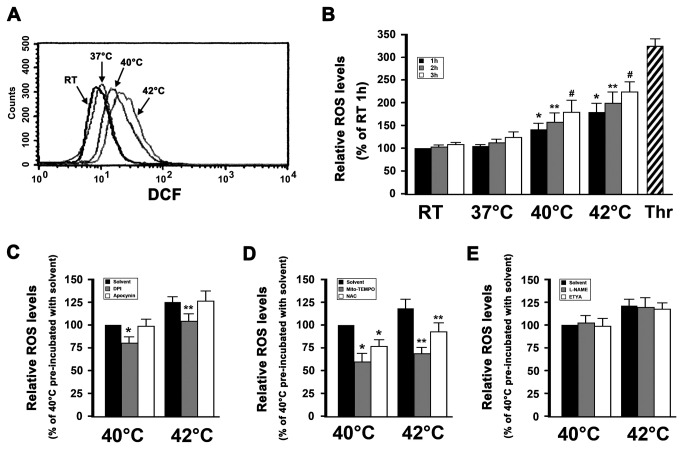
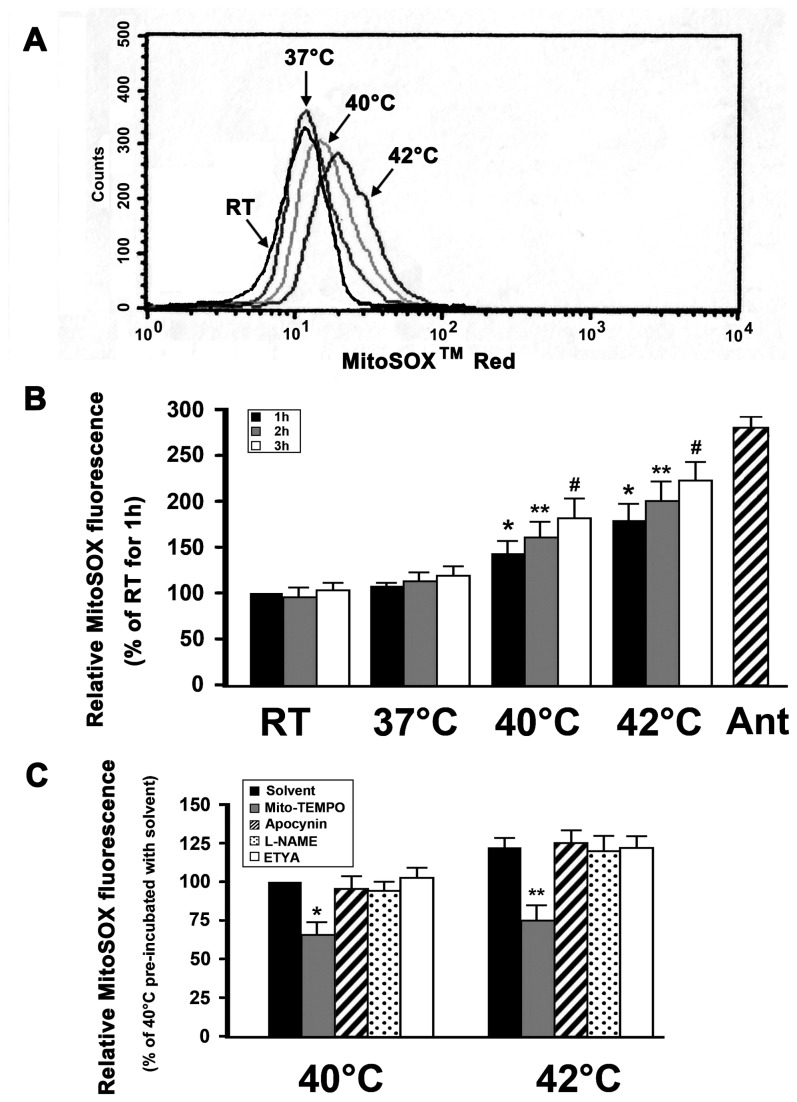
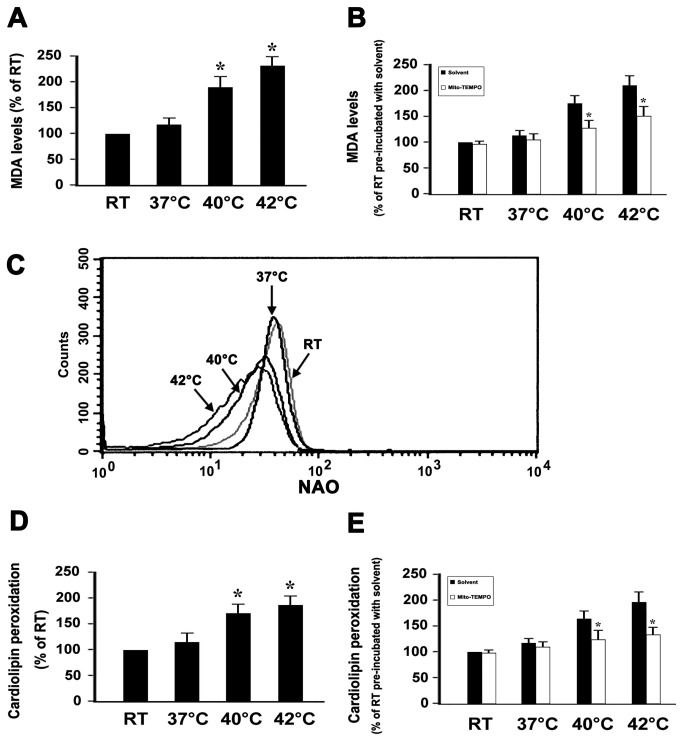
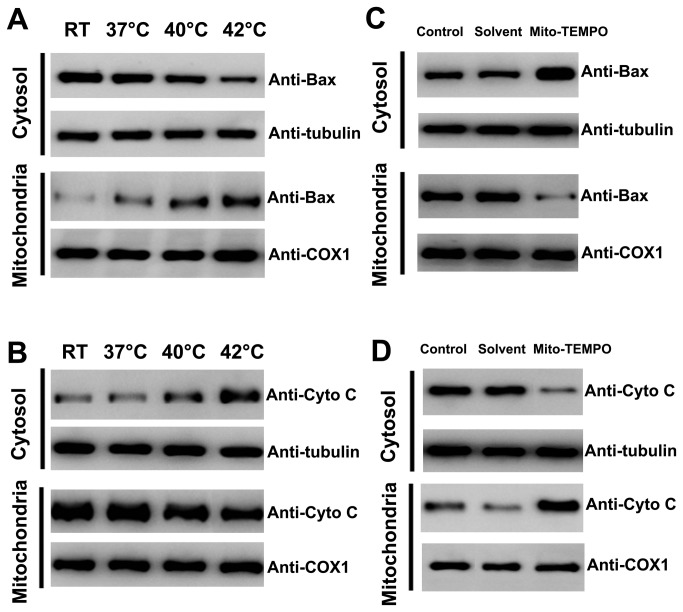
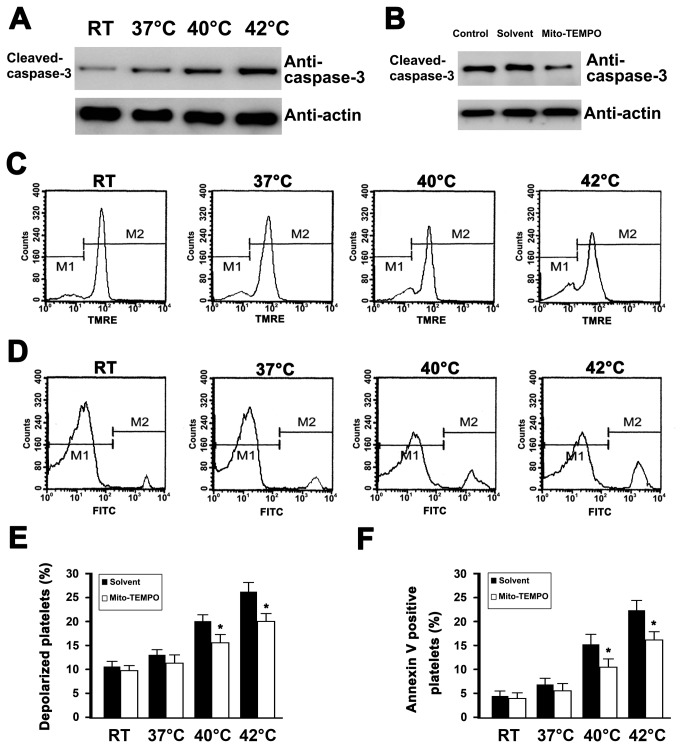
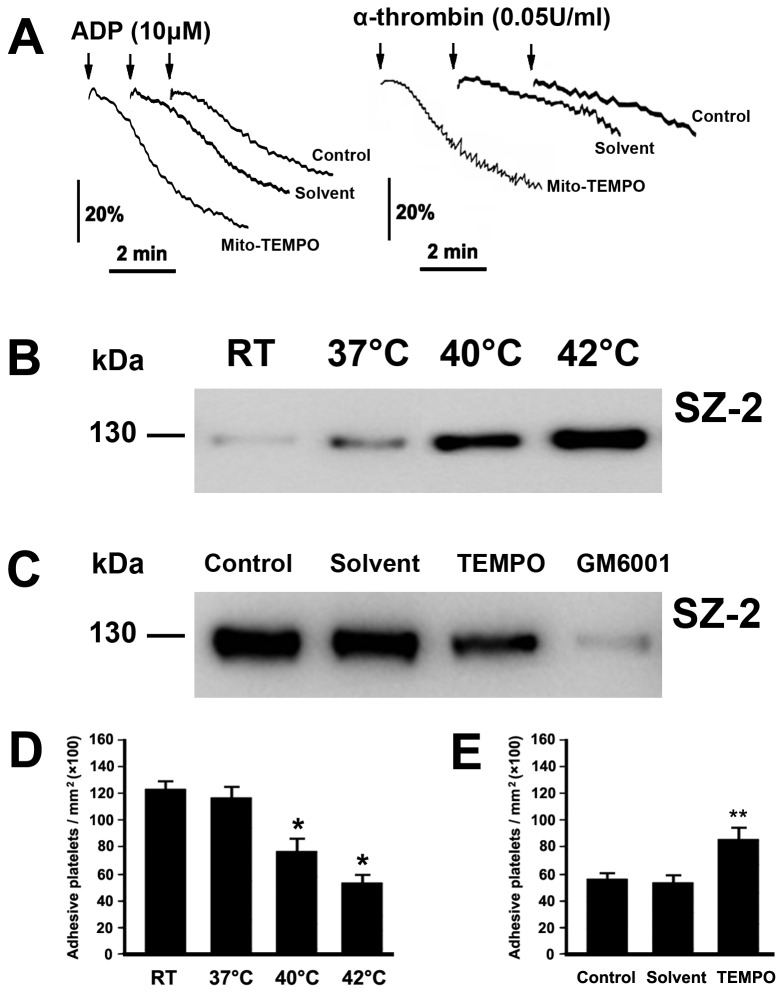
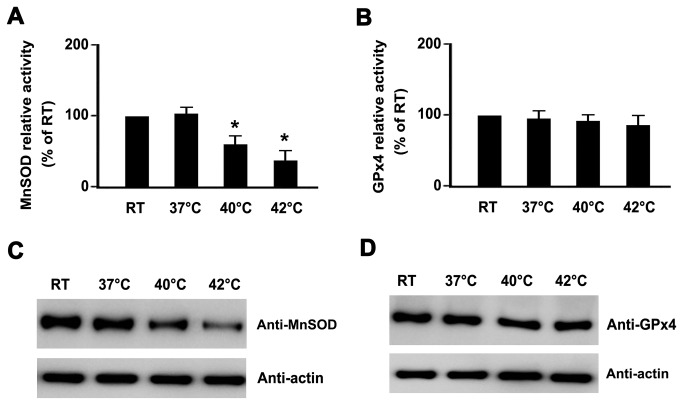
A combination of hyperthermia with radiotherapy and chemotherapy for various solid tumors has been practiced clinically. However, hyperthermic therapy has side effects, such as thrombocytopenia. Up to now, the pathogenesis of hyperthermia-induced thrombocytopenia remains unclear. Previous studies have shown that hyperthermia induces platelet apoptosis. However, the signaling pathways and molecular mechanisms involved in hyperthermia-induced platelet apoptosis have not been determined. Here we show that hyperthermia induced intracellular reactive oxygen species (ROS) production and mitochondrial ROS generation in a time-dependent manner in platelets. The mitochondria-targeted ROS scavenger Mito-TEMPO blocked intracellular ROS and mitochondrial ROS generation. By contrast, inhibitors of reduced nicotinamide adenine dinucleotide phosphate (NADPH) oxidase, nitric oxide synthase, cyclooxygenase and lipoxygenase did not. Furthermore, Mito-TEMPO inhibited hyperthermia-induced malonyldialdehyde production and cardiolipin peroxidation. We also showed that hyperthermia-triggered platelet apoptosis was inhibited by Mito-TEMPO. Furthermore, Mito-TEMPO ameliorated hyperthermia-impaired platelet aggregation and adhesion function. Lastly, hyperthermia decreased platelet manganese superoxide dismutase (MnSOD) protein levels and enzyme activity. These data indicate that mitochondrial ROS play a pivotal role in hyperthermia-induced platelet apoptosis, and decreased of MnSOD activity might, at least partially account for the enhanced ROS levels in hyperthermia-treated platelets. Therefore, determining the role of mitochondrial ROS as contributory factors in platelet apoptosis, is critical in providing a rational design of novel drugs aimed at targeting mitochondrial ROS. Such therapeutic approaches would have potential clinical utility in platelet-associated disorders involving oxidative damage.
Overview
The claims and statistics of this paper haven’t been checked yet.
Free: it reads the open-access text and checks the first 5 claims that cite a source we can check. Create a free account to check every claim.
Integrity signals
Registry
Cites
Statistics
Figures
Verification
Claims the paper makes
The claims and statistics of this paper haven’t been checked yet.
Free: it reads the open-access text and checks the first 5 claims that cite a source we can check. Create a free account to check every claim.
Claims other papers make about this one
Each is checked against this paper’s own text: does it say what the citing paper says it does?
The source backs part of the claim, not all of it — or backs it for a different population, condition or comparison.
In the citing paper
“these mtROS also contribute to oxidative stress through the oxidation of surrounding biomolecules, eventually culminating in uncontrolled inflammation, production of neoantigens, DNA damage and DNA mutations60–63”
From The role of mitochondria in rheumatic diseases (2022) · cites this paper as [60]
Experimental — accuracy not yet measuredThe source backs part of the claim, not all of it — or backs it for a different population, condition or comparison.
In the citing paper
“Mitochondrial ROS can oxidize mitochondrial nucleic acids, causing the expression of aberrant proteins, and/or directly induce post-translational oxidation of local proteins, lipid peroxidation and oxidative damage to nuclear DNA and/or mtDNA60,66,67”
From The role of mitochondria in rheumatic diseases (2022) · cites this paper as [60]
Experimental — accuracy not yet measured
Self-check
Percentages, sums and reported differences re-computed from the paper’s own numbers.
The self-check needs the paper’s full text.
Citations
Cites
Mitochondria, Oxidants, and Aging
Balaban, R. S., Nemoto, S., & Finkel, T. (2005) · Cell · doi:10.1016/j.cell.2005.02.001 · Cited by 4,388 · cited 4×
“The formation of ROS occurs when unpaired electrons escape the electron transport chain and react with molecular oxygen, generating superoxide [11].”
BackgroundInfluentialAssessing mitochondrial dysfunction in cells
Brand, M. D., & Nicholls, D. G. (2011) · Biochemical Journal · doi:10.1042/bj20110162 · Cited by 2,405
Cytochrome c acts as a cardiolipin oxygenase required for release of proapoptotic factors
Kagan, V. E., Tyurin, V. A., Jiang, J., Tyurina, Y. Y., Ritov, V. B., Amoscato, A. A., Osipov, A. N., Belikova, N. A., Kapralov, A. A., Kini, V., et al. (2005) · Nature Chemical Biology · doi:10.1038/nchembio727 · Cited by 1,256 · cited 1×
“Oxygenated cardiolipin appears to be essential for mitochondrial membrane permeabilization and release of pro-apoptotic factors into the cytosol [38,39].”
BackgroundReactive Oxygen Species: Players in the Platelet Game
Krötz, F., Sohn, H.-Y., & Pohl, U. (2004) · Arteriosclerosis, Thrombosis, and Vascular Biology · doi:10.1161/01.atv.0000145574.90840.7d · Cited by 1,006 · cited 2×
“Several studies have shown that nitric oxide synthase (NOS), cyclooxygenase (COX) and lipoxygenase (LOX) are involved in ROS production in agonist-stimulated platelets [33,34].”
BackgroundTherapeutic Targeting of Mitochondrial Superoxide in Hypertension
Dikalova, A. E., Bikineyeva, A. T., Budzyn, K., Nazarewicz, R. R., McCann, L., Lewis, W., Harrison, D. G., & Dikalov, S. I. (2010) · Circulation Research · doi:10.1161/circresaha.109.214601 · Cited by 737 · cited 1×
“reported that mitochondrial ROS is important in the development of hypertension, and that mitochondria-targeted antioxidant MitoTEMPO decreased mitochondrial ROS, inhibited total cellular ROS, and restored the levels of bioavailable nitric oxide [21].”
BackgroundQuinlan, C. L., Orr, A. L., Perevoshchikova, I. V., Treberg, J. R., Ackrell, B. A., & Brand, M. D. (2012) · Journal of Biological Chemistry · doi:10.1074/jbc.m112.374629 · Cited by 670
Oxidative stress and oxidative damage in chemical carcinogenesis
Klaunig, J. E., Wang, Z., Pu, X., & Zhou, S. (2011) · Toxicology and Applied Pharmacology · doi:10.1016/j.taap.2009.11.028 · Cited by 470 · cited 1×
“An increase in ROS generation, a decrease in antioxidant capacity, or a combination both will lead to oxidative stress [18].”
BackgroundSelf-citationMarkers of Oxidative Stress in Erythrocytes and Plasma During Aging in Humans
Pandey, K. B., & Rizvi, S. I. (2010) · Oxidative Medicine and Cellular Longevity · doi:10.4161/oxim.3.1.10476 · Cited by 444 · cited 2×
“MDA is a product of lipid membrane oxidation and a marker of oxidative damage [28].”
BackgroundThe mechanism of mitochondrial superoxide production by the cytochrome bc1 complex
Dröse, S., & Brandt, U. (2008) · Journal of Biological Chemistry · doi:10.1074/jbc.m803236200 · Cited by 386 · cited 1×
“As a positive control, washed platelets were incubated with antimycin A, which is known to increase mitochondrial ROS production [35].”
Role of reactive oxygen species and cardiolipin in the release of cytochrome c from mitochondria
Petrosillo, G., Ruggiero, F. M., & Paradies, G. (2003) · The FASEB Journal · doi:10.1096/fj.03-0012com · Cited by 384 · cited 2×
“Oxygenated cardiolipin appears to be essential for mitochondrial membrane permeabilization and release of pro-apoptotic factors into the cytosol [38,39].”
Background
Cited by
Items 101–155 of 155
Wang, Y., Li, Y., Chen, B., Deng, X., Luo, Q., & Zao, X. (2022) · Molecules · doi:10.3390/molecules27123767 · Cited by 13
“Increased production of ROS and reduced innate antioxidant capacity can lead to oxidative stress [8].”
BackgroundIshii, R., Kamiya, T., Hara, H., & Adachi, T. (2020) · Archives of Biochemistry and Biophysics · doi:10.1016/j.abb.2020.108565 · Cited by 12
Kikusato, M., & Toyomizu, M. (2015) · The Journal of Physiological Sciences · doi:10.1007/s12576-015-0395-2 · Cited by 12
“Mitochondria-derived superoxide production may increase muscle atrophy [5, 6], apoptosis [7, 8], autophagy [9], and”
BackgroundYu, T., Dohl, J., Park, Y. M., Brown, L. L., Costello, R. B., Chen, Y., & Deuster, P. A. (2021) · Life Sciences · doi:10.1016/j.lfs.2021.120160 · Cited by 12
Marycz, K., Marędziak, M., Lewandowski, D., Zachanowicz, E., Zięcina, A., Wiglusz, R. J., & Pązik, R. (2017) · Cellular and Molecular Bioengineering · doi:10.1007/s12195-017-0480-0 · Cited by 11
Yu, T., Park, Y. M., Wang, L., & Deuster, P. A. (2022) · British Journal Of Nutrition · doi:10.1017/s0007114522001982 · Cited by 12
“All of these indicate mitochondrial dysfunction under heat stress, which is associatedwith increased production of ROS, release of cytochrome c into the cytosol and subsequent caspase activation and cell death(11,12,39,40).”
BackgroundUrs, A. P., Manjuprasanna, V. N., Rudresha, G. V., Hiremath, V., Sharanappa, P., Rajaiah, R., & Vishwanath, B. S. (2020) · Biochimica et Biophysica Acta (BBA) - Molecular Cell Research · doi:10.1016/j.bbamcr.2020.118925 · Cited by 12
Fuentes, E., Arauna, D., & Araya‐Maturana, R. (2023) · Thrombosis Research · doi:10.1016/j.thromres.2023.08.013 · Cited by 10
Furukawa, K., Toyomizu, M., & Kikusato, M. (2021) · Domestic Animal Endocrinology · doi:10.1016/j.domaniend.2021.106608 · Cited by 9
Batool, I., Kausar, R., & Hussain, T. (2025) · Journal of Thermal Biology · doi:10.1016/j.jtherbio.2025.104201 · Cited by 9
Seo, D., Oliveira, S. B., Rex, E. A., Ye, X., Rice, L. M., da Fonseca, F. G., & Gammon, D. B. (2024) · Cell Reports · doi:10.1016/j.celrep.2024.113882 · Cited by 9
“56,57 Both GSH and MitoTEMPO significantly decreased ROS levels in ΔA51R FA51RTriple -infected cells (Figures 6D and S8D).”
BackgroundTabuchi, Y., Ahmed, K., & Kondo, T. (2016) · Springer eBooks · doi:10.1007/978-981-10-0719-4_2 · Cited by 8
Kim, S.-R., Song, J.-H., Ahn, J.-H., Jeong, M. S., Yang, Y. M., Cho, J., Jeong, J.-H., Cha, Y., Kim, K., Kim, H.-P., et al. (2022) · Immune Network · doi:10.4110/in.2022.22.e19 · Cited by 7
“NAC may only partially decrease mtROS generation and was not sufficient to diminish the effects of mtROS (65).”
BackgroundBlue light photobiomodulation of dental pulp cells
Mohamad, S. A., Milward, M. R., Hadis, M. A., Kuehne, S. A., & Cooper, P. R. (2022) · Lasers in Dental Science · doi:10.1007/s41547-022-00152-3 · Cited by 6
Li, H., Xu, X., Cai, M., Qu, Y., Ren, Z., Ye, C., & Shen, H. (2022) · Food & Function · doi:10.1039/d1fo04157f · Cited by 7
Enhanced Photocatalytic Hydrogen Evolution and Antibacterial Activities of Ternary Chevrel Phases
Acar, E. G., Kuru, T., Sarılmaz, A., Çekceoğlu, İ. A., Yanalak, G., Aslan, E., Özel, S. S., Karanfil, G., Özel, F., & Patır, İ. H. (2023) · ChemCatChem · doi:10.1002/cctc.202201252 · Cited by 7
Choi, J. H., & Kim, K. (2024) · Toxics · doi:10.3390/toxics12010050 · Cited by 7
Wang, J., Yi, X., Liu, M., Zhou, Q., Ren, S., Wang, Y., Yang, C., Zhou, J., & Han, Y. (2015) · PLoS ONE · doi:10.1371/journal.pone.0138509 · Cited by 7
“PS externalization is an apoptotic marker [15], which can be detected during platelet storage.”
BackgroundApoptosis of Platelets Inhibited By Herba Sarcandrae Extract through the Mitochondria Pathway
Zhu, X., Jiang, Y., Zheng, Q., Zhang, A., Shi, L., Xia, L., & Luo, M. (2018) · Evidence-based Complementary and Alternative Medicine · doi:10.1155/2018/1956902 · Cited by 6
“Our previous study has found that the platelet apoptosis mediated by mitochondrial pathway in immune-induced bone marrow failure resulted in abnormal coagulation and bleeding [13, 14].”
BackgroundSelf-citationMoniruzzaman, M., Dutta, S. D., Acharya, R., Lim, K., & Kim, J. (2024) · Colloids and Surfaces A Physicochemical and Engineering Aspects · doi:10.1016/j.colsurfa.2024.134266 · Cited by 8
Heat stroke-induced central nervous system injury: Mechanisms and therapeutic perspectives
Yang, W., Gao, Z., Wang, C., Wang, M., Cao, Y., Li, Y., Shi, S., Wu, Y., Wang, L., & Kang, H. (2025) · Journal of Thermal Biology · doi:10.1016/j.jtherbio.2025.104263 · Cited by 6
Chen, C., Moreno, R. L. H. G., Wang, P., Nguyen, T. S., Wu, J., Chen, K., Chen, C., Lin, C.-Y., & Wong, P. (2025) · ACS Applied Materials & Interfaces · doi:10.1021/acsami.5c05707 · Cited by 12
Yiling, J., Zheng, Q., Aiping, Z., Lele, C., Lemin, X., & Meihong, L. (2017) · 中医杂志:英文版 · doi:10.1016/s0254-6272(17)30318-7 · Cited by 6
Para‐tertiary butyl catechol (PTBC), an industrial antioxidant induces human platelet apoptosis
Vishalakshi, G. J., NaveenKumar, S. K., Hemshekhar, M., Mahendra, M., Kemparaju, K., & Girish, K. S. (2018) · Environmental Toxicology · doi:10.1002/tox.22681 · Cited by 6
“Increased NADPH oxidase activity contributes significantly towards cytosolic ROS content, whereas the impaired activity of mitochondrial respiratory chain contribute towards mitochondrial ROS content.(35) Therefore, to determine the sources of PTBC-induced ROS production, DPI: NOX inhibitor, Mito-TEMPO: mitochondria-t…”
Freixer, G., Zekri-Nechar, K., Zamorano‐León, J. J., Martínez-Martínez, C. H., Butta, N. V., Manzano, E. M., Recio, M.-J., Giner, M., & López-Farré, A. J. (2020) · Platelets · doi:10.1080/09537104.2020.1839637 · Cited by 6
Sándor, L., Donka, T., Baráth, B., Jávor, P., Jász, D. K., Perenyi, D. S., Babik, B., Varga, E., Török, L., & Hartmann, P. (2024) · Injury · doi:10.1016/j.injury.2024.111481 · Cited by 8
Manjuprasanna, V. N., Urs, A. P., Rudresha, G. V., Gowda, M. D. M., Jayachandra, K., Hiremath, V., Rajaiah, R., & Vishwanath, B. S. (2021) · Journal of Cellular Biochemistry · doi:10.1002/jcb.29917 · Cited by 5
Zhang, Y., Wang, J., Lei, S., Hu, Y., & Fu, L. (2022) · European Journal of Medicinal Chemistry Reports · doi:10.1016/j.ejmcr.2022.100070 · Cited by 5
Role of Oxidative Stress and Cardiovascular Risk Factors in Ischemic Heart Disease
Barteková, M., Ferenczyová, K., Jelemenský, M., & Dhalla, N. S. (2019) · Springer eBooks · doi:10.1007/978-981-13-8273-4_16 · Cited by 7
Fernandes, M. R. U., Teti, G., Gatta, V., Longhin, A., Aranha, A. C. C., & Falconi, M. (2025) · International Journal of Molecular Sciences · doi:10.3390/ijms26178174 · Cited by 4
“The inhibitory effects of a higher radiant exposure may result from direct interference with chromophore function by photons, or indirect interference through excessive reactive oxygen species production or hyperthermia [46–48].”
Ioannidou, S., Tsiakalidou, A., Kazeli, K., Ginoudis, A., Fouza, A., Daoudaki, M., & Lymperaki, E. (2024) · Oxygen · doi:10.3390/oxygen4030014 · Cited by 7
“Increased levels of ROS are responsible for premature platelet apoptosis [64,65].”
BackgroundKassassir, H., Siewiera, K., Przygodzki, T., Łabieniec-Watała, M., & Watała, C. W. (2016) · InTech eBooks · doi:10.5772/63473 · Cited by 3
“, hyperlipidemia, altered cardiac functions, diabetes, and chronic uremia [189, 190]; (c) physical factors, i.”
BackgroundKesorn, P., Shen, P., Wu, H., Ju, J.-C., Liu, S.-S., Wu, H.-H., Lee, J., & Peng, S.-Y. (2017) · Theriogenology · doi:10.1016/j.theriogenology.2017.07.032 · Cited by 3
The effect of chlorin e6 drug on platelet aggregation activity
Петрищев, Н. Н., Galkin, M. A., Гришачева, Т. Г., Dementjeva, I. N., & Григорьевна, Ч. С. (2019) · Biomedical Photonics · doi:10.24931/2413-9432-2019-8-3-4-10 · Cited by 3
The Formation of Long-Lived Reactive Protein Species in Heat-Treated Solutions of Gelatin and Casein
Иванов, В. Е., Черников, А. В., Gudkov, S. V., & Брусков, В. И. (2018) · BIOPHYSICS · doi:10.1134/s0006350918050093 · Cited by 4
Jávor, P., Rárosi, F., Horváth, T., Török, L., & Hartmann, P. (2021) · European Surgical Research · doi:10.1159/000521670 · Cited by 2
“According to the literature, inhibition of the electron transport chain (ETC) impedes on thrombogenesis [24-26], suggesting the potential role of mitochondria in TIC.”
BackgroundCajanding, R. J. M. (2023) · AACN Advanced Critical Care · doi:10.4037/aacnacc2023314 · Cited by 4
Singh, K., Kumari, S., Ali, M., Das, M. K., Mishra, A., & Singh, A. K. (2023) · International Journal of Biometeorology · doi:10.1007/s00484-023-02555-8 · Cited by 1
“The decrease in MMP further leads to an increase in ROS accumulation because of the electron leakage in the electron transport chain as reverse electron flow takes place from coenzyme Q to complex I (Zorov et al. 2014; Wang et al. 2013).”
BackgroundResearch progress of inorganic metal nanomaterials in biological imaging and photothermal therapy
Shen, M., Cao, Q., Zhang, M., Jing, H., & Zhao, Z. (2024) · Scientia Sinica Chimica · doi:10.1360/ssc-2023-0197 · Cited by 3
Sertoli cell-conditioned medium restores spermatogenesis in mice induced by scrotal hyperthermia
Soltani, R., Abbaszadeh, H., Norouzian, M., Aghajanpour, F., Afshar, A., Aliaghaei, A., Moeinian, N., Nejad, A. D., Fathabadi, F. F., & Abdollahifar, M. (2025) · Economy of Tajikistan · doi:10.61882/phypha.29.3.293 · Cited by 1
“…Glutathione (GSH), Reactive oxygen species ( ROS ) plays a central role as an intra-cellular mediator of heat-induced oxidative stress, and the increase in its level with the disruption of the cell’s respiratory cycle leads to the induction of mitochondrial apoptosis pathway (Wang et al., 2013) .”
Gough, P., Getz, T. M., Paoli, S. D., Wagner, S. J., & Atreya, C. D. (2021) · Blood transfusion · doi:10.2450/2020.0100-20 · Cited by 1
Asano, M., Sugiyama, J., Kawano, K., & Futaki, S. (2021) · Thermal Medicine · doi:10.3191/thermalmed.37.15 · Cited by 1
Fadhlina, A. N., Indriaswati, L., Nurwasis, N., Fauziah, D., & Mahmudah, M. (2022) · Bali Medical Journal · doi:10.15562/bmj.v11i3.3734 · Cited by 1
Kumar, K. P., & Garrepally, P. (2019) · Stem Cells Research and Therapeutics International · doi:10.31579/2643-1912/003 · Cited by 2
Vyankati, P. A., & Laxmi, A. (2014) · DOAJ (DOAJ: Directory of Open Access Journals)
Nuevos datos para la biografía de Alvar Nuñez Cabeza de Vaca
Maura, J. F. (2002) · Cuadernos hispanoamericanos
Status oxidativo sazonal no sêmen de touros Bos indicus e Bos taurus em região tropical
Nagai, K. K. (2022) · Digital Library of Theses and Dissertations (Universidade de São Paulo) · doi:10.11606/d.10.2022.tde-27022023-115200
Alternative Methods for the Detection of Superoxide Anion Generation in Platelets
Vara, D. S., Leonard, S. V. L., Calaminus, S. D. J., & Pula, G. (2024) · Journal of Visualized Experiments · doi:10.3791/66647
Kumar, A. P., Newmaster, S. G., Panda, S., Hemamalini, A. J., Krishnan, S., Shanmugam, R., & Venugopal, V. (2026) · Oxford Open Climate Change · doi:10.1093/oxfclm/kgag002 · Cited by 1
Wang, R., Zhang, X., Zhao, C., Luo, S., Chang, Z., Di, J., Hao, Y., & Wu, D. (2026) · ACS Applied Materials & Interfaces · doi:10.1021/acsami.6c07609
Singh, N., Islam, S. N., Singh, V., Siddiqui, E. A., Siddiqui, I. A., Kumar, A., Siddiqui, M. H., Ahmad, A., & Dash, D. (2026) · Colloids and Surfaces B Biointerfaces · doi:10.1016/j.colsurfb.2026.116216
Role of Mitochondrial Impairment in Sepsis-Induced Platelet Activation
Greco, E., Schiavello, M., Bosco, O., Vizio, B., Bellini, S., Dini, C., Barutta, F., Vallino, P. C., Pivetta, E. E., Morello, F., et al. (2026) · Critical Care Medicine · doi:10.1097/ccm.0000000000007407
Metadata
- Authors
- Wang, Z., Cai, F., Chen, X., Luo, M., Hu, L., & Lu, Y.
- Affiliations
- Shanghai Medical College of Fudan University (CN)
- Shanghai University of Traditional Chinese Medicine (CN)
- Anhui Medical University (CN)
- Corresponding author
- Lu, Yuan
- Venue
- PLoS ONE
- Publisher
- Public Library of Science (PLoS)
- Published
- 2013-09-04
- Volume
- 8
- Issue
- 9
- Pages
- e75044
- ISSN
- 1932-6203 (ISSN-L)
- PMC
- PMC3762754
- OpenAlex
- W2011506319
- Cited by
- 155
- References
- 54
- Citations by year
- 2026: 4 · 2025: 9 · 2024: 12 · 2023: 8 · 2022: 14 · 2021: 12 · 2020: 11 · 2019: 12 · 2018: 15 · 2017: 24 · 2016: 7 · 2015: 14 · 2014: 12
- FWCI
- 7.89
- Type
- journal article
- Language
- en
- Open access
- gold
- doi.org
- Locations
- PLoS ONE (publishedVersion, cc-by)
- Europe PMC (PubMed Central) (publishedVersion, cc-by)
- PubMed Central (publishedVersion, cc-by)
- PubMed (publishedVersion)
- DOAJ (DOAJ: Directory of Open Access Journals) (submittedVersion, cc-by-sa)
- Funders
- Natural Science Foundation of Shanghai
- National Natural Science Foundation of China (81270650)
- China Postdoctoral Science Foundation
- Shanghai Municipal Education Commission
- Topics
- Health Sciences › Medicine › Hematology › Platelet Disorders and Treatments
- Life Sciences › Biochemistry, Genetics and Molecular Biology › Molecular Biology › Mitochondrial Function and Pathology
- Life Sciences › Biochemistry, Genetics and Molecular Biology › Molecular Biology › Cell death mechanisms and regulation
- Keywords
- hyperthermia, platelet apoptosis, mitochondrial reactive oxygen species, MitoTEMPO, thrombocytopenia, manganese superoxide dismutase, cardiolipin peroxidation, malondialdehyde, platelet aggregation, platelet adhesion, oxidative stress, NADPH oxidase, nitric oxide synthase, cyclooxygenase, lipoxygenase
- MeSH terms
- Blood Platelets, Cardiolipins, Humans, Hyperthermia, Induced, Malondialdehyde, Mitochondria, Organophosphorus Compounds, Piperidines, Superoxides, Superoxide Dismutase, Lipid Peroxidation, Apoptosis, Reactive Oxygen Species
About these checks
Registry, retraction, Cites and statistics results are computed, not judged, with one exception: a printed reference that no index lists is read once by a model before it counts as a citation error. Claims are extracted by a model and kept only when their quote appears verbatim in the text; each cited source is then checked, with a model’s help, for whether it says what the claim relies on. Those verdicts can be wrong — read the claim’s quote and the cited source before relying on one.
Statistics and arithmetic are recomputed, not judged.
Confidence bands are shown only for fields calibrated on our annotated test set. None is calibrated yet, so no band is shown.
What counts as a claim ›How we measure confidence ›How we check this ›
Are you an author, or do you see a problem with this page? Request a review
Data sources
Bibliographic data: Semantic Scholar, OpenAlex, Crossref.
Contains information from the Semantic Scholar Academic Graph Datasets, made available under the ODC Attribution License (ODC-BY 1.0).
Semantic Scholar’s data is described in: Kinney, R., et al. (2023). The Semantic Scholar Open Data Platform. arXiv:2301.10140.
