

The DOI matches its Crossref record; 13 of the 13 references it cites were found in a registry or an index.
Impact of Over-the-Counter Restrictions on Antibiotic Consumption in Brazil and Mexico
Open accessAbstract
BACKGROUND: In Latin American countries over-the-counter (OTC) dispensing of antibiotics is common. In 2010, both Mexico and Brazil implemented policies to enforce existing laws of restricting consumption of antibiotics only to patients presenting a prescription. The objective of the present study is therefore to evaluate the impact of OTC restrictions (2010) on antibiotics consumption in Brazil and Mexico. METHODS AND FINDINGS: Retail quarterly sales data in kilograms of oral and injectable antibiotics between January 2007 and June 2012 for Brazil and Mexico were obtained from IMS Health. The unit of analysis for antibiotics consumption was the defined daily dose per 1,000 inhabitants per day (DDD/TID) according to the WHO ATC classification system. Interrupted time series analysis was conducted using antihypertensives as reference group to account for changes occurring independently of the OTC restrictions directed at antibiotics. To reduce the effect of (a) seasonality and (b) autocorrelation, dummy variables and Prais-Winsten regression were used respectively. Between 2007 and 2012 total antibiotic usage increased in Brazil (from 5.7 to 8.5 DDD/TID, +49.3%) and decreased in Mexico (10.5 to 7.5 DDD/TID, -29.2%). Interrupted time series analysis showed a change in level of consumption of -1.35 DDD/TID (p<0.01) for Brazil and -1.17 DDD/TID (p<0.00) for Mexico. In Brazil the penicillins, sulfonamides and macrolides consumption had a decrease in level after the intervention of 0.64 DDD/TID (p = 0.02), 0.41 (p = 0.02) and 0.47 (p = 0.01) respectively. While in Mexico it was found that only penicillins and sulfonamides had significant changes in level of -0.86 DDD/TID (p<0.00) and -0.17 DDD/TID (p = 0.07). CONCLUSIONS: Despite different overall usage patterns of antibiotics in Brazil and Mexico, the effect of the OTC restrictions on antibiotics usage was similar. In Brazil the trend of increased usage of antibiotics was tempered after the OTC restrictions; in Mexico the trend of decreased usage was boosted.
Overview
The claims and statistics of this paper haven’t been checked yet.
Run the check — free, no account needed. It reads the open-access text and checks the sources it cites.
Integrity signals
Registry
Cites
Statistics
Figures
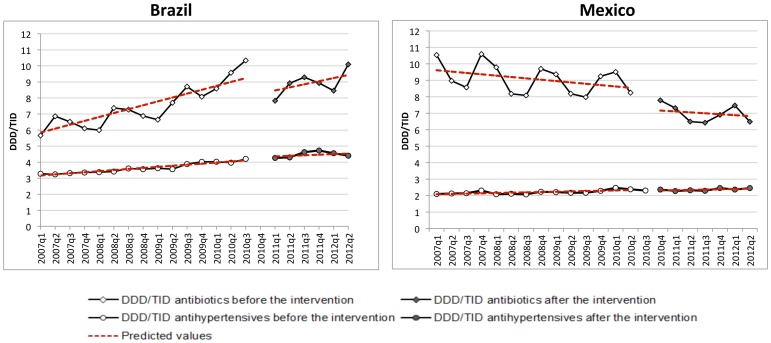
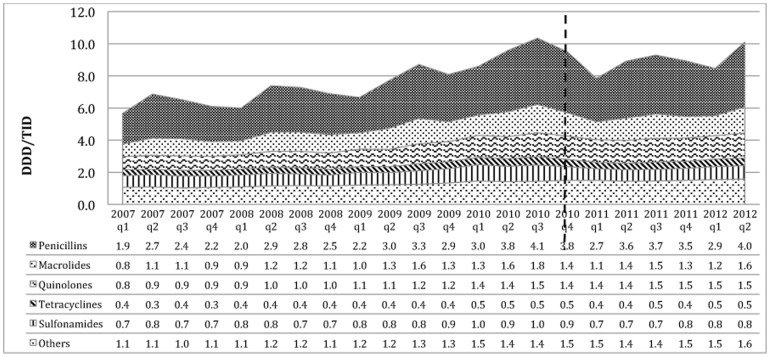
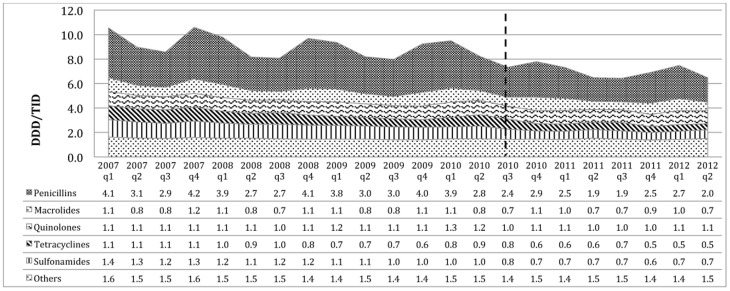
Verification
Claims the paper makes
The claims and statistics of this paper haven’t been checked yet.
Run the check — free, no account needed. It reads the open-access text and checks the sources it cites.
Claims other papers make about this one
Each is checked against this paper’s own text: does it say what the citing paper says it does?
The source backs part of the claim, not all of it — or backs it for a different population, condition or comparison.
In the citing paper
“A number of studies conducted in Zimbabwe, Chile, Colombia, Brazil, Mexico and Korea in addition to a study completed in Saudi Arabia found strict enforcement of existing laws to be effective in containing the non-prescribed antibiotics provision [61–65].”
From No prescription? No problem: drivers of non-prescribed sale of antibiotics among community drug retail outlets in low and middle income countries: a systematic review of qualitative studies (2021) · cites this paper as [63]
Experimental — accuracy not yet measured
Self-check
Percentages, sums and reported differences re-computed from the paper’s own numbers.
The self-check needs the paper’s full text.
Citations
Cites
Outpatient antibiotic use in Europe and association with resistance: a cross-national database study
Goossens, H., Ferech, M., Vander Stichele, R., & Elseviers, M. (2005) · The Lancet · doi:10.1016/s0140-6736(05)17907-0 · Cited by 3,359 · cited 1×
“It leads to treatment failures causing deaths and an increase in use of more costly antibiotics [1,2].”
BackgroundSegmented regression analysis of interrupted time series studies in medication use research
Wagner, A. K., Soumerai, S. B., Zhang, F., & Ross-Degnan, D. (2002) · Journal of Clinical Pharmacy and Therapeutics · doi:10.1046/j.1365-2710.2002.00430.x · Cited by 3,279 · cited 1×
“Subsequently, we used interrupted time-series analysis [18] to measure the impact of the policy implementation in each country estimating changes in level and trend in antibiotics consumption after the enforcement of the regulations.”
MethodTHE JOURNAL OF ANTIMICROBIAL CHEMOTHERAPY
(1975) · The Medical Journal of Australia · doi:10.5694/j.1326-5377.1975.tb105896.x · Cited by 1,902
European Surveillance of Antimicrobial Consumption (ESAC): outpatient antibiotic use in Europe
Ferech, M., Coenen, S., Malhotra‐Kumar, S., Dvorakova, K., Hendrickx, E., Suetens, C., & Goossens, H. (2006) · Journal of Antimicrobial Chemotherapy · doi:10.1093/jac/dkl188 · Cited by 598 · cited 1×
“High seasonal fluctuations in antibiotics consumption suggest inadequate use for viral acute respiratory tract infections (ARI) [23].”
BackgroundTrends in antibiotic utilization in eight Latin American countries, 1997-2007
Wirtz, V. J., Dreser, A., & Gonzales, R. (2010) · Revista Panamericana de Salud Pública · doi:10.1590/s1020-49892010000300009 · Cited by 139 · cited 4×
“In both countries, penicillins, tetracyclines, quinolones, macrolides and sulfonamides were the most frequently consumed therapeutic subgroups [7], and these were therefore included as separate classes.”
BackgroundInfluentialSelf-citationImpacto de medidas regulatorias en la tendencia de consumo comunitario de antibióticos en Chile
Luis Bavestrello, F., Ángela Cabello, M., & Dunny Casanova, Z. (2002) · Revista médica de Chile · doi:10.4067/s0034-98872002001100009 · Cited by 83
Antimicrobial-Drug Use and Changes in Resistance in Streptococcus pneumoniae
Diekema, D. J., Brueggemann, A. B., & Doern, G. V. (2000) · Emerging infectious diseases · doi:10.3201/eid0605.000519 · Cited by 83
Wirtz, V. J., Herrera‐Patino, J. J., Santa‐Ana‐Tellez, Y., Dreser, A., Elseviers, M., & Vander Stichele, R. H. (2013) · Tropical Medicine & International Health · doi:10.1111/tmi.12096 · Cited by 76 · cited 4×
“The effect of these policies were evaluated recently, showing a decrease in level of consumption in Colombia, but no change in level or trend in Venezuela [6].”
BackgroundInfluentialSelf-citationEfficiency of Least-Squares Estimation of Linear Trend when Residuals Are Autocorrelated
Chipman, J. S. (1979) · Econometrica · doi:10.2307/1912350 · Cited by 73
Dreser, A., Vázquez‐Vélez, E., Treviño, S., & Wirtz, V. J. (2012) · BMC Public Health · doi:10.1186/1471-2458-12-1051 · Cited by 53 · cited 4×
“Indeed, the Mexican government justified the antibiotic regulation in 2010 [10] arguing that it would prevent harmful self-medication with antibiotics that had led to delayed medical diagnosis of lifethreatening complications during the influenza epidemic [9].”
BackgroundInfluentialSelf-citation
Research works printed but not linked: 1
- Bavestrello L, Cabello A, Casanova D (2002) [Impact of regulatory measures in the trends of community consumption of antibiotics in Chile]. Revista médica de Chile 130: 1265–1272. Available: http://www.ncbi.nlm.nih.gov/pubmed/12587509. Accessed 2013 April 17.
Cited by
Sorted by citations
Manyi-Loh, C., Mamphweli, S., Meyer, E., & Okoh, A. (2018) · Molecules · doi:10.3390/molecules23040795 · Cited by 1,808
“, Brazil and Mexico) have implemented policies to regulate and prohibit the sales of over-the-counter antibiotics without prescription [155].”
BackgroundOcan, M., Obuku, E. A., Bwanga, F., Akena, D., Richard, S., Ogwal-Okeng, J., & Obua, C. (2015) · BMC Public Health · doi:10.1186/s12889-015-2109-3 · Cited by 504
Antibiotic stewardship in low- and middle-income countries: the same but different?
Cox, J. A., Vlieghe, E., Mendelson, M., Wertheim, H., Ndegwa, L., Villegas, M. V., Gould, I., & Levy Hara, G. (2017) · Clinical Microbiology and Infection · doi:10.1016/j.cmi.2017.07.010 · Cited by 529
Jandoc, R., Burden, A. M., Mamdani, M., Lévesque, L. E., & Cadarette, S. M. (2015) · Journal of Clinical Epidemiology · doi:10.1016/j.jclinepi.2014.12.018 · Cited by 474
Auta, A., Hadi, M. A., Oga, E. F., Adewuyi, E. O., Abdu-Aguye, S. N., Adeloye, D., Strickland–Hodge, B., & Morgan, D. J. (2018) · Journal of Infection · doi:10.1016/j.jinf.2018.07.001 · Cited by 442
Antimicrobial resistance in low- and middle-income countries: current status and future directions
Sulis, G., Sayood, S. J., & Gandra, S. (2021) · Expert Review of Anti-infective Therapy · doi:10.1080/14787210.2021.1951705 · Cited by 414
The Lancet Infectious Diseases Commission on antimicrobial resistance: 6 years later
Laxminarayan, R., Boeckel, T. P. V., Frost, I., Kariuki, S., Khan, E. A., Limmathurotsakul, D., Larsson, D. G. J., Levy-Hara, G., Mendelson, M., Outterson, K., et al. (2020) · The Lancet Infectious Diseases · doi:10.1016/s1473-3099(20)30003-7 · Cited by 346
Strategies to Improve Antimicrobial Utilization with a Special Focus on Developing Countries
Godman, B., Egwuenu, A. J., Haque, M., Malande, O. O., Schellack, N., Kumar, S., Saleem, Z., Sneddon, J., Hoxha, I., Islam, S., et al. (2021) · Life · doi:10.3390/life11060528 · Cited by 244
Belachew, S. A., Hall, L., & Selvey, L. A. (2021) · Antimicrobial Resistance and Infection Control · doi:10.1186/s13756-020-00880-w · Cited by 187
Godman, B., Haque, M., McKimm, J., Abu Bakar, M., Sneddon, J., Wale, J., Campbell, S., Martin, A. P., Hoxha, I., Abilova, V., et al. (2020) · Current Medical Research and Opinion · doi:10.1080/03007995.2019.1700947 · Cited by 171
Iskandar, K., Molinier, L., Hallit, S. R., Sartelli, M., Catena, F., Coccolini, F., Hardcastle, T. C., Roques, C. G., & Salameh, P. (2020) · Antibiotics · doi:10.3390/antibiotics9070372 · Cited by 156
“These measures can potentially lead to a decrease in the use of antibiotics over-the-counter [109–111] and reduce the selection pressure but not necessarily reverse antibiotic resistance [112].”
BackgroundHadi, M. A., Karami, N. A., Al-Muwalid, A. S., Al-Otabi, A., Al-Subahi, E., Bamomen, A., Mohamed, M. M. A., & Elrggal, M. E. (2016) · International Journal of Infectious Diseases · doi:10.1016/j.ijid.2016.06.003 · Cited by 153
“001)).(18) Similarly, resistance profiles have been reported to have improved in Chile(35) and South Korea(36) following the implementation of regulations prohibiting over-the-counter sales of antibiotics.”
BackgroundNon-prescription sale and dispensing of antibiotics in community pharmacies in Zambia
Kalungia, A. C., Burger, J. R., Godman, B., Costa, J. D. O., & Simuwelu, C. (2016) · Expert Review of Anti-infective Therapy · doi:10.1080/14787210.2016.1227702 · Cited by 148
How can we improve antibiotic prescribing in primary care?
Dyar, O. J., Beovič, B., Vlahović–Palčevski, V., Verheij, T. J., & Pulcini, C. (2016) · Expert Review of Anti-infective Therapy · doi:10.1586/14787210.2016.1151353 · Cited by 142
“When this practice is legally prohibited and the laws are appropriately enforced, antibiotic use is reduced [68 – 70].”
Montagu, D., & Goodman, C. A. (2016) · The Lancet · doi:10.1016/s0140-6736(16)30242-2 · Cited by 145
Jacobs, T. G., Robertson, J., van den Ham, H. A., Iwamoto, K., Pedersen, H. B., & Mantel-Teeuwisse, A. K. (2019) · BMC Health Services Research · doi:10.1186/s12913-019-4359-8 · Cited by 140
Self-citationKatwyk, S. R. V., Grimshaw, J., Nkangu, M., Nagi, R., Mendelson, M., Taljaard, M., & Hoffman, S. J. (2019) · PLoS Medicine · doi:10.1371/journal.pmed.1002819 · Cited by 126
Alrasheedy, A. A., Alsalloum, M. A., Almuqbil, F. A., Almuzaini, M. A., Aba Alkhayl, B. S., Albishri, A. S., Alharbi, F. F., Alharbi, S. R., Alodhayb, A. K., Alfadl, A. A., et al. (2020) · Expert Review of Anti-infective Therapy · doi:10.1080/14787210.2020.1705156 · Cited by 102
Sono, T. M., Yeika, E., Cook, A., Kalungia, A., Opanga, S. A., Acolatse, J. E. E., Sefah, I. A., Jelić, A. G., Campbell, S., Lorenzetti, G., et al. (2023) · Expert Review of Anti-infective Therapy · doi:10.1080/14787210.2023.2259106 · Cited by 95
“…Reference Overall antibiotic consumption in DIDs (DDDs per one thousand inhabitants per day)/total units before and after ASP interventions [56, 190–192] ATC groups of antibiotics dispensed, e.g. % Penicillins versus total antibiotics dispensed; % cephalosporins versus total antibiotics…”
BackgroundLescure, D. L. A., Paget, J., Schellevis, F., & van Dijk, L. (2018) · Frontiers in Public Health · doi:10.3389/fpubh.2018.00370 · Cited by 93
“In countries where the sale of over-the-counter (OTC) drugs is prohibited but not enforced, like in many Latin American countries, self-medication with antibiotics is common (5).”
BackgroundCuevas, C., Batura, N., Wulandari, L. P. L., Khan, M. S., & Wiseman, V. L. (2021) · Health Policy and Planning · doi:10.1093/heapol/czab021 · Cited by 84
Cao, B., Qu, J., Yin, Y., & Eldere, J. V. (2015) · The Clinical Respiratory Journal · doi:10.1111/crj.12379 · Cited by 77
Belachew, S. A., Hall, L., Erku, D. A., & Selvey, L. A. (2021) · BMC Public Health · doi:10.1186/s12889-021-11163-3 · Cited by 73
Hoxha, I., Malaj, A., Kraja, B., Bino, S., Oluka, M., Marković-Peković, V., & Godman, B. (2018) · Journal of Global Antimicrobial Resistance · doi:10.1016/j.jgar.2018.01.019 · Cited by 73
Schuck‐Paim, C., Taylor, R. J., Alonso, W. J., Weinberger, D. M., & Simonsen, L. (2019) · The Lancet Global Health · doi:10.1016/s2214-109x(18)30455-8 · Cited by 94
The Impact of Restricting Over-the-Counter Sales of Antimicrobial Drugs
Moura, M. L., Boszczowski, Í., Mortari, N., Barrozo, L. V., Neto, F. C., Lobo, R., de Lima, A. C. P., & Levin, A. S. (2015) · Medicine · doi:10.1097/md.0000000000001605 · Cited by 61
“In Mexico, the restriction was implemented in 2010, with reduction of 3 DDD/TID (29% decrease); however, there had already been a trend toward decrease of consumption before the regulation.(20) When analyzing the impact of the restriction in each of the 5 macro regions of Brazil, we observed a decrease in all during t…”
BackgroundGodman, B., Fadare, J. O., Kwon, H.-Y., Dias, C. Z., Kurdi, A. B., Godói, I. P. D., Kibuule, D., Hoxha, I., Opanga, S. A., Saleem, Z., et al. (2021) · Journal of Comparative Effectiveness Research · doi:10.2217/cer-2020-0273 · Cited by 59
Antimicrobial resistance dynamics and the one-health strategy: a review
Singh, K. S., Anand, S. K., Dholpuria, S., Sharma, J. K., Blankenfeldt, W., & Shouche, Y. S. (2021) · Environmental Chemistry Letters · doi:10.1007/s10311-021-01238-3 · Cited by 62
Elmahi, O. K. O., Musa, R. A. E., Shareef, A. A. H., Omer, M. E. A., Elmahi, M. A. M., Altamih, R. A. A., Mohamed, R. I. H., & Mohamed, R. I. H. (2022) · PLoS ONE · doi:10.1371/journal.pone.0263067 · Cited by 52
Knowledge, attitudes and practices regarding antibiotic use in Maputo City, Mozambique
Mate, I., Comé, C. E., Gonçalves, M. P., Cliff, J., & Gudo, E. S. (2019) · PLoS ONE · doi:10.1371/journal.pone.0221452 · Cited by 53
Kliemann, B. S., Levin, A. S., Moura, M. L., Boszczowski, Í., & Lewis, J. J. (2016) · PLoS ONE · doi:10.1371/journal.pone.0167885 · Cited by 44
“Santa-Ana-Tellez et al. (2013) [15] noticed an increase in the private sector antibiotic use from 5.7 in 2007 to 8.5 DID in 2012.”
BackgroundInfluentialMokwele, R. N., Schellack, N., Bronkhorst, E., Brink, A. J., Schweickerdt, L., & Godman, B. (2021) · JAC-Antimicrobial Resistance · doi:10.1093/jacamr/dlab196 · Cited by 48
Phuong, T. N. T., Thang, D. X., Nguyen, H. A., Nguyen, C. T. T., Meyer, J. C., Godman, B., Skosana, P., & Nguyen, B. T. (2022) · Antibiotics · doi:10.3390/antibiotics11081091 · Cited by 43
“Chile [36,37] • Chile was one of the first countries in Latin America to introduce greater enforcement of the law banning the purchasing of antibiotics without a prescription.”
BackgroundBaz, M. S. A., Law, M. R., & Saadeh, R. (2018) · Travel Medicine and Infectious Disease · doi:10.1016/j.tmaid.2018.02.004 · Cited by 42
The World Alliance Against Antibiotic Resistance: Consensus for a Declaration
Carlet, J. M. (2015) · Clinical Infectious Diseases · doi:10.1093/cid/civ196 · Cited by 40
“It is very difficult to fight against this problem, because in several countries, it is the only way to access antibiotics [17].”
BackgroundPalmeira, J. D., Haenni, M., Métayer, V., Madec, J.-Y., & Ferreira, H. (2020) · Veterinary Microbiology · doi:10.1016/j.vetmic.2020.108629 · Cited by 40
Santa‐Ana‐Téllez, Y., Mantel-Teeuwisse, A. K., Leufkens, H. G. M., & Wirtz, V. J. (2014) · Antimicrobial Agents and Chemotherapy · doi:10.1128/aac.03629-14 · Cited by 35
Self-citationFactors influencing the inappropriate use of antibiotics in the Rupandehi district of Nepal.
Nepal, A., Hendrie, D., Selvey, L., & Robinson, S. (2020) · International Journal of Health Planning and Management · doi:10.1002/hpm.3061 · Cited by 35
Belachew, S. A., Hall, L., & Selvey, L. A. (2022) · Antimicrobial Resistance and Infection Control · doi:10.1186/s13756-022-01102-1 · Cited by 35
Katwyk, S. R. V., Grimshaw, J., Mendelson, M., Taljaard, M., & Hoffman, S. J. (2017) · Systematic Reviews · doi:10.1186/s13643-017-0640-2 · Cited by 35
“Mexico [13], Brazil [14], and Chile [15], for example, all saw reductions in antibiotic use after implementing policies to prevent overthe-counter sales of antibiotics.”
BackgroundTendência da prática de automedicação entre idosos brasileiros entre 2006 e 2010: Estudo SABE
Secoli, S. R., Marquesini, E. A., Fabretti, S. D. C., Corona, L. P., & Romano-Lieber, N. S. (2018) · Revista Brasileira de Epidemiologia · doi:10.1590/1980-549720180007.supl.2 · Cited by 33
Irigoyen‐Camacho, M. E., Gutiérrez, T. V., Castaño-Seiquer, A. L., Molina‐Frechero, N., Zepeda‐Zepeda, M. A., & Sánchez‐Pérez, L. (2019) · Clinical and Experimental Dental Research · doi:10.1002/cre2.252 · Cited by 31
A Collaborative Initiative For the Containment of Antimicrobial Resistance in Mexico
Zaidi, M. B., Dreser, A., & Ochoa, I. M. F. (2014) · Zoonoses and Public Health · doi:10.1111/zph.12166 · Cited by 31
“The emergence of such establishments likely explains the modest impact of the decree on overall antibiotic sales (Santa-Ana-Tellez et al., 2013).”
BackgroundSelf-citationAponte-González, J., González-Acuña, A., José Julián López, G., Brown, P., & Eslava-Schmalbach, J. H. (2019) · Pharmacy Practice · doi:10.18549/pharmpract.2019.1.1394 · Cited by 30
Antibiotic usage and resistance in Mexico: an update after a decade of change
Amábile-Cuevas, C. F. (2021) · The Journal of Infection in Developing Countries · doi:10.3855/jidc.13467 · Cited by 29
Zawahir, S., Le, H. T. T., Nguyen, T. A., Beardsley, J., Dang, A. D., Bernays, S., Viney, K. A., Cao, T. H., Drabarek, D., Tran, H. H., et al. (2022) · The Lancet Regional Health - Western Pacific · doi:10.1016/j.lanwpc.2022.100447 · Cited by 27
Raju, R., Srinivas, S. C., Siddalingegowda, S. M., Vaidya, R., Gharat, M., & Kumar, T. M. P. (2024) · Journal of Pharmacy & Pharmaceutical Sciences · doi:10.3389/jpps.2024.12721 · Cited by 25
Durán, C. E., Christiaens, T., Acosta, Á., & Stichele, R. V. (2015) · Pharmacoepidemiology and Drug Safety · doi:10.1002/pds.3896 · Cited by 23
Morfín‐Otero, R., Rodríguez-Noriega, E., & Dowzicky, M. J. (2015) · Annals of Clinical Microbiology and Antimicrobials · doi:10.1186/s12941-015-0116-y · Cited by 21
“This policy has been shown to have decreased consumption [30], although a trend for decreasing consumption had already been detected [31].”
BackgroundSánchez-Huesca, R., Lerma, A., Saldaña, R. M. E. G., & Lerma, C. (2020) · Antibiotics · doi:10.3390/antibiotics9010038 · Cited by 21
“Before that year, antibiotics could be retrieved as if they were over-the-counter (OTC) medications [2,18], but since the law update, it is mandatory to present a prescription to the pharmacy for the antibiotic to be dispensed.”
BackgroundIvanovska, V., Angelovska, B., van Dijk, L., Zdravkovska, M., Leufkens, H. G. M., & Mantel-Teeuwisse, A. K. (2017) · European Journal of Public Health · doi:10.1093/eurpub/ckx240 · Cited by 22
Self-citationTagliari, A. P., Steckert, G. V., da Silveira, L. M. V., Kochi, A. N., & Wender, O. C. B. (2020) · Journal of Cardiac Surgery · doi:10.1111/jocs.14787 · Cited by 22
“18‐20 Negative cultures are usually related to infections with highly fastidious bacterial or nonbacterial pathogens, inadequate microbiological technique, or prior administration of antibiotics before the diagnosis of IE.(21) Most of our patients were males (66%) e the majority of the cases were from native valves (7…”
ResultInfluentialZhang, T., Lambert, H., Zhao, L., Liu, R., Shen, X., Wang, D., & Cabral, C. (2022) · Antibiotics · doi:10.3390/antibiotics11020141 · Cited by 21
Mattos, K. P. H., Visacri, M. B., Quintanilha, J. C. F., Lloret, G. R., Cursino, M. A., Levin, A. S., Levy, C. E., & Moriel, P. (2017) · Journal of Global Antimicrobial Resistance · doi:10.1016/j.jgar.2017.05.023 · Cited by 21
da Costa, R. C., Serrano, I. D., Chambel, L., & Oliveira, M. (2024) · One Health · doi:10.1016/j.onehlt.2024.100691 · Cited by 20
“These measures could potentially lead to a decrease in the selection pressure prompted by antibiotic abuse and consequently in antibiotic resistance [34].”
BackgroundHussain, M. A., Mohamed, A., Abkar, A. S., Mohamed, F. S., & Elzubair, H. K. (2022) · Integrated Pharmacy Research and Practice · doi:10.2147/iprp.s363079 · Cited by 18
“Additionally, 47% of the pharmacists (n = 572) thought that they were knowledgeable enough to DAwP.”
BackgroundInfluentialLopes, L. C., Salas, M., Osorio-de-Castro, C. G. S., Leal, L. F., Doubova, S. V., Cañás, M., Dreser, A., Acosta, Á., Baldoni, A. O., Bergamaschi, C. D. C., et al. (2021) · Pharmacoepidemiology and Drug Safety · doi:10.1002/pds.5404 · Cited by 18
Self-citationGama, A. S. M., Figueras, A., & Secoli, S. R. (2018) · PLoS ONE · doi:10.1371/journal.pone.0201579 · Cited by 17
Farooqui, H. H., Selvaraj, S., Mehta, A., & Mathur, M. R. (2020) · JAC-Antimicrobial Resistance · doi:10.1093/jacamr/dlaa076 · Cited by 16
Mortalidade prematura por câncer de colo uterino: estudo de séries temporais interrompidas
do Nascimento, M. I., Massahud, F. C., Barbosa, N. G., Lopes, C. D., & Rodrigues, V. D. C. (2020) · Revista de Saúde Pública · doi:10.11606/s1518-8787.2020054002528 · Cited by 16
“Tomando como exemplo o Brasil como um todo e a equação “Resultadojt = βo + β1 * tempot + β2 * nívelj + β3 * tendênciajt + ejt”, estimaram-se valores preditos (20,042) e valores contrafactuais (10,415), verificando-se que a taxa média de mortes prematuras por CCU observada em 2018 se aproximaria de 7,38 por 100 mil cas…”
BackgroundAl-Jedai, A. H., Almogbel, Y. S., Eljaaly, K., Alqahtani, N. M., Almudaiheem, H., Awad, N. S., Alissa, D. A., Assiri, A. M., & Alaama, T. Y. (2022) · PLoS ONE · doi:10.1371/journal.pone.0271188 · Cited by 16
Saif, A., Khan, T. M., Bukhsh, A., Yaseen, M. O., & Saif, A. (2024) · BMJ Public Health · doi:10.1136/bmjph-2023-000758 · Cited by 15
Santa‐Ana‐Téllez, Y., Mantel-Teeuwisse, A. K., Leufkens, H. G. M., & Wirtz, V. J. (2016) · Health Policy and Planning · doi:10.1093/heapol/czw066 · Cited by 15
“The effect on the use of NSAIDs and analgesics in Mexico and Brazil and cough and cold medicines in Mexico might be due to two S2 different actions: changes in self-medication or changes in health seeking behaviours.”
InfluentialSelf-citationHoxha, I., Godman, B., Malaj, A., & Meyer, J. C. (2023) · Antibiotics · doi:10.3390/antibiotics12050882 · Cited by 16
Urbiztondo, I., Bjerrum, L., Caballero, L., Suarez, M., Olinisky, M., & Córdoba, G. (2017) · Antibiotics · doi:10.3390/antibiotics6040038 · Cited by 14
“, differing populations between general practitioners depending on the type of health insurance the patient belong to), but also the problem of poor compliance with regulations to prohibit the sale of antibiotics over the counter [8].”
BackgroundKatebi, K., Eslami, H., & Jabbari, S. (2024) · BMC Oral Health · doi:10.1186/s12903-024-04900-8 · Cited by 13
Rationality of Antimicrobial Prescriptions in Community Pharmacy Users
Lima, S. I. V. C., Diniz, R. S., do Egito, E. S. T., de Azevedo, P. R. M., Oliveira, A. G., & de Araújo, I. B. (2015) · PLoS ONE · doi:10.1371/journal.pone.0141615 · Cited by 13
Nabeel, M., Ali, K., Sarwar, M. R., & Waheed, I. (2024) · PLoS ONE · doi:10.1371/journal.pone.0304361 · Cited by 17
“Studies from different regions of the globe predict the increasing problem of antimicrobial resistance as a negative outcome of DAwP [25, 26, 31–33].”
BackgroundHow law can help solve the collective action problem of antimicrobial resistance
Hoffman, S. J., Bakshi, R., & Katwyk, S. R. V. (2019) · Bioethics · doi:10.1111/bioe.12597 · Cited by 12
Lin, L. K., Alam, P., Fearon, E., & Hargreaves, J. (2020) · Implementation Science · doi:10.1186/s13012-020-01018-7 · Cited by 17
Belachew, S. A., Hall, L., & Selvey, L. A. (2023) · BMC Health Services Research · doi:10.1186/s12913-023-09819-4 · Cited by 11
Lami, F., Hameed, I., & Arbaji, A. K. (2018) · JMIR Public Health and Surveillance · doi:10.2196/10905 · Cited by 11
Tawfik, A. G., Abdelaziz, A., Omran, M., Rabie, K. A., Ahmed, A. F., & Abou‐Ali, A. (2020) · International Journal of Clinical Pharmacy · doi:10.1007/s11096-020-01203-0 · Cited by 11
“Reports from other countries also proved that restrictions and regulations on OTC drugs had a great impact on antibiotics consumption [69].”
BackgroundWaleekhachonloet, O., Rattanachotphanit, T., Limwattananon, C., Thammatacharee, N., & Limwattananon, S. (2021) · Pharmacy Practice · doi:10.18549/10.18549/pharmpract.2021.1.2201 · Cited by 11
Can over-the-counter antibiotics coerce people for self-medication with antibiotics?
Mandal, S. (2015) · Asian Pacific Journal of Tropical Disease · doi:10.1016/s2222-1808(15)60886-6 · Cited by 11
“Interestingly enough in Brazil the tendency of amplified practice of self-medication with antibiotics has been tempered, while in Mexico the trend of reduced usage of antibiotics has been improved on restricting OTC antibiotic usage[16].”
BackgroundSelf-Medication Practice in Mexico
Ortiz, M. I., Flores-Ceron, K. I., & Muñoz‐Pérez, V. M. (2022) · The Senior Care Pharmacist · doi:10.4140/tcp.n.2022.266 · Cited by 10
Yacelga-Gómez, J. J., Valenzuela-Madera, A. J., Chicaiza-Montero, J. F., Medina-León, J. A., & Cargua-Usca, A. M. (2025) · Revista Científica Ciencia y Método · doi:10.55813/gaea/rcym/v3/n4/94 · Cited by 9
“…gravedad y beneficios inmediatos, mientras que el enfoque de Determinantes Sociales de la Salud resalta el papel del nivel educativo, el ingreso económico y el acceso a servicios sanitarios como factores estructurales que la facilitan (Santa-Ana-Téllez et al., 2013; Flores-Torres et al., 2024).”
Saleh, H. A., Borg, M., Lundborg, C. S., & Saliba‐Gustafsson, E. A. (2022) · Antibiotics · doi:10.3390/antibiotics11050661 · Cited by 9
“In fact, in 2011, an estimated 19–100% of antibiotics used outside northern Europe and North America were consumed without a prescription [19], which led several countries to prohibit non-prescription use [19,20].”
BackgroundZhang, X., Jin, F., Lu, Y., Ni, F., Xu, Y., & Xia, W. (2022) · Infection and Drug Resistance · doi:10.2147/idr.s362601 · Cited by 9
“The high prevalence of negative blood cultures was usually associated with the antibiotic treatment given before the blood culture, the insufficient number of blood cultures submitted, highly fastidious bacterial or nonbacterial infections, and inadequate microbiological techniques.(37) In the present study, 75.”
BackgroundTörümküney, D., de la Torre, C., Langfeld, K., Lopez-Turrent, N. P., & Beltrame, C. O. (2022) · Journal of Antimicrobial Chemotherapy · doi:10.1093/jac/dkac216 · Cited by 8
Kopsidas, I., Kokkinidou, L., Petsiou, D., Kourkouni, Ε., Triantafyllou, C., Tsopela, G.-C., & Zaoutis, T. E. (2023) · Antimicrobial Stewardship & Healthcare Epidemiology · doi:10.1017/ash.2022.357 · Cited by 8
The Legislative Momentum of Antimicrobial Stewardship: An International Perspective
Vindenes, T., Beaulac, K. R., & Doron, S. (2016) · Current treatment options in infectious diseases/Current treatment options in infectious disease · doi:10.1007/s40506-016-0072-x · Cited by 8
Cross-border antibiotic resistance patterns in trauma patients
Berndtson, A. E., Bricker-Ford, R., Box, K. W., Madsen, G. Z., Malany, L. K., Smith, A. M., Costantini, T. W., & Coimbra, R. S. M. (2019) · Surgery · doi:10.1016/j.surg.2019.03.023 · Cited by 8
Aponte-González, J., Brown, P., & Eslava-Schmalbach, J. H. (2021) · Pharmacy Practice · doi:10.18549/pharmpract.2021.3.2401 · Cited by 6
Rojop, N., Moreno, P., Grajeda, L. M., Romero, J., Reynoso, L., Muñoz, E., Palmer, G. H., Cordón‐Rosales, C., Call, D. R., & Ramay, B. M. (2024) · BMC Pharmacology and Toxicology · doi:10.1186/s40360-023-00720-8 · Cited by 6
Mostafa‐Hedeab, G. (2018) · Asian Journal of Pharmaceutical and Clinical Research · doi:10.22159/ajpcr.2018.v11i8.26308 · Cited by 6
“This phenomenon is not limited to the developing countries, but it is also reported in many European countries as Spain, Greece, Portugal as well as Mexico, and Brazil [3-7] indicating the worldwide spread of this problem.”
BackgroundPrevalence and Associated Factors of Self-Medication with Antibiotics Worldwide: A Systematic Review
Saif, A., Khan, T. M., Bukhsh, A., Saif, A., Baig, M. R., & Tahir, H. (2024) · Archives of Pharmacy Practice · doi:10.51847/stw8psfrrv · Cited by 9
“In many Latin American countries, despite the restricted sale of over-the-counter medications, the policies are rarely enforced, and people tend to self-medicate frequently [10].”
Morberg, D. P., López, Y. A. A., Moreira, S., Prata, N., Riley, L. W., & Peña, M. S. B. (2019) · Public Health · doi:10.1016/j.puhe.2019.03.015 · Cited by 5
The Antimicrobial Resistance Crisis: How Neoliberalism Helps Microbes Dodge Our Drugs
Dutescu, I. A. (2020) · International Journal of Health Services · doi:10.1177/0020731420949823 · Cited by 5
Gornyk, D., Scharlach, M., Buhr-Riehm, B., Klett-Tammen, C. J., Eberhard, S., Stahmeyer, J. T., Großhennig, A., Smith, A., Meinicke, S., Bautsch, W., et al. (2021) · Frontiers in Pharmacology · doi:10.3389/fphar.2021.533248 · Cited by 5
Schiaffino, F., Colston, J. M., Olórtegui, M. P., Pinedo, S. R., Zamora-Babilonia, M., Asayag, C. R., Yori, P. P., & Kosek, M. N. (2022) · Clinical Infectious Diseases · doi:10.1093/cid/ciac500 · Cited by 5
“objective data support this assumption as universal [22].”
BackgroundTrade-offs between access and quality in healthcare: Evidence from retail clinics in Mexico
Rubli, A. (2023) · Journal of Public Economics · doi:10.1016/j.jpubeco.2023.104938 · Cited by 5
Antimicrobial Resistance Paradigm and One-Health Approach
Singh, K. S., Anand, S. K., Dholpuria, S., Sharma, J. K., & Shouche, Y. S. (2020) · Sustainable agriculture reviews · doi:10.1007/978-3-030-53024-2_1 · Cited by 5
Lajunen, T. J., Silva, L. S., & Sullman, M. J. M. (2025) · Antibiotics · doi:10.3390/antibiotics14111074 · Cited by 8
“Interrupted time-series analyses confirm that the 2010/2011 regulations reduced population-level antibiotic consumption, but long-term effectiveness has been limited by inconsistent enforcement and substitution with other medicines [7,8].”
Lim, A. H., Rahman, N. A., Ong, S. M., Azman, S. R. M., Rathi, F. Z. M., Ismail, M., Tok, P. S. K., Ho, B. K., & Sivasampu, S. (2024) · Journal of Pharmaceutical Policy and Practice · doi:10.1080/20523211.2024.2355666 · Cited by 4
“…despite the different overall usage patterns of antibiotics in these countries, the restrictions on sale of over the counter antibiotics had decreased the overall antibiotics consumption in these two countries by 1.35 and 1.17 DDD per 1000 inhabitants, respectively (Santa-Ana-Tellez et al., 2013).”
BackgroundInfluentialMedicines policy, access and use in Mexico: a systematic literature review 2000–2022
López, L. C. V., Gallegos, D. C., Borjas, D. M. B., & Wirtz, V. J. (2024) · Drugs in Context · doi:10.7573/dic.2023-7-3 · Cited by 4
Self-citationLeufkens, H. G. M. (2020) · Springer eBooks · doi:10.1007/978-981-15-3013-5_14 · Cited by 4
Self-citationAntibiotic surveillance: an action-oriented integrated approach
Valsson, O., Tayler, E., Kitutu, F. E., Bonnah, J., Cornejo, J., Dorado-García, A., Dreser, A., Echeverría, A., Essack, S. Y., Fenwick, S. G., et al. (2026) · Wellcome Open Research · doi:10.12688/wellcomeopenres.24568.1 · Cited by 2
Self-citationAlrasheed, M. A., Mansy, W., & Al-Arifi, M. N. (2024) · Saudi Pharmaceutical Journal · doi:10.1016/j.jsps.2024.102027 · Cited by 1
Netthong, R., Donsamak, S., John, D., Kane, R., & Armani, K. (2024) · Exploratory Research in Clinical and Social Pharmacy · doi:10.1016/j.rcsop.2024.100535 · Cited by 1
Metadata
- Authors
- Santa-Ana-Tellez, Y., Mantel-Teeuwisse, A. K., Dreser, A., Leufkens, H. G. M., & Wirtz, V. J.
- Affiliations
- Utrecht University (NL)
- Boston University (US)
- Corresponding author
- Mantel-Teeuwisse, Aukje K.
- Leufkens, Hubert G. M.
- Wirtz, Veronika J.
- Venue
- PLoS ONE
- Publisher
- Public Library of Science (PLoS)
- Published
- 2013-10-16
- Volume
- 8
- Issue
- 10
- Pages
- e75550
- ISSN
- 1932-6203 (ISSN-L)
- PMC
- PMC3797702
- OpenAlex
- W1978318446
- Cited by
- 135
- References
- 13
- Citations by year
- 2026: 4 · 2025: 4 · 2024: 12 · 2023: 8 · 2022: 21 · 2021: 19 · 2020: 18 · 2019: 13 · 2018: 11 · 2017: 5 · 2016: 8 · 2015: 10 · 2014: 2
- FWCI
- 5.90
- Type
- journal article
- Language
- en
- Open access
- gold
- doi.org
- Locations
- PLoS ONE (publishedVersion, cc-by)
- Europe PMC (PubMed Central) (publishedVersion, cc-by)
- PubMed Central (publishedVersion, cc-by)
- PubMed (publishedVersion)
- RePEc: Research Papers in Economics (submittedVersion)
- DOAJ (DOAJ: Directory of Open Access Journals) (submittedVersion, cc-by-sa)
- Funders
- ZonMw
- College ter Beoordeling van Geneesmiddelen
- Consejo Nacional de Ciencia y Tecnología
- Top Institute Pharma
- Topics
- Health Sciences › Medicine › Infectious Diseases › Antibiotic Use and Resistance
- Social Sciences › Economics, Econometrics and Finance › Economics and Econometrics › Pharmaceutical Economics and Policy
- Health Sciences › Medicine › Microbiology (medical) › Antibiotic Resistance in Bacteria
- Keywords
- antibiotic use, defined daily doses, penicillin, sulfonamides, macrolides, antimicrobial policy, Brazil, Mexico, Latin America
- MeSH terms
- Anti-Bacterial Agents, Brazil, Drug Utilization, Nonprescription Drugs, Humans, Mexico, Prescription Drug Misuse
About these checks
Registry, retraction, Cites and statistics results are computed, not judged, with one exception: a printed reference that no index lists is read once by a model before it counts as a citation error. Claims are extracted by a model and kept only when their quote appears verbatim in the text; each cited source is then checked, with a model’s help, for whether it says what the claim relies on. Those verdicts can be wrong — read the claim’s quote and the cited source before relying on one.
Statistics and arithmetic are recomputed, not judged.
Confidence bands are shown only for fields calibrated on our annotated test set. None is calibrated yet, so no band is shown.
What counts as a claim ›How we measure confidence ›How we check this ›
Are you an author, or do you see a problem with this page? Request a review
