

Developmental Differences in the Structure of Executive Function in Middle Childhood and Adolescence
Open accessThe DOI matches its Crossref record; 48 of the 48 references it cites were found in a registry or an index.
Abstract
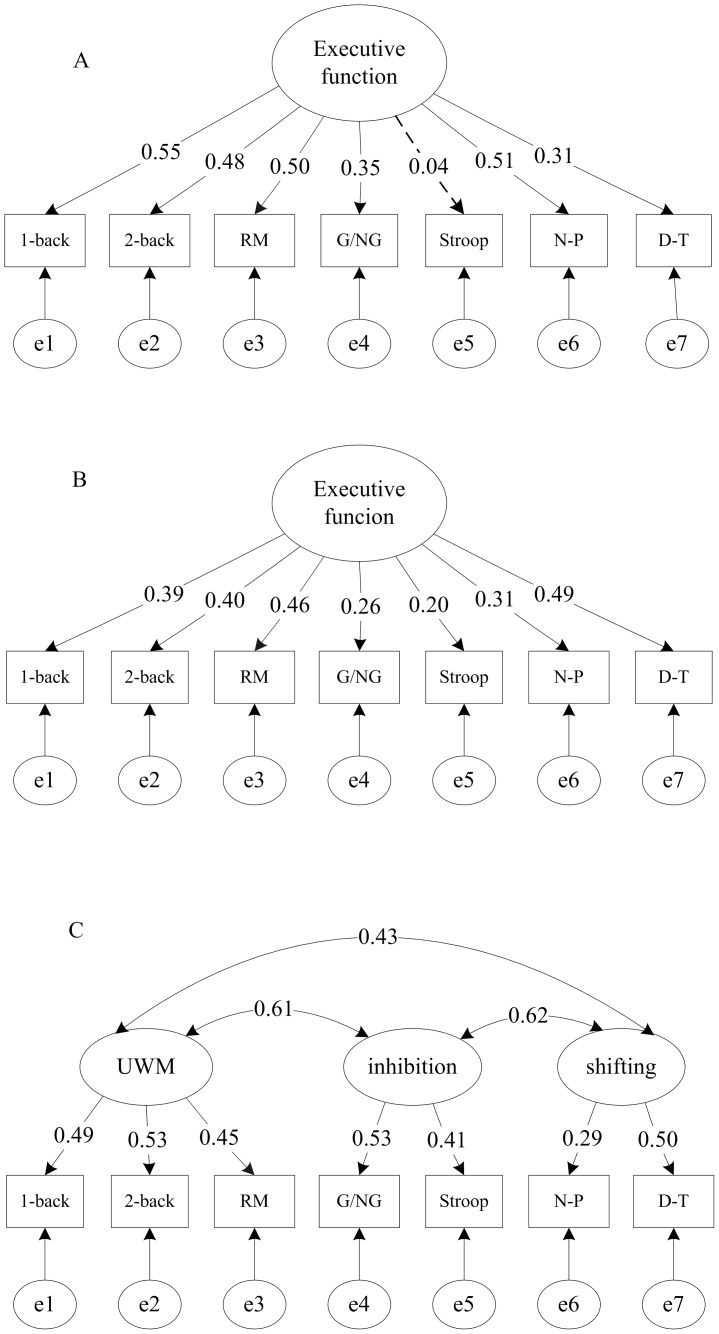
Although it has been argued that the structure of executive function (EF) may change developmentally, there is little empirical research to examine this view in middle childhood and adolescence. The main objective of this study was to examine developmental changes in the component structure of EF in a large sample (N = 457) of 7-15 year olds. Participants completed batteries of tasks that measured three components of EF: updating working memory (UWM), inhibition, and shifting. Confirmatory factor analysis (CFA) was used to test five alternative models in 7-9 year olds, 10-12 year olds, and 13-15 year olds. The results of CFA showed that a single-factor EF model best explained EF performance in 7-9-year-old and 10-12-year-old groups, namely unitary EF, though this single factor explained different amounts of variance at these two ages. In contrast, a three-factor model that included UWM, inhibition, and shifting best accounted for the data from 13-15 year olds, namely diverse EF. In sum, during middle childhood, putative measures of UWM, inhibition, and shifting may rely on similar underlying cognitive processes. Importantly, our findings suggest that developmental dissociations in these three EF components do not emerge until children transition into adolescence. These findings provided empirical evidence for the development of EF structure which progressed from unity to diversity during middle childhood and adolescence.
Overview
The claims and statistics of this paper haven’t been checked yet.
Free: it reads the open-access text and checks the first 5 claims that cite a source we can check. Create a free account to check every claim.
Integrity signals
Registry
Cites
Statistics
Figures
Verification
Claims the paper makes
The claims and statistics of this paper haven’t been checked yet.
Free: it reads the open-access text and checks the first 5 claims that cite a source we can check. Create a free account to check every claim.
Claims other papers make about this one
Each is checked against this paper’s own text: does it say what the citing paper says it does?
The source backs part of the claim, not all of it — or backs it for a different population, condition or comparison.
In the citing paper
“Since that initial study, this psychometric latent variable approach has been used in a large number of studies to show that unity and diversity of CC is evident across samples and ages (e.g., [34–41]), although there are some studies that suggest more unity (higher correlations between factors) in early childhood [35, 42–44].”
From The role of prefrontal cortex in cognitive control and executive function (2022) · cites this paper as [35]
Experimental — accuracy not yet measured
Self-check
Percentages, sums and reported differences re-computed from the paper’s own numbers.
The self-check needs the paper’s full text.
Citations
Cites
Significance tests and goodness of fit in the analysis of covariance structures.
Bentler, P. M., & Bonett, D. G. (1980) · Psychological Bulletin · doi:10.1037//0033-2909.88.3.588 · Cited by 19,023 · cited 7×
“Models were considered to be good fits with non-significant x2 values at the 0.05 level, x2/df of less than 2, CFI of more than 0.90, RMSEA of less than 0.08, and smaller AIC values [38].”
MethodInfluentialMiyake, A., Friedman, N. P., Emerson, M. J., Witzki, A. H., Howerter, A., & Wager, T. D. (2000) · Cognitive Psychology · doi:10.1006/cogp.1999.0734 · Cited by 15,798 · cited 7×
“Following the approach of Miyake and his colleagues [2,12], we used tasks that were designed to tap a single EF component while placing minimal demands on other EF components.”
BackgroundMethodResultInfluentialAn Integrative Theory of Prefrontal Cortex Function
Miller, E. K., & Cohen, J. D. (2001) · Annual Review of Neuroscience · doi:10.1146/annurev.neuro.24.1.167 · Cited by 12,803 · cited 1×
“Executive function (EF) is the ability to monitor and regulate different types of cognition and behavior to achieve specific internal goals [1–2].”
BackgroundSchermelleh-Engel, K., Moosbrugger, H., & Müller, H. (2003) · Department of Psychology - University of Koblenz-Landau · doi:10.23668/psycharchives.12784 · Cited by 8,975
Brain development during childhood and adolescence: a longitudinal MRI study
Giedd, J. N., Blumenthal, J., Jeffries, N. O., Castellanos, F. X., Liu, H., Zijdenbos, A., Paus, T., Evans, A. C., & Rapoport, J. L. (1999) · Nature Neuroscience · doi:10.1038/13158 · Cited by 5,552 · cited 1×
“From the structural perspective, longitudinal neuroimaging studies have demonstrated that gray matter in the PFC increased throughout childhood with a maximum size occurring at approximately 12 years, followed by a sharp loss after 12 years of age [44].”
BackgroundCurran, P. J., West, S. G., & Finch, J. F. (1996) · Psychological Methods · doi:10.1037/1082-989x.1.1.16 · Cited by 5,512 · cited 1×
“, absolute value of skewness ,2 and kurtosis ,7) [39].”
BackgroundCosts of a predictible switch between simple cognitive tasks.
Rogers, R. D., & Monsell, S. (1995) · Journal of Experimental Psychology: General · doi:10.1037/0096-3445.124.2.207 · Cited by 3,170 · cited 3×
“Second, we followed the same procedures used in previous studies [28,35].”
MethodResultMonsell, S. (2003) · Trends in Cognitive Sciences · doi:10.1016/s1364-6613(03)00028-7 · Cited by 2,984
Storage and Executive Processes in the Frontal Lobes
Smith, E. E., & Jonides, J. (1999) · Science · doi:10.1126/science.283.5408.1657 · Cited by 2,834
Executive function in preschoolers: A review using an integrative framework.
Garon, N., Bryson, S. E., & Smith, I. M. (2008) · Psychological Bulletin · doi:10.1037/0033-2909.134.1.31 · Cited by 2,695 · cited 2×
“EF is often linked to the functioning of the prefrontal cortex (PFC) [8–9], and the development of EF appears to be closely linked to the development of PFC [29].”
Background
Research works printed but not linked: 2
- Smith EE, Jonides J (1999) Storage and executive processes in the frontal lobes. Science 283(5408): 1657– 1661. 10073923 · DOI · Paper page
- Zhang HC, Wang XP (1898) standardization research on Raven’s standard progressice matrices in China. Acta Psychology Sinica 21(2): 113– 121.
Cited by
The role of prefrontal cortex in cognitive control and executive function
Friedman, N. P., & Robbins, T. W. (2022) · Neuropsychopharmacology · doi:10.1038/s41386-021-01132-0 · Cited by 1,737
Karr, J. E., Areshenkoff, C. N., Rast, P., Hofer, S. M., Iverson, G. L., & Garcia-Barrera, M. A. (2018) · Psychological Bulletin · doi:10.1037/bul0000160 · Cited by 637
“…used just two indicators for inhibition (Duan et al., 2010; Lambek & Shevlin, 2011; Lehto et al., 2003; Rose et al., 2012; Usai et al., 2014; Xu et al., 2013), six studies used just two indicators for updating/working memory (Agostino et al., 2010; Duan et al., 2010; Lambek & Shevlin, 2011;…”
InfluentialThompson, W. K., Barch, D. M., Bjork, J. M., Gonzalez, R., Nagel, B. J., Nixon, S. J., & Luciana, M. (2019) · Developmental Cognitive Neuroscience · doi:10.1016/j.dcn.2018.12.004 · Cited by 227
“In contrast, (8) examined a sample of 457 715 year-old Chinese children from low SES backgrounds and found that a single factor”
BackgroundMinimal coherence among varied theory of mind measures in childhood and adulthood
Warnell, K. R., & Redcay, E. (2019) · Cognition · doi:10.1016/j.cognition.2019.06.009 · Cited by 156
Normative data on the n-back task for children and young adolescents
Pelegrina, S., Lechuga, M. T., García-Madruga, J. A., Elosúa, M. R., Macizo, P., Carreiras, M., Fuentes, L. J., & Bajo, M. T. (2015) · Frontiers in Psychology · doi:10.3389/fpsyg.2015.01544 · Cited by 155
“It has been shown that executive functions component processes may develop at different rates (Huizinga et al., 2006; Best et al., 2009; Xu et al., 2013).”
BackgroundExecutive Function: Implications for Education
Zelazo, P. D., Blair, C., & Willoughby, M. T. (n.d.) · University of North Texas Digital Library (University of North Texas) · Cited by 187
Campbell, S. B., Denham, S. A., Howarth, G. Z., Jones, S. M., Whittaker, J. V., Williford, A. P., Willoughby, M. T., Yudron, M., & Darling-Churchill, K. (2016) · Journal of Applied Developmental Psychology · doi:10.1016/j.appdev.2016.01.008 · Cited by 175
Lecce, S., Bianco, F., Devine, R. T., & Hughes, C. (2017) · Journal of Experimental Child Psychology · doi:10.1016/j.jecp.2017.06.011 · Cited by 126
Metacognition matters in many ways
Kuhn, D. (2022) · Educational Psychologist · doi:10.1080/00461520.2021.1988603 · Cited by 76
von Bastian, C. C., Blais, C., Brewer, G. A., Gyurkovics, M., Hedge, C., Kałamała, P., Meier, M. E., Oberauer, K., Rey-Mermet, A., Rouder, J. N., et al. (2020) · doi:10.31234/osf.io/x3b9k · Cited by 104
Early Executive Function at Age Two Predicts Emergent Mathematics and Literacy at Age Five
Mulder, H., Verhagen, J., Van der Ven, S. H. G., Slot, P. L., & Leseman, P. P. M. (2017) · Frontiers in Psychology · doi:10.3389/fpsyg.2017.01706 · Cited by 81
“Three such studies have shown that a single latent EF factor fitted the data best up until middle childhood, while multiple latent factors proved a better fit in early adolescence (Shing et al., 2010; Lee et al., 2013; Xu et al., 2013).”
BackgroundExecutive function in children born preterm: Risk factors and implications for outcome
Taylor, H. G., & Clark, C. A. C. (2016) · Seminars in Perinatology · doi:10.1053/j.semperi.2016.09.004 · Cited by 101
Carriedo, N., Corral, A., Montoro, P. R., Herrero, L., Ballestrino, P., & Sebastián, I. (2016) · PLoS ONE · doi:10.1371/journal.pone.0150289 · Cited by 100
“Therefore, analysis by age could be showing that, given that updating information in WM and cognitive inhibition—both related to executive functioning—are both still developing until late adolescence (and some processes related to inhibition even far beyond that stage) [55, 56], at the age of 11, children could not be…”
BackgroundThe factor structure of executive function in childhood and adolescence.
Laureys, F., De Waelle, S., Barendse, M. T., Lenoir, M., & Deconinck, F. J. A. (2022) · Intelligence · doi:10.1016/j.intell.2021.101600 · Cited by 92
Development of the updating executive function: From 7-year-olds to young adults.
Carriedo, N., Corral, A., Montoro, P. R., Herrero, L., & Rucián, M. (2016) · Developmental Psychology · doi:10.1037/dev0000091 · Cited by 95
Developmental transformations in the structure of executive functions
Hartung, J., Engelhardt, L. E., Thibodeaux, M. L., Harden, K. P., & Tucker-Drob, E. M. (2020) · Journal of Experimental Child Psychology · doi:10.1016/j.jecp.2019.104681 · Cited by 78
Cognitive effects of music and dance training in children.
LaPlume, A. A., & Wiseheart, M. (2018) · Archives of Scientific Psychology · doi:10.1037/arc0000048 · Cited by 80
“…(2013) Task switching: Local switch cost Unpredictable switching Color–Shape .78 Friedman et al. (2006) Predictable switching Quantity-Identity .77d Xu et al. (2013) Processing speed Psychomotor speed Box Completion .97c .78h Fristoe, Salthouse, & Woodard (1997); Salthouse (1994) Perceptual…”
BackgroundInfluentialTrait anxiety and adolescent's academic achievement: The role of executive function
Alfonso, S. V., & Lonigan, C. J. (2020) · Learning and Individual Differences · doi:10.1016/j.lindif.2020.101941 · Cited by 66
Hung, C. O., & Loh, E. K. Y. (2020) · Educational Psychology · doi:10.1080/01443410.2020.1734187 · Cited by 60
Development and plasticity of executive functions: A value-based account
Ganesan, K., & Steinbeis, N. (2021) · Current Opinion in Psychology · doi:10.1016/j.copsyc.2021.09.012 · Cited by 57
Barber, A. T., Cartwright, K. B., Stapleton, L. M., Klauda, S. L., Archer, C. J., & Smith, P. (2020) · Contemporary Educational Psychology · doi:10.1016/j.cedpsych.2020.101848 · Cited by 48
Research on Human Plasticity in Adulthood
Kühn, S., & Lindenberger, U. (2015) · Elsevier eBooks · doi:10.1016/b978-0-12-411469-2.00006-6 · Cited by 45
“…the structure of executive functions progresses from unity to diversity during middle childhood and adolescence, indicating a higher differentiation over the course of development (Shing, Lindenberger, Diamond, Li, & Davidson, 2010; Span, Ridderinkhof, & van der Molen, 2004; F. Xu et al., 2013).”
BackgroundYeung, M. K.-C. (2020) · NeuroImage · doi:10.1016/j.neuroimage.2020.117672 · Cited by 41
Cognitive Aspects of Pragmatic Disorders
Cummings, L. (2017) · Perspectives in pragmatics, psychology & philosophy · doi:10.1007/978-3-319-47489-2_22 · Cited by 39
Cognitive regulation, not behavior regulation, predicts learning
Modrek, A., Kuhn, D., Conway, A., & Arvidsson, T. S. (2017) · Learning and Instruction · doi:10.1016/j.learninstruc.2017.12.001 · Cited by 39
Longitudinal development of executive function from infancy to late childhood
Broomell, A. P. R., & Bell, M. A. (2022) · Cognitive Development · doi:10.1016/j.cogdev.2022.101229 · Cited by 38
Schiebener, J., García-Arias, M., García-Villamisar, D. A., Truffino, J. C., & Brand, M. (2014) · Child Neuropsychology · doi:10.1080/09297049.2014.934216 · Cited by 37
“Both domains improve from childhood to young adulthood (e.g., Klingberg, Forssberg, & Westerberg, 2002; Raven, 2000; Salthouse, 2004; Siegel & Ryan, 1989; Xu et al., 2013).”
BackgroundApproche développementale des fonctions exécutives : du bébé à l’adolescence
Fourneret, P., & Portes, V. D. (2016) · Archives de Pédiatrie · doi:10.1016/j.arcped.2016.10.003 · Cited by 38
Malone, S. A., Pritchard, V. E., Heron‐Delaney, M., Burgoyne, K., Lervåg, A., & Hulme, C. (2019) · Journal of Experimental Child Psychology · doi:10.1016/j.jecp.2019.02.009 · Cited by 36
Younger, J. W., O’Laughlin, K. D., Anguera, J. A., Bunge, S. A., Ferrer, E. E., Hoeft, F., McCandliss, B. D., Mishra, J., Rosenberg‐Lee, M., Gazzaley, A. H., et al. (2023) · Frontiers in Human Neuroscience · doi:10.3389/fnhum.2023.1195013 · Cited by 36
Yangüez, M., Bediou, B., Chanal, J. P., & Bavelier, D. (2024) · Psychological Review · doi:10.1037/rev0000434 · Cited by 38
Sambol, S., Suleyman, E., Scarfo, J., & Ball, M. (2023) · Acta Psychologica · doi:10.1016/j.actpsy.2023.103934 · Cited by 34
Ren, X., SCHWEIZER, K. W., Wang, T., Chu, P., & Gong, Q. L. (2017) · Acta Psychologica · doi:10.1016/j.actpsy.2017.09.002 · Cited by 33
“Previous research collecting the Stroop task data showed, at least, low to modest correlations with other EF and intelligence measures (e.g. Friedman et al., 2006; Unsworth & Spillers, 2010; Xu et al., 2013).”
Self-citationΑνδρέου, Μ., Tsimpli, I. M., Masoura, E. V., & Agathopoulou, E. (2021) · Frontiers in Psychology · doi:10.3389/fpsyg.2020.613992 · Cited by 32
Gustavson, D. E., Reynolds, C. A., Corley, R. P., Wadsworth, S. J., Hewitt, J. K., & Friedman, N. P. (2022) · Journal of Experimental Psychology General · doi:10.1037/xge0001168 · Cited by 30
Chaku, N., Barry, K. R., Fowle, J., & Hoyt, L. T. (2022) · Developmental Science · doi:10.1111/desc.13256 · Cited by 30
Executive abilities in children with congenital visual impairment in mid-childhood
Bathelt, J., de Haan, M. D. H., Salt, A., & Dale, N. (2016) · Child Neuropsychology · doi:10.1080/09297049.2016.1240158 · Cited by 30
“Xu et al. (2013) demonstrated that from 5 to 7 and 8 to 11 years of age, children’s performance on different EF tasks is explained best by a single-factor model rather than the three-factor model of working memory, inhibition, and shifting commonly described for adults (Miyake et al., 2000).”
BackgroundWei, W., Guo, L., Georgiou, G. K., Tavouktsoglou, A., & Deng, C. (2018) · Frontiers in Psychology · doi:10.3389/fpsyg.2018.01037 · Cited by 29
Ionescu, T., Goldstone, R. L., Rogobete, D., & Ţăranu, M. (2024) · Journal of Cognition · doi:10.5334/joc.403 · Cited by 28
Noroozi, M. O., Singh, I., & Fazel, M. S. (2018) · Evidence-Based Mental Health · doi:10.1136/ebmental-2018-300032 · Cited by 27
Development of strategic social information seeking: Implications for cumulative culture
Blakey, K. H., Rafetseder, E., Atkinson, M., Renner, E., Cowan-Forsythe, F., Sati, S. J., & Caldwell, C. A. (2021) · PLoS ONE · doi:10.1371/journal.pone.0256605 · Cited by 27
Menu, I., Rezende, G., Stanc, L. L., Borst, G., & Cachia, A. (2022) · Scientific Reports · doi:10.1038/s41598-022-17695-x · Cited by 27
“Previous SEM studies reported a differentiation of EF organization between middle childhood and adolescence 15,21,24,28–31 .”
BackgroundComputerized response inhibition training for children with trichotillomania
Lee, H., Espil, F. M., Bauer, C. C., Siwiec, S. G., & Woods, D. W. (2018) · Psychiatry Research · doi:10.1016/j.psychres.2017.12.070 · Cited by 27
“, 2000) remains undifferentiated in early childhood and become more specific and dissociable with age (Xu et al., 2013).”
BackgroundMilaré, C. A. R., Kozasa, E. H., Lacerda, S. S., Barrichello, C., Tobo, P. R., & Horta, A. L. D. M. (2021) · Frontiers in Psychology · doi:10.3389/fpsyg.2021.576311 · Cited by 26
“Among EFs, working memory, shifting and inhibition are some of the most studied among children, with dissociations reported in the age group studied here (Xu et al., 2013).”
BackgroundAn Exploration of the Factor Structure of Executive Functioning in Children
Messer, D. J., Bernardi, M., Botting, N., Hill, E. L., Nash, G., Leonard, H. C., & Henry, L. A. (2018) · Frontiers in Psychology · doi:10.3389/fpsyg.2018.01179 · Cited by 26
Moshel, M. L., Warburton, W., Thomasius, R., & Paschke, K. (2025) · Journal of Medical Internet Research · doi:10.2196/68571 · Cited by 23
“Impairments in healthy executive functioning, a crucial part of brain development during childhood and adolescence [39], can have far-reaching implications for socioeconomic status, including academic success, school dropout rates, overall health, and quality of life [40-43].”
Fombouchet, Y., Lannegrand‐Willems, L., & Lucenet, J. (2024) · Journal of Adolescence · doi:10.1002/jad.12334 · Cited by 24
Executive functioning profiles and mathematical and reading achievement in Grades 2, 6, and 10
Carriedo, N., Rodríguez‐Villagra, O. A., Pérez, L., & Iglesias-Sarmiento, V. (2024) · Journal of School Psychology · doi:10.1016/j.jsp.2024.101353 · Cited by 25
Clinchard, C., Casas, B. R., & Kim‐Spoon, J. (2024) · Development and Psychopathology · doi:10.1017/s0954579424001457 · Cited by 23
Keeping Pace with Adolescent Asthma: A Practical Approach to Optimizing Care
Cheng, Z. R., Tan, Y. H., Teoh, O. H., & Lee, J. H. (2021) · Pulmonary Therapy · doi:10.1007/s41030-021-00177-2 · Cited by 23
A Rational Account of Cognitive Control Development in Childhood
Steinbeis, N. (2023) · Annual Review of Developmental Psychology · doi:10.1146/annurev-devpsych-120221-040058 · Cited by 22
Johann, V. E., & Karbach, J. (2021) · Psychological Research · doi:10.1007/s00426-021-01623-1 · Cited by 20
“Studies with primary school children also reported a structure with a common EF factor (Brydges et al., 2012; Xu et al., 2013) or two EF factors (Lee et al.”
BackgroundSelf-Regulation in Childhood: A Developmental Perspective
Ziv, Y., Benita, M., & Sofri, I. (2017) · Autism and child psychopathology series · doi:10.1007/978-3-319-64592-6_10 · Cited by 21
Lavigne-Cerván, R., Cuenca, A. M. G., Romero-González, M., & Sánchez, M. (2020) · International Journal of Environmental Research and Public Health · doi:10.3390/ijerph17249286 · Cited by 20
“In later childhood and adolescence, the overall cohesion between these skills changes [31,32], evolving in a non-unitary way, which leads to the need to consider the components of EFs separately when researching older children.”
BackgroundDevelopmental profile of executive functioning in school-age children from Northeast Brazil.
Guerra, A., Hazin, I., Guerra, Y., Roulin, J.-L., Le Gall, D., & Roy, A. (2021) · Frontiers in Psychology · doi:10.3389/fpsyg.2020.596075 · Cited by 19
Effects of the Enriched Sports Activities-Program on Executive Functions in Italian Children
Alesi, M., Giordano, G., Giaccone, M., Basile, M., Costa, S., & Bianco, A. (2020) · Journal of Functional Morphology and Kinesiology · doi:10.3390/jfmk5020026 · Cited by 18
Profiles of executive functions in middle childhood and prediction of later self-regulation
Brandt, A. U., Bondü, R., & Elsner, B. (2024) · Frontiers in Psychology · doi:10.3389/fpsyg.2024.1379126 · Cited by 18
“However, for the oldest participants (13–15 years) the cool EFs inhibition, working-memory updating, and cognitive flexibility became distinguishable, and a three-factor model provided an improved fit.”
BackgroundInfluentialRašková, B., Hapčová, M., Celušáková, H., Franková, D., Kopčíková, M., Demkaninová, D., Januška, J., & Babinská, K. (2025) · Research on Child and Adolescent Psychopathology · doi:10.1007/s10802-025-01341-x · Cited by 18
“Some studies with preschoolers support a single general factor model (Brydges et al., 2014; Laureys et al., 2022; Xu et al., 2013; Wiebe et al., 2011), while other studies report a two-factor solution, where one factor is working memory and the other is inhibition (Monette et al., 2015; van der Ven…”
Rizeq, J., Flora, D. B., & Toplak, M. E. (2017) · The Clinical Neuropsychologist · doi:10.1080/13854046.2017.1317034 · Cited by 16
Grobe, S. E., Könen, T., David, C., Grüneisen, L., Dörrenbächer‐Ulrich, L., Perels, F., & Karbach, J. (2024) · Journal of Experimental Child Psychology · doi:10.1016/j.jecp.2024.106014 · Cited by 16
Development of Executive Function Skills in Childhood: Relevance for Important Life Outcomes
Happaney, K. R., & Zelazo, P. D. (2022) · Cambridge University Press eBooks · doi:10.1017/9781108399838.023 · Cited by 15
Menu, I., Rezende, G., Stanc, L. L., Borst, G., & Cachia, A. (2022) · Cognitive Development · doi:10.1016/j.cogdev.2022.101231 · Cited by 16
Pan, J. J., Sawyer, K. S., McDonough, E., Slotpole, L., & Gansler, D. A. (2018) · Developmental Neuropsychology · doi:10.1080/87565641.2018.1516770 · Cited by 15
“, 2005; Yamamoto & Imai-Matsumura, 2017), and others finding occasional marginal differences between males and females in child or adolescent populations (e.g., Newcorn et al., 2001; Xu et al., 2013).”
BackgroundFinch, J. E., & Obradović, J. (2017) · Learning and Individual Differences · doi:10.1016/j.lindif.2017.03.002 · Cited by 15
Povezanost izvršnih funkcija i jezika u odrasloj dobi
Edukacijsko-rehabilitacijski fakultet, S. U. Z., Krilčić, P., Šimleša, S., Edukacijsko-rehabilitacijski fakultet, S. U. Z., Olujić, M., Edukacijsko-rehabilitacijski fakultet, S. U. Z., Kraljević, J. K., & Edukacijsko-rehabilitacijski fakultet, S. U. Z. (2017) · Suvremena psihologija · doi:10.21465/2017-sp-201-04 · Cited by 14
Age-related changes of cognitive flexibility and planning skills in school-age Moroccan children
Er-Rafiqi, M., Guerra, A. B., Gall, D. L., & Roy, A. (2021) · Applied Neuropsychology Child · doi:10.1080/21622965.2021.1934471 · Cited by 14
“…studies conducted in Europe (Brocki & Bohlin, 2004; Schroeter et al., 2004), Africa (Bellaj et al., 2016; Willoughby et al., 2019), Asia (China – Xu et al., 2013) and the United States (Adleman et al., 2002; Davidson et al., 2006) report the idea of a progressive and continued development of…”
BackgroundResultFilippetti, V. A., & López, M. B. (2017) · Avances en Psicología Latinoamericana · doi:10.12804/revistas.urosario.edu.co/apl/a.4724 · Cited by 15
“…en poblaciones infantiles (Arán Filippetti, 2013; Brocki & Bohlin, 2004; Lehto et al., 2003; Levin et al.,1991; Welsh et al., 1991), como en adolescentes (Xu et al., 2013) y adultas (Boone, Pontón, Gorsuch, González & Miller, 1998; Miyake et al., 2000; Pineda, Merchán, Rosselli & Ardila, 2000).”
BackgroundJansen, P. (2014) · Sports Orthopaedics and Traumatology · doi:10.1016/j.orthtr.2014.02.001 · Cited by 14
“[47] F.”
BackgroundHasan, F., Hart, C. M., Graham, S. A., & Kam, J. W. Y. (2023) · Journal of Experimental Child Psychology · doi:10.1016/j.jecp.2023.105832 · Cited by 13
Modrek, A., & Ramirez, G. (2020) · Metacognition and Learning · doi:10.1007/s11409-020-09242-8 · Cited by 13
Johann, V. E., Enke, S., Gunzenhauser, C., Könen, T., Saalbach, H., & Karbach, J. (2022) · Journal of Experimental Child Psychology · doi:10.1016/j.jecp.2022.105515 · Cited by 13
The influence of relative pubertal maturity on executive function development in adolescent girls
Gerván, P., Oláh, G., Utczás, K., Tróznai, Z., Berencsi, A., Gombos, F., & Kovács, I. (2024) · Scientific Reports · doi:10.1038/s41598-024-71768-7 · Cited by 13
Zanini, G. D. A. V., Miranda, M. C., Cogo‐Moreira, H., Nouri, A., Fernández, A. L., & Pompéia, S. (2021) · Frontiers in Psychology · doi:10.3389/fpsyg.2021.627219 · Cited by 13
Unpacking pre-K classroom organization: Types, variation, and links to school readiness gains
Moffett, L., Weissman, A. K., Weiland, C., McCormick, M. P., Hsueh, J., Snow, C. E., & Sachs, J. (2021) · Journal of Applied Developmental Psychology · doi:10.1016/j.appdev.2021.101346 · Cited by 12
The Role of Pre-Primary Classes on School-Age Cognition in Rural Nepal
Jaganath, D., Khatry, S. K., Murray‐Kolb, L. E., LeClerq, S. C., & Christian, P. S. (2014) · The Journal of Pediatrics · doi:10.1016/j.jpeds.2014.11.031 · Cited by 12
Stuck on pain? Assessing children’s vigilance and awareness of pain sensations
Heathcote, L. C., & Simons, L. E. (2020) · European Journal of Pain · doi:10.1002/ejp.1581 · Cited by 12
“More broadly, findings indicate that dissociations in executive functioning capacities, for example updating working memory, inhibition and shifting, all of which can influence attentional processes, do not emerge until early adolescence (Xu et al., 2013).”
BackgroundBarber, A. T., Klauda, S. L., Wang, W., Cartwright, K. B., & Cutting, L. E. (2020) · Journal of Learning Disabilities · doi:10.1177/0022219420983247 · Cited by 12
“The tripartite cognitive structure of EF typically does not emerge until mid-to-late adolescence (Lee et al., 2013; Xu et al., 2013), with a unitary structure typical of younger children up to 12 years of age (Wiebe et al., 2008; Xu et al., 2013).”
BackgroundDevelopmental Changes in the Structure of Executive Function from Early To Late Adolescence
Ma, J., Liu, X., Pan, T., Ji, L., & Zhang, W. (2025) · Journal of Youth and Adolescence · doi:10.1007/s10964-025-02293-7 · Cited by 11
“…and identified a one-or two-factor structure in late child - hood and early adolescence, with a shift toward a three-factor model emerging by middle to late adolescence (e.g., 11–15 years old; Lee et al., 2013; Xu et al., 2013), comprehensive longitudinal analyses remain scarce around age 10 to 18.”
Development and Differentiation of Executive Function Structure
Yangüez, M., Bediou, B., Bavelier, D., & Chanal, J. P. (2025) · Journal of Cognition and Development · doi:10.1080/15248372.2025.2547621 · Cited by 11
“These results are well-aligned with the bulk of literature that has found stronger support for a three-factor structure as of preadolescence—that is, after 11 years of age (Duan et al., 2010; Lee et al., 2013; Rose et al., 2012; Xu et al., 2013).”
InfluentialEveraert, E., Boerma, T., Selten, I. S., Vorstman, J. A. S., & Wijnen, F. N. K. (2021) · Developmental Review · doi:10.1016/j.dr.2021.100962 · Cited by 11
Serious game for cognitive assessment. Validation of a psychometric embedded test
Zuluaga, C. A. M., Quimbaya, J., & Herrera-Marmolejo, A. (2025) · International Journal of Serious Games · doi:10.17083/ijsg.v11i3.667 · Cited by 10
Messer, D. J., Kearvell‐White, J., Danielsson, H., Faulkner, D. M., Henry, L. A., & Ibbotson, P. (2022) · British Journal of Developmental Psychology · doi:10.1111/bjdp.12418 · Cited by 10
Kurgansky, А. V. (2022) · Neuroscience and Behavioral Physiology · doi:10.1007/s11055-022-01237-z · Cited by 11
Sentence contexts and cloze probabilities for Brazilian Portuguese children and adolescents
Rossi, N. F., Fernandes, C., Moreira, C. S., Giacheti, C. M., Sicchieri, B. B., Pinheiro, A. P., & Sampaio, A. (2020) · PLoS ONE · doi:10.1371/journal.pone.0236388 · Cited by 9
“It is well established that inhibitory skills increase with age [64, 65] and that children show a less effective use of inhibitory mechanisms compared to adolescents, which develop rapidly during early school years [66, 67].”
BackgroundAhmadi, A., McClelland, M. M., Pourmohamadreza‐Tajrishi, M., Geldhof, J. G., Rothwell, D. W., & Hatfield, B. E. (2025) · Child Neuropsychology · doi:10.1080/09297049.2025.2481951 · Cited by 8
“It aligns with previous studies reporting a unitary structure of EF in children within the age range of those in the current study (Brydges et al., 2014; Carlson et al., 2014; Fuhs & Day, 2011; Laureys et al., 2022; Willoughby et al., 2012; Xu et al., 2013).”
InfluentialCarriedo, N., Rodríguez‐Villagra, O. A., Moriano, J. A., Montoro, P. R., & Iglesias-Sarmiento, V. (2025) · PLoS ONE · doi:10.1371/journal.pone.0316347 · Cited by 9
Knopik, V. S., Micalizzi, L., Marceau, K., Loviska, A. M., Yu, L., Bien, A., Rolan, E. P., Evans, A. S., Palmer, R. H. C., & Heath, A. C. (2022) · Development and Psychopathology · doi:10.1017/s095457942200075x · Cited by 8
Er-Rafiqi, M. (2020) · theses.fr (ABES) · doi:10.70675/98044e86za219z45c9zb512z10dcf70778b0 · Cited by 8
Yu, Y. H., Ma, Q., & Groth, S. W. (2022) · Pediatric Research · doi:10.1038/s41390-022-02084-x · Cited by 7
“✉email: yang_yu@urmc.rochester.edu www.nature.com/pr 1 2 3 4 5 6 7 8 9 0 () ;,: that may generate positive outcomes in the short term but carry uncertain or negative long-term consequences.5 Compelling evidence supports childhood and adolescence as critical developmental stages of EF.2,6 During these two stages, the p…”
BackgroundInfluentialSegura, I. A., Cogo‐Moreira, H., Nouri, A., Miranda, M. C., & Pompéia, S. (2023) · Journal of Cognition and Development · doi:10.1080/15248372.2023.2245471 · Cited by 6
“…Friedman, Miyake, Robinson, & Hewitt, 2011; Hartung, Engelhardt, Thibodeaux, Harden, & Tucker-Drob, 2020; Segura et al., 2022; Wu et al., 2011; Xu et al., 2013, 13 to 15 years old and all ages collapsed; Zanini et al., 2021), while longitudinal studies indicate that a differentiation into…”
BackgroundThe interplay of hot and cool executive functions: Implications for a unified executive framework
Sambol, S., Suleyman, E., & Ball, M. (2025) · Cognitive Systems Research · doi:10.1016/j.cogsys.2025.101360 · Cited by 6
“Previous re-evaluations of the Unity/Diversity Framework have consistently supported the updating factor, akin to working memory, across diverse age groups, including children (van der Ven et al., 2013), adolescents (Xu et al., 2013), and adults (Ito et al., 2015).”
Confirmatory factor analysis of the BRIEF2 in a sample of youth with Down syndrome
Soltani, A., Schworer, E. K., Jacobson, L. A., Channell, M. M., Lee, N.-H., Faught, G. G., Grzadzinski, R., Fidler, D. J., & Esbensen, A. J. (2022) · Journal of Intellectual Disability Research · doi:10.1111/jir.13000 · Cited by 6
Georgiou, G. K., & Zhang, L. (2023) · Behavioral Sciences · doi:10.3390/bs13100823 · Cited by 6
“We mention this because the structure of EF as well as the relation of the EF components with academic achievement may change over time (see [54,55]).”
BackgroundCosta, S., Bianco, A., Scifo, L., & Alesi, M. (2020) · Current Psychology · doi:10.1007/s12144-020-00733-0 · Cited by 6
Structural brain basis of latent factors of executive functions in childhood
Li, Y., Ganesan, K., Smid, C. R., Thompson, A., Cañigueral, R., Royer, J., Bernhardt, B. C., & Steinbeis, N. (2024) · Developmental Cognitive Neuroscience · doi:10.1016/j.dcn.2024.101504 · Cited by 5
Booker, J. A., Smith, C. L., Bell, M. A., & Dunsmore, J. C. (2026) · Applied Cognitive Psychology · doi:10.1002/acp.70276 · Cited by 6
Segura, I. A., Panjeh, S., Cogo‐Moreira, H., Nouri, A., Miranda, M. C., esmaeili, F., Seyedi, H., & Pompéia, S. (2022) · Current Psychology · doi:10.1007/s12144-022-03974-3 · Cited by 5
“…represent the framework of interest and tested only these three domains, although the age ranges in these studies were different from ours and included older adolescents (Duan et al., 2010; Wu et al., 2011; Xu et al., 2013; Zanini et al., 2021), and also studies in adults (see Karr et al., 2018).”
BackgroundMethodResultInfluentialPotocki, A., Chatelier, M., Dyoniziak, Y., Pylouster, J., & Rouet, J. (2022) · L’Année psychologique · doi:10.3917/anpsy1.231.0091 · Cited by 5
Waelle, S. D. (2021) · Ghent University Academic Bibliography (Ghent University) · doi:10.13140/rg.2.2.29863.06561 · Cited by 5
Unity or Diversity in Executive Functions: Examining the Three‐Factor Model in Young Children
Veraksa, А., Charkhabi, M., Сергеевна, А. М., Dvorskaya, E. V., & Анатольевна, Я. В. (2025) · PsyCh Journal · doi:10.1002/pchj.70055 · Cited by 4
“…in senior preschool-aged and elementary school-aged children (Wiebe et al. 2008, 2011; Hughes et al. 2010; Shing et al. 2010; Willoughby et al. 2010, 2012; Fuhs and Day 2011; Xu et al. 2013; Brydges et al. 2014; Johann et al. 2022; Laureys et al. 2022; Michel and Bimmüller 2023; Grobe et al. 2024).”
Metadata
- Authors
- Xu, F., Han, Y., Sabbagh, M. A., Wang, T., Ren, X., & Li, C.
- Affiliations
- Zhejiang Sci-Tech University (CN)
- Beijing Normal University (CN)
- Queen's University (CA)
- Goethe University Frankfurt (DE)
- Corresponding author
- Xu, Fen
- Han, Yan
- Venue
- PLoS ONE
- Publisher
- Public Library of Science (PLoS)
- Published
- 2013-10-29
- Volume
- 8
- Issue
- 10
- Pages
- e77770
- ISSN
- 1932-6203 (ISSN-L)
- PMC
- PMC3812181
- OpenAlex
- W2100740689
- Cited by
- 128
- References
- 48
- Citations by year
- 2026: 5 · 2025: 13 · 2024: 14 · 2023: 13 · 2022: 18 · 2021: 15 · 2020: 16 · 2019: 3 · 2018: 8 · 2017: 10 · 2016: 7 · 2015: 2 · 2014: 4
- FWCI
- 5.86
- Type
- journal article
- Language
- en
- Open access
- gold
- doi.org
- Locations
- PLoS ONE (publishedVersion, cc-by)
- Europe PMC (PubMed Central) (publishedVersion, cc-by)
- PubMed Central (publishedVersion, cc-by)
- PubMed (publishedVersion)
- RePEc: Research Papers in Economics (submittedVersion)
- DOAJ (DOAJ: Directory of Open Access Journals) (submittedVersion, cc-by-sa)
- Figshare (submittedVersion, cc-by)
- Publication Server of Goethe University Frankfurt am Main (Goethe University Frankfurt) (submittedVersion, cc-by)
- Funders
- National Natural Science Foundation of China (30528027, 31170996, 31028010)
- Natural Science Foundation of Zhejiang Province
- Topics
- Social Sciences › Psychology › Experimental and Cognitive Psychology › Cognitive Abilities and Testing
- Social Sciences › Psychology › Neuropsychology and Physiological Psychology › Developmental and Educational Neuropsychology
- Life Sciences › Neuroscience › Cognitive Neuroscience › Neural and Behavioral Psychology Studies
- Keywords
- executive function, developmental changes, middle childhood, adolescence, inhibition, cognitive flexibility, factor structure, cognitive development
- MeSH terms
- Adolescent, Aging, Attention, Child, Child Development, Female, Humans, Inhibition, Psychological, Male, Memory, Short-Term, Neuropsychological Tests, Reaction Time, Executive Function
About these checks
Registry, retraction, Cites and statistics results are computed, not judged, with one exception: a printed reference that no index lists is read once by a model before it counts as a citation error. Claims are extracted by a model and kept only when their quote appears verbatim in the text; each cited source is then checked, with a model’s help, for whether it says what the claim relies on. Those verdicts can be wrong — read the claim’s quote and the cited source before relying on one.
Statistics and arithmetic are recomputed, not judged.
Confidence bands are shown only for fields calibrated on our annotated test set. None is calibrated yet, so no band is shown.
What counts as a claim ›How we measure confidence ›How we check this ›
Are you an author, or do you see a problem with this page? Request a review
Data sources
Bibliographic data: Semantic Scholar, OpenAlex, Crossref.
Contains information from the Semantic Scholar Academic Graph Datasets, made available under the ODC Attribution License (ODC-BY 1.0).
Semantic Scholar’s data is described in: Kinney, R., et al. (2023). The Semantic Scholar Open Data Platform. arXiv:2301.10140.
