

Associations between Adenotonsillar Hypertrophy, Age, and Obesity in Children with Obstructive Sleep Apnea
Open accessThe DOI matches its Crossref record; 54 of the 55 references it cites were found in a registry or an index.
Abstract
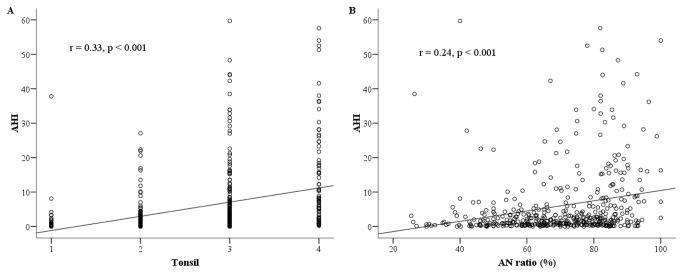
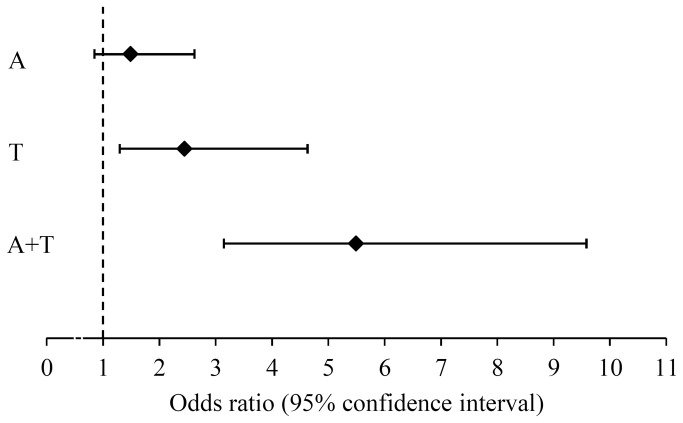
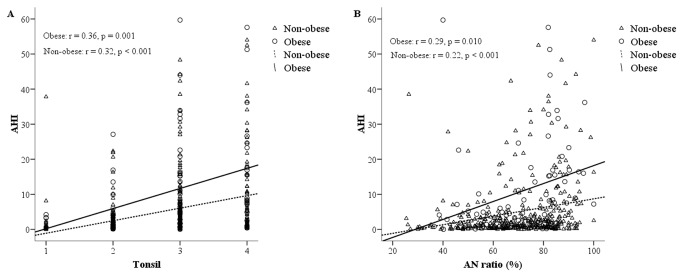
OBJECTIVE: To investigate the contributions of adenoid and tonsil size to childhood obstructive sleep apnea (OSA) and the interactions between adenotonsillar hypertrophy, age, and obesity in children with OSA. METHODS: In total, 495 symptomatic patients were recruited. The patients were assigned to four groups according to age: toddler (age 1-3, n=42), preschool (age 3-6, n=164), school (age 6-12, n=200), and adolescence (age 12-18, n=89). All subjects had tonsil size graded by otolaryngologists, adenoid size determined on lateral radiographs (Fujioka method), and a full-night polysomnography. The apnea-hypopnea index (AHI), adenoid size, and tonsil size were compared in obese and non-obese children in the four age groups. Adjusted odds ratios (ORs) and 95% confidence interval (CI) of adenotonsillar hypertrophy and OSA risk were estimated by multi-logistic regression. RESULTS: The AHI was positively related to tonsil grade (r=0.33, p <0.001) and adenoid size (r=0.24, p <0.01) in all patients. Tonsil grade was positively related to AHI in all four age groups. Adenoid size was positively related to AHI in the toddler, preschool, school groups, but not in the adolescent group (r=0.11, p=0.37). Tonsil grade and adenoid size were both positively related to AHI in obese and non-obese children. In the regression model, obesity (OR=2.89; 95% CI 1.47-5.68), tonsillar hypertrophy (OR=3.15; 95% CI 2.04-4.88), and adenoidal hypertrophy (OR=1.89; 95% CI 1.19-3.00) significantly increased OSA risk. CONCLUSIONS: Adenotonsillar hypertrophy and obesity are the major determinants of OSA in children. However, the influence of adenoid size decreases in adolescence.
Overview
The claims and statistics of this paper haven’t been checked yet.
Free: it reads the open-access text and checks the first 5 claims that cite a source we can check. Create a free account to check every claim.
Integrity signals
Registry
Cites
Statistics
Figures
Verification
Claims the paper makes
The claims and statistics of this paper haven’t been checked yet.
Free: it reads the open-access text and checks the first 5 claims that cite a source we can check. Create a free account to check every claim.
Claims other papers make about this one
Each is checked against this paper’s own text: does it say what the citing paper says it does?
The check wasn’t confident either way, so it gives no verdict — never disputed.
In the citing paper
“Regarding differences by diagnostic criteria, we found significantly higher risks of OSAS in PCOS overall compared with those without PCOS, regardless of diagnostic criteria (45).”
From Obstructive sleep apnea syndrome in polycystic ovary syndrome: a systematic review and meta-analysis (2025) · cites this paper as [45]
Experimental — accuracy not yet measured
Self-check
Percentages, sums and reported differences re-computed from the paper’s own numbers.
The self-check needs the paper’s full text.
Citations
Cites
(2007) · Cited by 6,530
Ohayon, M. M., Carskadon, M. A., Guilleminault, C., & Vitiello, M. V. (2004) · Sleep · doi:10.1093/sleep/27.7.1255 · Cited by 3,349
Diagnosis and Management of Childhood Obstructive Sleep Apnea Syndrome
Marcus, C. L., Brooks, L. J., Draper, K. A., Gozal, D., Halbower, A. C., Jones, J., Schechter, M. S., Sheldon, S. H., Spruyt, K., Ward, S. D., et al. (2012) · Pediatrics · doi:10.1542/peds.2012-1671 · Cited by 2,432
Diagnosis and Management of Childhood Obstructive Sleep Apnea Syndrome
Marcus, C. L., Brooks, L. J., Ward, S. D., Draper, K. A., Gozal, D., Halbower, A. C., Jones, J., Lehmann, C., Schechter, M. S., Sheldon, S., et al. (2012) · Pediatrics · doi:10.1542/peds.2012-1672 · Cited by 1,680
Standards and indications for cardiopulmonary sleep studies in children. American Thoracic Society.
(1996) · American Journal of Respiratory and Critical Care Medicine · doi:10.1164/ajrccm.153.2.8564147 · Cited by 1,180
The AASM Manual for the Scoring of Sleep and Associated Events : Rules
Iber, C. (2007) · Medical Entomology and Zoology · Cited by 929
Bhattacharjee, R., Kheirandish-Gozal, L., Spruyt, K., Mitchell, R. B., Promchiarak, J., Simakajornboon, N., Kaditis, A. G., Splaingard, D., Splaingard, M., Brooks, L. J., et al. (2010) · American Journal of Respiratory and Critical Care Medicine · doi:10.1164/rccm.200912-1930oc · Cited by 745 · cited 1×
“Diagnosis of pediatric OSA was defined as the presence of an apnea/hypopnea index (AHI) ≥ 1 event per hour in the overnight polysomnographic study [7,8,27-29].”
BackgroundSnoring, Apneic Episodes, and Nocturnal Hypoxemia Among Children 6 Months to 6 Years Old
Gislason, T., & Benediktsdóttir, B. (1995) · Chest · doi:10.1378/chest.107.4.963 · Cited by 561
Radiographic evaluation of adenoidal size in children: adenoidal-nasopharyngeal ratio
Fujioka, M., Young, L., & Girdany, B. (1979) · American Journal of Roentgenology · doi:10.2214/ajr.133.3.401 · Cited by 503 · cited 6×
“, is now the most frequently analyzed radiographic parameter in adenoid size assessment [10,11,15,21,41-43].”
BackgroundMethodInfluentialPolysomnographic Characteristics in Normal Preschool and Early School-Aged Children
Montgomery-Downs, H. E., O’Brien, L. M., Gulliver, T. E., & Gozal, D. (2006) · Pediatrics · doi:10.1542/peds.2005-1067 · Cited by 490 · cited 1×
“Subjects were divided into four age groups: toddler (age 1-3), preschool (age 3-6), school (age 6-12), and adolescence (age 12-18) [16-18].”
Background
Cited by
Items 101–191 of 191
Mapping the Fat: How Childhood Obesity and Body Composition Shape Obstructive Sleep Apnoea
Zaffanello, M., Pietrobelli, A., PIACENTINI, G. L., Zoller, T., Nosetti, L. M., Guzzo, A., & Antoniazzi, F. (2025) · Children · doi:10.3390/children12070912 · Cited by 9
“ATH may significantly obstruct the upper airway during sleep, resulting in intermittent apnoeic episodes, oxygen desaturation, and sleep fragmentation [47].”
Gan, Q., Liu, Q., Wu, Y., Zhu, X., Wang, J., Su, X., Zhao, D., Zhang, N., & Wu, K. (2024) · Nature and Science of Sleep · doi:10.2147/nss.s472014 · Cited by 7
Taherifard, E., Taherifard, E., Hosseini‐Bensenjan, M., Sayadi, M., & Haghpanah, S. (2023) · Hemoglobin · doi:10.1080/03630269.2023.2290507 · Cited by 7
Impact of Tonsillectomy on Obesity in Pediatric Patients With Sleep‐Disordered Breathing
Voora, R. S., Carvalho, D., & Jiang, W. (2021) · OTO Open · doi:10.1177/2473974x211059105 · Cited by 8
“It is known that tonsillar hypertrophy and obesity are major determinants of SDB in children and that these 2 factors share a close association as increased adiposity in the upper airway leads to increased opportunity for collapse.(4) Because of an ever-expanding body of literature implicating untreated SDB in a host…”
Balaban, O., Walia, H., Tumin, D., Jatana, K. R., Raman, V. T., & Tobias, J. D. (2016) · International Journal of Pediatric Otorhinolaryngology · doi:10.1016/j.ijporl.2016.10.001 · Cited by 7
Snoring in a cohort of obese children: association with palate position and nocturnal desaturations
Zaffanello, M., PIACENTINI, G. L., Gasperi, E., Maffeis, C., Fava, C., Bonafini, S., Tagetti, A., & Antoniazzi, F. (2016) · Journal of pediatric and neonatal individualized medicine · doi:10.7363/050134 · Cited by 6
“In particular, enlarged tonsil and adenoid size increases the risk for OSAS in these children [16-18].”
BackgroundAssociation between obesity and sleep disorders in primary school children: a cross-sectional study
Melinda, T. F., & Sekartini, R. (2019) · Medical Journal of Indonesia · doi:10.13181/mji.v28i2.2645 · Cited by 6
Ambulatory Blood Pressure Variability after Adenotonsillectomy in Childhood Sleep Apnea
Kang, K., Chiu, S., Weng, W., Lee, P., & Hsu, W. (2022) · The Laryngoscope · doi:10.1002/lary.30058 · Cited by 6
“Adenotonsillectomy (T&A) is the first-line treatment for childhood OSA because hypertrophy of the adenoids and tonsils is associated with childhood OSA.(28,29) T&A provides considerable improvement in OSA and several sleep parameters.”
BackgroundSelf-citationAbulhamail, A., AlShebli, A., Merdad, L., Wali, S., Jastaniah, W. A., & Abaalkhail, B. (2021) · Annals of Hematology · doi:10.1007/s00277-021-04646-1 · Cited by 6
Gunnlaugsson, S., Greco, K. F., Petty, C. R., Sierra, G. C., Stamatiadis, N. P., Thayer, C., Hammond, A., Giancola, L. M., Katwa, U., Simoneau, T., et al. (2021) · Journal of Asthma · doi:10.1080/02770903.2021.1897838 · Cited by 7
“major determinants of OSA (35), the prevalence is relatively equal.”
BackgroundHalder, A. L., & Biswas, S. S. (2022) · BIRDEM Medical Journal · doi:10.3329/birdem.v12i2.59611 · Cited by 5
Berdina, O. N., Михайловна, М. И., Bolshakova, S., Ukhinov, E. B., Sholokhov, L. F., & Rychkova, L. (2023) · The European Physical Journal Special Topics · doi:10.1140/epjs/s11734-023-00777-w · Cited by 7
“Wherein the most common cause of pediatric OSA has been recognized overgrowth of the tonsils and adenoid tissue [7], while”
BackgroundVenkatesha, B. K., Yogeesha, B. S., & Asha, M. N. (2017) · International Journal of Otorhinolaryngology and Head and Neck Surgery · doi:10.18203/issn.2454-5929.ijohns20170444 · Cited by 5
Kahal, H., Kyrou, I., Uthman, O. A., Brown, A., Johnson, S. A., Wall, P. D. H., Metcalfe, A., Tahrani, A. A., & Randeva, H. S. (2017) · Endocrine Abstracts · doi:10.1530/endoabs.50.p339 · Cited by 6
Hypoglossal Nerve Stimulation Outcomes in Pediatric Trisomy 21 Patients with Overweight or Obesity
Mecham, J. C., Gibbs, H. G., House, T., & Scheffler, P. (2024) · The Laryngoscope · doi:10.1002/lary.31832 · Cited by 4
Rilwanu, M. D., Saidu, S. A., Ma’aji, S. M., Danfulani, M., Yunusa, G. H., Hafsat, A.-R. O., Iseh, K. R., & Ahmad, A. (2022) · Asian Journal of Medical Sciences · doi:10.3126/ajms.v13i4.41969 · Cited by 4
Alam, M., Razzak, M. A., Rahman, S. M. A., Islam, M. S., & Akter, S. (2022) · International Journal of Contemporary Pediatrics · doi:10.18203/2349-3291.ijcp20223058 · Cited by 5
“13,15,17 Wide variability in percentage of indications were found in different studies.”
Quelle, N. B., Ansotegui, A. S., Alonso, S. B., Lowy‐Benoliel, A., García-Santiago, S., Ribeiro-Arold, C., & Montalvo, J. I. P. (2023) · Revista de Neurología · doi:10.33588/rn.7609.2023076 · Cited by 7
Prevalence of Obstructive Sleep Apnea in 6–9-Year-Old Children of Visnagar: A Cross-Sectional Study
Fernandes, S., Shah, Z., Agrawal, S., Bafna, Y., Patel, D., & Parmar, D. (2024) · Sleep Medicine Research · doi:10.17241/smr.2023.02054 · Cited by 5
Kang, K., Chen, Y., Weng, W., Hsiao, H., Lee, P., & Hsu, W. (2025) · Otolaryngology · doi:10.1002/ohn.1234 · Cited by 4
“35 Using this concept, we determined the minimal and mean cross ‐ sectional surface area of the airway (AA) and obtained the ratio of minimal to mean AA of the pharynx.”
Self-citationIncidence of children at risk for obstructive sleep apnea undergoing common day surgery procedures
Holmes, E. M., Singh, H. H. K., Kirk, V. G., Brindle, M. E., Luntley, J., Weber, B., & Yunker, W. K. (2017) · Journal of Pediatric Surgery · doi:10.1016/j.jpedsurg.2017.05.020 · Cited by 4
Improved diagnostic accuracy for pediatric obstructive sleep apnea using an out-of-center sleep test
Isaka, N., Chiba, S., Suzuki, M., Ikeda, K., Miura, M., Yagi, T., & Kojima, H. (2022) · Auris Nasus Larynx · doi:10.1016/j.anl.2022.03.001 · Cited by 6
Nasal cannula use during polysomnography in children aged under three with suspected sleep apnea
Jurado, M. J., Sampol, G., Quintana, M., Romero, O., Cambrodí, R., Ferré, À., & Sampol, J. (2022) · Sleep Medicine · doi:10.1016/j.sleep.2022.07.009 · Cited by 4
Obstructive sleep apnea syndrome in children as a multi-disciplinary problem (a review)
Kuznietsova, O. D., Nedelska, S. M., & Кузнєцов, А. А. (2022) · Zaporozhye Medical Journal · doi:10.14739/2310-1210.2022.5.257059 · Cited by 4
“Діти з аденотонзилярною гіпертрофією (OR = 5,49; 95 % ДІ 3,15–9,58; p < 0,001) та аденоїдною гіпертрофією (OR = 2,45; 95 % ДІ 1,29–4,63; p = 0,006) мають достовірно вищий ризик СОАС, ніж діти без збільшення аденоїдів і глоткових мигдаликів [20].”
Khadgi, A., Koirala, K. P., Maharjan, S., Chalise, K., Dhungana, I., & Karki, B. B. (2023) · Cureus · doi:10.7759/cureus.44439 · Cited by 4
“To prevent complications from adenoids, early diagnosis and treatment are needed [2].”
BackgroundMin, H. J., Chung, H. J., Seong, S. Y., Sim, N. S., Yoon, J., Lee, J. G., Kim, C., & Cho, H. (2015) · Clinical Otolaryngology · doi:10.1111/coa.12568 · Cited by 4
Alkhateeb, A. A., Alrusayyis, D., Alrashedi, E. A., Alkhunaizi, L. T., Alali, S. M., & Alghamdi, A. (2024) · Journal of Family and Community Medicine · doi:10.4103/jfcm.jfcm_49_24 · Cited by 3
“[ Table 5].”
BackgroundInfluentialImpact of Adenotonsillectomy on Weight Gain in Children: A Systematic Review
Alanazi, O. I., Alsharif, A., Alsharif, A. T., Wasaya, H. I., Aljifri, F., Mohammed, A., Halawani, R., Halawani, A. M., Awad, B. I., & Halawani, M. (2025) · Children · doi:10.3390/children12030270 · Cited by 3
“Kang KT [46] OSA in children (”
Association between adenotonsillar hypertrophy and sickle cell disease in adolescents
de Góis, C. R. T., D’Ávila, J. S., Cipolotti, R., Guimarães, L. C., Neto, J. S., & Oliveira, H. F. (2019) · Pediatria Polska · doi:10.5114/polp.2019.92962 · Cited by 3
“It is known that ATH is the main cause of snoring and obstructive sleep apnoea syndrome in this age group, and that respiratory sleep disorders may aggravate the clinical picture of SCD [10]; however, one study has indicated that the effect of pharyngeal tonsil hypertrophy in obstructive sleep apnoea syndrome was sign…”
BackgroundAssessment of Predicting Factors for Pediatric Sleep Disordered Breathing
Moon, S., Lee, D., Kim, J., & Yang, Y.-M. (2020) · THE JOURNAL OF THE KOREAN ACADEMY OF PEDTATRIC DENTISTRY · doi:10.5933/jkapd.2020.47.4.377 · Cited by 3
Liu, A., Lu, Q., Huang, X., Li, H., Hou, Z., Lin, W., Huang, T., Cui, Y., Wu, T., Xiao, Y., et al. (2026) · Nature and Science of Sleep · doi:10.2147/nss.s574045 · Cited by 2
“9,10 Our study focuses on non-obese children, consistent with the exclusion criteria, to better assess the anatomical contributions to OSA.”
Gómez‐Pastrana, D., Aragón-Fernández, C., Mora-Delgado, J., & Díaz-Colom, M. C. (2026) · European Journal of Pediatrics · doi:10.1007/s00431-026-06813-w · Cited by 2
“Furthermore, the independent and additive effects of obesity and tonsillar hypertrophy suggest that surgical intervention alone, such as adenotonsillectomy, might be insufficient for managing OSA in obese children [5, 18].”
Scholes, M. A., Jensen, E. L., Meier, M. R., & Friedman, N. R. (2020) · Journal of Clinical Sleep Medicine · doi:10.5664/jcsm.9012 · Cited by 2
“7,8 There are multiple studies in the adult literature investigating the relationship between OSA and psychiatric disorders, including the role of obesity, medications, and outcomes of psychiatric disease after treatment of OSA.”
Adenoid Hypertrophy, Craniofacial Growth and Obstructive Sleep Apnea: A Crucial Triad in Children
Volkov, S. I., Ginter, O. V., Covanţev, S., & Corlăteanu, A. (2020) · Current Respiratory Medicine Reviews · doi:10.2174/1573398x16999201202122440 · Cited by 3
Haematologic Markers and Tonsil-to-Body Weight Ratio to Assist Adenotonsillar Hypertrophy Diagnosis
Kourelis, K. G., Marazioti, A., Kourelis, T., & Stathopoulos, G. T. (2021) · Indian Journal of Otolaryngology and Head & Neck Surgery · doi:10.1007/s12070-021-02943-9 · Cited by 2
Majumder, S. (2022) · PARIPEX-INDIAN JOURNAL OF RESEARCH · doi:10.36106/paripex/7600794 · Cited by 2
Ohuche, I. O., Iloanusi, N. I., Dike, C. M., & Chime, E. N. (2023) · Ghana Medical Journal · doi:10.4314/gmj.v57i3.7 · Cited by 2
Verhulst, S. L., de Perck, E. V., Slaats, M., Eyck, A. V., Hoorenbeeck, K. V., & Boudewyns, A. N. (2024) · European Respiratory Society eBooks · doi:10.1183/2312508x.10011323 · Cited by 2
Nowlen, F. M., & Scheffler, P. (2024) · Otolaryngology · doi:10.1002/ohn.1030 · Cited by 2
Lin, C.-Y., Kang, K., Weng, W., & Hsu, W. (2025) · Journal of the Formosan Medical Association · doi:10.1016/j.jfma.2025.07.024 · Cited by 5
Self-citationLeclere, J.-C., Marianowski, R., Monteyrol, P.-J., Akkari, M., Chalumeau, F., Fayoux, P., Leboulanger, N., Franco, P., Couloigner, V., & Mondain, M. (2019) · Annales françaises d Oto-rhino-laryngologie et de Pathologie Cervico-faciale · doi:10.1016/j.aforl.2019.02.017 · Cited by 5
Yan, X., Wang, J., & Zhao, Y. (2020) · European Archives of Oto-Rhino-Laryngology · doi:10.1007/s00405-020-05831-0 · Cited by 2
Wu, S., Huang, M., Guo, W., Xie, X., & Su, R. (2026) · European Archives of Oto-Rhino-Laryngology · doi:10.1007/s00405-025-09973-x · Cited by 1
Yoon, A. J.-S., Hor, J. K. L., & Kim, K. (2026) · Sleep And Breathing · doi:10.1007/s11325-026-03809-6 · Cited by 1
Paediatric Obstructive Sleep Apnoea: Pathophysiology and the Role of Myofunctional Therapy
Li, Y. K. (2021) · Pediatric Respirology and Critical Care Medicine · doi:10.4103/prcm.prcm_21_21 · Cited by 1
Lee, S. H., Kwon, S.-B., Lee, H. B., Park, G. H., Mun, M. J., Kim, Y. J., & Koo, S. K. (2018) · Korean Journal of Otorhinolaryngology - Head and Neck Surgery · doi:10.3342/kjorl-hns.2017.01095 · Cited by 1
Tutar, B., Ekincioglu, E., Berkıten, G., Yılmazbaş, P., Karaketir, S., Anarat, M. E. A., Saltürk, Z., Göker, A. E., & Uyar, Y. (2020) · The Indian Journal of Pediatrics · doi:10.1007/s12098-020-03282-3 · Cited by 1
Kalliny, M. (2019) · Elsevier eBooks · doi:10.1016/b978-0-323-66130-0.00005-3 · Cited by 1
The Relationship Between Oxidative Stress and Adenotonsillar Hypertrophy in Children
ALYAR, G., Öztürk, N., Yörük, Ö., Türkeri, Ö. N., & Bakan, N. (2022) · Turkish Journal of Pediatric Disease · doi:10.12956/tchd.1072563 · Cited by 1
Classification of Cardiovascular Disease Risk for Patients with Obstructive Sleep Apnea
Priyadharshini, R., & Pandiyan, P. M. (2023) · Journal of Testing and Evaluation · doi:10.1520/jte20220277 · Cited by 1
Kaneko, M., Hirata, M., Kimura, A., Inada, H., Shikano, K., Ito, S., Okano, T., Yatsuya, H., & Nakata, S. (2024) · PubMed Central · doi:10.20407/fmj.2023-011 · Cited by 1
“Kang et al. 20 and Xu et al. 21 stated that hypertrophy of the palatine tonsils is associated with a higher risk of developing OSA than is hypertrophy of the pharyngeal tonsils.”
BackgroundResultShakkottai, A., & Firdaus, M. (2025) · Springer eBooks · doi:10.1007/978-3-031-92166-7_9 · Cited by 1
Hu, X., Pan, C. G. S., Zhang, Y., Sun, R., Tang, H., & Dong, F. (2022) · Research Square · doi:10.21203/rs.3.rs-1539089/v1 · Cited by 1
Amaddeo, A., SANCTIS, L. D., Arroyo, J. O., Giordanella, J. ‐., Monteyrol, P.-J., & Fauroux, B. (2016) · Médecine du Sommeil · doi:10.1016/j.msom.2016.10.003
“Une étude récente réalisée sur 495 enfants âgés de 1 à 18 ans a également montré une corrélation positive significative entre l’index d’apnées-hypopnées (IAH) et l’obésité (risque relatif [RR] = 2,89), l’hypertrophie des végétations (RR = 1,89) et celle des amygdales (RR = 3,15) [4].”
InfluentialObstructive Sleep Apnea in the Very Young
Powell, J., & Powell, S. M. (2018) · Current Otorhinolaryngology Reports · doi:10.1007/s40136-018-0184-6
Zaffanello, M., Antoniazzi, F., Tenero, L., Piazza, M., Pietrobelli, A., Lippi, G., Gasperi, E., & PIACENTINI, G. L. (2018) · Medical Science and Discovery · doi:10.17546/msd.411431
“The gold standard for diagnosing OSA is overnight polysomnography (PSG).”
BackgroundInfluentialOtorhinolaryngologic Findings in Pediatric Patients with Pandas
Cocuzza, S. G., Marino, S., Cho, S. Y., Luca, M. D., Falsaperla, R., Mauro, P. D., Serra, A., Jin, D., Sabino, L., & Pavone, P. (2018) · Neuropsychiatry · doi:10.4172/neuropsychiatry.1000482
“Although the pathophysiology of childhood OSA is multifactorial, it is mainly due to enlarged adenotonsillar tissues, and the removal of the tonsils and adenoids is therefore widely considered the first-line therapy for childhood sleep apnoea [15-17].”
BackgroundThe efficacy of adenotonsillectomy on oxidative stress evaluated by thiol / disulfide balance
Tursun, S., Şimşek, G., Muluk, N. B., Taş, B. M., & Erel, Ö. (2020) · Pediatrics International · doi:10.1111/ped.14389
Prevalence of airway obstruction: A cross-racial comparison
Malik, S., Micaroni, C., Rossouw, P., & Feng, C. (2020) · SRM Journal of Research in Dental Sciences · doi:10.4103/srmjrds.srmjrds_86_20
Sleep in Obese Children and Adolescents
Lebenthal, Y., & Tauman, R. (2021) · Springer eBooks · doi:10.1007/978-3-030-65574-7_47
Sonker, T., & Pankaj, D. (2021) · Indian Journal Of Applied Research · doi:10.36106/7602218
Mujahid, Z., Suheryanto, R., & Maharani, I. (2021) · Oto Rhino Laryngologica Indonesiana · doi:10.32637/orli.v51i1.362
Albrandt, B. (2002) · Texas law review
Hu, X., Pan, C. G. S., Zhang, Y., Sun, R., Tang, H., & Dong, F. (2022) · Research Square · doi:10.21203/rs.3.rs-1493197/v1
Obstructive sleep apnea and amyloid-β42 in adolescents: The results of a pilot study
Berdina, O. N., Михайловна, М. И., Bolshakova, S. E., Sholokhov, L. F., & Rychkova, L. V. (2022) · Бюллетень Восточно-Сибирского научного центра Сибирского отделения Российской академии медицинских наук · doi:10.29413/abs.2022-7.3.2 · Cited by 2
The impact of obstructive sleep apnea on quality of life in children with asthma
Garina, L. A., Yunus, F., Timan, I. S., Nalapraya, W. Y., & Supriyatno, B. (2022) · Paediatrica Indonesiana · doi:10.14238/pi62.3.2022.166-73
Çocukluk Çağı Adenoid Dokusu ve Deri Altı Yağ Dokusu İlişkisinin MRI Kullanılarak Değerlendirilmesi
Şırık, M., Koparal, M., & Bucak, İ. H. (2022) · Ahi Evran Medical Journal · doi:10.46332/aemj.1032736
Betsu, K. D., Mengesha, A. T., & Ketema, S. G. (2024) · Research Square · doi:10.21203/rs.3.rs-4132280/v1
Prevalence of Obstructive Sleep Apnoea in patients with primary nasal and nasopharyngeal pathologies
Shankameswaran, B., Viveknarayan, G., Gowrishankar, M., & Suresh, V. (2024) · Indian Journal of Otolaryngology and Head & Neck Surgery · doi:10.1007/s12070-024-04742-4
“Kang KT et al. [22] conducted a study to investigate the association of adenoid and tonsil size to childhood”
Jalumuru, A., Ramya, M. S., Punithavathy, R., Martha, S., Haritha, K., & Sainadh, M. B. (2025) · Journal of Indian Society of Pedodontics and Preventive Dentistry · doi:10.4103/jisppd.jisppd_145_25
Shan, S., Zhang, L., Wang, S., Xiao, S., Li, X., Xiu, L., Liu, F., & Xu, C. (2025) · Journal of International Medical Research · doi:10.1177/03000605251389357
“1,3–7 The primary risk factor for OSA in children is adenoton-sillar hypertrophy, 8–10 whereas additional risk factors include snoring for > 3 months, 11,12 male sex, 11,13 obesity, 10,13 and lack of breastfeeding.”
Shirsat, S. M., Pawar, M. V., Choudhari, K. S., Panamgipalli, S., Mathawala, V. K., & Patil, S. (2025) · International Journal of Clinical Pediatric Dentistry · doi:10.5005/jp-journals-10005-3331
“24 In our investigation, 85.1% and 9% of the cases show a high incidence of grades III and IV tonsillar hypertrophy.”
InfluentialSleep Disturbances in Pediatric Craniofacial Syndromes
TRIBULS, K., Madden, C., & Nallu, S. (2026) · Advances in Pediatrics · doi:10.1016/j.yapd.2025.12.008
A Lifecourse Perspective on Polycystic Ovary Syndrome (PCOS): Bridging Gaps in Research and Practice
(2026) · Frontiers research topics · doi:10.3389/978-2-8325-7544-4
Clinical predictors of pediatric obstructive sleep apnea: Demographic and physical factors
Choi, H., Choi, Y., Park, C.-S., Kim, S. W., Kim, S. W., Kim, B.-G., & Lee, D. C. (2026) · International Journal of Pediatric Otorhinolaryngology · doi:10.1016/j.ijporl.2026.112773 · Cited by 1
Lin, C.-Y., Kang, K., Weng, W., & Hsu, W. (2026) · Journal of the Formosan Medical Association · doi:10.1016/j.jfma.2026.03.048
Self-citationCorrelation Between Intraoral Markers and the Risk of Obstructive Sleep Apnea in Children
Chiang, H. K. (2026) · Journal of Dental Sleep Medicine · doi:10.15331/jdsm.7432
Liu, T., Wang, X., Hu, W., Kong, Y., Wan, Y., Zhan, X., & Tai, J. (2026) · Nature and Science of Sleep · doi:10.2147/nss.s588036
“30,31 In this context, NHR more accurately reflects the burden of soft tissue surrounding the upper airway, thereby demonstrating higher predictive performance in children over 10 years of age.”
Geyer, J. D., Gong, J., Cox, P. G., Henderson-Mitchell, R. J., Gomez, C. R., Qureshi, A. I., Branch, S. G., Geisser, S., & Carney, P. R. (2026) · Children · doi:10.3390/children13050602
“Etiologically, adenotonsillar hypertrophy is the dominant driver in early childhood, often interacting with craniofacial phenotypes such as midfacial hypoplasia, retrognathia, high-arched palate, and dental crowding, which reduce retropalatal or retroglossal airway caliber [34,35].”
Kulkarni, S. V., Gawand, R., Nikam, M., Aher, T. S., Kotekar, T., Totawar, A., & Karwa, N. (2026) · Indian Journal of Otolaryngology and Head & Neck Surgery · doi:10.1007/s12070-026-06605-6
Mitreski, G., Sholjakova, M. V., Guceva, N. L., & Mitreska, V. (2025) · Goce Delchev University Repository (Goce Delčev University of Štip) · Cited by 1
Xu, W., Xia, Y., Mi, R. H., Sun, Y., Hu, L., Pan, H., Xie, Z., & Ma, S. (2026) · Journal of Craniofacial Surgery · doi:10.1097/scs.0000000000013011
Qu, H., Liu, C., Sun, J., Zhai, Y., Li, H., & Wang, J. (2026) · BMC Oral Health · doi:10.1186/s12903-026-08934-y
Hoang, D. A., Nguyen, V. T. N., Tam, D. N. N., Hoang, T. A., Nguyen, T. M., & Jagomägi, T. (2026) · BMC Pediatrics · doi:10.1186/s12887-026-07186-7
Pandeva, A. U., Maretti, T. J., Boshkovska, K., & Dzambazovska, V. (2026) · Journal of Morphological Sciences · doi:10.55302/jms269289up
Quality and Readability of Websites on Tongue Base Procedures for Pediatric Obstructive Sleep Apnea
Rasmussen, N., Mecham, J. C., & Scheffler, P. (2026) · World Journal of Otorhinolaryngology - Head and Neck Surgery · doi:10.1002/wjo2.70120
Umławska, W., Pawłowska, K., Krzyżanowska, M., Resler, K., Frączek, M., & Morawska–Kochman, M. (2026) · Journal of Clinical Medicine · doi:10.3390/jcm15145347
“ATH and obesity are both known to contribute to paediatric OSAS, but the relative contribution of ATH appears to diminish with increasing age, especially during adolescence [33,34].”
Phenotypic and Polysomnographic Features of Children With Very Severe and Extreme OSA
Advano, D., Ulualp, S. O., Wani, A., Rongo, D., Johnson, R. F., & Mitchell, R. B. (2026) · The Laryngoscope · doi:10.1002/lary.70727
Mullo, B. J. P., Paguay, M. A. C., Suntaxi, D. A. S., Guaman, J. M., Ayovi, M. A. A., Farinango, Y. S. A., Morales, M. J. S., & Rodríguez, V. C. M. (2026) · Ibero-American Journal of Health Science Research · doi:10.56183/iberojhr.v6i2.1003
Lin, C.-Y., Chen, P.-Y., & Ahuja, G. S. (2026) · International Journal of Pediatric Otorhinolaryngology · doi:10.1016/j.ijporl.2026.112995
Hsueh, W.-Y., Kang, K., Hsu, W., Lin, C., Su, C., & Hsu, W. (2026) · Otolaryngology · doi:10.1002/ohn.70463
Self-citation
Metadata
- Authors
- Kang, K.-T., Chou, C.-H., Weng, W.-C., Lee, P.-L., & Hsu, W.-C.
- Affiliations
- National Taiwan University (TW)
- National Taiwan University Hospital (TW)
- Corresponding author
- Hsu, Wei-Chung
- Venue
- PLoS ONE
- Publisher
- Public Library of Science (PLoS)
- Published
- 2013-10-25
- Volume
- 8
- Issue
- 10
- Pages
- e78666
- ISSN
- 1932-6203 (ISSN-L)
- PMC
- PMC3808373
- OpenAlex
- W2028622713
- Cited by
- 186
- References
- 54
- Citations by year
- 2026: 18 · 2025: 10 · 2024: 16 · 2023: 11 · 2022: 23 · 2021: 22 · 2020: 16 · 2019: 15 · 2018: 12 · 2017: 10 · 2016: 14 · 2015: 8 · 2014: 10
- FWCI
- 7.43
- Type
- journal article
- Language
- en
- Open access
- gold
- doi.org
- Locations
- PLoS ONE (publishedVersion, cc-by)
- Europe PMC (PubMed Central) (publishedVersion, other-oa)
- PubMed Central (publishedVersion, cc-by)
- PubMed (publishedVersion)
- DOAJ (DOAJ: Directory of Open Access Journals) (submittedVersion, cc-by-sa)
- Funders
- American Society of Pediatric Otolaryngology
- National Taiwan University Hospital
- National Taiwan University
- Topics
- Health Sciences › Medicine › Physiology (medical) › Obstructive Sleep Apnea Research
- Social Sciences › Psychology › Experimental and Cognitive Psychology › Sleep and related disorders
- Health Sciences › Medicine › Surgery › Nasal Surgery and Airway Studies
- Keywords
- obstructive sleep apnea, adenotonsillar hypertrophy, adenoid size, tonsil size, childhood obesity, age differences, apnea-hypopnea index, OSA risk factors, adolescence
- MeSH terms
- Adolescent, Child, Child, Preschool, Female, Humans, Hypertrophy, Infant, Male, Obesity, Organ Size, Palatine Tonsil, Multivariate Analysis, Sleep Apnea, Obstructive, Adiposity
About these checks
Registry, retraction, Cites and statistics results are computed, not judged, with one exception: a printed reference that no index lists is read once by a model before it counts as a citation error. Claims are extracted by a model and kept only when their quote appears verbatim in the text; each cited source is then checked, with a model’s help, for whether it says what the claim relies on. Those verdicts can be wrong — read the claim’s quote and the cited source before relying on one.
Statistics and arithmetic are recomputed, not judged.
Confidence bands are shown only for fields calibrated on our annotated test set. None is calibrated yet, so no band is shown.
What counts as a claim ›How we measure confidence ›How we check this ›
Are you an author, or do you see a problem with this page? Request a review
Data sources
Bibliographic data: Semantic Scholar, OpenAlex, Crossref.
Contains information from the Semantic Scholar Academic Graph Datasets, made available under the ODC Attribution License (ODC-BY 1.0).
Semantic Scholar’s data is described in: Kinney, R., et al. (2023). The Semantic Scholar Open Data Platform. arXiv:2301.10140.
