

Associations between Adenotonsillar Hypertrophy, Age, and Obesity in Children with Obstructive Sleep Apnea
Open accessThe DOI matches its Crossref record; 54 of the 55 references it cites were found in a registry or an index.
Abstract
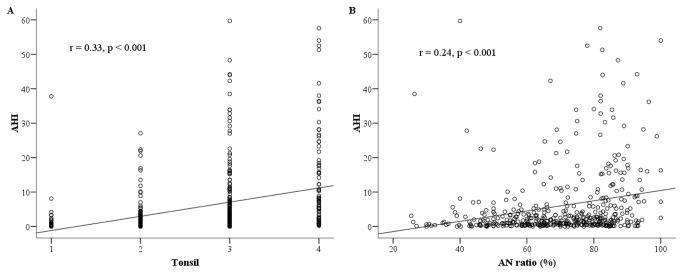
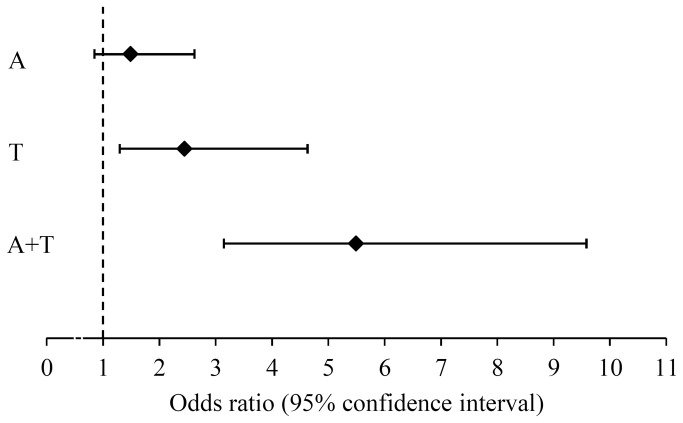
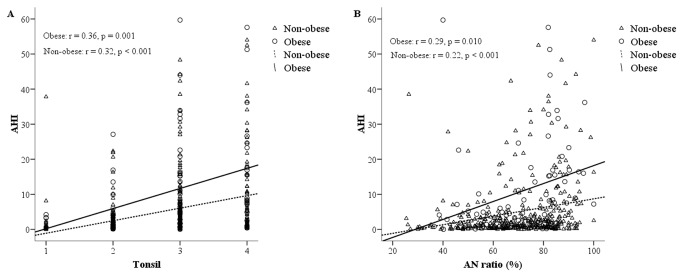
OBJECTIVE: To investigate the contributions of adenoid and tonsil size to childhood obstructive sleep apnea (OSA) and the interactions between adenotonsillar hypertrophy, age, and obesity in children with OSA. METHODS: In total, 495 symptomatic patients were recruited. The patients were assigned to four groups according to age: toddler (age 1-3, n=42), preschool (age 3-6, n=164), school (age 6-12, n=200), and adolescence (age 12-18, n=89). All subjects had tonsil size graded by otolaryngologists, adenoid size determined on lateral radiographs (Fujioka method), and a full-night polysomnography. The apnea-hypopnea index (AHI), adenoid size, and tonsil size were compared in obese and non-obese children in the four age groups. Adjusted odds ratios (ORs) and 95% confidence interval (CI) of adenotonsillar hypertrophy and OSA risk were estimated by multi-logistic regression. RESULTS: The AHI was positively related to tonsil grade (r=0.33, p <0.001) and adenoid size (r=0.24, p <0.01) in all patients. Tonsil grade was positively related to AHI in all four age groups. Adenoid size was positively related to AHI in the toddler, preschool, school groups, but not in the adolescent group (r=0.11, p=0.37). Tonsil grade and adenoid size were both positively related to AHI in obese and non-obese children. In the regression model, obesity (OR=2.89; 95% CI 1.47-5.68), tonsillar hypertrophy (OR=3.15; 95% CI 2.04-4.88), and adenoidal hypertrophy (OR=1.89; 95% CI 1.19-3.00) significantly increased OSA risk. CONCLUSIONS: Adenotonsillar hypertrophy and obesity are the major determinants of OSA in children. However, the influence of adenoid size decreases in adolescence.
Overview
The claims and statistics of this paper haven’t been checked yet.
Free: it reads the open-access text and checks the first 5 claims that cite a source we can check. Create a free account to check every claim.
Integrity signals
Registry
Cites
Statistics
Figures
Verification
Claims the paper makes
The claims and statistics of this paper haven’t been checked yet.
Free: it reads the open-access text and checks the first 5 claims that cite a source we can check. Create a free account to check every claim.
Claims other papers make about this one
Each is checked against this paper’s own text: does it say what the citing paper says it does?
The check wasn’t confident either way, so it gives no verdict — never disputed.
In the citing paper
“Regarding differences by diagnostic criteria, we found significantly higher risks of OSAS in PCOS overall compared with those without PCOS, regardless of diagnostic criteria (45).”
From Obstructive sleep apnea syndrome in polycystic ovary syndrome: a systematic review and meta-analysis (2025) · cites this paper as [45]
Experimental — accuracy not yet measured
Self-check
Percentages, sums and reported differences re-computed from the paper’s own numbers.
The self-check needs the paper’s full text.
Citations
Cites
(2007) · Cited by 6,530
Ohayon, M. M., Carskadon, M. A., Guilleminault, C., & Vitiello, M. V. (2004) · Sleep · doi:10.1093/sleep/27.7.1255 · Cited by 3,349
Diagnosis and Management of Childhood Obstructive Sleep Apnea Syndrome
Marcus, C. L., Brooks, L. J., Draper, K. A., Gozal, D., Halbower, A. C., Jones, J., Schechter, M. S., Sheldon, S. H., Spruyt, K., Ward, S. D., et al. (2012) · Pediatrics · doi:10.1542/peds.2012-1671 · Cited by 2,432
Diagnosis and Management of Childhood Obstructive Sleep Apnea Syndrome
Marcus, C. L., Brooks, L. J., Ward, S. D., Draper, K. A., Gozal, D., Halbower, A. C., Jones, J., Lehmann, C., Schechter, M. S., Sheldon, S., et al. (2012) · Pediatrics · doi:10.1542/peds.2012-1672 · Cited by 1,680
Standards and indications for cardiopulmonary sleep studies in children. American Thoracic Society.
(1996) · American Journal of Respiratory and Critical Care Medicine · doi:10.1164/ajrccm.153.2.8564147 · Cited by 1,180
The AASM Manual for the Scoring of Sleep and Associated Events : Rules
Iber, C. (2007) · Medical Entomology and Zoology · Cited by 929
Bhattacharjee, R., Kheirandish-Gozal, L., Spruyt, K., Mitchell, R. B., Promchiarak, J., Simakajornboon, N., Kaditis, A. G., Splaingard, D., Splaingard, M., Brooks, L. J., et al. (2010) · American Journal of Respiratory and Critical Care Medicine · doi:10.1164/rccm.200912-1930oc · Cited by 745 · cited 1×
“Diagnosis of pediatric OSA was defined as the presence of an apnea/hypopnea index (AHI) ≥ 1 event per hour in the overnight polysomnographic study [7,8,27-29].”
BackgroundSnoring, Apneic Episodes, and Nocturnal Hypoxemia Among Children 6 Months to 6 Years Old
Gislason, T., & Benediktsdóttir, B. (1995) · Chest · doi:10.1378/chest.107.4.963 · Cited by 561
Radiographic evaluation of adenoidal size in children: adenoidal-nasopharyngeal ratio
Fujioka, M., Young, L., & Girdany, B. (1979) · American Journal of Roentgenology · doi:10.2214/ajr.133.3.401 · Cited by 503 · cited 6×
“, is now the most frequently analyzed radiographic parameter in adenoid size assessment [10,11,15,21,41-43].”
BackgroundMethodInfluentialPolysomnographic Characteristics in Normal Preschool and Early School-Aged Children
Montgomery-Downs, H. E., O’Brien, L. M., Gulliver, T. E., & Gozal, D. (2006) · Pediatrics · doi:10.1542/peds.2005-1067 · Cited by 490 · cited 1×
“Subjects were divided into four age groups: toddler (age 1-3), preschool (age 3-6), school (age 6-12), and adolescence (age 12-18) [16-18].”
Background
Cited by
Insufficient Sleep in Adolescents and Young Adults: An Update on Causes and Consequences
Owens, J., ADOLESCENT SLEEP WORKING GROUP, COMMITTEE ON ADOLESCENCE, Au, R., Carskadon, M., Millman, R., Wolfson, A., Braverman, P. K., Adelman, W. P., Breuner, C. C., et al. (2014) · Pediatrics · doi:10.1542/peds.2014-1696 · Cited by 1,413
Prevalence of Obstructive Sleep Apnea in Children With Down Syndrome: A Meta-Analysis
Lee, C.-F., Lee, C.-H., Hsueh, W.-Y., Lin, M.-T., & Kang, K.-T. (2018) · Journal of Clinical Sleep Medicine · doi:10.5664/jcsm.7126 · Cited by 198
“54 In the DS population, these risk factors have been ex - amined but the results are inconsistent.”
Self-citationAndersen, I. G., Holm, J., & Homøe, P. (2016) · International Journal of Pediatric Otorhinolaryngology · doi:10.1016/j.ijporl.2016.06.017 · Cited by 170
Lee, C., Hsu, W. ‐., Chang, W. ‐., Lin, M., & Kang, K. ‐. (2016) · Clinical Otolaryngology · doi:10.1111/coa.12549 · Cited by 159
Self-citationObstructive sleep apnea in children and adolescents with and without obesity
Andersen, I. G., Holm, J., & Homøe, P. (2019) · European Archives of Oto-Rhino-Laryngology · doi:10.1007/s00405-019-05290-2 · Cited by 136
Development of a Screening Tool for Sleep Disordered Breathing in Children Using the Phone Oximeter™
Garde, A., Dehkordi, P., Karlen, W., Wensley, D., Ansermino, J. M., & Dumont, G. A. (2014) · PLoS ONE · doi:10.1371/journal.pone.0112959 · Cited by 135
“The AHI was significantly higher during REM sleep stages, and as expected the Body Mass Index (BMI) was significantly higher in the SDB group [36] (see Table 1).”
BackgroundRisk factors for residual obstructive sleep apnea after adenotonsillectomy in children
Imanguli, M. M., & Ulualp, S. O. (2016) · The Laryngoscope · doi:10.1002/lary.25979 · Cited by 119
“The correlation between adenoid size and OSA has been reported with conflicting results.(34,35) Our findings showed no difference in the prevalence of severe OSA among the grades of adenoid size.”
ResultKahal, H., Kyrou, I., Uthman, O. A., Brown, A., Johnson, S., Wall, P. D. H., Metcalfe, A., Parr, D. G., Tahrani, A. A., & Randeva, H. S. (2020) · Sleep and Breathing · doi:10.1007/s11325-019-01835-1 · Cited by 87
Headache in sleep apnea syndrome: Epidemiology and pathophysiology
Russell, M. B., Kristiansen, H. A., & Kværner, K. J. (2014) · Cephalalgia · doi:10.1177/0333102414538551 · Cited by 87
“high body mass index (BMI) in adults, and is associated with obesity and/or adenotonsillar hypertrophy in children, as the influence of adenoid size decreases in adolescents (2).”
BackgroundLingual Tonsillectomy for Treatment of Pediatric Obstructive Sleep Apnea: A Meta-analysis
Kang, K., Koltai, P. J., Lee, C.-H., Lin, M.-T., & Hsu, W. (2017) · JAMA Otolaryngology–Head & Neck Surgery · doi:10.1001/jamaoto.2016.4274 · Cited by 81
“Surgical Outcomes of Lingual Tonsillectomy Four outcomes for lingual tonsillectomy were analyzed: (1) net postoperative changes in the AHI (Figure 2), (2) net postoperative changes in the minimum oxygen saturation (Figure 3), (3) the overall success rate for a postoperative AHI less than 1 (eFigure 1 in the Supplement…”
Self-citationThe medical care costs of obesity and severe obesity in youth: An instrumental variables approach
Biener, A. I., Cawley, J., & Meyerhoefer, C. (2020) · Health Economics · doi:10.1002/hec.4007 · Cited by 69
Franco, L. P., Souki, B. Q., Cheib, P. L., Abrão, M., Pereira, T. B. J., Becker, H. M. G., & Pinto, J. (2014) · International Journal of Pediatric Otorhinolaryngology · doi:10.1016/j.ijporl.2014.12.013 · Cited by 78
Treatment outcomes of supraglottoplasty for pediatric obstructive sleep apnea: A meta-analysis
Lee, C.-F., Hsu, W., Lee, C., Lin, M., & Kang, K. (2016) · International Journal of Pediatric Otorhinolaryngology · doi:10.1016/j.ijporl.2016.05.015 · Cited by 63
Self-citationWang, J., Zhao, Y., Yang, W. J., Shen, T., Xue, P., Yan, X., Chen, D., Qiao, Y., Chen, M., Ren, R., et al. (2019) · Scientific Reports · doi:10.1038/s41598-019-47596-5 · Cited by 79
Lee, C., Kang, K., Weng, W., Lee, P., & Hsu, W. (2014) · International Journal of Pediatric Otorhinolaryngology · doi:10.1016/j.ijporl.2014.05.038 · Cited by 59
Self-citationNguyên, X.-L., Lévy, P., Beydon, N., Gozal, D., & Fleury, B. (2016) · Sleep Medicine · doi:10.1016/j.sleep.2016.01.021 · Cited by 59
“The main pathophysiologic contributors include reduced airway size, increased ratio between the volume of the adenoids and tonsils, coupled with increased collapsibility of the upper airways, particularly during sleep [2].”
BackgroundKang, K., Chiu, S., Weng, W., Lee, P., & Hsu, W. (2016) · The Journal of Pediatrics · doi:10.1016/j.jpeds.2016.11.032 · Cited by 61
“Disease severity in children was classified as primary snoring (apnea– hypopnea index [AHI < 1), mild OSA (1 ≤ AHI < 5), and moderate-to-severe OSA (AHI ≥ 5).(8,35-41) Children received 24-hour ambulatory BP (ABP) monitoring using an Oscar 2 oscillometric monitor (Model 222; SunTech Medical, Morrisville, North Carolin…”
MethodSelf-citationLee, C.-H., Kang, K., Weng, W., Lee, P., & Hsu, W. (2014) · International Journal of Pediatric Otorhinolaryngology · doi:10.1016/j.ijporl.2014.12.011 · Cited by 56
Self-citationKang, K., Weng, W., Lee, C., Lee, P., & Hsu, W. (2014) · Otolaryngology · doi:10.1177/0194599814529534 · Cited by 49
“Methods for evaluating adenoid size remain controversial.(52) Fiberoptic endoscopy is another diagnostic option for adenoids that allows a 3-dimensional view.”
BackgroundSelf-citationMECHANISMS OF ENDOCRINOLOGY: Mechanisms of disease: the endocrinology of obstructive sleep apnoea
Lavrentaki, A., Ali, A., Cooper, B. G., & Tahrani, A. A. (2018) · European Journal of Endocrinology · doi:10.1530/eje-18-0411 · Cited by 52
Blood Pressure after Surgery among Obese and Nonobese Children with Obstructive Sleep Apnea
Kuo, Y., Kang, K., Chiu, S., Weng, W., Lee, P., & Hsu, W. (2015) · Otolaryngology · doi:10.1177/0194599815573927 · Cited by 49
“Full-night PSG (Embla N7000; Medcare Flaga, Reykjavik, Iceland) was performed in a sleep laboratory following the established protocol.(29-31,35-39) The sleep stage and respiratory events were scored according to the standard of the American Academy of Sleep Medicine.”
BackgroundMethodSelf-citationLee, C.-H., Kang, K., Chiu, S., Chang, I., Weng, W., Lee, P., & Hsu, W. (2018) · JAMA Otolaryngology–Head & Neck Surgery · doi:10.1001/jamaoto.2017.3127 · Cited by 48
“In ahospital-based study,Kang et al13 reportedthatchildrenwithmoderate tosevereOSAhavehigher ambulatory BP compared with those who are primary snorers.”
BackgroundInfluentialSelf-citationKang, K., Chiu, S., Weng, W., Lee, P., & Hsu, W. (2015) · Medicine · doi:10.1097/md.0000000000001568 · Cited by 48
Self-citationAdenotonsillar hypertrophy as a risk factor of dentofacial abnormality in Korean children
Kim, D., Rhee, C., Yun, P., & Kim, J. (2014) · European Archives of Oto-Rhino-Laryngology · doi:10.1007/s00405-014-3407-6 · Cited by 46
Health disparities in pediatric sleep-disordered breathing
Williamson, A. A., Johnson, T. J., & Tapia, I. E. (2022) · Paediatric Respiratory Reviews · doi:10.1016/j.prrv.2022.01.005 · Cited by 51
Clinical risk assessment model for pediatric obstructive sleep apnea
Kang, K., Weng, W., Lee, C., Hsiao, T., Lee, P., & Hsu, W. (2016) · The Laryngoscope · doi:10.1002/lary.25912 · Cited by 42
“reported that the adenoid size and pediatric OSA are significantly correlated in toddlers, preschoolers, and school-aged children but not in adolescents.(6) These observations are consistent with normal growth patterns of adenoids: the adenoidal–nasopharyngeal space is narrowest at 4.”
BackgroundMethodInfluentialSelf-citationAnalysis of the Risk Factors Associated With Obstructive Sleep Apnea Syndrome in Chinese Children
Xiao, L., Su, S., Liang, J., Jiang, Y., Yan, S., & Ding, L. (2022) · Frontiers in Pediatrics · doi:10.3389/fped.2022.900216 · Cited by 50
Inoshita, A., Kasai, T., Matsuoka, R., Sata, N., Shiroshita, N., Kawana, F., Kato, M., & Ikeda, K. (2018) · Journal of Thoracic Disease · doi:10.21037/jtd.2018.11.09 · Cited by 44
“Adenotonsillar hypertrophy plays an important role in the pathogenesis of childhood OSA (7).”
BackgroundDetection of pediatric obstructive sleep apnea syndrome: history or anatomical findings?
Kang, K., Weng, W., Lee, C., Hsiao, T., Lee, P., Lee, Y. L., & Hsu, W. (2015) · Sleep Medicine · doi:10.1016/j.sleep.2014.12.018 · Cited by 42
“The disease severity was defined as OSA (apnea/hypopnea index, AHI ≥ 1) or non-OSA (AHI < 1) [4–6,18–23].”
BackgroundMethodInfluentialSelf-citationThe shifting relationship between weight and pediatric obstructive sleep apnea: A historical review
Keefe, K. R., Patel, P. N., & Levi, J. R. (2018) · The Laryngoscope · doi:10.1002/lary.27606 · Cited by 41
Revision adenoidectomy in children: a population-based cohort study in Taiwan
Lee, C., Chang, W., Ko, J., Yeh, T., Hsu, W., & Kang, K. (2017) · European Archives of Oto-Rhino-Laryngology · doi:10.1007/s00405-017-4655-z · Cited by 38
“The adenoids decrease and diminish gradually thereafter [30, 34, 35].”
BackgroundSelf-citationAre there gender differences in the severity and consequences of sleep disordered in children?
Horne, R. S. C., Ong, C. T. W., Weichard, A. J., Nixon, G. M., & Davey, M. J. (2019) · Sleep Medicine · doi:10.1016/j.sleep.2019.11.1249 · Cited by 39
Hsueh, W.-Y., Hsu, W., Ko, J., Yeh, T., Lee, C., & Kang, K. (2018) · International Journal of Pediatric Otorhinolaryngology · doi:10.1016/j.ijporl.2018.02.021 · Cited by 38
Self-citationAdenoids and clinical symptoms: Epidemiology of a cohort of 795 pediatric patients
Pagella, F., De Amici, M., Pusateri, A., Tinelli, G., Matti, E., Benazzo, M., Licari, A., Nigrisoli, S., Quaglini, S., Ciprandi, G., et al. (2015) · International Journal of Pediatric Otorhinolaryngology · doi:10.1016/j.ijporl.2015.09.035 · Cited by 35
Kang, K., Chang, I., Tseng, C., Weng, W., Hsiao, T., Lee, P., & Hsu, W. (2017) · The Laryngoscope · doi:10.1002/lary.26539 · Cited by 39
“The primary cause of SDB in children is enlarged tonsils and adenoids that obstruct the upper airway.(1,2,5,6) Therefore, removing tonsils and adenoids (adenotonsillectomy [T&A]) is considered the first-line therapy for pediatric SDB worldwide; T&A markedly improves PSG parameters and quality of life in these children.”
BackgroundSelf-citationHsu, W., Kang, K., Yao, C. J., Chou, C., Weng, W., Lee, P., & Chen, Y. (2020) · The Laryngoscope · doi:10.1002/lary.28863 · Cited by 39
“In children, hypertrophic adenoids in nasopharynx and hypertrophic tonsils in oropharynx may attribute concurrently to OSA.(19) Therefore, both nasopharyngeal and oropharyngeal should always be measured in childhood OSA.”
BackgroundSelf-citationLee, C., Hsu, W., Ko, J., Yeh, T., Lin, M., & Kang, K. (2019) · Otolaryngology · doi:10.1177/0194599819893115 · Cited by 34
“Adenoid and tonsillar hypertrophy is the main cause of pediatric OSA.(29) Adenotonsillectomy (T&A) is widely considered the first-line therapy for the treatment of pediatric OSA.”
BackgroundSelf-citation24-Hour Ambulatory Blood Pressure after Adenotonsillectomy in Childhood Sleep Apnea
Hsu, W., Kang, K., Chiu, S., Weng, W., Lee, P., & Lin, C.-Y. (2018) · The Journal of Pediatrics · doi:10.1016/j.jpeds.2018.03.072 · Cited by 33
Self-citationZhang, J., Fu, Y., Wang, L., & Wu, G. (2024) · Frontiers in Public Health · doi:10.3389/fpubh.2024.1494517 · Cited by 37
“However, adenoids shrink in size by puberty and their immune functions correspondingly diminish (24).”
The impact of sleep disordered breathing on cardiovascular health in overweight children
Horne, R. S. C., Shandler, G., Tamanyan, K., Weichard, A. J., Odoi, A., Biggs, S. N., Davey, M. J., Nixon, G. M., & Walter, L. M. (2017) · Sleep Medicine · doi:10.1016/j.sleep.2017.09.012 · Cited by 32
Kang, K., Chiu, S., Lee, C., Lin, M., & Hsu, W. (2021) · Sleep Medicine · doi:10.1016/j.sleep.2021.06.017 · Cited by 32
Self-citationNosetti, L. M., Zaffanello, M., Bernardi, F., Simoncini, D., Beretta, G., Guacci, P., PIACENTINI, G. L., & Agosti, M. A. (2023) · Children · doi:10.3390/children10081426 · Cited by 31
“The impact of ATH on the development of OSA has been widely acknowledged in the scientific literature [31,32].”
BackgroundHeterogeneities in Consumer Diet Quality and Health Outcomes of Consumers by Store Choice and Income
Dhakal, C., & Khadka, S. (2021) · Nutrients · doi:10.3390/nu13041046 · Cited by 30
The relation between childhood obesity and adenotonsillar hypertrophy
Daar, G., Sarı, K., Gencer, Z. K., Ede, H., Aydın, R., & Saydam, L. (2015) · European Archives of Oto-Rhino-Laryngology · doi:10.1007/s00405-015-3554-4 · Cited by 32
Physical Examination Findings Among Children and Adolescents With Obesity: An Evidence-Based Review
Armstrong, S., Lazorick, S., Hampl, S. E., Skelton, J. A., Wood, C. T., Collier, D. N., & Perrin, E. M. (2016) · PEDIATRICS · doi:10.1542/peds.2015-1766 · Cited by 34
Chuang, H., Hsu, J., Chuang, L., Chen, N., Huang, Y., Li, H., Chen, J., Lee, L., & Huang, C. (2020) · International Journal of Environmental Research and Public Health · doi:10.3390/ijerph17134663 · Cited by 27
“demonstrated that the influence of adenoid size on pediatric OSA decreased in adolescents [13].”
BackgroundBase of Tongue Surgery and Pediatric Obstructive Sleep Apnea
Williamson, A., McArdle, E. H., Morrow, V. R., Zalzal, H. G., Carr, M. M., & Coutras, S. W. (2022) · Otolaryngology · doi:10.1177/01945998221094211 · Cited by 28
Zaffanello, M., PIACENTINI, G. L., Nosetti, L. M., & Zoccante, L. (2023) · Children · doi:10.3390/children10101609 · Cited by 34
“In the 2–6-year-old group, the prevalence of hypotonia was approximately 63% [36] at the age in which there is a high prevalence of SDB, mainly due to adenotonsillar hypertrophy [38,39].”
BackgroundAnalysis of possible risk factors for the severity of paediatric obstructive sleep apnoea syndrome
Dékány, L., Molnár, V., Molnár, A., Bikov, A., Lázár, Z., Csenteri, O. K., & Benedek, P. E. (2023) · European Archives of Oto-Rhino-Laryngology · doi:10.1007/s00405-023-08237-w · Cited by 28
Tonsillectomy for Obstructive Sleep‐Disordered Breathing: Should They Stay, or Could They Go?
Friedman, N. R., Meier, M. R., Tholen, K., Crowder, R., Hoefner‐Notz, R., Nguyen, T. T., Derieg, S., Campbell, K. R., & McLeod, L. M. (2021) · The Laryngoscope · doi:10.1002/lary.29909 · Cited by 23
Age‐ and gender‐related characteristics in pediatric obstructive sleep apnea
Kang, K., Weng, W., Lee, P., & Hsu, W. (2022) · Pediatric Pulmonology · doi:10.1002/ppul.25900 · Cited by 25
Self-citationUltrasonographic Evaluation of Upper Airway Structures in Children With Obstructive Sleep Apnea
Lin, C.-Y., Chen, C., Kang, K., Hsiao, T., Lee, P., & Hsu, W. (2018) · JAMA Otolaryngology–Head & Neck Surgery · doi:10.1001/jamaoto.2018.1809 · Cited by 23
Self-citationNarayanan, A. M., Yogesh, A., Mitchell, R. B., & Johnson, R. F. (2019) · The Laryngoscope · doi:10.1002/lary.28029 · Cited by 24
Liao, Z., Chen, Y., Wu, L., Huang, Y., Li, S., Liu, J., Zong, X., Tai, J., & Chen, F. (2024) · Nutrients · doi:10.3390/nu16152419 · Cited by 22
“…differences between obese and nonobese airways, such as adipose tissue around the pharynx and neck and more crowding of the oropharynx in obese children [4,48], and accumulation of fat around the viscera and abdominal and thoracic walls, which leads to decreased lung volume and oxygen reserve [13].”
BackgroundKang, K., Chiu, S., Lin, C.-Y., Weng, W., Lee, P., & Hsu, W. (2019) · Otolaryngology · doi:10.1177/0194599818825462 · Cited by 21
Self-citationAmaddeo, A., SANCTIS, L. D., Arroyo, J. O., Giordanella, J. ‐., Monteyrol, P.-J., & Fauroux, B. (2016) · Archives de Pédiatrie · doi:10.1016/j.arcped.2016.09.003 · Cited by 20
Kang, K., Chiu, S., Lin, C.-Y., Weng, W., Lee, P., & Hsu, W. (2019) · Sleep Medicine · doi:10.1016/j.sleep.2019.07.027 · Cited by 19
Self-citation24‐Hour Ambulatory Blood Pressure Variability in Children with Obstructive Sleep Apnea
Kang, K., Chiu, S., Weng, W., Lee, P., & Hsu, W. (2021) · The Laryngoscope · doi:10.1002/lary.29455 · Cited by 19
“Obstructive sleep apnea (OSA) in children is a respi- ratory disorder caused by complete or partial airway obstruction during sleep.1,2 Pediatric OSA can lead to significant physiological disturbances with various clinical effects.3,4 In particular, OSA may increase cardiovascular risks in children.5 The association b…”
MethodInfluentialSelf-citationObstructive Sleep Apnea in Children Under 3 Years of Age
Rayasam, S. S., Johnson, R. F., Lenahan, D., Abijay, C. A., & Mitchell, R. B. (2021) · The Laryngoscope · doi:10.1002/lary.29536 · Cited by 18
“Over half of the study population had tonsillar hypertrophy, but less than 35% of children under 1 year of age had enlarged tonsils, reflecting the fact that tonsils enlarge as children age.(19,22) Suspicion of OSA in the setting of tonsillar hypertrophy warrants PSG and consideration of T&A.”
BackgroundLeclere, J.-C., Marianowski, R., Monteyrol, P.-J., Akkari, M., Chalumeau, F., Fayoux, P., Leboulanger, N., Franco, P., Couloigner, V., & Mondain, M. (2019) · European Annals of Otorhinolaryngology Head and Neck Diseases · doi:10.1016/j.anorl.2019.05.017 · Cited by 24
C-reactive protein in children with obstructive sleep apnea and effects of adenotonsillectomy
Kang, K., Weng, W., Lee, P., & Hsu, W. (2021) · Auris Nasus Larynx · doi:10.1016/j.anl.2021.06.001 · Cited by 22
Self-citationLiu, C.-N., Kang, K., Yao, C. J., Chen, Y., Lee, P., Weng, W., & Hsu, W. (2022) · JAMA Otolaryngology–Head & Neck Surgery · doi:10.1001/jamaoto.2022.0925 · Cited by 20
Self-citationVolume estimation of tonsil phantoms using an oral camera with 3D imaging
Das, A. J., Valdez, T. A., Vargas, J. A., Saksupapchon, P., Rachapudi, P., Ge, Z., Estrada, J. C., & Raskar, R. (2016) · Biomedical Optics Express · doi:10.1364/boe.7.001445 · Cited by 19
Yang, T., Wang, H., Mou, Y., Liu, W.-C., Wang, Y., Song, X.-Y., Ren, C., & Song, X. (2024) · Nature and Science of Sleep · doi:10.2147/nss.s482258 · Cited by 20
“55,56 However, considering adenoid hypertrophy as a point of penetration to explore the relationship between AR and sleep is often limited to pediatric patients, resulting in age bias.”
BackgroundKim, K. M., Kim, J. H., Kim, D., Lim, M. H., Joo, H., Yoo, S.-J., Kim, E.-J., Ha, M., Paik, K. C., & Kwon, H. (2020) · Clinical Psychopharmacology and Neuroscience · doi:10.9758/cpn.2020.18.4.553 · Cited by 18
“peak at the age of 6 years, and adenotonsillar hypertrophy has been reported as a major determinant of OSA in children but not in adolescents [33].”
BackgroundZalzal, H. G., Davis, K., Carr, M. M., & Coutras, S. W. (2020) · American Journal of Otolaryngology · doi:10.1016/j.amjoto.2020.102478 · Cited by 16
Oral cavity morphology among children at risk of sleep disordered breathing
Burska, Z., Burghard, M., Brożek-Mądry, E., Sierdziński, J., & Krzeski, A. (2022) · European Archives of Paediatric Dentistry · doi:10.1007/s40368-022-00701-1 · Cited by 18
“Similar results were obtained in previous studies (e.g. Ikavalko et al. 2012, 2018; Kang et al. 2013; Villa et al. 2013; Kumar et al. 2014; Wang et al. 2019).”
ResultObstructive sleep apnea syndrome in polycystic ovary syndrome: a systematic review and meta-analysis
Abdul Jafar, N. K., Al Balushi, A., Subramanian, A., Lee, S. I., Bennett, C. J., Moran, L. J., Mousa, A., Tay, C. T., Teede, H. J., & Mansfield, D. R. (2025) · Frontiers in Endocrinology · doi:10.3389/fendo.2025.1532519 · Cited by 15
Gender Differences in Sleep Disordered Breathing—a Review of Literature
Zaw, M., Hein, L., Chacón, A. R., Ascher, K. B., Abreu, A. R., & Chediak, A. D. (2021) · Current Pulmonology Reports · doi:10.1007/s13665-021-00278-y · Cited by 56
Impact of Sex on Sleep Disorders Across the Lifespan
Tobias, L. A., Thapa, S., & Won, C. H. J. (2021) · Clinics in Chest Medicine · doi:10.1016/j.ccm.2021.04.005 · Cited by 15
Obstructive sleep apnea and anatomical structures of the nasomaxillary complex in adolescents
Kang, J., Kim, H. J., & Song, S. I. (2022) · PLoS ONE · doi:10.1371/journal.pone.0272262 · Cited by 16
“The tonsillar size showed positive correlations with AHI in toddlers and preschoolers but not in adolescents [42].”
BackgroundHigh‐Frequency Ultrasound: A Novel Diagnostic Tool to Measure Pediatric Tonsils in 3 Dimensions
Kay‐Rivest, E., Saint‐Martin, C., & Daniel, S. J. (2019) · Otolaryngology · doi:10.1177/0194599819850139 · Cited by 14
“To this day, the literature is divided on whether tonsil size correlates with severity of sleep apnea in children and adults.(29-31) Two important questions remain unanswered: whether subjective tonsil size correlates with objective tonsil size and whether subjective tonsil size correlates with the severity of sleep-d…”
BackgroundBeyond the growth delay in children with sleep-related breathing disorders: a systematic review
Zaffanello, M., PIACENTINI, G. L., & Grutta, S. L. (2020) · Panminerva Medica · doi:10.23736/s0031-0808.20.03904-x · Cited by 15
Voltan, C., Concer, F., Pecoraro, L., Pietrobelli, A., PIACENTINI, G. L., & Zaffanello, M. (2024) · Children · doi:10.3390/children11050595 · Cited by 17
“Adenotonsillar hypertrophy is a significant risk factor for OSA in obese children, but surgical removal of the tonsils may only have a partial effect on improving the condition [27].”
BackgroundHariharan, A., Rodriguez, S. M., & Alsadi, T. H. (2024) · Journal of Clinical Medicine · doi:10.3390/jcm14010116 · Cited by 13
“For example, in paediatric OSA, one of the major implicated risk factors is adenotonsillar hypertrophy [7].”
Associations of Snoring and Asthma Morbidity in the School Inner-City Asthma Study
Gunnlaugsson, S., Abul, M. H., Wright, L. S., Petty, C. R., Permaul, P., Gold, D. R., Gaffin, J. M., & Phipatanakul, W. (2021) · The Journal of Allergy and Clinical Immunology In Practice · doi:10.1016/j.jaip.2021.05.022 · Cited by 13
An Anatomically Based Analysis of Objectively Measured Pediatric Snoring: A Pilot Study
Brietzke, S. E., & Pusz, M. D. (2014) · Otolaryngology · doi:10.1177/0194599814564543 · Cited by 13
“(A) Body mass index (BMI) versus snoring index, (B) BMI versus resistance occurrence percentage (ROP), (C) nasopharyngeal inlet versus ROP, (D) subjective turbinate size (1-31) and ROP, (E) lowest pulse oximetry saturation measurement (%) versus ROP, and (F) mean pulse oximetry saturation measurement (%) versus ROP.”
BackgroundBeyond counting sheep: Exploring the link between polycystic ovary syndrome and sleep health
Jafar, N. K. A., Bennett, C. J., Moran, L. J., & Mansfield, D. R. (2023) · Seminars in Reproductive Medicine · doi:10.1055/s-0043-1777724 · Cited by 12
Clinical predictors of moderate-to-severe pediatric obstructive sleep apnea
Unchiti, K., Samerchua, A., Pipanmekaporn, T., Leurcharusmee, P., Sonsuwan, N., Phinyo, P., & Patumanond, J. (2024) · Frontiers in Pediatrics · doi:10.3389/fped.2024.1421467 · Cited by 13
Fenger, K. N., Andersen, I. G., Holm, L. A., Holm, J., & Homøe, P. (2020) · International Journal of Pediatric Otorhinolaryngology · doi:10.1016/j.ijporl.2020.110320 · Cited by 16
Effect of adenotonsillar hypertrophy on right ventricle function in children
Lee, J. H., Yoon, J. M., Lim, J. W., Ko, K. O., Choi, S. J., Kim, J., & Cheon, E. J. (2014) · Korean Journal of Pediatrics · doi:10.3345/kjp.2014.57.11.484 · Cited by 12
Bains, A., Abraham, E., Hsieh, A., Rubin, B. R., Levi, J. R., & Cohen, M. B. (2020) · Otolaryngology · doi:10.1177/0194599820931084 · Cited by 15
“Age was grouped into 3 categories: ages 2 to 3 (toddlers), ages 4 to 6 (preschoolers), and ages 7 to 18 (adolescence to teenager), similar to cutoffs used by previous studies.(14) Patient sex was considered as either male or female.”
MethodLu, Y., Yan, M., Hoque, S., Tapia, I. E., & Ma, N. (2025) · Environmental Research · doi:10.1016/j.envres.2025.120860 · Cited by 12
Office Blood Pressure Monitoring in Children with Obesity and Obstructive Sleep Apnea
Kang, K., Weng, W., Chiu, S., Lee, P., & Hsu, W. (2022) · The Journal of Pediatrics · doi:10.1016/j.jpeds.2022.03.024 · Cited by 12
Self-citationObstructive Sleep Apnea in Underweight Children
Johnson, C. W., Leavitt, T., Daram, S. P., Johnson, R. F., & Mitchell, R. B. (2021) · Otolaryngology · doi:10.1177/01945998211058722 · Cited by 12
“Underweight children may be less likely to have severe OSA from tonsillar hypertrophy, as a lack of adipose tissue may limit upper airway constriction.(56) The primary strength of this study is that it includes a large, ethnically diverse patient population of underweight children with suspected OSA.”
BackgroundCurrent trends of adenotonsillar hypertrophy presentation in a developing country, Nigeria
Adegbiji, W. A., Aremu, S. K., Nwawolo, C. C., & Asoegwu, C. N. (2017) · International Journal of Otorhinolaryngology and Head and Neck Surgery · doi:10.18203/issn.2454-5929.ijohns20173030 · Cited by 11
Qiao, Y., & Chen, J. (2021) · Medical Science Monitor · doi:10.12659/msm.930792 · Cited by 12
“Adenotonsillar hypertrophy (ATH) accounts for more than 75% of OSAHS patients [6,7].”
BackgroundSleep disorders in obese children are not limited to obstructive sleep apnoea syndrome
Carriere, C., Coste, O., Meiffred, M.-C., Barat, P., & Thibault, H. (2017) · Acta Paediatrica · doi:10.1111/apa.14178 · Cited by 10
“This was paralleled by a decrease in hypertrophy of the adenoids and tonsils, while overweight played an increasing etiologic role after the age of 12 years, as reported elsewhere (7,26).”
BackgroundResultChildhood Obesity and its Influence on Sleep Disorders: Kids-Play Study
Sánchez-López, A. M., Segovia, J. P. N., Núñez-Negrillo, A. M., García, J. L., & Cordero, M. J. A. (2020) · International Journal of Environmental Research and Public Health · doi:10.3390/ijerph17217948 · Cited by 10
“[29], carried out in 2013, concluded that obesity is a risk factor for SAHS in children according to a polysomnography study of 495 children with symptoms of sleep disturbance, which showed that children with obesity had higher AHI scores than those of children with normal weight.”
BackgroundHsueh, W.-Y., Kang, K., Yao, C. J., Chen, Y., Weng, W., Lee, P., Chang, C., & Hsu, W. (2022) · International Journal of Pediatric Otorhinolaryngology · doi:10.1016/j.ijporl.2022.111287 · Cited by 11
Self-citationSleep-disordered breathing among Saudi children seeking orthodontic treatment
Al-Ehaideb, A., Almufadhi, N. M., Alhassn, G. M. A., Fallatah, A. A., Adnan, S., & ALSUBAIE, A. (2021) · Journal of Family Medicine and Primary Care · doi:10.4103/jfmpc.jfmpc_1918_20 · Cited by 9
“Adenotonsillar hypertrophy is a significant determinant of sleep‐disordered breathing in children.[35] Adenectomy is one of the treatment options to relieve the symptoms of patients with SDB.”
BackgroundZhou, Y., Ma, R., Luo, J., Wang, Z., & Yang, P. (2023) · Evidence-based Complementary and Alternative Medicine · doi:10.1155/2023/5628551 · Cited by 9
“One of the most critical complications of AH is obstructive sleep apnea (OSA), which has a signifcant impact on children’s growth and learning [5].”
BackgroundPalatine tonsil volume estimation using different methods after tonsillectomy
Sağıroğlu, A., Acer, N., Okuducu, H., Ertekın, T., Erkan, M., Durmaz, E., Aydın, M., Yılmaz, S., & Zararsız, G. (2016) · Anatomical Science International · doi:10.1007/s12565-016-0350-1 · Cited by 10
“Kang et al. (2013) investigated associations between adenotonsillar hypertrophy, age, and obesity in children with OSA.”
BackgroundKang, K., Lin, Y., Lin, C.-Y., Lee, C., & Hsu, W. (2021) · International Journal of Pediatric Otorhinolaryngology · doi:10.1016/j.ijporl.2021.110989 · Cited by 9
Self-citationZaffanello, M., PIACENTINI, G. L., Pietrobelli, A., Fava, C., Lippi, G., Maffeis, C., Gasperi, E., Nosetti, L. M., Bonafini, S., Tagetti, A., et al. (2017) · World Journal of Pediatrics · doi:10.1007/s12519-017-0054-1 · Cited by 9
Predictors of a Normal Sleep Study in Healthy Children with Sleep Disordered Breathing Symptoms
Abraham, E. J., Bains, A., Rubin, B. R., Cohen, M. B., & Levi, J. R. (2021) · Annals of Otology Rhinology & Laryngology · doi:10.1177/0003489421990156 · Cited by 9
Lee, C., Hsu, W., Ko, J., Yeh, T., & Kang, K. (2019) · International Journal of Pediatric Otorhinolaryngology · doi:10.1016/j.ijporl.2019.06.016 · Cited by 9
Self-citationPediatric Obstructive Sleep Apnea: Clinical Manifestations and Consequences
Kim, J., & Choi, J. H. (2024) · Korean Journal of Otorhinolaryngology - Head and Neck Surgery · doi:10.3342/kjorl-hns.2024.00374 · Cited by 11
Sleep clinical record: what differences in school and preschool children?
Villa, M. P., Shafiek, H., Evangelisti, M., Rabasco, J., Cecili, M., Montesano, M., & Barreto, M. (2016) · ERJ Open Research · doi:10.1183/23120541.00049-2015 · Cited by 8
Chinawa, J. M., Akpeh, J. O., & Chinawa, A. T. (2015) · Pan African Medical Journal · doi:10.11604/pamj.2015.21.191.6028 · Cited by 8
Metadata
- Authors
- Kang, K.-T., Chou, C.-H., Weng, W.-C., Lee, P.-L., & Hsu, W.-C.
- Affiliations
- National Taiwan University (TW)
- National Taiwan University Hospital (TW)
- Corresponding author
- Hsu, Wei-Chung
- Venue
- PLoS ONE
- Publisher
- Public Library of Science (PLoS)
- Published
- 2013-10-25
- Volume
- 8
- Issue
- 10
- Pages
- e78666
- ISSN
- 1932-6203 (ISSN-L)
- PMC
- PMC3808373
- OpenAlex
- W2028622713
- Cited by
- 186
- References
- 54
- Citations by year
- 2026: 18 · 2025: 10 · 2024: 16 · 2023: 11 · 2022: 23 · 2021: 22 · 2020: 16 · 2019: 15 · 2018: 12 · 2017: 10 · 2016: 14 · 2015: 8 · 2014: 10
- FWCI
- 7.43
- Type
- journal article
- Language
- en
- Open access
- gold
- doi.org
- Locations
- PLoS ONE (publishedVersion, cc-by)
- Europe PMC (PubMed Central) (publishedVersion, other-oa)
- PubMed Central (publishedVersion, cc-by)
- PubMed (publishedVersion)
- DOAJ (DOAJ: Directory of Open Access Journals) (submittedVersion, cc-by-sa)
- Funders
- American Society of Pediatric Otolaryngology
- National Taiwan University Hospital
- National Taiwan University
- Topics
- Health Sciences › Medicine › Physiology (medical) › Obstructive Sleep Apnea Research
- Social Sciences › Psychology › Experimental and Cognitive Psychology › Sleep and related disorders
- Health Sciences › Medicine › Surgery › Nasal Surgery and Airway Studies
- Keywords
- obstructive sleep apnea, adenotonsillar hypertrophy, adenoid size, tonsil size, childhood obesity, age differences, apnea-hypopnea index, OSA risk factors, adolescence
- MeSH terms
- Adolescent, Child, Child, Preschool, Female, Humans, Hypertrophy, Infant, Male, Obesity, Organ Size, Palatine Tonsil, Multivariate Analysis, Sleep Apnea, Obstructive, Adiposity
About these checks
Registry, retraction, Cites and statistics results are computed, not judged, with one exception: a printed reference that no index lists is read once by a model before it counts as a citation error. Claims are extracted by a model and kept only when their quote appears verbatim in the text; each cited source is then checked, with a model’s help, for whether it says what the claim relies on. Those verdicts can be wrong — read the claim’s quote and the cited source before relying on one.
Statistics and arithmetic are recomputed, not judged.
Confidence bands are shown only for fields calibrated on our annotated test set. None is calibrated yet, so no band is shown.
What counts as a claim ›How we measure confidence ›How we check this ›
Are you an author, or do you see a problem with this page? Request a review
Data sources
Bibliographic data: Semantic Scholar, OpenAlex, Crossref.
Contains information from the Semantic Scholar Academic Graph Datasets, made available under the ODC Attribution License (ODC-BY 1.0).
Semantic Scholar’s data is described in: Kinney, R., et al. (2023). The Semantic Scholar Open Data Platform. arXiv:2301.10140.
