

How Patients Take Malaria Treatment: A Systematic Review of the Literature on Adherence to Antimalarial Drugs
Open accessThe DOI matches its Crossref record; 75 of the 75 references it cites were found in a registry or an index.
Abstract
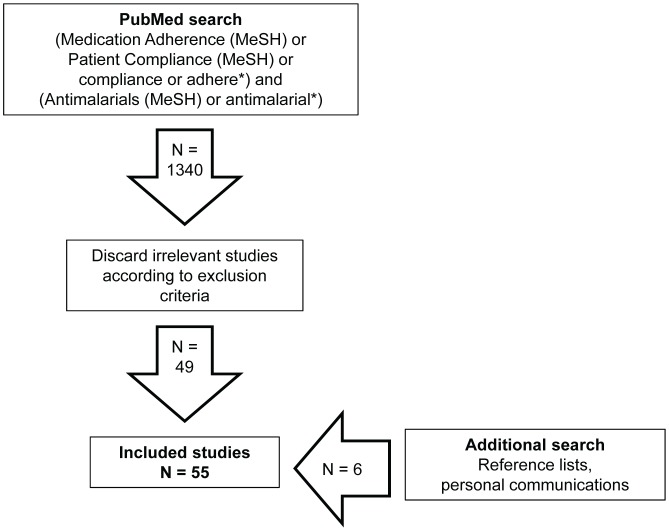
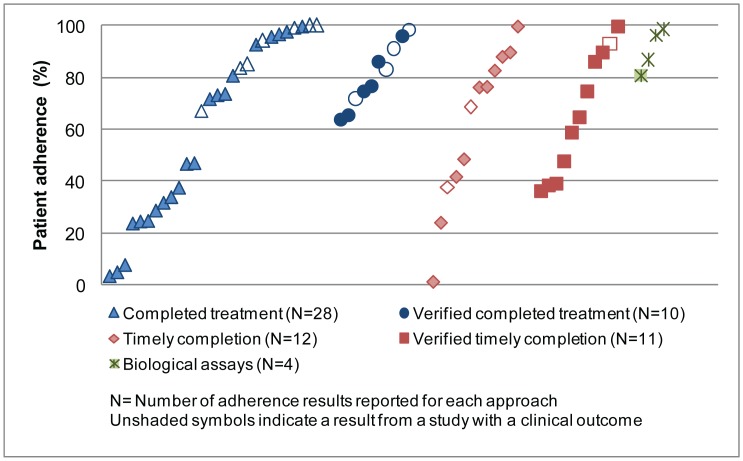
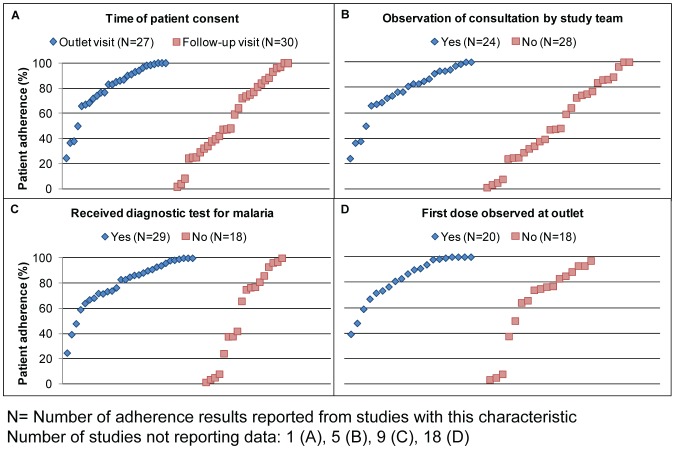
BACKGROUND: High levels of patient adherence to antimalarial treatment are important in ensuring drug effectiveness. To achieve this goal, it is important to understand levels of patient adherence, and the range of study designs and methodological challenges involved in measuring adherence and interpreting results. Since antimalarial adherence was reviewed in 2004, there has been a major expansion in the use of artemisinin-based combination therapies (ACTs) in the public sector, as well as initiatives to make them more widely accessible through community health workers and private retailers. These changes and the large number of recent adherence studies raise the need for an updated review on this topic. OBJECTIVE: We conducted a systematic review of studies reporting quantitative results on patient adherence to antimalarials obtained for treatment. RESULTS: The 55 studies identified reported extensive variation in patient adherence to antimalarials, with many studies reporting very high adherence (90-100%) and others finding adherence of less than 50%. We identified five overarching approaches to assessing adherence based on the definition of adherence and the methods used to measure it. Overall, there was no clear pattern in adherence results by approach. However, adherence tended to be higher among studies where informed consent was collected at the time of obtaining the drug, where patient consultations were directly observed by research staff, and where a diagnostic test was obtained. CONCLUSION: Variations in reported adherence may reflect factors related to patient characteristics and the nature of their consultation with the provider, as well as methodological variations such as interaction between the research team and patients before and during the treatment. Future studies can benefit from an awareness of the impact of study procedures on adherence outcomes, and the identification of improved measurement methods less dependent on self-report.
Overview
The claims and statistics of this paper haven’t been checked yet.
Free: it reads the open-access text and checks the first 5 claims that cite a source we can check. Create a free account to check every claim.
Integrity signals
Registry
Cites
Statistics
Figures
Verification
Claims the paper makes
The claims and statistics of this paper haven’t been checked yet.
Free: it reads the open-access text and checks the first 5 claims that cite a source we can check. Create a free account to check every claim.
Claims other papers make about this one
Each is checked against this paper’s own text: does it say what the citing paper says it does?
The source backs part of the claim, not all of it — or backs it for a different population, condition or comparison.
In the citing paper
“Specifically, variations in the age of participating children, level of caregiver education, household religion and socioeconomic position were found, all of which may influence treatment adherence [3, 29, 67, 68].”
From Adherence to treatment with artemether–lumefantrine or amodiaquine–artesunate for uncomplicated malaria in children in Sierra Leone: a randomized trial (2018) · cites this paper as [29]
Experimental — accuracy not yet measuredThe cited source says what the claim attributes to it.
In the citing paper
“Moreover, although this study did occur under ‘normal conditions’, the fact that providers and caregivers were observed, may have altered their behaviour as a result of participating in the study (participation bias), and influenced adherence outcomes [29, 69].”
From Adherence to treatment with artemether–lumefantrine or amodiaquine–artesunate for uncomplicated malaria in children in Sierra Leone: a randomized trial (2018) · cites this paper as [29]
Self-check
Percentages, sums and reported differences re-computed from the paper’s own numbers.
The self-check needs the paper’s full text.
Citations
Cites
Weltgesundheitsorganisation (2005) · Cited by 3,799
Dondorp, A. M., Fanello, C. I., Hendriksen, I. C., Gomes, E., Seni, A., Chhaganlal, K. D., Bojang, K., Olaosebikan, R., Anunobi, N., Maitland, K., et al. (2010) · The Lancet · doi:10.1016/s0140-6736(10)61924-1 · Cited by 1,022
Nosten, F., van Vugt, M., Price, R., Luxemburger, C., Thway, K., Brockman, A., McGready, R., ter Kuile, F., Looareesuwan, S., & White, N. (2000) · The Lancet · doi:10.1016/s0140-6736(00)02505-8 · Cited by 500 · cited 2×
“1 9 8 9 [3 9 ], (T o g o ),”
BackgroundBarnes, K. I., Durrheim, D. N., Little, F., Jackson, A., Mehta, U., Allen, E., Dlamini, S. S., Tsoka, J., Bredenkamp, B., Mthembu, D. J., et al. (2005) · PLoS Medicine · doi:10.1371/journal.pmed.0020330 · Cited by 285
Piola, P., Fogg, C., Bajunirwe, F., Biraro, S., Grandesso, F., Ruzagira, E., Babigumira, J., Kigozi, I., Kiguli, J., Kyomuhendo, J., et al. (2005) · The Lancet · doi:10.1016/s0140-6736(05)66416-1 · Cited by 211
Changing home treatment of childhood fevers by training shop keepers in rural Kenya
Marsh, V. M., Mutemi, W. M., Muturi, J., Haaland, A., Watkins, W. M., Otieno, G., & Marsh, K. (1999) · Tropical Medicine & International Health · doi:10.1046/j.1365-3156.1999.00403.x · Cited by 204 · cited 7×
“7%–34%) [35,39–40,42,48–49] and adherence to longer primaquine regimens for the treatment of vivax malaria (25%–85%) [21,25,31–32,51,62,66–67].”
BackgroundResultInfluentialHyperparasitaemia and low dosing are an important source of anti-malarial drug resistance
White, N. J., Pongtavornpinyo, W., Maude, R. J., Saralamba, S., Aguas, R., Stepniewska, K., Lee, S. J., Dondorp, A. M., White, L. J., & Day, N. P. (2009) · Malaria Journal · doi:10.1186/1475-2875-8-253 · Cited by 194 · cited 1×
“Sub-therapeutic treatment can result in recrudescence and select for resistant parasites [7].”
Backgroundvon Seidlein, L., Milligan, P., Pinder, M., Bojang, K., Anyalebechi, C., Gosling, R., Coleman, R., Ude, J. I., Sadiq, A., Duraisingh, M., et al. (2000) · The Lancet · doi:10.1016/s0140-6736(99)10237-x · Cited by 190
Sirima, S. B., Konaté, A., Tiono, A. B., Convelbo, N., Cousens, S., & Pagnoni, F. (2003) · Tropical Medicine & International Health · doi:10.1046/j.1365-3156.2003.00997.x · Cited by 182 · cited 1×
“Most household surveys reported adherence to antimalarials obtained from both public and private sectors, except for four that focused on interventions to improve adherence to antimalarials obtained from drug shops [48–49] or community health workers [36,53].”
BackgroundArtesunate/mefloquine treatment of multi-drug resistant falciparum malaria
Price, R. N., Nosten, F., Luxemburger, C., van Vugt, M., Phaipun, L., Chongsuphajaisiddhi, T., & White, N. J. (1997) · Transactions of the Royal Society of Tropical Medicine and Hygiene · doi:10.1016/s0035-9203(97)90032-8 · Cited by 159 · cited 1×
“Since publication of this review, there has been a major expansion of the availability of ACTs, which have been shown to be efficacious and may reduce the spread of resistance in low transmission settings [9–12].”
Background
Cited by
Taylor, W. R. J., Thriemer, K., von Seidlein, L., Yuentrakul, P., Assawariyathipat, T., Assefa, A., Auburn, S., Chand, K., Chau, N. H., Cheah, P. Y., et al. (2019) · The Lancet · doi:10.1016/s0140-6736(19)31285-1 · Cited by 178
Lindner, A. K., Lejon, V., Chappuis, F., Seixas, J., Kazumba, L., Barrett, M. P., Mwamba, E., Erphas, O., Akl, E. A., Villanueva, G., et al. (2020) · The Lancet Infectious Diseases · doi:10.1016/s1473-3099(19)30612-7 · Cited by 161
Douglas, N. M., Poespoprodjo, J. R., Patriani, D., Malloy, M. J., Kenangalem, E., Sugiarto, P., Simpson, J. A., Soenarto, Y., Anstey, N. M., & Price, R. N. (2017) · PLOS Medicine · doi:10.1371/journal.pmed.1002379 · Cited by 107
“It is well recognized that the duration of antimalarial treatment is a critical determinant of adherence [9].”
BackgroundResultInfluentialDrug targets for resistant malaria: Historic to future perspectives
Kumar, S., Bhardwaj, T., Prasad, D. N., & Singh, R. K. (2018) · Biomedicine & Pharmacotherapy · doi:10.1016/j.biopha.2018.05.009 · Cited by 135
Recent advances in use of silver nanoparticles as antimalarial agents
Rai, M. K., Ingle, A. P., Paralikar, P., Gupta, I. R., Medici, S., & dos Santos, C. A. (2017) · International Journal of Pharmaceutics · doi:10.1016/j.ijpharm.2017.04.042 · Cited by 104
Abreha, T., Hwang, J., Thriemer, K., Tadesse, Y., Girma, S., Melaku, Z., Assef, A., Kassa, M., Chatfield, M. D., Landman, K. Z., et al. (2017) · PLOS Medicine · doi:10.1371/journal.pmed.1002299 · Cited by 82
Self-citationRoutine data for malaria morbidity estimation in Africa: challenges and prospects
Alegana, V. A., Okiro, E. A., & Snow, R. W. (2020) · BMC Medicine · doi:10.1186/s12916-020-01593-y · Cited by 81
“The variation between and within country in testing rates can result from inadequate training and lack of supervision of healthcare workers [72–74], shortages and stock-outs of equipment and mRDTs [75, 76], and patient-level factors [77, 78].”
BackgroundAdhikari, B., Phommasone, K., Pongvongsa, T., Koummarasy, P., Soundala, X., Henriques, G., Sirithiranont, P., Parker, D. M., von Seidlein, L., White, N. J., et al. (2019) · BMC Health Services Research · doi:10.1186/s12913-019-4070-9 · Cited by 71
The early preclinical and clinical development of cipargamin (KAE609), a novel antimalarial compound
Bouwman, S. A. M., Manego, R. Z., Csermak, K., Schmitt, E. K., Mombo‐Ngoma, G., & Grobusch, M. P. (2020) · Travel Medicine and Infectious Disease · doi:10.1016/j.tmaid.2020.101765 · Cited by 61
“Nowadays, all dosing regimens are three-day courses, which are not ideal regarding patient compliance and the associated potential to foster development of resistance [6].”
BackgroundDouine, M., Lambert, Y., Galindo, M. S., Mutricy, L., Sanna, A., Peterka, C., Marchesini, P. B., Hiwat, H., Nacher, M., Adenis, A. A., et al. (2021) · The Lancet Regional Health - Americas · doi:10.1016/j.lana.2021.100047 · Cited by 77
Frueh, L., Li, Y., Mather, M. W., Li, Q., Pou, S., Nilsen, A., Winter, R. W., Forquer, I., Pershing, A. M., Xie, L. H., et al. (2017) · ACS Infectious Diseases · doi:10.1021/acsinfecdis.7b00062 · Cited by 50
Yakasai, A. M., Hamza, M., Dalhat, M. M., Bello, M. M., Gadanya, M. A., Yaqub, Z. M., Ibrahim, D. A., & Hassan-Hanga, F. (2015) · Journal of Tropical Medicine · doi:10.1155/2015/189232 · Cited by 52
“Moreover, two recently published reviews also noted this wide variation in adherence to ACT [10, 11].”
BackgroundPoespoprodjo, J. R., Burdam, F. H., Candrawati, F., Ley, B., Meagher, N., Kenangalem, E., Indrawanti, R., Trianty, L., Thriemer, K., Price, D. J., et al. (2021) · The Lancet Infectious Diseases · doi:10.1016/s1473-3099(21)00358-3 · Cited by 48
Addai‐Mensah, O., Annani-Akollor, M. E., Fondjo, L. A., Sarbeng, K., Anto, E. O., Owiredu, E., & Arthur, S. N. (2018) · Journal of Tropical Medicine · doi:10.1155/2018/5019215 · Cited by 50
Suswardany, D. L., Sibbritt, D. W., Supardi, S., Pardosi, J. F., Chang, S., & Adams, J. (2017) · PLoS ONE · doi:10.1371/journal.pone.0173522 · Cited by 47
MAIP: a web service for predicting blood‐stage malaria inhibitors
Bosc, N., Félix, E., Arcila, R., Méndez, D., Saunders, M. R., Green, D. V. S., Ochoada, J., Shelat, A. A., Martin, É., Iyer, P., et al. (2021) · Journal of Cheminformatics · doi:10.1186/s13321-021-00487-2 · Cited by 47
Mehdipour, P., Rajasekhar, M., Dini, S., Zaloumis, S. G., Abreha, T., Adam, I., Awab, G. R., Baird, J. K., Brasil, L. W., Chu, C. S., et al. (2023) · Malaria Journal · doi:10.1186/s12936-023-04725-w · Cited by 48
“Although the duration of anti-malarial treatment is a potential determinant of adherence [ 53, 57], the results of this pooled analysis of clinical trial studies did not find an association between the duration of primaquine regimen and adherence.”
BackgroundResultMasserey, T., Lee, T. E., Golumbeanu, M., Shattock, A. J., Kelly, S. L., Hastings, I. M., & Penny, M. A. (2022) · eLife · doi:10.7554/elife.77634 · Cited by 46
Darteh, E. K. M., Dickson, K. S., Ahinkorah, B. O., Owusu, B. A., Okyere, J., Salihu, T., Bediako, V. B., Budu, E., Agbemavi, W., Edjah, J. O., et al. (2021) · Archives of Public Health · doi:10.1186/s13690-021-00707-z · Cited by 46
Devine, A., Parmiter, M., Chu, C. S., Bancone, G., Nosten, F. H., Price, R. N., Lubell, Y., & Yeung, S. (2017) · PLoS neglected tropical diseases · doi:10.1371/journal.pntd.0005602 · Cited by 39
“Our model is based on supervised primaquine therapy and hence our findings may not be applicable to other settings where unsupervised primaquine is the norm and adherence to a complete course of treatment and thus effectiveness may be low [41].”
MethodDing, J., Coldiron, M. E., Assao, B., Guindo, O., Blessborn, D., Winterberg, M., Grais, R. F., Koščálová, A., Langendorf, C., & Tärning, J. (2019) · Clinical Pharmacology & Therapeutics · doi:10.1002/cpt.1707 · Cited by 41
“5% and 100%, using indirect adherence methods (self-report, questionnaire, pill count, or a combination of these).(17) However, patient self-report may lead to an overestimation of adherence.”
MethodKaboré, J. M. T., Siribié, M., Hien, D., Soulama, I., Barry, N., Nombré, Y., Dianda, F., Baguiya, A., Tiono, A. B., Burri, C., et al. (2022) · Malaria Journal · doi:10.1186/s12936-022-04180-z · Cited by 42
Bruxvoort, K., Festo, C., Cairns, M., Kalolella, A., Mayaya, F., Kachur, S. P., Schellenberg, D., & Goodman, C. (2015) · PLOS ONE · doi:10.1371/journal.pone.0134275 · Cited by 37
“A number of studies assessing adherence to ACTs have been conducted in recent years, with results showing that anywhere between 39% and 100% of patients can be considered adherent [5, 6], reflecting both genuine differences in adherence as well as variation in study design and measurement methods.”
BackgroundMethodResultInfluentialSelf-citationSchifrin, A., Ly, T. T. B., Günnewich, N., Zapp, J., Thiel, V., Schulz, S., Hannemann, F., Khatri, Y., & Bernhardt, R. (2014) · ChemBioChem · doi:10.1002/cbic.201402443 · Cited by 37
Cohen, J. L., & Saran, I. (2018) · Journal of Development Economics · doi:10.1016/j.jdeveco.2018.04.008 · Cited by 36
“This definition of adherence is standard in the literature, with the majority of studies using a combination of pill counts and self-reports in order to measure adherence (Bruxvoort et al., 2014; Banek et al., 2014).”
BackgroundChallenger, J. D., Gonçalves, B. P., Bradley, J., Bruxvoort, K. J., Tiono, A. B., DRAKELEY, C. J., Bousema, T., Ghani, A. C., & Okell, L. (2019) · BMJ Global Health · doi:10.1136/bmjgh-2019-001856 · Cited by 36
Self-citationDevine, A., Battle, K. E., Meagher, N., Howes, R. E., Dini, S., Gething, P. W., Simpson, J. A., Price, R. N., & Lubell, Y. (2021) · PLOS Medicine · doi:10.1371/journal.pmed.1003614 · Cited by 33
“Limited information is available on adherence to and effectiveness of a 14-day primaquine regimen [11,38].”
Challenger, J. D., Bruxvoort, K. J., Ghani, A. C., & Okell, L. (2017) · Nature Communications · doi:10.1038/s41467-017-01352-3 · Cited by 36
Self-citationDevine, A., Pasaribu, A. P., Teferi, T., Pham, H.-T., Awab, G. R., Contantia, F., Nguyen, T.-N., Ngo, V. T. T., Tran, T.-H., Hailu, A., et al. (2019) · Bulletin of the World Health Organization · doi:10.2471/blt.18.226688 · Cited by 34
Signorell, A., Awor, P., Okitawutshu, J., Tshefu, A. K., Omoluabi, E., Hetzel, M. W., Athieno, P., Kimera, J., Tumukunde, G., Angiro, I., et al. (2023) · PLoS Medicine · doi:10.1371/journal.pmed.1004189 · Cited by 33
Narrative review of current context of malaria and management strategies in Uganda (Part I)
Kassam, R., Collins, J. B., Liow, E., & Rasool, N. (2015) · Acta Tropica · doi:10.1016/j.actatropica.2015.07.028 · Cited by 38
Altering Antimalarial Drug Regimens May Dramatically Enhance and Restore Drug Effectiveness
Kay, K., Hodel, E. M., & Hastings, I. M. (2015) · Antimicrobial Agents and Chemotherapy · doi:10.1128/aac.00482-15 · Cited by 32
“A systematic investigation of the impact of poor adherence would be a complex task (36, 37).”
BackgroundRahmalia, A., Poespoprodjo, J. R., Landuwulang, C. U. R., Ronse, M., Kenangalem, E., Burdam, F. H., Thriemer, K., Devine, A., Price, R. N., Grietens, K. P., et al. (2023) · Malaria Journal · doi:10.1186/s12936-023-04578-3 · Cited by 34
“Studies about patient adherence to antimalarials yielded varied results related to patient characteristics, the nature of their consultation with the provider, and methodological variations of the study [12].”
BackgroundSilumbe, K., Yukich, J. O., Hamainza, B., Bennett, A. F., Earle, D. M., Kamuliwo, M., Steketee, R. W., Eisele, T. P., & Miller, J. M. (2015) · Malaria Journal · doi:10.1186/s12936-015-0722-3 · Cited by 34
“symptomatic patients [42, 43].”
An epigrammatic status of the ‘ azole ’-based antimalarial drugs
Sharma, M., & Prasher, P. (2020) · RSC Medicinal Chemistry · doi:10.1039/c9md00479c · Cited by 30
Bruxvoort, K., Festo, C., Kalolella, A., Cairns, M., Lyaruu, P., Kenani, M., Kachur, S. P., Goodman, C., & Schellenberg, D. (2014) · The American Society of Tropical Medicine and Hygiene · doi:10.4269/ajtmh.14-0126 · Cited by 27
“widely from39% to 100%.(4,5)Many patients seek care formalaria in the private retail sector.”
BackgroundSelf-citationTalisuna, A. O., Oburu, A., Githinji, S., Malinga, J., Amboko, B., Bejon, P., Jones, C. O. H., Snow, R. W., & Zurovac, D. (2017) · Malaria Journal · doi:10.1186/s12936-017-1702-6 · Cited by 35
“SMS reminders sent to either health workers or malaria patients and their caregivers have been suggested as a potential intervention [16–18] to improve sub-optimal caregivers’ adherence to artemisinin-based combination therapy (ACT) [19, 20] and poor outpatient attendance rates for follow-up [21].”
BackgroundInfluentialBanek, K., Webb, E. L., Smith, S. J., Chandramohan, D., & Staedke, S. G. (2018) · Malaria Journal · doi:10.1186/s12936-018-2370-x · Cited by 25
“Moreover, although this study did occur under ‘normal conditions’, the fact that providers and caregivers were observed, may have altered their behaviour as a result of participating in the study (participation bias), and influenced adherence outcomes [29, 69].”
BackgroundMethodResultInfluentialDinelly, K. M. O., Vítor-Silva, S., Brito-Sousa, J. D., Sampaio, V. D. S., Silva, M. G. O., Siqueira, A. M., Peterka, C. R. L., Rodovalho, S., Omena, A. G., Monteiro, W. M., et al. (2021) · Malaria Journal · doi:10.1186/s12936-021-03793-0 · Cited by 27
Hodel, E. M., Kay, K., Hayes, D. J., Terlouw, D. J., & Hastings, I. M. (2014) · Malaria Journal · doi:10.1186/1475-2875-13-138 · Cited by 26
“In practice, full adherence to anti-malarial drug regimens can be less than 50% in ‘real life’ situations [47].”
BackgroundMumtaz, R., Okell, L., & Challenger, J. D. (2020) · Malaria Journal · doi:10.1186/s12936-020-03520-1 · Cited by 25
Koko, D. C., Maazou, A., Jackou, H., & Eddis, C. (2022) · Malaria Journal · doi:10.1186/s12936-022-04407-z · Cited by 26
“Several studies demonstrate that caregivers have better adherence to anti-malarial treatments when the first dose is directly observed by the community distributor [33, 34] and when the caregivers have complete and accurate information [30, 32].”
BackgroundDried Blood Spot Analysis to Assess Medication Adherence and to Inform Personalization of Treatment
Tanna, S., & Lawson, G. (2014) · Bioanalysis · doi:10.4155/bio.14.189 · Cited by 27
Ochwedo, K. O., Omondi, C. J., Magomere, E. O., Olumeh, J. O., Debrah, I., Onyango, S. A., Orondo, P. W., Ondeto, B. M., Atieli, H. E., Ogolla, S. O., et al. (2021) · Malaria Journal · doi:10.1186/s12936-021-04012-6 · Cited by 23
“These high levels of submicroscopic infections in adults could be attributed to acquired immunity that suppresses parasite load, self-prescription, poor adherence to anti-malarial drug regimens, and a high prevalence of recently acquired infections [12, 13].”
BackgroundOlafuyi, O., Coleman, M. D., & Badhan, R. K. S. (2017) · European Journal of Pharmaceutical Sciences · doi:10.1016/j.ejps.2017.05.043 · Cited by 24
Garg, S., Gurung, P., Dewangan, M., & Nanda, P. (2020) · Malaria Journal · doi:10.1186/s12936-020-03285-7 · Cited by 22
Camara, A., Moriarty, L. F., Guilavogui, T., Diakité, P. S., Zoumanigui, J. S., Sidibé, S., Bah, I., Kaba, I., Kourouma, D., Zoumanigui, K., et al. (2019) · Malaria Journal · doi:10.1186/s12936-019-2664-7 · Cited by 19
Gore-Langton, G. R., Alenwi, N., Mungai, J., Erupe, N. I., Eves, K., Kimwana, F. N., Soti, D., Akhwale, W., Hassan, F. A., Juma, E., et al. (2015) · Malaria Journal · doi:10.1186/s12936-015-0645-z · Cited by 18
“The last method is “biological assay” which uses the detection of sufficient levels of the drug in biological samples to confirm adherence [10].”
BackgroundMethodLay knowledge and management of malaria in Baringo county, Kenya
Mutua, E., Bukachi, S. A., Bett, B., Estambale, B. A., & Nyamongo, I. K. (2016) · Malaria Journal · doi:10.1186/s12936-016-1542-9 · Cited by 20
“This may be due to respondents who know the expected practice reporting compliance to save face and avoid presenting themselves as negligent [37].”
BackgroundGithinji, S., Jones, C. O. H., Malinga, J., Snow, R. W., Talisuna, A. O., & Zurovac, D. (2015) · Malaria Journal · doi:10.1186/s12936-015-0825-x · Cited by 18
“Strategies to improve patient adherence to the full therapeutic course of malaria treatment are urgently required [9, 11].”
BackgroundBawate, C., Callender-Carter, S. T., Guyah, B., & Ouma, C. (2024) · Malaria Journal · doi:10.1186/s12936-023-04824-8 · Cited by 16
“However, it contradicts those reporting low adherence to ACT below 50% [18, 20, 22, 34] and those reporting high adherence above 80% [17, 19, 21, 33].”
BackgroundResultKibira, D., Ssebagereka, A., van den Ham, H. A., Opigo, J., Katamba, H., Seru, M., Reed, T., Leufkens, H. G. M., & Mantel-Teeuwisse, A. K. (2021) · Malaria Journal · doi:10.1186/s12936-021-03680-8 · Cited by 16
Bruxvoort, K., Kalolella, A., Cairns, M., Festo, C., Kenani, M., Lyaruu, P., Kachur, S. P., Schellenberg, D., & Goodman, C. (2015) · Malaria Journal · doi:10.1186/s12936-015-0602-x · Cited by 16
“Adherence was defined in two ways [10].”
BackgroundSelf-citationBridging the quality gap in diagnosis and treatment of malaria
Ikeda, D. J., Gosling, R. D., Eliades, M. J., Chung, A. M., Murungu, J., & Agins, B. (2020) · BMJ · doi:10.1136/bmj.m1176 · Cited by 15
Price, D. J., Nekkab, N., Monteiro, W. M., Villela, D. A. M., Simpson, J. A., Lacerda, M., White, M. T., & Devine, A. (2024) · PLoS Medicine · doi:10.1371/journal.pmed.1004255 · Cited by 15
Mori, A. T., Ngalesoni, F. N., Norheim, O. F., & Robberstad, B. (2014) · Malaria Journal · doi:10.1186/1475-2875-13-363 · Cited by 18
“Compliance with AL 51 (38–65%) Uniform [43]”
BackgroundAlmeida, E. D., & Vieira, J. L. F. (2016) · Revista da Sociedade Brasileira de Medicina Tropical · doi:10.1590/0037-8682-0275-2015 · Cited by 16
Gebrekidan, M. G., Berhe, G., Gebregiorgis, Y. S., Addisu, A., & Tesfay, K. (2020) · Antimicrobial Resistance and Infection Control · doi:10.1186/s13756-020-00846-y · Cited by 15
“Eventually, it might lead to the emergence and spread of drug resistant PF malaria strains [3, 7, 8].”
BackgroundTargeting PfCLK3 with Covalent Inhibitors: A Novel Strategy for Malaria Treatment
Brettell, S. B., Janha, O., Begen, A., Cann, G., Sharma, S., Olaniyan, N., Yelland, T., Hole, A. J., Alam, B., Mayville, E., et al. (2024) · Journal of Medicinal Chemistry · doi:10.1021/acs.jmedchem.4c01300 · Cited by 13
Devine, A., Howes, R. E., Price, D. J., Moore, K. A., Ley, B., Simpson, J. A., Dittrich, S., & Price, R. N. (2020) · American Journal of Tropical Medicine and Hygiene · doi:10.4269/ajtmh.19-0943 · Cited by 14
Gatiba, P., Laury, J., Steinhardt, L. C., Hwang, J., Thwing, J. I., Zulliger, R., Emerson, C., & Gutman, J. (2023) · American Journal of Tropical Medicine and Hygiene · doi:10.4269/ajtmh.23-0478 · Cited by 13
Adherence to Anti-Malarial Treatment in Malaria Endemic Areas of Bangladesh
Hossain, M. S., Matin, M. A., Ferdous, N.-E. N., Hasan, A., Sazed, S. A., Neogi, A. K., Chakma, S., Islam, M. A., Khan, A. A., Haque, M. R., et al. (2023) · Pathogens · doi:10.3390/pathogens12121392 · Cited by 15
“…counts); pill boxes with electronic caps that track the date and time of each opening; biological assays; and combinations of these techniques [23]. and when medications were taken (self-report); physical counts of remaining tablets in blister packages or dispensing envelopes (pill counts);…”
BackgroundMethodInfluentialFinn, T. P., Porter, T. R., Moonga, H. B., Silumbe, K., Daniels, R. F., Volkman, S. K., Yukich, J. O., Keating, J. A., Bennett, A. F., Steketee, R. W., et al. (2020) · American Journal of Tropical Medicine and Hygiene · doi:10.4269/ajtmh.19-0667 · Cited by 14
Steinhardt, L. C., Achyut, K. C., Tiffany, A., Quincer, E. M., Loerinc, L. B., Laramee, N., Large, A., & Lindblade, K. A. (2023) · American Journal of Tropical Medicine and Hygiene · doi:10.4269/ajtmh.22-0720 · Cited by 13
“18 Conversely, in RDA, provision of a full-course of antimalarials to individuals who have not been tested and who do not feel ill may raise concern over the side effects of the medicine, while provision of medicine to someone who is not infected raises ethical and equity issues.”
Oduro, A. R., Chatio, S. T., Beeri, P., Anyorigiya, T., Baiden, R., Adongo, P. B., & Akweongo, P. (2019) · Journal of Tropical Medicine · doi:10.1155/2019/5198010 · Cited by 12
“like malaria except that most of those findings have come from self-reporting studies [26].”
BackgroundResultBanek, K., Webb, E. L., Doogue, E. B., Smith, S., Chandramohan, D., & Staedke, S. G. (2021) · Malaria Journal · doi:10.1186/s12936-021-03590-9 · Cited by 12
“reported that age, higher household income, higher education level, malaria knowledge, and treatment-seeking behavior are factors facilitating anti-malarial adherence [41], none of the a priori socioeconomic or demographic factors were associated with adherence in this study.”
ResultBanek, K., DiLiberto, D., Webb, E. L., Smith, S., Chandramohan, D., & Staedke, S. G. (2021) · Healthcare · doi:10.3390/healthcare9091233 · Cited by 13
“Although the evidence base on antimalarial adherence is growing, the published literature lacks consensus on factors associated with non-adherence to antimalarial regimens [14,16,17].”
BackgroundGallay, J., Mosha, D., Lutahakana, E., Mazuguni, F. S., Zuakulu, M., Decosterd, L. A., Genton, B., & Pothin, E. (2018) · Malaria Journal · doi:10.1186/s12936-018-2357-7 · Cited by 11
“This study observed a higher proportion of appropriate treatment when assessed by self-reported medical history than by anti-malarials measured in the blood and there are several potential reasons to explain such discrepancies: in case of a positive test result, the treatment received may have not been an anti-malaria…”
House screening for malaria control: views and experiences of participants in the RooPfs trial
Jones, C. O. H., Matta, A. C. Z., Pinder, M., D’Alessandro, U., Knudsen, J., & Lindsay, S. W. (2022) · Malaria Journal · doi:10.1186/s12936-022-04321-4 · Cited by 13
Talisuna, A. O. (2014) · Journal of Clinical Trials · doi:10.4172/2167-0870.1000217 · Cited by 10
“A recent systematic review has suggested that future studies of adherence to malaria treatment could benefit from an awareness of the impact of study procedures on adherence outcomes, and has proposed the identification of improved measurement methods less dependent on self-reporting [13].”
BackgroundSchwabl, P., Camponovo, F., Clementson, C., Early, A. M., Laws, M., Forero-Peña, D. A., Noya, Ó., Grillet, M. E., Vanhove, M., Anthony, F., et al. (2024) · Nature Communications · doi:10.1038/s41467-024-52545-6 · Cited by 11
Determinants of Patients’ Adherence to Malaria Treatment in the Democratic Republic of the Congo
Ntamabyaliro, N. Y., Burri, C., Lula, Y. N., Nzolo, D. B., Engo, A. B., Ngale, M. A., Situakibanza, H. N.-T., Mukomena, E. S., Kahunu, G. M., Mampunza, S. M. M., et al. (2022) · Tropical Medicine and Infectious Disease · doi:10.3390/tropicalmed7070138 · Cited by 13
“Patients must adhere to the treatment regimen to benefit from it, which, unfortunately, is not always the case [3,4].”
BackgroundWang, Q., Zou, Y., Pan, Z., Zhang, H., Deng, C., Yuan, Y., Guo, J., Tang, Y., Julie, N., Wu, W., et al. (2020) · Frontiers in Pharmacology · doi:10.3389/fphar.2020.562363 · Cited by 9
“The data on resistance to routinely used antimalarial drugs, such as sulfadoxinepyrimethamine, mefloquine, and chloroquine has been reported (Nosten et al., 1991; Ter Kuile et al., 1992; Marfurt et al., 2007; Bruxvoort, 2014; Packard, 2014).”
BackgroundSaran, I., Yavuz, E., Kasozi, H., & Cohen, J. L. (2016) · American Journal of Tropical Medicine and Hygiene · doi:10.4269/ajtmh.15-0420 · Cited by 9
“However, many patients with suspected malaria fail to complete the full course of drugs, with some studies finding adherence rates as low as 39%.(6,7) Patients who obtain drugs from the private sector have been shown to have lower adherence rates.”
BackgroundPhillips, V., Njau, J. D., Li, S., & Kachur, S. P. (2015) · Health Affairs · doi:10.1377/hlthaff.2015.0095 · Cited by 8
“32 We assumed that patients could have up to two health care visits per fever episode.”
Self-citationDas, A. M., Chitnis, N., Burri, C., Paris, D. H., Patel, S. K., Spencer, S. E. F., Miaka, E. M., & Castaño, S. (2021) · PLoS neglected tropical diseases · doi:10.1371/journal.pntd.0009992 · Cited by 9
Tackie, V., Seidu, A., & Osei, M. (2020) · Journal of Public Health · doi:10.1007/s10389-020-01234-x · Cited by 8
Improving the Role and Contribution of Pharmacokinetic Analyses in Antimalarial Drug Clinical Trials
Kay, K., Hodel, E. M., & Hastings, I. M. (2014) · Antimicrobial Agents and Chemotherapy · doi:10.1128/aac.02777-14 · Cited by 7
Lek, D., Tsai, Y.-C., Hirano, J., Sovannaroth, S., Bunreth, V., Vonn, P., Vannthen, O., Tol, B., Samphornarann, T., Sokomar, N., et al. (2024) · Malaria Journal · doi:10.1186/s12936-024-04884-4 · Cited by 7
“However, when this is compared to other studies, where the adherence rate for 14-day primaquine regimen ranged from 23.8% to 98% [19–21], Cambodia’s phase I implementation suggests higher compliance.”
ResultInfluentialBarsosio, H. C., Webster, J., Omiti, F., K’Oloo, A., Odero, I. A., Ojuok, M. A., Odiwa, D., Omondi, B., Okello, E., Dodd, J., et al. (2024) · The Lancet Global Health · doi:10.1016/s2214-109x(24)00261-4 · Cited by 7
Jones, C. O. H., Talisuna, A. O., Snow, R. W., & Zurovac, D. (2018) · Malaria Journal · doi:10.1186/s12936-017-2164-6 · Cited by 10
“Similarly, reviews of studies examining factors influencing adherence have not shown consistent patterns in the determinants of adherence [4, 5] nor have concluded about the most effective interventions to improve adherence to anti-malarial drugs [6].”
InfluentialRamli, A. H., & Faudzi, S. M. M. (2023) · Archiv der Pharmazie · doi:10.1002/ardp.202300391 · Cited by 6
Mori, A. T., Norheim, O. F., & Robberstad, B. (2015) · PharmacoEconomics · doi:10.1007/s40273-015-0344-1 · Cited by 7
“Normal [10, 20] Compliance with DhP 80 (70–90”
BackgroundInfluentialPost-Marketing Surveillance of Quality of Artemether Injection Marketed in Southwest Nigeria
Hassan, I. A., Adegbola, A. J., Soyinka, J. O., Onyeji, C. O., & Bolaji, O. O. (2020) · American Journal of Tropical Medicine and Hygiene · doi:10.4269/ajtmh.20-0190 · Cited by 7
Rodovalho, S., Dias, Á. L. B., Ade, M. P., Saint-Gerons, D. M., Castro, J. L., Beratarrechea, A. G., Murta, F., Santos, A. C., Marques, L. L. G., Sampaio, V. D. S., et al. (2023) · Revista da Sociedade Brasileira de Medicina Tropical · doi:10.1590/0037-8682-0616-2022 · Cited by 7
Primaquine and the power of adherence in radical cure
Grobusch, M. P., & Schlagenhauf, P. (2021) · The Lancet Infectious Diseases · doi:10.1016/s1473-3099(21)00389-3 · Cited by 5
Santos, H. F. P., Guaraldo, L., Pedro, R. S., Damasceno, L. S., Daniel‐Ribeiro, C. T., & Brasil, P. (2022) · Frontiers in Pharmacology · doi:10.3389/fphar.2022.796027 · Cited by 9
“Additionally, a snowball search was performed by screening the references of the studies included in this review for eligibility, as well as references of other reviews (Yeung andWhite, 2005; Banek et al., 2014; Bruxvoort et al., 2014; Yakasai et al., 2015).”
BackgroundMethodInfluentialShater, A. F. (2025) · Vector-Borne and Zoonotic Diseases · doi:10.1177/15303667251363381 · Cited by 4
“Currently, the primary approach to malaria prevention and treatment involves the administration of chemical agents, including artemisinin, primaquine, chloroquine, and me fl o-quine (Bruxvoort et al., 2014).”
Malaria in British military personnel deployed to Sierra Leone: a case series
Quantick, O., Howlett-Shipley, R., Roughton, S., & Ross, D. A. (2016) · Journal of the Royal Army Medical Corps · doi:10.1136/jramc-2016-000627 · Cited by 4
Zinc oxide nanoparticles loaded with linalool as a potential control agent of malaria infection
Alkhaibari, A. M., Albalawi, A. E., Shater, A. F., AL-Mohammed, H. I., Alnomasy, S. F., & Alanazi, A. D. (2024) · Acta Tropica · doi:10.1016/j.actatropica.2024.107312 · Cited by 4
From relief to resistance: implications of self-medication practice for malaria elimination in India
Verma, K., Nitika, N., & Bharti, P. K. (2025) · Transactions of the Royal Society of Tropical Medicine and Hygiene · doi:10.1093/trstmh/traf008 · Cited by 3
Klein, E. Y., Smith, D. L., Cohen, J. M., & Laxminarayan, R. (2015) · Journal of The Royal Society Interface · doi:10.1098/rsif.2014.1356 · Cited by 3
Cheng, J., Li, F. Y., Lai, Y., Chen, J., Sun, X., Xiang, L., Jiang, P., Wu, S., Xiao, Y., Zhou, L., et al. (2021) · BMC Public Health · doi:10.1186/s12889-021-11333-3 · Cited by 5
Malla, P., Wang, Z., Brashear, A., Yang, Z., Lo, E., Baird, K., Wang, C., & Cui, L. (2023) · The Journal of Infectious Diseases · doi:10.1093/infdis/jiad552 · Cited by 3
Galick, D. S., Donfack, O. T., Mifumu, T. A. O., Onvogo, C. N. O., Dougan, T. B., Mikue, M. I. A. A., Nguema, G. E., Eribo, C. O., Euka, M. M. B., Martin, K. P. M., et al. (2024) · Malaria Journal · doi:10.1186/s12936-024-05057-z · Cited by 3
“…the estimated adherence rates, and even larger variation in the factors driving adherence, in many cases with studies providing contradicting results about even the direction of effect (e.g. older age being associated with higher adherence in some cases and lower adherence in others) [7, 19, 20].”
ResultBawate, C., Guyah, B., Callender-Carter, S. T., & Ouma, C. (2025) · Malaria Journal · doi:10.1186/s12936-025-05444-0 · Cited by 3
Evaluation of anti-malarial drugs' use in Fitche Hospital, North Shoa, Oromia Region, Ethiopia
Bobasa, E. M., Getachew, R., & Amelo, W. (2015) · Journal of Pharmacy And Bioallied Sciences · doi:10.4103/0975-7406.164294 · Cited by 3
Age as a Moderator of Health Outcomes and Trust in Physicians and the Healthcare System
Katz, E. (2021) · The Research Repository @ WVU (West Virginia University) · doi:10.33915/etd.8331 · Cited by 7
Understanding Malaria Treatment Adherence in Rwanda: Implications for Artemisinin Resistance
Gashema, P., Jordan, A., Saramba, E., Young, N. W., Iradukunda, P. G., Karema, C., Mazarati, J.-B., Juliano, J. J., Bailey, J. A., & Banek, K. (2025) · American Journal of Tropical Medicine and Hygiene · doi:10.4269/ajtmh.25-0061 · Cited by 2
Towards a Process View of Adherence
Ward, P. M. (2025) · Journal of Medicine and Medical Studies · doi:10.51219/jmms/ward-pm/04 · Cited by 2
Metadata
- Authors
- Bruxvoort, K., Goodman, C., Kachur, S. P., & Schellenberg, D.
- Affiliations
- Ifakara Health Institute (TZ)
- London School of Hygiene & Tropical Medicine (GB)
- Centers for Disease Control and Prevention (US)
- Corresponding author
- Bruxvoort, Katia
- Venue
- PLoS ONE
- Publisher
- Public Library of Science (PLoS)
- Published
- 2014-01-20
- Volume
- 9
- Issue
- 1
- Pages
- e84555
- ISSN
- 1932-6203 (ISSN-L)
- PMC
- PMC3896377
- OpenAlex
- W2050622314
- Cited by
- 135
- References
- 74
- Citations by year
- 2026: 4 · 2025: 5 · 2024: 14 · 2023: 12 · 2022: 9 · 2021: 24 · 2020: 16 · 2019: 11 · 2018: 6 · 2017: 9 · 2016: 5 · 2015: 13 · 2014: 7
- FWCI
- 1.47
- Type
- journal article
- Language
- en
- Open access
- gold
- doi.org
- Licence
- Locations
- PLoS ONE (publishedVersion, cc-by)
- Europe PMC (PubMed Central) (publishedVersion, cc-by)
- PubMed Central (publishedVersion, cc-by)
- PubMed (publishedVersion)
- IHI Repository (acceptedVersion)
- LSHTM Research Online (London School of Hygiene and Tropical Medicine) (acceptedVersion)
- RePEc: Research Papers in Economics (submittedVersion)
- DOAJ (DOAJ: Directory of Open Access Journals) (submittedVersion, cc-by-sa)
- Figshare (submittedVersion, cc-by)
- Funders
- Bill and Melinda Gates Foundation
- London School of Hygiene and Tropical Medicine
- Topics
- Health Sciences › Medicine › Family Practice › Medication Adherence and Compliance
- Health Sciences › Medicine › Public Health, Environmental and Occupational Health › Malaria Research and Control
- Health Sciences › Medicine › Infectious Diseases › HIV/AIDS Research and Interventions
- Keywords
- antimalarial drugs, artemisinin-based combination therapy, adherence measurement methods, informed consent, diagnostic testing, self-report bias, community health workers
- MeSH terms
- Antimalarials, Humans, Malaria, Patient Compliance, Artemisinins
About these checks
Registry, retraction, Cites and statistics results are computed, not judged, with one exception: a printed reference that no index lists is read once by a model before it counts as a citation error. Claims are extracted by a model and kept only when their quote appears verbatim in the text; each cited source is then checked, with a model’s help, for whether it says what the claim relies on. Those verdicts can be wrong — read the claim’s quote and the cited source before relying on one.
Statistics and arithmetic are recomputed, not judged.
Confidence bands are shown only for fields calibrated on our annotated test set. None is calibrated yet, so no band is shown.
What counts as a claim ›How we measure confidence ›How we check this ›
Are you an author, or do you see a problem with this page? Request a review
Data sources
Bibliographic data: Semantic Scholar, OpenAlex, Crossref.
Contains information from the Semantic Scholar Academic Graph Datasets, made available under the ODC Attribution License (ODC-BY 1.0).
Semantic Scholar’s data is described in: Kinney, R., et al. (2023). The Semantic Scholar Open Data Platform. arXiv:2301.10140.
