

How Patients Take Malaria Treatment: A Systematic Review of the Literature on Adherence to Antimalarial Drugs
Open accessThe DOI matches its Crossref record; 75 of the 75 references it cites were found in a registry or an index.
Abstract
BACKGROUND: High levels of patient adherence to antimalarial treatment are important in ensuring drug effectiveness. To achieve this goal, it is important to understand levels of patient adherence, and the range of study designs and methodological challenges involved in measuring adherence and interpreting results. Since antimalarial adherence was reviewed in 2004, there has been a major expansion in the use of artemisinin-based combination therapies (ACTs) in the public sector, as well as initiatives to make them more widely accessible through community health workers and private retailers. These changes and the large number of recent adherence studies raise the need for an updated review on this topic. OBJECTIVE: We conducted a systematic review of studies reporting quantitative results on patient adherence to antimalarials obtained for treatment. RESULTS: The 55 studies identified reported extensive variation in patient adherence to antimalarials, with many studies reporting very high adherence (90-100%) and others finding adherence of less than 50%. We identified five overarching approaches to assessing adherence based on the definition of adherence and the methods used to measure it. Overall, there was no clear pattern in adherence results by approach. However, adherence tended to be higher among studies where informed consent was collected at the time of obtaining the drug, where patient consultations were directly observed by research staff, and where a diagnostic test was obtained. CONCLUSION: Variations in reported adherence may reflect factors related to patient characteristics and the nature of their consultation with the provider, as well as methodological variations such as interaction between the research team and patients before and during the treatment. Future studies can benefit from an awareness of the impact of study procedures on adherence outcomes, and the identification of improved measurement methods less dependent on self-report.
Overview
The claims and statistics of this paper haven’t been checked yet.
Free: it reads the open-access text and checks the first 5 claims that cite a source we can check. Create a free account to check every claim.
Integrity signals
Registry
Cites
Statistics
Figures
Verification
Claims the paper makes
The claims and statistics of this paper haven’t been checked yet.
Free: it reads the open-access text and checks the first 5 claims that cite a source we can check. Create a free account to check every claim.
Claims other papers make about this one
Each is checked against this paper’s own text: does it say what the citing paper says it does?
The source backs part of the claim, not all of it — or backs it for a different population, condition or comparison.
In the citing paper
“Specifically, variations in the age of participating children, level of caregiver education, household religion and socioeconomic position were found, all of which may influence treatment adherence [3, 29, 67, 68].”
From Adherence to treatment with artemether–lumefantrine or amodiaquine–artesunate for uncomplicated malaria in children in Sierra Leone: a randomized trial (2018) · cites this paper as [29]
Experimental — accuracy not yet measuredThe cited source says what the claim attributes to it.
In the citing paper
“Moreover, although this study did occur under ‘normal conditions’, the fact that providers and caregivers were observed, may have altered their behaviour as a result of participating in the study (participation bias), and influenced adherence outcomes [29, 69].”
From Adherence to treatment with artemether–lumefantrine or amodiaquine–artesunate for uncomplicated malaria in children in Sierra Leone: a randomized trial (2018) · cites this paper as [29]
Self-check
Percentages, sums and reported differences re-computed from the paper’s own numbers.
The self-check needs the paper’s full text.
Citations
Cites
Weltgesundheitsorganisation (2005) · Cited by 3,799
Dondorp, A. M., Fanello, C. I., Hendriksen, I. C., Gomes, E., Seni, A., Chhaganlal, K. D., Bojang, K., Olaosebikan, R., Anunobi, N., Maitland, K., et al. (2010) · The Lancet · doi:10.1016/s0140-6736(10)61924-1 · Cited by 1,022
Nosten, F., van Vugt, M., Price, R., Luxemburger, C., Thway, K., Brockman, A., McGready, R., ter Kuile, F., Looareesuwan, S., & White, N. (2000) · The Lancet · doi:10.1016/s0140-6736(00)02505-8 · Cited by 500 · cited 2×
“1 9 8 9 [3 9 ], (T o g o ),”
BackgroundBarnes, K. I., Durrheim, D. N., Little, F., Jackson, A., Mehta, U., Allen, E., Dlamini, S. S., Tsoka, J., Bredenkamp, B., Mthembu, D. J., et al. (2005) · PLoS Medicine · doi:10.1371/journal.pmed.0020330 · Cited by 285
Piola, P., Fogg, C., Bajunirwe, F., Biraro, S., Grandesso, F., Ruzagira, E., Babigumira, J., Kigozi, I., Kiguli, J., Kyomuhendo, J., et al. (2005) · The Lancet · doi:10.1016/s0140-6736(05)66416-1 · Cited by 211
Changing home treatment of childhood fevers by training shop keepers in rural Kenya
Marsh, V. M., Mutemi, W. M., Muturi, J., Haaland, A., Watkins, W. M., Otieno, G., & Marsh, K. (1999) · Tropical Medicine & International Health · doi:10.1046/j.1365-3156.1999.00403.x · Cited by 204 · cited 7×
“7%–34%) [35,39–40,42,48–49] and adherence to longer primaquine regimens for the treatment of vivax malaria (25%–85%) [21,25,31–32,51,62,66–67].”
BackgroundResultInfluentialHyperparasitaemia and low dosing are an important source of anti-malarial drug resistance
White, N. J., Pongtavornpinyo, W., Maude, R. J., Saralamba, S., Aguas, R., Stepniewska, K., Lee, S. J., Dondorp, A. M., White, L. J., & Day, N. P. (2009) · Malaria Journal · doi:10.1186/1475-2875-8-253 · Cited by 194 · cited 1×
“Sub-therapeutic treatment can result in recrudescence and select for resistant parasites [7].”
Backgroundvon Seidlein, L., Milligan, P., Pinder, M., Bojang, K., Anyalebechi, C., Gosling, R., Coleman, R., Ude, J. I., Sadiq, A., Duraisingh, M., et al. (2000) · The Lancet · doi:10.1016/s0140-6736(99)10237-x · Cited by 190
Sirima, S. B., Konaté, A., Tiono, A. B., Convelbo, N., Cousens, S., & Pagnoni, F. (2003) · Tropical Medicine & International Health · doi:10.1046/j.1365-3156.2003.00997.x · Cited by 182 · cited 1×
“Most household surveys reported adherence to antimalarials obtained from both public and private sectors, except for four that focused on interventions to improve adherence to antimalarials obtained from drug shops [48–49] or community health workers [36,53].”
BackgroundArtesunate/mefloquine treatment of multi-drug resistant falciparum malaria
Price, R. N., Nosten, F., Luxemburger, C., van Vugt, M., Phaipun, L., Chongsuphajaisiddhi, T., & White, N. J. (1997) · Transactions of the Royal Society of Tropical Medicine and Hygiene · doi:10.1016/s0035-9203(97)90032-8 · Cited by 159 · cited 1×
“Since publication of this review, there has been a major expansion of the availability of ACTs, which have been shown to be efficacious and may reduce the spread of resistance in low transmission settings [9–12].”
BackgroundThe de novo selection of drug–resistant malaria parasites
White, N. J., & Pongtavornpinyo, W. (2003) · Proceedings of the Royal Society of London. Series B: Biological Sciences · doi:10.1098/rspb.2002.2241 · Cited by 158 · cited 3×
“[5 5 ], (G h an a) , H e al th fa ci lit ie s C h lo ro q u in e (3 d ay s) A g e -b as e d p ac ka g in g o f”
BackgroundHome treatment of febrile children with antimalarial drugs in Togo.
Deming, M. S., Gayibor, A., Murphy, K. V., Jones, T. S., & Karsa, T. (1989) · Europe PMC (PubMed Central) · Cited by 148
FOGG, C., BAJUNIRWE, F., PIOLA, P., BIRARO, S., CHECCHI, F., KIGULI, J., NAMIIRO, P., MUSABE, J., KYOMUGISHA, A., & GUTHMANN, J.-P. (2004) · The American Journal of Tropical Medicine and Hygiene · doi:10.4269/ajtmh.2004.71.525 · Cited by 139 · cited 4×
“4%–75%) [17,20,23] and higher in two other studies (90%–93%) [19,61].”
BackgroundResultInfluentialImproving malaria home treatment by training drug retailers in rural Kenya
Marsh, V. M., Mutemi, W. M., Willetts, A., Bayah, K., Were, S., Ross, A., & Marsh, K. (2004) · Tropical Medicine & International Health · doi:10.1111/j.1365-3156.2004.01223.x · Cited by 133 · cited 8×
“7%–34%) [35,39–40,42,48–49] and adherence to longer primaquine regimens for the treatment of vivax malaria (25%–85%) [21,25,31–32,51,62,66–67].”
BackgroundResultInfluentialHow do patients use antimalarial drugs? A review of the evidence
Yeung, S., & White, N. J. (2005) · Tropical Medicine & International Health · doi:10.1111/j.1365-3156.2004.01364.x · Cited by 124 · cited 2×
“Secondly, more effective antimalarials such as ACTs may encourage higher patient adherence; if drugs are perceived to be ineffective, patients may use a drug briefly or not at all before looking for a more effective alternative [8].”
BackgroundAdherence to 7-Day Primaquine Treatment for the Radical Cure of P. vivax in the Peruvian Amazon
Grietens, K. P., Soto, V., Erhart, A., Ribera, J. M., Toomer, E., Tenorio, A., Grande-Montalvo, T., Rodriguez, H., Llanos‐Cuentas, A., D’Alessandro, U., et al. (2010) · American Journal of Tropical Medicine and Hygiene · doi:10.4269/ajtmh.2010.09-0521 · Cited by 118 · cited 1×
“A study by Peeters Grietens et al. (2010) found that while 72% of patients reported taking the full course of primaquine, only 49% claiming to take the full course had actually received the full course according to records [21].”
BackgroundOvercoming health systems barriers to successful malaria treatment
Rao, B., Schellenberg, D. M., & Ghani, A. C. (2013) · Trends in Parasitology · doi:10.1016/j.pt.2013.01.005 · Cited by 114 · cited 1×
“In addition, a growing number of initiatives to increase ACT use through community health workers and private sector providers have been implemented [13].”
BackgroundSelf-citationAnsah, E. K., Gyapong, J. O., Agyepong, I. A., & Evans, D. B. (2001) · Tropical Medicine & International Health · doi:10.1046/j.1365-3156.2001.00740.x · Cited by 113 · cited 3×
“Ansah et al. (2001) [44] conducted an RCT of chloroquine tablets for children compared to chloroquine syrup, while Denis et al. (1998) [45] evaluated videos and posters as community health education strategies to improve adherence to a 7-day regimen of quinine + tetracycline.”
BackgroundNshakira, N., Kristensen, M., Ssali, F., & Reynolds Whyte, S. (2002) · Tropical Medicine & International Health · doi:10.1046/j.1365-3156.2002.00858.x · Cited by 101 · cited 2×
“Four follow-up studies evaluated adherence to drugs obtained from community agents [15,24,28,54] three took place in the context of complex humanitarian emergencies [17–18,26], and three were conducted from private drug shops [16,30,45].”
BackgroundInfluentialAchan, J., Tibenderana, J. K., Kyabayinze, D., Wabwire Mangen, F., Kamya, M. R., Dorsey, G., D'Alessandro, U., Rosenthal, P. J., & Talisuna, A. O. (2009) · BMJ · doi:10.1136/bmj.b2763 · Cited by 96 · cited 3×
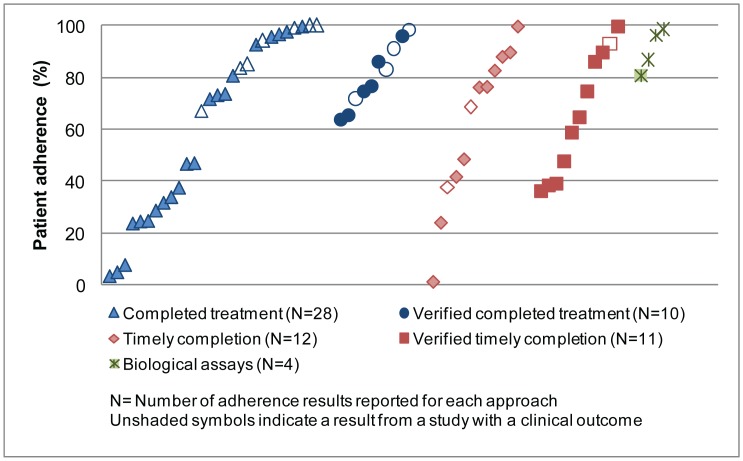
“Studies that did not use any of the five approaches were not plotted [4,37,56].”
BackgroundMethodDepoortere, E., Guthmann, J., Sipilanyambe, N., Nkandu, E., Fermon, F., Balkan, S., & Legros, D. (2004) · Tropical Medicine & International Health · doi:10.1046/j.1365-3156.2003.01157.x · Cited by 94 · cited 5×
“Factors significantly associated with non-adherence in more than one study included being male [31,56], lack of education [17,19], and vomiting [24,56].”
BackgroundMethodInfluentialImpact of prepackaging antimalarial drugs on cost to patients and compliance with treatment.
Yeboah‐Antwi, K., Gyapong, J. O., Asare, I. K., Barnish, G., Evans, D., & Adjei, S. (2001) · Europe PMC (PubMed Central) · Cited by 92
Takeuchi, R., Lawpoolsri, S., Imwong, M., Kobayashi, J., Kaewkungwal, J., Pukrittayakamee, S., Puangsa-art, S., Thanyavanich, N., Maneeboonyang, W., Day, N., et al. (2010) · Malaria Journal · doi:10.1186/1475-2875-9-308 · Cited by 90 · cited 3×
“(2011) found that patients who waited more than one day to seek care after onset of fever were more likely to be adherent, but other studies showed that seeking care within 24 hours of symptom onset was associated with adherence [27], and waiting two or more days was associated with nonadherence [24,62].”
BackgroundAdherence to Antimalarial Drug Therapy among Vivax Malaria Patients in Northern Thailand
Khantikul, N., Butraporn, P., Kim, H. S., Leemingsawat, S., Tempongko, M. S. B., & Suwonkerd, W. (2009) · Journal of Health, Population and Nutrition · doi:10.3329/jhpn.v27i1.3313 · Cited by 89 · cited 4×
“2009 [25] Knowledge of the seriousness of the infection/knowing the species in mixed transmission areas Yepez et al.”
BackgroundMethodInfluentialAjayi, I. O., Browne, E. N., Bateganya, F., Yar, D., Happi, C., Falade, C. O., Gbotosho, G. O., Yusuf, B., Boateng, S., Mugittu, K., et al. (2008) · Malaria Journal · doi:10.1186/1475-2875-7-190 · Cited by 88 · cited 4×
“In addition, a study evaluating adherence to ACTs dispensed by CHWs reported high adherence of 83%–97% by ‘‘completed treatment’’ in household surveys in three countries [36].”
BackgroundInfluentialChild malaria treatment practices among mothers in the district of Yanfolila, Sikasso region, Mali
Aly Théra, M., D'alessandro, U., Ouedraogo, A., Packou, J., Ahmed Deida Souleymane, O., Fané, M., Ade, G., Alvez, F., & Doumbo, O. (2000) · Tropical Medicine & International Health · doi:10.1046/j.1365-3156.2000.00652.x · Cited by 85
Kangwana, B. P., Kedenge, S. V., Noor, A. M., Alegana, V. A., Nyandigisi, A. J., Pandit, J., Fegan, G. W., Todd, J. E., Brooker, S., Snow, R. W., et al. (2011) · PLoS Medicine · doi:10.1371/journal.pmed.1000437 · Cited by 83
Self-citationOkonkwo, P. O., Akpala, C. O., Okafor, H. U., Mbah, A. U., & Nwaiwu, O. (2001) · Transactions of the Royal Society of Tropical Medicine and Hygiene · doi:10.1016/s0035-9203(01)90252-4 · Cited by 78 · cited 1×
“Twenty-four studies used multivariate analysis to examine factors associated with adherence: of these, 13 studies reported 30 factors significantly associated with adherence in multivariate models, nine studies found 12 factors associated with non-adherence, and five studies reported not finding any factors significan…”
BackgroundChinbuah, A. M., Gyapong, J. O., Pagnoni, F., Wellington, E. K., & Gyapong, M. (2006) · Tropical Medicine & International Health · doi:10.1111/j.1365-3156.2006.01654.x · Cited by 78 · cited 8×
“It was hard to assess variation across outlet types as of the 55 studies included, only five specifically evaluated adherence to antimalarials from private drug shops [16,30,45,48–49] and five from community health workers [15,24,28,36,54].”
BackgroundMethodResultInfluentialAdherence to Plasmodium vivax malaria treatment in the Brazilian Amazon Region
Pereira, E. A., Ishikawa, E. A., & Fontes, C. J. (2011) · Malaria Journal · doi:10.1186/1475-2875-10-355 · Cited by 77 · cited 5×
“2011 [31] Quality of history taking (i.”
BackgroundInfluentialBell, D. J., Wootton, D., Mukaka, M., Montgomery, J., Kayange, N., Chimpeni, P., Hughes, D. A., Molyneux, M. E., Ward, S. A., Winstanley, P. A., et al. (2009) · Malaria Journal · doi:10.1186/1475-2875-8-204 · Cited by 76 · cited 3×
“Likewise, Bell and colleagues stated that self-reported data, which resulted in 100% adherence to AL and CPD in Malawi, was unreliable compared to MEMS containers [57].”
BackgroundMethodResultInfluentialKACHUR, S. P., KHATIB, R. A., KAIZER, E., FOX, S. S., ABDULLA, S. M., & BLOLAND, P. B. (2004) · The American Journal of Tropical Medicine and Hygiene · doi:10.4269/ajtmh.2004.71.715 · Cited by 73 · cited 3×
“4%–75%) [17,20,23] and higher in two other studies (90%–93%) [19,61].”
BackgroundMethodSelf-citationAdherence to Treatment With Artemether-Lumefantrine for Uncomplicated Malaria in Rural Malawi
Mace, K. E., Mwandama, D., Jafali, J., Luka, M., Filler, S. J., Sande, J., Ali, D., Kachur, S. P., Mathanga, D. P., & Skarbinski, J. (2011) · Clinical Infectious Diseases · doi:10.1093/cid/cir498 · Cited by 73 · cited 10×
“2011 [29] - Being a child age 8–10 years versus 2–4 years Souares et al.”
BackgroundMethodResultInfluentialSelf-citationBarriers to prompt and effective treatment of malaria in northern Sri Lanka
Reilley, B., Abeyasinghe, R., & Pakianathar, M. V. (2002) · Tropical Medicine & International Health · doi:10.1046/j.1365-3156.2002.00919.x · Cited by 66 · cited 1×
“Twenty-four studies used multivariate analysis to examine factors associated with adherence: of these, 13 studies reported 30 factors significantly associated with adherence in multivariate models, nine studies found 12 factors associated with non-adherence, and five studies reported not finding any factors significan…”
BackgroundBeer, N., Ali, A. S., Rotllant, G., Abass, A. K., Omari, R. S., Al‐mafazy, A. H., Björkman, A., & Källander, K. (2009) · Tropical Medicine & International Health · doi:10.1111/j.1365-3156.2009.02289.x · Cited by 64
Faucher, J., Aubouy, A., Adeothy, A., Cottrell, G., Doritchamou, J., Gourmel, B., Houzé, P., Kossou, H., Amedome, H., Massougbodji, A., et al. (2009) · The Journal of Infectious Diseases · doi:10.1086/599378 · Cited by 61 · cited 3×
“Artemether-lumefantrine (AL) was the ACT in 18 of these studies, with two of these 18 also reporting adherence to artesunateamodiaquine [36,60].”
BackgroundLawford, H., Zurovac, D., O'Reilly, L., Hoibak, S., Cowley, A., Munga, S., Vulule, J., Juma, E., Snow, R. W., & Allan, R. (2011) · Malaria Journal · doi:10.1186/1475-2875-10-281 · Cited by 59
Agyepong, I. A., Ansah, E., Gyapong, M., Adjei, S., Barnish, G., & EVANS, D. B. (2002) · Social Science & Medicine · doi:10.1016/s0277-9536(01)00366-5 · Cited by 57
Lemma, H., Löfgren, C., & San Sebastian, M. (2011) · Malaria Journal · doi:10.1186/1475-2875-10-349 · Cited by 54 · cited 2×
“Similarly, Lemma et al. (2011) found that patients who waited more than one day to seek care after onset of fever were more likely to be adherent, but other studies showed that seeking care within 24 hours of symptom onset was associated with adherence [27], and waiting two or more days was…”
BackgroundMethodInfluentialKabanywanyi, A. M., Lengeler, C., Kasim, P., King'eng'ena, S., Schlienger, R., Mulure, N., & Genton, B. (2010) · Malaria Journal · doi:10.1186/1475-2875-9-48 · Cited by 54 · cited 2×
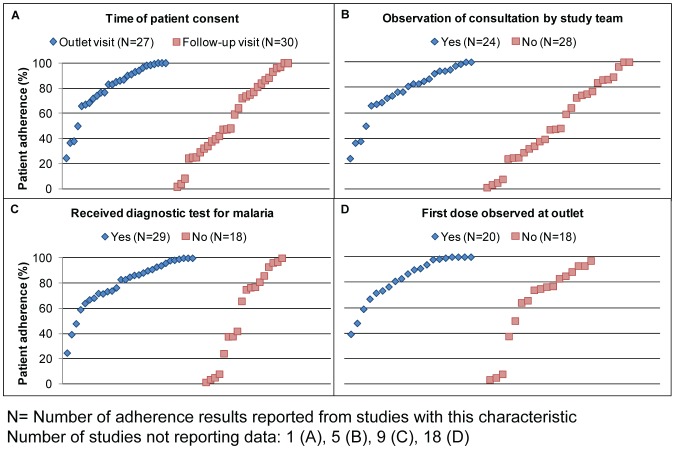
“3%–100%) [15,22,33], except in studies where the research team enrolled patients at the time the drug was obtained and likely had a more significant research presence than in other studies (90% and 93%) [19,61].”
ResultRahman, M. M., Dondorp, A. M., Day, N. P. J., Lindegardh, N., Imwong, M., Faiz, M. A., Bangali, A. M., Kamal, A. T. M. M., Karim, J., Kaewkungwal, J., et al. (2008) · Transactions of the Royal Society of Tropical Medicine and Hygiene · doi:10.1016/j.trstmh.2008.05.022 · Cited by 54 · cited 4×
“4%–75%) [17,20,23] and higher in two other studies (90%–93%) [19,61].”
BackgroundResultInfluentialKalyango, J. N., Rutebemberwa, E., Karamagi, C., Mworozi, E., Ssali, S., Alfven, T., & Peterson, S. (2013) · PLoS ONE · doi:10.1371/journal.pone.0060481 · Cited by 53 · cited 10×
“Factors significantly associated with non-adherence in more than one study included being male [31,56], lack of education [17,19], and vomiting [24,56].”
BackgroundInfluentialKrause, G., & Sauerborn, R. (2000) · Annals of Tropical Paediatrics · doi:10.1080/02724936.2000.11748147 · Cited by 52 · cited 2×
“Studies that did not use any of the five approaches were not plotted [4,37,56].”
BackgroundMethodFungladda, W., Honrado, E. R., Thimasarn, K., Kitayaporn, D., Karbwang, J., Kamolratanakul, P., & Masngammueng, R. (1998) · Europe PMC (PubMed Central) · Cited by 48
Onyango, E. O., Ayodo, G., Watsierah, C. A., Were, T., Okumu, W., Anyona, S. B., Raballah, E., Okoth, J. M., Gumo, S., Orinda, G. O., et al. (2012) · BMC Infectious Diseases · doi:10.1186/1471-2334-12-143 · Cited by 48 · cited 5×
“2012 [41] Residence in one of two areas in study location Duarte et al.”
BackgroundResultInfluentialCohen, J. L., Yavuz, E., Morris, A., Arkedis, J., & Sabot, O. (2012) · Malaria Journal · doi:10.1186/1475-2875-11-83 · Cited by 45 · cited 11×
“2012 [16] Lower expectation of getting malaria in the next 30 days Cohen et al.”
BackgroundMethodInfluentialKeoluangkhot, V., Green, M. D., Nyadong, L., Fernández, F. M., Mayxay, M., & Newton, P. N. (2008) · The American Journal of Tropical Medicine and Hygiene · doi:10.4269/ajtmh.2008.78.552 · Cited by 45 · cited 2×
“2 0 0 8 [3 6 ], (G h an a,”
BackgroundWINCH, P. J., Bagayoko, A., Diawara, A., Kane, M., Thiéro, F., Gilroy, K., Daou, Z., Berthé, Z., & Swedberg, E. (2003) · Transactions of the Royal Society of Tropical Medicine and Hygiene · doi:10.1016/s0035-9203(03)80001-9 · Cited by 44 · cited 1×
“…had lower adherence for all approaches, as is particularly evident in the community-based interventions by Marsh et al. (1999, 2004) and Winch et al. (2003) and the private-sector follow-up study by Denis et al. (2008); this may be because most of the interventions included in the…”
BackgroundDorsey, G., Vlahos, J., Kamya, M. R., Staedke, S. G., & Rosenthal, P. J. (2003) · The Journal of Infectious Diseases · doi:10.1086/378523 · Cited by 42 · cited 1×
“Since publication of this review, there has been a major expansion of the availability of ACTs, which have been shown to be efficacious and may reduce the spread of resistance in low transmission settings [9–12].”
BackgroundCommunity effectiveness of malaria treatment in Uganda—a long way to Abuja targets
Nsungwa‐Sabiiti, J., Tomson, G. B., Pariyo, G. W., Ogwal-Okeng, J. W., & Peterson, S. S. (2005) · Annals of Tropical Paediatrics · doi:10.1179/146532805x45683 · Cited by 42 · cited 1×
“Non-artemisinin-based combinations featured in 13 studies (chloroproguanil-dapsone (CPD) [57–58], quinine + doxycycline or tetracycline [45,59,67], chloroquine + SP [26,40,47], SP + amodiaquine [65] and, for treatment of P.”
BackgroundThe difference between effectiveness and efficacy of antimalarial drugs in Kenya
Amin, A. A., Hughes, D. A., Marsh, V., Abuya, T., Kokwaro, G. O., Winstanley, P., Ochola, S. A., & Snow, R. W. (2004) · Tropical Medicine & International Health · doi:10.1111/j.1365-3156.2004.01291.x · Cited by 41 · cited 1×
“Studies that did not use any of the five approaches were not plotted [4,37,56].”
MethodGerstl, S., Dunkley, S., Mukhtar, A., Baker, S., & Maikere, J. (2010) · Transactions of the Royal Society of Tropical Medicine and Hygiene · doi:10.1016/j.trstmh.2009.12.008 · Cited by 41 · cited 3×
“4%–75%) [17,20,23] and higher in two other studies (90%–93%) [19,61].”
BackgroundMethodCongpuong, K., Bualombai, P., Banmairuroi, V., & Na‐Bangchang, K. (2010) · Malaria Journal · doi:10.1186/1475-2875-9-43 · Cited by 40
Qingjun, L., Jihui, D., Laiyi, T., Xiangjun, Z., Jun, L., Hay, A., Shires, S., & Navaratnam, V. (1998) · Europe PMC (PubMed Central) · Cited by 36
Adherence to a combination of artemether and lumefantrine (Coartem®) in Kajo Keji, southern Sudan
Depoortere, E., Salvador, E. T. C., Stivanello, E., Bisoffi, Z., & Guthmann, J.-P. (2004) · Annals of Tropical Medicine & Parasitology · doi:10.1179/000349804225021271 · Cited by 34 · cited 1×
“Several studies calculated the expected time of each dose per the manufacturer’s instructions and allowed an interval of several hours on either side [22–23,28], while other studies required the correct dose to be taken on each day specified, or for AL twice per day for three days [15,18,33,61], and other studies did…”
BackgroundHodel, E. M., Kabanywanyi, A. M., Malila, A., Zanolari, B., Mercier, T., Beck, H., Buclin, T., Olliaro, P., Decosterd, L. A., & Genton, B. (2009) · PLoS ONE · doi:10.1371/journal.pone.0008184 · Cited by 34 · cited 1×
“Studies in Tanzania and Cambodia found high levels of antimalarials circulating in the blood among patients stating they had not taken any drugs in the previous 28 days [69–70].”
BackgroundKolaczinski, J. H., Ojok, N., Opwonya, J., Meek, S., & Collins, A. (2006) · Malaria Journal · doi:10.1186/1475-2875-5-40 · Cited by 33 · cited 4×
“1%–83%) [16,24,27,29,60] was lower than adherence to artesunate-amodiaquine (77%–91%) [14,60] and chloroquine+SP (96%) [26].”
BackgroundInfluentialShwe, T., Lwin, M., & Aung, S. (1998) · Europe PMC (PubMed Central) · Cited by 33
Simba, D. O., Kakoko, D., Tomson, G., Premji, Z., Petzold, M., Mahindi, M., & Gustafsson, L. L. (2012) · Transactions of the Royal Society of Tropical Medicine and Hygiene · doi:10.1016/j.trstmh.2011.09.006 · Cited by 32 · cited 6×
“Several studies calculated the expected time of each dose per the manufacturer’s instructions and allowed an interval of several hours on either side [22–23,28], while other studies required the correct dose to be taken on each day specified, or for AL twice per day for three days [15,18,33,61], and other studies did…”
BackgroundResultInfluentialDuarte, E. C., & Gyorkos, T. W. (2003) · Tropical Medicine & International Health · doi:10.1046/j.1365-3156.2003.01042.x · Cited by 31 · cited 3×
“Non-artemisinin-based combinations featured in 13 studies (chloroproguanil-dapsone (CPD) [57–58], quinine + doxycycline or tetracycline [45,59,67], chloroquine + SP [26,40,47], SP + amodiaquine [65] and, for treatment of P.”
BackgroundA CONTRARIAN VIEW OF MALARIA THERAPY POLICY IN AFRICA
Bloland, P. B. (2003) · American Journal of Tropical Medicine and Hygiene · doi:10.4269/ajtmh.2003.68.125 · Cited by 31 · cited 2×
“2 0 0 4 [3 5 ], (G h an a) , M u lt ip le so u rc e s SP , ch lo ro q u in e (C Q ), &”
BackgroundDenis, M. B. (1998) · Europe PMC (PubMed Central) · Cited by 29
Bruxvoort, K., Festo, C., Kalolella, A., Cairns, M., Lyaruu, P., Kenani, M., Kachur, S. P., Goodman, C., & Schellenberg, D. (2014) · The American Society of Tropical Medicine and Hygiene · doi:10.4269/ajtmh.14-0126 · Cited by 27
Self-citation[The factors associated with noncompliance with antimalarial treatment in Ecuadorian patients].
Yépez, M. C., Zambrano, D., Carrasco, F., & Yépez, R. F. (2000) · Revista cubana de medicina tropical · Cited by 26
Dunyo, S., Sirugo, G., Sesay, S., Bisseye, C., Njie, F., Adiamoh, M., Nwakanma, D., Diatta, M., Janha, R., Sisay Joof, F., et al. (2011) · PLoS ONE · doi:10.1371/journal.pone.0017371 · Cited by 25 · cited 4×
“The third type of studies, those assessing clinical outcomes as a primary endpoint in addition to reporting patient adherence, included seven RCTs comparing effectiveness and adherence of different drug regimens [56–60] or supervised versus nonsupervised treatment [61–62], and four uncontrolled studies also assessing…”
BackgroundResultInfluentialAntimalarial drug use among caregivers in Ghana.
Abuaku, B. K., Koram, K. A., & Binka, F. N. (2004) · Europe PMC (PubMed Central) · Cited by 24
The Impact of Recall Periods on Reported Morbidity and Health Seeking Behavior
Hammer, J. S., Das, J., & Sánchez-Páramo, C. (2011) · doi:10.1596/1813-9450-5778 · Cited by 23
Hodel, E. M., Genton, B., Zanolari, B., Mercier, T., Socheat, D., Beck, H., Olliaro, P., Decosterd, L. A., & Ariey, F. (2010) · The Journal of Infectious Diseases · doi:10.1086/655779 · Cited by 23 · cited 1×
“Studies in Tanzania and Cambodia found high levels of antimalarials circulating in the blood among patients stating they had not taken any drugs in the previous 28 days [69–70].”
BackgroundSouares, A., Lalou, R., Sene, I., Sow, D., & Le Hesran, J.-Y. (2008) · Transactions of the Royal Society of Tropical Medicine and Hygiene · doi:10.1016/j.trstmh.2008.05.016 · Cited by 21 · cited 7×
“2008 [65] Factors related to the consultation Having received exact number of pills to complete treatment Beer et al.”
BackgroundResultInfluentialBlomstedt, Y., Souares, A., Niamba, L., Sié, A., Weinehall, L., & Sauerborn, R. (2012) · Global Health Action · doi:10.3402/gha.v5i0.8488 · Cited by 21
Na‐Bangchang, K., Congpuong, K., Sirichaisinthop, J., Suprakorb, K., & Karbwang, J. (1997) · British Journal of Clinical Pharmacology · doi:10.1046/j.1365-2125.1997.00604.x · Cited by 21 · cited 2×
“(1997) measured adherence to artesunate + mefloquine by whole blood mefloquine concentrations based on a reference interval [64].”
BackgroundMethodLauwo, J., Hombhanje, F. W., Tulo, S. P., Maibani, G., & Bjorge, S. (2006) · PubMed · Cited by 20
Evaluation of medication adherence methods in the treatment of malaria in Rwandan infants
Twagirumukiza, M., Kayumba, P. C., Kips, J. G., Vrijens, B., Stichele, R. V., Vervaet, C., Remon, J. P., & Van Bortel, M. L. (2010) · Malaria Journal · doi:10.1186/1475-2875-9-206 · Cited by 17 · cited 3×
“(2010), adherence to quinine tablets was 100% by both self-report (‘‘verified timely completion’’) and pill count (no pill boxes had pills remaining), but only 78% of patients took at least 80% of the doses based on the electronic pill box data [34].”
BackgroundMethodInfluential[The factors associated with noncompliance with antimalarial treatment in Ecuadorian patients].
Yépez, M. C., Zambrano, D., Carrasco, F., & Rf, Y. (2001) · PubMed · Cited by 15
Souares, A., Moulin, P., Sarrassat, S., Carlotti, M., Lalou, R., & Hesran, J. L. (2009) · Malaria Journal · doi:10.1186/1475-2875-8-257 · Cited by 13
Cited by
Taylor, W. R. J., Thriemer, K., von Seidlein, L., Yuentrakul, P., Assawariyathipat, T., Assefa, A., Auburn, S., Chand, K., Chau, N. H., Cheah, P. Y., et al. (2019) · The Lancet · doi:10.1016/s0140-6736(19)31285-1 · Cited by 178
Lindner, A. K., Lejon, V., Chappuis, F., Seixas, J., Kazumba, L., Barrett, M. P., Mwamba, E., Erphas, O., Akl, E. A., Villanueva, G., et al. (2020) · The Lancet Infectious Diseases · doi:10.1016/s1473-3099(19)30612-7 · Cited by 161
Douglas, N. M., Poespoprodjo, J. R., Patriani, D., Malloy, M. J., Kenangalem, E., Sugiarto, P., Simpson, J. A., Soenarto, Y., Anstey, N. M., & Price, R. N. (2017) · PLOS Medicine · doi:10.1371/journal.pmed.1002379 · Cited by 107
“It is well recognized that the duration of antimalarial treatment is a critical determinant of adherence [9].”
BackgroundResultInfluentialDrug targets for resistant malaria: Historic to future perspectives
Kumar, S., Bhardwaj, T., Prasad, D. N., & Singh, R. K. (2018) · Biomedicine & Pharmacotherapy · doi:10.1016/j.biopha.2018.05.009 · Cited by 138
Recent advances in use of silver nanoparticles as antimalarial agents
Rai, M. K., Ingle, A. P., Paralikar, P., Gupta, I. R., Medici, S., & dos Santos, C. A. (2017) · International Journal of Pharmaceutics · doi:10.1016/j.ijpharm.2017.04.042 · Cited by 104
Metadata
- Authors
- Bruxvoort, K., Goodman, C., Kachur, S. P., & Schellenberg, D.
- Affiliations
- Ifakara Health Institute (TZ)
- London School of Hygiene & Tropical Medicine (GB)
- Centers for Disease Control and Prevention (US)
- Corresponding author
- Bruxvoort, Katia
- Venue
- PLoS ONE
- Publisher
- Public Library of Science (PLoS)
- Published
- 2014-01-20
- Volume
- 9
- Issue
- 1
- Pages
- e84555
- ISSN
- 1932-6203 (ISSN-L)
- PMC
- PMC3896377
- OpenAlex
- W2050622314
- Semantic Scholar
- 50c7bae19cc16b2a0bcb0d3bc1e76c67e37fad86
- Cited by
- 135
- References
- 74
- Citations by year
- 2026: 4 · 2025: 5 · 2024: 14 · 2023: 12 · 2022: 9 · 2021: 24 · 2020: 16 · 2019: 11 · 2018: 6 · 2017: 9 · 2016: 5 · 2015: 13 · 2014: 7
- FWCI
- 1.47
- Type
- journal article
- Language
- en
- Open access
- gold
- doi.org
- Licence
- Locations
- PLoS ONE (publishedVersion, cc-by)
- Europe PMC (PubMed Central) (publishedVersion, cc-by)
- PubMed Central (publishedVersion, cc-by)
- PubMed (publishedVersion)
- IHI Repository (acceptedVersion)
- LSHTM Research Online (London School of Hygiene and Tropical Medicine) (acceptedVersion)
- RePEc: Research Papers in Economics (submittedVersion)
- DOAJ (DOAJ: Directory of Open Access Journals) (submittedVersion, cc-by-sa)
- Figshare (submittedVersion, cc-by)
- Funders
- Bill and Melinda Gates Foundation
- London School of Hygiene and Tropical Medicine
- Topics
- Health Sciences › Medicine › Family Practice › Medication Adherence and Compliance
- Health Sciences › Medicine › Public Health, Environmental and Occupational Health › Malaria Research and Control
- Health Sciences › Medicine › Infectious Diseases › HIV/AIDS Research and Interventions
- Keywords
- antimalarial drugs, artemisinin-based combination therapy, adherence measurement methods, informed consent, diagnostic testing, self-report bias, community health workers
- MeSH terms
- Antimalarials, Humans, Malaria, Patient Compliance, Artemisinins
About these checks
Registry, retraction, Cites and statistics results are computed, not judged, with one exception: a printed reference that no index lists is read once by a model before it counts as a citation error. Claims are extracted by a model and kept only when their quote appears verbatim in the text; each cited source is then checked, with a model’s help, for whether it says what the claim relies on. Those verdicts can be wrong — read the claim’s quote and the cited source before relying on one.
Statistics and arithmetic are recomputed, not judged.
Confidence bands are shown only for fields calibrated on our annotated test set. None is calibrated yet, so no band is shown.
What counts as a claim ›How we measure confidence ›How we check this ›
Are you an author, or do you see a problem with this page? Request a review
Data sources
Bibliographic data: Semantic Scholar, OpenAlex, Crossref.
Contains information from the Semantic Scholar Academic Graph Datasets, made available under the ODC Attribution License (ODC-BY 1.0).
Semantic Scholar’s data is described in: Kinney, R., et al. (2023). The Semantic Scholar Open Data Platform. arXiv:2301.10140.
