

Machine Learning for Outcome Prediction of Acute Ischemic Stroke Post Intra-Arterial Therapy
Open accessThe DOI matches its Crossref record; 61 of the 62 references it cites were found in a registry or an index.
Abstract
INTRODUCTION: Stroke is a major cause of death and disability. Accurately predicting stroke outcome from a set of predictive variables may identify high-risk patients and guide treatment approaches, leading to decreased morbidity. Logistic regression models allow for the identification and validation of predictive variables. However, advanced machine learning algorithms offer an alternative, in particular, for large-scale multi-institutional data, with the advantage of easily incorporating newly available data to improve prediction performance. Our aim was to design and compare different machine learning methods, capable of predicting the outcome of endovascular intervention in acute anterior circulation ischaemic stroke. METHOD: We conducted a retrospective study of a prospectively collected database of acute ischaemic stroke treated by endovascular intervention. Using SPSS®, MATLAB®, and Rapidminer®, classical statistics as well as artificial neural network and support vector algorithms were applied to design a supervised machine capable of classifying these predictors into potential good and poor outcomes. These algorithms were trained, validated and tested using randomly divided data. RESULTS: We included 107 consecutive acute anterior circulation ischaemic stroke patients treated by endovascular technique. Sixty-six were male and the mean age of 65.3. All the available demographic, procedural and clinical factors were included into the models. The final confusion matrix of the neural network, demonstrated an overall congruency of ∼ 80% between the target and output classes, with favourable receiving operative characteristics. However, after optimisation, the support vector machine had a relatively better performance, with a root mean squared error of 2.064 (SD: ± 0.408). DISCUSSION: We showed promising accuracy of outcome prediction, using supervised machine learning algorithms, with potential for incorporation of larger multicenter datasets, likely further improving prediction. Finally, we propose that a robust machine learning system can potentially optimise the selection process for endovascular versus medical treatment in the management of acute stroke.
Overview
The claims and statistics of this paper haven’t been checked yet.
Free: it reads the open-access text and checks the first 5 claims that cite a source we can check. Create a free account to check every claim.
Integrity signals
Registry
Cites
Statistics
Figures
Verification
Claims the paper makes
The claims and statistics of this paper haven’t been checked yet.
Free: it reads the open-access text and checks the first 5 claims that cite a source we can check. Create a free account to check every claim.
Claims other papers make about this one
Each is checked against this paper’s own text: does it say what the citing paper says it does?
The source backs part of the claim, not all of it — or backs it for a different population, condition or comparison.
In the citing paper
“The authors analysed the data via artificial neural network and SVM, and obtained prediction accuracy above 70%.”
From Artificial intelligence in healthcare: past, present and future (2017) · cites this paper as [59]
Experimental — accuracy not yet measured
Self-check
Percentages, sums and reported differences re-computed from the paper’s own numbers.
The self-check needs the paper’s full text.
Citations
Cites
Artificial intelligence: a modern approach
(1995) · Choice Reviews Online · doi:10.5860/choice.33-1577 · Cited by 21,974
Jauch, E. C., Saver, J. L., Adams, H. P., Bruno, A., Connors, J. J. (., Demaerschalk, B. M., Khatri, P., McMullan, P. W., Qureshi, A. I., Rosenfield, K., et al. (2013) · Stroke · doi:10.1161/str.0b013e318284056a · Cited by 7,634 · cited 1×
“There is currently level I evidence that NIHSS (National Institute of Health Stroke Score) [46,47] is a quick and relatively simple guide to estimate the extent and the severity of a stroke, and probably correlates with the clinical outcome [46].”
BackgroundWRITING GROUP MEMBERS, Lloyd-Jones, D., Adams, R., Carnethon, M., De Simone, G., Ferguson, T. B., Flegal, K., Ford, E., Furie, K., Go, A., et al. (2009) · Circulation · doi:10.1161/circulationaha.108.191259 · Cited by 3,908 · cited 1×
“Approximately 800,000 cases of stroke are reported in United States of America per annum, leading to 200,000 deaths, almost one of every 16 deaths [2,3].”
BackgroundRosamond, W., Flegal, K., Friday, G., Furie, K., Go, A., Greenlund, K., Haase, N., Ho, M., Howard, V., Kissela, B., et al. (2007) · Circulation · doi:10.1161/circulationaha.106.179918 · Cited by 3,277
WRITING GROUP MEMBERS, Lloyd-Jones, D., Adams, R., Carnethon, M., De Simone, G., Ferguson, T. B., Flegal, K., Ford, E., Furie, K., Go, A., et al. (2009) · Circulation · doi:10.1161/circulationaha.108.191261 · Cited by 3,140
Furlan, A., Higashida, R., Wechsler, L., Gent, M., Rowley, H., Kase, C., Pessin, M., Ahuja, A., Callahan, F., Clark, W. M., et al. (1999) · JAMA · doi:10.1001/jama.282.21.2003 · Cited by 3,073
A Trial of Imaging Selection and Endovascular Treatment for Ischemic Stroke
Kidwell, C. S., Jahan, R., Gornbein, J., Alger, J. R., Nenov, V., Ajani, Z., Feng, L., Meyer, B. C., Olson, S., Schwamm, L. H., et al. (2013) · New England Journal of Medicine · doi:10.1056/nejmoa1212793 · Cited by 1,387 · cited 1×
“This conundrum was made more complicated when the MRRESCUE trial demonstrated not only that embolectomy was no better than standard care, but also a favorable penumbral pattern on imaging does not necessarily indicates patients who would benefit from endovascular therapy [37].”
BackgroundSafety and Efficacy of Mechanical Embolectomy in Acute Ischemic Stroke: Results of the MERCI Trial
Smith, W. S., Sung, G., Starkman, S., Saver, J. L., Kidwell, C. S., Gobin, Y. P., Lutsep, H. L., Nesbit, G. M., Grobelny, T., Rymer, M. M., et al. (2005) · Stroke · doi:10.1161/01.str.0000171066.25248.1d · Cited by 1,312 · cited 1×
“However, randomized control trials are restricted and limited by the lower incidence of posterior circulation strokes, and the results are potentially influenced by the heterogeneity of both the presentations and the causes; and at this stage the rational for aggressive treatment is mainly based on anecdotal evidence…”
BackgroundSaver, J. L., Jahan, R., Levy, E. I., Jovin, T. G., Baxter, B., Nogueira, R. G., Clark, W., Budzik, R., & Zaidat, O. O. (2012) · The Lancet · doi:10.1016/s0140-6736(12)61384-1 · Cited by 1,302 · cited 1×
“well as Pivotal and SWIFT, have further strengthened the importance of the mechanical techniques in large vessels occlusion[10,20–26].”
MethodEndovascular Treatment for Acute Ischemic Stroke
Ciccone, A., Valvassori, L., Nichelatti, M., Sgoifo, A., Ponzio, M., Sterzi, R., & Boccardi, E. (2013) · New England Journal of Medicine · doi:10.1056/nejmoa1213701 · Cited by 1,297 · cited 1×
“The SYNTHESIS trial also failed to show any superiority of endovascular intervention or even for combined endovascular and peripheral thrombolysis over traditional intravenous tPA[34–36].”
Method
Research works printed but not linked: 2
- Ciccone A, Valvassori L, Nichelatti M, Sgoifo A, Ponzio M, et al. (2013) Endovascular treatment for acute ischemic stroke. N Engl J Med 368: 904-913. · DOI · Paper page
- Alpaydin E (2010) Introduction to machine learning. Cambridge, Mass.: MIT Press. xl, 537 p.
Cited by
Items 101–200 of 256
Multimodal Fusion Strategies for Outcome Prediction in Stroke
Zihni, E., Madai, V. I., Khalil, A. A., Galinović, I., Fiebach, J. B., Kelleher, J. D., Frey, D., & Livne, M. (2020) · International Joint Conference on Biomedical Engineering Systems and Technologies (BIOSTEC) · doi:10.5220/0008957304210428 · Cited by 20
“com/prediction2020/multimodal-classification racy (Asadi et al., 2014; Whiteley et al., 2012; Vora et al., 2011).”
BackgroundJeon, J. P., Kim, C., Oh, B.-D., Kim, S. J., & Kim, Y.-S. (2017) · Clinical Neurology and Neurosurgery · doi:10.1016/j.clineuro.2017.12.005 · Cited by 20
Chen, M. M., Tan, X. W., & Padman, R. (2023) · Journal of Medical Internet Research · doi:10.2196/36477 · Cited by 19
“In the literature on stroke research, ML algorithms have been applied in different tasks, such as identifying factors associated with future stroke risk [17-19], developing stroke severity measures [20,21], and predicting stroke outcomes [22,23].”
Transition toward Healthcare 5.0: Impact of COVID-19 in the healthcare industry
Raisa, J. F., Rahman, M. S., Mahmud, I., Kaiser, M. S., & Han, D. S. (2025) · ICT Express · doi:10.1016/j.icte.2025.04.002 · Cited by 20
Nowinski, W. L., Gupta, V., Qian, G., Ambrosius, W., & Kaźmierski, R. (2014) · PLoS ONE · doi:10.1371/journal.pone.0102048 · Cited by 20
“Some works, such as [41], [42], also use the ROC curves to assess binary classification.”
MethodOrmancılıkta makine öğrenmesi kullanımı
Eker, R., Alkiş, K. C., Uçar, Z., & Aydın, A. (2023) · Turkish Journal of Forestry | Türkiye Ormancılık Dergisi · doi:10.18182/tjf.1282768 · Cited by 17
Zhou, R., Ji, H., Liu, Q., Zhu, C., & Liu, R. (2019) · World Journal of Clinical Cases · doi:10.12998/wjcc.v7.i13.1611 · Cited by 17
Current Perspectives of Artificial Intelligence in Pediatric Neuroradiology: An Overview
Martin, D., Tong, E., Kelly, B. S., Yeom, K. W., & Yedavalli, V. S. (2021) · Frontiers in Radiology · doi:10.3389/fradi.2021.713681 · Cited by 17
Knowledge Discovery and Data Mining
Krochmal, M., & Husi, H. (2018) · Wiley eBooks · doi:10.1002/9781119183952.ch14 · Cited by 16
Grip strength differences in middle-aged and older adults and individuals with stroke
Lee, M.-T., Howe, T.-H., Chen, C.-C., Wu, C., & Hsieh, Y. (2023) · European Journal of Physical and Rehabilitation Medicine · doi:10.23736/s1973-9087.23.07729-8 · Cited by 15
Coelho, H. G. B., Silva, F., Correia, M., & Rodrigues, P. M. (2025) · Journal of Clinical Medicine · doi:10.3390/jcm14238479 · Cited by 15
Armstrong, R. M., Symons, M., Scott, J. G., Arnott, W. L., Copland, D. A., McMahon, K. L., & Whitehouse, A. (2018) · Journal of Speech Language and Hearing Research · doi:10.1044/2018_jslhr-l-17-0210 · Cited by 16
Ospel, J. M., Ganesh, A., Kappelhof, M., McDonough, R. V., Menon, B. K., Almekhlafi, M., Demchuk, A. M., McTaggart, R., Field, T. S., Dowlatshahi, D. D., et al. (2021) · Stroke Vascular and Interventional Neurology · doi:10.1161/svin.121.000167 · Cited by 15
Luo, G., Stone, B. L., Johnson, M. D., & Nkoy, F. L. (2016) · JMIR Research Protocols · doi:10.2196/resprot.5155 · Cited by 14
“In comparison to statistical methods, machine learning can improve prediction accuracy, occasionally doubling it, with less stringent assumptions on data distribution [38,42,43].”
Fighting healthcare rocketing costs with value-based medicine: the case of stroke management
Esposti, F., & Banfi, G. (2020) · BMC Health Services Research · doi:10.1186/s12913-020-4925-0 · Cited by 14
Chandra, J., Rangaswamy, M., Banerjee, B., Prajapati, A., Akhtar, Z., Sakauye, K. M., & Joseph, A. (2022) · Elsevier eBooks · doi:10.1016/b978-0-323-90037-9.00005-9 · Cited by 14
Khorsand, B., Vaghf, A., Salimi, V., Zand, M., & Ghoreishi, S. A. (2025) · Brain Injury · doi:10.1080/02699052.2025.2472188 · Cited by 14
“Furthermore, Hamed Asadi, et al., reported the strong capability of SVM in acute ischemic stroke after intra-arterial therapy, with a root mean squared error of 2.064 (25).”
InfluentialPredicting poststroke dyskinesia with resting-state functional connectivity in the motor network
Lin, S., Wang, D., Sang, H., Xiao, H., Yan, K., Wang, D., Zhang, Y., Yi, L., Shao, G., Shao, Z., et al. (2023) · Neurophotonics · doi:10.1117/1.nph.10.2.025001 · Cited by 13
“Machine learning has been widely used in medicine due to its ability to identify discriminant variables that can be used for prediction(54) and easily incorporate new data to improve prediction performance.(55) Machine learning has improved the assessment and prediction for both diagnosis and treatment purposes in str…”
BackgroundToward a hemorrhagic trauma severity score: fusing five physiological biomarkers
Bhat, A., Podstawczyk, D. A., Walther, B. K., Aggas, J. R., Machado-Aranda, D., Ward, K. R., & Guiseppi‐Elie, A. (2020) · Journal of Translational Medicine · doi:10.1186/s12967-020-02516-4 · Cited by 13
Allen, M. J., Pearn, K., Monks, T., Bray, B., Everson, R., Salmon, A., James, M. A., & Stein, K. (2019) · BMJ Open · doi:10.1136/bmjopen-2018-028296 · Cited by 13
Otieno, J. A., Häggström, J., Darehed, D., & Eriksson, M. (2024) · PLoS ONE · doi:10.1371/journal.pone.0303287 · Cited by 12
“Past studies on ML and stroke outcomes have mainly focused on binary outcomes [5, 10, 12, 13, 47, 48] whereas our study has an outcome with three classes.”
Improving Stroke Diagnosis and Treatment With Deep Learning: A Review
Soomro, T. A., Ali, A., Faye, I., Memon, K. A., Alothman, A., Mahmud, R. A., Muda, A. S., & Qureshi, K. K. (2025) · IEEE Sensors Journal · doi:10.1109/jsen.2025.3586157 · Cited by 12
“Since 2014, there has been significant progress in using ML to forecast the recovery outcomes of patients suffering from AIS [103].”
Predictive and diagnosis models of stroke from hemodynamic signal monitoring
Terriza, L. G., Risco‐Martín, J. L., Roselló, G. R., & Ayala, J. L. (2021) · Medical & Biological Engineering & Computing · doi:10.1007/s11517-021-02354-6 · Cited by 12
Hassan, F. H., & Omar, M. A. (2021) · Baghdad Science Journal · doi:10.21123/bsj.2021.18.4(suppl.).1406 · Cited by 12
Predicting Continuity of Asthma Care Using a Machine Learning Model: Retrospective Cohort Study
Tong, Y., Lin, B., Chen, G., & Zhang, Z. (2022) · International Journal of Environmental Research and Public Health · doi:10.3390/ijerph19031237 · Cited by 12
“Compared with statistical approaches (linear model) such as logistic regression, the XGBoost (ensemble model) can intensify the prediction performance with less fundamental assumptions on data distribution [51,52].”
MethodZijtregtop, E. A. M., Winterswijk, L. A., Beishuizen, T. P. A., Zwaan, C. M., Nievelstein, R. A. J., Meyer‐Wentrup, F. A. G., & Beishuizen, A. (2022) · Cancers · doi:10.2139/ssrn.4053477 · Cited by 12
AI-based Reference Ankle Joint Torque Trajectory Generation for Robotic Gait Assistance: First Steps
Moreira, L., Cerqueira, S. M., Figueiredo, J., Vilas‐Boas, J. P., & Santos, C. P. (2020) · IEEE International Conference on Autonomous Robot Systems and Competitions · doi:10.1109/icarsc49921.2020.9096205 · Cited by 13
“To realize that, we implemented, validated and compared two regression models based on Artificial Intelligence (AI) algorithms, namely, a Multilayer Perceptron (MLP) and a LongShort Term Memory (LSTM) neural networks since they have potential to model nonlinear relationships of data from the walking motion [19]–[21].”
MethodStroke Prediction System Using Artificial Neural Network
Ponmalar, A., Nokudaiyaval, G., Vishnu Kirthiga, R., Pavithra, P., & Rakshya, S. (2021) · International Conference on Communication and Electronics Systems (ICCES) · doi:10.1109/icces51350.2021.9489055 · Cited by 11
“[14] Asadi H, Dowling R, Yan B, Mitchell P.”
BackgroundArtificial Intelligence in Colorectal Polyp Detection and Characterization
Le, A., Salifu, M. O., & McFarlane, I. M. (2021) · International Journal of Clinical Research & Trials · doi:10.15344/2456-8007/2021/157 · Cited by 11
“This type of learning has been used to predict patient outcomes [24,25].”
MethodThe neurologist and artificial intelligence: Titans at crossroads
Vinny, P., & Vishnu, V. Y. (2019) · Annals of Indian Academy of Neurology · doi:10.4103/aian.aian_493_18 · Cited by 11
“[9] Machine learning has also been employed in outcome predictions and prognostic evaluation after strokes.[10-17]”
MethodMaharjan, J., Ektefaie, Y., Ryan, L., Mataraso, S. J., Barnes, G., Shokouhi, S., Green‐Saxena, A., Calvert, J. S., Mao, Q., & Das, R. (2022) · Frontiers in Neurology · doi:10.3389/fneur.2021.784250 · Cited by 10
“While there has been much progress in the prediction of outcomes of acute stroke using ML-based models (14–17), there is a need for research regarding the utilization of ML tools for the prediction of future stroke.”
BackgroundEnd to end stroke triage using cerebrovascular morphology and machine learning
Deshpande, A., Elliott, J. M., Jiang, B., Tahsili‐Fahadan, P., Kidwell, C. S., Wintermark, M., & Laksari, K. (2023) · Frontiers in Neurology · doi:10.3389/fneur.2023.1217796 · Cited by 10
Irie, F., Matsumoto, K., Matsuo, R., Nohara, Y., Wakisaka, Y., Ago, T., Nakashima, N., Kitazono, T., & Kamouchi, M. (2024) · JMIR AI · doi:10.2196/46840 · Cited by 10
Babayan, G. B., Zorin, R. A., Пшенников, А. С., Suchkov, I. A., Yudin, V. A., Zhadnov, V. A., Egorov, A. A., & Жданов, А. И. (2019) · Nauka molodykh (Eruditio Juvenium) · doi:10.23888/hmj201974533-540 · Cited by 10
“При этом прогностические технологии должны учитывать сложные нелинейные отношения между данными предикторами, что может быть реализовано при помощи технологии машинного обучения [6,7].”
Mold breakout prediction based on computer vision and machine learning
Wang, Y., Wang, Q.-C., Zhang, Y.-C., Cheng, Y.-H., Yao, M., & Wang, X. (2024) · Journal of Iron and Steel Research International · doi:10.1007/s42243-024-01198-2 · Cited by 9
Early Ischemic Stroke Detection Using Deep Learning: A Systematic Literature Review
Tan, K., Marvell, Y. A., & Gunawan, A. A. S. (2023) · International Seminar on Application for Technology of Information and Communication (iSemantic) · doi:10.1109/isemantic59612.2023.10295339 · Cited by 9
“…[20], [24], [25] Delaunay Triangulation 1 [3] Ais Lesion Segmentation (ALS) 2 [4], [7] Computational Linguistic Support Vector Machine (SVM) 2 [11], [13] Deep Belief Network (DBN) Combined with Deep Learning As each research or journal has a different approach to predict/detecting Ischemic…”
Methodde Sousa, D. A., & Mira, K. (2020) · Stroke · doi:10.1161/strokeaha.120.033061 · Cited by 9
“9,10 Arthur Samuel coined the term machine learning in 1959, while programming a computer to play checkers.”
BackgroundBaazaoui, H., Engelter, S. T., Gensicke, H., Enz, L., Psychogios, M., Mutke, M. A., Michel, P., Strambo, D., Salerno, A., Marquering, H. A., et al. (2025) · Frontiers in Neuroinformatics · doi:10.3389/fninf.2024.1508161 · Cited by 8
Data-Driven Machine Learning Techniques for the Prediction of Cholera Outbreak in West Africa
Onyijen, O. H., Olaitan, E. O., C, O. T., & Oyelola, S. (2023) · International Journal of Applied and Natural Sciences · doi:10.61424/ijans.v1i1.5 · Cited by 8
“The supervised ML predictive model for acute ischemic stroke post intra-arterial therapy was built in the article of Asadi et al. (2014) on "Machine learning for outcome prediction of acute ischemic stroke following intra-arterial therapy."”
MethodDing, X., Meng, Y., Xiang, L., & Boden-Albala, B. M. (2024) · Discover Public Health · doi:10.1186/s12982-024-00199-6 · Cited by 8
“These findings are consistent with previous studies that have demonstrated the effectiveness of machine learning techniques in predicting stroke outcomes [34, 35].”
Silent brain infarction: a quiet predictor of future stroke
Bang, O. Y. (2018) · Precision and Future Medicine · doi:10.23838/pfm.2018.00086 · Cited by 8
A Classification Model Based on an Adaptive Neuro-fuzzy Inference System for Disease Prediction
Mohanty, R., Solanki, S. S., Mallick, P. K., & Pani, S. K. (2020) · Studies in computational intelligence · doi:10.1007/978-981-15-5495-7_7 · Cited by 8
A Manta-Ray Hill Climbing Vision Transformer Model for Predicting Ischemic Stroke Outcome
Sarhan, A. M., Saif, D., & Elshennawy, N. M. (2024) · International Journal of Computational Intelligence Systems · doi:10.1007/s44196-024-00438-3 · Cited by 7
Gayle, A. A., & Shimaoka, M. (2017) · PLoS ONE · doi:10.1371/journal.pone.0172338 · Cited by 7
Ma, Y., Zhang, P., Tang, Y., Pan, C., Li, G., Liu, N., Hu, Y., & Tang, Z. (2020) · Brain Hemorrhages · doi:10.1016/j.hest.2020.01.006 · Cited by 7
A Multilevel NER Framework for Automatic Clinical Name Entity Recognition
Luu, T. M., Phan, R., Davey, R., & Chetty, G. (2017) · IEEE ... International Conference on Data Mining workshops · doi:10.1109/icdmw.2017.161 · Cited by 7
“rich text features [4] used for building Co-training model and”
MethodHenry gas solubility optimization double machine learning classifier for neurosurgical patients
Mosa, D. T., Mahmoud, A., Zaki, J. F. W., Sorour, S. E., El–Sappagh, S., & Abuhmed, T. (2023) · PLoS ONE · doi:10.1371/journal.pone.0285455 · Cited by 7
“[30] analyzed 107 patients of acute anterior or posterior circulation stroke via ANN and SVM.”
MethodBrzus, M., Griffis, J. C., Riley, C. J., Bruss, J., Shea, C., Johnson, H. J., & Boes, A. D. (2026) · npj Digital Medicine · doi:10.1038/s41746-026-02803-2 · Cited by 7
“Similarly, while predictive models have been developed for global measures of disability such as the Modi fi ed Rankin Scale and Barthel Index 7 – 11 , they are intendedtopredictglobaloutcomesandarenotabletopredictimpairments in speci fi c cognitive/behavioral domains, limiting their utility for applications such as ide…”
InfluentialComprehensive analysis of clinical data for COVID-19 outcome estimation with machine learning models
Iglesias, D., de Moura, J., Marcos, P. J., Rey, E. M., Novo, J., & Ortega, M. (2023) · Biomedical Signal Processing and Control · doi:10.1016/j.bspc.2023.104818 · Cited by 6
Application of Machine Learning Algorithms in Predicting Hepatitis C
Wang, Y., Yin, B., & Zhu, Q. (2023) · International Symposium on Artificial Intelligence for Medicine Sciences (ISAIMS) · doi:10.1145/3644116.3644176 · Cited by 6
“These metrics are founded upon a ”confusion matrix” incorporating the elements of true positives (TP), true negatives (TN), false positives (FP), and false negatives (FN) [36-37].”
BackgroundMachine Learning Model for Predicting Epidemics
Bokonda, P. L., Sidibé, M., Souissi, N., & Ouazzani-Touhami, K. (2023) · Computers · doi:10.3390/computers12030054 · Cited by 6
Artificial Intelligence a Paradigm Shift in Healthcare Sector Past, Present and Future Prospects
Omankwu, O. C. (2023) · Zenodo (CERN European Organization for Nuclear Research) · doi:10.5281/zenodo.8348837 · Cited by 6
Koraishy, F. M., & Mallipattu, S. K. (2023) · Frontiers in Nephrology · doi:10.3389/fneph.2023.1266967 · Cited by 6
Adaptive Neuro-Fuzzy Inference System for Prediction of Surgery Time for Ischemic Stroke Patients
Ali, R., Qidwai, U. A., Kamran, S., Akhtar, N., Alboudi, A. M., Ahmed, A., & Inshasi, J. S. S. (2019) · International Journal of Integrated Engineering · doi:10.30880/ijie.2019.11.03.007 · Cited by 5
Application of artificial intelligence in medical care: review of current status
Pandya, H. B., & Pandya, T. (2023) · International Journal of Advances in Medicine · doi:10.18203/2349-3933.ijam20230073 · Cited by 5
Zheng, J., Xiong, Y., Zheng, Y., Zhang, H., & Wu, R. (2023) · Evaluation Review · doi:10.1177/0193841x231193468 · Cited by 5
“Most previous studies have focused on analyzing one or two machine learning methods to predict stroke risk (Asadi et al., 2014; Khosla et al., 2010; Rukmawan et al., 2021).”
BackgroundAdvances in artificial neural networks as a disease prediction tool
Taylor, M. A., Cl, B., Schoen, M. W., & Hoque, S. (2021) · Journal of Cancer Research & Therapy · doi:10.14312/2052-4994.2021-1 · Cited by 5
Application of Machine Learning Techniques in Healthcare
H, S. D., Sudha, V., & Jagadeesan, D. (2022) · IGI Global eBooks · doi:10.4018/978-1-6684-6291-1.ch067 · Cited by 5
Shi, S., Qie, S., Wang, H., Wang, J., & Liu, T. (2023) · Frontiers in Neurology · doi:10.3389/fneur.2023.1178087 · Cited by 5
“Machine learning has already been widely applied in the field of medicine due to its capacity for identifying discriminant variables that can be utilized for making predictions (62), as well as its ability to easily integrate new data and enhance predictive performance (63).”
BackgroundAbisoye, O. A., & Jimoh, R. G. (2018) · International Journal of Modern Education and Computer Science · doi:10.5815/ijmecs.2018.04.03 · Cited by 5
“Recently, machine learning (ML) is used in medical science to check health condition [12-14] and diagnose several diseases such as cancer [15-16].”
BackgroundBiomedical Named Entity Recognition Based on Hybrid Multistage CNN-RNN Learner
Phan, R., Luu, T. M., Davey, R., & Chetty, G. (2018) · International Conference on Machine Learning and Data Engineering (iCMLDE) · doi:10.1109/icmlde.2018.00032 · Cited by 5
“These systems can perform new tasks at different treatment strategies to manage different diseases [8-11].”
BackgroundImpact of Pretreatment Ischemic Location on Functional Outcome after Thrombectomy
Xie, Y., Oster, J., Micard, E., Chen, B., Douros, I., Liao, L., Zhu, F., Soudant, M., Felblinger, J., Guillemin, F., et al. (2021) · Diagnostics · doi:10.3390/diagnostics11112038 · Cited by 5
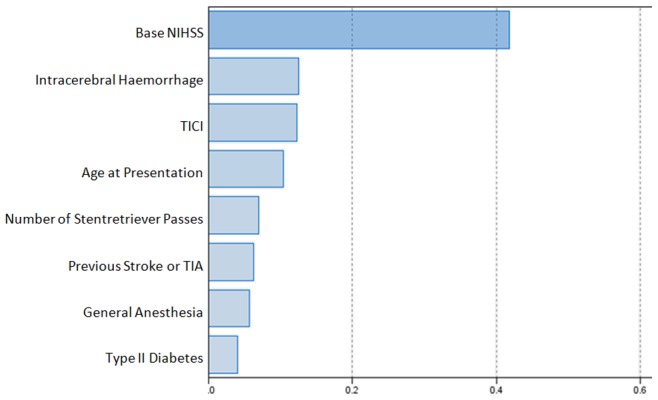
“Machine learning approaches have already been proposed for stroke outcome prediction using different parameters, such as baseline NIHSS score, intracerebral hemorrhage transformation, recanalization success, and age, which obtained promising accuracy (approaching 70%) [39].”
MethodKimura, N., Takahashi, K., Setsu, T., Goto, S., Miida, S., Takeda, N., Kojima, Y., Arao, Y., Hayashi, K., Sakai, N., et al. (2023) · JGH Open · doi:10.1002/jgh3.12915 · Cited by 4
Performance Evaluation of Machine Learning Classifiers for Brain Stroke Prediction
Singla, N., Garg, R., Asif, F., Garg, R., & Arora, D. (2023) · International Journal of Bioinformatics Research and Applications · doi:10.1504/ijbra.2024.137369 · Cited by 4
The intersection of prognostication and code status in patients with severe brain injury
Georgia, M. A. D. (2022) · Journal of Critical Care · doi:10.1016/j.jcrc.2022.153997 · Cited by 4
Simulation and Machine Learning Provide New Approaches to Examine Quality of Acute Stroke Management
Kamal, N. R., & Lakshminarayan, K. (2022) · Stroke · doi:10.1161/strokeaha.122.039954 · Cited by 4
Persistent Hemodynamic Depression After Carotid Artery Stenting: A Review and Update
Liu, X., Zheng, P., Xu, X., & Tu, Y. (2022) · Vascular and Endovascular Surgery · doi:10.1177/15385744221096220 · Cited by 3
“The risk factors for PHD after CAS were evaluated using multiple logistic regression (MLR) models.(47) It was found that 702 Vascular and Endovascular Surgery 56(7)”
MethodCurrent critical review on prediction stroke using machine learning
Byna, A., Lakulu, M. M., & Panessai, I. Y. (2024) · Bulletin of Electrical Engineering and Informatics · doi:10.11591/eei.v13i5.7435 · Cited by 3
“…of various algorithms combined with statistical methods and techniques such as synthetic minority oversampling technique (SMOTE), Chi-Square, feature selection, principal component analysis (PCA), partial least squares (PLS) optimization hybrids, and Cox models [13], [15], [24], [55], [61]–[63].”
MethodAutomated extraction of post-stroke functional outcomes from unstructured electronic health records
Fernandes, M. P., Gallagher, K., Turley, N., Gupta, A., Westover, M. B., Singhal, A. B., & Zafar, S. F. (2025) · European Stroke Journal · doi:10.1177/23969873251314340 · Cited by 3
“16–25 Some focused on predicting the full range of mRS scores 0–6 either using ordinal models, linear models or multiclas-sification, others focused on predicting poor functional outcome (mRS 3–6).”
A connectionist model for cerebrovascular accident risk prediction
Irina, T., & Albu, A. (2017) · E-Health and Bioengineering Conference (EHB) · doi:10.1109/ehb.2017.7995357 · Cited by 3
“Such a computational model may become crucial in prognostication, identifying the high-risk patients, and also may have a future role in treatment selection [9].”
BackgroundFerguson, D. P., Harris, M. K., & Williams, L. T. (2023) · Journal of Information Systems · doi:10.2308/isys-2021-032 · Cited by 3
Luo, G., Stone, B. L., Sheng, X., He, S., Koebnick, C., & Nkoy, F. L. (2021) · JMIR Research Protocols · doi:10.2196/27065 · Cited by 3
“In fact, the black-box issue has been a major reason for the slow adoption of machine learning in clinical practice, despite machine learning often producing the highest prediction accuracy among all predictive modeling methods [33,123-127].”
BackgroundUse artificial neural network to recommend the lumbar spinal endoscopic surgical corridor
Chen, C.-M., Chen, P.-C., Chen, Y., & Wang, G.-C. (2022) · Tzu Chi Medical Journal · doi:10.4103/tcmj.tcmj_281_21 · Cited by 3
“Our research is advantageous because the number of patients was relatively large compared with other studies that used AI models in medical predictions or decision-making [1,12-14 , 16 ].”
ResultAsadi, H., Dowling, R., Yan, B., & Mitchell, P. J. (2014) · Cited by 3
Self-citationMining Acute Stroke Patients’ Data Using Supervised Machine Learning
Kundu, R., & Mahmoodi, T. (2017) · Lecture notes in computer science · doi:10.1007/978-3-319-72453-9_30 · Cited by 3
“Another recent study applies machine learning algorithms in acute ischemic stroke outcome prediction in relation to treatment by endovascular intervention [4].”
BackgroundNielsen, M., Waldmann, M., Frölich, A. M., Fiehler, J., & Werner, R. (2019) · Informatik aktuell · doi:10.1007/978-3-658-25326-4_45 · Cited by 3
A framework for testing different imputation methods for tabular datasetsPreprint
Kossen, T., Livne, M., Madai, V. I., Galinović, I., Frey, D., & Fiebach, J. B. (2019) · bioRxiv (Cold Spring Harbor Laboratory) · doi:10.1101/773762 · Cited by 3
“The mRS 70 was split into 0-2 (good outcome) and 3-6 (bad outcome) [4, 22].”
BackgroundHegde, A., VIJAYSENAN, D., Mandava, P., & Menon, G. R. (2024) · Neurosurgical Review · doi:10.1007/s10143-024-03115-3 · Cited by 2
Lehmann, S., Vychopen, M., Güresir, E., & Wach, J. (2025) · Frontiers in Neurology · doi:10.3389/fneur.2025.1603536 · Cited by 2
“Using supervised machine learning algorithms, another research group was able to predict the outcome of patients with ischemic stroke after intra-arterial therapy with an accuracy of ∼ 70% (3).”
Augusto, I. C. M., António, N., Marreiros, A., Ramalhete, S., & Nzwalo, H. (2026) · Neurorehabilitation · doi:10.1177/10538135261420819 · Cited by 2
“It is also important to note that the complex interplay of clinical factors, which underlies ML (Asadi et al., 2014; Castro et al., 2025; Wang et al., 2023), could not be fully explored, as many variables were unavailable.”
InfluentialYoun, S. W., Kwon, J., Kim, J., Park, J., Ahn, D., & Lee, J. (2019) · Cardiovascular Imaging Asia · doi:10.22468/cvia.2018.00248 · Cited by 2
Wu, J., Zhang, Q., Tao, L., & Lu, X. (2022) · Journal of Information & Knowledge Management · doi:10.1142/s0219649222500794 · Cited by 2
Advancements in Neuroanesthesia Through Artificial Intelligence
Nozari, A., Binda, D. D., & Baker, M. B. (2025) · Anesthesiology Clinics · doi:10.1016/j.anclin.2025.05.006 · Cited by 2
Artificial Intelligence in Neuroanesthesiology and Neurocritical Care
Rajagopalan, V., & Kulkarni, D. K. (2020) · Journal of Neuroanaesthesiology and Critical Care · doi:10.1055/s-0040-1701954 · Cited by 2
Abubakar, H. (2021) · Kuwait Journal of Science · doi:10.48129/kjs.11861 · Cited by 2
Stroke pathway – Evidence Base Commissioning. An Evidence Review
Marshall, I. J., McKevitt, C., Wang, Y., Wafa, H. A., Skolarus, L. E., Bhalla, A., Muruet-Gutierrez, W., Emmett, E. S., Sommerville, P., Birns, J., et al. (2022) · doi:10.3310/nihropenres.1115195.1 · Cited by 2
Free Text to Standardized Concepts to Clinical Decisions
Lee, E. K., & Egan, B. M. (2023) · IGI Global eBooks · doi:10.4018/978-1-7998-9220-5.ch028 · Cited by 2
Menon, G. R., Hareesha, K. S., Gajula, K., Kumar, S., & Hegde, A. (2022) · Journal of Stroke Medicine · doi:10.1177/25166085221127861 · Cited by 1
He, S., Gao, Y., Tan, Q., An, Y., Zhu, G., Lin, Y., Zhang, M., Mao, F., Deng, H., Chen, X., et al. (2026) · Stroke and Vascular Neurology · doi:10.1136/svn-2025-004020 · Cited by 1
Stroke Prediction Using Machine Learning: A Review
Gaikwad, S., mulani, S., & Shelke, A. (2024) · International Journal of Progressive Research in Science and Engineering · Cited by 1
Estimation of Diffusion Weight Imaging and Perfusion-Weighted Imaging Volume by Texture Methods
Akıl, M. F., & Ertuğrul, Ö. F. (2023) · Arabian Journal for Science and Engineering · doi:10.1007/s13369-022-07536-4 · Cited by 1
“000 deaths in the USA every year, while 1/16 of them are caused by stroke and the most common reason for being disabled in adults is stroke [1].”
BackgroundInfluentialStroke Outcome and Evolution Prediction from CT Brain Using a Spatiotemporal Diffusion Autoencoder
Marcus, A. P., Bentley, P., & Rueckert, D. (2023) · Lecture notes in computer science · doi:10.1007/978-3-031-44858-4_15 · Cited by 1
Machine Learning en la detección y predicción de enfermedades del ganado: una visión general
Vieto-Vega, M. (2024) · Memoria Investigaciones en Ingeniería · doi:10.36561/ing.27.4 · Cited by 1
Arun, C. B., Anusha, M. P., Kodipalli, A., Gargi, N., Harish, L., & Devamane, S. B. (2024) · IEEE International Conference for Women in Computing (InCoWoCo) · doi:10.1109/incowoco64194.2024.10863346 · Cited by 1
A to-do list for realizing the sequence-to-function paradigm of proteins
Chan, C. K., Rajarigam, C., Jiang, P., Miratsky, J., Demir, M., Şener, M., & Singharoy, A. (2025) · Current Opinion in Structural Biology · doi:10.1016/j.sbi.2025.103119 · Cited by 1
Experimental economics for machine learning - a methodological contribution
Bershadskyy, D., Dinges, L., Fiedler, M.-A., Al-Hamadi, A. K., Ostermaiera, N., & Weimann, J. (2023) · Working Paper Series · doi:10.24352/ub.ovgu-2023-104 · Cited by 1
Mendes, L. M. (2015) · Americanae (AECID Library) · Cited by 1
Terriza, L. G. (2018) · Docta Complutense (Universidad Complutense de Madrid) · Cited by 1
A Predictive Analysis of Electronic Healthcare Records for Stroke Symptoms
Chantamit-o-pas, P. (2019) · OPUS - Open Publications of UTS Scholars (University of Technology Sydney) · Cited by 1
Assist-as-needed EMG-based control strategy for wearable powered assistive devices
Moreira, L. (2019) · Portuguese National Funding Agency for Science, Research and Technology (RCAAP Project by FCT) · Cited by 1
Metadata
- Authors
- Asadi, H., Dowling, R., Yan, B., & Mitchell, P.
- Affiliations
- The Royal Melbourne Hospital (AU)
- Corresponding author
- Mitchell, Peter
- Venue
- PLoS ONE
- Publisher
- Public Library of Science (PLoS)
- Published
- 2014-02-10
- Volume
- 9
- Issue
- 2
- Pages
- e88225
- ISSN
- 1932-6203 (ISSN-L)
- PMC
- PMC3919736
- OpenAlex
- W1968452917
- Cited by
- 218
- References
- 62
- Citations by year
- 2026: 7 · 2025: 17 · 2024: 20 · 2023: 29 · 2022: 22 · 2021: 31 · 2020: 25 · 2019: 25 · 2018: 22 · 2017: 12 · 2016: 4 · 2015: 2 · 2014: 2
- FWCI
- 5.04
- Type
- journal article
- Language
- en
- Open access
- gold
- doi.org
- Locations
- PLoS ONE (publishedVersion, cc-by)
- Europe PMC (PubMed Central) (publishedVersion, cc-by)
- PubMed Central (publishedVersion, cc-by)
- PubMed (publishedVersion)
- Minerva Access (University of Melbourne) (submittedVersion, cc-by)
- RePEc: Research Papers in Economics (submittedVersion)
- DOAJ (DOAJ: Directory of Open Access Journals) (submittedVersion)
- Topics
- Health Sciences › Medicine › Clinical Neurology › Acute Ischemic Stroke Management
- Health Sciences › Health Professions › Health Information Management › Artificial Intelligence in Healthcare
- Physical Sciences › Computer Science › Artificial Intelligence › Machine Learning in Healthcare
- Keywords
- acute ischemic stroke, endovascular treatment, intra-arterial therapy, stroke outcome prediction, machine learning, artificial neural networks, support vector machine, anterior circulation stroke, treatment selection
- MeSH terms
- Adult, Aged, Artificial Intelligence, Brain Ischemia, Female, Humans, Male, Models, Theoretical, ROC Curve, Neural Networks, Computer, Treatment Outcome, Intracranial Hemorrhages, Stroke, Endovascular Procedures, Support Vector Machine
About these checks
Registry, retraction, Cites and statistics results are computed, not judged, with one exception: a printed reference that no index lists is read once by a model before it counts as a citation error. Claims are extracted by a model and kept only when their quote appears verbatim in the text; each cited source is then checked, with a model’s help, for whether it says what the claim relies on. Those verdicts can be wrong — read the claim’s quote and the cited source before relying on one.
Statistics and arithmetic are recomputed, not judged.
Confidence bands are shown only for fields calibrated on our annotated test set. None is calibrated yet, so no band is shown.
What counts as a claim ›How we measure confidence ›How we check this ›
Are you an author, or do you see a problem with this page? Request a review
Data sources
Bibliographic data: Semantic Scholar, OpenAlex, Crossref.
Contains information from the Semantic Scholar Academic Graph Datasets, made available under the ODC Attribution License (ODC-BY 1.0).
Semantic Scholar’s data is described in: Kinney, R., et al. (2023). The Semantic Scholar Open Data Platform. arXiv:2301.10140.
