

Fat Oxidation, Hormonal and Plasma Metabolite Kinetics during a Submaximal Incremental Test in Lean and Obese Adults
Open accessThe DOI matches its Crossref record; 48 of the 48 references it cites were found in a registry or an index.
Abstract
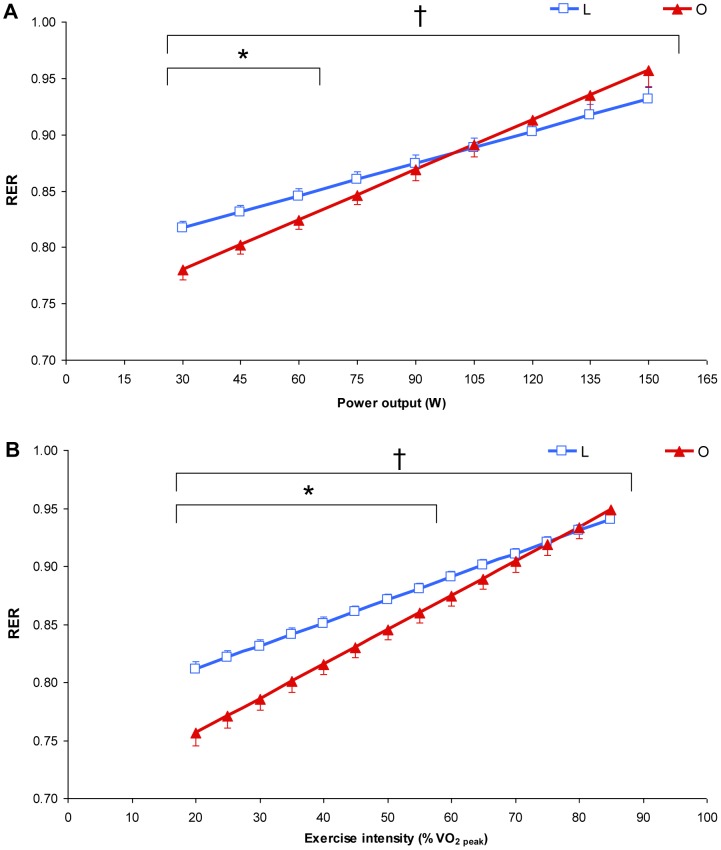
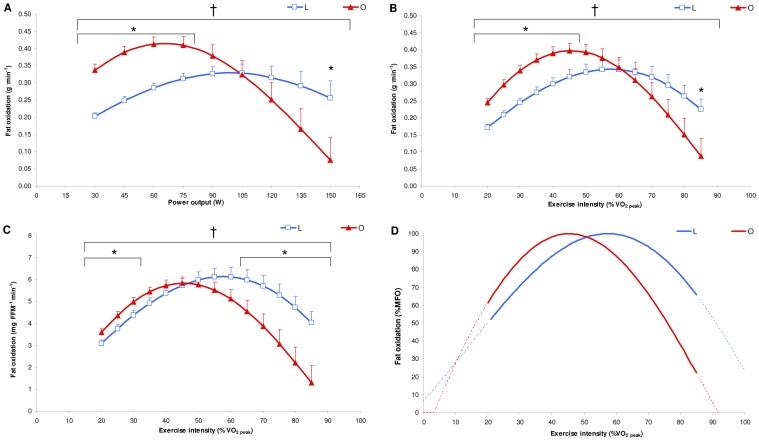
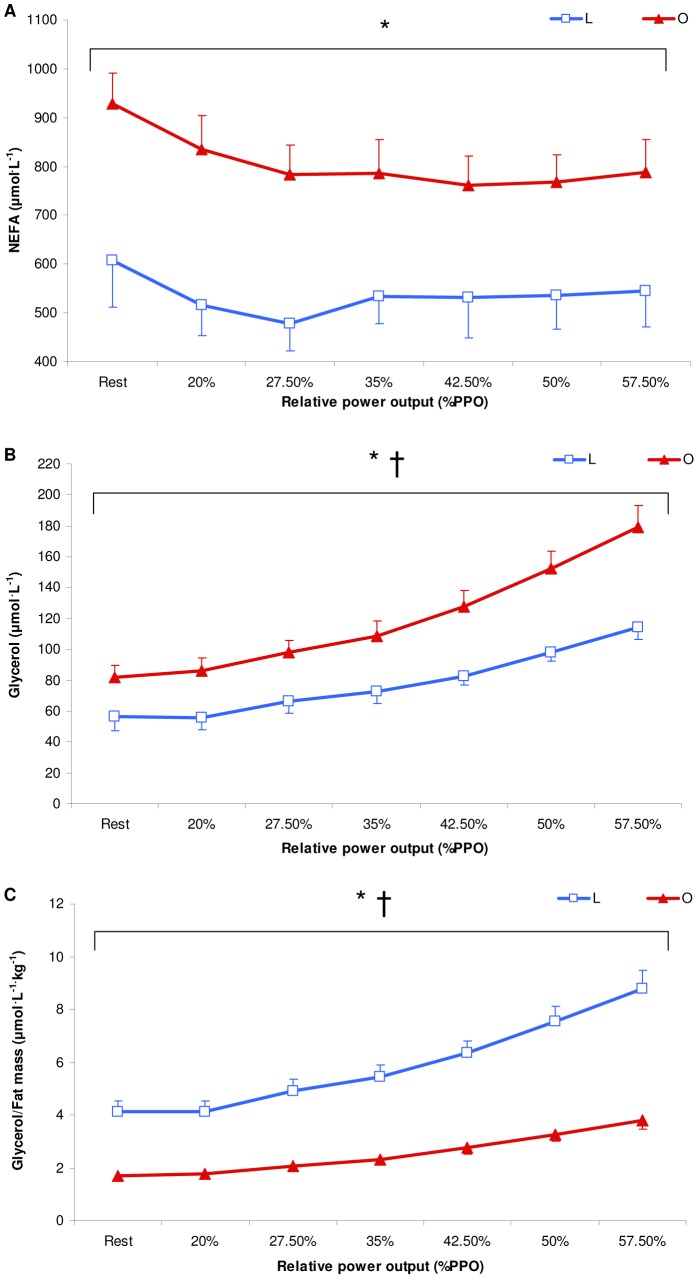
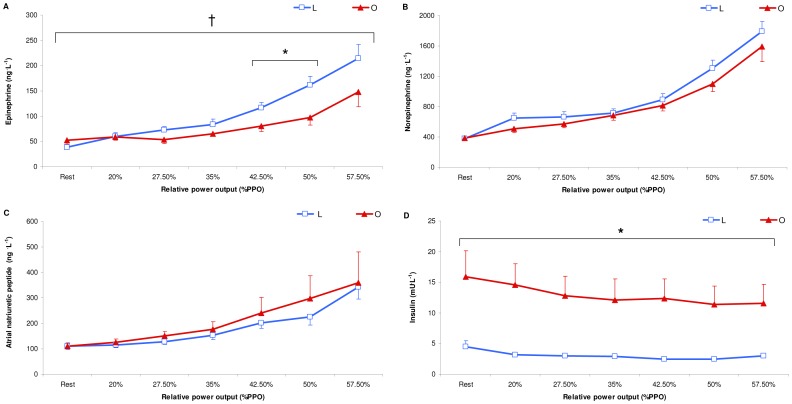
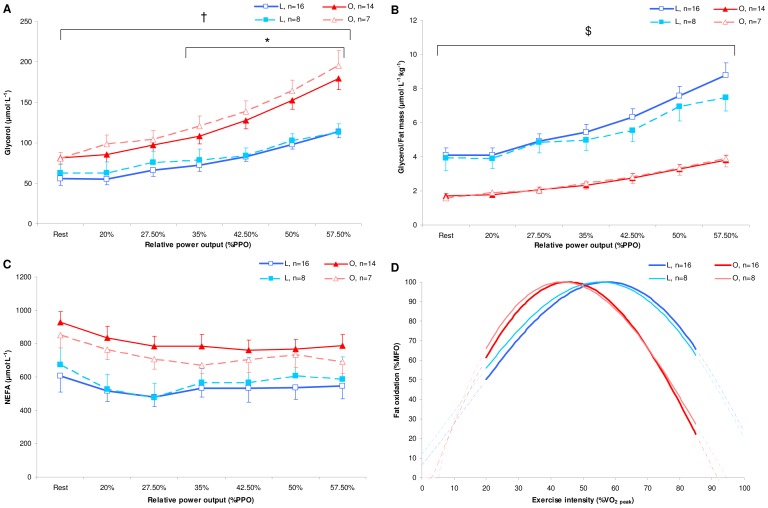
This study aimed to compare fat oxidation, hormonal and plasma metabolite kinetics during exercise in lean (L) and obese (O) men. Sixteen L and 16 O men [Body Mass Index (BMI): 22.9 ± 0.3 and 39.0 ± 1.4 kg · m(-2)] performed a submaximal incremental test (Incr) on a cycle-ergometer. Fat oxidation rates (FORs) were determined using indirect calorimetry. A sinusoidal model, including 3 independent variables (dilatation, symmetry, translation), was used to describe fat oxidation kinetics and determine the intensity (Fat(max)) eliciting maximal fat oxidation. Blood samples were drawn for the hormonal and plasma metabolite determination at each step of Incr. FORs (mg · FFM(-1) · min(-1)) were significantly higher from 20 to 30% of peak oxygen uptake (VO2peak) in O than in L and from 65 to 85% VO2peak in L than in O (p ≤ 0.05). FORs were similar in O and in L from 35 to 60% VO2peak. Fat max was 17% significantly lower in O than in L (p<0.01). Fat oxidation kinetics were characterized by similar translation, significantly lower dilatation and left-shift symmetry in O compared with L (p<0.05). During whole exercise, a blunted lipolysis was found in O [lower glycerol/fat mass (FM) in O than in L (p ≤ 0.001)], likely associated with higher insulin concentrations in O than in L (p<0.01). Non-esterified fatty acids (NEFA) were significantly higher in O compared with L (p<0.05). Despite the blunted lipolysis, O presented higher NEFA availability, likely due to larger amounts of FM. Therefore, a lower Fat(max), a left-shifted and less dilated curve and a lower reliance on fat oxidation at high exercise intensities suggest that the difference in the fat oxidation kinetics is likely linked to impaired muscular capacity to oxidize NEFA in O. These results may have important implications for the appropriate exercise intensity prescription in training programs designed to optimize fat oxidation in O.
Overview
The claims and statistics of this paper haven’t been checked yet.
Free: it reads the open-access text and checks the first 5 claims that cite a source we can check. Create a free account to check every claim.
Integrity signals
Registry
Cites
Statistics
Figures
Verification
Claims the paper makes
The claims and statistics of this paper haven’t been checked yet.
Free: it reads the open-access text and checks the first 5 claims that cite a source we can check. Create a free account to check every claim.
Claims other papers make about this one
Each is checked against this paper’s own text: does it say what the citing paper says it does?
The source backs part of the claim, not all of it — or backs it for a different population, condition or comparison.
In the citing paper
“These results, however, conflict with results from Lanzi et al. (2014) [43] who reported that obese subjects had a higher serum FA rate of appearance likely due to increased total adipose tissue mass (kg).”
From Understanding the factors that effect maximal fat oxidation. (2018) · cites this paper as Lanzi et al. (2014) [43]
Experimental — accuracy not yet measuredThe source backs part of the claim, not all of it — or backs it for a different population, condition or comparison.
In the citing paper
“Furthermore, sedentary/obese subjects have a reduced cellular transport and fat oxidation capabilities, therefore maintaining higher serum FA concentrations [43].”
From Understanding the factors that effect maximal fat oxidation. (2018) · cites this paper as [43]
Experimental — accuracy not yet measuredThe source backs part of the claim, not all of it — or backs it for a different population, condition or comparison.
In the citing paper
“The exercise intensity that MFO occurs has been reported to range from 45–75% VO2max [1, 4, 6, 41, 43], with a recent paper highlighting MFO rates from 1121 athletes in various disciplines (American Football, triathlon, golf, soccer, motor sports, cross county, and water sports amongst others) ranging from 23 to 89%VO2max [39].”
From Understanding the factors that effect maximal fat oxidation. (2018) · cites this paper as [43]
Experimental — accuracy not yet measured
Self-check
Percentages, sums and reported differences re-computed from the paper’s own numbers.
The self-check needs the paper’s full text.
Citations
Cites
Matthews, D. R., Hosker, J. P., Rudenski, A. S., Naylor, B. A., Treacher, D. F., & Turner, R. C. (1985) · Diabetologia · doi:10.1007/bf00280883 · Cited by 31,502
Toprak, O., Kurt, H., Sarı, Y., Şarkış, C., Us, H., & Kırık, A. (2017) · Kidney and Blood Pressure Research · doi:10.1159/000468530 · Cited by 29,627
Garber, C. E., Blissmer, B., Deschenes, M. R., Franklin, B. A., Lamonte, M. J., Lee, I.-M., Nieman, D. C., & Swain, D. P. (2011) · Medicine & Science in Sports & Exercise · doi:10.1249/mss.0b013e318213fefb · Cited by 9,319 · cited 2×
“In contrast, when these groups were not matched for aerobic fitness, no difference were found in MFO, Fatmax or FORs during low and moderate exercise intensities (,35–70% _ VO2 max [11]) [7].”
BackgroundCalculation of substrate oxidation rates in vivo from gaseous exchange.
Frayn, K. N. (1983) · Journal of Applied Physiology · doi:10.1152/jappl.1983.55.2.628 · Cited by 2,365
Unwin, N. C. (2006) · Cited by 1,661
The theoretical bases of indirect calorimetry: A review
Ferrannini, E. (1988) · Metabolism · doi:10.1016/0026-0495(88)90110-2 · Cited by 1,580
Validation of tetrapolar bioelectrical impedance method to assess human body composition
Lukaski, H. C., Bolonchuk, W. W., Hall, C. B., & Siders, W. A. (1986) · Journal of Applied Physiology · doi:10.1152/jappl.1986.60.4.1327 · Cited by 1,370 · cited 3×
“The study was approved by the Ethics Review Committee of the Istituto Auxologico Italiano, Italy.”
MethodKelley, D. E., Goodpaster, B., Wing, R. R., & Simoneau, J.-A. (1999) · American Journal of Physiology-Endocrinology and Metabolism · doi:10.1152/ajpendo.1999.277.6.e1130 · Cited by 1,096
Impact of Obesity on Plasma Natriuretic Peptide Levels
Wang, T. J., Larson, M. G., Levy, D., Benjamin, E. J., Leip, E. P., Wilson, P. W. F., & Vasan, R. S. (2004) · Circulation · doi:10.1161/01.cir.0000112582.16683.ea · Cited by 1,022 · cited 1×
“In addition, although previous studies suggested that the plasma ANP (a stimulator of lipolysis in AT [33]) is lower in obese than in lean individuals [34] (most likely linked to a higher expression of natriuretic peptide clearance receptors in AT with obesity [35]), our results showed no difference between O and L at…”
ResultFatty acids, obesity, and insulin resistance: Time for a reevaluation
Karpe, F., Dickmann, J. R., & Frayn, K. N. (2011) · Diabetes · doi:10.2337/db11-0425 · Cited by 896 · cited 1×
“Interestingly, higher absolute concentrations of NEFA and glycerol were found during all exercise intensities in O, suggesting that higher NEFA availability may be due to larger amounts of FM in these individuals [37].”
Background
Cited by
Understanding the factors that effect maximal fat oxidation.
Purdom, T., Kravitz, L., Dokladny, K., & Mermier, C. (2018) · Journal of the International Society of Sports Nutrition · doi:10.1186/s12970-018-0207-1 · Cited by 247
“The exercise intensity that MFO occurs has been reported to range from 45–75% VO2max [1, 4, 6, 41, 43], with a recent paper highlighting MFO rates from 1121 athletes in various disciplines (American Football, triathlon, golf, soccer, motor sports, cross county, and water sports amongst others) ranging from 23 to 89%VO…”
BackgroundResultContextualising Maximal Fat Oxidation During Exercise: Determinants and Normative Values
Maunder, E., Plews, D. J., & Kilding, A. E. (2018) · Frontiers in Physiology · doi:10.3389/fphys.2018.00599 · Cited by 158
Robinson, S. L., Hattersley, J., Frost, G. S., Chambers, E. S., & Wallis, G. A. (2015) · Journal of Applied Physiology · doi:10.1152/japplphysiol.00058.2015 · Cited by 95
Maximal Fat Oxidation Rates in an Athletic Population
RANDELL, R. K., ROLLO, I., ROBERTS, T. J., DALRYMPLE, K. J., JEUKENDRUP, A. E., & CARTER, J. M. (2017) · Medicine & Science in Sports & Exercise · doi:10.1249/mss.0000000000001084 · Cited by 101
Lanzi, S., Codecasa, F., Cornacchia, M., Maestrini, S., Capodaglio, P., Brunani, A., Fanari, P., Salvadori, A., & Malatesta, D. (2015) · Obesity · doi:10.1002/oby.21206 · Cited by 71
Self-citationCamacho-Cardeñosa, A., Camacho-Cardeñosa, M., Burtscher, M., Martínez‐Guardado, I., Timón, R., Brazo‐Sayavera, J., & Olcina, G. J. (2018) · Frontiers in Physiology · doi:10.3389/fphys.2018.00060 · Cited by 64
Brun, J.-F., Myzia, J., Varlet-Marie, E., Raynaud de Mauverger, E., & Mercier, J. (2022) · Nutrients · doi:10.3390/nu14081605 · Cited by 48
“Accordingly, circulating values of non-esterified fatty acid and mean glycerol are still increasing at the highest levels of an incremental exercise test (60% VO2max) while lipid oxidation has vanished [98].”
BackgroundDandanell, S., Præst, C. B., Søndergård, S. D., Skovborg, C., Dela, F., Larsen, S., & Helge, J. W. (2016) · Applied Physiology, Nutrition, and Metabolism · doi:10.1139/apnm-2016-0518 · Cited by 46
Vaccari, F., Passaro, A., D’Amuri, A., Sanz, J. M., Vece, F. D., Capatti, E., Magnesa, B., Comelli, M., Mavelli, I., Grassi, B., et al. (2020) · European Journal of Applied Physiology · doi:10.1007/s00421-020-04409-2 · Cited by 42
Petridou, A., Chatzinikolaou, A., Avloniti, A., Jamurtas, A., Loules, G., Papassotiriou, I., Fatouros, I., & Mougios, V. (2017) · The Journal of Clinical Endocrinology & Metabolism · doi:10.1210/jc.2017-00168 · Cited by 37
Lipolytic Markers, Insulin and Resting Fat Oxidation are Associated with Maximal Fat Oxidation
Robinson, S., Chambers, E. S., Fletcher, G., & Wallis, G. A. (2016) · International Journal of Sports Medicine · doi:10.1055/s-0042-100291 · Cited by 36
Fat oxidation over a range of exercise intensities: fitness versus fatness
Croci, I., Hickman, I. J., Wood, R. E., Borrani, F., Macdonald, G. A., & Byrne, N. M. (2014) · Applied Physiology, Nutrition, and Metabolism · doi:10.1139/apnm-2014-0144 · Cited by 30
Chávez-Guevara, I. A., Amaro‐Gahete, F. J., Ramos‐Jiménez, A., & Brun, J. ‐. (2023) · Sports Medicine · doi:10.1007/s40279-023-01897-y · Cited by 34
Camacho-Cardeñosa, A., Camacho-Cardeñosa, M., Brazo‐Sayavera, J., Burtscher, M., Timón, R., & Olcina, G. J. (2018) · High Altitude Medicine & Biology · doi:10.1089/ham.2018.0059 · Cited by 33
Cardiorespiratory Fitness May Influence Metabolic Inflexibility During Exercise in Obese Persons
Amaro‐Gahete, F. J., Sánchez‐Delgado, G., Ara, I., & Ruiz, J. R. (2019) · The Journal of Clinical Endocrinology & Metabolism · doi:10.1210/jc.2019-01225 · Cited by 32
Chávez-Guevara, I. A., Hernández‐Torres, R. P., González-Rodríguez, E., Ramos‐Jiménez, A., & Amaro‐Gahete, F. J. (2022) · European Journal of Applied Physiology · doi:10.1007/s00421-022-04936-0 · Cited by 31
D’Alleva, M., Vaccari, F., Graniero, F., Giovanelli, N., Floreani, M., Fiori, F., Marinoni, M., Parpinel, M. T., & Lazzer, S. (2023) · Journal of Exercise Science & Fitness · doi:10.1016/j.jesf.2023.01.004 · Cited by 28
¿Puede el ejercicio físico per se disminuir el peso corporal en sujetos con sobrepeso/obesidad?
Burgos, C., Henríquez‐Olguín, C., Ramírez‐Campillo, R., Matsudo, S. M., & Cerda‐Kohler, H. (2017) · Revista médica de Chile · doi:10.4067/s0034-98872017000600765 · Cited by 25
No Influence of Overweight/Obesity on Exercise Lipid Oxidation: A Systematic Review
Arad, A. D., Basile, A. J., Albu, J., & DiMenna, F. J. (2020) · International Journal of Molecular Sciences · doi:10.3390/ijms21051614 · Cited by 26
Emerenziani, G. P., Ferrari, D., Marocco, C., Greco, E. A., Migliaccio, S., Lenzi, A., Baldari, C., & Guidetti, L. (2019) · PLoS ONE · doi:10.1371/journal.pone.0215307 · Cited by 24
D’Alleva, M., Lazzer, S., Tringali, G., Micheli, R. D., Bondesan, A., Abbruzzese, L., & Sartório, A. (2023) · Scientific Reports · doi:10.1038/s41598-023-44953-3 · Cited by 20
Fat Oxidation Kinetics Is Related to Muscle Deoxygenation Kinetics During Exercise
Zurbuchen, A., Lanzi, S., Voirol, L., Trindade, C. B., Gojanovic, B., Kayser, B., Bourdillon, N., Chenevière, X., & Malatesta, D. (2020) · Frontiers in Physiology · doi:10.3389/fphys.2020.00571 · Cited by 20
Self-citationDeterminants of Peak Fat Oxidation Rates During Cycling in Healthy Men and Women
Chrzanowski‐Smith, O. J., Edinburgh, R. M., THOMAS, M. P., Hengist, A., Williams, S., Betts, J. A., & Gonzalez, J. T. (2021) · International Journal of Sport Nutrition and Exercise Metabolism · doi:10.1123/ijsnem.2020-0262 · Cited by 18
The metabolic effects of intermittent versus continuous feeding in critically ill patients
Wilkinson, D. J., Gallagher, I. J., McNelly, A. S., Bear, D. E., Hart, N., Montgomery, H., Guennec, A. D. L., Conte, M. R., Francis, T., Harridge, S. D. R., et al. (2023) · Scientific Reports · doi:10.1038/s41598-023-46490-5 · Cited by 18
Renton, M. C., McGee, S. L., & Howlett, K. F. (2020) · Obesity Reviews · doi:10.1111/obr.13145 · Cited by 18
Detraining effect on overweight/obese women after high‐intensity interval training in hypoxia
Camacho-Cardeñosa, A., Camacho-Cardeñosa, M., Olcina, G. J., Timón, R., & Brazo‐Sayavera, J. (2019) · Scandinavian Journal of Medicine and Science in Sports · doi:10.1111/sms.13380 · Cited by 17
Long Maximal Incremental Tests Accurately Assess Aerobic Fitness in Class II and III Obese Men
Lanzi, S., Codecasa, F., Cornacchia, M., Maestrini, S., Capodaglio, P., Brunani, A., Fanari, P., Salvadori, A., & Malatesta, D. (2015) · PLoS ONE · doi:10.1371/journal.pone.0124180 · Cited by 16
Self-citationCooney, C., Daly, E., McDonagh, M., & Ryan, L. (2021) · Nutrients · doi:10.3390/nu13041229 · Cited by 15
Ramadoss, R. K., Stanzione, J. R., & Volpe, S. L. (2022) · Frontiers in Psychology · doi:10.3389/fpsyg.2022.854451 · Cited by 15
Effects of Acute Supramaximal Cycle Exercise on Plasma FFA Concentration in Obese Adolescent Boys
Jabbour, G., Iancu, H.-D., Paulin, A., Lavoie, J.-M., Lemoine-Morel, S., & Zouhal, H. (2015) · PLoS ONE · doi:10.1371/journal.pone.0129654 · Cited by 11
Association Among Different Aerobic Threshold Markers and FATmax in Men With Obesity
Chávez-Guevara, I. A., Hernández‐Torres, R. P., Trejo-Trejo, M., Moreno-Brito, V., González-Rodríguez, E., & Ramos‐Jiménez, A. (2022) · Research Quarterly for Exercise and Sport · doi:10.1080/02701367.2022.2065235 · Cited by 10
Ramírez‐Vélez, R., Oscoz-Ochandorena, S., García‐Alonso, Y., García-Alonso, N., Legarra‐Gorgoñon, G., Oteiza, J., Lorea, A. E., Izquierdo, M., & Correa‐Rodríguez, M. (2023) · Clinical Nutrition ESPEN · doi:10.1016/j.clnesp.2023.10.009 · Cited by 9
Barnes, K. R., Kilding, A. E., Blagrove, R. C., Howatson, G., Hayes, P. R., Boone, J., Bourgois, J., Fletcher, J. R., MacIntosh, B. R., González‐Mohíno, F., et al. (2018) · Journal of Applied Physiology · doi:10.1152/japplphysiol.00638.2018 · Cited by 9
Self-citationChávez-Guevara, I. A. (2023) · Sports Medicine and Health Science · doi:10.1016/j.smhs.2023.02.001 · Cited by 8
Contreras, M. M., Garcia, A. I. P., Ramos‐Jiménez, A., Torres, R. P. H., & Chavez-Guevara, I. A. (2023) · Retos · doi:10.47197/retos.v47.95197 · Cited by 6
García‐Pastor, T., Muñoz-Puente, I., Pérez-Pelayo, M., Púa, I., Roberts, J., & Coso, J. D. (2024) · Genes · doi:10.3390/genes16010004 · Cited by 5
Brunani, A., Lanzi, S., Codecasa, F., Cornacchia, M., Maestrini, S., Soranna, D., Zambon, A., Cattaldo, S., Fanari, P., Malatesta, D., et al. (2017) · Respiration · doi:10.1159/000479887 · Cited by 4
Self-citationMaximal fat oxidation rate in women with sedentary behaviour and at-risk body fat percentage
Valdebenito, G. E., Yáñez-Baeza, C., Saavedra-Ibaca, V., Romero-Mardones, F. A., & Galdavini, V. P. (2021) · Revista chilena de nutrición · doi:10.4067/s0717-75182021000500726 · Cited by 4
D’Alleva, M., Lazzer, S., Martino, M. D., Mari, L., Rejc, E., Zaccaron, S., Stafuzza, J., Isola, M., Bondesan, A., Caroli, D., et al. (2025) · Frontiers in Nutrition · doi:10.3389/fnut.2025.1624696 · Cited by 3
Yokoyama, H., Takeda, R., Kawai, E., Ota, A., Morita, E., Imai, D., Suzuki, Y., Morioka, T., Emoto, M., Inaba, M., et al. (2018) · Journal of Clinical Medicine · doi:10.3390/jcm7100308 · Cited by 2
Maximal Lipid Oxidation (Fatmax) in Physical Exercise and Training: A review and Update
Ghanbari–Niaki, A., & Zarekookandeh, N. (2016) · Annals of Applied Sport Science · doi:10.18869/acadpub.aassjournal.4.3.1 · Cited by 2
Fat oxidation during exercise: significance, determinants and response to nutrition
Robinson, S. (2016) · University of Birmingham Institutional Research Archive (University of Birmingham) · Cited by 2
Μaximal Fat Oxidation During Cycle Ergometer Protocols in Obese Adults: A Scoping Review
Anagnostopoulos, K. P., Spassis, A. T., Kokkotis, C., Smilios, I., Chatzinikolaou, A., Douda, H. T., & Batrakoulis, A. (2025) · Diseases · doi:10.3390/diseases14010004 · Cited by 1
Physical Activity and Endurance Training Modalities: Evidences and Perspectives
Malatesta, D., Fanari, P., Salvadori, A., & Lanzi, S. (2020) · Springer eBooks · doi:10.1007/978-3-030-32274-8_1 · Cited by 1
Self-citationSubstrate oxidation during exercise in childhood acute lymphoblastic leukemia survivors
Bertrand, É., Caru, M., Morel, S., Parenteau, A. B., Bélanger, V., Laverdière, C., Krajinović, M., Sinnett, D., Levy, E. H., Marcil, V., et al. (2023) · Pediatric Hematology and Oncology · doi:10.1080/08880018.2023.2232399 · Cited by 1
THE ACUTE EFFECTS OF WEIGHTED VEST RUNNING ON SUBSTRATE UTILIZATION AND ENERGY EXPENDITURE
Mr., P., & Troy, M. H. (2016) · UNM’s Digital Repository (University of New Mexico)
Metabolic Implications of Environmental Heat Stress for Endurance Athletes
Maunder, E. (2021) · Tuwhera (Auckland University of Technology)
Nieuwenhuizen, A. G., & van Schothorst, E. M. (2022) · MDPI eBooks · doi:10.3390/books978-3-0365-1851-0
Jin, L., Zhu, X., & Xue, Q. (2022) · Research Square · doi:10.21203/rs.3.rs-1671753/v1 · Cited by 1
Prastickho, A. D., Merawati, D., & Sugiharto, S. (2023) · COMPETITOR Jurnal Pendidikan Kepelatihan Olahraga · doi:10.26858/cjpko.v15i2.47705
Low-intensity exercise elicits maximal fat oxidation in young healthy men
Zebarjad, N. (2023) · Memorial University Research Repository (Memorial University) · doi:10.48336/d7cj-2x25
Gideon, A. M. (2025) · YorkSpace (York University)
Fonseca, H. V. D. C. (2024) · LA Referencia (Red Federada de Repositorios Institucionales de Publicaciones Científicas)
Ariffin, N. H. C. M., Fauzi, N. F. M., Yusof, H. A., Aziz, A. R., Nosaka, K., & Muhamed, A. M. C. (2026) · European Journal of Applied Physiology · doi:10.1007/s00421-026-06178-w
Braunsperger, A., Tischer, D., Soriano‐Arroquia, A., Schönfelder, M., Georgiadi, A., & Wackerhage, H. (2026) · Sports Medicine - Open · doi:10.1186/s40798-026-01085-y
Zhao, G., Khong, T. K., Yanqing, Y., & Yusof, A. (2026) · Diabetes Metabolic Syndrome and Obesity · doi:10.2147/dmso.s619590
Metadata
- Authors
- Lanzi, S., Codecasa, F., Cornacchia, M., Maestrini, S., Salvadori, A., Brunani, A., & Malatesta, D.
- Affiliations
- University of Lausanne (CH)
- IRCCS Istituto Auxologico Italiano (IT)
- Corresponding author
- Lanzi, Stefano
- Venue
- PLoS ONE
- Publisher
- Public Library of Science (PLoS)
- Published
- 2014-02-11
- Volume
- 9
- Issue
- 2
- Pages
- e88707
- ISSN
- 1932-6203 (ISSN-L)
- PMC
- PMC3921204
- OpenAlex
- W2069288666
- Cited by
- 50
- References
- 47
- Citations by year
- 2026: 2 · 2025: 2 · 2024: 1 · 2023: 9 · 2022: 6 · 2021: 3 · 2020: 5 · 2019: 3 · 2018: 6 · 2017: 3 · 2016: 5 · 2015: 4 · 2014: 1
- FWCI
- 9.33
- Type
- journal article
- Language
- en
- Open access
- gold
- doi.org
- Locations
- PLoS ONE (publishedVersion, cc-by)
- Europe PMC (PubMed Central) (publishedVersion, cc-by)
- PubMed Central (publishedVersion, cc-by)
- PubMed (publishedVersion)
- IRIS (submittedVersion)
- DOAJ (DOAJ: Directory of Open Access Journals) (submittedVersion, cc-by-sa)
- SERVAL (Université de Lausanne) (submittedVersion, other-oa)
- Topics
- Health Sciences › Medicine › Physiology (medical) › Cardiovascular and exercise physiology
- Health Sciences › Nursing › Nutrition and Dietetics › Muscle metabolism and nutrition
- Health Sciences › Medicine › Physiology (medical) › Adipose Tissue and Metabolism
- Keywords
- fat oxidation, obesity, lean adults, lipolysis, free fatty acids, insulin, plasma metabolites, sinusoidal model, exercise intensity prescription, fat mass
- MeSH terms
- Adipose Tissue, Adult, Anthropometry, Body Composition, Body Weight, Calorimetry, Indirect, Densitometry, Esters, Exercise Test, Fatty Acids, Humans, Insulin, Kinetics, Lipids, Male, Obesity, Oxygen, Body Mass Index
About these checks
Registry, retraction, Cites and statistics results are computed, not judged, with one exception: a printed reference that no index lists is read once by a model before it counts as a citation error. Claims are extracted by a model and kept only when their quote appears verbatim in the text; each cited source is then checked, with a model’s help, for whether it says what the claim relies on. Those verdicts can be wrong — read the claim’s quote and the cited source before relying on one.
Statistics and arithmetic are recomputed, not judged.
Confidence bands are shown only for fields calibrated on our annotated test set. None is calibrated yet, so no band is shown.
What counts as a claim ›How we measure confidence ›How we check this ›
Are you an author, or do you see a problem with this page? Request a review
Data sources
Bibliographic data: Semantic Scholar, OpenAlex, Crossref.
Contains information from the Semantic Scholar Academic Graph Datasets, made available under the ODC Attribution License (ODC-BY 1.0).
Semantic Scholar’s data is described in: Kinney, R., et al. (2023). The Semantic Scholar Open Data Platform. arXiv:2301.10140.
