

Human Adipose Tissue-Derived Stromal/Stem Cells Promote Migration and Early Metastasis of Triple Negative Breast Cancer Xenografts
Open accessThe DOI matches its Crossref record; 61 of the 62 references it cites were found in a registry or an index.
Abstract
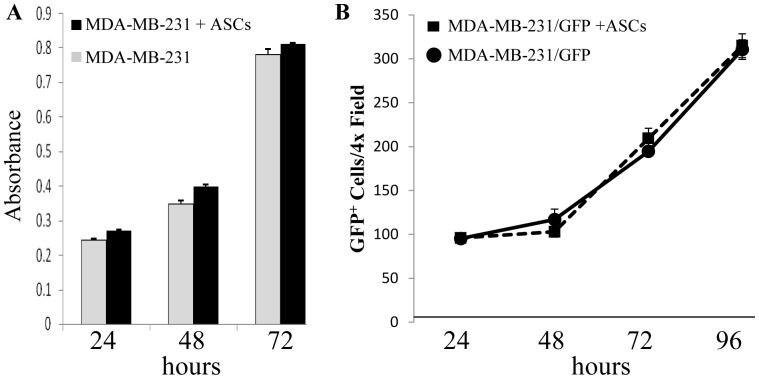
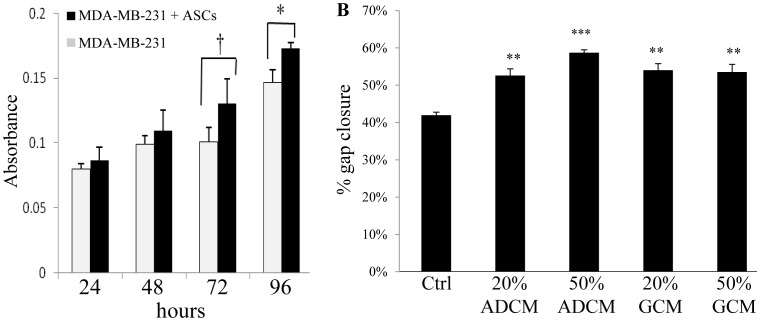
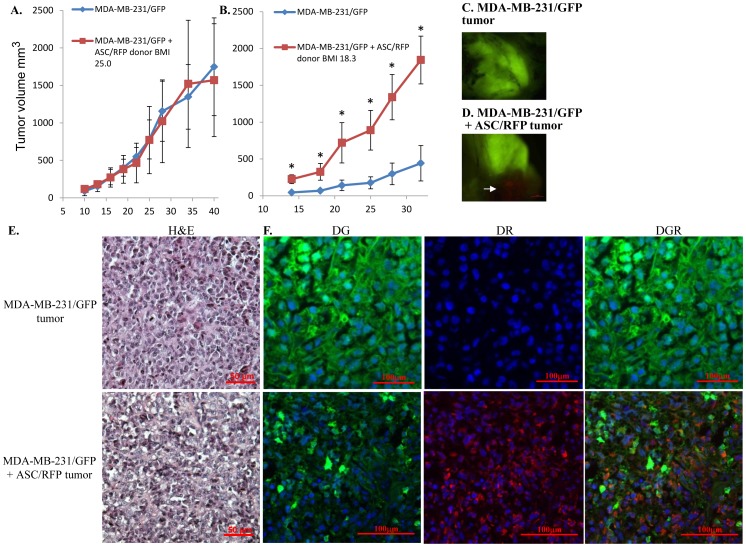
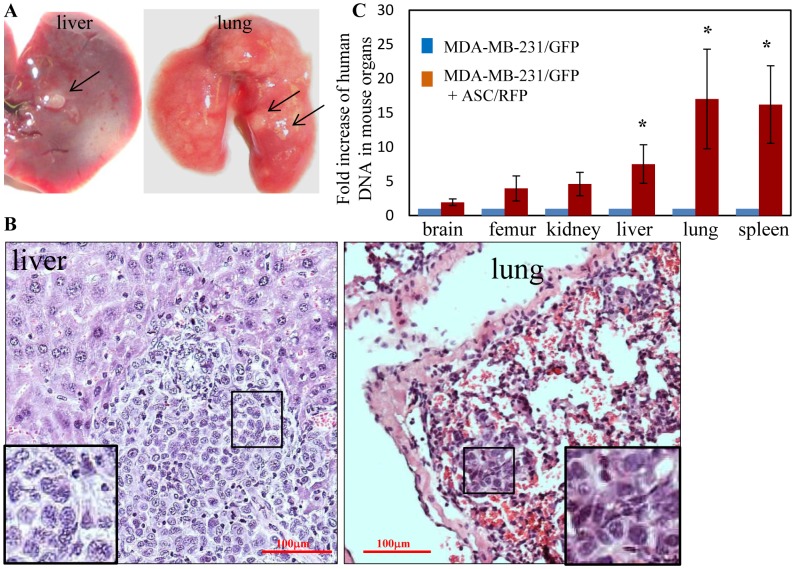
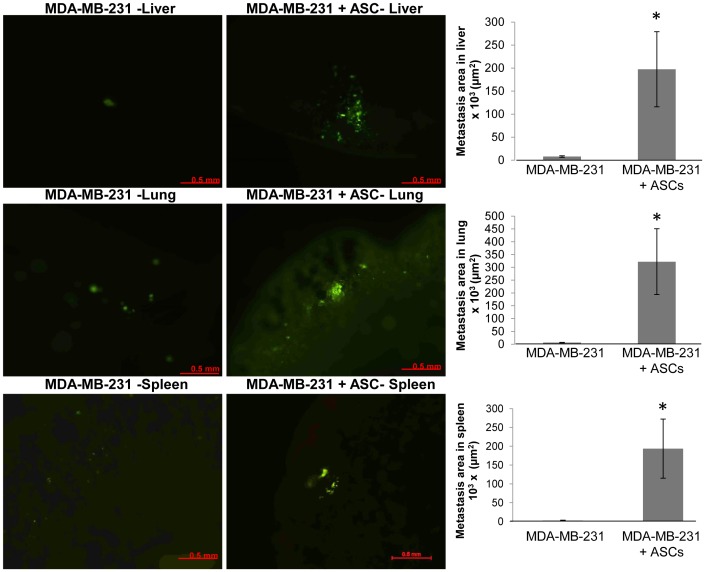
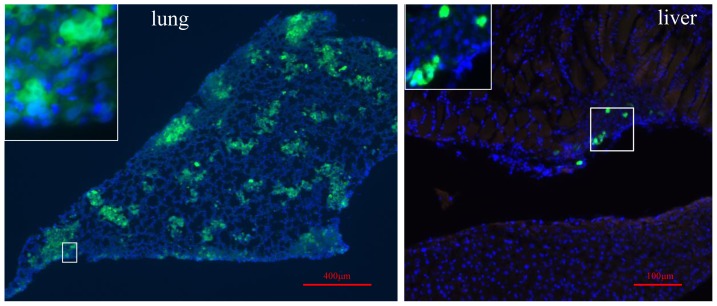
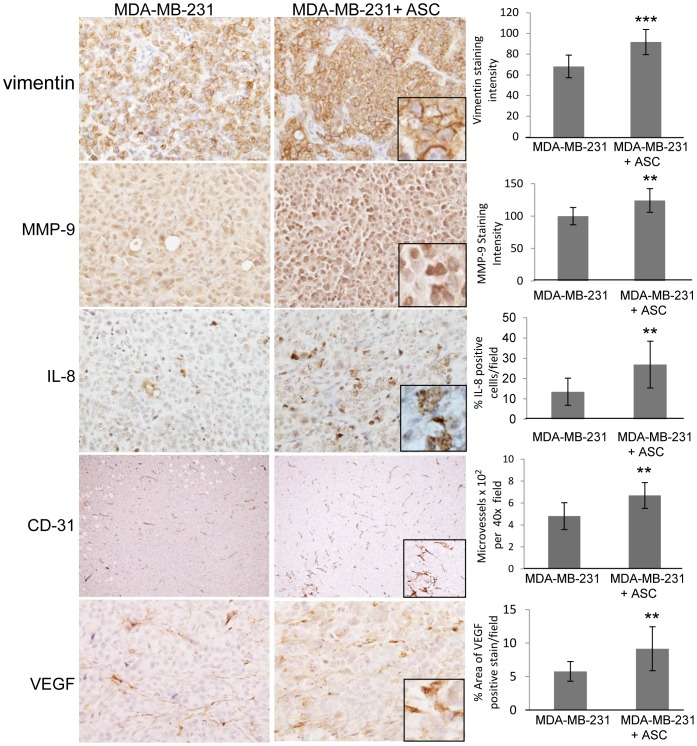
BACKGROUND: Fat grafting is used to restore breast defects after surgical resection of breast tumors. Supplementing fat grafts with adipose tissue-derived stromal/stem cells (ASCs) is proposed to improve the regenerative/restorative ability of the graft and retention. However, long term safety for ASC grafting in proximity of residual breast cancer cells is unknown. The objective of this study was to determine the impact of human ASCs derived from abdominal lipoaspirates of three donors, on a human breast cancer model that exhibits early metastasis. METHODOLOGY/PRINCIPAL FINDINGS: Human MDA-MB-231 breast cancer cells represents "triple negative" breast cancer that exhibits early micrometastasis to multiple mouse organs [1]. Human ASCs were derived from abdominal adipose tissue from three healthy female donors. Indirect co-culture of MDA-MB-231 cells with ASCs, as well as direct co-culture demonstrated that ASCs had no effect on MDA-MB-231 growth. Indirect co-culture, and ASC conditioned medium (CM) stimulated migration of MDA-MB-231 cells. ASC/RFP cells from two donors co-injected with MDA-MB-231/GFP cells exhibited a donor effect for stimulation of primary tumor xenografts. Both ASC donors stimulated metastasis. ASC/RFP cells were viable, and integrated with MDA-MB-231/GFP cells in the tumor. Tumors from the co-injection group of one ASC donor exhibited elevated vimentin, matrix metalloproteinase-9 (MMP-9), IL-8, VEGF and microvessel density. The co-injection group exhibited visible metastases to the lung/liver and enlarged spleen not evident in mice injected with MDA-MB-231/GFP alone. Quantitation of the total area of GFP fluorescence and human chromosome 17 DNA in mouse organs, H&E stained paraffin sections and fluorescent microscopy confirmed multi-focal metastases to lung/liver/spleen in the co-injection group without evidence of ASC/RFP cells. CONCLUSIONS: Human ASCs derived from abdominal lipoaspirates of two donors stimulated metastasis of MDA-MB-231 breast tumor xenografts to multiple mouse organs. MDA-MB-231 tumors co-injected with ASCs from one donor exhibited partial EMT, expression of MMP-9, and increased angiogenesis.
Overview
The claims and statistics of this paper haven’t been checked yet.
Free: it reads the open-access text and checks the first 5 claims that cite a source we can check. Create a free account to check every claim.
Integrity signals
Registry
Cites
Statistics
Figures
Verification
Claims the paper makes
The claims and statistics of this paper haven’t been checked yet.
Free: it reads the open-access text and checks the first 5 claims that cite a source we can check. Create a free account to check every claim.
Claims other papers make about this one
Each is checked against this paper’s own text: does it say what the citing paper says it does?
The source backs part of the claim, not all of it — or backs it for a different population, condition or comparison.
In the citing paper
“However, as referred to earlier, there were safety concerns about human adipose-tissue stromal cells (ASC) included in fat grafts that increased migration and metastases of breast tumour and osteosarcoma animal models [74], [101].”
From Mesenchymal stromal cells for bone sarcoma treatment: Roadmap to clinical practice (2019) · cites this paper as [74]
Experimental — accuracy not yet measuredThe source backs part of the claim, not all of it — or backs it for a different population, condition or comparison.
In the citing paper
“There were some safety concerns about human ADSC included in fat grafts, however, that were found to increase migration and metastases in a breast tumour and osteosarcoma models [74], [101].”
From Mesenchymal stromal cells for bone sarcoma treatment: Roadmap to clinical practice (2019) · cites this paper as [74]
Experimental — accuracy not yet measuredThe cited source says what the claim attributes to it.
In the citing paper
“The application of human ADSCs in proximity to breast cancer raised concerns as it was associated with an increase in the migration and metastasis of cancer cells [74].”
From Mesenchymal stromal cells for bone sarcoma treatment: Roadmap to clinical practice (2019) · cites this paper as [74]
Self-check
Percentages, sums and reported differences re-computed from the paper’s own numbers.
The self-check needs the paper’s full text.
Citations
Cites
Mesenchymal stem cells within tumour stroma promote breast cancer metastasis
Karnoub, A. E., Dash, A. B., Vo, A. P., Sullivan, A., Brooks, M. W., Bell, G. W., Richardson, A. L., Polyak, K., Tubo, R., & Weinberg, R. A. (2007) · Nature · doi:10.1038/nature06188 · Cited by 3,206
Adipose-derived stem cells for regenerative medicine
Gimble, J. M., Katz, A. J., & Bunnell, B. A. (2007) · Circulation Research · doi:10.1161/01.res.0000265074.83288.09 · Cited by 2,332
Self-citationAdipose-derived stem cells: Isolation, expansion and differentiation☆
BUNNELL, B., FLAAT, M., GAGLIARDI, C., PATEL, B., & RIPOLL, C. (2008) · Methods · doi:10.1016/j.ymeth.2008.03.006 · Cited by 1,067
Facial Recontouring with Lipostructure
Coleman, S. R. (1997) · Clinics in Plastic Surgery · doi:10.1016/s0094-1298(20)31069-5 · Cited by 1,046
Yoshimura, K., Sato, K., Aoi, N., Kurita, M., Hirohi, T., & Harii, K. (2008) · Aesthetic Plastic Surgery · doi:10.1007/s00266-007-9019-4 · Cited by 881
Allred, D. C., Clark, G. M., Elledge, R., Fuqua, S. A. W., Brown, R. W., Chamness, G. C., Osborne, C. K., & McGuire, W. L. (1993) · JNCI Journal of the National Cancer Institute · doi:10.1093/jnci/85.3.200 · Cited by 772
Production, concentration and titration of pseudotyped HIV-1-based lentiviral vectors
Kutner, R. H., Zhang, X.-Y., & Reiser, J. (2009) · Nature Protocols · doi:10.1038/nprot.2009.22 · Cited by 668
Self-citationDelay, E., Garson, S., Tousson, G., & Sinna, R. (2009) · Aesthetic Surgery Journal · doi:10.1016/j.asj.2009.08.010 · Cited by 536
YOSHIMURA, K., SATO, K., AOI, N., KURITA, M., INOUE, K., SUGA, H., ETO, H., KATO, H., HIROHI, T., & HARII, K. (2008) · Dermatologic Surgery · doi:10.1111/j.1524-4725.2008.34256.x · Cited by 429
Finn, R. S., Dering, J., Ginther, C., Wilson, C. A., Glaspy, P., Tchekmedyian, N., & Slamon, D. J. (2007) · Breast Cancer Research and Treatment · doi:10.1007/s10549-006-9463-x · Cited by 409
Cited by
Items 101–177 of 177
Komorowska-Timek, E. D., Turfe, Z. A., & Davis, A. T. (2017) · Plastic & Reconstructive Surgery · doi:10.1097/prs.0000000000003616 · Cited by 18
Obesity, proinflammatory mediators, adipose tissue progenitors, and breast cancer
Bertolini, F., Orecchioni, S., Petit, J., & Kolonin, M. G. (2014) · Current Opinion in Oncology · doi:10.1097/cco.0000000000000130 · Cited by 17
Adipose Stem Cell Therapy in Cancer Reconstruction: A Critical Review
Alperovich, M. A., Lee, Z., Friedlander, P. L., Rowan, B. G., Gimble, J. M., & Chiu, E. S. (2014) · Annals of Plastic Surgery · doi:10.1097/sap.0000000000000283 · Cited by 17
“…et al. (2012) Human (reduction mammoplasty) 2:3 coinjected SQ Increased tumor growth Increased desmoplasia 1:1 transplanted onto fat pad Increased invasion Rowan et al. (2014) Human (abdominal lipoaspiration) 1:1 coinjected SQ into mammary fat pads Increased tumor metastasis Enhanced EMT”
Self-citationBreast Total Male Breast Reconstruction with Fat Grafting
Al-Kalla, T., & Komorowska-Timek, E. D. (2014) · Plastic & Reconstructive Surgery Global Open · doi:10.1097/gox.0000000000000221 · Cited by 17
Lyes, M., Payne, S., Ferrell, P. D., Pizzo, S. V., Hollenbeck, S. T., & Bachelder, R. E. (2018) · Breast Cancer Research and Treatment · doi:10.1007/s10549-018-05103-w · Cited by 16
Breast fat grafting and cancer: a systematic review of the science behind enhancements and concerns
Valente, D. S., Ely, P. B., Kieling, L., Konzen, A. T., Steffen, L. P., Lazzaretti, G. S., & Zanella, R. K. (2024) · Translational Breast Cancer Research · doi:10.21037/tbcr-23-54 · Cited by 17
Crake, R., Phillips, E., Kleffmann, T., & Currie, M. J. (2019) · Cancer Genomics & Proteomics · doi:10.21873/cgp.20137 · Cited by 16
Tong, J., Mou, S., Xiong, L., Wang, Z., Wang, R., Weigand, A., Yuan, Q., Horch, R. E., Sun, J., & Yang, J. (2018) · PLoS ONE · doi:10.1371/journal.pone.0204077 · Cited by 15
Chiu, Y., Yang, J., Hsu, H., Tsai, C.-H., & Ma, H. (2017) · Oncology Reports · doi:10.3892/or.2017.6126 · Cited by 14
Cell-supplemented autologous fat grafting: a review from bench to bedside
Ghosh, K., Patel, R. A., & Hanson, S. E. (2024) · Plastic and Aesthetic Research · doi:10.20517/2347-9264.2024.70 · Cited by 13
Cytokine signaling regulating adipose stromal cell trafficking
Zhang, Y., & Kolonin, M. G. (2016) · Adipocyte · doi:10.1080/21623945.2016.1220452 · Cited by 15
The Mechanical Fingerprint of Circulating Tumor Cells (CTCs) in Breast Cancer Patients
Nel, I., Morawetz, E. W., Tschodu, D., Käs, J. A., & Aktas, B. (2021) · Cancers · doi:10.3390/cancers13051119 · Cited by 13
“(San Diego, CA, USA) and maintained under standard conditions at 37 ◦C in a 95% air and 5% CO2 atmosphere [39,40].”
MethodEffects of Stromal Vascular Fraction on Breast Cancer Growth and Fat Engraftment in NOD/SCID Mice
Lee, J. S., Eo, P. S., Kim, M. C., Kim, J. B., Jin, H. K., Bae, J., Jeong, J., Park, H. Y., & Yang, J. D. (2019) · Aesthetic Plastic Surgery · doi:10.1007/s00266-018-01304-2 · Cited by 12
Multifaceted Oncogenic Role of Adipocytes in the Tumour Microenvironment
Jiramongkol, Y., & Lam, E. W. ‐. (2020) · Advances in experimental medicine and biology · doi:10.1007/978-3-030-34025-4_7 · Cited by 13
Li, M., Li, X., Zhao, L., Zhou, J., Cheng, Y., Wang, J., & Wei, L. (2018) · Journal of obstetrics and gynaecology research · doi:10.1111/jog.13820 · Cited by 13
“In addition, Prizment et al.12 reported that ASC stimulated the migration of breast cancer cells and markedly increased their metastasis to mouse organ.”
BackgroundInfluentialRoy, R., Man, E., Aldakhlallah, R., Gonzalez, K. D., Merritt, L., Daisy, C. C., Lombardo, M. N., Yordanova, V., Sun, L., Isaac, B., et al. (2024) · Biochimica et Biophysica Acta (BBA) - Molecular Basis of Disease · doi:10.1016/j.bbadis.2024.167325 · Cited by 12
Interaction of adipose-derived stem cells with active and dormant breast cancer cells
Nystrom, M. L., Lauvrud, A. T., Pérez‐Díaz, S., Kingham, P. J., & Wiberg, R. (2023) · Journal of Plastic Reconstructive & Aesthetic Surgery · doi:10.1016/j.bjps.2023.05.006 · Cited by 14
Berti, M. D., Goupille, C., Doucet, M., Arbion, F., Vilde, A., Body, G., & Ouldamer, L. (2021) · Journal of Gynecology Obstetrics and Human Reproduction · doi:10.1016/j.jogoh.2021.102257 · Cited by 11
Autologous Fat Grafting for Oncologic Patients: A Literature Review
Seitz, A. J., Asaad, M., Hanson, S. E., Butler, C. E., & Largo, R. D. (2021) · Aesthetic Surgery Journal · doi:10.1093/asj/sjab126 · Cited by 11
Postmastectomy Reconstruction in Male Breast Cancer
Deldar, R., Sayyed, A. A., Towfighi, P. N., Aminpour, N., Sogunro, O. A., Son, J. D., Fan, K. L., & Song, D. H. (2022) · The Breast Journal · doi:10.1155/2022/5482261 · Cited by 9
“Additionally, the theoretical risk of local cancer recurrence in fat-grafted breasts secondary to malignant transformation of transferred adipocytes and adipose-derived stem cells exists [37, 38] but has not been observed in multiple studies [37, 39].”
BackgroundHuo, C. W., Huang, D., Chew, G. L., Hill, P., Vohora, A., Ingman, W. V., Glynn, D. J., Gödde, N., Henderson, M. A., Thompson, E. W., et al. (2016) · Cell Biology International · doi:10.1002/cbin.10675 · Cited by 8
“While there are now patient-derived tumor xenograft models to study BC growth and metastasis using either human (Rowan et al., 2014; Dahibawkar et al., 2015; Fritsche et al., 2015; Sp et al., 2015) or mouse-derived cancer cell lines (Singh et al.”
BackgroundAutologous Fat Grafting as a Novel Antiestrogen Vehicle for the Treatment of Breast Cancer
Thomas, S., Chen, S., Sbitany, H., Kwon, E., Piper, M. L., Park, J., Barberio, M. T., Pawłowska, N., & Münster, P. N. (2017) · Plastic & Reconstructive Surgery · doi:10.1097/prs.0000000000003579 · Cited by 8
Ogino, S., Yamada, A., Kambe, Y., Nakano, T., Lee, S., Sakamoto, M., Kato, Y., Okumura, S., Okano, J., Yamauchi, K., et al. (2022) · Journal of Artificial Organs · doi:10.1007/s10047-022-01313-8 · Cited by 8
Saha, A., Hamilton‐Reeves, J. M., & DiGiovanni, J. (2022) · Cancer and Metastasis Reviews · doi:10.1007/s10555-022-10056-0 · Cited by 8
Liu, W., Fu, X., Yang, Z., Li, S., Cao, Y. W., Li, Q., & Luan, J. (2017) · The Breast · doi:10.1016/j.breast.2017.11.011 · Cited by 8
De novo adipogenesis using a bioabsorbable implant without additional cells or growth factors
Ogino, S., Sakamoto, M., Lee, S., Yamanaka, H., Tsuge, I., Arata, J., Sakamoto, Y., Kambe, Y., Yamaoka, T., & Morimoto, N. (2020) · Journal of Tissue Engineering and Regenerative Medicine · doi:10.1002/term.3041 · Cited by 8
“(Alperovich et al., 2014; Chandler et al., 2012; Muehlberg et al., 2009; Rowan et al., 2014; Zhao et al., 2012) Therefore, our implant provides improved safety compared with other strategies that require cell ther-”
BackgroundDani, C., Foissac, R., Ladoux, A., & Chignon‐Sicard, B. (2017) · Current Surgery Reports · doi:10.1007/s40137-017-0178-1 · Cited by 9
“Numerous preclinical studies in animal models indicate that the grafted adipose tissue can stimulate breast cancer cells and promote their metastatic potential [32, 36].”
BackgroundSivakumar, S., Schmid, R., Wieland, A., Strissel, P. L., Strick, R., Fischer, L., Thievessen, I., Kataev, E. Y., Arkudas, A., Horch, R. E., et al. (2022) · Advanced Materials Interfaces · doi:10.1002/admi.202101808 · Cited by 7
Zaoui, M., Morel, M., Louadj, L., Ferrand, N., Lamazière, A., Uzan, C., Canlorbe, G., Atlan, M., & Sabbah, M. (2022) · Clinical & Translational Oncology · doi:10.1007/s12094-022-03035-y · Cited by 9
Adipose Tissue-Derived Stem Cells in Regenerative Medicine and Impact on Cancer
Thiagarajan, P. S., & Reizes, O. (2016) · Elsevier eBooks · doi:10.1016/b978-0-12-803892-5.00016-4 · Cited by 7
Jablonka, A., Scheich, J., Jacobsen, F., Hirsch, T., Hagouan, M., Lehnhardt, M., Tempfer, C., & Rezniczek, G. A. (2018) · Archives of Gynecology and Obstetrics · doi:10.1007/s00404-018-4910-6 · Cited by 6
Occurrence of Breast Mucinous Carcinoma After Autologous Fat Grating for Breast Augmentation
Cheng, L., Han, X., Zhang, C., Lv, L., & Li, F. (2015) · Aesthetic Plastic Surgery · doi:10.1007/s00266-015-0605-6 · Cited by 6
“It has been demonstrated in vitro and in animal models that ADSCs could increase migration and metastasis of breast cancer cells by increasing angiogenesis, decreasing local inflammation, and activating receptor site stem cells [10–15].”
BackgroundOgino, S., Yamada, A., Nakano, T., Lee, S., Yamanaka, H., Tsuge, I., Sowa, Y., Sakamoto, M., Fukazawa, K., Kambe, Y., et al. (2023) · Regenerative Therapy · doi:10.1016/j.reth.2023.08.004 · Cited by 5
Lee, S., Ogino, S., Sowa, Y., Yamamoto, K., Kato, Y., Munisso, M. C., Saito, S., Shirai, M., Yamaoka, T., & Morimoto, N. (2024) · Regenerative Therapy · doi:10.1016/j.reth.2023.12.015 · Cited by 5
“Adipose tissue is a major source of ASCs and mature adipocytes [13 e 17].”
BackgroundBreast Reconstruction Following Breast Conserving Surgery: A Review
Adamson, K. A., Rivedal, D. D., & Doren, E. L. (2020) · Current Surgery Reports · doi:10.1007/s40137-020-00256-4 · Cited by 5
Nutrients Lowering Obesity-Linked Chemokines Blamable for Metastasis
Ion, G., Bostan, M., Hardman, W. E., McFarland, M. P., Bleoţu, C., Radu, N., Diaconu, C. C., Mihaila, M. A., Caramihai, M. D., & Hotnog, C. M. (2025) · International Journal of Molecular Sciences · doi:10.3390/ijms26052275 · Cited by 4
Potential Safety Loophole of Fat Grafting in Breast Cancer Patients
Liang, X., Wang, Y., Franzblau, L. E., & Ma, J. (2016) · Aesthetic Plastic Surgery · doi:10.1007/s00266-016-0634-9 · Cited by 4
Effect of Human Fat Graft on Breast Cancer Metastasis in a Murine Model
Moltó-García, R., González-Alonso, V., Villaverde‐Doménech, M. E., & Novella-Maestre, E. (2017) · Plastic & Reconstructive Surgery · doi:10.1097/prs.0000000000003274 · Cited by 4
Stem cells and tissue engineering in plastic surgery: an update
Evans, G. R. D., & Widgerow, A. D. (2020) · Plastic and Aesthetic Research · doi:10.20517/2347-9264.2019.53 · Cited by 4
“However, concerns on genetic modification along with tumorigenic potential has led to caution for clinical indications([31-56]).”
BackgroundBaker, H. A., Fabian, C. J., Hastings, R. C., Dixon, D. A., Nydegger, J. L., Phillips, T. A., Powers, K. R., & Kimler, B. F. (2019) · Breast Cancer Research and Treatment · doi:10.1007/s10549-019-05251-7 · Cited by 6
Lentivirus vector-mediated gene transduction of CNGRC peptide in rat adipose stem cells
Du, M., Liu, R., Li, P., Hou, L., Ning, Q., Yu, Q., Lu, F., & Zhao, X. (2014) · Molecular Medicine Reports · doi:10.3892/mmr.2014.3043 · Cited by 3
Heo, C. Y., Yoon, Y. S., Min, K. H., Nam, S., Lee, K. S., Shin, B. H., Lee, S., & Lee, M. (2021) · Archives of Aesthetic Plastic Surgery · doi:10.14730/aaps.2021.00080 · Cited by 3
“The proliferation of remaining cancer cells may be induced by ASDCs [21,22].”
BackgroundRole of adipose-derived stem cells in breast cancer
Dang, W., Wu, J., Wang, G., Zhen, Y., & An, Y. (2023) · Chinese Journal of Plastic and Reconstructive Surgery · doi:10.1016/j.cjprs.2023.02.002 · Cited by 4
Stem Cell–Enriched Fat Grafts Versus Autologous Fat Grafts for Facial Reconstruction
Karam, M., Abul, A., Wood, B., Kahlar, N., Naik, A., Tay, J. Q., Rahman, S., & Matteucci, P. L. (2023) · Annals of Plastic Surgery · doi:10.1097/sap.0000000000003553 · Cited by 3
Das, D., Lawrence, W. R., Diaz‐Starokozheva, L., Salazar‐Puerta, A. I., Ott, N., Goebel, E. R., Damughatla, A. R., Vidal, P., Gallentine, S. C., Moore, J. T., et al. (2023) · Journal of Biomedical Materials Research Part A · doi:10.1002/jbm.a.37581 · Cited by 3
Plavá, J., Trnkova, L., Makovicky, P., Mego, M., Miklikova, S., & Kučerová, L. (2023) · Neoplasma · doi:10.4149/neo_2023_230404n185 · Cited by 3
Vu, M. N., Le, D. H., Vu, T. T., Nguyen, T. N., Chu, H. H., & Bui, V. N. (2024) · Current Issues in Molecular Biology · doi:10.3390/cimb46110702 · Cited by 2
“Other in vivo experiments in mice also reported an increased metastatic potential of BCCs cotransplanted with ADSCs [14,15].”
Cianciosi, D., Díaz, Y. A., Yang, B., Qi, Z., Chen, G., Quiles, J. L., Gasparrini, M., Cassotta, M., Iglesias, R. C., Battino, M. A., et al. (2026) · International Journal of Food Sciences and Nutrition · doi:10.1080/09637486.2026.2666404 · Cited by 2
“Different clinical studies show that CM from adipocytes deriving from people with obesity enhances angiogenesis, radioresistance, and metastasis, partially through upregulation of leptin, VEGF, and SERPINE1 (Rowan et al. 2014; Bougaret et al. 2017; su et al. 2023).”
Wang, G., Yuan, N., Huang, S., Lu, F., Han, R. F., Zhang, Y., Ren, J., Meng, M., & Zhao, X. (2017) · Tumor Biology · doi:10.1177/1010428317701649 · Cited by 2
Park, J. H., Choi, Y. J., Kang, S. Y., Ju, H., Min, K., Kim, N. Y., Park, H. Y., Kim, E. S., Kwon, M. J., & Suh, Y. J. (2022) · Life · doi:10.3390/life12081116 · Cited by 2
“Worryingly, possible oncologic risks associated with ADSC use have been proposed under extreme circumstances with the injection of co-cultured fatal cancer cell lines and h-ADSCs treated with ADSC conditioned medium in animal models [10,11], which is clearly different from the no-residual-tumor status obtained after c…”
BackgroundHolt-Kedde, I. L., Timmer‐Bosscha, H., Kruyt, F. A. E., Kelder, W., van der Vegt, B., Zwager, M. C., Schröder, C. P., & Arjaans, M. (2026) · Cancers · doi:10.3390/cancers18050868 · Cited by 1
“Future studies should refine this model by culturing adipose-derived stem cells directly from adipose tissue and analyzing their secretion pattern, or by employing co-culture systems to better mimic the cellular interactions within the tissue environment [33,36,46].”
Autologous Fat Grafting for Breast Augmentation in Patients after Implant Removal
Chiu, C.-H. (2015) · The American Journal of Cosmetic Surgery · doi:10.5992/ajcs-d-15-00016.1 · Cited by 1
“According to the author’s previous study, women with lower body mass index or those who are underweight could benefit from AFG for breast augmentation and achieve similar effectiveness as compared with women of normal weight.(17) Three-dimensional imaging and MRI-based volumetric analysis are better ways to evaluate b…”
ResultConsiderations regarding lipofilling in patients after breast cancer
Chan, C. W. (2016) · Journal of Plastic Reconstructive & Aesthetic Surgery · doi:10.1016/j.bjps.2016.01.016 · Cited by 1
Романенков, Н. С., & Мовчан, К. Н. (2018) · The Scientific Notes of the Pavlov University · doi:10.24884/1607-4181-2017-24-4-13-20 · Cited by 1
Lipotransfer: The Potential From Bench to Bedside Reply
Widgerow, A. D., & Tussardi, I. T. (2014) · Annals of Plastic Surgery · doi:10.1097/sap.0000000000000304 · Cited by 1
Targeting the adipose tissue to fight prostate cancer
Paternoster, S., & Falasca, M. (2019) · Translational Andrology and Urology · doi:10.21037/tau.2019.01.13 · Cited by 1
“This new model proposed by the authors, as summarized in Figure 1, is in agreement with a previous study that unveiled the pro-metastatic capabilities of ASCs in a murine xenograft model of breast cancer (3).”
BackgroundResultThe Role of Fat Grafting and Adipose-Derived Stem Cells in Breast Reconstruction
Vyas, K. S. (2016) · UKnowledge (University of Kentucky) · doi:10.13023/etd.2016.350 · Cited by 1
Fat Grafting: Its Role in Breast Reconstruction
Aggarwal, S., & Aggarwala, S. (2017) · Current Surgery Reports · doi:10.1007/s40137-017-0174-5
“Nonetheless establishing remission is paramount, and caution should be applied when using fat grafting in an existing tumour bed [45, 48].”
BackgroundYang, M., & Cui, D. (2017) · Translational medicine research · doi:10.1007/978-94-024-0951-2_13
The role of the adipose tissue microenvironment in kidney cancer
Shen, K. (2020) · The University of Queensland · doi:10.14264/uql.2020.251
The role of lipotransfer in postmastectomy breast reconstruction
Lago, G., & Raposio, E. (2021) · Chirurgia · doi:10.23736/s0394-9508.19.05010-1
Dilmaç, S., Ertosun, M. G., Açıkgöz, E., & Tanrιöver, G. (2021) · Ege Tıp Dergisi · doi:10.19161/etd.1036959
“Örneğin Adiposit Kökenli Kök Hücreler (AKKH) insülin benzeri büyüme faktörü (IGF), hepatosit büyüme faktörü (HGF), VEGF (Vasküler Endotelyal Büyüme Faktörü), IL-8 ve TGFβ dâhil olmak üzere birçok faktör üretebilir ve epitelyalmezenkimal geçişi (EMG) indükleyebilir, hücreleri invazyon ve metastaza teşvik ederler (22-27…”
Enrichment of the Fat Graft with Vascular Stem Cells
Geeroms, M., Hamdi, M., & Tanaka, R. (2023) · Springer eBooks · doi:10.1007/978-3-031-10881-5_7
Proliferation Patterns of MCF-7 Breast Cancer Cells in Lipoaspirate Conditioned Media
Chen, Y., Arbuiso, S., Qin, N., Vernice, N. A., Black, G. G., Brown, K. A., & Otterburn, D. M. (2024) · Annals of Plastic Surgery · doi:10.1097/sap.0000000000003910
“Similarly, Rowan et al 17 reported a significant escalation in cancer cell migration and metastasis after the coinjection of human ASCs alongside MDA-MB-231 cancer cells into female nude mice.”
BackgroundStem Cell Treatment for Cosmetic Surgery
Farhan, B. A., Farooq, W., Fatima, G., Khan, G. N., Ahmad, A., & Javed, S. (2025) · Springer eBooks · doi:10.1007/978-3-031-86087-4_13
Peta, K. T., Durandt, C., van Heerden, M. B., Pepper, M. S., & Ambele, M. A. (2025) · Current Research in Translational Medicine · doi:10.1016/j.retram.2025.103532
Ritter, A., Kreis, N.-N., Roth, S., Friemel, A., Safdar, B. K., Hoock, S. C., Wildner, J. M., Allert, R., Louwen, F., Solbach, C., et al. (2024) · Figshare · doi:10.6084/m9.figshare.26564847
Dilmaç, S., Ertosun, M. G., Açıkgöz, E., & Tanrιöver, G. (2021) · Ege Tıp Dergisi
Oncological Safety Aspects of Autologous Fat Grafting
Kempa, S., Jung, E. M., & Prantl, L. (2026) · Springer eBooks · doi:10.1007/978-3-032-01711-6_59
The potential of stem cells in breast cancer therapy: A review
Liu, Z., & Wang, D. (2026) · Medicine · doi:10.1097/md.0000000000048829
Targeting adipose tissue-vascular crosstalk in tumor angiogenesis
Zhang, Y., Wang, B., Sun, Y., Shao, R., Chen, Y., Qiu, F., Kang, N., & Zhang, Q. (2026) · Critical Reviews in Oncology/Hematology · doi:10.1016/j.critrevonc.2026.105644
Metadata
- Authors
- Rowan, B. G., Gimble, J. M., Sheng, M., Anbalagan, M., Jones, R. K., Frazier, T. P., Asher, M., Lacayo, E. A., Friedlander, P. L., Kutner, R., & Chiu, E. S.
- Affiliations
- Tulane University (US)
- Pennington Biomedical Research Center (US)
- Louisiana State University Health Sciences Center New Orleans (US)
- NYU Langone Health (US)
- Corresponding author
- Rowan, Brian G.
- Chiu, Ernest S.
- ORCID
- Venue
- PLoS ONE
- Publisher
- Public Library of Science (PLoS)
- Published
- 2014-02-28
- Volume
- 9
- Issue
- 2
- Pages
- e89595
- ISSN
- 1932-6203 (ISSN-L)
- PMC
- PMC3938488
- OpenAlex
- W1984075943
- Semantic Scholar
- 9c7fc1d6fa5496dc9fe1c873c980fc4bb0aa43af
- Cited by
- 174
- References
- 62
- Citations by year
- 2026: 4 · 2025: 3 · 2024: 7 · 2023: 11 · 2022: 10 · 2021: 17 · 2020: 15 · 2019: 14 · 2018: 17 · 2017: 24 · 2016: 20 · 2015: 20 · 2014: 12
- FWCI
- 12.71
- Type
- journal article
- Language
- en
- Open access
- gold
- doi.org
- Locations
- PLoS ONE (publishedVersion, cc-by)
- Europe PMC (PubMed Central) (publishedVersion, other-oa)
- PubMed Central (publishedVersion, cc-by)
- PubMed (publishedVersion)
- DOAJ (DOAJ: Directory of Open Access Journals) (submittedVersion, cc-by-sa)
- Figshare (submittedVersion, cc-by)
- Funders
- Aesthetic Surgery Education and Research Foundation
- Pennington Biomedical Research Foundation
- Tulane University
- National Institute of Diabetes and Digestive and Kidney Diseases (P30DK072476)
- Topics
- Life Sciences › Biochemistry, Genetics and Molecular Biology › Cell Biology › Mesenchymal stem cell research
- Health Sciences › Medicine › Oncology › Cancer Cells and Metastasis
- Life Sciences › Immunology and Microbiology › Immunology › Immune cells in cancer
- Keywords
- triple-negative breast cancer, early metastasis, micrometastases, MDA-MB-231 cells, fat grafting, breast reconstruction, tumor cell migration, epithelial-mesenchymal transition, MMP-9, angiogenesis, interleukin-8, vascular endothelial growth factor, microvessel density
- MeSH terms
- Adipose Tissue, Animals, Female, Humans, Stem Cells, Interleukin-8, Culture Media, Conditioned, Stromal Cells, Matrix Metalloproteinase 9, Vascular Endothelial Growth Factor A, Mice, Triple Negative Breast Neoplasms
About these checks
Registry, retraction, Cites and statistics results are computed, not judged, with one exception: a printed reference that no index lists is read once by a model before it counts as a citation error. Claims are extracted by a model and kept only when their quote appears verbatim in the text; each cited source is then checked, with a model’s help, for whether it says what the claim relies on. Those verdicts can be wrong — read the claim’s quote and the cited source before relying on one.
Statistics and arithmetic are recomputed, not judged.
Confidence bands are shown only for fields calibrated on our annotated test set. None is calibrated yet, so no band is shown.
What counts as a claim ›How we measure confidence ›How we check this ›
Are you an author, or do you see a problem with this page? Request a review
Data sources
Bibliographic data: Semantic Scholar, OpenAlex, Crossref.
Contains information from the Semantic Scholar Academic Graph Datasets, made available under the ODC Attribution License (ODC-BY 1.0).
Semantic Scholar’s data is described in: Kinney, R., et al. (2023). The Semantic Scholar Open Data Platform. arXiv:2301.10140.
