

Human Adipose Tissue-Derived Stromal/Stem Cells Promote Migration and Early Metastasis of Triple Negative Breast Cancer Xenografts
Open accessThe DOI matches its Crossref record; 61 of the 62 references it cites were found in a registry or an index.
Abstract
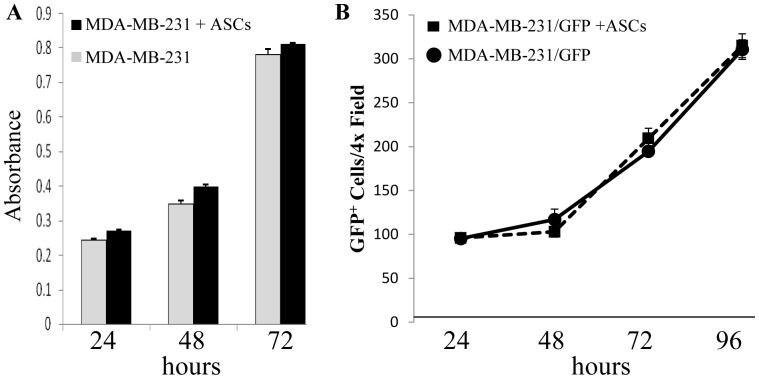
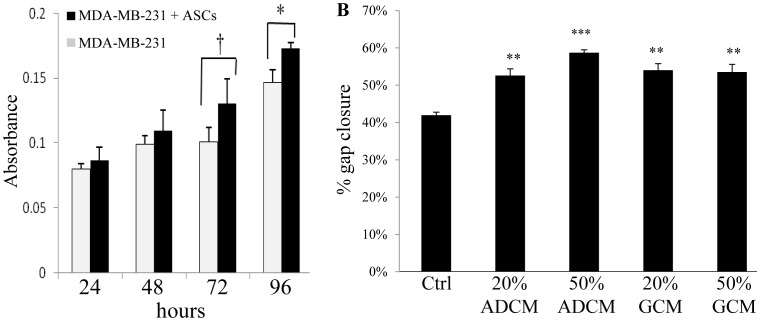
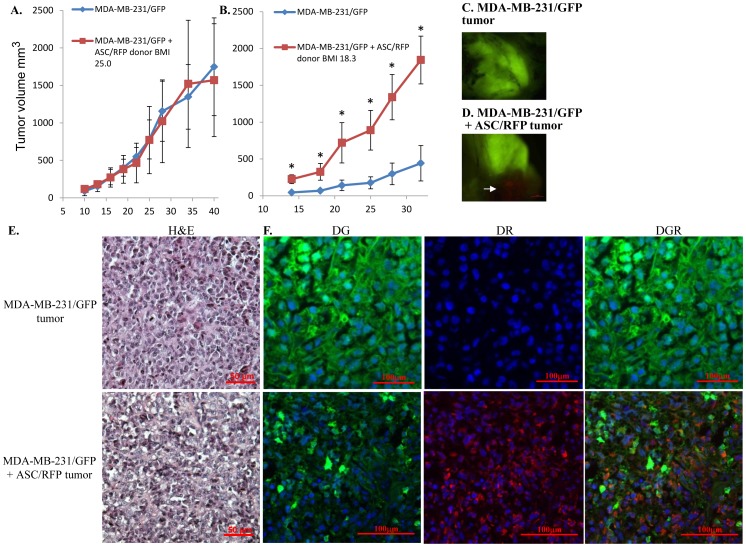
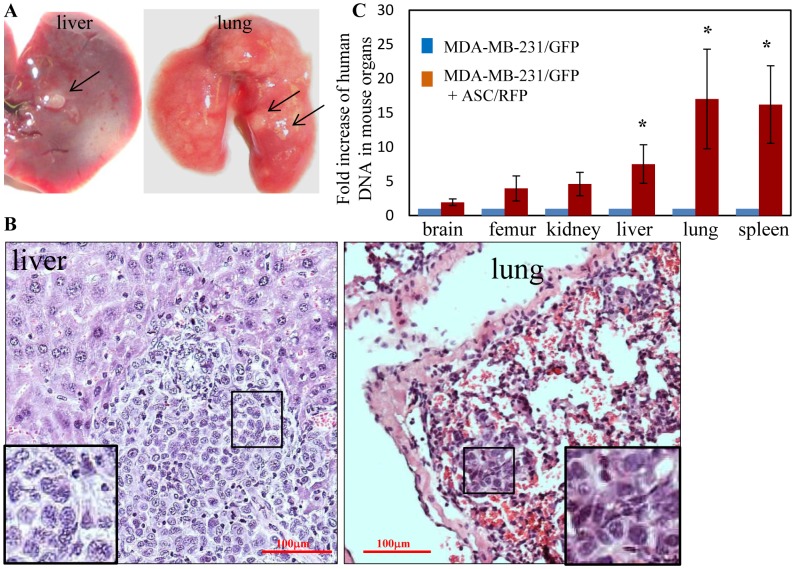
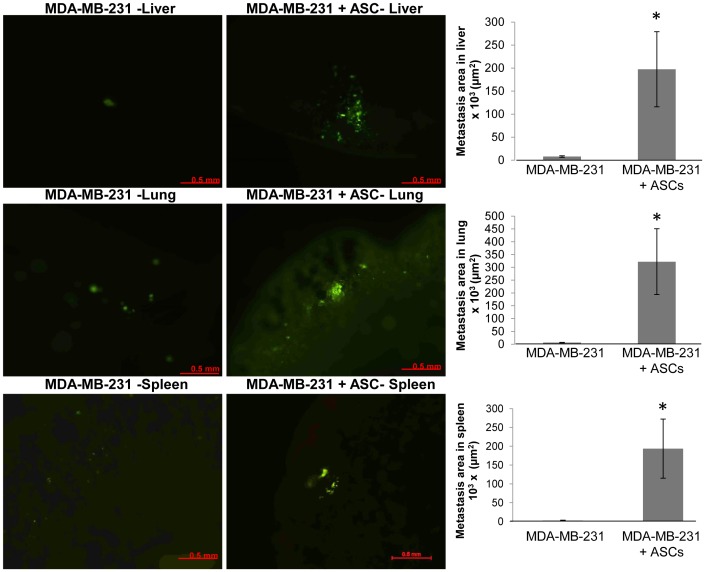
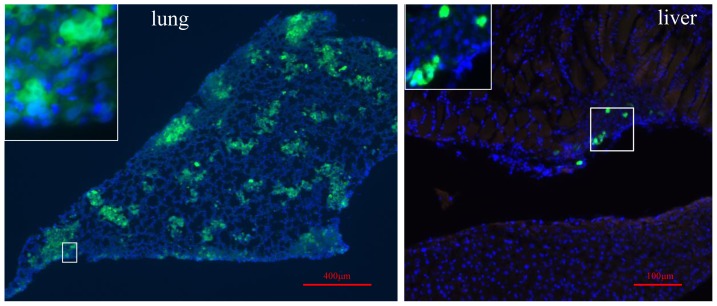
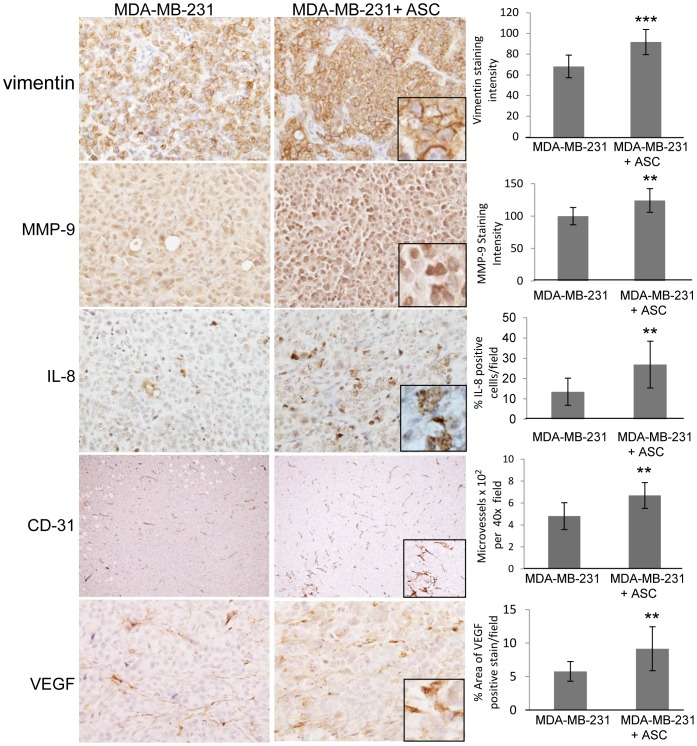
BACKGROUND: Fat grafting is used to restore breast defects after surgical resection of breast tumors. Supplementing fat grafts with adipose tissue-derived stromal/stem cells (ASCs) is proposed to improve the regenerative/restorative ability of the graft and retention. However, long term safety for ASC grafting in proximity of residual breast cancer cells is unknown. The objective of this study was to determine the impact of human ASCs derived from abdominal lipoaspirates of three donors, on a human breast cancer model that exhibits early metastasis. METHODOLOGY/PRINCIPAL FINDINGS: Human MDA-MB-231 breast cancer cells represents "triple negative" breast cancer that exhibits early micrometastasis to multiple mouse organs [1]. Human ASCs were derived from abdominal adipose tissue from three healthy female donors. Indirect co-culture of MDA-MB-231 cells with ASCs, as well as direct co-culture demonstrated that ASCs had no effect on MDA-MB-231 growth. Indirect co-culture, and ASC conditioned medium (CM) stimulated migration of MDA-MB-231 cells. ASC/RFP cells from two donors co-injected with MDA-MB-231/GFP cells exhibited a donor effect for stimulation of primary tumor xenografts. Both ASC donors stimulated metastasis. ASC/RFP cells were viable, and integrated with MDA-MB-231/GFP cells in the tumor. Tumors from the co-injection group of one ASC donor exhibited elevated vimentin, matrix metalloproteinase-9 (MMP-9), IL-8, VEGF and microvessel density. The co-injection group exhibited visible metastases to the lung/liver and enlarged spleen not evident in mice injected with MDA-MB-231/GFP alone. Quantitation of the total area of GFP fluorescence and human chromosome 17 DNA in mouse organs, H&E stained paraffin sections and fluorescent microscopy confirmed multi-focal metastases to lung/liver/spleen in the co-injection group without evidence of ASC/RFP cells. CONCLUSIONS: Human ASCs derived from abdominal lipoaspirates of two donors stimulated metastasis of MDA-MB-231 breast tumor xenografts to multiple mouse organs. MDA-MB-231 tumors co-injected with ASCs from one donor exhibited partial EMT, expression of MMP-9, and increased angiogenesis.
Overview
The claims and statistics of this paper haven’t been checked yet.
Free: it reads the open-access text and checks the first 5 claims that cite a source we can check. Create a free account to check every claim.
Integrity signals
Registry
Cites
Statistics
Figures
Verification
Claims the paper makes
The claims and statistics of this paper haven’t been checked yet.
Free: it reads the open-access text and checks the first 5 claims that cite a source we can check. Create a free account to check every claim.
Claims other papers make about this one
Each is checked against this paper’s own text: does it say what the citing paper says it does?
The source backs part of the claim, not all of it — or backs it for a different population, condition or comparison.
In the citing paper
“However, as referred to earlier, there were safety concerns about human adipose-tissue stromal cells (ASC) included in fat grafts that increased migration and metastases of breast tumour and osteosarcoma animal models [74], [101].”
From Mesenchymal stromal cells for bone sarcoma treatment: Roadmap to clinical practice (2019) · cites this paper as [74]
Experimental — accuracy not yet measuredThe source backs part of the claim, not all of it — or backs it for a different population, condition or comparison.
In the citing paper
“There were some safety concerns about human ADSC included in fat grafts, however, that were found to increase migration and metastases in a breast tumour and osteosarcoma models [74], [101].”
From Mesenchymal stromal cells for bone sarcoma treatment: Roadmap to clinical practice (2019) · cites this paper as [74]
Experimental — accuracy not yet measuredThe cited source says what the claim attributes to it.
In the citing paper
“The application of human ADSCs in proximity to breast cancer raised concerns as it was associated with an increase in the migration and metastasis of cancer cells [74].”
From Mesenchymal stromal cells for bone sarcoma treatment: Roadmap to clinical practice (2019) · cites this paper as [74]
Self-check
Percentages, sums and reported differences re-computed from the paper’s own numbers.
The self-check needs the paper’s full text.
Citations
Cites
Mesenchymal stem cells within tumour stroma promote breast cancer metastasis
Karnoub, A. E., Dash, A. B., Vo, A. P., Sullivan, A., Brooks, M. W., Bell, G. W., Richardson, A. L., Polyak, K., Tubo, R., & Weinberg, R. A. (2007) · Nature · doi:10.1038/nature06188 · Cited by 3,206
Adipose-derived stem cells for regenerative medicine
Gimble, J. M., Katz, A. J., & Bunnell, B. A. (2007) · Circulation Research · doi:10.1161/01.res.0000265074.83288.09 · Cited by 2,332
Self-citationAdipose-derived stem cells: Isolation, expansion and differentiation☆
BUNNELL, B., FLAAT, M., GAGLIARDI, C., PATEL, B., & RIPOLL, C. (2008) · Methods · doi:10.1016/j.ymeth.2008.03.006 · Cited by 1,067
Facial Recontouring with Lipostructure
Coleman, S. R. (1997) · Clinics in Plastic Surgery · doi:10.1016/s0094-1298(20)31069-5 · Cited by 1,046
Yoshimura, K., Sato, K., Aoi, N., Kurita, M., Hirohi, T., & Harii, K. (2008) · Aesthetic Plastic Surgery · doi:10.1007/s00266-007-9019-4 · Cited by 881
Allred, D. C., Clark, G. M., Elledge, R., Fuqua, S. A. W., Brown, R. W., Chamness, G. C., Osborne, C. K., & McGuire, W. L. (1993) · JNCI Journal of the National Cancer Institute · doi:10.1093/jnci/85.3.200 · Cited by 772
Production, concentration and titration of pseudotyped HIV-1-based lentiviral vectors
Kutner, R. H., Zhang, X.-Y., & Reiser, J. (2009) · Nature Protocols · doi:10.1038/nprot.2009.22 · Cited by 668
Self-citationDelay, E., Garson, S., Tousson, G., & Sinna, R. (2009) · Aesthetic Surgery Journal · doi:10.1016/j.asj.2009.08.010 · Cited by 536
YOSHIMURA, K., SATO, K., AOI, N., KURITA, M., INOUE, K., SUGA, H., ETO, H., KATO, H., HIROHI, T., & HARII, K. (2008) · Dermatologic Surgery · doi:10.1111/j.1524-4725.2008.34256.x · Cited by 429
Finn, R. S., Dering, J., Ginther, C., Wilson, C. A., Glaspy, P., Tchekmedyian, N., & Slamon, D. J. (2007) · Breast Cancer Research and Treatment · doi:10.1007/s10549-006-9463-x · Cited by 409
Cited by
Role of tumor microenvironment in tumorigenesis
Wang, M., Zhao, J., Zhang, L., Wei, F., Lian, Y., Wu, Y., Gong, Z., Zhang, S., Zhou, J., Cao, K., et al. (2017) · Journal of Cancer · doi:10.7150/jca.17648 · Cited by 1,404
Balaban, S., Shearer, R. F., Lee, L. S., van Geldermalsen, M., Schreuder, M., Shtein, H. C., Cairns, R., Thomas, K. C., Fazakerley, D. J., Grewal, T., et al. (2017) · Cancer & Metabolism · doi:10.1186/s40170-016-0163-7 · Cited by 416
Adipose-derived stem cells: Sources, potency, and implications for regenerative therapies
Si, Z., Wang, X., Sun, C., Kang, Y., Xu, J., Wang, X., & Hui, Y. (2019) · Biomedicine & Pharmacotherapy · doi:10.1016/j.biopha.2019.108765 · Cited by 423
Cancer as a Matter of Fat: The Crosstalk between Adipose Tissue and Tumors
Lengyel, E., Makowski, L., DiGiovanni, J., & Kolonin, M. G. (2018) · Trends in Cancer · doi:10.1016/j.trecan.2018.03.004 · Cited by 424
“In addition, roles for ASC in therapy resistance [59] and metastasis [60, 61] have also surfaced.”
BackgroundHossain, A., Gumin, J., Gao, F., Figueroa, J., Shinojima, N., Takezaki, T., Priebe, W., Villarreal, D., Kang, S.-G., Joyce, C., et al. (2015) · Stem Cells · doi:10.1002/stem.2053 · Cited by 224
Stem cell-based therapies for cancer treatment: separating hope from hype
Stuckey, D. W., & Shah, K. (2014) · Nature Reviews Cancer · doi:10.1038/nrc3798 · Cited by 220
Nguyen, A., Guo, J., Banyard, D. A., Fadavi, D., Toranto, J. D., Wirth, G. A., Paydar, K. Z., Evans, G. R. D., & Widgerow, A. D. (2016) · Journal of Plastic, Reconstructive & Aesthetic Surgery · doi:10.1016/j.bjps.2015.10.015 · Cited by 217
Signals from the Adipose Microenvironment and the Obesity–Cancer Link—A Systematic Review
Himbert, C., Delphan, M., Scherer, D., Bowers, L. W., Hursting, S., & Ulrich, C. M. (2017) · Cancer Prevention Research · doi:10.1158/1940-6207.capr-16-0322 · Cited by 195
“Others have similarly found that ASCs play a key role in cancer progression via additional mechanisms, including the promotion of metastasis and alterations in extracellular matrix mechanics (38, 39).”
BackgroundLiubomirski, Y., Lerrer, S., Meshel, T., Rubinstein-Achiasaf, L., Morein, D., Wiemann, S., Körner, C., & Ben-Baruch, A. (2019) · Frontiers in Immunology · doi:10.3389/fimmu.2019.00757 · Cited by 184
Zhang, T., Tseng, C., Zhang, Y., Sirin, O., Corn, P. G., Li-Ning-Tapia, E. M., Troncoso, P., Davis, J., Pettaway, C., Ward, J., et al. (2016) · Nature Communications · doi:10.1038/ncomms11674 · Cited by 160
“The capacity of ASCs to promote metastatic dissemination has also been reported 32,33 .”
3D Bioprinting of Breast Cancer Models for Drug Resistance Study
Wang, Y., Shi, W., Kuss, M., Mirza, S., Qi, D., Krasnoslobodtsev, A., Zeng, J., Band, H., Band, V., & Duan, B. (2018) · ACS Biomaterials Science & Engineering · doi:10.1021/acsbiomaterials.8b01277 · Cited by 157
Orecchioni, S., Reggiani, F., Talarico, G., Mancuso, P., Calleri, A., Gregato, G., Labanca, V., Noonan, D. M., Dallaglio, K., Albini, A., et al. (2015) · International Journal of Cancer · doi:10.1002/ijc.29193 · Cited by 139
Hill, B. S., Sarnella, A., D’Avino, G., & Zannetti, A. (2019) · Seminars in Cancer Biology · doi:10.1016/j.semcancer.2019.07.028 · Cited by 157
Obesity and gastrointestinal cancer: the interrelationship of adipose and tumour microenvironments
O'Sullivan, J. N., Lysaght, J., Donohoe, C. L., & Reynolds, J. V. (2018) · Nature Reviews Gastroenterology & Hepatology · doi:10.1038/s41575-018-0069-7 · Cited by 157
Groen, J.-W., Negenborn, V. L., Twisk, D. J. W. R., Rizopoulos, D., Ket, J. C. F., Smit, J. M., & Mullender, M. G. (2016) · Journal of Plastic Reconstructive & Aesthetic Surgery · doi:10.1016/j.bjps.2016.03.019 · Cited by 136
Autologous Fat Grafting: The Science Behind the Surgery
Zielins, E. R., Brett, E. A., Longaker, M. T., & Wan, D. C. (2016) · Aesthetic Surgery Journal · doi:10.1093/asj/sjw004 · Cited by 144
“This is due to the ASC content of grafted adipose tissue, which, though critical to the survival and integration of a fat graft, is concerning in the setting of prior malignancy, as varying reports have suggested a potential for ASCs to stimulate tumor recurrence.(77,78) This controversy is further magnified in the se…”
BackgroundAdipocyte–Tumor Cell Metabolic Crosstalk in Breast Cancer
Hoy, A. J., Balaban, S., & Saunders, D. N. (2017) · Trends in Molecular Medicine · doi:10.1016/j.molmed.2017.02.009 · Cited by 139
Freese, K. E., Kokai, L. E., Edwards, R. P., Philips, B. J., Sheikh, M. A., Kelley, J. L., Comerci, J. T., Marra, K. G., Rubin, J. P., & Linkov, F. Y. (2015) · Cancer Research · doi:10.1158/0008-5472.can-14-2744 · Cited by 139
“Investigations that used mixed animal and human cells in vivo were included, for example, those using human ASCs in mice to study tumor behavior (38, 39).”
BackgroundMethodToyserkani, N. M., Jørgensen, M. G., Tabatabaeifar, S., Jensen, C. H., Sheikh, S. P., & Sørensen, J. A. (2017) · Stem Cells Translational Medicine · doi:10.1002/sctm.17-0031 · Cited by 125
Rationale for the clinical use of adipose-derived mesenchymal stem cells for COVID-19 patients
Rogers, C. J., Harman, R. J., Bunnell, B. A., Schreiber, M. A., Xiang, C. C., Wang, F., Santidrián, A. F., & Minev, B. (2020) · Journal of Translational Medicine · doi:10.1186/s12967-020-02380-2 · Cited by 122
Duong, M. N., Cleret, A., Matera, E., Chettab, K., Mathé, D., Valsesia‐Wittmann, S., Clemenceau, B., & Dumontet, C. (2015) · Breast Cancer Research · doi:10.1186/s13058-015-0569-0 · Cited by 126
“Nonetheless, our data, together with those of others [46,47], raise the question of the safety of lipotransfer in patients undergoing breast reconstruction.”
ResultRivera-Cruz, C. M., Shearer, J. J., Figueiredo Neto, M., & Figueiredo, M. L. (2017) · Stem Cells International · doi:10.1155/2017/4015039 · Cited by 113
“Several reports point to a role for ASCs in inducing Treg cells, including those under lower oxygen (5% O2) conditions, and other physiologically relevant mechanisms thought to involve cell-cell contact [89].”
BackgroundGroen, J.-W., Negenborn, V. L., Twisk, J. W. R., Ket, J. C. F., Mullender, M. G., & Smit, J. M. (2016) · Aesthetic Surgery Journal · doi:10.1093/asj/sjw105 · Cited by 112
The Role of Adipose-Derived Stem Cells in Breast Cancer Progression and Metastasis
Schweizer, R., Tsuji, W., Gorantla, V. S., Marra, K. G., Rubin, J. P., & Plock, J. A. (2015) · Stem Cells International · doi:10.1155/2015/120949 · Cited by 110
“Moreover, freshly isolated primary breast cancer cells from tumor excisates or MPEs [5] should be preferred for preclinical studies, along with matched fat tissue and MSCs/ADSCs from the same patient, as different donor biology can affect the MSC functionality and thus the outcome [71].”
BackgroundResultInfluentialXia, L., Zheng, Z., Liu, J., Chen, Y., Ding, J., Xia, N., Luo, W., & Liu, W. (2020) · Clinical & Translational Immunology · doi:10.1002/cti2.1135 · Cited by 109
“haematoxylin and eosin (H&E) staining (Supplementary figure 7a) and was consistent with findings of previous reports.(65,66) The observed lung metastasis was not seen in EGFR”
ResultZielins, E. R., Atashroo, D. A., Maan, Z. N., Duscher, D., Walmsley, G. G., Marecic, O., Hu, M. S.-M., Senarath-Yapa, K., McArdle, A., Tevlin, R., et al. (2014) · Regenerative Medicine · doi:10.2217/rme.14.54 · Cited by 114
Camorani, S., Hill, B. S., Fontanella, R., Greco, A., Gramanzini, M., Auletta, L., Gargiulo, S., Albanese, S., Lucarelli, E., Cerchia, L., et al. (2017) · Theranostics · doi:10.7150/thno.18974 · Cited by 95
“Although the effect of MSCs on growth of breast cancer is controversial and probably depends on the experimental setting of the animal model [49], conversely, it is well established that MSCs have a significant impact on promoting breast cancer metastasis [50].”
BackgroundWei, H.-J., Zeng, R., Lu, J.-H., Lai, W. T., Chen, W.-H., Liu, H., Chang, Y.-T., & Deng, W. (2015) · Oncotarget · doi:10.18632/oncotarget.3481 · Cited by 96
“However, recent reports imply a potential tumorigenic role that ADSCs may play during tumor development, raising the concerns of their safety in clinical application [9, 1920, 22].”
Implications for human adipose‐derived stem cells in plastic surgery
Banyard, D. A., Salibian, A. A., Widgerow, A. D., & Evans, G. R. D. (2014) · Journal of Cellular and Molecular Medicine · doi:10.1111/jcmm.12425 · Cited by 100
“For example, studies have demonstrated that MSCs potentiate the metastatic potency of breast cancer cells when the two are mixed and reimplanted [41–43].”
Stem cells from adipose tissue and breast cancer: hype, risks and hope
Bertolini, F., Petit, J.-Y., & Kolonin, M. G. (2015) · British Journal of Cancer · doi:10.1038/bjc.2014.657 · Cited by 93
“Recent findings by us and others also suggest the role of WAT-derived stroma in cancer metastasis (Martin-Padura et al, 2012; Nowicka et al, 2013; Orecchioni et al, 2013; Rowan et al, 2014).”
BackgroundCell-Assisted Lipotransfer: A Systematic Review of Its Efficacy
Toyserkani, N. M., Quaade, M. L., & Sørensen, J. A. (2016) · Aesthetic Plastic Surgery · doi:10.1007/s00266-016-0613-1 · Cited by 94
Obesity and prostate cancer — microenvironmental roles of adipose tissue
Saha, A., Kolonin, M. G., & DiGiovanni, J. (2023) · Nature Reviews Urology · doi:10.1038/s41585-023-00764-9 · Cited by 92
Yang, Y., Otte, A., & Hass, R. (2015) · Stem Cells and Development · doi:10.1089/scd.2014.0413 · Cited by 82
“In addition, co-transplantation of human adipose tissue-derived MSC with MDA-MB-231 breast [46].”
Su, F., Ahn, S., Saha, A., DiGiovanni, J., & Kolonin, M. G. (2018) · Oncogene · doi:10.1038/s41388-018-0558-8 · Cited by 85
Strong, A. L., Pei, D. T., Hurst, C. G., Gimble, J. M., Burow, M. E., & Bunnell, B. A. (2017) · Stem Cells International · doi:10.1155/2017/9216502 · Cited by 77
Self-citationAdipose-Derived Stem Cells in Cancer Progression: New Perspectives and Opportunities
Scioli, M. G., Storti, G., D’Amico, F., Gentile, P., Kim, B., Cervelli, V., & Orlandi, A. (2019) · International Journal of Molecular Sciences · doi:10.3390/ijms20133296 · Cited by 82
“This process requires the MMP activity that is increased in vitro by the co-culture of human ASCs and breast cancer cells [62].”
BackgroundRadiation-Induced Tissue Damage: Clinical Consequences and Current Treatment Options
Nepon, H., Safran, T., Reece, E. M., Murphy, A. M., Vorstenbosch, J., & Davison, P. G. (2021) · Seminars in Plastic Surgery · doi:10.1055/s-0041-1731464 · Cited by 81
Morrison, W. A., Marré, D., Grinsell, D., Batty, A., Trost, N. M., & O’Connor, A. J. (2016) · EBioMedicine · doi:10.1016/j.ebiom.2016.03.032 · Cited by 73
“…there are oncological matters that need to be further investigated before translation into human tissue engineering, as adipose-derived mesenchymal stem cells and adipocytes may promote progression and metastatic spread in breast cancer and melanoma (Rowan et al., 2014; Kwan et al., 2014).”
BackgroundCancer Risk after Fat Transfer: A Multicenter Case-Cohort Study
Myckatyn, T. M., Wagner, I. J., Mehrara, B. J., Crosby, M. A., Park, J. E., Qaqish, B. F., Moore, D. T., Busch, E. L., Silva, A. K., Kaur, S., et al. (2016) · Plastic & Reconstructive Surgery · doi:10.1097/prs.0000000000002838 · Cited by 79
Kamat, P., Schweizer, R., Kaenel, P., Salemi, S., Calcagni, M., Giovanoli, P., Gorantla, V. S., Eberli, D., Andres, A., & Plock, J. A. (2015) · Plastic & Reconstructive Surgery · doi:10.1097/prs.0000000000001321 · Cited by 77
Okumura, T., Ohuchida, K., Kibe, S., Iwamoto, C., Ando, Y., Takesue, S., Nakayama, H., Abe, T., Endo, S., Koikawa, K., et al. (2018) · International Journal of Cancer · doi:10.1002/ijc.31775 · Cited by 65
Adipose-Derived Stem Cells: Selecting For Translational Success
Johal, K. S., Lees, V. C., & Reid, A. J. (2015) · Regenerative Medicine · doi:10.2217/rme.14.72 · Cited by 60
Koellensperger, E., Bonnert, L.-C., Zoernig, I., Marmé, F., Sandmann, S., Germann, G., Gramley, F., & Leimer, U. (2017) · Stem Cell Research & Therapy · doi:10.1186/s13287-017-0579-1 · Cited by 62
Chopan, M., White, J. A., Sayadi, L. R., Buchanan, P. J., & Katz, A. J. (2019) · Plastic & Reconstructive Surgery · doi:10.1097/prs.0000000000005617 · Cited by 59
Improving Autologous Fat Grafting in Regenerative Surgery through Stem Cell-Assisted Lipotransfer
Debuc, B., Gendron, N., Cras, A., Rancic, J., Philippe, A., Cetrulo, C. L., Lellouch, A. G., & Smadja, D. M. (2023) · Stem Cell Reviews and Reports · doi:10.1007/s12015-023-10568-4 · Cited by 56
Měšťák, O., Hromadkova, V., Fajfrova, M., Molitor, M., & Mestak, J. (2015) · Annals of Surgical Oncology · doi:10.1245/s10434-015-4908-2 · Cited by 53
Stromal Cells Derived from Visceral and Obese Adipose Tissue Promote Growth of Ovarian Cancers
Zhang, Y., Nowicka, A., Solley, T. N., Wei, C., Parikh, A. M., Court, L. E., Burks, J. K., Andreeff, M., Woodward, W. A., Dadbin, A., et al. (2015) · PLoS ONE · doi:10.1371/journal.pone.0136361 · Cited by 50
“Adipose tissue also contains a population of tumor-tropic adipose stem cells (ASCs) that support the formation of tumor vasculature [9] [10].”
Fang, J., Chen, F., Liu, D., Gu, F., & Wang, Y. (2021) · Stem Cell Research & Therapy · doi:10.1186/s13287-020-01955-6 · Cited by 55
Safety of Lipofilling in Patients with Breast Cancer
Petit, J., Maisonneuve, P., Rotmensz, N., Bertolini, F., Clough, K. B., Sarfati, I., Gale, K., Macmillan, R. D., Rey, P., Benyahi, D., et al. (2015) · Clinics in Plastic Surgery · doi:10.1016/j.cps.2015.03.004 · Cited by 48
Ritter, A., Kreis, N., Roth, S., Friemel, A., Safdar, B. K., Hoock, S. C., Wildner, J. M., Allert, R., Louwen, F., Solbach, C., et al. (2023) · Journal of Experimental & Clinical Cancer Research · doi:10.1186/s13046-022-02592-y · Cited by 47
“These findings are achieved by employing bASCs from mammary adipose tissue distant and adjacent to breast cancers of the same patient, distinguishing this study from other investigations that used MSCs of non-mammary origins [20, 65], only tumor adjacent cells [66, 67] or “cancereducated” MSCs [68].”
ResultTargeted Proapoptotic Peptides Depleting Adipose Stromal Cells Inhibit Tumor Growth
Daquinag, A. C., Tseng, C., Zhang, Y., Amaya‐Manzanares, F., Florez, F., Dadbin, A., Zhang, T., & Kolonin, M. G. (2015) · Molecular Therapy · doi:10.1038/mt.2015.155 · Cited by 47
Tissue engineering and regenerative medicine strategies for the female breast
Conci, C., Bennati, L., Bregoli, C., Buccino, F., Danielli, F., Gallan, M., Gjini, E., & Raimondi, M. T. (2019) · Journal of Tissue Engineering and Regenerative Medicine · doi:10.1002/term.2999 · Cited by 49
“Further studies, using different BMIs, are needed to study the effect of ADSCs on tumor growth (Rowan et al., 2014).”
BackgroundMethodInfluentialApplication of Fat Grafting in Cosmetic Breast Surgery
Davis, M. J., Perdanasari, A. T., Abu‐Ghname, A., Gonzalez, S. R., Chamata, E. S., Rammos, C. K., & Winocour, S. J. (2020) · Seminars in Plastic Surgery · doi:10.1055/s-0039-1700958 · Cited by 48
Su, F., Daquinag, A. C., Ahn, S., Saha, A., Dai, Y., Zhao, Z., DiGiovanni, J., & Kolonin, M. G. (2021) · npj Precision Oncology · doi:10.1038/s41698-021-00160-9 · Cited by 42
Peri-foci adipose-derived stem cells promote chemoresistance in breast cancer
Yeh, W., Tsai, C., & Chen, D. (2017) · Stem Cell Research & Therapy · doi:10.1186/s13287-017-0630-2 · Cited by 43
“adipose tissue enhanced breast cancer cell migration and early metastasis [47].”
Adipose Stromal Cell Expansion and Exhaustion: Mechanisms and Consequences
Eckel‐Mahan, K. L., Ribas‐Latre, A., & Kolonin, M. G. (2020) · Cells · doi:10.3390/cells9040863 · Cited by 42
“In addition, roles for ASCs in therapy resistance [159] and metastasis [160,161] have also surfaced.”
BackgroundHabanjar, O., Diab‐Assaf, M., Caldefie‐Chezet, F., & Delort, L. (2022) · Biology · doi:10.3390/biology11020339 · Cited by 45
Adipose regeneration and implications for breast reconstruction: update and the future.
Combellack, E. J., Jessop, Z. M., Naderi, N., Griffin, M., Dobbs, T. D., Ibrahim, A., Evans, S. J., Burnell, S. E. A., Doak, S. H., & Whitaker, I. S. (2016) · PubMed Central · doi:10.3978/j.issn.2227-684x.2016.01.01 · Cited by 44
“Increased metastatic potential has been further demonstrated in a study examining the co-culture of triple negative breast cancer and ADSCs; organ metastases were observed in the murine model in the ADSC group compared with none in the control (157).”
ResultThe effect of obesity on adipose-derived stromal cells and adipose tissue and their impact on cancer
Bunnell, B. A., Martin, E. C., Matossian, M. D., Brock, C. K., Nguyen, K., Collins‐Burow, B. M., & Burow, M. E. (2022) · Cancer and Metastasis Reviews · doi:10.1007/s10555-022-10063-1 · Cited by 41
Application of adipose-derived stromal cells in fat grafting: Basic science and literature review
Moustaki, M., Papadopoulos, O. N., Verikokos, C., Karypidis, D., Masud, D., Kostakis, A. I., Papastefanaki, F., Roubelakis, M. G., & Perrea, D. N. (2017) · Experimental and Therapeutic Medicine · doi:10.3892/etm.2017.4811 · Cited by 44
“Although the American Society of Plastic Surgeons has come to the conclusion that fat grafting does not increase the risk of breast cancer recurrence (90), studies have demonstrated that ADSCs may enhance the growth of proliferating cells (91-94).”
Tsuji, W., Valentin, J. E., Marra, K. G., Donnenberg, A. D., Donnenberg, V. S., & Rubin, J. P. (2017) · Stem Cells Translational Medicine · doi:10.1002/sctm.17-0062 · Cited by 42
Adipose tissue-to-breast cancer crosstalk: Comprehensive insights
Wu, Y., Li, X., Li, Q., Cheng, C., & Zheng, L. (2022) · Biochimica et Biophysica Acta (BBA) - Reviews on Cancer · doi:10.1016/j.bbcan.2022.188800 · Cited by 43
Stem cell and skin rejuvenation
Zarei, F., & Abbaszadeh, A. (2018) · Journal of Cosmetic and Laser Therapy · doi:10.1080/14764172.2017.1383615 · Cited by 38
“metastatic risk of developing breast cancer when MSCs and ADSCs are mixed and used during cosmetic breast augmentation surgery (30,31).”
BackgroundMesenchymal stromal cells for bone sarcoma treatment: Roadmap to clinical practice
Stamatopoulos, A., Stamatopoulos, T., Gamie, Z., Kenanidis, E., Ribeiro, R. D. C., Rankin, K. S., Gerrand, C., Dalgarno, K., & Tsiridis, E. (2019) · Journal of Bone Oncology · doi:10.1016/j.jbo.2019.100231 · Cited by 37
“stromal cells (ASC) included in fat grafts that increased migration and metastases of breast tumour and osteosarcoma animal models [74,101].”
BackgroundCharvet, H. J., Orbay, H., Wong, M. S., & Sahar, D. E. (2015) · Annals of Plastic Surgery · doi:10.1097/sap.0000000000000604 · Cited by 41
“Figure adapted from Rowan et al.(11) Annals of Plastic Surgery • Volume 75, Number 4, October 2015 Breast Cancer and Fat grafting”
MethodHuang, J., Wang, Y., Lo, S. J., Tseng, L., Chen, D., Wu, Y., Hou, M., & Yuan, S. F. (2019) · Cancers · doi:10.3390/cancers12010029 · Cited by 37
“ADSCs may also produce multiple factors including insulin-like growth factor (IGF), hepatocyte growth factor (HGF), VEGF, IL8, and TGFβ [9–13], and may induce epithelial-mesenchymal transition (EMT), promoting tumor migration and metastases [14,15].”
BackgroundResultNon-glycanated Decorin Is a Drug Target on Human Adipose Stromal Cells
Daquinag, A. C., Dadbin, A., Snyder, B., Wang, X., Şahin, A. A., Ueno, N. T., & Kolonin, M. G. (2017) · Molecular Therapy — Oncolytics · doi:10.1016/j.omto.2017.05.003 · Cited by 37
Rowan, B. G., Lacayo, E. A., Sheng, M., Anbalagan, M., Gimble, J. M., Jones, R. K., Joseph, W. J., Friedlander, P. L., & Chiu, E. S. (2015) · Aesthetic Surgery Journal · doi:10.1093/asj/sjv090 · Cited by 36
“We found similar results in our previous study in which ASC/RFP cells were co-injected with MDA-MB-231 breast cancer cells and this resulted in increased metastasis to several mouse organs that was donor dependent.(9) The present experiments were terminated at 6 weeks when the tumor burden became too large for the ani…”
BackgroundMethodResultSelf-citationBougaret, L., Delort, L., Billard, H., Lequeux, C., Gonçalves-Mendes, N., Mojallal, A. A., Damour, O., Vasson, M., & Caldefie‐Chezet, F. (2016) · Journal of Cellular Physiology · doi:10.1002/jcp.25701 · Cited by 37
“injections of MDA-MB-231 cells with ASCs increased angiogenesis (Rowan et al., 2014).”
BackgroundJeon, H. J., Choi, D. H., Lee, J. H., Lee, J. S., Lee, J., Park, H. Y., & Yang, J. D. (2020) · Aesthetic Plastic Surgery · doi:10.1007/s00266-020-01981-y · Cited by 37
Oncologic Safety of Autologous Fat Grafting in Breast Reconstruction
Shamoun, F., Asaad, M., & Hanson, S. E. (2021) · Clinical Breast Cancer · doi:10.1016/j.clbc.2021.01.020 · Cited by 37
Outcomes of Prosthetic Reconstruction of Irradiated and Nonirradiated Breasts with Fat Grafting
Komorowska-Timek, E. D., Turfe, Z. A., & Davis, A. T. (2016) · Plastic & Reconstructive Surgery · doi:10.1097/prs.0000000000002916 · Cited by 33
Metabolic Remodeling Induced by Adipocytes: A New Achilles' Heel in Invasive Breast Cancer?
Attané, C., Milhas, D., Hoy, A. J., & Muller, C. (2018) · Current Medicinal Chemistry · doi:10.2174/0929867325666180426165001 · Cited by 34
Maintenance of white adipose tissue in man
Hyvönen, M. T., & Spalding, K. L. (2014) · The International Journal of Biochemistry & Cell Biology · doi:10.1016/j.biocel.2014.09.013 · Cited by 38
Teoh, S. L., & Das, S. (2016) · Tumor Biology · doi:10.1007/s13277-016-5357-7 · Cited by 33
Rohrich, R. J., & Wan, D. (2019) · Plastic & Reconstructive Surgery · doi:10.1097/prs.0000000000005207 · Cited by 30
Lipotransfer: The Potential From Bench to Bedside
Tocco, I., Widgerow, A. D., Lalezari, S., Banyard, D. A., Shaterian, A., & Evans, G. R. D. (2014) · Annals of Plastic Surgery · doi:10.1097/sap.0000000000000154 · Cited by 32
Tukiama, R., Vieira, R. A. D. C., Moura, E. C. R., Oliveira, A. G. C., Facina, G., Zucca‐Matthes, G., Neto, J. N., de Oliveira, C. M. B., & Leal, P. D. C. (2021) · European Journal of Surgical Oncology · doi:10.1016/j.ejso.2021.12.017 · Cited by 31
Molecular insights into the interplay between adiposity, breast cancer and bone metastasis
Soni, S., Torvund, M., & Mandal, C. C. (2021) · Clinical & Experimental Metastasis · doi:10.1007/s10585-021-10076-0 · Cited by 30
Guillaume, V. G. J., Ruhl, T., Boos, A. M., & Beier, J. P. (2022) · Stem Cells Translational Medicine · doi:10.1093/stcltm/szac002 · Cited by 28
Li, W., Xu, H., & Qian, C. (2017) · BioMed Research International · doi:10.1155/2017/7407168 · Cited by 31
Unraveling Adipocytes and Cancer Links: Is There a Role for Senescence?
Wu, Q., Li, B., Sun, S., & Sun, S. (2020) · Frontiers in Cell and Developmental Biology · doi:10.3389/fcell.2020.00282 · Cited by 24
Zakaria, N., & Yahaya, B. H. (2020) · Advances in experimental medicine and biology · doi:10.1007/5584_2019_464 · Cited by 24
Su, F., Wang, X., Pearson, T., Lee, J., Krishnamurthy, S., Ueno, N. T., & Kolonin, M. G. (2020) · Molecular Therapy — Oncolytics · doi:10.1016/j.omto.2020.08.012 · Cited by 25
“A role for ASCs in therapy resistance has surfaced,(24) identifying these cells as a prospective drug target.(25)”
BackgroundLipofilling in Breast Oncological Surgery: A Safe Opportunity or Risk for Cancer Recurrence?
Piccotti, F., Rybińska, I., Scoccia, E., Morasso, C., Ricciardi, A., Signati, L., Triulzi, T., Corsi, F., & Truffi, M. (2021) · International Journal of Molecular Sciences · doi:10.3390/ijms22073737 · Cited by 27
Lee, J., Park, C., Chun, K., & Hong, S. (2015) · Oncology Letters · doi:10.3892/ol.2015.3360 · Cited by 23
“Furthermore, co-culture of ASCs enhanced the proliferation of human squamous cell carcinoma cells (8) and the migration of breast cancer cells in a xenograft model (9).”
Gebremeskel, S., Gencarelli, J. R., Gareau, A. J., LeVatte, T. L., Dugandzic, B. S. A., Johnston, B., & Bezuhly, M. (2018) · Plastic & Reconstructive Surgery · doi:10.1097/prs.0000000000005142 · Cited by 24
Ejaz, A., Yang, K. S., Venkatesh, K. P., Chinnapaka, S., Kokai, L. E., & Rubin, J. P. (2020) · International Journal of Molecular Sciences · doi:10.3390/ijms21239171 · Cited by 22
“demonstrated enhanced kidney, lung and spleen metastasis upon the injection of ASCs together with breast cancer cells [19].”
BackgroundAllen, H., Shraga‐Heled, N., Blumenfeld, M., Dego-Ashto, T., Fuchs‐Telem, D., Gilert, A., Aberman, Z., & Ofir, R. (2018) · Scientific Reports · doi:10.1038/s41598-017-18428-1 · Cited by 21
Flont, M., Jastrzębska, E., & Brzózka, Z. (2020) · The Analyst · doi:10.1039/d0an00911c · Cited by 21
Li, M., Li, X., Zhao, L., Zhou, J., Cheng, Y., Xu, B., Wang, J., & Wei, L. (2019) · Cell Cycle · doi:10.1080/15384101.2019.1568743 · Cited by 21
“reported that ASCs stimulated the migration of breast cancer cells and markedly increased their metastasis to mouse organs [17].”
BackgroundRoles of mesenchymal stromal cells in the head and neck cancer microenvironment
de Miranda, M. C., de Melo, M. I. A., Cunha, P. D. S., Gentilini, J., Faria, J. A. Q. A., Rodrigues, M. Â., & Gomes, D. A. (2021) · Biomedicine & Pharmacotherapy · doi:10.1016/j.biopha.2021.112269 · Cited by 20
Strategic Sequences in Fat Graft Survival
Guo, J., Widgerow, A. D., Banyard, D. A., Toranto, J. D., Wirth, G. A., Paydar, K. Z., Tussardi, I. T., & Evans, G. R. D. (2015) · Annals of Plastic Surgery · doi:10.1097/sap.0000000000000416 · Cited by 21
Development of a novel bioabsorbable implant that is substituted by adipose tissue in vivo
Ogino, S., Morimoto, N., Sakamoto, M., Jinno, C., Yoshikawa, K., Enoshiri, T., Sakamoto, Y., Taira, T., & Suzuki, S. (2017) · Journal of Tissue Engineering and Regenerative Medicine · doi:10.1002/term.2482 · Cited by 19
“induction of recurrence or metastasis of breast cancer (Alperovich et al., 2014; Chandler et al., 2012; Muehlberg et al., 2009; Rowan et al., 2014; Zhao et al., 2012).”
BackgroundAdipose Tissue-Secreted Factors Alter Bladder Cancer Cell Migration
Hariharan, N., Ashcraft, K. A., Svatek, R. S., Livi, C. B., Wilson, D., Kaushik, D., Leach, R. J., & Johnson‐Pais, T. L. (2018) · Journal of Obesity · doi:10.1155/2018/9247864 · Cited by 19
Li, M., Yue, G. G., Luo, L., Tsui, S. K., Fung, K., Ng, S. S. M., & Lau, C. B. (2021) · Frontiers in Oncology · doi:10.3389/fonc.2020.574827 · Cited by 20
“There was significantly decreased of the Ch17 expression in TE-treated mice (p 0.05), suggesting that the inhibitory effect of TE treatment on the metastasis and/or colonization of human xenograft cells in mice lungs.”
BackgroundMethodInfluentialChatterjee, S., Laliberte, M., Blelloch, S., Ratanshi, I., Safneck, J. R., Buchel, E. W., & Raouf, A. (2015) · Plastic & Reconstructive Surgery · doi:10.1097/prs.0000000000001635 · Cited by 22
Stem cell technology in breast cancer: current status and potential applications
Chiotaki, R., Polioudaki, H., & Theodoropoulos, P. A. (2016) · Stem Cells and Cloning Advances and Applications · doi:10.2147/sccaa.s72836 · Cited by 20
Fat grafting for breast cancer patients: From basic science to clinical studies
Gennari, R., Griguolo, G., Dieci, M. V., Guarneri, V., Tavaniello, B., Sibilio, A., & Conte, P. (2016) · European Journal of Surgical Oncology · doi:10.1016/j.ejso.2016.04.062 · Cited by 18
Charvet, H. J., Orbay, H., Harrison, L., Devi, K., & Sahar, D. E. (2016) · Annals of Plastic Surgery · doi:10.1097/sap.0000000000000802 · Cited by 18
“A Fortessa Flow cytometer (BD Biosciences) was used to detect the cellular markers expressed on the surface of ASCs.”
BackgroundInfluential
Metadata
- Authors
- Rowan, B. G., Gimble, J. M., Sheng, M., Anbalagan, M., Jones, R. K., Frazier, T. P., Asher, M., Lacayo, E. A., Friedlander, P. L., Kutner, R., & Chiu, E. S.
- Affiliations
- Tulane University (US)
- Pennington Biomedical Research Center (US)
- Louisiana State University Health Sciences Center New Orleans (US)
- NYU Langone Health (US)
- Corresponding author
- Rowan, Brian G.
- Chiu, Ernest S.
- ORCID
- Venue
- PLoS ONE
- Publisher
- Public Library of Science (PLoS)
- Published
- 2014-02-28
- Volume
- 9
- Issue
- 2
- Pages
- e89595
- ISSN
- 1932-6203 (ISSN-L)
- PMC
- PMC3938488
- OpenAlex
- W1984075943
- Semantic Scholar
- 9c7fc1d6fa5496dc9fe1c873c980fc4bb0aa43af
- Cited by
- 174
- References
- 62
- Citations by year
- 2026: 4 · 2025: 3 · 2024: 7 · 2023: 11 · 2022: 10 · 2021: 17 · 2020: 15 · 2019: 14 · 2018: 17 · 2017: 24 · 2016: 20 · 2015: 20 · 2014: 12
- FWCI
- 12.71
- Type
- journal article
- Language
- en
- Open access
- gold
- doi.org
- Locations
- PLoS ONE (publishedVersion, cc-by)
- Europe PMC (PubMed Central) (publishedVersion, other-oa)
- PubMed Central (publishedVersion, cc-by)
- PubMed (publishedVersion)
- DOAJ (DOAJ: Directory of Open Access Journals) (submittedVersion, cc-by-sa)
- Figshare (submittedVersion, cc-by)
- Funders
- Aesthetic Surgery Education and Research Foundation
- Pennington Biomedical Research Foundation
- Tulane University
- National Institute of Diabetes and Digestive and Kidney Diseases (P30DK072476)
- Topics
- Life Sciences › Biochemistry, Genetics and Molecular Biology › Cell Biology › Mesenchymal stem cell research
- Health Sciences › Medicine › Oncology › Cancer Cells and Metastasis
- Life Sciences › Immunology and Microbiology › Immunology › Immune cells in cancer
- Keywords
- triple-negative breast cancer, early metastasis, micrometastases, MDA-MB-231 cells, fat grafting, breast reconstruction, tumor cell migration, epithelial-mesenchymal transition, MMP-9, angiogenesis, interleukin-8, vascular endothelial growth factor, microvessel density
- MeSH terms
- Adipose Tissue, Animals, Female, Humans, Stem Cells, Interleukin-8, Culture Media, Conditioned, Stromal Cells, Matrix Metalloproteinase 9, Vascular Endothelial Growth Factor A, Mice, Triple Negative Breast Neoplasms
About these checks
Registry, retraction, Cites and statistics results are computed, not judged, with one exception: a printed reference that no index lists is read once by a model before it counts as a citation error. Claims are extracted by a model and kept only when their quote appears verbatim in the text; each cited source is then checked, with a model’s help, for whether it says what the claim relies on. Those verdicts can be wrong — read the claim’s quote and the cited source before relying on one.
Statistics and arithmetic are recomputed, not judged.
Confidence bands are shown only for fields calibrated on our annotated test set. None is calibrated yet, so no band is shown.
What counts as a claim ›How we measure confidence ›How we check this ›
Are you an author, or do you see a problem with this page? Request a review
Data sources
Bibliographic data: Semantic Scholar, OpenAlex, Crossref.
Contains information from the Semantic Scholar Academic Graph Datasets, made available under the ODC Attribution License (ODC-BY 1.0).
Semantic Scholar’s data is described in: Kinney, R., et al. (2023). The Semantic Scholar Open Data Platform. arXiv:2301.10140.
