

The DOI matches its Crossref record; 32 of the 34 references it cites were found in a registry or an index.
Detusking Fence-Breaker Elephants as an Approach in Human-Elephant Conflict Mitigation
Open accessAbstract
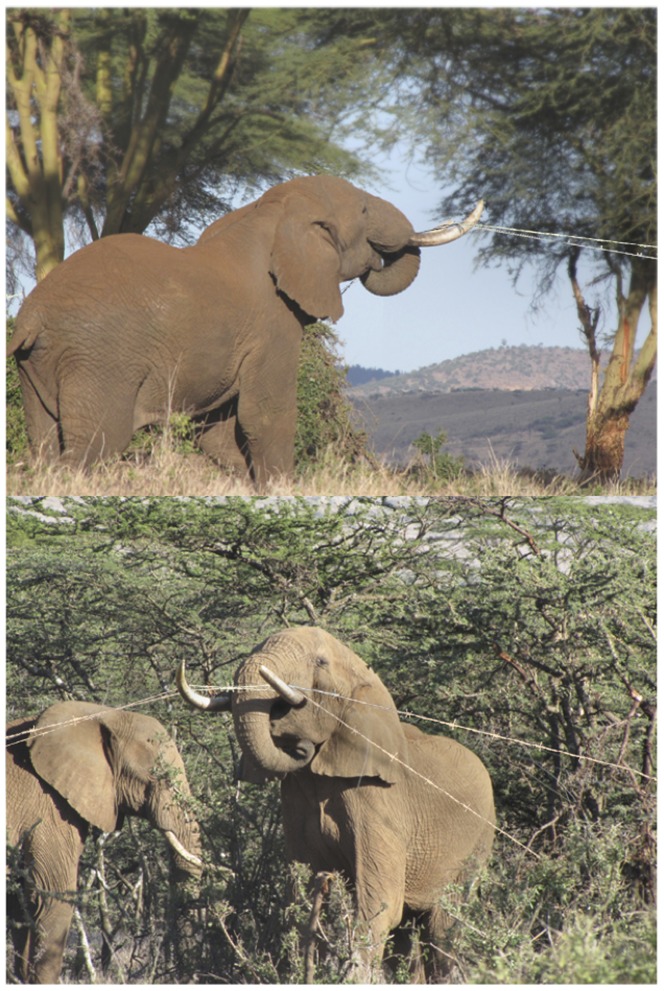
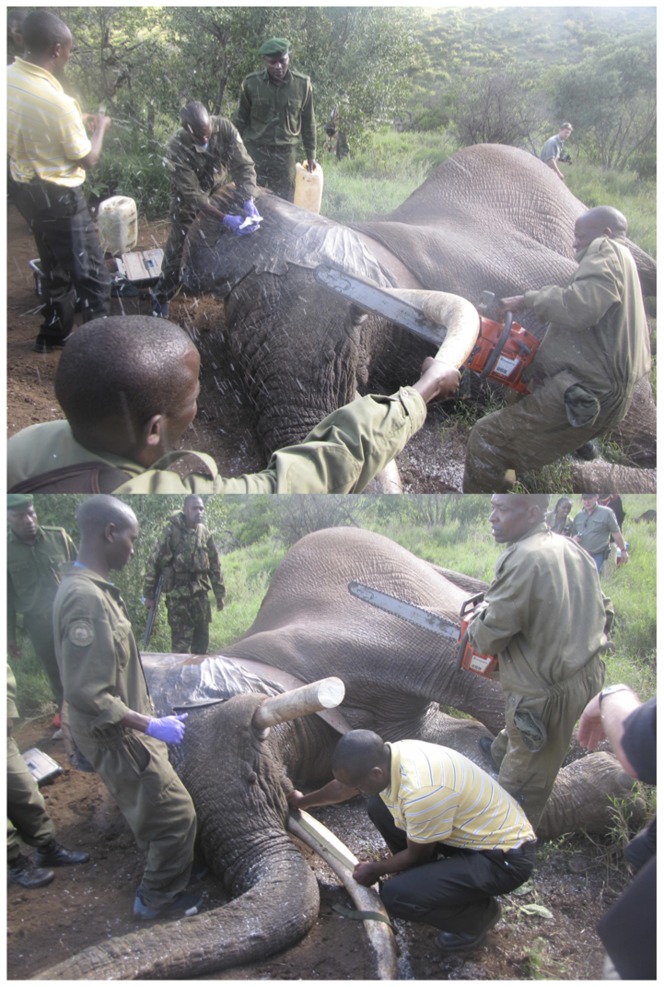
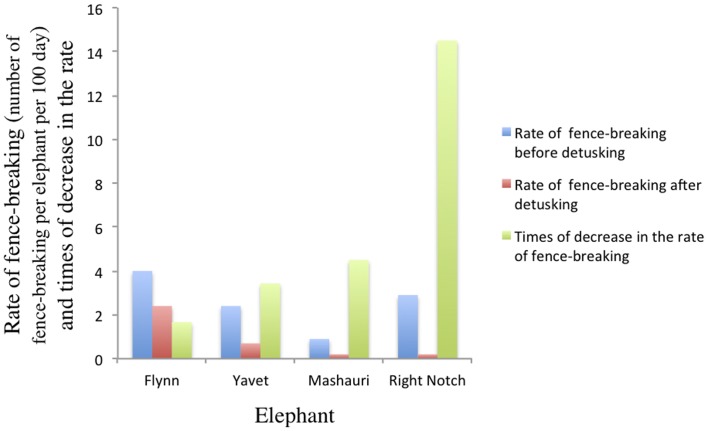
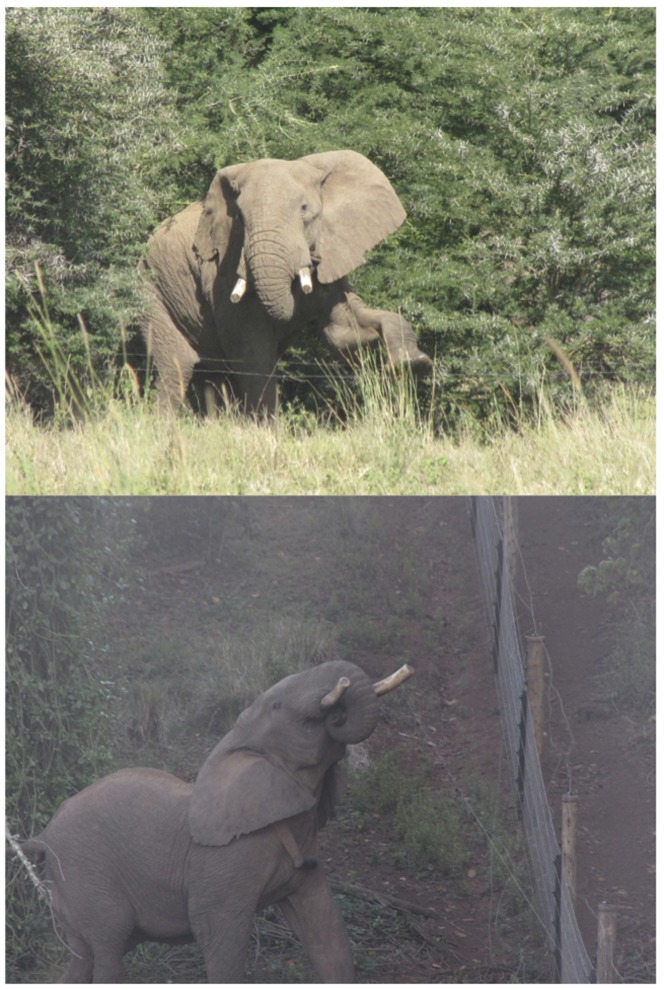
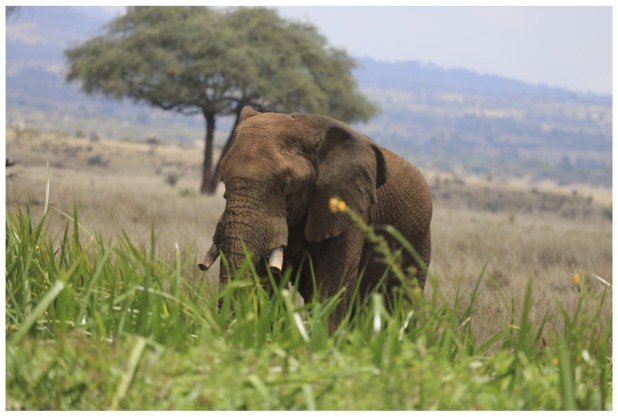
BACKGROUND: Human-elephant conflict (HEC) is a recurring problem that appears wherever the range of elephants and humans overlap. Different methods including the use of electric fences are used worldwide to mitigate this conflict. Nonetheless, elephants learn quickly that their tusks do not conduct electricity and use them to break down fences (fence-breakers). METHODOLOGY/PRINCIPAL FINDINGS: In Lewa Wildlife Conservancy, Kenya, destructive elephants (Loxodonta africana) were monitored between 2010 and 2013. The fence-breaking rate reached four incidents (fence-breaking) per elephant per 100 days. Ten bull males and 57 females were identified as fence-breakers. The bulls were involved in 85.07% and the females in 14.93% of incidents. The Kenya Wildlife Service approved detusking (partial cutting of tusks) in four of the 10 fence-breakers as a way of preventing them from breaking down fences, thereby mitigating HEC in the Conservancy. The result of the detusking was a drastic six-fold reduction in damage to fences (range: 1.67 to 14.5 times less fence-breaking) by the four worst fence-breaker elephants, because with trimmed tusks elephants lack the tools to break down fences. Detusking could not totally eliminate fence destruction because, despite lacking their tools, elephants can still destroy fences using their heads, bodies and trunks, albeit less effectively. On the other hand, apart from inherent aesthetic considerations, the detusking of elephants may have certain negative effects on factors such as elephants' social hierarchies, breeding, mate selection and their access to essential minerals and food. CONCLUSIONS: Elephant detusking seems to be effective in drastically reducing fence-breaking incidents, nonetheless its negative effects on behaviour, access to food and its aesthetical consequences still need to be further studied and investigated.
Overview
The claims and statistics of this paper haven’t been checked yet.
Run the check — free, no account needed. It reads the open-access text and checks the sources it cites.
Integrity signals
Registry
Cites
Statistics
Figures
Verification
Claims the paper makes
The claims and statistics of this paper haven’t been checked yet.
Run the check — free, no account needed. It reads the open-access text and checks the sources it cites.
Claims other papers make about this one
Each is checked against this paper’s own text: does it say what the citing paper says it does?
The cited source says what the claim attributes to it.
In the citing paper
“some elephants learn to use their tusks, which do not conduct electricity, as a way to manipulate and break electric fences (Mutinda et al., 2014)”
From Do elephants really never forget? What we know about elephant memory and a call for further investigation (2025) · cites this paper as Mutinda et al., 2014
The cited source says what the claim attributes to it.
In the citing paper
“elephants have been observed overcoming barriers to access and forage on crop fields (Fernando et al., 2008; Kioko et al., 2008; Mutinda et al., 2014)”
From Do elephants really never forget? What we know about elephant memory and a call for further investigation (2025) · cites this paper as Mutinda et al., 2014
The cited source says what the claim attributes to it.
In the citing paper
“To access crops, elephants have learned to overcome barriers, such as electric fences, that are meant to deter them from entering crop fields (Kioko et al., 2008; Mutinda et al., 2014).”
From Do elephants really never forget? What we know about elephant memory and a call for further investigation (2025) · cites this paper as Mutinda et al., 2014
The cited source says what the claim attributes to it.
In the citing paper
“In the wild, elephants have demonstrated their ability to find solutions to novel problems when they determine how to overcome barriers, such as electric fences, to enter crop fields to forage (Fernando et al., 2008; Kioko et al., 2008; Mutinda et al., 2014).”
From Do elephants really never forget? What we know about elephant memory and a call for further investigation (2025) · cites this paper as Mutinda et al., 2014
Self-check
Percentages, sums and reported differences re-computed from the paper’s own numbers.
The self-check needs the paper’s full text.
Citations
Cites
R: A Language and Environment for Statistical Computing
R Core Team (2000) · doi:10.32614/r.manuals · Cited by 355,893
Dickman, A. J. (2010) · Animal Conservation · doi:10.1111/j.1469-1795.2010.00368.x · Cited by 1,590
Human-induced evolution caused by unnatural selection through harvest of wild animals
Allendorf, F. W., & Hard, J. J. (2009) · Proceedings of the National Academy of Sciences · doi:10.1073/pnas.0901069106 · Cited by 629
Mate choice and sexual selection: What have we learned since Darwin?
Jones, A. G., & Ratterman, N. L. (2009) · Proceedings of the National Academy of Sciences · doi:10.1073/pnas.0901129106 · Cited by 383
Fences and artificial water affect African savannah elephant movement patterns
Loarie, S. R., van Aarde, R. J., & Pimm, S. L. (2009) · Biological Conservation · doi:10.1016/j.biocon.2009.08.008 · Cited by 256
Newmark, W. D., Manyanza, D. N., Gamassa, D.-G. M., & Sariko, H. I. (1994) · Conservation Biology · doi:10.1046/j.1523-1739.1994.08010249.x · Cited by 250
Mate guarding, reproductive success and female choice in African elephants
Poole, J. H. (1989) · Animal Behaviour · doi:10.1016/0003-3472(89)90068-7 · Cited by 242
Beehive fences as effective deterrents for crop-raiding elephants: field trials in northern Kenya
King, L. E., Douglas‐Hamilton, I., & Vollrath, F. W. (2011) · African Journal of Ecology · doi:10.1111/j.1365-2028.2011.01275.x · Cited by 154
Shocking elephants: Fences and crop raiders in Laikipia District, Kenya
Thouless, C. R., & Sakwa, J. (1995) · Biological Conservation · doi:10.1016/0006-3207(94)00071-w · Cited by 153
Osborn, F. V., & Parker, G. E. (2003) · Oryx · doi:10.1017/s0030605303000152 · Cited by 148
Research works printed but not linked: 3
- Ngene S (2010) Why elephants roam? PHD Thesis University of Twente. The Netherlands; accessed on 03/20/2013.
- J Beringer, 2002, Efficacy of translocation to control urban deer in Missouri: costs, efficiency, and outcome, Wildl Soc B, 30, 767
- Nelson A, Bidwell P, Sillero-Zubiri C (2003) A review of human-elephant conflict management strategies. People & Wildlife, A Wildlife Conservation Research Unit, Born Free Foundation Partnership.
Cited by
Sorted by citations
Items 101–111 of 111
IUCN Species Survival Commission (SSC), H.-W. C. &. C. S. G. (. (2023) · doi:10.2305/eksg6741
Charting Coexistence: Patterns and Predictors of Human-Elephant Conflict in Tamil Nadu, IndiaPreprint
Shameer, T. T., Routray, P., Udhayan, A., Ranjan, N., Ganesan, M. G., Manimozhi, A., & Kumari, D. V. (2023) · Research Square · doi:10.21203/rs.3.rs-3610287/v1
Руководство КВВ МСОП по конфликтам и сосуществованию человека и дикой природы: Первое издание
IUCN SSC Human-Wildlife Conflict & Coexistence Specialist Group (HWCCSG) (2024) · doi:10.2305/wbmi2816
IUCN SSC Human-Wildlife Conflict & Coexistence Specialist Group (HWCCSG) (2024) · doi:10.2305/yoji3047
An, X., Zhou, J., & Zhang, K. (2024) · Research Square · doi:10.21203/rs.3.rs-4506947/v1
Wright, M. G., Au, M. G., Gatti, I., Salehi, J., Spencer, C. R., Allin, P., & Mafra‐Neto, A. (2025) · Wildlife Biology · doi:10.1002/wlb3.01419
Roy, A., Sharma, S., Lélé, S. M., & Kaswan, P. (2025) · SSRN Electronic Journal · doi:10.2139/ssrn.5845430
Rasambainarivo, F., Rasolofoniaina, O., Porton, I. J., Ranantenaina, E., Claude, F. J., Lehafatra, J. B., Rasambainarivo, F., Howard, L., & Metcalf, C. J. E. (2026) · SSRN Electronic Journal · doi:10.2139/ssrn.6018303
Rasambainarivo, F., Rasolofoniaina, O., Porton, I. J., Ranantenaina, E., Claude, F. J., Lehafatra, J. B., Rasambainarivo, F., Howard, L., & Metcalf, C. J. E. (2026) · SSRN Electronic Journal · doi:10.2139/ssrn.6018334
Elephant barrier behaviors in response to conflict mitigation fences
Gonçalves, D. D., Smith, R. J., & O’Neill, H. M. K. (2026) · Conservation Biology · doi:10.1111/cobi.70258
Jayasinghe, A. D., Burns, G. L., Nalau, J., & Biggs, D. (2026) · People and Nature · doi:10.1002/pan3.70426
Metadata
- Authors
- Mutinda, M., Chenge, G., Gakuya, F., Otiende, M., Omondi, P., Kasiki, S., Soriguer, R. C., & Alasaad, S.
- Affiliations
- Kenya Wildlife Service (KE)
- Consejo Superior de Investigaciones Científicas (ES)
- Corresponding author
- Alasaad, Samer
- Venue
- PLoS ONE
- Publisher
- Public Library of Science (PLoS)
- Published
- 2014-03-10
- Volume
- 9
- Issue
- 3
- Pages
- e91749
- ISSN
- 1932-6203 (ISSN-L)
- PMC
- PMC3948880
- OpenAlex
- W2054351282
- Cited by
- 111
- References
- 34
- Citations by year
- 2026: 4 · 2025: 4 · 2024: 6 · 2023: 11 · 2022: 8 · 2021: 10 · 2020: 13 · 2019: 9 · 2018: 12 · 2017: 16 · 2016: 13 · 2015: 3 · 2014: 2
- FWCI
- 9.84
- Type
- journal article
- Language
- en
- Open access
- gold
- doi.org
- Locations
- PLoS ONE (publishedVersion, cc-by)
- Europe PMC (PubMed Central) (publishedVersion, other-oa)
- PubMed Central (publishedVersion, cc-by)
- PubMed (publishedVersion)
- DIGITAL.CSIC (Spanish National Research Council (CSIC)) (submittedVersion)
- DOAJ (DOAJ: Directory of Open Access Journals) (submittedVersion, cc-by-sa)
- Greater South Information System
- Topics
- Physical Sciences › Environmental Science › Ecology › Wildlife Ecology and Conservation
- Physical Sciences › Environmental Science › Ecology › Rangeland and Wildlife Management
- Physical Sciences › Environmental Science › Ecology › Wildlife-Road Interactions and Conservation
- Keywords
- human-elephant conflict, elephant tusks, electric fences, Loxodonta africana, social hierarchy
- MeSH terms
- Animals, Animal Structures, Conflict, Psychological, Conservation of Natural Resources, Elephants, Female, Humans, Kenya, Male, Time Factors
About these checks
Registry, retraction, Cites and statistics results are computed, not judged, with one exception: a printed reference that no index lists is read once by a model before it counts as a citation error. Claims are extracted by a model and kept only when their quote appears verbatim in the text; each cited source is then checked, with a model’s help, for whether it says what the claim relies on. Those verdicts can be wrong — read the claim’s quote and the cited source before relying on one.
Statistics and arithmetic are recomputed, not judged.
Confidence bands are shown only for fields calibrated on our annotated test set. None is calibrated yet, so no band is shown.
What counts as a claim ›How we measure confidence ›How we check this ›
Are you an author, or do you see a problem with this page? Request a review
