

The DOI matches its Crossref record; 36 of the 36 references it cites were found in a registry or an index.
Synergistic and Antagonistic Drug Combinations Depend on Network Topology
Open accessAbstract
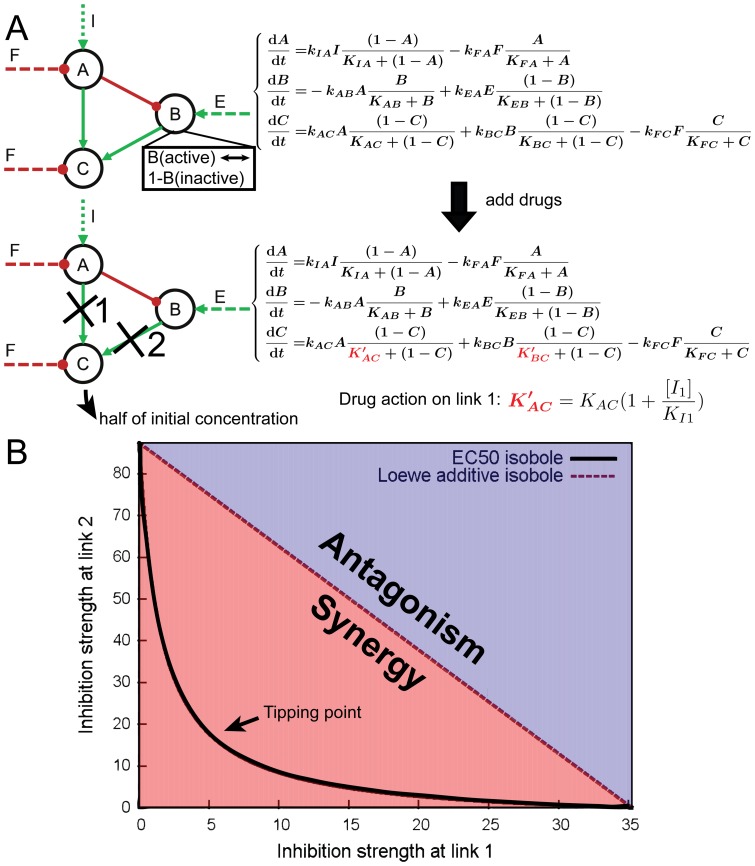
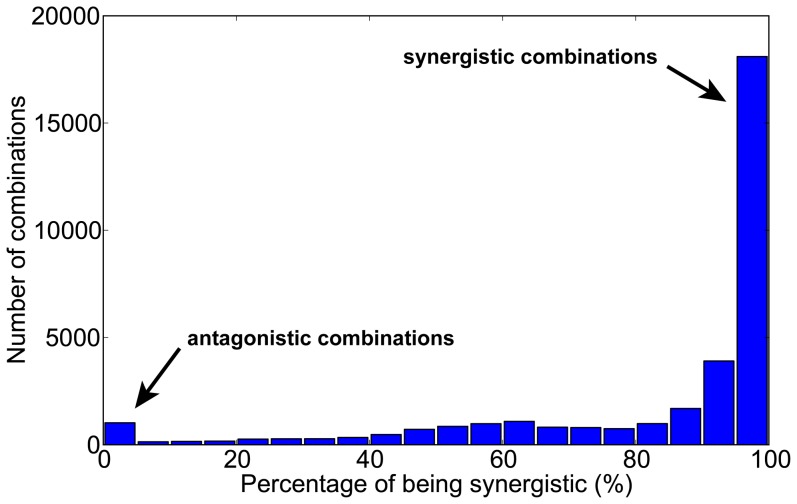
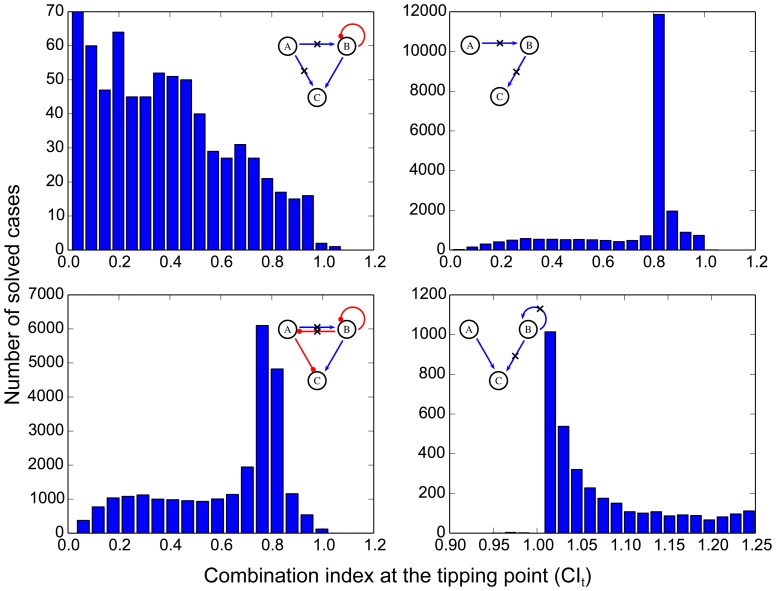
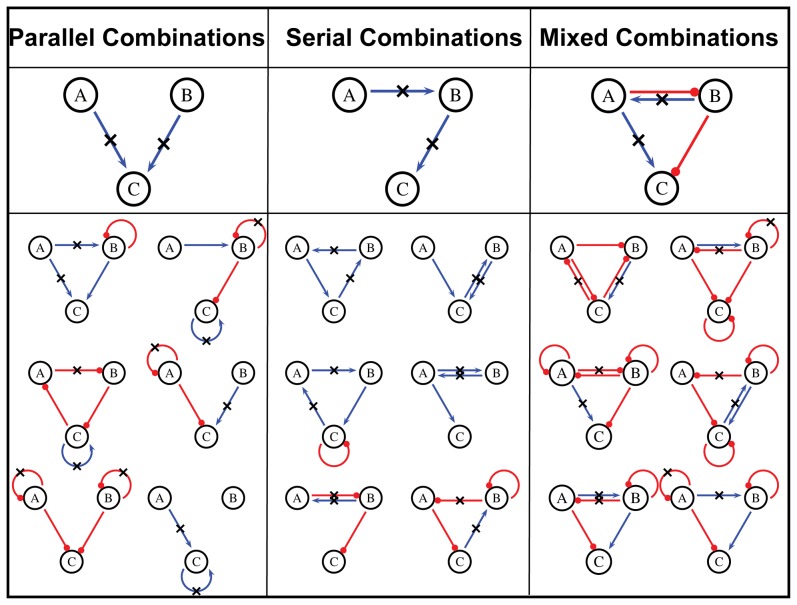
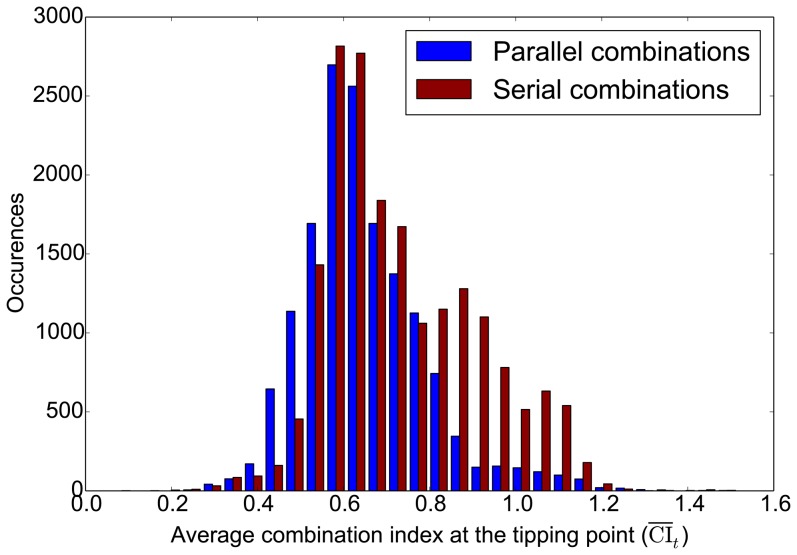
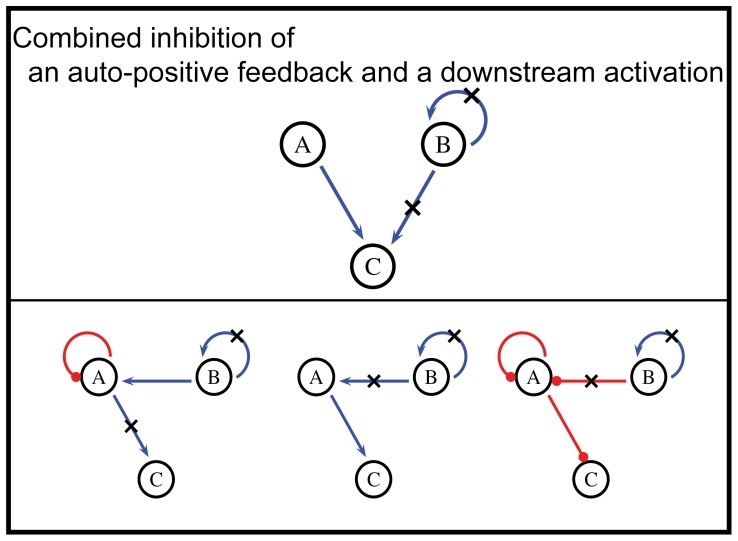
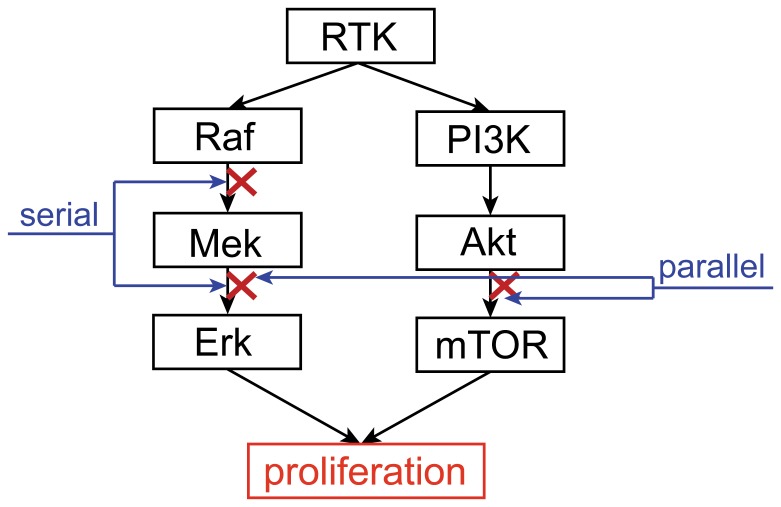
Drug combinations may exhibit synergistic or antagonistic effects. Rational design of synergistic drug combinations remains a challenge despite active experimental and computational efforts. Because drugs manifest their action via their targets, the effects of drug combinations should depend on the interaction of their targets in a network manner. We therefore modeled the effects of drug combinations along with their targets interacting in a network, trying to elucidate the relationships between the network topology involving drug targets and drug combination effects. We used three-node enzymatic networks with various topologies and parameters to study two-drug combinations. These networks can be simplifications of more complex networks involving drug targets, or closely connected target networks themselves. We found that the effects of most of the combinations were not sensitive to parameter variation, indicating that drug combinational effects largely depend on network topology. We then identified and analyzed consistent synergistic or antagonistic drug combination motifs. Synergistic motifs encompass a diverse range of patterns, including both serial and parallel combinations, while antagonistic combinations are relatively less common and homogenous, mostly composed of a positive feedback loop and a downstream link. Overall our study indicated that designing novel synergistic drug combinations based on network topology could be promising, and the motifs we identified could be a useful catalog for rational drug combination design in enzymatic systems.
Overview
The claims and statistics of this paper haven’t been checked yet.
Run the check — free, no account needed. It reads the open-access text and checks the sources it cites.
Integrity signals
Registry
Cites
Statistics
Figures
Verification
Claims the paper makes
The claims and statistics of this paper haven’t been checked yet.
Run the check — free, no account needed. It reads the open-access text and checks the sources it cites.
Claims other papers make about this one
Each is checked against this paper’s own text: does it say what the citing paper says it does?
In the citing paper
“To this end, graph representation learning methods, such as GNNs, have been developed to learn robust and meaningful representations of molecules despite the incomplete interactome [102] and to inductively infer new edges between pairs of nodes [154].”
From Graph representation learning in biomedicine and healthcare (2022) · cites this paper as [102]
Self-check
Percentages, sums and reported differences re-computed from the paper’s own numbers.
The self-check needs the paper’s full text.
Citations
Cites
McKay, M. D., Beckman, R. J., & Conover, W. J. (2000) · Technometrics · doi:10.2307/1271432 · Cited by 8,270
Drug combination studies and their synergy quantification using the Chou-Talalay method
Chou, T.-C. (2010) · Cancer Research · doi:10.1158/0008-5472.can-09-1947 · Cited by 5,739
McKay, M. D., Beckman, R., & Conover, W. J. (1979) · Technometrics · doi:10.2307/1268522 · Cited by 3,834
The search for synergy: a critical review from a response surface perspective.
Greco, W. R., Bravo, G., & Parsons, J. C. (1995) · Pharmacological Reviews · doi:10.1016/s0031-6997(25)06847-4 · Cited by 1,445
Synergistic drug combinations tend to improve therapeutically relevant selectivity
Lehár, J., Krueger, A., Avery, W., Heilbut, A. M., Johansen, L. M., Price, E. R., Rickles, R. J., Short, G. F., Staunton, J. E., Jin, X., et al. (2009) · Nature Biotechnology · doi:10.1038/nbt.1549 · Cited by 959
Defining Network Topologies that Can Achieve Biochemical Adaptation
Ma, W., Trusina, A., El-Samad, H., Lim, W. A., & Tang, C. (2009) · Cell · doi:10.1016/j.cell.2009.06.013 · Cited by 919
Self-citationMulticomponent therapeutics for networked systems
Keith, C. T., Borisy, A. A., & Stockwell, B. R. (2005) · Nature Reviews Drug Discovery · doi:10.1038/nrd1609 · Cited by 769
Systematic discovery of multicomponent therapeutics
Borisy, A. A., Elliott, P. J., Hurst, N. W., Lee, M. S., Lehár, J., Price, E. R., Serbedzija, G., Zimmermann, G. R., Foley, M. A., Stockwell, B. R., et al. (2003) · Proceedings of the National Academy of Sciences · doi:10.1073/pnas.1337088100 · Cited by 620
Systems biology and combination therapy in the quest for clinical efficacy
Fitzgerald, J. B., Schoeberl, B., Nielsen, U. B., & Sorger, P. K. (2006) · Nature Chemical Biology · doi:10.1038/nchembio817 · Cited by 570
Antibiotic interactions that select against resistance
Chait, R., Craney, A., & Kishony, R. (2007) · Nature · doi:10.1038/nature05685 · Cited by 439
Cited by
Sorted by citations
Items 101–139 of 139
Yanar, S., Kanlı, A., Kasap, M., Albayrak, M. G. B., Eskiler, G. G., & Özkan, A. D. (2024) · Molecular Biology Reports · doi:10.1007/s11033-023-09055-3 · Cited by 4
Synergy and network pharmacology—Establishing the efficacy of herbal medicine
Mukherjee, P. K., Banerjee, S., Kar, A., Chaudhary, S. K., Bhardwaj, P. K., Haldar, P. K., & Sharma, N. (2022) · Elsevier eBooks · doi:10.1016/b978-0-323-85542-6.00017-2 · Cited by 4
Anggraini, F., Satari, M. H., & Mariam, M. S. (2018) · Padjadjaran Journal of Dentistry · doi:10.24198/pjd.vol30no2.18325 · Cited by 4
Tong, J. X., Ang, S. E. L., Tan, E., & Tan, K. S. W. (2019) · Antimicrobial Agents and Chemotherapy · doi:10.1128/aac.02389-18 · Cited by 4
Richards, R., Schwartz, H. R., Stewart, M. S., Cruz‐Gordillo, P., Honeywell, M. E., Joyce, A. J., Landry, B. D., & Lee, M. J. (2019) · bioRxiv (Cold Spring Harbor Laboratory) · doi:10.1101/805093 · Cited by 4
Yam, M. F., Tew, W. Y., Tan, C. S., Qiu, Q., Zhou, R., Wang, X., Yap, Y. P., Xu, W., Xu, W., & Teh, L. K. (2024) · Hypertension Research · doi:10.1038/s41440-024-01907-0 · Cited by 3
Tanim, T. I., Al‐Qaaneh, A. M., Chowdhury, R., Bhuia, M. S., Islam, T., Akbor, M. S., Islam, M. T., Miah, M. M., Ishaq, A. R., Abdel-Maksoud, M. A., et al. (2025) · Journal of Functional Foods · doi:10.1016/j.jff.2025.106702 · Cited by 3
Precision oncology informatics for anticancer drug combination responses: A systematic review
Rahaman, S., Wang, P., Yu, J., Rahman, T., Toseef, M., Sayem, I. M., Li, X., & Wong, K. (2025) · Computers in Biology and Medicine · doi:10.1016/j.compbiomed.2025.110788 · Cited by 3
Delivery kinetics of natural active agents by PVA hydrogels intended for wound care
Fernandes, I. S., Saboia, L. D. C., Gonçalves, V. S., Neto, J. L. S. D. C., Moreira, A. P., de Souza, N. D., do Nascimento, A. M., Chaves, D. S. D. A., Rosado, L. H. G., da Silva, L. D. B., et al. (2023) · Matéria (Rio de Janeiro) · doi:10.1590/1517-7076-rmat-2023-0071 · Cited by 3
de Souza, H. D. S. V., Kumar, A., & Nugegoda, D. (2025) · Ecotoxicology · doi:10.1007/s10646-024-02824-1 · Cited by 3
Lemus, E. H. (2020) · Elsevier eBooks · doi:10.1016/b978-0-12-819668-7.00007-5 · Cited by 3
Rodrigues, L., Giglioti, R., Katiki, L. M., Sarria, A. L. F., Scholze, G., & Verı́ssimo, C. J. (2024) · Experimental Parasitology · doi:10.1016/j.exppara.2024.108877 · Cited by 2
Insights into the antineoplastic mechanism of Chelidonium majus via systems pharmacology approach
Xiao, X., Chen, Z., Wu, Z., Wang, T., Li, W., Liu, G., Zhang, B., & Tang, Y. (2019) · Quantitative Biology · doi:10.1007/s40484-019-0165-x · Cited by 2
Extending the Lymphoblastoid Cell Line Model for Drug Combination Pharmacogenomics
Green, A. J., Anchang, B., Akhtari, F. S., Reif, D. M., & Motsinger‐Reif, A. A. (2021) · Pharmacogenomics · doi:10.2217/pgs-2020-0160 · Cited by 2
Xi, X., Yuan, J., Lu, S., & He, J. (2024) · Tsinghua Science & Technology · doi:10.26599/tst.2023.9010149 · Cited by 2
Bioinformatics Resources for Interpreting Proteomics Mass Spectrometry Data
Lazar, I. M. (2017) · Methods in molecular biology · doi:10.1007/978-1-4939-7201-2_19 · Cited by 2
A Computational Approach for Pathway-Based Systemic Drug Influence
Kim, S. (2021) · Processes · doi:10.3390/pr9061063 · Cited by 2
Pramana, A. A. C., Ramadhani, E. L., Priyambada, F., Pertiwi, G. A., Setiawibawa, R. A. A., & Wijayanti, N. (2022) · Journal of Microbiology Biotechnology and Food Sciences · doi:10.55251/jmbfs.3352 · Cited by 2
Zhao, L., & Luo, J. (2024) · bioRxiv (Cold Spring Harbor Laboratory) · doi:10.1101/2024.12.05.627115 · Cited by 2
Current Approaches of Building Mechanistic Pharmacodynamic Drug–Target Binding Models
Liang, J., Tran, V. N.-N., Hemez, C. F., & Wiesch, P. A. Z. (2021) · Methods in molecular biology · doi:10.1007/978-1-0716-1767-0_1 · Cited by 1
Screening combinatorial perturbations via a bifurcation-based method
Liu, L., Chen, Q., & Wang, R. (2022) · Modern Physics Letters B · doi:10.1142/s0217984922500178 · Cited by 1
Hasyim, R. M. S., Yuniarti, L., & Andriane, Y. (2023) · Bandung Conference Series Medical Science · doi:10.29313/bcsms.v3i1.5741 · Cited by 1
Control and controllability of nonlinear dynamical networks: a geometrical approachPreprint
Wang, L.-Z., Su, R., Huang, Z., Wang, X., Wang, W.-X., Grebogi, C., & Lai, Y. (2015) · arXiv (Cornell University) · doi:10.48550/arxiv.1509.07038 · Cited by 1
Combination Therapy of Antiepileptic Drugs (AEDS) With Safe Natural Anticonvulsant Agent
Gavzandarounkola, H., & Sayyah, M. (2016) · Journal of Neurological Disorders · doi:10.4172/2329-6895.1000323
Lai, Y. (2016) · The Sydney eScholarship Repository (The University of Sydney)
Engineering Synthetic Antibiotics in Non-Traditional Pathways to Counter Antibiotic Resistance
Courtney, C. M. (2017) · CU Scholar (University of Colorado Boulder)
Future Nontuberculous Mycobacteria DST and Therapeutic Interventions
Hoffner, S. E., & Ordway, D. J. (2019) · Elsevier eBooks · doi:10.1016/b978-0-12-814692-7.00004-8
The Influence of BCL6 on the WNT Pathway in Glioblastoma Therapy Resistance
Gordon-Schneider, R. (2018) · doi:10.26686/wgtn.17136140.v1
Logical modeling: Combining manual curation and automated parameterization to predict drug synergiesPreprint
Flobak, Å., Zobolas, J., Vázquez, M., Steigedal, T. S., Thommesen, L., Grislingås, A., Niederdorfer, B., Folkesson, E., & Kuiper, M. T. R. (2021) · bioRxiv (Cold Spring Harbor Laboratory) · doi:10.1101/2021.06.28.450165
Dharsono, H. D. A., Nurdin, D., Fatriadi, F., Gondowidjojo, Y. D., Yunita, E., & Apriyanti, E. (2021) · Padjadjaran Journal of Dentistry · doi:10.24198/pjd.vol33no3.35894
The Influence of BCL6 on the WNT Pathway in Glioblastoma Therapy Resistance
Gordon-Schneider, R. (2018) · doi:10.26686/wgtn.17136140
Pengembangan Obat Kanker dari Daun Kelor (Moringa Oleifera)
Hunafa, S. H., Andriane, Y., & Yuniarti, L. (2023) · Bandung Conference Series Medical Science · doi:10.29313/bcsms.v3i1.6638
Singh, H., Rana, P. S., & Singh, U. (2023) · Multimedia Tools and Applications · doi:10.1007/s11042-023-14536-5
RetractedMathematical Models for Chemical Mixtures
Kamo, M. (2023) · Theoretical biology · doi:10.1007/978-981-99-0309-2_7
Antimicrobial action of natural phenolics against food spoilage yeasts
Kimani, B. G. (2023) · doi:10.14232/phd.11825
Assessment of environmental sustainability
Ifte, M. R. I., Ahmed, M., Chowdhury, F. I., Rahman, M. R., & Bakri, M. K. B. (2025) · Elsevier eBooks · doi:10.1016/b978-0-443-33643-0.00003-x
Network topology dictates sequential drug efficacy through bistability-mediated state switchingPreprint
Osman, T. O., Rios, K. I., Hart, A., Shin, S.-Y., & Nguyen, L. K. (2026) · bioRxiv (Cold Spring Harbor Laboratory) · doi:10.64898/2026.05.01.722163
Kapustka, L. A. (2026) · doi:10.1002/9781119886082.ch4
BindingDB (2022) · UC San Diego · doi:10.7270/q2v128mv
Metadata
- Authors
- Yin, N., Ma, W., Pei, J., Ouyang, Q., Tang, C., & Lai, L.
- Affiliations
- Peking University (CN)
- Harvard University (US)
- Corresponding author
- Lai, Luhua
- Venue
- PLoS ONE
- Publisher
- Public Library of Science (PLoS)
- Published
- 2014-04-08
- Volume
- 9
- Issue
- 4
- Pages
- e93960
- ISSN
- 1932-6203 (ISSN-L)
- PMC
- PMC3979733
- OpenAlex
- W2015789827
- Cited by
- 139
- References
- 36
- Citations by year
- 2026: 2 · 2025: 12 · 2024: 12 · 2023: 22 · 2022: 12 · 2021: 15 · 2020: 12 · 2019: 15 · 2018: 8 · 2017: 9 · 2016: 11 · 2015: 7 · 2014: 2
- FWCI
- 3.96
- Type
- journal article
- Language
- en
- Open access
- gold
- doi.org
- Locations
- PLoS ONE (publishedVersion, cc-by)
- Europe PMC (PubMed Central) (publishedVersion, other-oa)
- PubMed Central (publishedVersion, cc-by)
- PubMed (publishedVersion)
- Digital Access to Scholarship at Harvard (DASH) (Harvard University) (submittedVersion, cc-by)
- DOAJ (DOAJ: Directory of Open Access Journals) (submittedVersion, cc-by-sa)
- Greater South Information System
- Funders
- National Natural Science Foundation of China (91313302, 90913021, 81273436, 2012AA020301, 2012AA020308)
- National Institute on Alcohol Abuse and Alcoholism (R01AA020308)
- Topics
- Life Sciences › Biochemistry, Genetics and Molecular Biology › Molecular Biology › Gene Regulatory Network Analysis
- Life Sciences › Pharmacology, Toxicology and Pharmaceutics › Drug Discovery › Computational Drug Discovery Methods
- Life Sciences › Biochemistry, Genetics and Molecular Biology › Molecular Biology › Bioinformatics and Genomic Networks
- Keywords
- combination therapy, drug synergy, drug antagonism, network topology, drug-target network, three-node network, positive feedback loop, network motifs
- MeSH terms
- Drug Combinations, Drug Interactions, Drug Synergism, Models, Theoretical, Drug Design
About these checks
Registry, retraction, Cites and statistics results are computed, not judged, with one exception: a printed reference that no index lists is read once by a model before it counts as a citation error. Claims are extracted by a model and kept only when their quote appears verbatim in the text; each cited source is then checked, with a model’s help, for whether it says what the claim relies on. Those verdicts can be wrong — read the claim’s quote and the cited source before relying on one.
Statistics and arithmetic are recomputed, not judged.
Confidence bands are shown only for fields calibrated on our annotated test set. None is calibrated yet, so no band is shown.
What counts as a claim ›How we measure confidence ›How we check this ›
Are you an author, or do you see a problem with this page? Request a review
