

The DOI matches its Crossref record; 36 of the 36 references it cites were found in a registry or an index.
Synergistic and Antagonistic Drug Combinations Depend on Network Topology
Open accessAbstract
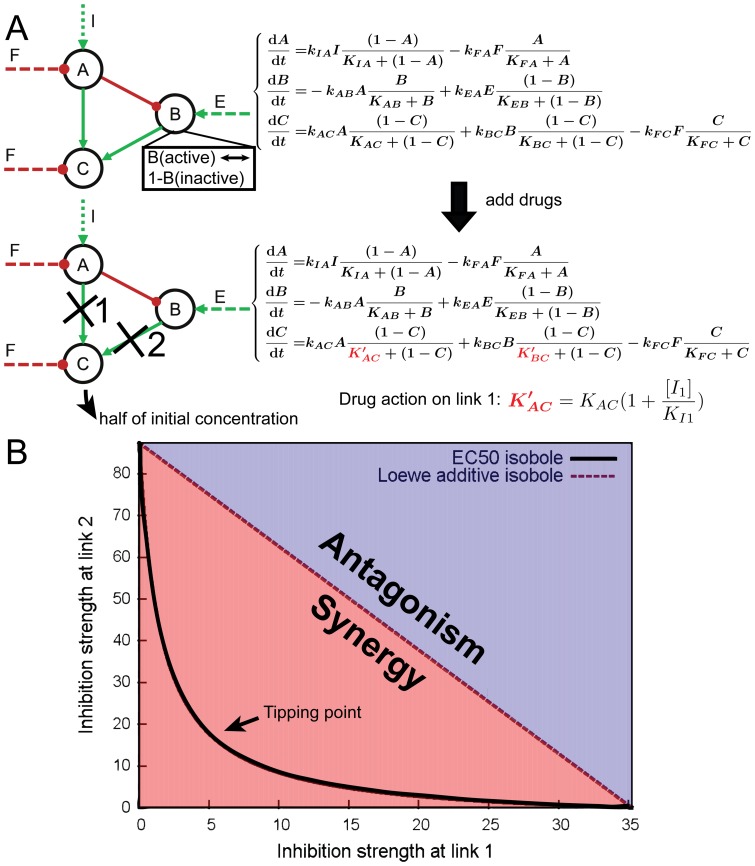
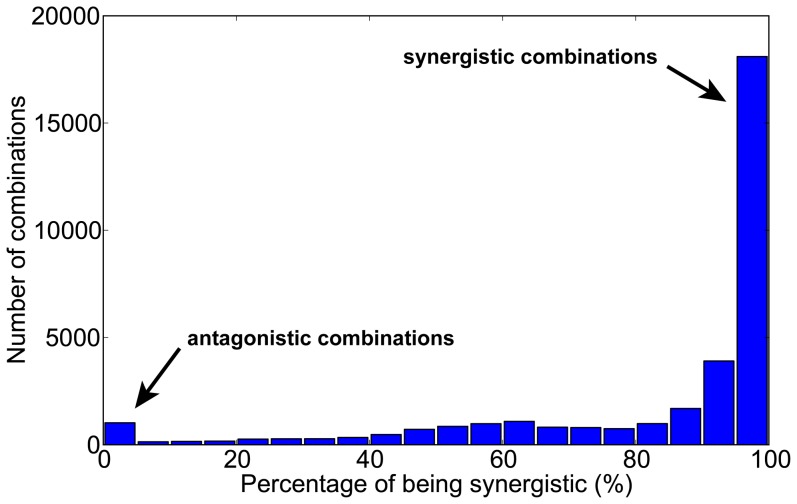
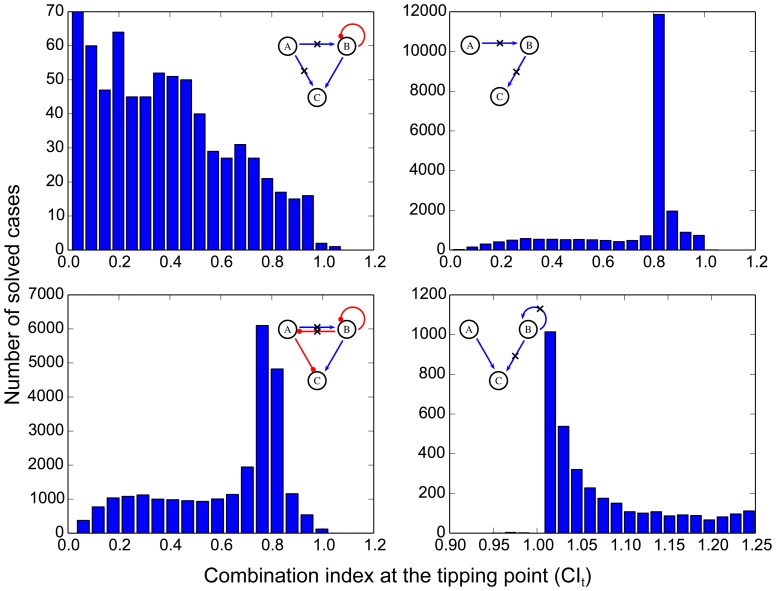
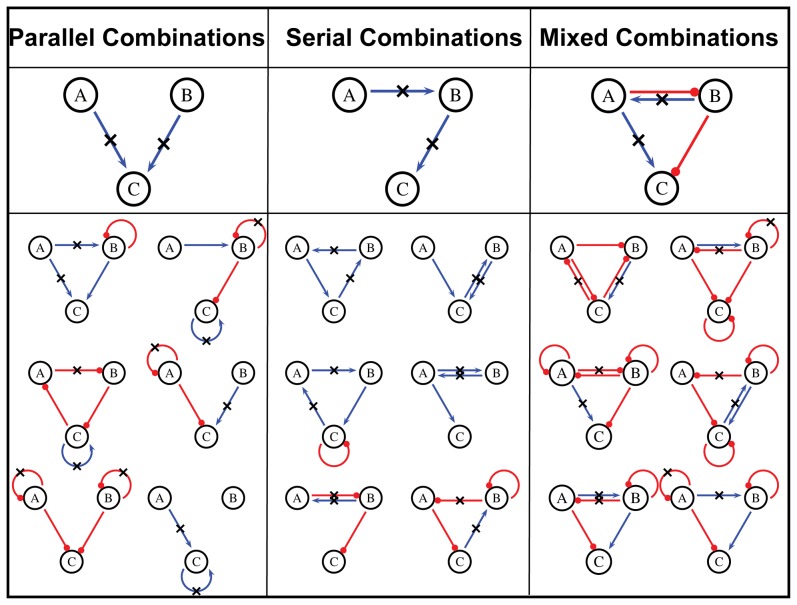
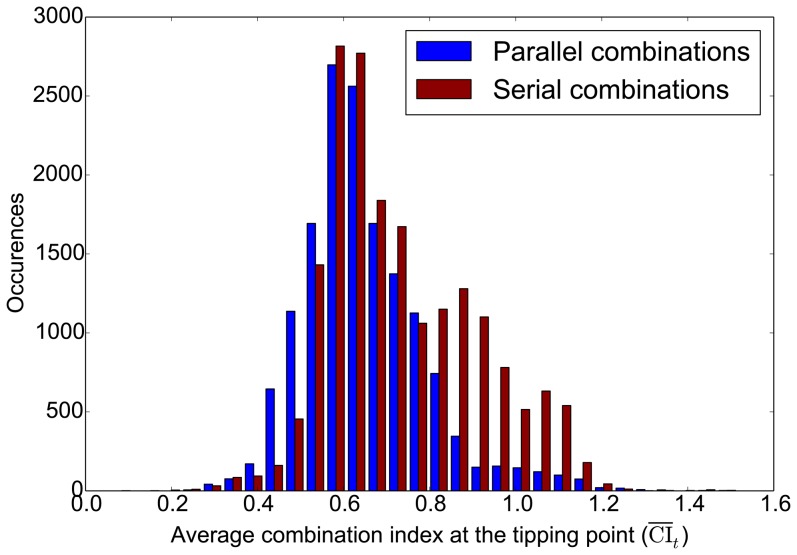
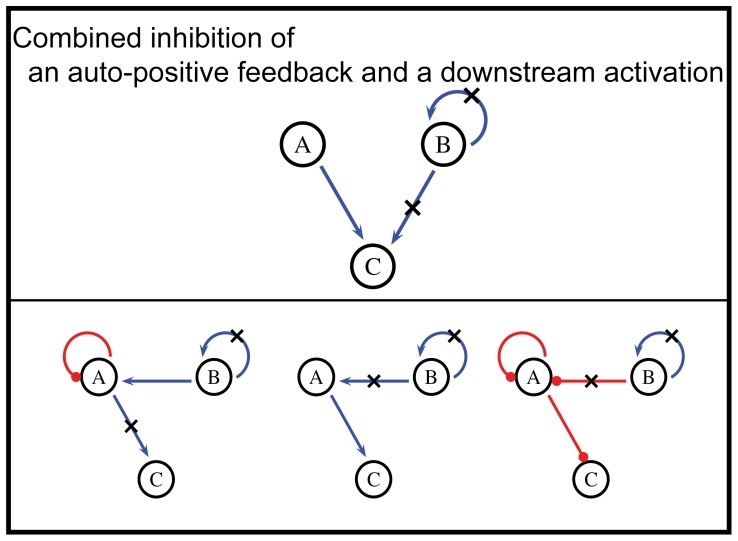
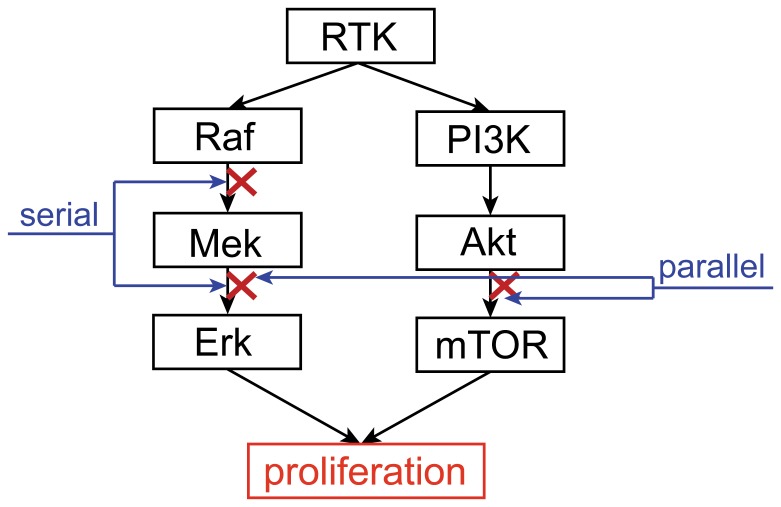
Drug combinations may exhibit synergistic or antagonistic effects. Rational design of synergistic drug combinations remains a challenge despite active experimental and computational efforts. Because drugs manifest their action via their targets, the effects of drug combinations should depend on the interaction of their targets in a network manner. We therefore modeled the effects of drug combinations along with their targets interacting in a network, trying to elucidate the relationships between the network topology involving drug targets and drug combination effects. We used three-node enzymatic networks with various topologies and parameters to study two-drug combinations. These networks can be simplifications of more complex networks involving drug targets, or closely connected target networks themselves. We found that the effects of most of the combinations were not sensitive to parameter variation, indicating that drug combinational effects largely depend on network topology. We then identified and analyzed consistent synergistic or antagonistic drug combination motifs. Synergistic motifs encompass a diverse range of patterns, including both serial and parallel combinations, while antagonistic combinations are relatively less common and homogenous, mostly composed of a positive feedback loop and a downstream link. Overall our study indicated that designing novel synergistic drug combinations based on network topology could be promising, and the motifs we identified could be a useful catalog for rational drug combination design in enzymatic systems.
Overview
The claims and statistics of this paper haven’t been checked yet.
Run the check — free, no account needed. It reads the open-access text and checks the sources it cites.
Integrity signals
Registry
Cites
Statistics
Figures
Verification
Claims the paper makes
The claims and statistics of this paper haven’t been checked yet.
Run the check — free, no account needed. It reads the open-access text and checks the sources it cites.
Claims other papers make about this one
Each is checked against this paper’s own text: does it say what the citing paper says it does?
In the citing paper
“To this end, graph representation learning methods, such as GNNs, have been developed to learn robust and meaningful representations of molecules despite the incomplete interactome [102] and to inductively infer new edges between pairs of nodes [154].”
From Graph representation learning in biomedicine and healthcare (2022) · cites this paper as [102]
Self-check
Percentages, sums and reported differences re-computed from the paper’s own numbers.
The self-check needs the paper’s full text.
Citations
Cites
McKay, M. D., Beckman, R. J., & Conover, W. J. (2000) · Technometrics · doi:10.2307/1271432 · Cited by 8,270
Drug combination studies and their synergy quantification using the Chou-Talalay method
Chou, T.-C. (2010) · Cancer Research · doi:10.1158/0008-5472.can-09-1947 · Cited by 5,739
McKay, M. D., Beckman, R., & Conover, W. J. (1979) · Technometrics · doi:10.2307/1268522 · Cited by 3,834
The search for synergy: a critical review from a response surface perspective.
Greco, W. R., Bravo, G., & Parsons, J. C. (1995) · Pharmacological Reviews · doi:10.1016/s0031-6997(25)06847-4 · Cited by 1,445
Synergistic drug combinations tend to improve therapeutically relevant selectivity
Lehár, J., Krueger, A., Avery, W., Heilbut, A. M., Johansen, L. M., Price, E. R., Rickles, R. J., Short, G. F., Staunton, J. E., Jin, X., et al. (2009) · Nature Biotechnology · doi:10.1038/nbt.1549 · Cited by 959
Defining Network Topologies that Can Achieve Biochemical Adaptation
Ma, W., Trusina, A., El-Samad, H., Lim, W. A., & Tang, C. (2009) · Cell · doi:10.1016/j.cell.2009.06.013 · Cited by 919
Self-citationMulticomponent therapeutics for networked systems
Keith, C. T., Borisy, A. A., & Stockwell, B. R. (2005) · Nature Reviews Drug Discovery · doi:10.1038/nrd1609 · Cited by 769
Systematic discovery of multicomponent therapeutics
Borisy, A. A., Elliott, P. J., Hurst, N. W., Lee, M. S., Lehár, J., Price, E. R., Serbedzija, G., Zimmermann, G. R., Foley, M. A., Stockwell, B. R., et al. (2003) · Proceedings of the National Academy of Sciences · doi:10.1073/pnas.1337088100 · Cited by 620
Systems biology and combination therapy in the quest for clinical efficacy
Fitzgerald, J. B., Schoeberl, B., Nielsen, U. B., & Sorger, P. K. (2006) · Nature Chemical Biology · doi:10.1038/nchembio817 · Cited by 570
Antibiotic interactions that select against resistance
Chait, R., Craney, A., & Kishony, R. (2007) · Nature · doi:10.1038/nature05685 · Cited by 439
Cited by
Sorted by citations
PD-L1 Distribution and Perspective for Cancer Immunotherapy—Blockade, Knockdown, or Inhibition
Wu, Y., Chen, W., Xu, Z. P., & Gu, W. (2019) · Frontiers in Immunology · doi:10.3389/fimmu.2019.02022 · Cited by 423
Graph representation learning in biomedicine and healthcare
Li, M. M., Huang, K., & Zitnik, M. (2022) · Nature Biomedical Engineering · doi:10.1038/s41551-022-00942-x · Cited by 294
“For example, according to a corollary of the local hypothesis 13 , the topology of drug combinations is indicative of synergistic or antagonistic relationships 102 .”
NLLSS: Predicting Synergistic Drug Combinations Based on Semi-supervised Learning
Chen, X., Ren, B., Chen, M., Wang, Q., Zhang, L., & Yan, G. (2016) · PLoS Computational Biology · doi:10.1371/journal.pcbi.1004975 · Cited by 284
Computational Multitarget Drug Design
Zhang, W., Pei, J., & Lai, L. (2017) · Journal of Chemical Information and Modeling · doi:10.1021/acs.jcim.6b00491 · Cited by 189
Self-citationSystems biology approaches for advancing the discovery of effective drug combinations
Ryall, K. A., & Tan, A. C. (2015) · Journal of Cheminformatics · doi:10.1186/s13321-015-0055-9 · Cited by 160
Sarma, R., Adhikari, K., Mahanta, S., & Khanikor, B. (2019) · Scientific Reports · doi:10.1038/s41598-019-45908-3 · Cited by 142
Courtney, C. M., Goodman, S. M., Nagy, T. A., Levy, M., Bhusal, P., Madinger, N. E., Detweiler, C. S., Nagpal, P., & Chatterjee, A. (2017) · Science Advances · doi:10.1126/sciadv.1701776 · Cited by 132
A geometrical approach to control and controllability of nonlinear dynamical networks
Wang, L.-Z., Su, R.-Q., Huang, Z., Wang, X., Wang, W.-X., Grebogi, C., & Lai, Y. (2016) · Nature Communications · doi:10.1038/ncomms11323 · Cited by 136
Harnessing machine learning to find synergistic combinations for FDA-approved cancer drugs
El‐Hafeez, T. A., Shams, M. Y., Elshaier, Y. A. M. M., Farghaly, H. M., & Hassanien, A. E. (2024) · Scientific Reports · doi:10.1038/s41598-024-52814-w · Cited by 105
Systems Pharmacology: Defining the Interactions of Drug Combinations
van Hasselt, J. G. C., & Iyengar, R. (2018) · The Annual Review of Pharmacology and Toxicology · doi:10.1146/annurev-pharmtox-010818-021511 · Cited by 105
Bioinspired Nanocomposites: Applications in Disease Diagnosis and Treatment
Mishra, S., Sharma, S., Javed, M. N., Pottoo, F. H., Barkat, M. A., Harshita, Alam, M. S., Amir, M., & Sarafroz, M. (2019) · Pharmaceutical Nanotechnology · doi:10.2174/2211738507666190425121509 · Cited by 90
Systematic synergy modeling: understanding drug synergy from a systems biology perspective
Chen, D., Liu, X., Yang, Y., Yang, H., & Lu, P. (2015) · BMC Systems Biology · doi:10.1186/s12918-015-0202-y · Cited by 78
Fan, K., Cheng, L., & Li, L. (2021) · Briefings in Bioinformatics · doi:10.1093/bib/bbab271 · Cited by 79
Systems Biology Brings New Dimensions for Structure-Based Drug Design
Pei, J., Yin, N., Ma, X., & Lai, L. (2014) · Journal of the American Chemical Society · doi:10.1021/ja504810z · Cited by 74
Self-citationLipid metabolism as a target for cancer drug resistance: progress and prospects
Wang, Z., Wang, Y., Li, Z., Xue, W., Hu, S., & Kong, X. (2023) · Frontiers in Pharmacology · doi:10.3389/fphar.2023.1274335 · Cited by 71
Synergy evaluation by a pathway–pathway interaction network: a new way to predict drug combination
Chen, D., Zhang, H., Lu, P., Liu, X., & Cao, H. (2015) · Molecular BioSystems · doi:10.1039/c5mb00599j · Cited by 64
Natural Product Target Network Reveals Potential for Cancer Combination Therapies
Chamberlin, S. R., Blucher, A., Wu, G., Shinto, L. H., Choonoo, G., Kulesz-Martin, M. F., & McWeeney, S. K. (2019) · Frontiers in Pharmacology · doi:10.3389/fphar.2019.00557 · Cited by 62
Topological network measures for drug repositioning
Badkas, A., Landtsheer, S. D., & Sauter, T. (2020) · Briefings in Bioinformatics · doi:10.1093/bib/bbaa357 · Cited by 61
Modeling of signaling crosstalk-mediated drug resistance and its implications on drug combination
Sun, X., Bao, J., You, Z., Chen, X., & Cui, J. (2016) · Oncotarget · doi:10.18632/oncotarget.11745 · Cited by 59
Drug Combinations: Mathematical Modeling and Networking Methods
Vakil, V., & Trappe, W. K. (2019) · Pharmaceutics · doi:10.3390/pharmaceutics11050208 · Cited by 61
Pathway-Based Drug-Repurposing Schemes in Cancer: The Role of Translational Bioinformatics
Lemus, E. H., & Martínez-García, M. (2021) · Frontiers in Oncology · doi:10.3389/fonc.2020.605680 · Cited by 57
Lai, X., & Friedman, A. (2017) · BMC Systems Biology · doi:10.1186/s12918-017-0446-9 · Cited by 55
Mukherjee, P. K., Banerjee, S., & Kar, A. (2021) · Phytochemistry Reviews · doi:10.1007/s11101-020-09730-4 · Cited by 53
Chowdhury, R., Bhuia, M. S., Hasan, M. S. A., Ansari, S. A., Ansari, I. A., Gurgel, A. P. A. D., Coutinho, H. D. M., & Islam, M. T. (2024) · Neurochemistry International · doi:10.1016/j.neuint.2024.105704 · Cited by 48
Mechanistic model of MAPK signaling reveals how allostery and rewiring contribute to drug resistance
Fröhlich, F., Gerosa, L., Muhlich, J. L., & Sorger, P. K. (2023) · Molecular Systems Biology · doi:10.15252/msb.202210988 · Cited by 52
Melanoma Cancer Immunotherapy Using PD-L1 siRNA and Imatinib Promotes Cancer-Immunity Cycle
Li, C., & Han, X. (2020) · Pharmaceutical Research · doi:10.1007/s11095-020-02838-4 · Cited by 45
Modeling protein–ligand interactions for drug discovery in the era of deep learning
Wang, Y. X., Li, Y., Chen, J., & Lai, L. (2025) · Chemical Society Reviews · doi:10.1039/d5cs00415b · Cited by 53
Self-citationWang, J., Guo, Z., Fu, Y., Wu, Z., Huang, C., Zheng, C., Shar, P. A., Wang, Z., Xiao, W., & Wang, Y. (2016) · Briefings in Bioinformatics · doi:10.1093/bib/bbw018 · Cited by 44
Drug antagonism and single-agent dominance result from differences in death kinetics
Richards, R., Schwartz, H. R., Honeywell, M. E., Stewart, M., Cruz‐Gordillo, P., Joyce, A. J., Landry, B. D., & Lee, M. J. (2020) · Nature Chemical Biology · doi:10.1038/s41589-020-0510-4 · Cited by 39
Review of Predicting Synergistic Drug Combinations
Pan, Y., Ren, H., Lan, L., Li, Y., & Huang, T. (2023) · Life · doi:10.3390/life13091878 · Cited by 40
Zhao, H., Han, B., Li, X., Sun, C., Zhai, Y., Li, M., Jiang, M., Zhang, W., Liang, Y., & Kai, G. (2022) · Frontiers in Pharmacology · doi:10.3389/fphar.2022.872085 · Cited by 40
Biomolecular Network-Based Synergistic Drug Combination Discovery
Li, X., Qin, G., Yang, Q., Chen, L., & Xie, L. (2016) · BioMed Research International · doi:10.1155/2016/8518945 · Cited by 39
Prediction of drug cocktail effects when the number of measurements is limited
Zimmer, A., Tendler, A., Katzir, I., Mayo, A., & Alon, U. S. (2017) · PLoS Biology · doi:10.1371/journal.pbio.2002518 · Cited by 39
Zhang, P., Tu, S., Zhang, W., & Xu, L. (2022) · Briefings in Bioinformatics · doi:10.1093/bib/bbac403 · Cited by 38
Synergy Maps: exploring compound combinations using network-based visualization
Lewis, R., Guha, R., Korcsmáros, T., & Bender, A. (2015) · Journal of Cheminformatics · doi:10.1186/s13321-015-0090-6 · Cited by 37
In Vitro Combinations of Baloxavir Acid and Other Inhibitors against Seasonal Influenza A Viruses
Checkmahomed, L., Padey, B., Pizzorno, A., Terrier, O., Rosa‐Calatrava, M., Abed, Y., Baz, M., & Boivin, G. (2020) · Viruses · doi:10.3390/v12101139 · Cited by 37
Zhao, Q., Bai, J., Chen, Y., Liu, X., Zhao, S., Ling, G., Jia, S., Zhai, F., & Xiang, R. (2022) · Journal of Ethnopharmacology · doi:10.1016/j.jep.2022.115567 · Cited by 41
Campelo, Y. D. M., Mafud, A. C., Véras, L. M. C., Guimarães, M. A., Yamaguchi, L. F., Lima, D. F., Arcanjo, D. D. R., Kato, M. J., Mendonça, R. Z., Pinto, P. L. S., et al. (2017) · Biomedicine & Pharmacotherapy · doi:10.1016/j.biopha.2016.12.057 · Cited by 36
Promising New Antifungal Treatment Targeting Chorismate Synthase from Paracoccidioides brasiliensis
Rodrigues-Vendramini, F. A. V., Marschalk, C., Toplak, M., Macheroux, P., Mendonca, P., Svidzinski, T. I. E., Seixas, F. A. V., & Kioshima, É. S. (2018) · Antimicrobial Agents and Chemotherapy · doi:10.1128/aac.01097-18 · Cited by 36
Synergistic Effects of Nobiletin and Sorafenib Combination on Metastatic Prostate Cancer Cells
Eskiler, G. G., Özkan, A. D., Bilir, C., & Kaleli, S. (2019) · Nutrition and Cancer · doi:10.1080/01635581.2019.1601237 · Cited by 36
Searching for synergy in silico, in vitro and in vivo
Sucher, N. J. (2014) · Synergy · doi:10.1016/j.synres.2014.07.004 · Cited by 36
Hatami, H., Mojahedian, M. M., Kesharwani, P., & Sahebkar, A. (2024) · European Polymer Journal · doi:10.1016/j.eurpolymj.2024.113245 · Cited by 35
Wu, Y., Liu, J., Movahedi, F., Gu, W., Xu, T., & Xu, Z. P. (2020) · Advanced Healthcare Materials · doi:10.1002/adhm.201901706 · Cited by 35
Computational frameworks transform antagonism to synergy in optimizing combination therapies
Chen, J., Lin, A., Jiang, A., Qi, C., Liu, Z., Cheng, Q., Yuan, S., & Luo, P. (2025) · npj Digital Medicine · doi:10.1038/s41746-025-01435-2 · Cited by 38
Integrating phytochemicals and in silico methods for modern drug discovery: a comprehensive review
Babalola, O. O., Bridget, K., Oyubu, G., Adio, W. S., Ajiboye, S. A., Fakayode, A. E., Edema, A. A., Udensi, C. G., Tiamiyu, R. T., Fakayode, A. J., et al. (2025) · Discover Chemistry. · doi:10.1007/s44371-025-00373-y · Cited by 47
Rawal, S. U., Patel, B. M., & Patel, M. M. (2020) · Journal of Microencapsulation · doi:10.1080/02652048.2020.1823498 · Cited by 29
Dual-drug loaded ultrasound-responsive nanodroplets for on-demand combination chemotherapy
Spatarelu, C.-P., Jandhyala, S., & Luke, G. P. (2023) · Ultrasonics · doi:10.1016/j.ultras.2023.107056 · Cited by 29
Wright, T. D., Raybuck, C., Bhatt, A. B., Monlish, D. A., Chakrabarty, S., Wendekier, K., Gartland, N., Gupta, M., Burow, M. E., Flaherty, P. T., et al. (2019) · Journal of Cellular Biochemistry · doi:10.1002/jcb.29350 · Cited by 29
Schreiber, A., Ambrosy, B., Planz, O., Schloer, S., Rescher, U., & Ludwig, S. (2022) · Pharmaceutics · doi:10.3390/pharmaceutics14091776 · Cited by 27
Nibamureke, U. M. C., & Wagenaar, G. M. (2021) · Chemosphere · doi:10.1016/j.chemosphere.2021.129900 · Cited by 26
Antifungal activity of two oxadiazole compounds for the paracoccidioidomycosis treatment
Rodrigues-Vendramini, F. A. V., Faria, D. R., Arita, G. S., Capoci, I. R. G., Sakita, K. M., Caparroz‐Assef, S. M., Becker, T. C. A., Mendonca, P., Felipe, M. S. S., Svidzinski, T. I. E., et al. (2019) · PLoS neglected tropical diseases · doi:10.1371/journal.pntd.0007441 · Cited by 25
Acyclovir, cidofovir, and amenamevir have additive antiviral effects on herpes simplex virus TYPE 1
Greeley, Z. W., Giannasca, N. J., Porter, M. J., & Margulies, B. J. (2020) · Antiviral Research · doi:10.1016/j.antiviral.2020.104754 · Cited by 25
Russo, R., Cimmino, F., Pezone, L., Manna, F., Avitabile, M., Langella, C., Köster, J., Casale, F., Raia, M., Viola, G., et al. (2017) · Carcinogenesis · doi:10.1093/carcin/bgx077 · Cited by 23
Usta, D., Sigaud, R., Buhl, J. L., Selt, F., Marquardt, V., Pauck, D., Jansen, J., Pusch, S., Ecker, J., Hielscher, T., et al. (2020) · Molecular Cancer Therapeutics · doi:10.1158/1535-7163.mct-19-1021 · Cited by 23
Dual Glycolate Oxidase/Lactate Dehydrogenase A Inhibitors for Primary Hyperoxaluria
Ding, J., Gumpena, R., Boily, M.-O., Caron, A., Chong, O., Cox, J. H., Dumais, V., Gaudreault, S., Graff, A. H., King, A., et al. (2021) · ACS Medicinal Chemistry Letters · doi:10.1021/acsmedchemlett.1c00196 · Cited by 22
Djouab, A., Benamara, S., Gougam, H., Amellal-Chibane, H., & Hidous, K. (2016) · Emirates Journal of Food and Agriculture · doi:10.9755/ejfa.2015-12-1056 · Cited by 20
Tan, Y. J., Lee, Y. T., Petersen, S. H., Kaur, G., Kono, K., Tan, S. C., Majid, A. M. S. A., & Oon, C. E. (2019) · Therapeutic Advances in Medical Oncology · doi:10.1177/1758835919878977 · Cited by 20
Pravalphruekul, N., Piriyajitakonkij, M., Phunchongharn, P., & Piyayotai, S. (2023) · Journal of Chemical Information and Modeling · doi:10.1021/acs.jcim.3c00355 · Cited by 21
Lu, S., Zhao, F. H., Zhang, Q., & Chen, P. (2018) · International Journal of Molecular Sciences · doi:10.3390/ijms19092773 · Cited by 19
Wu, Y., Gu, W., & Xu, Z. P. (2018) · Nanomedicine · doi:10.2217/nnm-2018-0252 · Cited by 19
Non-monotonic dynamics and crosstalk in signaling pathways and their implications for pharmacology
van Wijk, R., Tans, S. J., ten Wolde, P. R., & Mashaghi, A. (2015) · Scientific Reports · doi:10.1038/srep11376 · Cited by 19
Jin, S., Long, H., Huang, A., Wang, J., Yu, X., Xu, Z., & Xu, J. (2025) · BMC Biology · doi:10.1186/s12915-025-02302-y · Cited by 18
Torres‐Martínez, Z., Pérez, D., Torres, G., Estrada, S., Correa, C., Mederos, N., Velazquez, K., Castillo, B., Griebenow, K. H., & Delgado, Y. (2023) · BioTech · doi:10.3390/biotech12010013 · Cited by 16
Developing an Agent-Based Drug Model to Investigate the Synergistic Effects of Drug Combinations
Gao, H., Yin, Z., Cao, Z., & Zhang, L. (2017) · Molecules · doi:10.3390/molecules22122209 · Cited by 18
Computational models, databases and tools for antibiotic combinations
Lv, J. Z., Liu, G., Hao, J., Ju, Y., Sun, B., & Sun, Y. (2022) · Briefings in Bioinformatics · doi:10.1093/bib/bbac309 · Cited by 17
Li, S., Zhang, F., Xiao, X., Guo, Y., Wen, Z., Li, M., & Pu, X. (2021) · Frontiers in Pharmacology · doi:10.3389/fphar.2021.634097 · Cited by 16
Predicting drug synergy for precision medicine using network biology and machine learning
Cüvitoğlu, A., Zhou, J., Huang, S., & Işık, Z. (2019) · Journal of Bioinformatics and Computational Biology · doi:10.1142/s0219720019500124 · Cited by 16
Zhou, L., Zhang, Y., Liu, R.-Y., Smolen, P., Cleary, L. J., & Byrne, J. H. (2015) · The Journal of Neuroscience · doi:10.1523/jneurosci.3330-14.2015 · Cited by 14
Anholeto, L. A., Blanchard, S., Wang, H. V., Chagas, A. C. D. S., Hillier, N. K., & Faraone, N. (2024) · Ticks and Tick-borne Diseases · doi:10.1016/j.ttbdis.2024.102309 · Cited by 14
Dong, Z., Zhang, H., Chen, Y., Payne, P., & Li, F. (2023) · Cancers · doi:10.3390/cancers15174210 · Cited by 17
New potential chemotherapy for ovarian cancer — Combined therapy with WP 631 and epothilone B
Bukowska, B., Rogalska, A., & Marczak, A. (2016) · Life Sciences · doi:10.1016/j.lfs.2016.02.095 · Cited by 13
Network motifs modulate druggability of cellular targets
Wu, F., Ma, C., & Tan, C. (2016) · Scientific Reports · doi:10.1038/srep36626 · Cited by 13
A Bilayer Vaginal Tablet for the Localized Delivery of Disulfiram and 5-Fluorouracil to the Cervix
Abidin, I. Z., Rezoagli, E., Simonassi-Paiva, B., Fehrenbach, G. W., Masterson, K., Pogue, R. E., Cao, Z. Q., Rowan, N. J., Murphy, E. J., & Major, I. (2020) · Pharmaceutics · doi:10.3390/pharmaceutics12121185 · Cited by 13
Li, L., Yu, C., Yu, C., Chen, Q., & Yu, S. (2021) · International Journal of Biological Macromolecules · doi:10.1016/j.ijbiomac.2021.03.031 · Cited by 11
Biochemical reaction network topology defines dose-dependent Drug–Drug interactions
Babaei, M., Evers, T. M. J., Shokri, F., Altucci, L., de Lange, E. C. M., & Mashaghi, A. (2023) · Computers in Biology and Medicine · doi:10.1016/j.compbiomed.2023.106584 · Cited by 11
Khan, M. R. U. Z., Yanase, E., & Trivedi, V. (2023) · PLoS ONE · doi:10.1371/journal.pone.0286274 · Cited by 11
Combination effect of three anti-HSV-2 active plant extracts exhibiting different modes of action
Benzekri, R., Limam, F., & Bouslama, L. (2020) · Oriental Pharmacy and Experimental Medicine · doi:10.1007/s13596-020-00430-0 · Cited by 11
Shao, F., Li, H., Hsieh, K., Zhang, P., Li, S., & Wang, T. (2023) · Acta Pharmaceutica Sinica B · doi:10.1016/j.apsb.2023.11.027 · Cited by 9
Computational modeling approaches and regulatory pathways for drug combinations
Fillinger, L., Walter, S., Ley, M., Kęska, K., Dehkordi, L. G., Kratochwill, K., & Perco, P. (2025) · Drug Discovery Today · doi:10.1016/j.drudis.2025.104345 · Cited by 10
Predicting anti-cancer drug combination responses with a temporal cell state network model
Sarmah, D., Meredith, W. O., Weber, I. K., Price, M. R., & Birtwistle, M. R. (2023) · PLoS Computational Biology · doi:10.1371/journal.pcbi.1011082 · Cited by 10
Joshi, B. P., Mohanakrishnan, D., Mittal, G., Kar, S., Pola, J. K., Golakoti, N. R., Nanubolu, J. B., Dandamudi, R. B., Sai Suraj Kumar, S., & Sahal, D. (2018) · Medicinal Chemistry Research · doi:10.1007/s00044-018-2237-2 · Cited by 10
Yooboon, T., Bullangpoti, V., & Kainoh, Y. (2021) · International Journal of Pest Management · doi:10.1080/09670874.2020.1853275 · Cited by 10
Decoupled signed link prediction method based on graph neural network
Zhou, Z., & Yan, G. (2025) · Knowledge-Based Systems · doi:10.1016/j.knosys.2025.113657 · Cited by 9
Ge, X., Lee, Y.-T., & Yeh, S. (2025) · Frontiers in Pharmacology · doi:10.3389/fphar.2025.1564339 · Cited by 13
Suksaeree, J., Navabhatra, A., Wunnakup, T., & Monton, C. (2022) · Trends in Sciences · doi:10.48048/tis.2022.3265 · Cited by 10
Shekho, D., Mishra, R., Kamal, R., Khurana, D., Chauhan, A., & Awasthi, A. (2024) · Current Pharmaceutical Design · doi:10.2174/0113816128297170240513105418 · Cited by 8
Verma, P., Shakya, M., Swamy, N. K., & Sandhu, S. S. (2022) · Elsevier eBooks · doi:10.1016/b978-0-323-90590-9.00023-7 · Cited by 9
Extreme Antagonism Arising from Gene-Environment Interactions
Wytock, T. P., Zhang, M., Jinich, A., Fiebig, A., Crosson, S., & Motter, A. E. (2020) · Biophysical Journal · doi:10.1016/j.bpj.2020.09.038 · Cited by 7
Cheminformatics and Bioinformatics at the Interface with Systems Biology
Kaushik, A. C., Mehmood, A., Wei, D., Nawab, S., Sahi, S., & Kumar, A. (2023) · Royal Society of Chemistry eBooks · doi:10.1039/9781839166037 · Cited by 7
Ruyani, A., Parlindungan, D., Kartika, E., Putra, R. J., Sundaryono, A., & Susanta, A. (2019) · Toxicological Research · doi:10.1007/s43188-019-00010-8 · Cited by 7
Lianah, L., Khasanah, R. A. N., Pranatami, D. A., & Krisantini, K. (2021) · Biodiversitas Journal of Biological Diversity · doi:10.13057/biodiv/d220247 · Cited by 7
Gupta, S., Tak, H., Rathore, K., Banavath, H. N., & Tejavath, K. K. (2024) · Journal of Biomolecular Structure and Dynamics · doi:10.1080/07391102.2024.2318481 · Cited by 6
DCGG: drug combination prediction using GNN and GAE
Ziaee, S. S., Rahmani, H., Tabatabaei, M., Vlot, A. H. C., & Bender, A. (2024) · Progress in Artificial Intelligence · doi:10.1007/s13748-024-00314-3 · Cited by 6
Bifurcation-based approach reveals synergism and optimal combinatorial perturbation
Liu, Y., Li, S., Liu, Z., & Wang, R. (2016) · Journal of Biological Physics · doi:10.1007/s10867-016-9414-7 · Cited by 6
Ge, J., Han, P., Xu, R., Wang, S., Li, M., & Song, T. (2025) · Journal of Chemical Information and Modeling · doi:10.1021/acs.jcim.5c01310 · Cited by 5
Sun, M., She, S., Chen, H., Cheng, J., Ji, W., Wang, D., & Feng, C. (2022) · Journal of Bioinformatics and Computational Biology · doi:10.1142/s0219720022500160 · Cited by 5
Meschi, M., Khorsandi, K., & Kianmehr, Z. (2023) · Applied Biochemistry and Biotechnology · doi:10.1007/s12010-023-04395-z · Cited by 5
Flobak, Å., Zobolas, J., Vázquez, M., Steigedal, T. S., Thommesen, L., Grislingås, A., Niederdorfer, B., Folkesson, E., & Kuiper, M. T. R. (2023) · Frontiers in Systems Biology · doi:10.3389/fsysb.2023.1252961 · Cited by 7
Systems Pharmacology: Enabling Multidimensional Therapeutics
Maudsley, S. R., Leysen, H., van Gastel, J., & Martin, B. (2021) · Elsevier eBooks · doi:10.1016/b978-0-12-820472-6.00017-7 · Cited by 5
Eo, J., Kang, J., Youn, T., & Park, H. (2023) · NeuroImage · doi:10.1016/j.neuroimage.2023.120161 · Cited by 4
Metadata
- Authors
- Yin, N., Ma, W., Pei, J., Ouyang, Q., Tang, C., & Lai, L.
- Affiliations
- Peking University (CN)
- Harvard University (US)
- Corresponding author
- Lai, Luhua
- Venue
- PLoS ONE
- Publisher
- Public Library of Science (PLoS)
- Published
- 2014-04-08
- Volume
- 9
- Issue
- 4
- Pages
- e93960
- ISSN
- 1932-6203 (ISSN-L)
- PMC
- PMC3979733
- OpenAlex
- W2015789827
- Cited by
- 139
- References
- 36
- Citations by year
- 2026: 2 · 2025: 12 · 2024: 12 · 2023: 22 · 2022: 12 · 2021: 15 · 2020: 12 · 2019: 15 · 2018: 8 · 2017: 9 · 2016: 11 · 2015: 7 · 2014: 2
- FWCI
- 3.96
- Type
- journal article
- Language
- en
- Open access
- gold
- doi.org
- Locations
- PLoS ONE (publishedVersion, cc-by)
- Europe PMC (PubMed Central) (publishedVersion, other-oa)
- PubMed Central (publishedVersion, cc-by)
- PubMed (publishedVersion)
- Digital Access to Scholarship at Harvard (DASH) (Harvard University) (submittedVersion, cc-by)
- DOAJ (DOAJ: Directory of Open Access Journals) (submittedVersion, cc-by-sa)
- Greater South Information System
- Funders
- National Natural Science Foundation of China (91313302, 90913021, 81273436, 2012AA020301, 2012AA020308)
- National Institute on Alcohol Abuse and Alcoholism (R01AA020308)
- Topics
- Life Sciences › Biochemistry, Genetics and Molecular Biology › Molecular Biology › Gene Regulatory Network Analysis
- Life Sciences › Pharmacology, Toxicology and Pharmaceutics › Drug Discovery › Computational Drug Discovery Methods
- Life Sciences › Biochemistry, Genetics and Molecular Biology › Molecular Biology › Bioinformatics and Genomic Networks
- Keywords
- combination therapy, drug synergy, drug antagonism, network topology, drug-target network, three-node network, positive feedback loop, network motifs
- MeSH terms
- Drug Combinations, Drug Interactions, Drug Synergism, Models, Theoretical, Drug Design
About these checks
Registry, retraction, Cites and statistics results are computed, not judged, with one exception: a printed reference that no index lists is read once by a model before it counts as a citation error. Claims are extracted by a model and kept only when their quote appears verbatim in the text; each cited source is then checked, with a model’s help, for whether it says what the claim relies on. Those verdicts can be wrong — read the claim’s quote and the cited source before relying on one.
Statistics and arithmetic are recomputed, not judged.
Confidence bands are shown only for fields calibrated on our annotated test set. None is calibrated yet, so no band is shown.
What counts as a claim ›How we measure confidence ›How we check this ›
Are you an author, or do you see a problem with this page? Request a review
