

Effects of Green Tea Gargling on the Prevention of Influenza Infection in High School Students: A Randomized Controlled Study
Open accessThe DOI matches its Crossref record; 34 of the 34 references it cites were found in a registry or an index.
Abstract
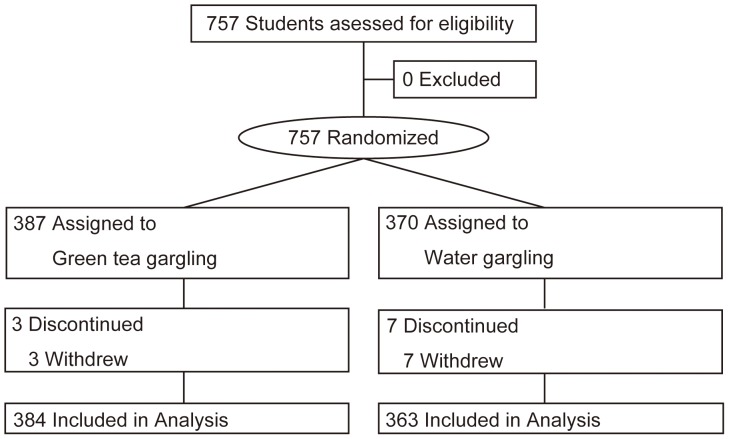
BACKGROUND: The anti-influenza virus activity of green tea catechins has been demonstrated in experimental studies, but clinical evidence has been inconclusive. School-aged children play an important role in the infection and spread of influenza in the form of school-based outbreaks. Preventing influenza infection among students is essential for reducing the frequency of epidemics and pandemics. As a non-pharmaceutical intervention against infection, gargling is also commonly performed in Asian countries but has not yet been extensively studied. METHODS AND FINDINGS: A randomized, open label, 2-group parallel study of 757 high school students (15 to 17 years of age) was conducted for 90 days during the influenza epidemic season from December 1st, 2011 to February 28th, 2012, in 6 high schools in Shizuoka Prefecture, Japan. The green tea gargling group gargled 3 times a day with bottled green tea, and the water gargling group did the same with tap water. The water group was restricted from gargling with green tea. The primary outcome measure was the incidence of laboratory-confirmed influenza using immunochromatographic assay for antigen detection. 757 participants were enrolled and 747 participants completed the study (384 in the green tea group and 363 in the water group). Multivariate logistic regression indicated no significant difference in the incidence of laboratory-confirmed influenza between the green tea group (19 participants; 4.9%) and the water group (25 participants; 6.9%) (adjusted OR, 0.69; 95%CI, 0.37 to 1.28; P = 0.24). The main limitation of the study is the adherence rate among high school students was lower than expected. CONCLUSIONS: Among high school students, gargling with green tea three times a day was not significantly more efficacious than gargling with water for the prevention of influenza infection. In order to adequately assess the effectiveness of such gargling, additional large-scale randomized studies are needed. TRIAL REGISTRATION: ClinicalTrials.gov NCT01225770.
Overview
The claims and statistics of this paper haven’t been checked yet.
Free: it reads the open-access text and checks the first 5 claims that cite a source we can check. Create a free account to check every claim.
Integrity signals
Registry
Cites
Statistics
Figures
Verification
Claims the paper makes
The claims and statistics of this paper haven’t been checked yet.
Free: it reads the open-access text and checks the first 5 claims that cite a source we can check. Create a free account to check every claim.
Claims other papers make about this one
Each is checked against this paper’s own text: does it say what the citing paper says it does?
The cited source says what the claim attributes to it.
In the citing paper
“There was no difference in the incidence of laboratory‐confirmed influenza between high school students gargling with green tea compared with those using tap water (adjusted OR 0.69, 95% CI 0.37 to 1.28; P = 0.24) (Ide 2014).”
From Physical interventions to interrupt or reduce the spread of respiratory viruses (2023) · cites this paper as Ide 2014
The cited source says what the claim attributes to it.
In the citing paper
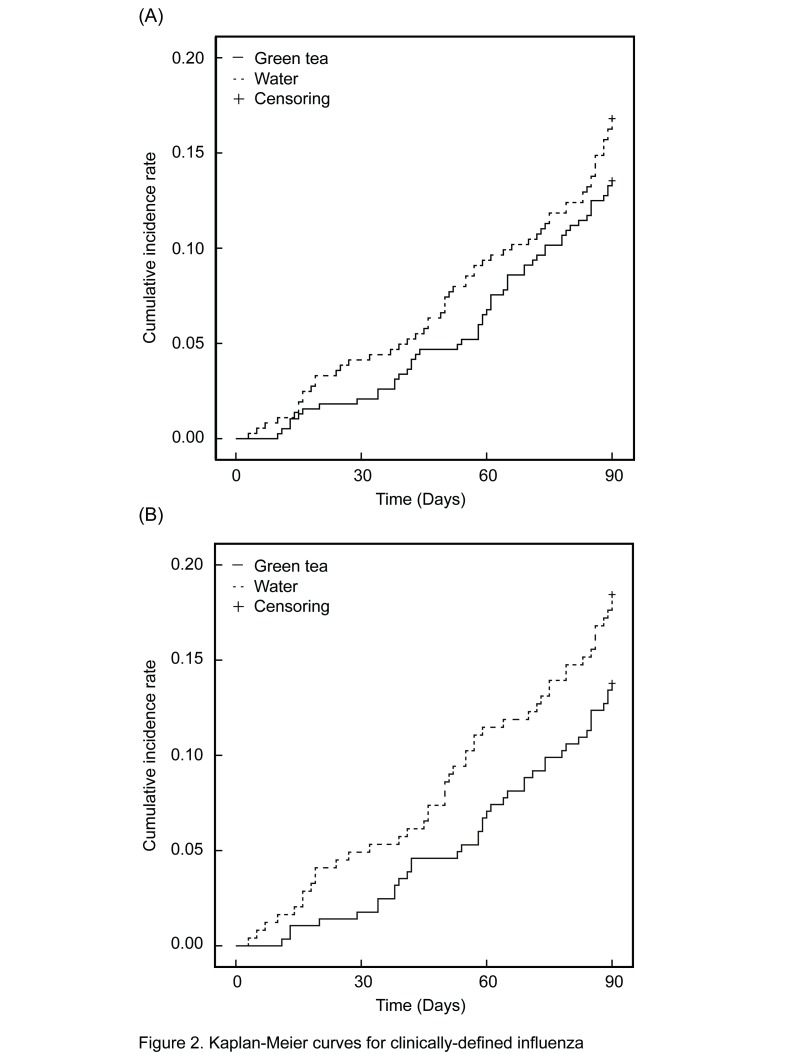
“There was also no difference in the incidence of clinically defined influenza (adjusted OR 0.75, 95% CI 0.50 to 1.13; P = 0.17).”
From Physical interventions to interrupt or reduce the spread of respiratory viruses (2023) · cites this paper as Ide 2014
The cited source says what the claim attributes to it.
In the citing paper
“Ide 2014 also did not observe any adverse events during the study.”
From Physical interventions to interrupt or reduce the spread of respiratory viruses (2023) · cites this paper as Ide 2014
The cited source says what the claim attributes to it.
In the citing paper
“Three trials addressed the use of gargling in preventing respiratory infections (Goodall 2014; Ide 2014; Satomura 2005).”
From Physical interventions to interrupt or reduce the spread of respiratory viruses (2023) · cites this paper as Ide 2014
Self-check
Percentages, sums and reported differences re-computed from the paper’s own numbers.
The self-check needs the paper’s full text.
Citations
Cites
Influenza-Associated Hospitalizations in the United States
Thompson, W. W. (2004) · JAMA · doi:10.1001/jama.292.11.1333 · Cited by 2,213 · cited 1×
“Influenza causes acute respiratory illness, and can lead to severe complications with mortality risk, such as pneumonia and encephalitis [1,2].”
BackgroundEfficacy and effectiveness of influenza vaccines: a systematic review and meta-analysis
Osterholm, M. T., Kelley, N. S., Sommer, A., & Belongia, E. A. (2012) · The Lancet Infectious Diseases · doi:10.1016/s1473-3099(11)70295-x · Cited by 1,789 · cited 1×
“The main strategy for preventing influenza infection is vaccination, but its efficacy and effectiveness depend on the strain of the virus [7], and it has the drawback of limited supply [8,9].”
BackgroundNonpharmaceutical Interventions Implemented by US Cities During the 1918-1919 Influenza Pandemic
Markel, H., Lipman, H. B., Navarro, J. A., Sloan, A., Michalsen, J. R., Stern, A. M., & Cetron, M. S. (2007) · JAMA · doi:10.1001/jama.298.6.644 · Cited by 777
Neuraminidase inhibitors for preventing and treating influenza in healthy adults and children
Jefferson, T., Jones, M. A., Doshi, P., Del Mar, C. B., Heneghan, C. J., Hama, R., & Thompson, M. J. (2012) · Cochrane Database of Systematic Reviews · doi:10.1002/14651858.cd008965.pub3 · Cited by 594
Anti‐infective properties of epigallocatechin‐3‐gallate (EGCG), a component of green tea
Steinmann, J., Buer, J., Pietschmann, T., & Steinmann, E. (2013) · British Journal of Pharmacology · doi:10.1111/bph.12009 · Cited by 559 · cited 1×
“Regarding infectivity, the highly-bioactive catechin (-)-epigallocatechin gallate has been reported to inhibit plaque formation, adsorption, and hemmagglutination by influenza A and B viruses in Madin-Darby canine kidney cells [24,25].”
BackgroundAccuracy of Rapid Influenza Diagnostic Tests: A Meta-analysis
Chartrand, C., Leeflang, M. M. G., Minion, J., Brewer, T., & Pai, M. (2012) · Annals of Internal Medicine · doi:10.7326/0003-4819-156-7-201204030-00403 · Cited by 483
Jefferson, T., Jones, M., Doshi, P., & Del Mar, C. (2009) · BMJ · doi:10.1136/bmj.b5106 · Cited by 363
Aiello, A. E., Murray, G. F., Perez, V., Coulborn, R. M., Davis, B. M., Uddin, M., Shay, D. K., Waterman, S. H., & Monto, A. S. (2010) · The Journal of Infectious Diseases · doi:10.1086/650396 · Cited by 354
Predicting Influenza Infections during Epidemics with Use of a Clinical Case Definition
Boivin, G., Hardy, I., Tellier, G., & Maziade, J. (2000) · Clinical Infectious Diseases · doi:10.1086/317425 · Cited by 347 · cited 1×
“8 uC) plus any 2 of the following additional symptoms: cough, sore throat, headache, or myalgia [30].”
BackgroundNonpharmaceutical Interventions for Pandemic Influenza, International Measures
World Health Organization Writing Group (2006) · Emerging Infectious Diseases · doi:10.3201/eid1201.051370 · Cited by 326
Cited by
Activity of catechins and their applications
Bae, J., Kim, N., Shin, Y., Kim, S.-Y., & Kim, Y.-J. (2020) · Biomedical Dermatology · doi:10.1186/s41702-020-0057-8 · Cited by 356
Physical interventions to interrupt or reduce the spread of respiratory viruses
Jefferson, T., Del Mar, C. B., Dooley, L., Ferroni, E., Al-Ansary, L. A., Bawazeer, G. A., van Driel, M. L., Jones, M. A., Thorning, S., Beller, E. M., et al. (2020) · Cochrane Database of Systematic Reviews · doi:10.1002/14651858.cd006207.pub5 · Cited by 318
Physical interventions to interrupt or reduce the spread of respiratory viruses
Jefferson, T., Dooley, L., Ferroni, E., Al-Ansary, L. A., van Driel, M. L., Bawazeer, G. A., Jones, M. A., Hoffmann, T. C., Clark, J., Beller, E. M., et al. (2023) · Cochrane Database of Systematic Reviews · doi:10.1002/14651858.cd006207.pub6 · Cited by 291
COVID-19 Pandemic: Can Maintaining Optimal Zinc Balance Enhance Host Resistance?
Razzaque, M. S. (2020) · The Tohoku Journal of Experimental Medicine · doi:10.1620/tjem.251.175 · Cited by 112
Furushima, D., Ide, K., & Yamada, H. (2018) · Molecules · doi:10.3390/molecules23071795 · Cited by 65
“conducted a randomized controlled study on school-age populations [34,38].”
BackgroundSelf-citationChen, Y., Shen, J., Wu, Y., Ni, M., Deng, Y., Sun, X., Wang, X., Zhang, T., Pan, F., & Tang, Z. (2022) · European Journal of Nutrition · doi:10.1007/s00394-022-02994-w · Cited by 71
“Several studies observed that tea consumption has preventive effects against LRTIs [12, 13], but others did not find similar link [14, 15].”
ResultHerbs for Viral Respiratory Infections
Yarnell, E. L. (2017) · Alternative and Complementary Therapies · doi:10.1089/act.2017.29150.eya · Cited by 55
Furushima, D., Nishimura, T., Takuma, N., Iketani, R., Mizuno, T., Matsui, Y., Yamaguchi, T., Nakashima, Y., Yamamoto, S., Hibi, M., et al. (2019) · Nutrients · doi:10.3390/nu12010004 · Cited by 44
Self-citationGreen tea catechins adsorbed on the murine pharyngeal mucosa reduce influenza A virus infection
Onishi, S., Mori, T., Kanbara, H., Habe, T., Ota, N., Kurebayashi, Y., & Suzuki, T. (2020) · Journal of Functional Foods · doi:10.1016/j.jff.2020.103894 · Cited by 41
Umeda, M., Tominaga, T., Kozuma, K., Kitazawa, H., Furushima, D., Hibi, M., & Yamada, H. (2021) · European Journal of Nutrition · doi:10.1007/s00394-021-02681-2 · Cited by 31
“[46]) or single blind method (Furushima et al.”
MethodSelf-citationIde, K., Yamada, H., & Kawasaki, Y. (2016) · BMC Public Health · doi:10.1186/s12889-016-3083-0 · Cited by 31
“2014 757 16 ± 1* 16 ± 1* 224/160* 199/164* 3 Randomized controlled [22]”
BackgroundSelf-citationCan medicinal plants contribute to the cure of Tunisian COVID-19 patients?
Wannes, W. A., & Tounsi, M. S. (2020) · Journal of Medicinal Plants Studies · doi:10.22271/plants.2020.v8.i5c.1218 · Cited by 32
Singh, V., Singh, S., Sharma, N., Singh, U., Singh, T., & Mangal, D. K. (2020) · Lung India · doi:10.4103/lungindia.lungindia_241_20 · Cited by 35
“These Japanese studies analyzing the role of oral gargles noted reduced incidence rates of influenza in healthy adult and elderly volunteers, but not in teenage volunteers.[8,10,11]”
BackgroundInfluentialCamellia Sinensis Mouthwashes in Oral Care: a Systematic Review.
Tafazoli, A., & Moghadam, E. T. (2020) · PubMed Central · doi:10.30476/dentjods.2020.83204.1045 · Cited by 35
“[73] randomized 757 high school children into green tea and tap water gargle three times daily during the influenza epidemic season.”
BackgroundAnti-Influenza with Green Tea Catechins: A Systematic Review and Meta-Analysis
Rawangkan, A., Kengkla, K., Kanchanasurakit, S., Duangjai, A., & Saokaew, S. (2021) · Molecules · doi:10.3390/molecules26134014 · Cited by 22
“The sensitivity analysis was then performed after eliminating studies with a high risk of bias [35,36] or low quality of evidence [38].”
BackgroundMethodInfluentialda Silva‐Júnior, E. F., & Silva, L. R. (2022) · Current Topics in Medicinal Chemistry · doi:10.2174/1568026622666220127112056 · Cited by 19
The effect of Greek herbal tea consumption on thyroid cancer: a case-control study
Riza, E., Linos, A., Petralias, A., de Martinis, L., Duntas, L. H., & Linos, D. A. (2015) · European Journal of Public Health · doi:10.1093/eurpub/ckv063 · Cited by 19
Occupational COVID‐19 risk to dental staff working in a public dental unit in the outbreak epicenter
Nardone, M., Cordone, A., & Petti, S. (2020) · Oral Diseases · doi:10.1111/odi.13632 · Cited by 17
Efficacy of phytochemicals as immunomodulators in managing COVID-19: a comprehensive view
Bhattacharya, S., & Paul, S. M. N. (2021) · VirusDisease · doi:10.1007/s13337-021-00706-2 · Cited by 14
Mohamed, I. M. A., Ogawa, H. K., & Takeda, Y. (2021) · Journal of Natural Medicines · doi:10.1007/s11418-021-01568-0 · Cited by 14
Investigation of the Oral Retention of Tea Catechins in Humans: An Exploratory Interventional Study
Furushima, D., Otake, Y., Koike, N., Onishi, S., Mori, T., Ota, N., & Yamada, H. (2021) · Nutrients · doi:10.3390/nu13093024 · Cited by 13
Self-citationIde, K., Kawasaki, Y., Akutagawa, M., & Yamada, H. (2017) · The Journal of Alternative and Complementary Medicine · doi:10.1089/acm.2016.0094 · Cited by 10
Self-citationImpact of gargling on respiratory infections
Ahmad, L. (2021) · All Life · doi:10.1080/26895293.2021.1893834 · Cited by 8
Yao, J., Zhao, J., Wen, J.-R., Yang, Z.-J., Lin, Y.-P., Sun, L., Lu, Q.-Y., & Fan, G.-J. (2022) · Complementary Therapies in Medicine · doi:10.1016/j.ctim.2022.102865 · Cited by 6
Antiviral effect of oral antiseptic solutions commonly used in dentistry practice: A scoping review
Toschi, E. M., Mercado, L. W., & Henz, S. L. (2023) · Dentistry Review · doi:10.1016/j.dentre.2023.100064 · Cited by 7
Man, G. C. W., Zheng, X., Hung, S. W., Chan, L. K. Y., Zhang, T., Chen, X., Chu, K. O., Huen, I. C. Y., Lui, D. W. Y., Wong, A. D., et al. (2023) · Current Topics in Medicinal Chemistry · doi:10.2174/0115680266251803230925075508 · Cited by 4
Tominaga, T., Ikukawa, T., Furushima, D., Nakamura, T. J., & Yamada, H. (2024) · Biological and Pharmaceutical Bulletin · doi:10.1248/bpb.b24-00113 · Cited by 4
Self-citationThe Effect of Tea Catechins on Natural Killer Cell Activity in the Elderly: A Pilot Study
Iketani, R., Furushima, D., Nishimura, T., Hirama, Y., Onishi, S., Kanbara, H., Mori, T., Ota, N., Ohno, Y., & Yamada, H. (2019) · Rinsho yakuri/Japanese Journal of Clinical Pharmacology and Therapeutics · doi:10.3999/jscpt.50.139 · Cited by 4
Self-citationYuen, E., Fried, J., Salvador, C., Gudis, D. A., Schlosser, R. J., Nguyen, S. A., Brennan, E. A., & Rowan, N. R. (2021) · Rhinology Journal · doi:10.4193/rhin20.563 · Cited by 4
“Gloves, Gowns, and Eye Protection Because no RCTs assessing the use of gloves, gowns, and eye protection in preventing upper VRTI transmission were identified, available evidence derived from case-control studies was evaluated (Tables 6-8).”
BackgroundInfluentialSelvakumar, D., Paranidharan, V., Vellaikumar, S., Manoharan, B., Karthikeyan, A., Nallusamy, S., Arunachala, B., Senthil, K., & Natesan, S. (2022) · The Journal of Phytology · doi:10.25081/jp.2022.v14.7934 · Cited by 4
“, 1995), anti-inflammation, antiviral (Ide et al., 2014), anti-cancer (Kumar et al.”
BackgroundKaggwa, B., Edson, I. M., Henry, K., Anywar, G., Okella, H., Clement, O. A., Wangalwa, R., John, M., Sesaazi, D. C., Lynn, K. B., et al. (2023) · Journal of Medicinal Plants Research · doi:10.5897/jmpr2022.7285 · Cited by 4
Assaf, I., & Moussa, S. (2020) · BAU Journal - Health and Wellbeing · doi:10.54729/2789-8288.1039 · Cited by 3
Uraguchi, K., Mitsuhashi, T., Matsumoto, N., Takao, S., Makihara, S., Ando, M., & Yorifuji, T. (2023) · European Journal of Pediatrics · doi:10.1007/s00431-023-05062-5 · Cited by 3
“Reports showed that tap water and green tea are effective, but povidone-iodine was ineffective [7, 22, 25, 26].”
BackgroundIbrahim, I. A., Saif, A., Algadeeb, R., & Al-Quwaidhi, A. J. (2024) · Cureus · doi:10.7759/cureus.68283 · Cited by 1
“Moreover, seasonal influenza at schools is a problematic issue, as close contact among scholars leads to the fast spread of the viral infection between them and later to the public [15].”
BackgroundCould antiseptic gargling prevent COVID-19?
Mohamed, N. A., Hady, A., Aziz, A. H. A., & Isahak, I. (2020) · Tropical biomedicine · doi:10.47665/tb.37.4.1141 · Cited by 2
“The result was also similar to a study among school-aged children that found no significant difference between gargling with water and green tea (Ide et al., 2014).”
ResultBenefits of Green Tea: Clinical Evidence for Respiratory Tract Infections
Yamada, H. (2022) · YAKUGAKU ZASSHI · doi:10.1248/yakushi.22-00153 · Cited by 1
Self-citationEfficacité de la L-théanine en santé mentale : une revue systématique et méta-analyse
Saddier, E. (2024) · HAL
Effects of Green Tea Gargling on COVID-19: A Multicenter RCT
Kawai, Y., Ito, Y., Nakamura, T. J., Furushima, D., Nakai, Y., Miura, M., Uchida, S., Unno, K., Nakamura, Y., Takuma, N., et al. (2026) · AJPM Focus · doi:10.1016/j.focus.2026.100517
Self-citationKim, K. M., An, S. H., Kim, J. W., Park, Y. B., Kim, S., Kim, S., Byun, Y. H., Moon, S., & Jang, Y. H. (2026) · Antibiotics · doi:10.3390/antibiotics15101007
“Previous studies have investigated the potential of tea-based interventions, including green tea gargling and catechin consumption, for reducing the risk of influenza and other upper respiratory tract infections [28,29].”
Metadata
- Authors
- Ide, K., Yamada, H., Matsushita, K., Ito, M., Nojiri, K., Toyoizumi, K., Matsumoto, K., & Sameshima, Y.
- Affiliations
- Shizuoka University (JP)
- Corresponding author
- Yamada, Hiroshi
- Venue
- PLoS ONE
- Publisher
- Public Library of Science (PLoS)
- Published
- 2014-05-16
- Volume
- 9
- Issue
- 5
- Pages
- e96373
- ISSN
- 1932-6203 (ISSN-L)
- PMC
- PMC4023996
- OpenAlex
- W2077861279
- Cited by
- 37
- References
- 34
- Citations by year
- 2026: 1 · 2024: 2 · 2023: 5 · 2022: 5 · 2021: 7 · 2020: 10 · 2019: 2 · 2018: 1 · 2017: 1 · 2016: 2 · 2015: 1
- FWCI
- 0.99
- Type
- journal article
- Language
- en
- Open access
- gold
- doi.org
- Locations
- PLoS ONE (publishedVersion, cc-by)
- Europe PMC (PubMed Central) (publishedVersion, other-oa)
- PubMed Central (publishedVersion, cc-by)
- PubMed (publishedVersion)
- DOAJ (DOAJ: Directory of Open Access Journals) (submittedVersion, cc-by-sa)
- Figshare (submittedVersion, cc-by)
- Funders
- Japan Society for the Promotion of Science (23590887)
- Topics
- Life Sciences › Agricultural and Biological Sciences › Food Science › Tea Polyphenols and Effects
- Health Sciences › Medicine › Epidemiology › Influenza Virus Research Studies
- Health Sciences › Medicine › Epidemiology › Respiratory viral infections research
- Keywords
- influenza prevention, catechins, high school students, non-pharmaceutical interventions, influenza incidence
- MeSH terms
- Adolescent, Catechin, Chromatography, Affinity, Humans, Influenza, Human, Japan, Mouthwashes, Patient Compliance, Tea, Logistic Models, Odds Ratio
About these checks
Registry, retraction, Cites and statistics results are computed, not judged, with one exception: a printed reference that no index lists is read once by a model before it counts as a citation error. Claims are extracted by a model and kept only when their quote appears verbatim in the text; each cited source is then checked, with a model’s help, for whether it says what the claim relies on. Those verdicts can be wrong — read the claim’s quote and the cited source before relying on one.
Statistics and arithmetic are recomputed, not judged.
Confidence bands are shown only for fields calibrated on our annotated test set. None is calibrated yet, so no band is shown.
What counts as a claim ›How we measure confidence ›How we check this ›
Are you an author, or do you see a problem with this page? Request a review
Data sources
Bibliographic data: Semantic Scholar, OpenAlex, Crossref.
Contains information from the Semantic Scholar Academic Graph Datasets, made available under the ODC Attribution License (ODC-BY 1.0).
Semantic Scholar’s data is described in: Kinney, R., et al. (2023). The Semantic Scholar Open Data Platform. arXiv:2301.10140.
