

The DOI matches its Crossref record; 61 of the 61 references it cites were found in a registry or an index.
Genkwanin Inhibits Proinflammatory Mediators Mainly through the Regulation of miR-101/MKP-1/MAPK Pathway in LPS-Activated Macrophages
Open accessAbstract
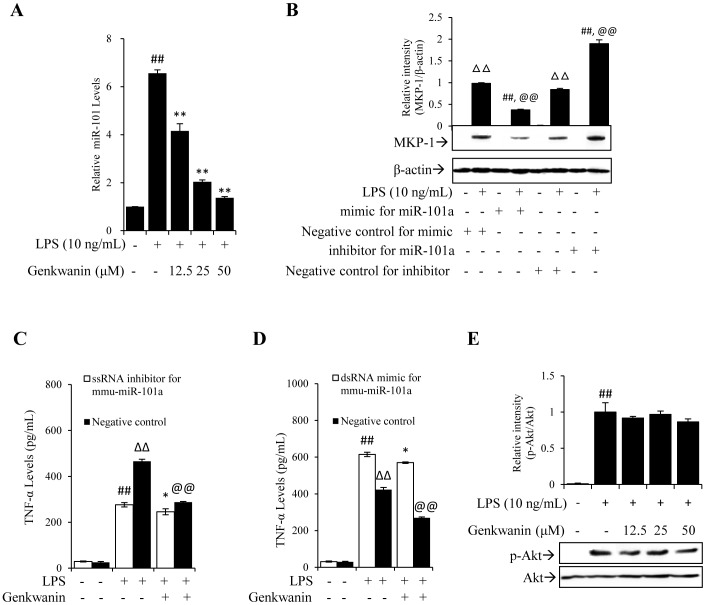
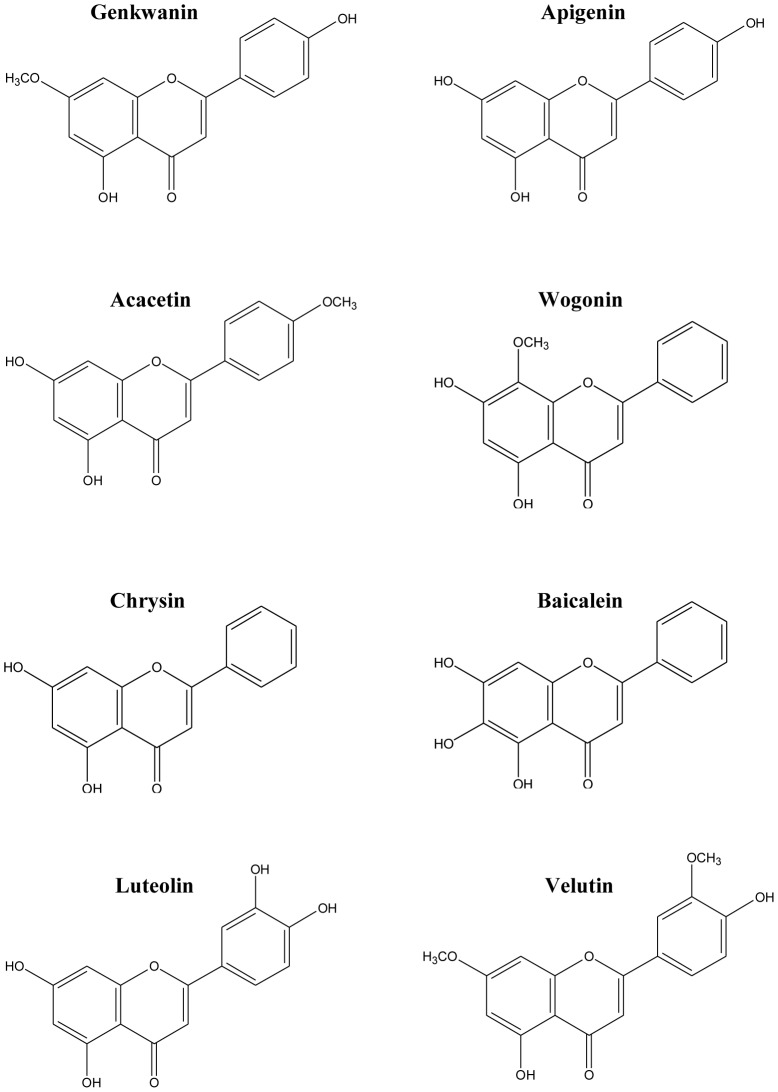
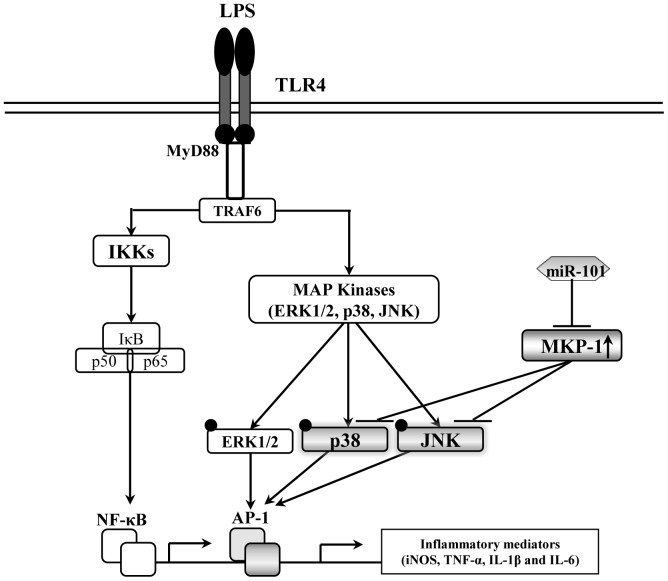
Genkwanin is one of the major non-glycosylated flavonoids in many herbs with anti-inflammatory activities. Although its anti-inflammatory activity in vivo has been reported, the potential molecular mechanisms remain obscure. In this study, by pharmacological and genetic approaches, we explore the anti-inflammatory effects of genkwanin in LPS-activated RAW264.7 macrophages. Genkwanin potently decreases the proinflammatory mediators, such as iNOS, TNF-α, IL-1β and IL-6, at the transcriptional and translational levels without cytotoxicity, indicating the excellent anti-inflammatory potency of genkwanin in vitro. Mechanism study shows that genkwanin significantly suppresses the p38- and JNK-mediated AP-1 signaling pathway and increases the mitogen-activated protein kinase (MAPK) phosphatase 1 (MKP-1) expression at the posttranscriptional level. We also confirmed that microRNA-101 (miR-101) is a negative regulator of MKP-1 expression. Moreover, regardless of miR-101-deficient cells or miR-101-abundant cells, the suppression effects of genkwanin on supernatant proinflammatory mediators' levels are far less than that in respective negative control cells, suggesting that genkwanin exerts anti-inflammatory effect mainly through reducing miR-101 production. However, genkwanin can't affect the level of phospho-Akt (p-Akt), indicating that the phosphorylation of Akt may be not responsible for the effect of genkwanin on miR-101 production. We conclude that genkwanin exerts its anti-inflammatory effect mainly through the regulation of the miR-101/MKP-1/MAPK pathway.
Overview
The claims and statistics of this paper haven’t been checked yet.
Run the check — free, no account needed. It reads the open-access text and checks the sources it cites.
Integrity signals
Registry
Cites
Statistics
Figures
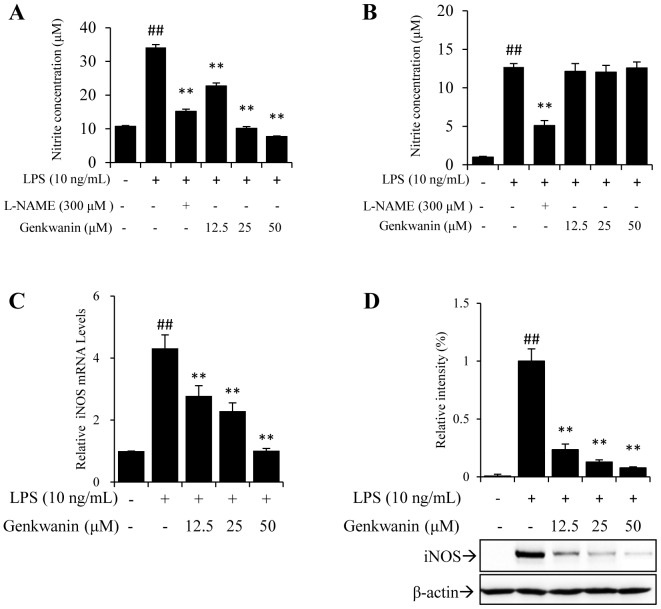
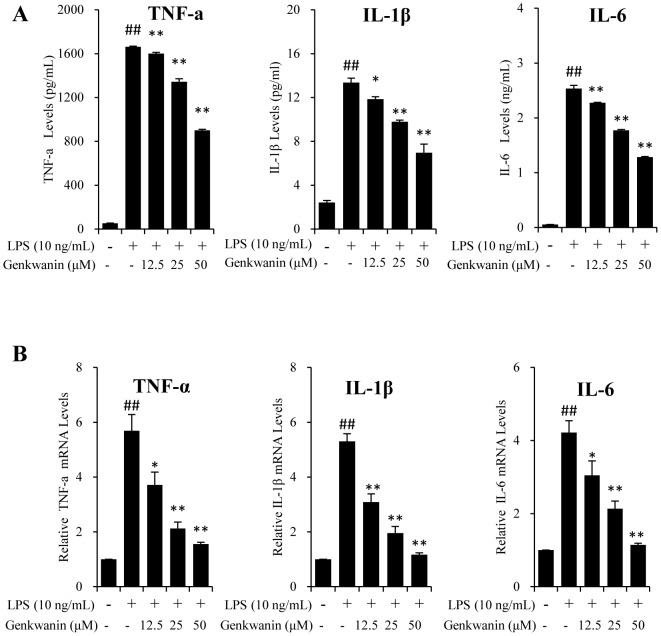
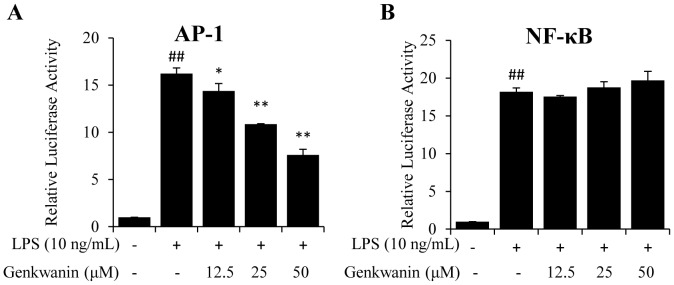
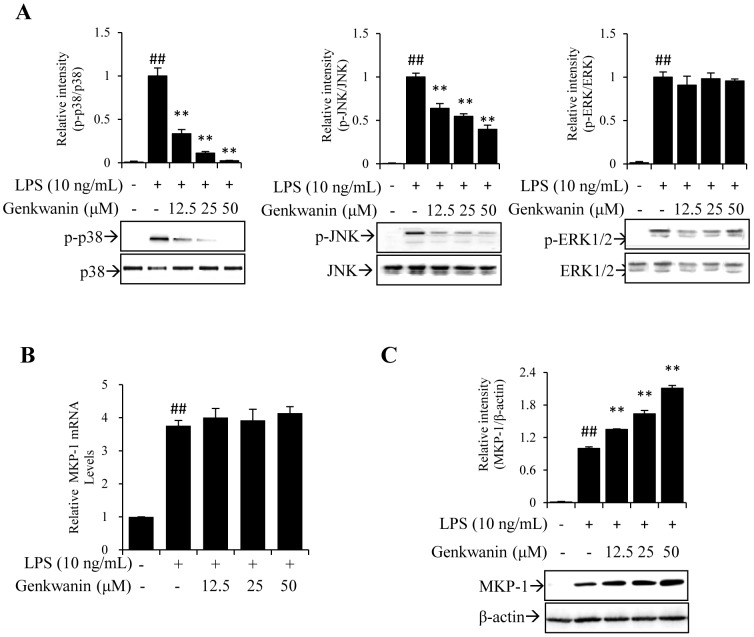
Verification
Claims the paper makes
The claims and statistics of this paper haven’t been checked yet.
Run the check — free, no account needed. It reads the open-access text and checks the sources it cites.
Claims other papers make about this one
Each is checked against this paper’s own text: does it say what the citing paper says it does?
In the citing paper
“The absolute level of IL6 we detected fell in the middle range of reported levels (50 pg/mL to 200 ng/mL) in inflammatory contexts and above reported ranges post-exercise and diet-induced obesity (30-100 pg/mL) (Chowdhury et al.; Gao et al., 2014; Greenhill et al., 2011; Masuda et al., 2013; Osuchowski et al., 2006; Remick et al., 2005; Vida et al.; Wang et al., 2017; Yan et al., 2015).”
From Origin and function of stress-induced IL-6 in murine models (2020) · cites this paper as Gao et al., 2014
Self-check
Percentages, sums and reported differences re-computed from the paper’s own numbers.
The self-check needs the paper’s full text.
Citations
Cites
The functions of animal microRNAs
Ambros, V. (2004) · Nature · doi:10.1038/nature02871 · Cited by 10,728
Defective LPS Signaling in C3H/HeJ and C57BL/10ScCr Mice: Mutations in Tlr4 Gene
Poltorak, A., He, X., Smirnova, I., Liu, M.-Y., Huffel, C. V., Du, X., Birdwell, D., Alejos, E., Silva, M., Galanos, C., et al. (1998) · Science · doi:10.1126/science.282.5396.2085 · Cited by 7,631
Chemokines and leukocyte traffic
Baggiolini, M. (1998) · Nature · doi:10.1038/33340 · Cited by 2,711
Activation and signaling of the p38 MAP kinase pathway
Zarubin, T., & Han, J. (2005) · Cell Research · doi:10.1038/sj.cr.7290257 · Cited by 1,711
MAP Kinases in the Immune Response
Dong, C., Davis, R. J., & Flavell, R. A. (2002) · Annual Review of Immunology · doi:10.1146/annurev.immunol.20.091301.131133 · Cited by 1,684
MacMicking, J. D., Nathan, C., Hom, G. J., Chartrain, N. A., Fletcher, D. S., Trumbauer, M. E., Stevens, K. A., Xie, Q. W., Sokol, K. A., Hutchinson, N. I., et al. (1995) · Cell · doi:10.1016/0092-8674(95)90085-3 · Cited by 1,445
Sun, H., Charles, C. H., Lau, L. F., & Tonks, N. K. (1993) · Cell · doi:10.1016/0092-8674(93)90383-2 · Cited by 1,156
The MAP kinase cascade is essential for diverse signal transduction pathways
Nishida, E., & Gotoh, Y. (1993) · Trends in Biochemical Sciences · doi:10.1016/0968-0004(93)90019-j · Cited by 1,087
Dual specificity phosphatases: a gene family for control of MAP kinase function
Camps, M., NICHOLS, A., & Arkinstall, S. (2000) · The FASEB Journal · doi:10.1096/fasebj.14.1.6 · Cited by 823
Guha, M., & Mackman, N. (2002) · Journal of Biological Chemistry · doi:10.1074/jbc.m203298200 · Cited by 799
Mitogen-activated protein kinase cascades and regulation of gene expression
Su, B., & Karin, M. (1996) · Current Opinion in Immunology · doi:10.1016/s0952-7915(96)80131-2 · Cited by 747
PI3K and negative regulation of TLR signaling
Fukao, T., & Koyasu, S. (2003) · Trends in Immunology · doi:10.1016/s1471-4906(03)00139-x · Cited by 619
Nitrogen oxide levels in patients after trauma and during sepsis
OCHOA, J. B., UDEKWU, A. O., BILLIAR, T. R., CURRAN, R. D., CERRA, F. B., SIMMONS, R. L., & PEITZMAN, A. B. (1991) · Annals of Surgery · doi:10.1097/00000658-199111000-00013 · Cited by 599
Chi, H., Barry, S. P., Flach, R. J. R., Wu, J. J., Jones, E. A., Bennett, A. M., & Flavell, R. A. (2006) · Proceedings of the National Academy of Sciences · doi:10.1073/pnas.0510965103 · Cited by 568
Lee, J. Y., Ye, J., Gao, Z., Youn, H. S., Lee, W. H., Zhao, L., Sizemore, N., & Hwang, D. H. (2003) · Journal of Biological Chemistry · doi:10.1074/jbc.m305213200 · Cited by 524
Nicholas, C., Batra, S., Vargo, M. A., Voss, O. H., Gavrilin, M. A., Wewers, M. D., Guttridge, D. C., Grotewold, E., & Doseff, A. I. (2007) · The Journal of Immunology · doi:10.4049/jimmunol.179.10.7121 · Cited by 342
Ojaniemi, M., Glumoff, V., Harju, K., Vähä-Mäkilä, M., Vuori, K., & Hallman, M. (2003) · European Journal of Immunology · doi:10.1002/eji.200323376 · Cited by 324
Theodosiou, A. M., & Ashworth, A. (2002) · Genome biology · doi:10.1186/gb-2002-3-7-reviews3009 · Cited by 321
Biological activity of five antibacterial flavonoids from Combretum erythrophyllum (Combretaceae)
Martini, N. D., Katerere, D. R., & Eloff, J. N. (2004) · Journal of Ethnopharmacology · doi:10.1016/j.jep.2004.02.030 · Cited by 289
Chen, P., Li, J., Barnes, J., Kokkonen, G. C., Lee, J. C., & Liu, Y. (2002) · The Journal of Immunology · doi:10.4049/jimmunol.169.11.6408 · Cited by 285
Cannabinoids inhibit LPS-inducible cytokine mRNA expression in rat microglial cells
Puffenbarger, R. A., Boothe, A. C., & Cabral, G. A. (2000) · Glia · doi:10.1002/(sici)1098-1136(20000101)29:1 · Cited by 248
Chen, Y., Shen, S., Lee, W., Hou, W., Yang, L., & Lee, T. J.-F. (2001) · Journal of Cellular Biochemistry · doi:10.1002/jcb.1184 · Cited by 246
Charles, C. H., Abler, A. S., & Lau, L. F. (1992) · PubMed · Cited by 233
Xie, C., Kang, J., Li, Z., Schauss, A. G., Badger, T. M., Nagarajan, S., Wu, T., & Wu, X. (2011) · The Journal of Nutritional Biochemistry · doi:10.1016/j.jnutbio.2011.06.013 · Cited by 195
The growth factor-inducible immediate-early gene 3CH134 encodes a protein-tyrosine-phosphatase.
Charles, C. H., Sun, H., Lau, L. F., & Tonks, N. K. (1993) · Proceedings of the National Academy of Sciences · doi:10.1073/pnas.90.11.5292 · Cited by 192
Characterization of Topical Antiinflammatory Compounds inRosmarinus officinalisL.
Altinier, G., Sosa, S., Aquino, R. P., Mencherini, T., Loggia, R. D., & Tubaro, A. (2007) · Journal of Agricultural and Food Chemistry · doi:10.1021/jf062610+ · Cited by 177
Pan, M., Lai, C., Wang, Y., & Ho, C. (2006) · Biochemical Pharmacology · doi:10.1016/j.bcp.2006.07.039 · Cited by 167
Smolinski, A. T., & Pestka, J. J. (2003) · Food and Chemical Toxicology · doi:10.1016/s0278-6915(03)00146-7 · Cited by 166
In vitro antiplasmodial evaluation of medicinal plants from Zimbabwe
Kraft, C., Jenett‐Siems, K., Siems, K., Jakupovic, J., Mavi, S., Bienzle, U., & Eich, E. (2003) · Phytotherapy Research · doi:10.1002/ptr.1066 · Cited by 166
Antimicrobial evaluation of coumarins and flavonoids from the stems of L.
Cottiglia, F. (2001) · Phytomedicine · doi:10.1078/0944-7113-00036 · Cited by 163
Acute and chronic antiinflammatory effects of plant flavonoids
Pelzer, L. E., Guardia, T., Juárez, A., & Guerreiro, E. (1998) · Il Farmaco · doi:10.1016/s0014-827x(98)00046-9 · Cited by 156
MicroRNA-101 targets MAPK phosphatase-1 to regulate the activation of MAPKs in macrophages
Zhu, Q.-Y., Liu, Q., Chen, J.-X., Lan, K., & Ge, B.-X. (2010) · The Journal of Immunology · doi:10.4049/jimmunol.1000798 · Cited by 152
Liver X Receptor Activation Potentiates the Lipopolysaccharide Response in Human Macrophages
Fontaine, C., Rigamonti, E., Nohara, A., Gervois, P. P., Teissier, E., Fruchart, J., Staels, B., & Chinetti, G. (2007) · Circulation Research · doi:10.1161/circresaha.106.135814 · Cited by 145
Reimer, T., Brcic, M., Schweizer, M., & Jungi, T. W. (2008) · Journal of Leukocyte Biology · doi:10.1189/jlb.0607412 · Cited by 141
Choi, Y., Lee, M., Lim, S., Sung, S., & Kim, Y. (2009) · British Journal of Pharmacology · doi:10.1111/j.1476-5381.2009.00022.x · Cited by 134
Park, C., Jin, K.-S., Lee, Y.-W., & Song, Y.-S. (2010) · European Journal of Pharmacology · doi:10.1016/j.ejphar.2011.04.007 · Cited by 122
Fan, G., Zhang, Y., Jiang, X., Zhu, Y., Wang, B., Su, L., Cao, W., Zhang, H., & Gao, X. (2013) · Inflammation · doi:10.1007/s10753-013-9703-2 · Cited by 119
Rajaram, M. V. S., Ganesan, L. P., Parsa, K. V. L., Butchar, J. P., Gunn, J. S., & Tridandapani, S. (2006) · The Journal of Immunology · doi:10.4049/jimmunol.177.9.6317 · Cited by 108
Discovery of natural product chemopreventive agents utilizing HL-60 cell differentiation as a model.
Suh, N., Luyengi, L., Fong, H. H. S., Kinghorn, A. D., & Pezzuto, J. M. (1995) · PubMed · Cited by 104
Chung, H., Lee, H.-S., Shin, J., Lee, S., Park, B.-M., Youn, Y., & Lee, S. K. (2010) · Journal of Ethnopharmacology · doi:10.1016/j.jep.2010.05.020 · Cited by 95
Prostaglandin inhibitory and antioxidant components of Cistus laurifolius, a Turkish medicinal plant
Sadhu, S. K., Okuyama, E., Fujimoto, H., Ishibashi, M., & Yeşilada, E. (2006) · Journal of Ethnopharmacology · doi:10.1016/j.jep.2006.05.024 · Cited by 87
Yu, Y., Nagai, S., Wu, H., Neish, A. S., Koyasu, S., & Gewirtz, A. T. (2006) · The Journal of Immunology · doi:10.4049/jimmunol.176.10.6194 · Cited by 87
Medina, E. A., Morris, I. R., & Berton, M. T. (2010) · The Journal of Immunology · doi:10.4049/jimmunol.0903790 · Cited by 79
During, A., & Larondelle, Y. (2013) · Biochemical Pharmacology · doi:10.1016/j.bcp.2013.10.003 · Cited by 75
Nitric oxide hemoglobin in mice and rats in endotoxic shock
Wang, Q., Jacobs, J. M., DeLeo, J., Kruszyna, H. G., Kruszyna, R., Smith, R. P., & Wilcox, D. E. (1991) · Life Sciences · doi:10.1016/0024-3205(91)90251-6 · Cited by 74
Active components from Artemisia iwayomogi displaying ONOO− scavenging activity
Kim, A. R., Zou, Y. N., Park, T. H., Shim, K. H., Kim, M. S., Kim, N. D., Kim, J. D., Bae, S.-J., Choi, J. S., & Chung, H. Y. (2004) · Phytotherapy Research · doi:10.1002/ptr.1358 · Cited by 71
Harasstani, O. A., Moin, S., Tham, C. L., Liew, C. Y., Ismail, N., Rajajendram, R., Harith, H. H., Zakaria, Z. A., Mohamad, A. S., Sulaiman, M. R., et al. (2010) · Inflammation Research · doi:10.1007/s00011-010-0182-8 · Cited by 70
Wu, J. J., Zhang, L., & Bennett, A. M. (2005) · Molecular and Cellular Biology · doi:10.1128/mcb.25.11.4792-4803.2005 · Cited by 68
Mitogen activated protein kinases as targets for development of novel anti-inflammatory drugs
Karin, M. (2004) · Annals of the Rheumatic Diseases · doi:10.1136/ard.2004.028274 · Cited by 65
Pinho, B. R., Sousa, C., Valentão, P., & Andrade, P. B. (2011) · PLoS ONE · doi:10.1371/journal.pone.0024098 · Cited by 63
Ajmone‐Cat, M. A., Simone, R. D., Nicolini, A., & Minghetti, L. (2003) · Journal of Neurochemistry · doi:10.1046/j.1471-4159.2003.01562.x · Cited by 58
Vaillancourt, F., Morquette, B., Shi, Q., Fahmi, H., Lavigne, P., Battista, J. A. D., Fernandes, J., & Benderdour, M. (2006) · Journal of Cellular Biochemistry · doi:10.1002/jcb.21110 · Cited by 55
Flavonoids and cinnamic acid derivatives as inhibitors of 17β-hydroxysteroid dehydrogenase type 1
Brožič, P., Kocbek, P., Sova, M., Kristl, J., Martens, S., Adamski, J., Gobec, S., & Rižner, T. L. (2008) · Molecular and Cellular Endocrinology · doi:10.1016/j.mce.2008.09.004 · Cited by 53
Lin, M., Tsao, L., Chang, L., Chen, Y.-L., Huang, L., Kuo, S., Tzeng, C., Lee, M., & Wang, J.-P. (2007) · Biochemical Pharmacology · doi:10.1016/j.bcp.2007.02.009 · Cited by 49
Choi, Y. E., Lee, M. K., Lim, S., Yang, H., Sung, S., & Kim, Y. (2009) · Planta Medica · doi:10.1055/s-0029-1234376 · Cited by 48
Li, M., Zhang, L., Cai, R., Gao, Y., & Qi, Y. (2012) · Phytotherapy Research · doi:10.1002/ptr.3680 · Cited by 48
Rodriguez, N., Dietrich, H., Moßbrugger, I., Weintz, G., Scheller, J., Hammer, M., Quintanilla‐Martínez, L., Rose‐John, S., Miethke, T., & Lang, R. (2010) · Journal of Leukocyte Biology · doi:10.1189/jlb.0210083 · Cited by 39
Huang, G.-C., Chow, J., Shen, S., Yang, L., Lin, C., & Chen, Y. (2007) · International Immunopharmacology · doi:10.1016/j.intimp.2007.04.001 · Cited by 37
Role of MKP-1 in Osteoclasts and Bone Homeostasis
Carlson, J., Cui, W., Zhang, Q. H., Xu, X., Mercan, F., Bennett, A. M., & Vignery, A. (2009) · American Journal Of Pathology · doi:10.2353/ajpath.2009.090035 · Cited by 37
Oh, Y.-C., Cho, W., Jeong, Y. H., Im, G. Y., Lee, K. J., Yang, H. J., & Yeul, J. (2012) · Food and Chemical Toxicology · doi:10.1016/j.fct.2012.12.006 · Cited by 27
Kaneko, T., Chiba, H., Horie, N., Kato, T., Kobayashi, M., Hashimoto, K., Kusama, K., & Sakagami, H. (2009) · PubMed · Cited by 19
Research works printed but not linked: 1
- The State Commission of Chinese Pharmacopoeia (2010) Pharmacopoeia of People's Republic of China. Part I. Beijing: Chemical Industry Press. p148.
Cited by
Sorted by citations
Origin and function of stress-induced IL-6 in murine models
Qing, H., Desrouleaux, R., Israni-Winger, K., Mineur, Y. S., Fogelman, N., Zhang, C., Rashed, S., Palm, N. W., Sinha, R., Picciotto, M. R., et al. (2020) · Cell · doi:10.1016/j.cell.2020.05.054 · Cited by 303
“The absolute level of IL6 we detected fell in the middle range of reported levels (50 pg/mL to 200 ng/mL) in inflammatory contexts and above reported ranges post-exercise and diet-induced obesity (30-100 pg/mL) (Chowdhury et al.; Gao et al., 2014; Greenhill et al., 2011; Masuda et al., 2013; Osuchowski et al., 2006; R…”
Koirala, N., Thuấn, N. H., Ghimire, G. P., Thang, D. V., & Sohng, J. K. (2016) · Enzyme and Microbial Technology · doi:10.1016/j.enzmictec.2016.02.003 · Cited by 241
Wu, X., Dai, Y., Yang, Y., Huang, C. Z., Meng, X., Wu, B., & Li, J. (2016) · Immunology · doi:10.1111/imm.12608 · Cited by 116
Bao, Y., Sun, Y., Ji, J., Gan, L., Zhang, C.-F., Wang, C., & Yuan, C. (2019) · Phytomedicine · doi:10.1016/j.phymed.2019.153036 · Cited by 92
Zhao, M., Chen, Y., Wang, C., Xiao, W., Chen, S., Zhang, S., Yang, L., & Li, Y. (2019) · Frontiers in Pharmacology · doi:10.3389/fphar.2018.01448 · Cited by 78
“Interestingly, the association of many of them with FD treatment has been validated, like dipeptidyl peptidase 4 (DPP4), nitric oxide synthase, prostaglandin G/H synthase (PTGS2), Glycogen synthase kinase 3 beta (GSK3B) (Gao et al., 2014).”
BackgroundInfluential
Metadata
- Authors
- Gao, Y., Liu, F., Fang, L., Cai, R., Zong, C., & Qi, Y.
- Affiliations
- Chinese Academy of Medical Sciences & Peking Union Medical College (CN)
- Corresponding author
- Qi, Yun
- Venue
- PLoS ONE
- Publisher
- Public Library of Science (PLoS)
- Published
- 2014-05-06
- Volume
- 9
- Issue
- 5
- Pages
- e96741
- ISSN
- 1932-6203 (ISSN-L)
- PMC
- PMC4011752
- OpenAlex
- W2035643839
- Cited by
- 110
- References
- 61
- Citations by year
- 2026: 4 · 2025: 5 · 2024: 15 · 2023: 15 · 2022: 14 · 2021: 16 · 2020: 7 · 2019: 9 · 2018: 8 · 2017: 8 · 2016: 5 · 2015: 4
- FWCI
- 4.13
- Type
- journal article
- Language
- en
- Open access
- gold
- doi.org
- Locations
- PLoS ONE (publishedVersion, cc-by)
- Europe PMC (PubMed Central) (publishedVersion, cc-by)
- PubMed Central (publishedVersion, cc-by)
- PubMed (publishedVersion)
- DOAJ (DOAJ: Directory of Open Access Journals) (submittedVersion, cc-by-sa)
- Figshare (submittedVersion, cc-by)
- Funders
- National Natural Science Foundation of China (81173645, 2014ZX09201022-006, 81274163, 2012ZX09301002-001)
- Ministry of Science and Technology of the People's Republic of China (81274163, 2012ZX09301-002, 2014ZX09201022-006, 2012ZX09301-002-001)
- Topics
- Health Sciences › Medicine › Pharmacology (medical) › Flavonoids in Medical Research
- Life Sciences › Agricultural and Biological Sciences › Plant Science › Phytochemistry and Biological Activities
- Life Sciences › Pharmacology, Toxicology and Pharmaceutics › Drug Discovery › Bioactive natural compounds
- Keywords
- genkwanin, anti-inflammatory activity, macrophages, lipopolysaccharide stimulation, miR-101, MKP-1, MAPK signaling, AP-1 signaling, p38 MAPK, JNK, inflammatory cytokines, inducible nitric oxide synthase, post-transcriptional regulation, Akt
- MeSH terms
- Animals, Anti-Inflammatory Agents, Cell Line, Lipopolysaccharides, Macrophages, Nitric Oxide, Phosphorylation, Tumor Necrosis Factor-alpha, Signal Transduction, Interleukin-6, Up-Regulation, Oligonucleotides, Antisense, Inflammation Mediators, Mitogen-Activated Protein Kinases, MicroRNAs, Flavones, Mice, Nitric Oxide Synthase Type II, Interleukin-1beta, Dual Specificity Phosphatase 1
About these checks
Registry, retraction, Cites and statistics results are computed, not judged, with one exception: a printed reference that no index lists is read once by a model before it counts as a citation error. Claims are extracted by a model and kept only when their quote appears verbatim in the text; each cited source is then checked, with a model’s help, for whether it says what the claim relies on. Those verdicts can be wrong — read the claim’s quote and the cited source before relying on one.
Statistics and arithmetic are recomputed, not judged.
Confidence bands are shown only for fields calibrated on our annotated test set. None is calibrated yet, so no band is shown.
What counts as a claim ›How we measure confidence ›How we check this ›
Are you an author, or do you see a problem with this page? Request a review
