

A Meta-Analysis of Red Yeast Rice: An Effective and Relatively Safe Alternative Approach for Dyslipidemia
Open accessThe DOI matches its Crossref record; 39 of the 40 references it cites were found in a registry or an index.
Abstract
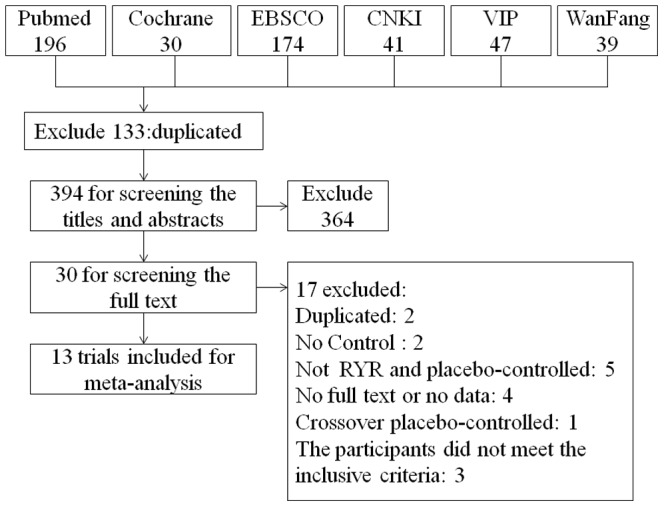
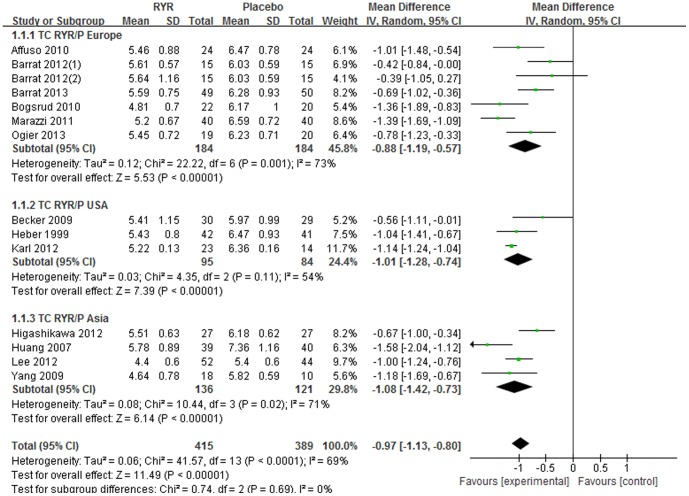
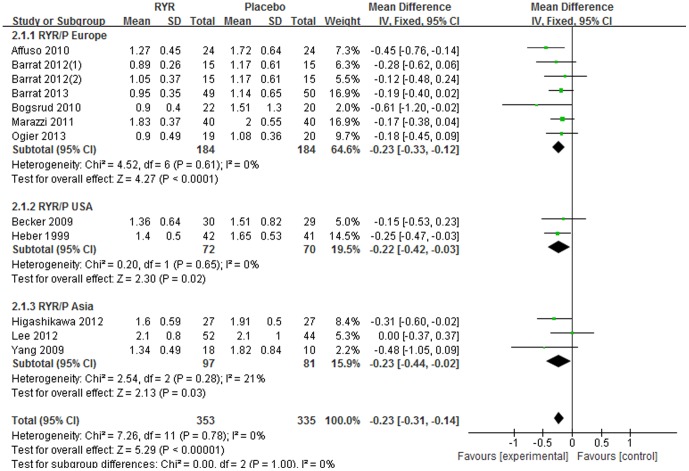
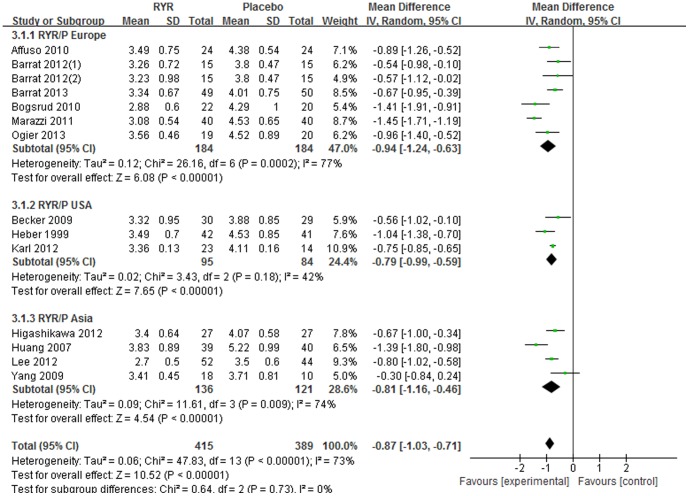
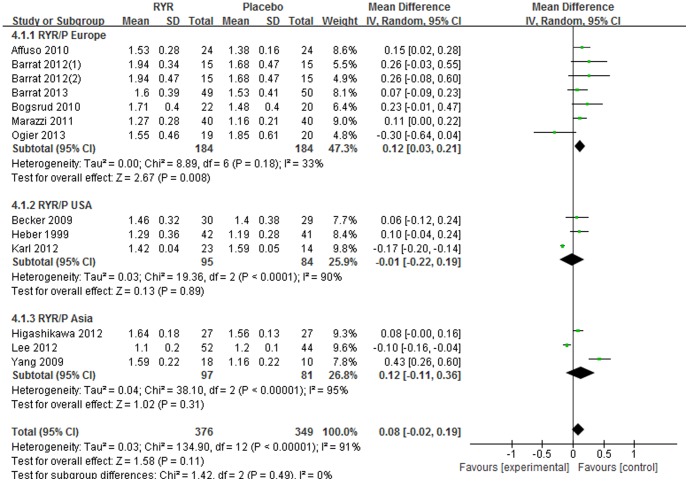
OBJECTIVE: To explore whether red yeast rice is a safe and effective alternative approach for dyslipidemia. METHODS: Pubmed, the Cochrane Library, EBSCO host, Chinese VIP Information (VIP), China National Knowledge Infrastructure (CNKI), Wanfang Databases were searched for appropriate articles. Randomized trials of RYR (not including Xuezhikang and Zhibituo) and placebo as control in patients with dyslipidemia were considered. Two authors read all papers and independently extracted all relevant information. The primary outcomes were serum total cholesterol (TC), low-density lipoprotein cholesterol (LDL-C), triglyceride (TG), and high-density lipoprotein cholesterol (HDL-C). The secondary outcomes were increased levels of alanine transaminase, aspartate aminotransferase, creatine kinase, creatinine and fasting blood glucose. RESULTS: A total of 13 randomized, placebo-controlled trials containing 804 participants were analyzed. Red yeast rice exhibited significant lowering effects on serum TC [WMD = -0.97 (95% CI: -1.13, -0.80) mmol/L, P<0.001], TG [WMD = -0.23 (95% CI: -0.31, -0.14) mmol/L, P<0.001], and LDL-C [WMD = -0.87 (95% CI: -1.03, -0.71) mmol/L, P<0.001] but no significant increasing effect on HDL-C [WMD = 0.08 (95% CI: -0.02, 0.19) mmol/L, P = 0.11] compared with placebo. No serious side effects were reported in all trials. CONCLUSIONS: The meta-analysis suggests that red yeast rice is an effective and relatively safe approach for dyslipidemia. However, further long-term, rigorously designed randomized controlled trials are still warranted before red yeast rice could be recommended to patients with dyslipidemia, especially as an alternative to statins.
Overview
The claims and statistics of this paper haven’t been checked yet.
Free: it reads the open-access text and checks the first 5 claims that cite a source we can check. Create a free account to check every claim.
Integrity signals
Registry
Cites
Statistics
Figures
Verification
Claims the paper makes
The claims and statistics of this paper haven’t been checked yet.
Free: it reads the open-access text and checks the first 5 claims that cite a source we can check. Create a free account to check every claim.
Claims other papers make about this one
Each is checked against this paper’s own text: does it say what the citing paper says it does?
In the citing paper
“A clinically relevant hypocholesterolaemic effect (up to a 20% reduction) is observed with RYR preparations providing a daily dose of ≏ 2.5-10 mg monacolin K. 146”
From 2016 ESC/EAS Guidelines for the Management of Dyslipidaemias (2016) · cites this paper as [146]
In the citing paper
“RYR has a mechanism of action similar to that of statins [21][22][23][24]”
In the citing paper
“Most of the other studies with RYR have been small but have consistently demonstrated its LDL-C-lowering efficacy [21].”
In the citing paper
“A clinically relevant hypocholesterolaemic effect (up to a 20% reduction) is observed with RYR preparations providing a daily dose of ~2.5e10 mg monacolin K. 146”
From 2016 ESC/EAS Guidelines for the Management of Dyslipidaemias (2016) · cites this paper as [146]
Self-check
Percentages, sums and reported differences re-computed from the paper’s own numbers.
The self-check needs the paper’s full text.
Citations
Cites
Preferred reporting items for systematic reviews and meta-analyses: the PRISMA Statement.
(2009) · PubMed Central · Cited by 44,859
Preferred reporting items for systematic reviews and meta-analyses: The PRISMA statement
Moher, D., Liberati, A., Tetzlaff, J., Altman, D. G., & the PRISMA Group* (2009) · Annals of Internal Medicine · doi:10.7326/0003-4819-151-4-200908180-00135 · Cited by 37,554
Collaborators, C. T. T. (. (2012) · The Lancet · doi:10.1016/s0140-6736(12)60367-5 · Cited by 2,833
Statins for the primary prevention of cardiovascular disease
Taylor, F., Huffman, M. D., Macedo, A. F., Moore, T. H., Burke, M., Davey Smith, G., Ward, K., Ebrahim, S., & Gay, H. C. (2013) · Cochrane Database of Systematic Reviews · doi:10.1002/14651858.cd004816.pub5 · Cited by 1,934
Smith, S. C., Benjamin, E. J., Bonow, R. O., Braun, L. T., Creager, M. A., Franklin, B. A., Gibbons, R. J., Grundy, S. M., Hiratzka, L. F., Jones, D. W., et al. (2011) · Circulation · doi:10.1161/cir.0b013e318235eb4d · Cited by 1,759
The safety of statins in clinical practice
Armitage, J. (2007) · The Lancet · doi:10.1016/s0140-6736(07)60716-8 · Cited by 833 · cited 1×
“However, recently much debate has focused on the side effects of statins including myalgias and muscle weakness, reduced energy, increased fatigue, liver enzyme elevations, worsening hyperglycemia and risk of incident diabetes[6–8].”
BackgroundFarzadfar, F., Finucane, M. M., Danaei, G., Pelizzari, P. M., Cowan, M. J., Paciorek, C. J., Singh, G. M., Lin, J. K., Stevens, G. A., Riley, L. M., et al. (2011) · The Lancet · doi:10.1016/s0140-6736(10)62038-7 · Cited by 513
Cholesterol-lowering effects of a proprietary Chinese red-yeast-rice dietary supplement
Heber, D., Yip, I., Ashley, J. M., Elashoff, D. A., Elashoff, R. M., & Go, V. L. W. (1999) · The American Journal of Clinical Nutrition · doi:10.1093/ajcn/69.2.231 · Cited by 499
Statins for the primary prevention of cardiovascular disease
Ebrahim, S., Taylor, F. C., & Brindle, P. (2014) · BMJ · doi:10.1136/bmj.g280 · Cited by 333
Red Yeast Rice for Dyslipidemia in Statin-Intolerant Patients: A Randomized Trial
Becker, D. J., Gordon, R. Y., Halbert, S. C., French, B., Morris, P. B., & Rader, D. J. (2009) · Annals of Internal Medicine · doi:10.7326/0003-4819-150-12-200906160-00006 · Cited by 275
Research works printed but not linked: 2
- Erdogrul O, Azirak S (2005) A review on the red yeast rice (Monascus purpureus). KSU Journal of Science and Engineering 8: 10– 15.
- Lu JH, Bonovich K, Colfer H, Davidson M, Dujovne CA, et al (2013) Clinical study on cholesterol-lowering effect of RYR Cholestin among Americans with moderate hy-percholesterolemia. Shanghai Journal of Preventive Medicine 25: 501– 506.
Cited by
Items 101–124 of 124
Feng, Y., Lu, S.-L., Jin, X.-G., Gao, J., Chen, W.-P., Wang, Y., Xu, H. F., & Wang, L. (2021) · Chinese Journal of Integrative Medicine · doi:10.1007/s11655-021-3499-y · Cited by 2
“Data were acquired from published studies((2,9)) and PASS 11.”
BackgroundMethodSelf-citationWendt, J. A., Considine, C., & Kogan, M. (2021) · Springer eBooks · doi:10.1007/978-3-030-81758-9_5 · Cited by 3
Epelde, F. (2025) · Pharmaceutics · doi:10.3390/pharmaceutics17121609 · Cited by 1
“Instead, they may complement lifestyle interventions and, in selected cases, reduce the need for pharmacologic intensification [51–54].”
Compléments alimentaires à base de levure rouge de riz
Bard, J. (2016) · Pratiques en nutrition · doi:10.1016/j.pranut.2016.09.011 · Cited by 1
Oliveira, J. D. S. M., Costa, J. T. G., da Silva, J. Y. G., Lira, S. M., Holanda, M. O., Lima, C. L. S., Moura, V. B., Serra, B. F., Marques, C. G., & Guedes, M. I. F. (2020) · Brazilian Journal of Health Review · doi:10.34119/bjhrv3n3-232 · Cited by 1
Rodegistrijst als cholesterolverlager
Rubens, M. (2016) · Huisarts en Wetenschap · doi:10.1007/s12445-016-0053-9 · Cited by 1
"Diets and heart disease. Myths and reality"
Calò, L. (2016) · Journal of Nutritional Health & Food Science · doi:10.15226/jnhfs.2016.00161 · Cited by 2
“Red yeast rice: Monacolin K, also known as lovastatin, is a metabolite of the fungus Monascus purpureus and is able to inhibit HMG-CoA reductase, the key enzyme in endogenous cholesterol synthesis, thus acting as a statin [45].”
BackgroundInfluentialCaroline, M., Bradley, R. D., & Guarneri, M. (2017) · Oxford University Press eBooks · doi:10.1093/med/9780190466268.003.0013 · Cited by 1
Rodegistrijst alternatief voor statine?
Umans, S. (2016) · TvPO · doi:10.1007/s12503-016-0006-6
Gonçalves, C. B., de Oliveira, M. R., Oliveira, F. P., & Torres, R. A. M. (2016) · Revista de Enfermagem da UFPI · doi:10.26694/reufpi.v5i2.4477
Suances, A. E., Estévez, A. E., & Estévez, M. E. (2018) · Farmacéuticos Comunitarios · doi:10.5672/fc.2173-9218.(2018/vol10).001.05 · Cited by 2
“En el caso concreto de las dislipemias, los productos más utilizados son la levadura roja del arroz (Monascus purpureus) [6-8], los policosanoles de la caña de azúcar [9-11], los ácidos grasos omega-3 del pescado azul [12], la lecitina de soja y el ajo.”
BackgroundShah, S. N., Rajagopal, N. P., Shah, B., Biswas, A. D., Hiremath, J., & Bansal, R. (2018) · PubMed
Does red yeast rice significantly decrease LDL cholesterol when compared with placebo?
Prazak, E. R., & Weiner, R. E. (2020) · Evidence-Based Practice · doi:10.1097/ebp.0000000000001011
“Another systematic review and meta-analysis of 13 RCTs (N5804) evaluated the benefit of red yeast rice as an alternative to statin therapy.(2) Four of the studies (N5216) were also in the meta-analysis described above.”
BackgroundFrau Doktor, kennen Sie die Rote Reishefe? Fallberichte und Literaturübersicht
Rau, M., Köppel-Fürer, K., & Knechtle, B. (2021) · Praxis · doi:10.1024/1661-8157/a003617
Nutraceuticals and Cardiovascular Disease
Chianetta, R., Sachinidis, A. G., Nikolić, D., Luzzu, L. M., Stoian, A. P., Toth, P. P., & Rizzo, M. (2021) · Contemporary cardiology · doi:10.1007/978-3-030-62632-7_5 · Cited by 1
USING NUTRACEUTICALS AND FUNCTIONAL FOODS TO MODULATE CHOLESTEROL CONCENTRATIONS
Ferri, N., Poli, A., Augustin, L. S. A., & Visioli, F. (2022) · doi:10.36118/pharmadvances.2022.22
Effect of red rice on the lipid profile and risk of cardiovascular diseases
Lazar, M., Miszczyk, K., Maj, P., Sergiel, N., Kania, A., Gonet, M., Włodarczyk-Cybulska, K., Mozer, P., Maternia, J., & Serwik-Trandasir, A. (2023) · Journal of Education Health and Sport · doi:10.12775/jehs.2023.46.01.005
“Nie stwierdzono natomiast istotnych różnic między grupami w zakresie poziomu cholesterolu HDL, trójglicerydów, enzymów wątrobowych czy kinazy kreatynowej, utraty masy ciała czy intensywności odczuwanego bólu.”
BackgroundInfluentialClement, Y. N., Liwa, A. C., Barton, E. N., Cole, W. C., & Nwokocha, C. R. (2023) · Elsevier eBooks · doi:10.1016/b978-0-443-18657-8.00033-5 · Cited by 1
Chu, W.-L., Hsu, Y.-J., Lee, M., & Huang, C. (2023) · Heart Research - Open Journal · doi:10.17140/hroj-9-160
Łowicka, W., Graca, M., Szeliga, A., Szostak, A., Korta, K., Oluszczak, K., Szopińska, K., Dyląg, L., Śmigielska-Mikołajczyk, M. J., & Wawszkowicz, K. (2024) · Quality in Sport · doi:10.12775/qs.2024.19.54155 · Cited by 2
Structural Elucidation and Complete NMR Spectral Assignments of Monascus Monacolin Analogs
Liu, J., Xu, Q., Wang, X., Pan, R., Zheng, L., Zhang, Y., Shang, X.-Y., & Wang, N. (2024) · Magnetic Resonance in Chemistry · doi:10.1002/mrc.5489
Tejada-González, C., Bonilla-Jiménez, V., Ruiz-Saavedra, A., Serpa-Morán, J. A., Leandro-Barros, A., & García‐Lledó, A. (2025) · Medicine - Programa de Formación Médica Continuada Acreditado · doi:10.1016/j.med.2025.08.011
Huntemann, K. (2025) · Chinesische Medizin / Chinese Medicine · doi:10.1007/s00052-025-00166-7
“Trotz der positiven Befundlage sind mehrere Limitationen im Hinblick auf die Anwendung von Rot fermentiertem Reis (RFR) zu berücksichtigen: Langzeitdaten zur Sicherheit und Wirksamkeit über einen Zeitraum von mehr als fünf Jahren liegen bislang kaum vor (Li et al. 2014).”
Influential
Metadata
- Authors
- Li, Y., Jiang, L., Jia, Z., Xin, W., Yang, S., Yang, Q., & Wang, L.
- Affiliations
- Capital Medical University (CN)
- Corresponding author
- Wang, Luya
- Venue
- PLoS ONE
- Publisher
- Public Library of Science (PLoS)
- Published
- 2014-06-04
- Volume
- 9
- Issue
- 6
- Pages
- e98611
- ISSN
- 1932-6203 (ISSN-L)
- PMC
- PMC4045580
- OpenAlex
- W2067614264
- Cited by
- 124
- References
- 40
- Citations by year
- 2025: 5 · 2024: 9 · 2023: 8 · 2022: 6 · 2021: 13 · 2020: 14 · 2019: 11 · 2018: 15 · 2017: 11 · 2016: 20 · 2015: 12
- FWCI
- 2.70
- Type
- journal article
- Language
- en
- Open access
- gold
- doi.org
- Locations
- PLoS ONE (publishedVersion, cc-by)
- PubMed Central (publishedVersion, cc-by)
- PubMed (publishedVersion)
- RePEc: Research Papers in Economics (submittedVersion)
- DOAJ (DOAJ: Directory of Open Access Journals) (submittedVersion, cc-by-sa)
- Figshare (submittedVersion, cc-by)
- Funders
- National Natural Science Foundation of China (81170810)
- Topics
- Health Sciences › Medicine › Cardiology and Cardiovascular Medicine › Lipoproteins and Cardiovascular Health
- Life Sciences › Pharmacology, Toxicology and Pharmaceutics › Pharmacology › Natural Products and Biological Research
- Life Sciences › Biochemistry, Genetics and Molecular Biology › Biochemistry › Cholesterol and Lipid Metabolism
- Keywords
- red yeast rice, dyslipidemia, hypercholesterolemia, total cholesterol, LDL cholesterol, triglycerides, HDL cholesterol, statin alternatives, hepatotoxicity, drug safety, hypolipidemic effect
- MeSH terms
- Complementary Therapies, Biological Products, Humans, Lipids, Liver Function Tests, Randomized Controlled Trials as Topic, Treatment Outcome, Publication Bias, Dyslipidemias
About these checks
Registry, retraction, Cites and statistics results are computed, not judged, with one exception: a printed reference that no index lists is read once by a model before it counts as a citation error. Claims are extracted by a model and kept only when their quote appears verbatim in the text; each cited source is then checked, with a model’s help, for whether it says what the claim relies on. Those verdicts can be wrong — read the claim’s quote and the cited source before relying on one.
Statistics and arithmetic are recomputed, not judged.
Confidence bands are shown only for fields calibrated on our annotated test set. None is calibrated yet, so no band is shown.
What counts as a claim ›How we measure confidence ›How we check this ›
Are you an author, or do you see a problem with this page? Request a review
Data sources
Bibliographic data: Semantic Scholar, OpenAlex, Crossref.
Contains information from the Semantic Scholar Academic Graph Datasets, made available under the ODC Attribution License (ODC-BY 1.0).
Semantic Scholar’s data is described in: Kinney, R., et al. (2023). The Semantic Scholar Open Data Platform. arXiv:2301.10140.
