

The DOI matches its Crossref record; 77 of the 79 references it cites were found in a registry or an index.
Life Cycle Assessment of Metals: A Scientific Synthesis
Open accessAbstract
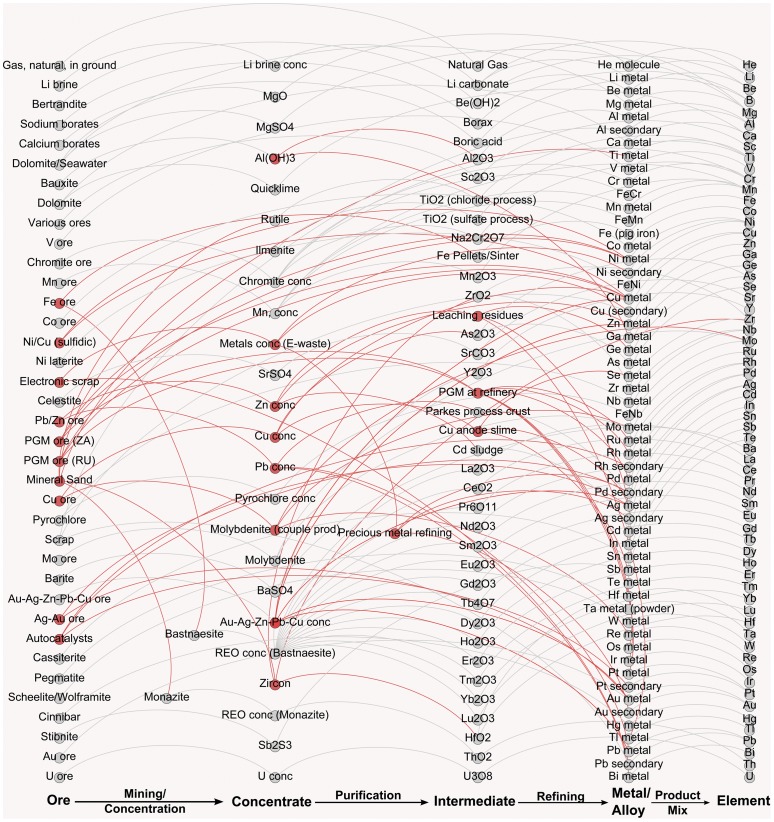
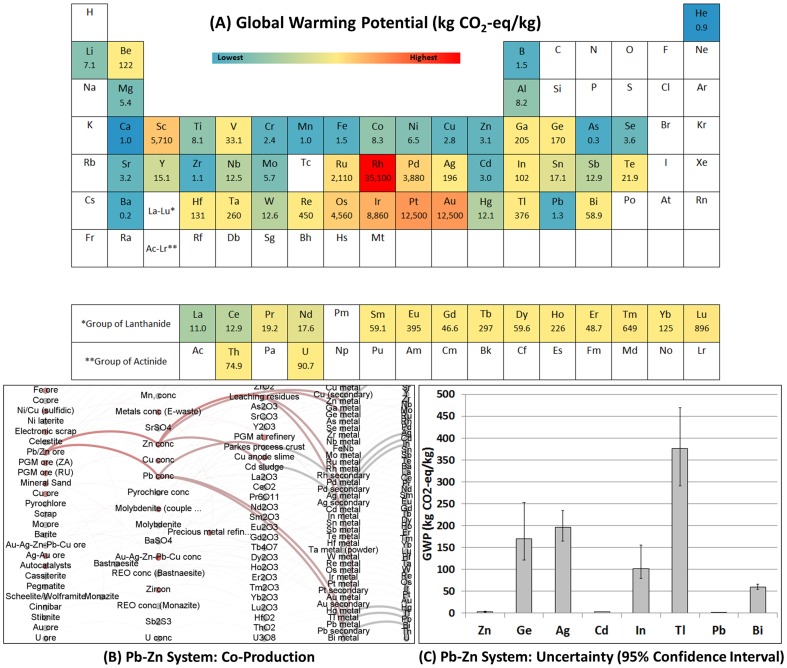
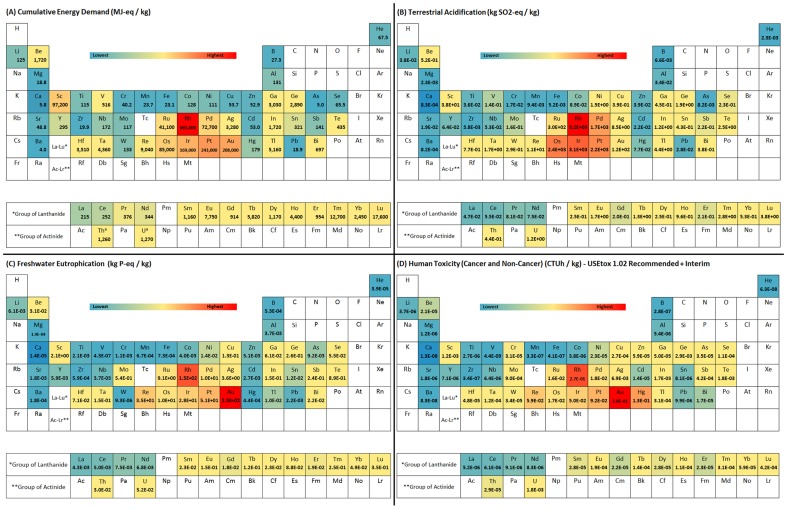
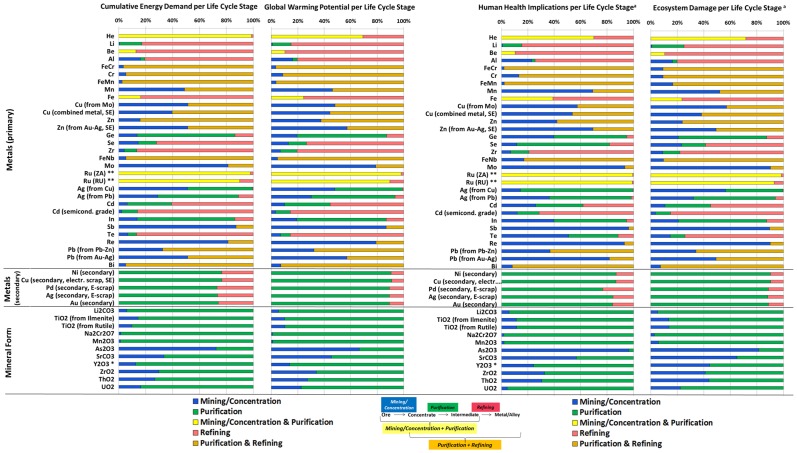
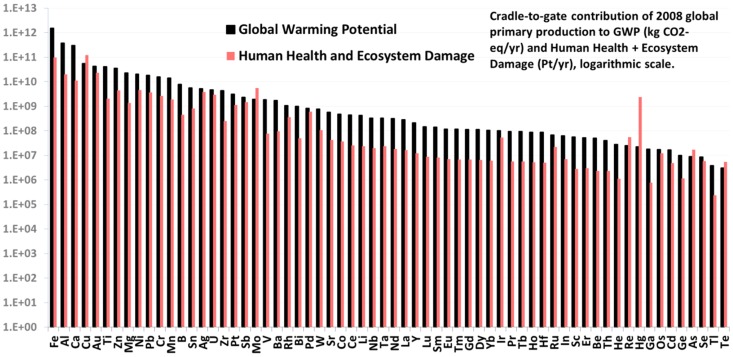
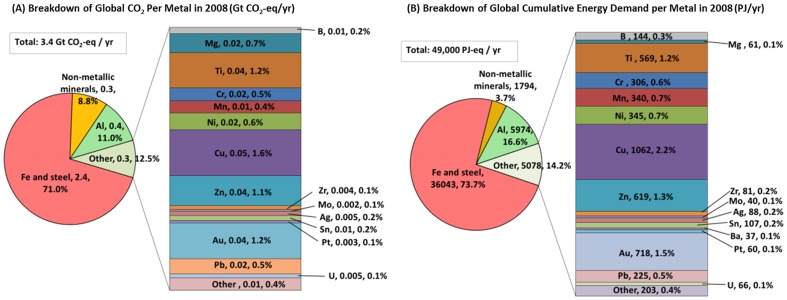
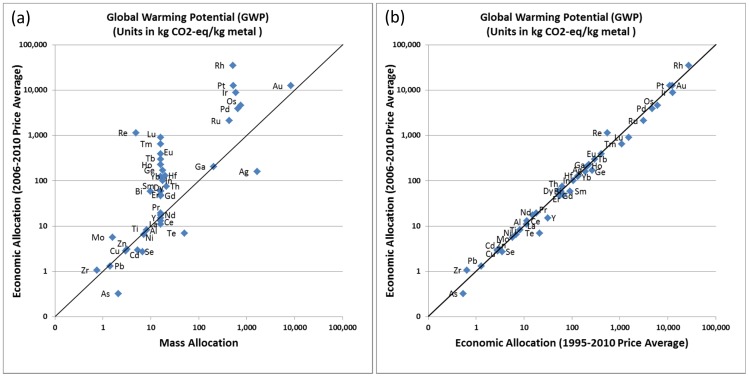
We have assembled extensive information on the cradle-to-gate environmental burdens of 63 metals in their major use forms, and illustrated the interconnectedness of metal production systems. Related cumulative energy use, global warming potential, human health implications and ecosystem damage are estimated by metal life cycle stage (i.e., mining, purification, and refining). For some elements, these are the first life cycle estimates of environmental impacts reported in the literature. We show that, if compared on a per kilogram basis, the platinum group metals and gold display the highest environmental burdens, while many of the major industrial metals (e.g., iron, manganese, titanium) are found at the lower end of the environmental impacts scale. If compared on the basis of their global annual production in 2008, iron and aluminum display the largest impacts, and thallium and tellurium the lowest. With the exception of a few metals, environmental impacts of the majority of elements are dominated by the purification and refining stages in which metals are transformed from a concentrate into their metallic form. Out of the 63 metals investigated, 42 metals are obtained as co-products in multi output processes. We test the sensitivity of varying allocation rationales, in which the environmental burden are allocated to the various metal and mineral products, on the overall results. Monte-Carlo simulation is applied to further investigate the stability of our results. This analysis is the most comprehensive life cycle comparison of metals to date and allows for the first time a complete bottom-up estimate of life cycle impacts of the metals and mining sector globally. We estimate global direct and indirect greenhouse gas emissions in 2008 at 3.4 Gt CO2-eq per year and primary energy use at 49 EJ per year (9.5% of global use), and report the shares for all metals to both impact categories.
Overview
The claims and statistics of this paper haven’t been checked yet.
Run the check — free, no account needed. It reads the open-access text and checks the sources it cites.
Integrity signals
Registry
Cites
Statistics
Figures
Verification
Claims the paper makes
The claims and statistics of this paper haven’t been checked yet.
Run the check — free, no account needed. It reads the open-access text and checks the sources it cites.
Claims other papers make about this one
Each is checked against this paper’s own text: does it say what the citing paper says it does?
The source backs part of the claim, not all of it — or backs it for a different population, condition or comparison.
In the citing paper
“The high natural abundance of iron results in much lower market prices than tin, and its production rates are high and stable and have a low environmental impact.”
From Iron( ii ) carboxylates and simple carboxamides: an inexpensive and modular catalyst system for the synthesis of PLLA and PLLA-PCL block copolymers (2023) · cites this paper as [41]
Experimental — accuracy not yet measuredIn the citing paper
“Such downcycling constitutes itself an energy loss: pig iron production causes emissions of 1.5 kg CO 2 equivalent per kg iron, while alloying elements range from similar (1.9 kg CO 2 /kg metal for ferrochromium) to much higher (11 kg CO 2 /kg nickel from sulfide ores) [170], so that the emissions associated with highly alloyed steel can be significantly higher than those of construction steel.”
From Material efficiency strategies to reducing greenhouse gas emissions associated with buildings, vehicles, and electronics—a review (2019) · cites this paper as [170]
Self-check
Percentages, sums and reported differences re-computed from the paper’s own numbers.
The self-check needs the paper’s full text.
Citations
Cites
Gephi: An Open Source Software for Exploring and Manipulating Networks
Bastian, M., Heymann, S., & Jacomy, M. (2009) · Proceedings of the International AAAI Conference on Web and Social Media · doi:10.1609/icwsm.v3i1.13937 · Cited by 11,675
Thring, M. W. (1977) · Electronics and Power · doi:10.1049/ep.1977.0180 · Cited by 7,338
Klüppel, H.-J. (2005) · The International Journal of Life Cycle Assessment · doi:10.1065/lca2005.03.001 · Cited by 4,650
KIRK-OTHMER ENCYCLOPEDIA OF CHEMICAL TECHNOLOGY
(1982) · Chemical & Engineering News · doi:10.1021/cen-v060n014.ibc · Cited by 2,410
Extractive Metallurgy of Rare Earths
Gupta, C. K., & Krishnamurthy, N. (2000) · Taylor & Francis eBooks · doi:10.4324/9780203413029 · Cited by 830
Assessing the environmental impact of metal production processes
Norgate, T. E., Jahanshahi, S., & Rankin, W. J. (2006) · Journal of Cleaner Production · doi:10.1016/j.jclepro.2006.06.018 · Cited by 726
Global Lithium Availability: A Constraint for Electric Vehicles?
Gruber, P. W., Medina, P. A., Keoleian, G. A., Kesler, S. E., Everson, M. P., & Wallington, T. J. (2011) · Journal of Industrial Ecology · doi:10.1111/j.1530-9290.2011.00359.x · Cited by 620
Methodology of Metal Criticality Determination
Graedel, T. E., Barr, R., Chandler, C., Chase, T. C., Choi, J., Christoffersen, L., Friedlander, E., Henly, C., Jun, C., Nassar, N. T., et al. (2011) · Environmental Science & Technology · doi:10.1021/es203534z · Cited by 610
An Environmental Analysis of Machining
Dahmus, J. B., & Gutowski, T. G. (2004) · ASME International Mechanical Engineering Congress and Exposition (IMECE) · doi:10.1115/imece2004-62600 · Cited by 582
Tracking Industrial Energy Efficiency and CO2 Emissions
International Energy Agency (2007) · OECD eBooks · doi:10.1787/9789264030404-en · Cited by 553
Research works printed but not linked: 5
- Graedel TE, Allwood J, Birat J-P, Buchert M, Hagelüken C, <etal>et al</etal>.. (2011) What Do We Know About Metal Recycling Rates? J Ind Ecol <volume>15</volume>: : 355–366. Available: http://onlinelibrary.wiley.com/doi/10.1111/j.1530-9290.2011.00342.x/abstract. Accessed 1 October 2012. · DOI
- Gupta CK (2004) Chemical Metallurgy. Wiley-VCH Verlag GmbH & Co. KGaA. Available: http://onlinelibrary.wiley.com/doi/10.1002/3527602003.fmatter/summary. Accessed 24 July 2013. · DOI
- NRC (2008) Minerals, Critical Minerals, and the U.S. Economy..Washington, D.C: The National Academies Press. 264 p.
- Ashby MF, Miller A, Rutter F, Seymour C, Wegst UGK (2012) CES EduPack for Eco Design — A White Paper. Cambridge, UK: Granta Design Ltd.
- USBM (1985) Mineral Facts and Problems: 1985 Edition. Washington D.C.: U.S. Department of the Interior, U.S. Bureau of Mines.
Cited by
Sorted by citations
A sustainable wood biorefinery for low–carbon footprint chemicals production
Liao, Y., Koelewijn, S.-F., den Bossche, G. V., Aelst, J. V., den Bosch, S. V., Renders, T., Navaré, K., Nicolaï, T., Aelst, K. V., Maesen, M., et al. (2020) · Science · doi:10.1126/science.aau1567 · Cited by 1,136
C–H Activation: Toward Sustainability and Applications
Dalton, T., Faber, T., & Glorius, F. (2021) · ACS Central Science · doi:10.1021/acscentsci.0c01413 · Cited by 849
Criticality of metals and metalloids
Graedel, T. E., Harper, E. M., Nassar, N. T., Nuss, P., & Reck, B. K. (2015) · Proceedings of the National Academy of Sciences · doi:10.1073/pnas.1500415112 · Cited by 770
Self-citationReview of the Decomposition of Ammonia to Generate Hydrogen
Lucentini, I., Garcia, X., Vendrell, X., & Llorca, J. (2021) · Industrial & Engineering Chemistry Research · doi:10.1021/acs.iecr.1c00843 · Cited by 711
A review on metal hydride materials for hydrogen storage
Klopčič, N., Grimmer, I., Winkler, F., Sartory, M., & Trattner, A. (2023) · Journal of Energy Storage · doi:10.1016/j.est.2023.108456 · Cited by 666
Metadata
- Authors
- Nuss, P., & Eckelman, M. J.
- Affiliations
- Yale University (US)
- Northeastern University (US)
- Corresponding author
- Nuss, Philip
- Venue
- PLoS ONE
- Publisher
- Public Library of Science (PLoS)
- Published
- 2014-07-07
- Volume
- 9
- Issue
- 7
- Pages
- e101298
- ISSN
- 1932-6203 (ISSN-L)
- PMC
- PMC4085040
- OpenAlex
- W2046102090
- Cited by
- 777
- References
- 79
- Citations by year
- 2026: 121 · 2025: 116 · 2024: 89 · 2023: 75 · 2022: 80 · 2021: 85 · 2020: 52 · 2019: 42 · 2018: 38 · 2017: 36 · 2016: 26 · 2015: 12 · 2014: 5
- FWCI
- 20.22
- Type
- journal article
- Language
- en
- Open access
- gold
- doi.org
- Locations
- PLoS ONE (publishedVersion, cc-by)
- Europe PMC (PubMed Central) (publishedVersion, cc-by)
- PubMed Central (publishedVersion, cc-by)
- PubMed (publishedVersion)
- HAL (submittedVersion)
- DOAJ (DOAJ: Directory of Open Access Journals) (submittedVersion, cc-by-sa)
- Funders
- Yale University
- Topics
- Physical Sciences › Environmental Science › Environmental Engineering › Environmental Impact and Sustainability
- Physical Sciences › Environmental Science › Environmental Engineering › Sustainability and Ecological Systems Analysis
- Physical Sciences › Materials Science › Metals and Alloys › Extraction and Separation Processes
- Keywords
- metals, life cycle assessment, environmental impact, mining, metal purification, metal refining, global warming potential, greenhouse gas emissions, human health effects, ecosystem damage, coproducts, platinum group metals, gold, iron, aluminum, thallium, tellurium, primary energy consumption
- MeSH terms
- Carbon Dioxide, Environmental Monitoring, Humans, Metals, Minerals, Ecosystem, Global Warming
About these checks
Registry, retraction, Cites and statistics results are computed, not judged, with one exception: a printed reference that no index lists is read once by a model before it counts as a citation error. Claims are extracted by a model and kept only when their quote appears verbatim in the text; each cited source is then checked, with a model’s help, for whether it says what the claim relies on. Those verdicts can be wrong — read the claim’s quote and the cited source before relying on one.
Statistics and arithmetic are recomputed, not judged.
Confidence bands are shown only for fields calibrated on our annotated test set. None is calibrated yet, so no band is shown.
What counts as a claim ›How we measure confidence ›How we check this ›
Are you an author, or do you see a problem with this page? Request a review
