

Leucocyte Telomere Length and Risk of Type 2 Diabetes Mellitus: New Prospective Cohort Study and Literature-Based Meta-Analysis
Open accessThe DOI matches its Crossref record; 51 of the 51 references it cites were found in a registry or an index.
Abstract
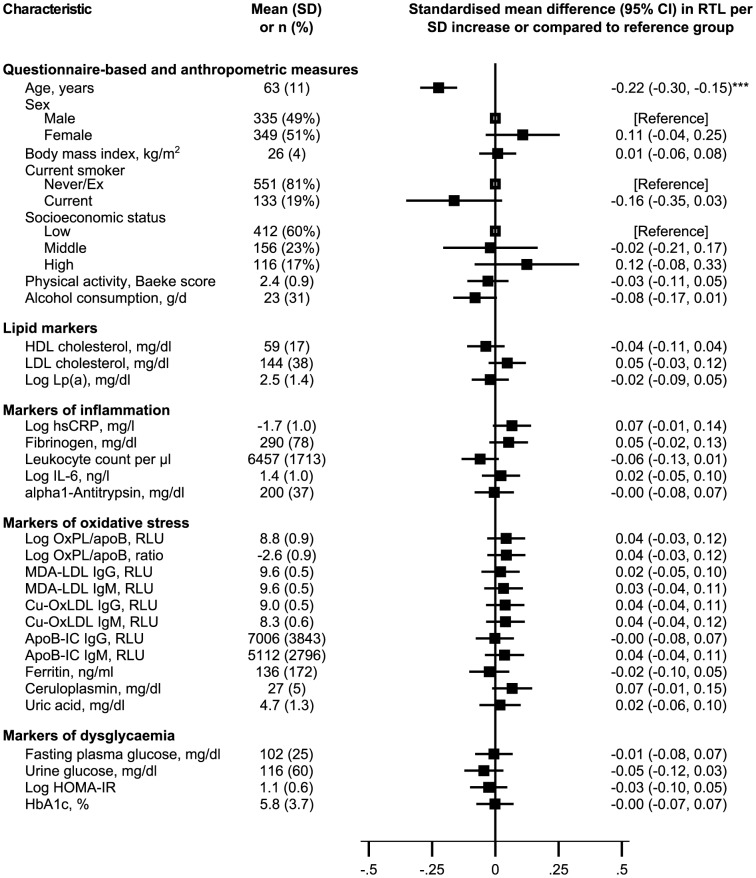
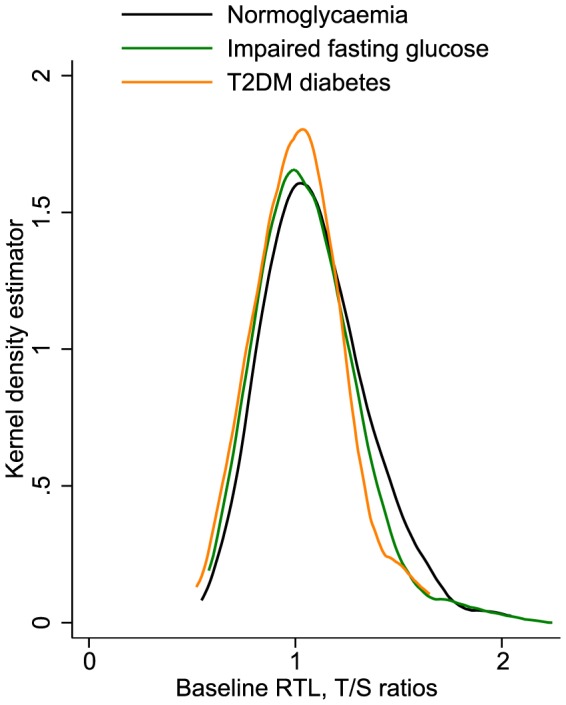
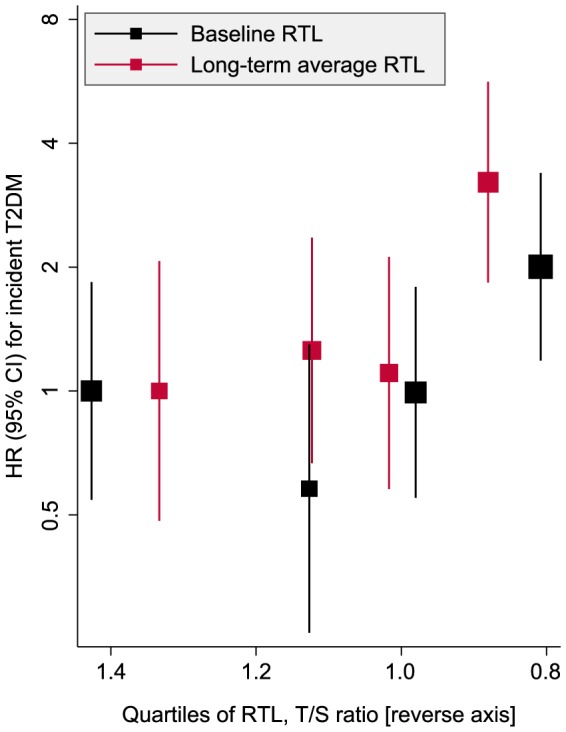
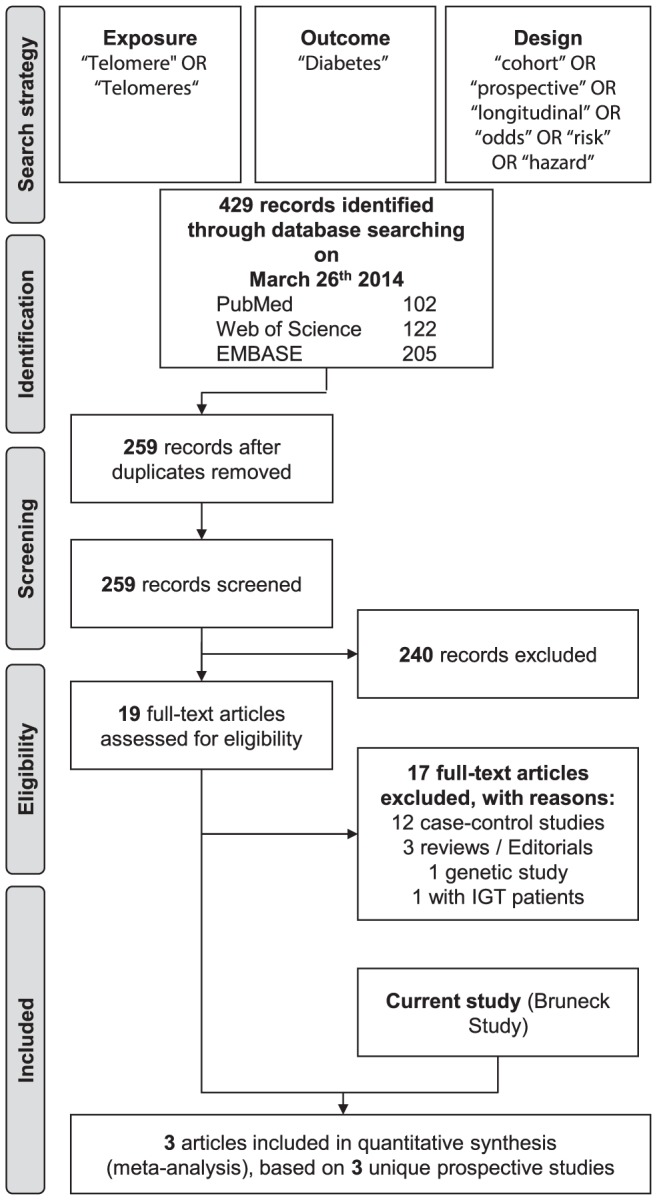
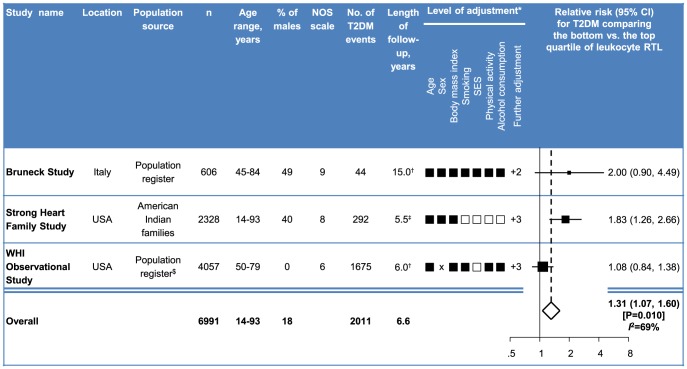
BACKGROUND: Short telomeres have been linked to various age-related diseases. We aimed to assess the association of telomere length with incident type 2 diabetes mellitus (T2DM) in prospective cohort studies. METHODS: Leucocyte relative telomere length (RTL) was measured using quantitative polymerase chain reaction in 684 participants of the prospective population-based Bruneck Study (1995 baseline), with repeat RTL measurements performed in 2005 (n = 558) and 2010 (n = 479). Hazard ratios for T2DM were calculated across quartiles of baseline RTL using Cox regression models adjusted for age, sex, body-mass index, smoking, socio-economic status, physical activity, alcohol consumption, high-density lipoprotein cholesterol, log high-sensitivity C-reactive protein, and waist-hip ratio. Separate analyses corrected hazard ratios for within-person variability using multivariate regression calibration of repeated measurements. To contextualise findings, we systematically sought PubMed, Web of Science and EMBASE for relevant articles and pooled results using random-effects meta-analysis. RESULTS: Over 15 years of follow-up, 44 out of 606 participants free of diabetes at baseline developed incident T2DM. The adjusted hazard ratio for T2DM comparing the bottom vs. the top quartile of baseline RTL (i.e. shortest vs. longest) was 2.00 (95% confidence interval: 0.90 to 4.49; P = 0.091), and 2.31 comparing the bottom quartile vs. the remainder (1.21 to 4.41; P = 0.011). The corresponding hazard ratios corrected for within-person RTL variability were 3.22 (1.27 to 8.14; P = 0.014) and 2.86 (1.45 to 5.65; P = 0.003). In a random-effects meta-analysis of three prospective cohort studies involving 6,991 participants and 2,011 incident T2DM events, the pooled relative risk was 1.31 (1.07 to 1.60; P = 0.010; I2 = 69%). CONCLUSIONS/INTERPRETATION: Low RTL is independently associated with the risk of incident T2DM. To avoid regression dilution biases in observed associations of RTL with disease risk, future studies should implement methods correcting for within-person variability in RTL. The causal role of short telomeres in T2DM development remains to be determined.
Overview
The claims and statistics of this paper haven’t been checked yet.
Free: it reads the open-access text and checks the first 5 claims that cite a source we can check. Create a free account to check every claim.
Integrity signals
Registry
Cites
Statistics
Figures
Verification
Claims the paper makes
The claims and statistics of this paper haven’t been checked yet.
Free: it reads the open-access text and checks the first 5 claims that cite a source we can check. Create a free account to check every claim.
Claims other papers make about this one
Each is checked against this paper’s own text: does it say what the citing paper says it does?
The cited source says what the claim attributes to it.
In the citing paper
“Short LTL in humans has been associated with serious medical illnesses with some consistency according to metaanalyses, including cardiovascular disease, diabetes, and cancer (D'Mello et al., 2014; Weischer et al., 2012 Willeit et al, 2014; Wentzensen et al, 2011).”
From Psychiatric disorders and leukocyte telomere length: Underlying mechanisms linking mental illness with cellular aging (2015) · cites this paper as Willeit et al, 2014
The cited source says what the claim attributes to it.
In the citing paper
“In addition to psychiatric and substance-related comorbidities, many serious comorbid medical illnesses may also be associated with decreased LTL (D'Mello et al., 2014; Weischer et al., 2012 Willeit et al, 2014; Wentzensen et al, 2011), and presumably this is independent of the effect of the psychiatric diagnosis.”
From Psychiatric disorders and leukocyte telomere length: Underlying mechanisms linking mental illness with cellular aging (2015) · cites this paper as Willeit et al, 2014
In the citing paper
“Both diseases were shown to be significantly more likely to occur in patients with shorter initial telomere lengths.”
From Markers of cellular senescence. Telomere shortening as a marker of cellular senescence (2016) · cites this paper as [55]
Self-check
Percentages, sums and reported differences re-computed from the paper’s own numbers.
The self-check needs the paper’s full text.
Citations
Cites
Measuring inconsistency in meta-analyses
Higgins, J. P. T., Thompson, S. G., Deeks, J. J., & Altman, D. G. (2003) · BMJ · doi:10.1136/bmj.327.7414.557 · Cited by 63,139 · cited 1×
“Heterogeneity between studies was quantified using the I(2) statistic and tested by a standard x(2) test [42].”
MethodBias in meta-analysis detected by a simple, graphical test
Egger, M., Smith, G. D., Schneider, M., & Minder, C. (1997) · BMJ · doi:10.1136/bmj.315.7109.629 · Cited by 56,722 · cited 1×
“Potential publication and small-study bias was formally assessed using Egger’s test [43].”
MethodA new mathematical model for relative quantification in real-time RT-PCR
Pfaffl, M. W. (2001) · Nucleic Acids Research · doi:10.1093/nar/29.9.e45 · Cited by 34,610
Friedewald, W. T., Levy, R. I., & Fredrickson, D. S. (1972) · Clinical Chemistry · doi:10.1093/clinchem/18.6.499 · Cited by 32,423 · cited 1×
“LDL cholesterol was estimated using the Friedewald equation [33].”
Method(2014) · Medical Entomology and Zoology · Cited by 17,633
Antihyperlipidemic and Biochemical Activities of Mcy Protein in Streptozotocin Induced Diabetic Rats
Marella, S., Maddirela, D. R., Badri, K. R., Jyothi Kumar, M. V., & Chippada, A. (2015) · Cellular Physiology and Biochemistry · doi:10.1159/000373954 · Cited by 5,938
The limited in vitro lifetime of human diploid cell strains
Hayflick, L. (1965) · Experimental Cell Research · doi:10.1016/0014-4827(65)90211-9 · Cited by 5,876 · cited 2×
“Telomeres shorten with each cellular division, accelerated by inflammation and oxidative stress, and, below a critical length, the apoptotic programme of the cell is induced [1,3].”
BackgroundA short questionnaire for the measurement of habitual physical activity in epidemiological studies
Baecke, J., Burema, J., & Frijters, J. (1982) · The American Journal of Clinical Nutrition · doi:10.1093/ajcn/36.5.936 · Cited by 3,945 · cited 1×
“Physical activity was assessed using the validated Baeke Score [30].”
MethodFollow-up report on the diagnosis of diabetes mellitus
The Expert Committee on the Diagnosis and Classification of Diabetes Mellitus* (2003) · Diabetes Care · doi:10.2337/diacare.26.11.3160 · Cited by 3,784 · cited 1×
“$7 mmol/l) or when the subjects had a clinical diagnosis of T2DM and received anti-diabetic treatment [37].”
BackgroundStructure and function of telomeres
Blackburn, E. H. (1991) · Nature · doi:10.1038/350569a0 · Cited by 3,596
Cited by
Items 101–200 of 209
Pavanello, S., Angelici, L., Hoxha, M., Cantone, L., Campisi, M., Tirelli, A. S., Vigna, L., Pesatori, A. C., & Bollati, V. (2018) · Frontiers in Endocrinology · doi:10.3389/fendo.2018.00309 · Cited by 22
Needham, B. L., Wang, X., Carroll, J., Barber, S., Sánchez, B. N., Seeman, T. E., & Roux, A. V. D. (2018) · Psychoneuroendocrinology · doi:10.1016/j.psyneuen.2018.12.007 · Cited by 21
“A number of studies have shown that leukocyte telomere length is associated with morbidity (e.g., Haycock et al., 2014; Willeit et al., 2014) and mortality (e.”
BackgroundModerate-to-severe obstructive sleep apnea is associated with telomere lengthening
Polonis, K., Somers, V. K., Becari, C., Covassin, N., Schulte, P. J., Druliner, B. R., Johnson, R., Narkiewicz, K., Boardman, L. A., & Singh, P. (2017) · American Journal of Physiology-Heart and Circulatory Physiology · doi:10.1152/ajpheart.00197.2017 · Cited by 23
Piplani, S., Alemao, N. N., Prabhu, M., Ambar, S., Chugh, Y., & Chugh, S. (2018) · Indian Heart Journal · doi:10.1016/j.ihj.2018.09.007 · Cited by 23
Gut-Derived Endotoxin and Telomere Length Attrition in Adults with and without Type 2 Diabetes
Al‐Daghri, N. M., Abdi, S., Sabico, S., Alnaami, A. M., Wani, K., Ansari, M. G. A., Khattak, M. N. K., Khan, N., Tripathi, G., Chrousos, G. P., et al. (2021) · Biomolecules · doi:10.3390/biom11111693 · Cited by 21
“Several previous studies to date have provided evidence for a relationship between TL and T2DM, a disease with a known higher rate of premature mortality [13,34,35], as well as it being noted that TL itself can provide prognostic information on the mortality risk of subjects with T2DM, which is also influenced by ethn…”
BackgroundNeedham, B. L., Hicken, M. T., Govia, I., Mitchell, C. M., & Abdou, C. M. (2017) · Biodemography and Social Biology · doi:10.1080/19485565.2017.1300520 · Cited by 18
“2014) and type 2 diabetes (Willeit et al. 2014), that disproportionately affect individuals from socially disadvantaged backgrounds (Adler and Rehkopf 2008).”
BackgroundLi, S., Yang, M., Carter, E. M., Schauer, J. J., Yang, X., Ezzati, M., Goldberg, M. S., & Baumgartner, J. (2019) · Environmental Health Perspectives · doi:10.1289/ehp4041 · Cited by 23
“…health outcomes, including all-cause mortality (Cawthon et al. 2003; Mons et al. 2017), cancer (Zhu et al. 2016), hypertension (Tellechea and Pirola 2017), diabetes (Willeit et al. 2014), coronary artery disease (Haycock et al. 2014), and chronic obstructive pulmonary disease (Rode et al. 2013).”
BackgroundIncreased Telomere Attrition After Renal Transplantation—Impact of Antimetabolite Therapy
Luttropp, K., Nordfors, L., McGuinness, D., Wennberg, L. M., Curley, H., Quasim, T., Genberg, H., Sandberg, J. T., Sönnerborg, I., Schalling, M., et al. (2016) · Transplantation Direct · doi:10.1097/txd.0000000000000629 · Cited by 19
“005 Homocysteine, μM 35 (24-46) 18 (14-20) <0.”
Kodali, H., & Borrell, L. N. (2021) · Annals of Epidemiology · doi:10.1016/j.annepidem.2021.07.013 · Cited by 30
Spigoni, V., Aldigeri, R., Picconi, A., Derlindati, E., Franzini, L., Haddoub, S., Prampolini, G., Vigna, G. B., Zavaroni, I., Bonadonna, R. C., et al. (2016) · Acta Diabetologica · doi:10.1007/s00592-016-0857-x · Cited by 20
Telomere length, telomerase activity, stress, and aging
Im, S., Mikhelson, V. M., & Spivak, D. L. (2016) · Advances in Gerontology · doi:10.1134/s2079057016010136 · Cited by 19
Mazidi, M., Banach, M., & Kengne, A. P. (2018) · European Journal of Clinical Nutrition · doi:10.1038/s41430-017-0065-y · Cited by 19
Zeng, J., Liu, H.-B., Ping, F., Li, W., & Li, Y. (2019) · Journal of Diabetes and its Complications · doi:10.1016/j.jdiacomp.2019.02.003 · Cited by 20
Liu, Y., Ma, C., Li, P., Ma, C., He, S., Ping, F., Zhang, H., Li, W., Xu, L., & Li, Y. (2020) · Oxidative Medicine and Cellular Longevity · doi:10.1155/2020/9256107 · Cited by 17
“Similar results were obtained in a European cohort [17].”
ResultOjeda‐Rodríguez, A., Rangel-Zúñiga, O. A., Larriva, A. P. A.-D., Gutierrez-Mariscal, F. M., Torres-Peña, J. D., Romero‐Cabrera, J. L., Podadera-Herreros, A., García-Fernández, H., Porras‐Pérez, E., Luque, R. M., et al. (2024) · Cardiovascular Diabetology · doi:10.1186/s12933-024-02175-5 · Cited by 17
Sillanpää, E., Törmäkangas, T., Rantanen, T., Kaprio, J. A., & Sipilä, S. (2016) · AGE · doi:10.1007/s11357-016-9898-x · Cited by 21
“Telomere length has shown a modest association with several risk factors (Haycock et al. 2014; Willeit et al. 2014) and various chronic diseases (Zhao et al.”
BackgroundYeap, B. B., Hui, J., Knuiman, M. W., Flicker, L. A., Divitini, M., Arscott, G. M., Twigg, S. M., Almeida, O. P., Hankey, G. J., Golledge, J., et al. (2020) · The Journals of Gerontology Series A · doi:10.1093/gerona/glaa190 · Cited by 17
Hyperglycemia attenuates the association between telomere length and age in Ukrainian population
Krasnienkov, D. S., Khalangot, M. D., Kravchenko, V. I., Kovtun, V. A., Gurianov, V. G., Chizhova, V. P., Korkushko, O. V., Shatylo, V. B., Kukharsky, V. M., & Vaiserman, A. M. (2018) · Experimental Gerontology · doi:10.1016/j.exger.2018.06.027 · Cited by 16
“A relationship between T2D and telomere length was evident in recent meta-analyses on this topic (D'Mello et al., 2015; Wang et al., 2016; Willeit et al., 2014; Zhao et al., 2013).”
Amin, V., Fletcher, J. M., Sun, Z., & Lu, Q. (2021) · SSM - Population Health · doi:10.1016/j.ssmph.2021.101018 · Cited by 21
“A short TL, usually assessed in blood leukocytes, is associated with adult morbidity (Müezzinler et al., 2013; Wentzensen et al., 2011; Willeit et al., 2014) and mortality (Wang et al.”
BackgroundSilva, J. C., Fantuzzi, G., Minshall, R. D., Wu, S., Oddo, V. M., & Koh, T. J. (2024) · Wound Repair and Regeneration · doi:10.1111/wrr.13200 · Cited by 18
“100 However, the impact of weathering on development and outcomes of chronic wounds remains to be elucidated.”
Wojcicki, J. M., Elwan, D., Lin, J., Blackburn, E. H., & Epel, E. S. (2018) · Metabolic Syndrome and Related Disorders · doi:10.1089/met.2017.0134 · Cited by 16
Telomere length: biological marker of cellular vitality, aging, and health-disease process
Teixeira, M. Z. (2021) · Revista da Associação Médica Brasileira · doi:10.1590/1806-9282.67.02.20200655 · Cited by 17
Resistance training enhances insulin suppression of endogenous glucose production in elderly women
Honka, M., Bucci, M., Andersson, J., Huovinen, V., Guzzardi, M. A., Sandboge, S., Savisto, N., Salonen, M. K., Badeau, R. M., Parkkola, R. K., et al. (2016) · Journal of Applied Physiology · doi:10.1152/japplphysiol.00950.2015 · Cited by 23
“Leukocyte telomere shortening has been associated with an increased risk of type 2 diabetes and cardiovascular disease (19, 53).”
BackgroundKamycheva, E., Goto, T., & Camargo, C. A. (2017) · Experimental Gerontology · doi:10.1016/j.exger.2017.01.003 · Cited by 16
“Our finding of a positive relation between LTL and socioeconomic status is confirmed by other recent studies (Revesz et al., 2016; Willeit et al., 2014).”
Francis, M., Lindrose, A. R., O’Connell, S. S., Tristano, R. I., McGarvey, C., & Drury, S. S. (2023) · SSM - Population Health · doi:10.1016/j.ssmph.2023.101380 · Cited by 16
García-Calzón, S., Moleres, A., Gómez‐Martínez, S., Díaz, L. E., Bueno, G., Campoy, C., Martínez, J. A., Marcos, A., Azcona, C., Zalba, G., et al. (2016) · Pediatric Obesity · doi:10.1111/ijpo.12136 · Cited by 17
AlDehaini, D. M. B., Al‐Bustan, S. A., Malalla, Z. H. A., Ali, M. E., Sater, M. S., & Giha, H. A. (2020) · Gene · doi:10.1016/j.gene.2020.145127 · Cited by 16
de Jaeger, C., Saskia, K., Voronska, E., Lamberti, C., Baramki, H., Beaudeux, J. L., & Cherin, P. (2024) · Nutrients · doi:10.3390/nu16172963 · Cited by 17
Hazardous air pollutants and telomere length in the Sister Study
Niehoff, N. M., Gammon, M. D., Keil, A. P., Nichols, H. B., Engel, L. S., Taylor, J. A., White, A. J., & Sandler, D. P. (2019) · Environmental Epidemiology · doi:10.1097/ee9.0000000000000053 · Cited by 15
Telomere length in patients with osteoarthritis: a systematic review and meta-analysis
Xie, H., Ma, Y., Shao, M., Kong, J., Zhou, T., Wang, F., Cai, G., Xu, S., & Pan, F. (2021) · Aging Clinical and Experimental Research · doi:10.1007/s40520-021-01944-6 · Cited by 14
Gürünlüoğlu, K., Demircan, M., Koç, A., Koçbıyık, A., Taşçı, A., Durmuş, K., Gürünlüoğlu, S., & Bag, H. G. (2019) · Journal of Burn Care & Research · doi:10.1093/jbcr/irz019 · Cited by 15
Chmelar, C., Jörres, R. A., Kronseder, A., Müller, A., Nowak, D., & Weigl, M. (2017) · Journal of Occupational and Environmental Medicine · doi:10.1097/jom.0000000000001102 · Cited by 14
Makino, N., Maeda, T., & Abe, N. (2019) · Canadian Journal of Physiology and Pharmacology · doi:10.1139/cjpp-2018-0568 · Cited by 12
“It was therefore thought to be no more shortened in LTL from all subjects, because that the tail ends of chromosomes cannot be replicated when cells divide and they become shorter with cellular aging as a result (Harley et al.1990; Willeit et al. 2014).”
BackgroundAssociation of Relative Telomere Length and LINE-1 Methylation with Autism but not with Severity
Salem, S. M., & Ashaat, E. A. (2023) · Journal of Autism and Developmental Disorders · doi:10.1007/s10803-023-05965-0 · Cited by 12
“80 n of extracted DNA was subjected to qPCR using HERA SYBR green master mix (Willow-fort, UK) and primers for telomere (Ujvari et al., 2012) and 36B4 (Willeit et al., 2014) (Primers sequences are listed in Table 2).”
MethodShortening of the leucocytes’ telomeres length in T2DM independent of age and telomerase activity
AlDehaini, D. M. B., Al‐Bustan, S. A., Ali, M. E., Malalla, Z. H. A., Sater, M. S., & Giha, H. A. (2020) · Acta Diabetologica · doi:10.1007/s00592-020-01550-4 · Cited by 14
Doroschuk, N. A., Postnov, A. Y., Doroschuk, A. D., Ryzhkova, A. I., Sinyov, V. V., Sazonova, M. D., Khotina, V. A., Orekhov, A. N., Sobenin, I. A., & Sazonova, M. A. (2021) · Toxicology Reports · doi:10.1016/j.toxrep.2021.02.024 · Cited by 11
“Such molecules damage DNA by oxidation of deoxyribose [26], this way contributing to shortening of telomeres [21], occurrence of mtDNA mutations and development of cardiovascular diseases [27–31], hypertension [32–36], neurodegenerative diseases [37], and also with such metabolic diseases as type 2 diabetes mellitus […”
BackgroundAxson, E. L., Peterson, K. E., Téllez‐Rojo, M. M., Goodrich, J. M., Meeker, J. D., Mercado‐García, A., Solano, M., & Needham, B. L. (2018) · Gender and the Genome · doi:10.1177/2470289718795177 · Cited by 13
Baliou, S., Apetroaei, M.-M., Hatzidaki, E., Kuzmin, S. V., Tzatzarakis, M. N., Arsene, A. L., Tsatsakis, A. M., & Ιωάννου, Π. (2025) · Life · doi:10.3390/life15060873 · Cited by 21
“Regarding the prognostic value of telomere shortening in the context of T2D, several prospective studies have demonstrated that telomere shortening can serve as a predictive biomarker for monitoring the onset of T2DM [205,217].”
Carvalho, B. G., Ribeiro, A., da Mota, J. C. N. L., Carvalho, L. M., & Nicoletti, C. F. (2025) · Nutrition Research · doi:10.1016/j.nutres.2025.06.010 · Cited by 10
Pérez-López, F. R., López-Baena, M. T., Ulloque‐Badaracco, J. R., & Benites-Zapata, V. A. (2023) · Reproductive Sciences · doi:10.1007/s43032-023-01306-9 · Cited by 9
Thirumoorthy, C., Rekha, R., Deepa, M., Ram, U., Shalu, D., Venkatesan, U., Srikumar, B. N., Anjana, R. M., Balasubramanyam, M., Mohan, V., et al. (2025) · Psychoneuroendocrinology · doi:10.1016/j.psyneuen.2025.107431 · Cited by 9
Günday, Ö. K., Erdoğan, M. Ö., Pehlivan, A., & Yılmazer, M. (2022) · Journal of Assisted Reproduction and Genetics · doi:10.1007/s10815-022-02577-y · Cited by 12
“Short telomeres are known to be associated with type 2 DM [7].”
BackgroundSurvival analysis with a random change-point
Lee, C. Y., & Wong, K. Y. (2023) · Statistical Methods in Medical Research · doi:10.1177/09622802231192946 · Cited by 10
Doroshchuk, N. A., Lankin, V. Z., Tikhaze, A. K., Хеймец, Г. И., Doroshchuk, A. D., Смирнова, М. Д., & Chazova, I. E. (2021) · Terapevticheskii arkhiv · doi:10.26442/00403660.2021.01.200588 · Cited by 8
“Действительно, нами и другими авторами показано, что уменьшение длины теломеров происходит как при ишемической болезни сердца (иБс) [5, 6], так и при сахарном диабете 2-го типа, являющемся фактором риска иБс и атеросклероза [7, 8].”
Gutmajster, E., Chudek, J. T., Auguściak-Duma, A., Szwed, M., Szybalska, A., Mossakowska, M., Puzianowska‐Kuźnicka, M., Więcek, A., & Sieroń, A. L. (2018) · Journal of Applied Genetics · doi:10.1007/s13353-018-0450-9 · Cited by 9
“Additionally, numerous studies have reported that the association between telomere attrition and both types of DM were correlated with the time of the disease duration (Willeit et al. 2014).”
BackgroundPregnancy by Assisted Reproductive Technology Is Associated with Shorter Telomere Length in Neonates
Minamoto, T., Nakayama, K., Ishibashi, T., Ishikawa, M., Nakamura, K., Yamashita, H., Shanta, K., Mahmud, H. M., Razia, S., Iida, K., et al. (2020) · International Journal of Molecular Sciences · doi:10.3390/ijms21249688 · Cited by 9
Telomeres do not always shorten over time in individuals with type 1 diabetes
Syreeni, A., Carroll, L. M., Mutter, S., Januszewski, A. S., Forsblom, C. M., Lehto, M. J., Groop, P., & Jenkins, A. J. (2022) · Diabetes Research and Clinical Practice · doi:10.1016/j.diabres.2022.109926 · Cited by 8
Ageing, Metabolic Dysfunction, and the Therapeutic Role of Antioxidants
Santos, A. L., & Sinha, S. (2023) · Sub-cellular biochemistry/Subcellular biochemistry · doi:10.1007/978-3-031-26576-1_15 · Cited by 8
Leucocyte Telomere Length and Glucose Tolerance Status in Mixed-Ancestry South Africans
Weale, C. J., Davison, G. M., Hon, G. M., Kengne, A. P., Erasmus, R. T., & Matsha, T. E. (2019) · Cells · doi:10.3390/cells8050464 · Cited by 8
“As a result, the telomere length is an indicator of biological aging [21], as well as age-related disorders, such as type 2 diabetes [6,13,22].”
BackgroundTelomeres, Aging, and Nutrition
Dhillon, V. S., Bull, C. F., & Fenech, M. F. (2016) · Elsevier eBooks · doi:10.1016/b978-0-12-801816-3.00010-8 · Cited by 11
Sharaf, R., Jin, D. X., Grady, J. P., Napier, C. E., Ebot, E. M., Frampton, G. M., Albacker, L. A., Thomas, D. M., & Montesion, M. (2023) · npj Genomic Medicine · doi:10.1038/s41525-023-00369-6 · Cited by 9
“…studies where healthy non-diabetic participants were followed up for years, those with a lower telomere length at baseline were more likely to develop diabetes, with one study reporting a hazard ratio of 2.0 when comparing participants in the bottom vs top quartile of telomere length 68 – 70 .”
BackgroundInfluentialLi, R., Wang, J., Wang, Y., Lin, X., Sun, C., & Xu, L. (2024) · Environmental Pollution · doi:10.1016/j.envpol.2024.123309 · Cited by 6
Modifiable Factors Influencing Telomere Length and Aging
Fyhrquist, F., & Saijonmaa, O. J. (2016) · Oxidative stress in applied basic research and clinical practice · doi:10.1007/978-3-319-33486-8_4 · Cited by 6
AL-Thuwaini, T. M. (2021) · Journal of Diabetes & Metabolic Disorders · doi:10.1007/s40200-021-00835-x · Cited by 9
VanEtten, S. L., Bonner, M. R., Ren, X., Birnbaum, L. S., Kostyniak, P. J., Wang, J., & Olson, J. R. (2020) · Toxicology and Applied Pharmacology · doi:10.1016/j.taap.2020.115264 · Cited by 7
Cancello, R., Rey, F., Carelli, S., Cattaldo, S., Fontana, J. M., Goitre, I., Ponzo, V., Merlo, F. D., Zuccotti, G., Bertoli, S., et al. (2022) · Nutrients · doi:10.3390/nu14204293 · Cited by 5
Proteomic Mendelian randomization to identify protein biomarkers of telomere length
Zhao, J., Yang, K., Lu, Y., Zhou, L., Fu, H., Feng, J., & Wu, J. (2024) · Scientific Reports · doi:10.1038/s41598-024-72281-7 · Cited by 8
Song, L., Wu, M., Wang, L., Bi, J., Cao, Z., Xu, S., Tian, Y., Xiong, C., & Wang, Y. (2022) · Environmental Science and Pollution Research · doi:10.1007/s11356-022-19977-3 · Cited by 6
Teixeira, M. Z. (2021) · Homeopathy · doi:10.1055/s-0041-1726008 · Cited by 7
Endén, K., Tainio, J., Hou, M., Suominen, A. M., Pakarinen, M. P., Huang, T., Söder, O., Jalanko, H., Jahnukainen, K., & Jahnukainen, T. (2019) · Pediatric Transplantation · doi:10.1111/petr.13550 · Cited by 4
Characteristics of salivary telomere length shortening in preterm infants
Schneper, L. M., Drake, A. J., Dunstan, T., Kotenko, I., Notterman, D. A., & Piyasena, C. (2023) · PLoS ONE · doi:10.1371/journal.pone.0280184 · Cited by 6
Gardener, S. L., & Rainey‐Smith, S. R. (2021) · Elsevier eBooks · doi:10.1016/b978-0-12-817990-1.00048-2 · Cited by 6
Lan, B., Bai, Y., Chang, X., & Zhang, X. (2022) · Frontiers in Endocrinology · doi:10.3389/fendo.2022.1035017 · Cited by 4
Lin, Y., Zhu, Y., Wu, J., Hinkle, S. N., Rawal, S., Han, J., Weir, N. L., Tsai, M. Y., & Zhang, C. (2019) · Epidemiology · doi:10.1097/ede.0000000000001081 · Cited by 5
Telomeres and Cellular Senescence in Metabolic and Endocrine Diseases
Matsumoto, R., & Takahashi, Y. (2016) · InTech eBooks · doi:10.5772/64759 · Cited by 5
“[74] also reported the similar results of prospective cohort study of healthy subjects.”
ResultAlam, R., & Kim, D.-K. (2020) · Toxicology Reports · doi:10.1016/j.toxrep.2020.10.011 · Cited by 3
Tariq, J. A., Mandokhail, K., Sajjad, N., Hussain, A., JAVAID, H., Rasool, A., Sadaf, H., Javaid, S., & Durrani, A. S. (2024) · Medicina · doi:10.3390/medicina60050698 · Cited by 8
Usefulness of the ECORE-BF Scale to Determine Atherogenic Risk in 386,924 Spanish Workers
Arroyo, M. M., Gallegos, I. R., López‐González, Á. A., Herrero, M. T. V., Vallejos, D., Sastre-Alzamora, T., & Ramírez‐Manent, J. I. (2024) · Nutrients · doi:10.3390/nu16152434 · Cited by 4
“However, given the sample size, we believe that excluding these groups does not significantly affect the results.”
BackgroundVenegas, M. L. M., Quiccione, M. S., Sharma, S., Gianfagna, F., Bracone, F., Domenico, P. D., Tirozzi, A., Cerletti, C., Donati, M. B., de Gaetano, G., et al. (2026) · International Journal of Molecular Sciences · doi:10.3390/ijms27073019 · Cited by 2
Is Depression Associated With Accelerated Aging? Mechanisms and Implications
Lindqvist, D., Simon, N. M., & Wolkowitz, O. M. (2019) · Elsevier eBooks · doi:10.1016/b978-0-12-813333-0.00019-6 · Cited by 4
Sperm Telomere Length in Men with Normal and Abnormal semen Parameters. A Pilot Study
Boniewska‐Bernacka, E. (2019) · Biomedical Journal of Scientific & Technical Research · doi:10.26717/bjstr.2019.21.003559 · Cited by 3
“Faster telomere shortening is associated with a higher risk of developing certain diseases, such as diabetes, atherosclerosis and cancers [6-8].”
BackgroundWojcicki, J. M., Lustig, R. H., Jacobs, L. M., Mason, A. E., Hartman, A. R., Leung, C. W., Stanhope, K. L., Lin, J., Schmidt, L. A., & Epel, E. S. (2021) · Current Developments in Nutrition · doi:10.1093/cdn/nzab084 · Cited by 7
“Previous longitudinal studies have found that shorter LTL is predictive of incident diabetes mellitus (7, 8) and cardiovascular disease (9).”
BackgroundLongueur des télomères : de la sénescence cellulaire aux trajectoires du vieillissement humain
Benetos, A. (2022) · Bulletin de l Académie Nationale de Médecine · doi:10.1016/j.banm.2022.02.018 · Cited by 4
Association between aortic telomere length and cardiac post-transplant allograft function
Dlouhá, D., Vymětalová, J., Hubacek, J. A., Lánská, V., & Málek, I. (2019) · International Journal of Cardiology · doi:10.1016/j.ijcard.2019.05.006 · Cited by 2
Aguayo, L., Ogolsky, B. G., Terán-García, M., Piñeros-Leaño, M., Wiley, A. R., Lin, J., Aguirre-Pereyra, R., & Schwingel, A. (2021) · Comprehensive Psychoneuroendocrinology · doi:10.1016/j.cpnec.2021.100029 · Cited by 3
Burke, K., Zhou, X., Wang, Y., & Wei, H. (2021) · OBM Geriatrics · doi:10.21926/obm.geriatr.2104184 · Cited by 1
“Further epidemiological studies indicate that short telomeres in humans are a risk factor for common diseases such as hypertension [20], atherosclerosis [21], cardiovascular disease [21], stroke [21, 24], diabetes type 2 [24, 25], arthritis [24], osteoporosis [24], cataracts [24], cancer [21, 26], and overall mortalit…”
BackgroundSocial Interactions and Cell Aging Dynamics in Postpartum Women
Houminer-Klepar, N., Bord, S., Epel, E. S., Lin, J., Sagi, S., & Baron‐Epel, O. (2025) · Biological Research For Nursing · doi:10.1177/10998004251397544 · Cited by 3
“Physiologically, shorter telomeres are associated with increased cardiovascular risk (Haycock et al., 2014), type 2 diabetes (Willeit et al., 2014) and some types of cancer (Wentzensen et al., 2011) and psychologically, various psychosocial stressors have been linked to telomere attrition (Oliveira…”
Azar, P. S., Akhlaghi, S., Shariat‐Madar, Z., & Mahdi, F. (2026) · Biomolecules · doi:10.3390/biom16040535 · Cited by 2
“Telomere shortening is strongly linked to elevated risk of developing nu‑ merous age‑associated conditions comprising CVDs [135,136], T2DM [137], and liver dis‑ eases [138].”
Telomere Dynamics and Aging Related Diseases
Toupance, S., & Bénétos, A. (2019) · Cambridge University Press eBooks · doi:10.1017/9781316677018.007 · Cited by 1
A Biopsychosocial Framework to Examine Risk for Type 2 Diabetes in Asian Pacific Islander Immigrants
Connor, J., & Janusek, L. W. (2021) · Research and theory for nursing practice · doi:10.1891/rtnp-d-19-00132 · Cited by 1
Giha, H. A., Joatar, F. E., AlDehaini, D. M. B., Malalla, Z. H. A., Ali, M. E., & Qarni, A. A. A. (2022) · Hormone Molecular Biology and Clinical Investigation · doi:10.1515/hmbci-2021-0063 · Cited by 2
An Overview of Intracytoplasmic Sperm Injection (ICSI): Its Development and Popularity
Öztürk, A. E., Korkmaz, O., Bucak, M. N., Kalyan, E. Y., & Topraggaleh, T. R. (2023) · Özgür Yayınları eBooks · doi:10.58830/ozgur.pub124.c546 · Cited by 1
Duque, A., Lin, J., Jelliffe‐Pawlowski, L. L., Coleman‐Phox, K., Rand, L., & Wojcicki, J. M. (2025) · Pediatric Obesity · doi:10.1111/ijpo.70034 · Cited by 1
“16 However, LTL at birth may be predictive of future disease development as meta-analyses from adult studies have suggested that LTL is predictive of incident diabetes mellitus 17 and cardiovascular disease.”
Długość telomerów – nowy biomarker w medycynie
Kozłowska, A., Mikołajczyk, A., & Pawlas, N. (2015) · Medycyna Środowiskowa - Environmental Medicine
Dietary Patterns in Aging and Disease
Dreher, M. L. (2018) · Springer eBooks · doi:10.1007/978-3-319-59180-3_2
Psychosomatic Medicine and Consultation-Liaison Psychiatry in the United States
Leigh, H. (2019) · Springer eBooks · doi:10.1007/978-3-030-12584-4_23 · Cited by 1
Demographic and psychological factors in type 2 diabetes risk and progression
Panagi, L. (2020) · UCL Discovery (University College London) · doi:10.13140/rg.2.2.10768.93444 · Cited by 1
An Interactive Graphics Program for Studying Models of Kinetic Chemical Systems
Groner, G. F., Berman, R. A., & Heirschfeldt, R. M. (1969)
Savage, S. A. (2018) · Faculty Opinions – Post-Publication Peer Review of the Biomedical Literature · doi:10.3410/f.732012039.793545193
Shay, J. W. (2016) · Faculty Opinions – Post-Publication Peer Review of the Biomedical Literature · doi:10.3410/f.726327765.793521663
Ishino, F. A. M., Rowan, C., Villalobos, K., Rajbhandari‐Thapa, J., & Williams, F. (2022) · International Journal of Environmental Research and Public Health · doi:10.3390/ijerph191711069 · Cited by 1
“Meta-analyses of prospective studies provide evidence that TL is inversely associated with chronic diseases such as cardiovascular disease [4], diabetes [5], and all-cause mortality [6,7].”
Backgroundde Jaeger, Kruiskamp, Voronska, Lamberti, Baramki, Beaudeux, & Cherin (2022) · Research Square · doi:10.21203/rs.3.rs-2206669/v1
Longueur des télomères : de la sénescence cellulaire aux trajectoires du vieillissement humain
Bénétos, A. (2022) · HEGEL - HEpato-GastroEntérologie Libérale · doi:10.3917/heg.123.0269 · Cited by 2
Berezutskiy, M. A., Дурнова, Н. А., Романтеева, Ю. В., Шереметьева, А. С., Komarova, E. E., Matvienko, U. A., & Zenina, I. V. (2022) · Современные проблемы науки и образования · doi:10.17513/spno.32108
Dirican, E., & Kaya, Y. (2023) · Çukurova medical journal (Online)/Çukurova medical journal · doi:10.17826/cumj.1238482
Tüberkülozda İlaç Direnci ve Dirençli Tüberkülozda Yeni Alternatifler: Eflüks Pompa İnhibitörleri
Kaya, H. (2023) · Özgür Yayınları eBooks · doi:10.58830/ozgur.pub124.c549
Shelterin Proteinleri: Telomerlerin Koruyucu Kalkanı
Bedir, M. D., & Bakır, D. (2023) · Özgür Yayınları eBooks · doi:10.58830/ozgur.pub124.c686
Orhan, Z. (2023) · Özgür Yayınları eBooks · doi:10.58830/ozgur.pub124.c548
Association Analysis of Telomere Length and Vision in a Large Community-Based Survey
Zhang, B., & Zhao, Y. (2024) · Ophthalmic Epidemiology · doi:10.1080/09286586.2024.2422349
Lyu, T., Wang, J.-Y., Tan, J., Yang, Y., Wang, Y., Zhao, J., Qing, P., Wu, L., & Wang, X.-J. (2024) · Medicine · doi:10.1097/md.0000000000040407
Metadata
- Authors
- Willeit, P., Raschenberger, J., Heydon, E. E., Tsimikas, S., Haun, M., Mayr, A., Weger, S., Witztum, J. L., Butterworth, A. S., Willeit, J., Kronenberg, F., & Kiechl, S.
- Affiliations
- Innsbruck Medical University (AT)
- University of Cambridge (GB)
- University of California San Diego (US)
- Krankenhaus Bruneck (IT)
- Corresponding author
- Willeit, Peter
- Kiechl, Stefan
- ORCID
- Venue
- PLoS ONE
- Publisher
- Public Library of Science (PLoS)
- Published
- 2014-11-12
- Volume
- 9
- Issue
- 11
- Pages
- e112483
- ISSN
- 1932-6203 (ISSN-L)
- PMC
- PMC4229188
- OpenAlex
- W2129880677
- Cited by
- 211
- References
- 51
- Citations by year
- 2026: 7 · 2025: 9 · 2024: 11 · 2023: 15 · 2022: 12 · 2021: 19 · 2020: 21 · 2019: 27 · 2018: 26 · 2017: 17 · 2016: 33 · 2015: 13
- FWCI
- 13.83
- Type
- journal article
- Language
- en
- Open access
- gold
- doi.org
- Locations
- PLoS ONE (publishedVersion, cc-by)
- Europe PMC (PubMed Central) (publishedVersion, cc-by)
- PubMed Central (publishedVersion, cc-by)
- PubMed (publishedVersion)
- RePEc: Research Papers in Economics (submittedVersion)
- DOAJ (DOAJ: Directory of Open Access Journals) (submittedVersion, cc-by-sa)
- Figshare (submittedVersion, cc-by)
- Funders
- National Institute for Health and Care Research (NF-SI-0512-10165)
- British Heart Foundation (RG/08/014/24067)
- Landes Tirols
- Provincia autonoma di Bolzano - Alto Adige
- Medical Research Council (MR/L003120/1)
- Topics
- Life Sciences › Biochemistry, Genetics and Molecular Biology › Cell Biology › Telomeres, Telomerase, and Senescence
- Life Sciences › Biochemistry, Genetics and Molecular Biology › Genetics › Genetic Associations and Epidemiology
- Health Sciences › Medicine › Endocrinology, Diabetes and Metabolism › Adipokines, Inflammation, and Metabolic Diseases
- Keywords
- type 2 diabetes, leukocyte telomere length, diabetes risk, regression dilution bias, within-person variability, Bruneck Study, age-related diseases
- MeSH terms
- Adult, Age Factors, Aged, Alcohol Drinking, C-Reactive Protein, Diabetes Mellitus, Type 2, Female, Humans, Leukocytes, Cholesterol, HDL, Male, Middle Aged, Motor Activity, Prospective Studies, Risk Factors, Sex Factors, Social Class, Body Mass Index, Proportional Hazards Models, Telomere, Waist-Hip Ratio, Telomere Shortening
About these checks
Registry, retraction, Cites and statistics results are computed, not judged, with one exception: a printed reference that no index lists is read once by a model before it counts as a citation error. Claims are extracted by a model and kept only when their quote appears verbatim in the text; each cited source is then checked, with a model’s help, for whether it says what the claim relies on. Those verdicts can be wrong — read the claim’s quote and the cited source before relying on one.
Statistics and arithmetic are recomputed, not judged.
Confidence bands are shown only for fields calibrated on our annotated test set. None is calibrated yet, so no band is shown.
What counts as a claim ›How we measure confidence ›How we check this ›
Are you an author, or do you see a problem with this page? Request a review
Data sources
Bibliographic data: Semantic Scholar, OpenAlex, Crossref.
Contains information from the Semantic Scholar Academic Graph Datasets, made available under the ODC Attribution License (ODC-BY 1.0).
Semantic Scholar’s data is described in: Kinney, R., et al. (2023). The Semantic Scholar Open Data Platform. arXiv:2301.10140.
