

Leucocyte Telomere Length and Risk of Type 2 Diabetes Mellitus: New Prospective Cohort Study and Literature-Based Meta-Analysis
Open accessThe DOI matches its Crossref record; 51 of the 51 references it cites were found in a registry or an index.
Abstract
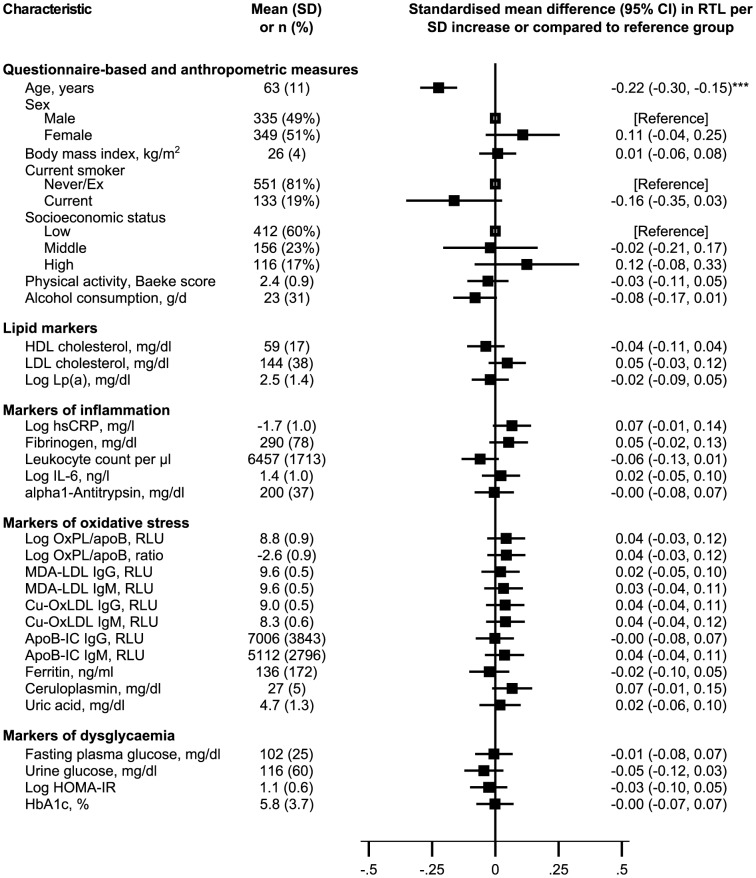
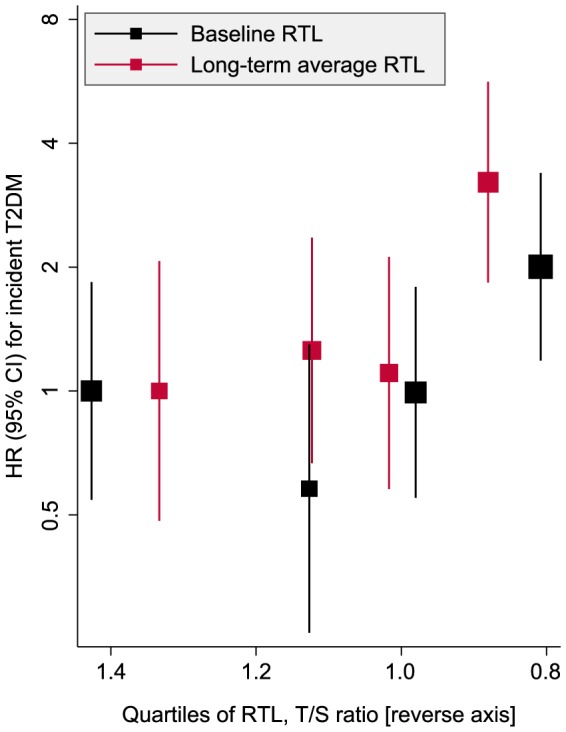
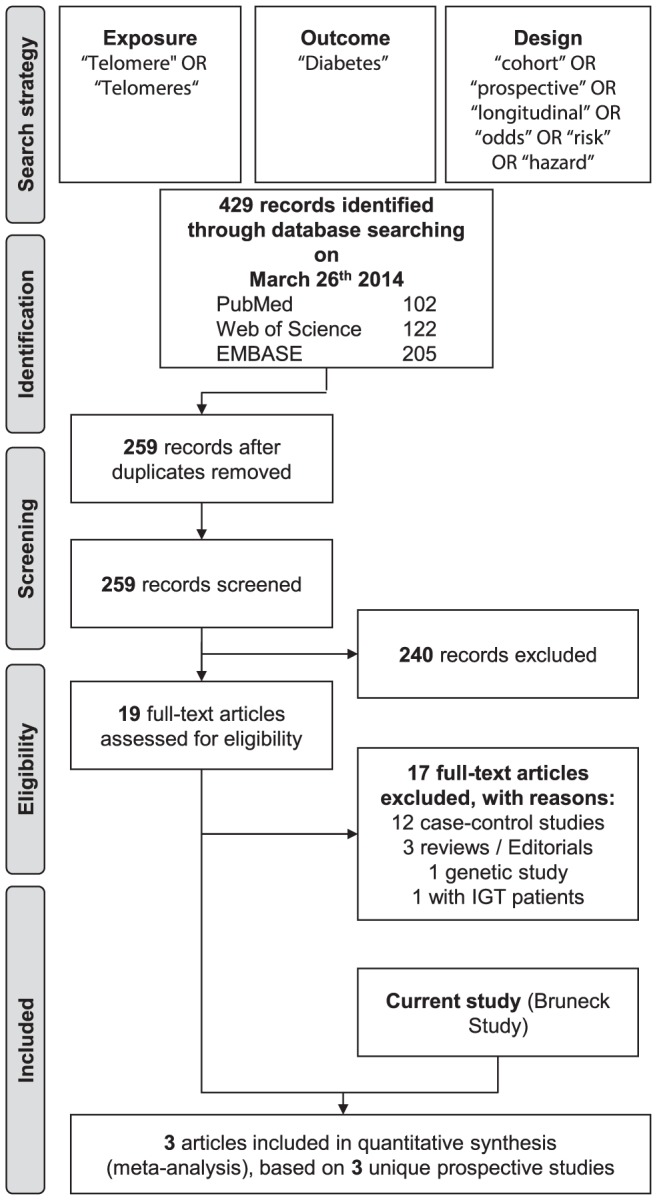
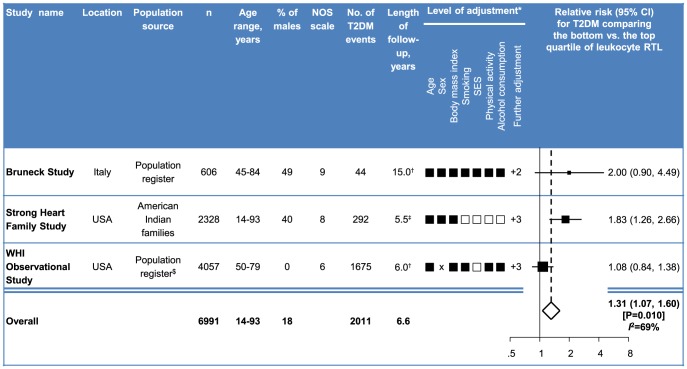
BACKGROUND: Short telomeres have been linked to various age-related diseases. We aimed to assess the association of telomere length with incident type 2 diabetes mellitus (T2DM) in prospective cohort studies. METHODS: Leucocyte relative telomere length (RTL) was measured using quantitative polymerase chain reaction in 684 participants of the prospective population-based Bruneck Study (1995 baseline), with repeat RTL measurements performed in 2005 (n = 558) and 2010 (n = 479). Hazard ratios for T2DM were calculated across quartiles of baseline RTL using Cox regression models adjusted for age, sex, body-mass index, smoking, socio-economic status, physical activity, alcohol consumption, high-density lipoprotein cholesterol, log high-sensitivity C-reactive protein, and waist-hip ratio. Separate analyses corrected hazard ratios for within-person variability using multivariate regression calibration of repeated measurements. To contextualise findings, we systematically sought PubMed, Web of Science and EMBASE for relevant articles and pooled results using random-effects meta-analysis. RESULTS: Over 15 years of follow-up, 44 out of 606 participants free of diabetes at baseline developed incident T2DM. The adjusted hazard ratio for T2DM comparing the bottom vs. the top quartile of baseline RTL (i.e. shortest vs. longest) was 2.00 (95% confidence interval: 0.90 to 4.49; P = 0.091), and 2.31 comparing the bottom quartile vs. the remainder (1.21 to 4.41; P = 0.011). The corresponding hazard ratios corrected for within-person RTL variability were 3.22 (1.27 to 8.14; P = 0.014) and 2.86 (1.45 to 5.65; P = 0.003). In a random-effects meta-analysis of three prospective cohort studies involving 6,991 participants and 2,011 incident T2DM events, the pooled relative risk was 1.31 (1.07 to 1.60; P = 0.010; I2 = 69%). CONCLUSIONS/INTERPRETATION: Low RTL is independently associated with the risk of incident T2DM. To avoid regression dilution biases in observed associations of RTL with disease risk, future studies should implement methods correcting for within-person variability in RTL. The causal role of short telomeres in T2DM development remains to be determined.
Overview
The claims and statistics of this paper haven’t been checked yet.
Free: it reads the open-access text and checks the first 5 claims that cite a source we can check. Create a free account to check every claim.
Integrity signals
Registry
Cites
Statistics
Figures
Verification
Claims the paper makes
The claims and statistics of this paper haven’t been checked yet.
Free: it reads the open-access text and checks the first 5 claims that cite a source we can check. Create a free account to check every claim.
Claims other papers make about this one
Each is checked against this paper’s own text: does it say what the citing paper says it does?
The cited source says what the claim attributes to it.
In the citing paper
“Short LTL in humans has been associated with serious medical illnesses with some consistency according to metaanalyses, including cardiovascular disease, diabetes, and cancer (D'Mello et al., 2014; Weischer et al., 2012 Willeit et al, 2014; Wentzensen et al, 2011).”
From Psychiatric disorders and leukocyte telomere length: Underlying mechanisms linking mental illness with cellular aging (2015) · cites this paper as Willeit et al, 2014
The cited source says what the claim attributes to it.
In the citing paper
“In addition to psychiatric and substance-related comorbidities, many serious comorbid medical illnesses may also be associated with decreased LTL (D'Mello et al., 2014; Weischer et al., 2012 Willeit et al, 2014; Wentzensen et al, 2011), and presumably this is independent of the effect of the psychiatric diagnosis.”
From Psychiatric disorders and leukocyte telomere length: Underlying mechanisms linking mental illness with cellular aging (2015) · cites this paper as Willeit et al, 2014
In the citing paper
“Both diseases were shown to be significantly more likely to occur in patients with shorter initial telomere lengths.”
From Markers of cellular senescence. Telomere shortening as a marker of cellular senescence (2016) · cites this paper as [55]
Self-check
Percentages, sums and reported differences re-computed from the paper’s own numbers.
The self-check needs the paper’s full text.
Citations
Cites
Measuring inconsistency in meta-analyses
Higgins, J. P. T., Thompson, S. G., Deeks, J. J., & Altman, D. G. (2003) · BMJ · doi:10.1136/bmj.327.7414.557 · Cited by 63,139 · cited 1×
“Heterogeneity between studies was quantified using the I(2) statistic and tested by a standard x(2) test [42].”
MethodBias in meta-analysis detected by a simple, graphical test
Egger, M., Smith, G. D., Schneider, M., & Minder, C. (1997) · BMJ · doi:10.1136/bmj.315.7109.629 · Cited by 56,722 · cited 1×
“Potential publication and small-study bias was formally assessed using Egger’s test [43].”
MethodA new mathematical model for relative quantification in real-time RT-PCR
Pfaffl, M. W. (2001) · Nucleic Acids Research · doi:10.1093/nar/29.9.e45 · Cited by 34,610
Friedewald, W. T., Levy, R. I., & Fredrickson, D. S. (1972) · Clinical Chemistry · doi:10.1093/clinchem/18.6.499 · Cited by 32,423 · cited 1×
“LDL cholesterol was estimated using the Friedewald equation [33].”
Method(2014) · Medical Entomology and Zoology · Cited by 17,633
Antihyperlipidemic and Biochemical Activities of Mcy Protein in Streptozotocin Induced Diabetic Rats
Marella, S., Maddirela, D. R., Badri, K. R., Jyothi Kumar, M. V., & Chippada, A. (2015) · Cellular Physiology and Biochemistry · doi:10.1159/000373954 · Cited by 5,938
The limited in vitro lifetime of human diploid cell strains
Hayflick, L. (1965) · Experimental Cell Research · doi:10.1016/0014-4827(65)90211-9 · Cited by 5,876 · cited 2×
“Telomeres shorten with each cellular division, accelerated by inflammation and oxidative stress, and, below a critical length, the apoptotic programme of the cell is induced [1,3].”
BackgroundA short questionnaire for the measurement of habitual physical activity in epidemiological studies
Baecke, J., Burema, J., & Frijters, J. (1982) · The American Journal of Clinical Nutrition · doi:10.1093/ajcn/36.5.936 · Cited by 3,945 · cited 1×
“Physical activity was assessed using the validated Baeke Score [30].”
MethodFollow-up report on the diagnosis of diabetes mellitus
The Expert Committee on the Diagnosis and Classification of Diabetes Mellitus* (2003) · Diabetes Care · doi:10.2337/diacare.26.11.3160 · Cited by 3,784 · cited 1×
“$7 mmol/l) or when the subjects had a clinical diagnosis of T2DM and received anti-diabetic treatment [37].”
BackgroundStructure and function of telomeres
Blackburn, E. H. (1991) · Nature · doi:10.1038/350569a0 · Cited by 3,596
Cited by
Determinants of telomere length across human tissues
Demanelis, K., Jasmine, F., Chen, L. S., Chernoff, M., Tong, L., Delgado, D., Zhang, C., Shinkle, J., Sabarinathan, M., Lin, H., et al. (2020) · Science · doi:10.1126/science.aaz6876 · Cited by 515
Markers of cellular senescence. Telomere shortening as a marker of cellular senescence
Bernadotte, A., Mikhelson, V. M., & Spivak, I. M. (2016) · Aging · doi:10.18632/aging.100871 · Cited by 466
“One research group monitoring individuals’ telomere length over a period of 15 years showed what proportion of respondents developed type 2 diabetes [55] or cancer [54, 56].”
BackgroundVaiserman, A., & Krasnienkov, D. (2021) · Frontiers in Genetics · doi:10.3389/fgene.2020.630186 · Cited by 454
“An association of short LTL with higher risk for developing type 2 diabetes has been also demonstrated; this association, however, was significantly influenced by body mass index (BMI), diabetes type, age, region, and sex (Zhao et al., 2013; Willeit et al., 2014; Wang et al., 2016; Krasnienkov et al., 2018).”
BackgroundTelomere Biology and Human Phenotype
Turner, K., Vasu, V., & Griffin, D. (2019) · Cells · doi:10.3390/cells8010073 · Cited by 385
“While some analyses demonstrate shortened telomere length as a risk for type II diabetes, others report no such link [132,133].”
BackgroundThe role of childhood trauma in bipolar disorders
Aas, M., Henry, C., Andreassen, O. A., Bellivier, F., Melle, I., & Etain, B. (2016) · International Journal of Bipolar Disorders · doi:10.1186/s40345-015-0042-0 · Cited by 345
Lindqvist, D., Epel, E. S., Mellon, S. H., Penninx, B. W., Révész, D., Verhoeven, J. E., Reus, V. I., Lin, J., Mahan, L., Hough, C. M., et al. (2015) · Neuroscience & Biobehavioral Reviews · doi:10.1016/j.neubiorev.2015.05.007 · Cited by 285
Wilbourn, R. V., Moatt, J. P., Froy, H., Walling, C. A., Nussey, D. H., & Boonekamp, J. J. (2018) · Philosophical Transactions of the Royal Society B: Biological Sciences · doi:10.1098/rstb.2016.0447 · Cited by 270
Saenen, N. D., Martens, D. S., Neven, K. Y., Alfano, R., Bové, H., Janssen, B. G., Roels, H. A., Plusquin, M., Vrijens, K., & Nawrot, T. S. (2019) · Clinical Epigenetics · doi:10.1186/s13148-019-0688-z · Cited by 267
Prenatal Air Pollution and Newborns' Predisposition to Accelerated Biological Aging
Martens, D. S., Cox, B., Janssen, B. G., Clemente, D. B. P., Gasparrini, A., Vanpoucke, C., Lefebvre, W., Roels, H. A., Plusquin, M., & Nawrot, T. S. (2017) · JAMA Pediatrics · doi:10.1001/jamapediatrics.2017.3024 · Cited by 241
Maternal pre-pregnancy body mass index and newborn telomere length
Martens, D. S., Plusquin, M., Gyselaers, W., De Vivo, I., & Nawrot, T. S. (2016) · BMC Medicine · doi:10.1186/s12916-016-0689-0 · Cited by 188
“Telomere length is considered a biomarker of biological ageing and has been associated with age-related diseases such as cardiovascular disease [7, 8], type 2 diabetes [9], atherosclerosis [10, 11], and increased mortality [12–14].”
BackgroundTelomere length measurement as a clinical biomarker of aging and disease
Fasching, C. L. (2018) · Critical Reviews in Clinical Laboratory Sciences · doi:10.1080/10408363.2018.1504274 · Cited by 167
“[96] measured BTL prior to the clinical detection of T2DM [96].”
BackgroundMethodZota, A. R., Geller, R. J., Romano, L. E., Coleman-Phox, K., Adler, N. E., Parry, E., Wang, M., Park, J.-S., Elmi, A. F., Laraia, B. A., et al. (2018) · Environment International · doi:10.1016/j.envint.2018.02.044 · Cited by 136
“Leukocyte telomere length (LTL) in blood is commonly measured in epidemiological studies (Haycock et al., 2014; Willeit et al., 2014; Mitro et al., 2016b).”
Discovery of potent telomerase activators: Unfolding new therapeutic and anti-aging perspectives
Tsoukalas, D., Fragkiadaki, P., Docea, A., Alegakis, A., Sarandi, E., Thanasoula, M., Spandidos, D., Tsatsakis, A., Razgonova, M., & Calina, D. (2019) · Molecular Medicine Reports · doi:10.3892/mmr.2019.10614 · Cited by 130
“Several studies have indicated that short telomere length is associated with aging-related diseases, including cardiovascular diseases (cads), stroke, cancer, arthritis, osteoporosis, cataracts, diabetes type 2, hypertension, mental diseases, chronic obstructive pulmonary disease (coPd) and dementia (1).”
Telomere attrition and diabetes mellitus
Tamura, Y., Takubo, K., Aida, J., Araki, A., & Ito, H. (2016) · Geriatrics and gerontology international/Geriatrics & gerontology international · doi:10.1111/ggi.12738 · Cited by 111
Telomeres and Age-Related Diseases
Gruber, H.-J., Semeraro, M. D., Renner, W., & Herrmann, M. (2021) · Biomedicines · doi:10.3390/biomedicines9101335 · Cited by 94
The association of female and male infertility with telomere length (Review)
Vasilopoulos, E., Fragkiadaki, P., Kalliora, C., Fragou, D., Docea, A., Vakonaki, E., Tsoukalas, D., Calina, D., Buga, A., Georgiadis, G., et al. (2019) · International Journal of Molecular Medicine · doi:10.3892/ijmm.2019.4225 · Cited by 84
“It is known that shorter telomeres are associated with a range of chronic diseases, such as cardiovascular disease (CAD), stroke, cancer, arthritis, osteoporosis, diabetes type 2, hypertension, mental diseases, chronic obstructive pulmonary disease and dementia (27-31).”
BackgroundLongitudinal Associations Between Metabolic Syndrome Components and Telomere Shortening
Révész, D., Milaneschi, Y., Verhoeven, J. E., Lin, J., & Penninx, B. W. J. H. (2015) · The Journal of Clinical Endocrinology & Metabolism · doi:10.1210/jc.2015-1995 · Cited by 97
Telomere length and common disease: study design and analytical challenges
Barrett, J. H., Iles, M. M., Dunning, A. M., & Pooley, K. A. (2015) · Human Genetics · doi:10.1007/s00439-015-1563-4 · Cited by 84
“In a more recently reported analysis (Willeit et al. 2014) based on the prospective Bruneck Study, TL was measured on three occasions, spanning 15 years, but only a small number of participants (44/606) developed type 2 diabetes.”
MethodTellechea, M. L., & Pirola, C. J. (2016) · Journal of Human Hypertension · doi:10.1038/jhh.2016.45 · Cited by 91
Mitro, S. D., Birnbaum, L. S., Needham, B. L., & Zota, A. R. (2015) · Environmental Health Perspectives · doi:10.1289/ehp.1510187 · Cited by 86
“In epidemiological studies, short LTL has been associated with increased risk for a variety of chronic conditions, including cardiovascular disease (Haycock et al. 2014), Type II diabetes (Willeit et al. 2014), and metabolic syndrome (Révész et al. 2014).”
BackgroundParity associated with telomere length among US reproductive age women
Pollack, A. Z., Rivers, K., & Ahrens, K. A. (2018) · Human Reproduction · doi:10.1093/humrep/dey024 · Cited by 96
“For Permissions, please e-mail: journals.permissions@oup.com D ow nloaded from https://academ ic.oup.com /hum rep/article-abstract/33/4/736/4858327 by guest on 15 M arch 2020 Haycock et al., 2014; Willeit et al., 2014; Aviv et al., 2015; Zhang et al., 2016).”
BackgroundAssociation of nutraceutical supplements with longer telomere length
Tsoukalas, D., Fragkiadaki, P., Docea, A., Alegakis, A., Sarandi, E., Vakonaki, E., Salataj, E., Kouvidi, E., Nikitovic, D., Kovatsi, L., et al. (2019) · International Journal of Molecular Medicine · doi:10.3892/ijmm.2019.4191 · Cited by 76
“Furthermore, attention has been paid to telomere shortening in various diseases and age-related diseases, such as cancer, cardiovascular diseases (CAD), diabetes, rheumatoid arthritis and psychiatric disorders (6-10).”
BackgroundChen, B., Yan, Y., Wang, H., & Xu, J. (2023) · Aging Cell · doi:10.1111/acel.13874 · Cited by 91
“…have shown that LTL is associated with the risk of various age- related diseases such as cardiovascular diseases and Type 2 diabetes mellitus, some types of cancer, and the human life span (Arbeev et al., 2020; Haycock et al., 2014; Rode et al., 2016; Wentzensen et al., 2011; Willeit et al., 2014).”
BackgroundCheng, F., Luk, A. O. Y., Tam, C. H. T., Fan, B., Wu, H., Yang, A., Lau, E. S. H., Ng, A. C. W., Lim, C. K. P., Lee, H. M., et al. (2020) · Diabetes Care · doi:10.2337/dc20-0028 · Cited by 77
“60) when comparing the shortest with the longest rLTL at baseline (31).”
BackgroundLeukocyte telomere length and mortality risk in patients with type 2 diabetes
Bonfigli, A. R., Spazzafumo, L., Prattichizzo, F., Bonafè, M., Mensa’, E., Micolucci, L., Giuliani, A., Fabbietti, P., Testa, R., Boemi, M., et al. (2016) · Oncotarget · doi:10.18632/oncotarget.10615 · Cited by 77
“Epidemiological studies have shown that short telomeres are associated with a number of age-related disorders such as cardiovascular and neurodegenerative diseases, cancer [9-13], and metabolic syndrome [14-18].”
BackgroundMcFarland, M. J., Taylor, J. D., McFarland, C. A. S., & Friedman, K. L. (2018) · Journal of Health and Social Behavior · doi:10.1177/0022146518811144 · Cited by 80
“Shorter telomeres are predictive of stress-related health conditions, including cardiovascular disease, type 2 diabetes, and all-cause mortality (Haycock et al. 2014; Willeit et al. 2014).”
BackgroundPatel, C. J., Manrai, A. K., Corona, E., & Kohane, I. S. (2016) · International Journal of Epidemiology · doi:10.1093/ije/dyw043 · Cited by 70
“We found that higher levels of PCBs were correlated with longer MTL.”
BackgroundInfluentialRaschenberger, J., Kollerits, B., Ritchie, J., Lane, B., Kalra, P. A., Ritz, E., & Kronenberg, F. (2015) · Scientific Reports · doi:10.1038/srep11887 · Cited by 66
Association of Parental Socioeconomic Status and Newborn Telomere Length
Martens, D. S., Janssen, B. G., Bijnens, E. M., Clemente, D. B. P., Vineis, P., Plusquin, M., & Nawrot, T. S. (2020) · JAMA Network Open · doi:10.1001/jamanetworkopen.2020.4057 · Cited by 75
Meyer, A., Salewsky, B., Spira, D., Steinhagen‐Thiessen, E., Norman, K., & Demuth, I. (2015) · American Journal of Clinical Nutrition · doi:10.3945/ajcn.115.116806 · Cited by 67
Baseline biopsychosocial determinants of telomere length and 6-year attrition rate
Révész, D., Milaneschi, Y., Terpstra, E. M., & Penninx, B. W. J. H. (2016) · Psychoneuroendocrinology · doi:10.1016/j.psyneuen.2016.02.007 · Cited by 71
Obesity is associated with shorter telomeres in 8 year-old children
Clemente, D. B. P., Maître, L., Bustamante, M., Chatzi, L., Roumeliotaki, T., Fossati, S., Gražulevičienė, R., Gützkow, K. B., Lepeule, J., Martens, D. S., et al. (2019) · Scientific Reports · doi:10.1038/s41598-019-55283-8 · Cited by 64
Saßenroth, D., Meyer, A., Salewsky, B., Kroh, M., Norman, K., Steinhagen‐Thiessen, E., & Demuth, I. (2015) · PLoS ONE · doi:10.1371/journal.pone.0142131 · Cited by 61
Caini, S., Raimondi, S., Johansson, H. A., GIORGI, V. D., Zanna, I., Palli, D., & Gandini, S. (2015) · Journal of Dermatological Science · doi:10.1016/j.jdermsci.2015.08.003 · Cited by 56
“Previous studies have shown that shortened telomere length as measured in peripheral blood leukocytes correlates with the incidence of major chronic diseases, like cancer at several sites [7], cardiovascular disease [8] and diabetes [9], and with overall mortality as well [10–11].”
BackgroundThe aging lung: tissue telomere shortening in health and disease
Everaerts, S., Lammertyn, E. J., Martens, D. S., Sadeleer, L. D., Maes, K., van Batenburg, A. A., Goldschmeding, R., van Moorsel, C. H. M., Dupont, L., Wuyts, W. A., et al. (2018) · Respiratory Research · doi:10.1186/s12931-018-0794-z · Cited by 57
“Shortened peripheral blood leukocyte telomeres have been associated with various age-related diseases, such as atherosclerosis [7] and type 2 diabetes mellitus [8], and an increased risk for some cancers [9].”
BackgroundParamasivam, P., Poongothai, S., Shanthirani, C. S., Anjana, R. M., Mohan, V., & Balasubramanyam, M. (2020) · Acta Diabetologica · doi:10.1007/s00592-020-01486-9 · Cited by 56
Prenatal cadmium exposure is associated with shorter leukocyte telomere length in Chinese newborns
Zhang, L., Song, L., Liu, B., Wu, M., Wang, L., Zhang, B., Xiong, C., Xia, W., Li, Y., Cao, Z., et al. (2019) · BMC Medicine · doi:10.1186/s12916-019-1262-4 · Cited by 52
“Shortened telomere length (TL) is associated with aging-related diseases, such as type 2 diabetes mellitus [13, 14], cardiovascular disease [15, 16], and cancer [17, 18].”
BackgroundHumphreys, K. L., Esteves, K., Zeanah, C. H., Fox, N. A., Nelson, C. A., & Drury, S. S. (2016) · Psychiatry Research · doi:10.1016/j.psychres.2016.09.023 · Cited by 50
Telomere length, telomerase expression, and oxidative stress in lead smelters
Pawlas, N., Płachetka, A., Kozłowska, A., Mikołajczyk, A., Kasperczyk, A., Dobrakowski, M., & Kasperczyk, S. (2016) · Toxicology and Industrial Health · doi:10.1177/0748233715601758 · Cited by 56
“, 2012), diabetes type 2 (Willeit et al., 2014; Zhao et al., 2013), cancer (Ma et al.”
BackgroundClemente, D. B. P., Vrijheid, M., Martens, D. S., Bustamante, M., Chatzi, L., Danilevičiūtė, A., de Castro, M., Gražulevičienė, R., Gützkow, K. B., Lepeule, J., et al. (2019) · Environmental Health Perspectives · doi:10.1289/ehp4148 · Cited by 58
“…such as cardiovascular disease (Chen et al. 2014; Haycock et al. 2014; Hunt et al. 2015; Zhan and Hagg 2019), type 2 diabetes (Tamura et al. 2016; Wang et al. 2016; Willeit et al. 2014), and increased mortality (Cawthon et al. 2003; Dean et al. 2017; Fitzpatrick et al. 2011; Needham et al. 2015).”
Telomere length in children environmentally exposed to low-to-moderate levels of lead
Pawlas, N., Płachetka, A., Kozłowska, A., Bröberg, K., & Kasperczyk, S. (2015) · Toxicology and Applied Pharmacology · doi:10.1016/j.taap.2015.05.005 · Cited by 55
Raschenberger, J., Lamina, C., Haun, M., Kollerits, B., Coassin, S., Boes, E., Kedenko, L., Köttgen, A., & Kronenberg, F. (2016) · Scientific Reports · doi:10.1038/srep25398 · Cited by 58
Martens, D. S., & Nawrot, T. S. (2018) · Toxicology Letters · doi:10.1016/j.toxlet.2018.06.1213 · Cited by 54
Liu, B., Sun, Y., Xu, G., Snetselaar, L., Ludewig, G., Wallace, R. B., & Bao, W. (2018) · Journal of the Academy of Nutrition and Dietetics · doi:10.1016/j.jand.2018.09.007 · Cited by 58
Telomeres: New players in immune-mediated inflammatory diseases?
Heba, A.-C., Toupance, S., Arnone, D., Peyrin‐Biroulet, L., Bénétos, A., & Ndiaye, N. C. (2021) · Journal of Autoimmunity · doi:10.1016/j.jaut.2021.102699 · Cited by 55
Rao, S., Kota, L. N., Li, Z., Yao, Y., Tang, J., Mao, C., Jain, S., Xu, Y. J., & Xu, Q. (2016) · Journal of Psychiatric Research · doi:10.1016/j.jpsychires.2016.04.010 · Cited by 50
“Serious medical illnesses, such as cancer, diabetes and cardiovascular disease, have been reported to be associated with short LTL (Weischer et al., 2012; Wentzensen et al., 2011; Willeit et al., 2014).”
BackgroundRole of telomeres and associated maintenance genes in Type 2 Diabetes Mellitus: A review
Sethi, I., Bhat, G. R., Singh, V., Kumar, R., Bhanwer, A. J. S., Bamezai, R. N. K., Sharma, S., & Rai, E. (2016) · Diabetes Research and Clinical Practice · doi:10.1016/j.diabres.2016.10.015 · Cited by 48
The Telomeric Complex and Metabolic Disease
Kirchner, H., Shaheen, F., Kalscheuer, H., Schmid, S., Oster, H., & Lehnert, H. (2017) · Genes · doi:10.3390/genes8070176 · Cited by 44
“In a prospective population-based approach LTL and incident T2DM was studied [65].”
BackgroundHeritability of Biomarkers of Oxidized Lipoproteins: Twin Pair Study
Rao, F., Schork, A. J., Maihofer, A. X., Nievergelt, C. M., Marcovina, S. M., Miller, E. R., Witztum, J. L., O’Connor, D. T., & Tsimikas, S. (2015) · Arteriosclerosis Thrombosis and Vascular Biology · doi:10.1161/atvbaha.115.305306 · Cited by 48
Wojcicki, J. M., Heyman, M. B., Elwan, D., Shiboski, S., Lin, J., Blackburn, E., & Epel, E. (2015) · Translational Psychiatry · doi:10.1038/tp.2015.71 · Cited by 44
Alzain, M. A., Asweto, C. O., Zhang, J., Fang, H., Zhao, Z., Guo, X., Song, M., Zhou, Y., Chang, N., Wang, Y., et al. (2017) · OMICS A Journal of Integrative Biology · doi:10.1089/omi.2017.0050 · Cited by 45
“It has been previously demonstrated that people with shorter telomeres are likely to have chronic diseases, such as diabetes (Willeit et al., 2014; Zhao et al., 2014), cardio-vascular diseases (Peng et al., 2017; Rehkopf et al., 2016), lung diseases (Rode et al., 2012), impaired immune function…”
Common mental disorders and association with telomere length (Review)
Vakonaki, E., Tsiminikaki, K., Plaitis, S., Fragkiadaki, P., Tsoukalas, D., Katsikantami, I., Vaki, G., Tzatzarakis, M., Spandidos, D., & Tsatsakis, A. (2018) · Biomedical Reports · doi:10.3892/br.2018.1040 · Cited by 44
“Finally, other morbidities (such as cancer, diabetes and cardiovascular disease, unaware medical illness) might confound differences in leukocyte telomere length between cases and controls (80-82).”
The relationship between telomere length and aging-related diseases
Huang, X., Huang, L., Lu, J., Cheng, L., Wu, D. A., Li, L., Zhang, S., Lai, X., & Xu, L. (2025) · Clinical and Experimental Medicine · doi:10.1007/s10238-025-01608-z · Cited by 65
“They conducted repeat RTL measurements in 2005 ( n = 558) and 2010 ( n = 479), and found that low RTL was independently associated with the risk of incident T2DM [56].”
Leung, C. W., Fung, T. T., McEvoy, C. T., Lin, J., & Epel, E. S. (2018) · American Journal of Epidemiology · doi:10.1093/aje/kwy124 · Cited by 50
“been inversely related to risk of cardiovascular disease, type 2 diabetes, and some cancers (7-11).”
BackgroundPing, F., Li, Z., Lv, K., Zhou, M., Dong, Y., Sun, Q., & Li, Y. (2016) · Journal of Diabetes Investigation · doi:10.1111/jdi.12555 · Cited by 48
Telomere length is reduced in 9- to 16-year-old girls exposed to gestational diabetes in utero
Hjort, L., Vryer, R., Grunnet, L. G., Burgner, D. P., Olsen, S. F., Saffery, R., & Vaag, A. A. (2018) · Diabetologia · doi:10.1007/s00125-018-4549-7 · Cited by 41
Delayed sleep-onset and biological age: late sleep-onset is associated with shorter telomere length
Wynchank, D., Bijlenga, D., Penninx, B. W. J. H., Lamers, F., Beekman, A. T. F., Kooij, J. J. S., & Verhoeven, J. E. (2019) · SLEEP · doi:10.1093/sleep/zsz139 · Cited by 42
Zadeh, F. A., Bokov, D. O., Yasin, G., Vahdat, S., & Farhangi, M. A. (2021) · Critical Reviews in Food Science and Nutrition · doi:10.1080/10408398.2021.1971155 · Cited by 44
Révész, D., Verhoeven, J. E., Milaneschi, Y., & Penninx, B. W. J. H. (2016) · Psychological Medicine · doi:10.1017/s0033291716000891 · Cited by 39
“…found in persons with depression and anxiety disorder: shorter LTL was found to be associated with high levels of inflammatory markers, oxidative stress, catecholamine concentrations (Verhoeven et al. 2014c; Lindqvist et al. 2015) and metabolic alterations (Lee et al. 2011; Monickaraj et al. 2012).”
BackgroundMethodResultInfluentialBrown, L., Zhang, Y. S., Mitchell, C. M., & Ailshire, J. (2018) · The Journals of Gerontology Series A · doi:10.1093/gerona/gly001 · Cited by 38
“The summary measure of chronic disease burden (range 0–5) sums the number of doctor diagnosed self-reports of five major chronic conditions and diseases that have been associated with TL—heart disease (40), cancer (41), stroke (42), diabetes (43), and lung disease (44)—that may confound the association between TL and…”
Saedi, S., Watson, S. E., Young, J. L., Tan, Y., Wintergerst, K. A., & Cai, L. (2023) · Life Sciences · doi:10.1016/j.lfs.2023.121385 · Cited by 43
Lee, M., Saha, A., Sundaram, R., Albert, P. S., & Zhao, S. (2024) · Environmental Health · doi:10.1186/s12940-024-01088-w · Cited by 45
“…National Health and Nutrition Examination Survey (NHANES) 2001–2002 cycle, Gibson et al. [23] investigated the relationship between persistent organic pollutants (POPs) and leukocyte telomere length (LTL), a biomarker associated with chronic diseases [24–27] and dioxin-associated cancers [28–31].”
BackgroundDo black/white differences in telomere length depend on socioeconomic status?
Needham, B. L., Salerno, S. M., Roberts, E., Boss, J., Allgood, K. L., & Mukherjee, B. (2020) · Biodemography and Social Biology · doi:10.1080/19485565.2020.1765734 · Cited by 37
“2014), type 2 diabetes (Willeit et al. 2014), and some types of cancer (Wentzensen et al.”
BackgroundRasgon, N., Lin, K. W., Lin, J., Epel, E., & Blackburn, E. (2016) · Translational Psychiatry · doi:10.1038/tp.2015.187 · Cited by 35
Effect of different levels of exercise on telomere length: A systematic review and meta-analysis
Lin, X., Zhou, J., & Dong, B. (2019) · Journal of Rehabilitation Medicine · doi:10.2340/16501977-2560 · Cited by 37
Wu, Y., Cui, W., Zhang, D., Wu, W., & Yang, Z. (2017) · Oncotarget · doi:10.18632/oncotarget.18167 · Cited by 37
Biological Aging and Immune Senescence in Children with Perinatally Acquired HIV
Dalzini, A., Petrara, M. R., Ballin, G., Zanchetta, M., Giaquinto, C., & Rossi, A. D. (2020) · Journal of Immunology Research · doi:10.1155/2020/8041616 · Cited by 38
“…telomere length or erosion, similar studies on other conditions raised con fl icting results: it is not yet fully cleared whether type II diabetes [161, 162] and Alzheimer ’ s [163 – 167] and Parkinson ’ s [168, 169] diseases are associated with telomere shortening or if having shorter telomeres…”
Hautekiet, P., Nawrot, T. S., Janssen, B. G., Martens, D. S., Clercq, E. M. D., Dadvand, P., Plusquin, M., Bijnens, E. M., & Saenen, N. D. (2020) · Environment International · doi:10.1016/j.envint.2020.106332 · Cited by 32
Lustig, A., Shterev, I. D., Geyer, S. M., Shi, A., Hu, Y., Morishita, Y., Nagamura, H., Sasaki, K., Maki, M., Hayashi, I., et al. (2016) · Oncotarget · doi:10.18632/oncotarget.8801 · Cited by 35
“Previous studies showed that short telomeres of leukocytes correlated with some physiological/ pathological conditions and biomarkers [16, 23] and IR exposure causes activation of the inflammasome pathway in immune cells resulting in altered cytokine expression [24].”
Gong, Y., Tian, G., Xue, H., Zhang, X., Zhao, Y. B., & Cheng, G. (2017) · Clinical Nutrition · doi:10.1016/j.clnu.2017.05.005 · Cited by 30
“To date, mounting evidence suggests that TL, or more precisely, the rate of telomere shortening, reflects biological aging process and shortened TL is associated with greater mortality as well as several age-related diseases [1,38].”
BackgroundWojcicki, J. M., Shiboski, S. C., Heyman, M. B., Elwan, D., Lin, J., Blackburn, E. H., & Epel, E. S. (2016) · Molecular Genetics and Genomics · doi:10.1007/s00438-016-1191-2 · Cited by 34
“…relevant for later chronic disease risk as shorter telomere length has been implicated in disease progression through exposure to cellular senescence, inflammatory cytokines and adipocyte hypertrophy (Raschenberger et al. 2015; Willeit et al. 2014; Monickaraj et al. 2012; Fyhrquist et al. 2013).”
BackgroundHamlat, E. J., Neilands, T. B., Laraia, B. A., Zhang, J., Lu, A. T.-H., Lin, J., Horvath, S., & Epel, E. S. (2023) · Psychological Medicine · doi:10.1017/s0033291723001629 · Cited by 35
“Childhood adversity predicts shorter TL (Ridout et al., 2018); in turn, shorter TL predicts the earlier onset of diseases of aging, such as cardiovascular disease (CVD; D ’ Mello et al., 2015; Haycock et al., 2014; Willeit et al., 2014).”
BackgroundRosa, E. C. C. C., dos Santos, R. R. C., Fernandes, L. F. A., Neves, F. D. A. R., Coelho, M. S., & Amato, A. A. (2018) · Diabetes Research and Clinical Practice · doi:10.1016/j.diabres.2017.10.020 · Cited by 28
Guzzardi, M. A., Iozzo, P., Salonen, M. K., Kajantie, E., Airaksinen, R., Kiviranta, H., Rantakokko, P., & Eriksson, J. G. (2016) · Aging and Disease · doi:10.14336/ad.2016.0209 · Cited by 30
Callahan, C. L., Pavúk, M., Birnbaum, L. S., Ren, X., Olson, J. R., & Bonner, M. R. (2017) · Environment International · doi:10.1016/j.envint.2017.08.018 · Cited by 27
In vivo biomarkers of structural and functional brain development and aging in humans
Franke, K., Bublak, P., Hoyer, D., Billiet, T., Gaser, C., Witte, O. W., & Schwab, M. G. (2020) · Neuroscience & Biobehavioral Reviews · doi:10.1016/j.neubiorev.2017.11.002 · Cited by 33
Verma, A. K., Singh, P., Al‐Saeed, F. A., Ahmed, A. E., Kumar, S., Kumar, A., Dev, K., & Dohare, R. (2022) · Tissue and Cell · doi:10.1016/j.tice.2022.101925 · Cited by 31
Association between shortened telomere length and rheumatoid arthritis: A meta-analysis
Lee, Y. H., & Bae, S. (2016) · Zeitschrift für Rheumatologie · doi:10.1007/s00393-016-0209-9 · Cited by 32
Gilfillan, C. P., Naidu, P., Gunawan, F., Hassan, F., Tian, P., & Elwood, N. J. (2016) · PLoS ONE · doi:10.1371/journal.pone.0163824 · Cited by 26
Zhang, B., Liu, L., Guo, L., Guo, S., Zhao, X., Liu, G., Li, Q., Jiang, L., Pan, B., Nie, J., et al. (2020) · Chemosphere · doi:10.1016/j.chemosphere.2020.129111 · Cited by 28
Deng, L., Shi, Q., Chen, C., Xiaolei, L., Lixing, Z., Zuo, Z., & Birong, D. (2020) · Frontiers in Aging Neuroscience · doi:10.3389/fnagi.2020.527658 · Cited by 31
“Research has reported the implication of shortened leukocyte TL (LTL) in multiple age-related diseases including neurodegenerative ones (Serrano and Andrés, 2004; Valdes et al., 2007; Shammas, 2011; Willeit et al., 2014).”
BackgroundDeo, P., Dhillon, V. S., Lim, W. M., Jaunay, E. L., Donnellan, L., Peake, B., McCullough, C. L., & Fenech, M. F. (2020) · Mutagenesis · doi:10.1093/mutage/geaa012 · Cited by 25
Association of greenspace exposure with telomere length in preschool children
Miri, M., de Prado-Bert, P., Alahabadi, A., Najafi, M. L., Rad, A., Moslem, A., Aval, H. E., Ehrampoush, M. H., Bustamante, M., Sakhvidi, M. J. Z., et al. (2020) · Environmental Pollution · doi:10.1016/j.envpol.2020.115228 · Cited by 30
Association between shortened telomere length and systemic lupus erythematosus: a meta-analysis
Lee, Y. H., Jung, J. H., Seo, Y. H., Kim, J.-H., Choi, S., Ji, J. D., & Song, G. G. (2016) · Lupus · doi:10.1177/0961203316662721 · Cited by 31
Shorter telomere length in people with schizophrenia: A preliminary study from Australia
Galletly, C. A., Dhillon, V. S., Liu, D., Balzan, R. P., Hahn, L. A., & Fenech, M. F. (2017) · Schizophrenia Research · doi:10.1016/j.schres.2017.03.007 · Cited by 30
Genetically Increased Telomere Length and Aging-Related Traits in the U.K. Biobank
Demanelis, K., Lin, T., & Pierce, B. L. (2019) · The Journals of Gerontology Series A · doi:10.1093/gerona/glz240 · Cited by 30
“Meta-analyses of observational studies of leukocyte TL suggest that TL is associated with all-cause mortality (4) and risk of age-related chronic diseases including cardiovascular disease (5), type II diabetes (6), Alzheimer’s disease (7), and some cancers (8).”
BackgroundSuchy‐Dicey, A. M., Muller, C. J., Madhyastha, T. M., Shibata, D. K., Cole, S. A., Zhao, J., Longstreth, W. T., & Buchwald, D. (2018) · American Journal of Epidemiology · doi:10.1093/aje/kwx368 · Cited by 28
Friedenreich, C. M., Wang, Q., Ting, N. S. Y., Brenner, D. R., Conroy, S. M., McIntyre, J. B., Mickle, A. T., Courneya, K. S., & Beattie, T. L. (2018) · Cancer Epidemiology · doi:10.1016/j.canep.2018.07.012 · Cited by 23
Song, L., Liu, B., Zhang, L., Wu, M., Wang, L., Cao, Z., Zhang, B., Li, Y., Wang, Y., & Xu, S. (2019) · Environmental Research · doi:10.1016/j.envres.2019.05.042 · Cited by 23
Manoliu, A., Bosch, O. G., Brakowski, J., Brühl, A. B., & Seifritz, E. (2017) · Journal of Affective Disorders · doi:10.1016/j.jad.2017.08.022 · Cited by 29
Sex-specific associations between telomere length and candidate miRNA expression in placenta
Tsamou, M., Martens, D. S., Cox, B., Madhloum, N., Vrijens, K., & Nawrot, T. S. (2018) · Journal of Translational Medicine · doi:10.1186/s12967-018-1627-z · Cited by 23
Grunnet, L. G., Pilgaard, K. A., Alibegovic, A. C., Jensen, C. B., Hjort, L., Ozanne, S. E., Bennett, M. R., Vaag, A. A., & Brøns, C. (2019) · Scientific Reports · doi:10.1038/s41598-019-43387-0 · Cited by 25
Fares, D. A., Schalekamp–Timmermans, S., Nawrot, T. S., & Steegers‐Theunissen, R. P. M. (2020) · Birth Defects Research · doi:10.1002/bdr2.1682 · Cited by 26
“…with elevated risk for future age-related disease, including: cardiovascular disease (Haycock et al., 2014), atherosclerosis (Fitzpatrick et al., 2007), myocardial infarction (Fitzpatrick et al., 2007), type 2 diabetes mellitus (Willeit et al., 2014), and Alzheimer's disease (Zhan et al., 2015).”
BackgroundShin, C., & Baik, I. (2016) · Alcoholism Clinical and Experimental Research · doi:10.1111/acer.13005 · Cited by 24
“In addition, those diagnosed with cancer or cardiovascular disease and those using hypoglycemic medications to treat diabetes mellitus (n = 200) were excluded because the presence of these chronic diseases was considered to modify both alcohol consumption status and LTL (Haycock et al., 2014; Wentzensen et al., 2011;…”
BackgroundWang, H., Kim, H., & Baik, I. (2017) · Nutrition Research and Practice · doi:10.4162/nrp.2017.11.4.334 · Cited by 23
“Previous studies have reported that telomere length shortening is associated with age-related diseases such as hypertension, diabetes mellitus, cardiovascular disease, and cancer [3-6].”
BackgroundWojcicki, J. M., Rehkopf, D. H., Epel, E. S., & Rosenthal, P. J. (2017) · International Journal of Hepatology · doi:10.1155/2017/8435178 · Cited by 22
Telomeres as a molecular marker of male infertility
Boniewska‐Bernacka, E., Pańczyszyn, A., & Cybulska, N. (2018) · Human Fertility · doi:10.1080/14647273.2018.1456682 · Cited by 25
Stefler, D., Malyutina, S. K., Maximov, V. N., Orlov, P. S., Иванощук, Д. Е., Nikitin, Y., Гафаров, В. В., Ryabikov, A. N., Voevoda, M. I., Bobák, M., et al. (2018) · Scientific Reports · doi:10.1038/s41598-018-35122-y · Cited by 26
Watkins, L. E., Harpaz‐Rotem, I., Sippel, L. M., Krystal, J. H., Southwick, S. M., & Pietrzak, R. H. (2016) · Psychoneuroendocrinology · doi:10.1016/j.psyneuen.2016.09.006 · Cited by 22
Proportional Hazards Model with a Change Point for Clustered Event Data
Deng, Y. H., Zeng, D., Zhao, J., & Cai, J. (2017) · Biometrics · doi:10.1111/biom.12655 · Cited by 22
“Such a change point for LTL and diabetes incidence was also observed by Willeit et al. (2014).”
Metadata
- Authors
- Willeit, P., Raschenberger, J., Heydon, E. E., Tsimikas, S., Haun, M., Mayr, A., Weger, S., Witztum, J. L., Butterworth, A. S., Willeit, J., Kronenberg, F., & Kiechl, S.
- Affiliations
- Innsbruck Medical University (AT)
- University of Cambridge (GB)
- University of California San Diego (US)
- Krankenhaus Bruneck (IT)
- Corresponding author
- Willeit, Peter
- Kiechl, Stefan
- ORCID
- Venue
- PLoS ONE
- Publisher
- Public Library of Science (PLoS)
- Published
- 2014-11-12
- Volume
- 9
- Issue
- 11
- Pages
- e112483
- ISSN
- 1932-6203 (ISSN-L)
- PMC
- PMC4229188
- OpenAlex
- W2129880677
- Cited by
- 211
- References
- 51
- Citations by year
- 2026: 7 · 2025: 9 · 2024: 11 · 2023: 15 · 2022: 12 · 2021: 19 · 2020: 21 · 2019: 27 · 2018: 26 · 2017: 17 · 2016: 33 · 2015: 13
- FWCI
- 13.83
- Type
- journal article
- Language
- en
- Open access
- gold
- doi.org
- Locations
- PLoS ONE (publishedVersion, cc-by)
- Europe PMC (PubMed Central) (publishedVersion, cc-by)
- PubMed Central (publishedVersion, cc-by)
- PubMed (publishedVersion)
- RePEc: Research Papers in Economics (submittedVersion)
- DOAJ (DOAJ: Directory of Open Access Journals) (submittedVersion, cc-by-sa)
- Figshare (submittedVersion, cc-by)
- Funders
- National Institute for Health and Care Research (NF-SI-0512-10165)
- British Heart Foundation (RG/08/014/24067)
- Landes Tirols
- Provincia autonoma di Bolzano - Alto Adige
- Medical Research Council (MR/L003120/1)
- Topics
- Life Sciences › Biochemistry, Genetics and Molecular Biology › Cell Biology › Telomeres, Telomerase, and Senescence
- Life Sciences › Biochemistry, Genetics and Molecular Biology › Genetics › Genetic Associations and Epidemiology
- Health Sciences › Medicine › Endocrinology, Diabetes and Metabolism › Adipokines, Inflammation, and Metabolic Diseases
- Keywords
- type 2 diabetes, leukocyte telomere length, diabetes risk, regression dilution bias, within-person variability, Bruneck Study, age-related diseases
- MeSH terms
- Adult, Age Factors, Aged, Alcohol Drinking, C-Reactive Protein, Diabetes Mellitus, Type 2, Female, Humans, Leukocytes, Cholesterol, HDL, Male, Middle Aged, Motor Activity, Prospective Studies, Risk Factors, Sex Factors, Social Class, Body Mass Index, Proportional Hazards Models, Telomere, Waist-Hip Ratio, Telomere Shortening
About these checks
Registry, retraction, Cites and statistics results are computed, not judged, with one exception: a printed reference that no index lists is read once by a model before it counts as a citation error. Claims are extracted by a model and kept only when their quote appears verbatim in the text; each cited source is then checked, with a model’s help, for whether it says what the claim relies on. Those verdicts can be wrong — read the claim’s quote and the cited source before relying on one.
Statistics and arithmetic are recomputed, not judged.
Confidence bands are shown only for fields calibrated on our annotated test set. None is calibrated yet, so no band is shown.
What counts as a claim ›How we measure confidence ›How we check this ›
Are you an author, or do you see a problem with this page? Request a review
Data sources
Bibliographic data: Semantic Scholar, OpenAlex, Crossref.
Contains information from the Semantic Scholar Academic Graph Datasets, made available under the ODC Attribution License (ODC-BY 1.0).
Semantic Scholar’s data is described in: Kinney, R., et al. (2023). The Semantic Scholar Open Data Platform. arXiv:2301.10140.
