

Extent of Non-Publication in Cohorts of Studies Approved by Research Ethics Committees or Included in Trial Registries
Open accessThe DOI matches its Crossref record; 64 of the 65 references it cites were found in a registry or an index.
Abstract
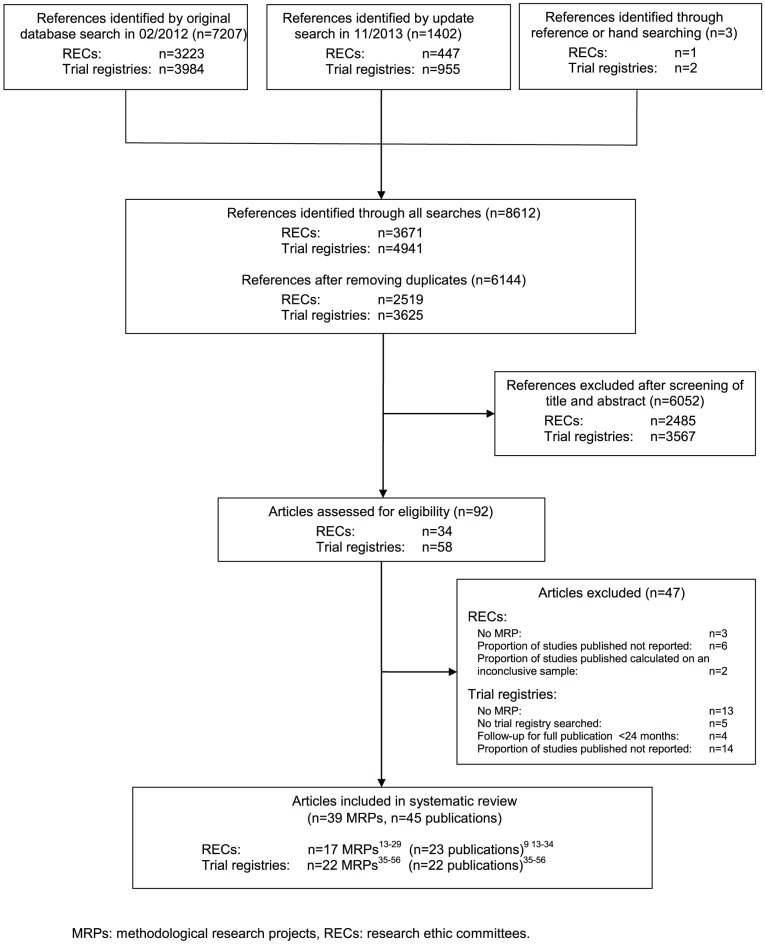
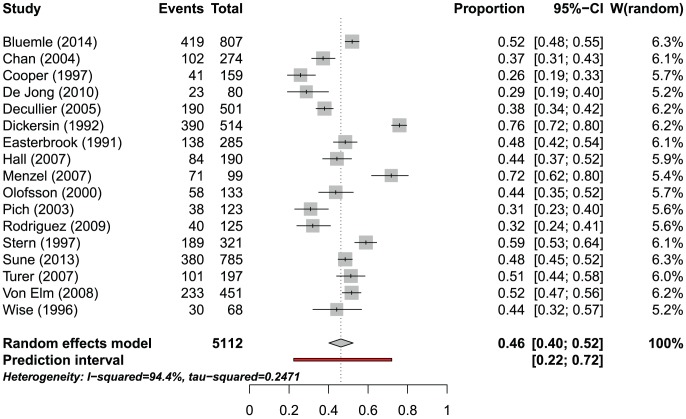
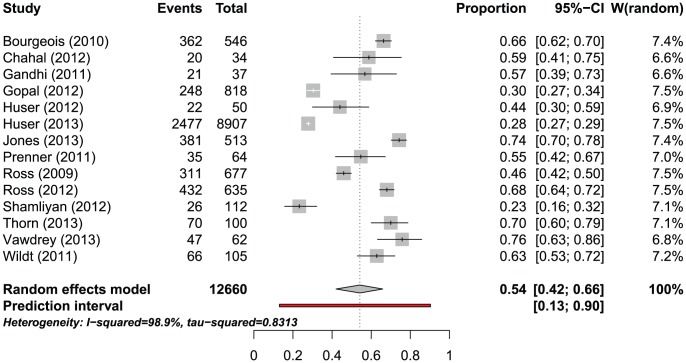
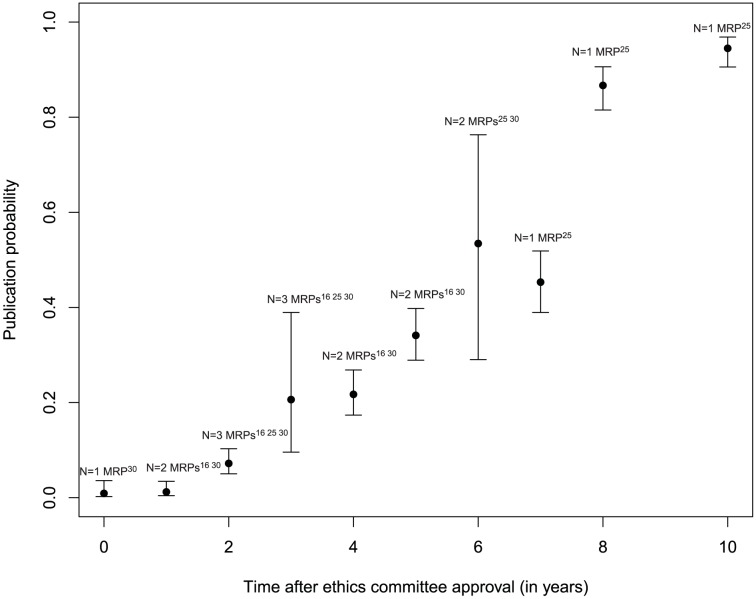
BACKGROUND: The synthesis of published research in systematic reviews is essential when providing evidence to inform clinical and health policy decision-making. However, the validity of systematic reviews is threatened if journal publications represent a biased selection of all studies that have been conducted (dissemination bias). To investigate the extent of dissemination bias we conducted a systematic review that determined the proportion of studies published as peer-reviewed journal articles and investigated factors associated with full publication in cohorts of studies (i) approved by research ethics committees (RECs) or (ii) included in trial registries. METHODS AND FINDINGS: Four bibliographic databases were searched for methodological research projects (MRPs) without limitations for publication year, language or study location. The searches were supplemented by handsearching the references of included MRPs. We estimated the proportion of studies published using prediction intervals (PI) and a random effects meta-analysis. Pooled odds ratios (OR) were used to express associations between study characteristics and journal publication. Seventeen MRPs (23 publications) evaluated cohorts of studies approved by RECs; the proportion of published studies had a PI between 22% and 72% and the weighted pooled proportion when combining estimates would be 46.2% (95% CI 40.2%-52.4%, I2 = 94.4%). Twenty-two MRPs (22 publications) evaluated cohorts of studies included in trial registries; the PI of the proportion published ranged from 13% to 90% and the weighted pooled proportion would be 54.2% (95% CI 42.0%-65.9%, I2 = 98.9%). REC-approved studies with statistically significant results (compared with those without statistically significant results) were more likely to be published (pooled OR 2.8; 95% CI 2.2-3.5). Phase-III trials were also more likely to be published than phase II trials (pooled OR 2.0; 95% CI 1.6-2.5). The probability of publication within two years after study completion ranged from 7% to 30%. CONCLUSIONS: A substantial part of the studies approved by RECs or included in trial registries remains unpublished. Due to the large heterogeneity a prediction of the publication probability for a future study is very uncertain. Non-publication of research is not a random process, e.g., it is associated with the direction of study findings. Our findings suggest that the dissemination of research findings is biased.
Overview
The claims and statistics of this paper haven’t been checked yet.
Free: it reads the open-access text and checks the first 5 claims that cite a source we can check. Create a free account to check every claim.
Integrity signals
Registry
Cites
Statistics
Figures
Verification
Claims the paper makes
The claims and statistics of this paper haven’t been checked yet.
Free: it reads the open-access text and checks the first 5 claims that cite a source we can check. Create a free account to check every claim.
Claims other papers make about this one
Each is checked against this paper’s own text: does it say what the citing paper says it does?
The source backs part of the claim, not all of it — or backs it for a different population, condition or comparison.
In the citing paper
“Such an association has been observed for randomized and non-randomized studies of interventions 6 , diagnostic test accuracy studies 9 , prognostic accuracy studies 10 and qualitative studies 11 .”
From Investigating and dealing with publication bias and other reporting biases in meta-analyses of health research: a review (2021) · cites this paper as [6]
Experimental — accuracy not yet measuredThe cited source says what the claim attributes to it.
In the citing paper
“These investigations have found that, on average, studies with statistically significant or “positive” results are more likely to be published than null or “negative” studies (Figure 1).”
From Investigating and dealing with publication bias and other reporting biases in meta-analyses of health research: a review (2021) · cites this paper as [6]
Self-check
Percentages, sums and reported differences re-computed from the paper’s own numbers.
The self-check needs the paper’s full text.
Citations
Cites
Measuring inconsistency in meta-analyses
Higgins, J. P. T., Thompson, S. G., Deeks, J. J., & Altman, D. G. (2003) · BMJ · doi:10.1136/bmj.327.7414.557 · Cited by 63,139 · cited 1×
“[11] Given the substantial heterogeneity found we also decided to calculate prediction intervals (PI) - which were not pre-specified in the published protocol - using the method suggested by Higgins et al.”
MethodWhy Most Published Research Findings Are False
Ioannidis, J. P. A. (2005) · PLoS Medicine · doi:10.1371/journal.pmed.0020124 · Cited by 10,505
Why Most Published Research Findings Are False
Ioannidis, J. P. A. (2005) · CHANCE · doi:10.1080/09332480.2005.10722754 · Cited by 4,702 · cited 1×
“[5] It is obvious that these selection mechanisms violate the fundamental scientific and ethical imperative that findings from all research on humans should be available to advance knowledge.”
BackgroundPublication bias in clinical research
Easterbrook, P. J., Gopalan, R., Berlin, J. A., & Matthews, D. R. (1991) · The Lancet · doi:10.1016/0140-6736(91)90201-y · Cited by 3,109 · cited 3×
“Easterbrook 1992 [9, 19] Different medical specialties UK Research protocols approved/completed by the Central Oxford REC between 1984 and 1987 (RCT+others) Author contact (100% response) 29 (from completion) 285 (completed)/ 487 (approved) 138 (48.”
BackgroundA Re-Evaluation of Random-Effects Meta-Analysis
Higgins, J. P. T., Thompson, S. G., & Spiegelhalter, D. J. (2009) · Journal of the Royal Statistical Society Series A: Statistics in Society · doi:10.1111/j.1467-985x.2008.00552.x · Cited by 2,569
Chan, A.-W., Hróbjartsson, A., Haahr, M. T., Gøtzsche, P. C., & Altman, D. G. (2004) · JAMA · doi:10.1001/jama.291.20.2457 · Cited by 1,845 · cited 5×
“Eight [17, 19–21, 23, 26–28] included studies from different fields and five [13, 14, 18, 22, 25] did not provide any information.”
BackgroundMethodInfluentialSuñé, P., Suñé, J. M., & Montoro, J. B. (2013) · PLoS ONE · doi:10.1371/journal.pone.0054583 · Cited by 1,687 · cited 6×
“Factors associated with time to publication The time to full publication of studies being published in peer-reviewed journals was reported in two MRPs following studies after REC approval: [17, 26] One MRP [17] reported a statistically significant (p,0.”
BackgroundInfluentialIncreasing value and reducing waste in research design, conduct, and analysis
Ioannidis, J. P. A., Greenland, S., Hlatky, M. A., Khoury, M. J., Macleod, M. R., Moher, D., Schulz, K. F., & Tibshirani, R. (2014) · The Lancet · doi:10.1016/s0140-6736(13)62227-8 · Cited by 1,597
The Existence of Publication Bias and Risk Factors for Its Occurrence
Dickersin, K. (1990) · JAMA: The Journal of the American Medical Association · doi:10.1001/jama.1990.03440100097014 · Cited by 1,417
Dwan, K., Gamble, C., Williamson, P. R., Kirkham, J. J., & the Reporting Bias Group (2013) · PLoS ONE · doi:10.1371/journal.pone.0066844 · Cited by 1,127 · cited 1×
“[58] In addition, a Cochrane Review concluded that trials with positive findings are published more often and more quickly than trials with negative findings.”
BackgroundFull publication of results initially presented in abstracts.
Scherer, R. W., Langenberg, P., & von Elm, E. (2007) · Cochrane Database of Systematic Reviews · doi:10.1002/14651858.mr000005.pub3 · Cited by 997 · cited 2×
“[10] In this review, survival analyses combining aggregated data resulted in an estimated publication rate at nine years of 52.”
BackgroundSelf-citationPublication bias in clinical trials due to statistical significance or direction of trial results
Hopewell, S., Loudon, K., Clarke, M. J., Oxman, A. D., & Dickersin, K. (2009) · Cochrane Database of Systematic Reviews · doi:10.1002/14651858.mr000006.pub3 · Cited by 898 · cited 1×
“[59] Despite differences in types of Extent of Non-Publication of Research Studies”
MethodDickersin, K. (1992) · JAMA · doi:10.1001/jama.1992.03480030052036 · Cited by 854 · cited 6×
“Dickersin 1992 [18] [33] ? + NA + Easterbrook 1992 [19] [9]* + + NA + +”
BackgroundInfluentialPublication bias: evidence of delayed publication in a cohort study of clinical research projects
Stern, J. M., & Simes, R. J. (1997) · BMJ · doi:10.1136/bmj.315.7109.640 · Cited by 818 · cited 8×
“Eight [17, 19–21, 23, 26–28] included studies from different fields and five [13, 14, 18, 22, 25] did not provide any information.”
BackgroundMethodResultInfluentialPublication bias: the case for an international registry of clinical trials.
Simes, R. J. (1986) · Journal of Clinical Oncology · doi:10.1200/jco.1986.4.10.1529 · Cited by 747
Ioannidis, J. P. A. (1998) · JAMA · doi:10.1001/jama.279.4.281 · Cited by 632
Eyding, D., Lelgemann, M., Grouven, U., Harter, M., Kromp, M., Kaiser, T., Kerekes, M. F., Gerken, M., & Wieseler, B. (2010) · BMJ · doi:10.1136/bmj.c4737 · Cited by 588 · cited 1×
“[60] The inability to make evidence-informed decisions impacts the healthcare system at various levels: First, dissemination bias is at odds with the ethical responsibility towards patients to use all research to advance medical knowledge and improve their care.”
BackgroundIncreasing value and reducing waste in biomedical research regulation and management
Salman, R. A.-S., Beller, E., Kagan, J., Hemminki, E., Phillips, R. S., Savulescu, J., Macleod, M., Wisely, J., & Chalmers, I. (2014) · The Lancet · doi:10.1016/s0140-6736(13)62297-7 · Cited by 534 · cited 1×
“[61, 62] The creation of clinical trial registers and the prospective publication of detailed study protocols with explicit outcome descriptions and analysis plans should help to combat dissemination bias.”
BackgroundTrial Publication after Registration in ClinicalTrials.Gov: A Cross-Sectional Analysis
Ross, J. S., Mulvey, G. K., Hines, E. M., Nissen, S. E., & Krumholz, H. M. (2009) · PLoS Medicine · doi:10.1371/journal.pmed.1000144 · Cited by 401
Publication of NIH funded trials registered in ClinicalTrials.gov: cross sectional analysis
Ross, J. S., Tse, T., Zarin, D. A., Xu, H., Zhou, L., & Krumholz, H. M. (2012) · BMJ · doi:10.1136/bmj.d7292 · Cited by 371 · cited 5×
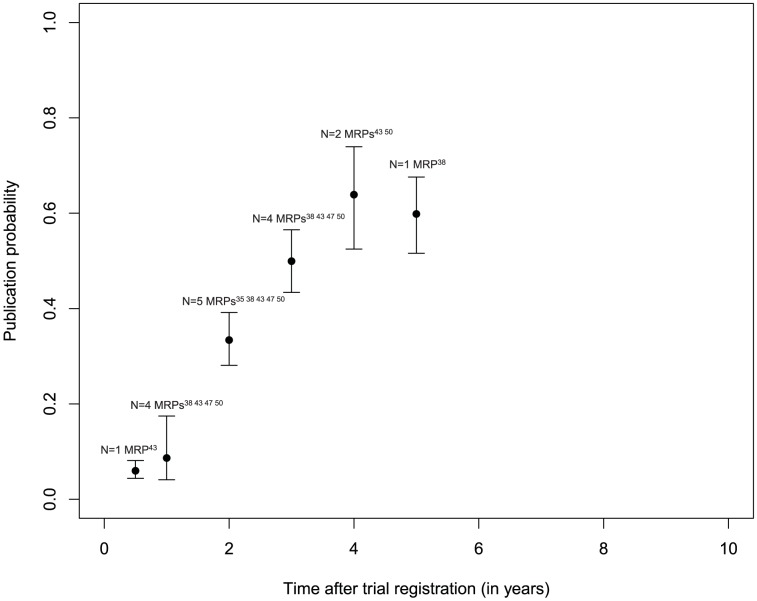
“5): [35, 38, 43, 47, 50] After two years the publication probability reached approximately 30%, [35, 38, 43, 47, 50] after three years 50%, [38, 43, 47, 50] and after five years approximately 60%.”
BackgroundResultInfluentialNon-publication of large randomized clinical trials: cross sectional analysis
Jones, C. W., Handler, L., Crowell, K. E., Keil, L. G., Weaver, M. A., & Platts-Mills, T. F. (2013) · BMJ · doi:10.1136/bmj.f6104 · Cited by 350 · cited 3×
“[37, 39, 41, 42, 46, 50, 52, 53] But no difference in the probability of publication between basic and human research was identified (pooled OR 1.”
BackgroundOutcome Reporting Among Drug Trials Registered in ClinicalTrials.gov
Bourgeois, F. T., Murthy, S., & Mandl, K. D. (2010) · Annals of Internal Medicine · doi:10.7326/0003-4819-153-3-201008030-00006 · Cited by 332 · cited 5×
“[44, 52] Thirteen MRPs [35, 37, 38, 40, 41, 44, 45, 48, 49, 52, 53, 55, 56] did not comment on matching criteria between registry entry and retrieved journal publication; whereas all but one [47] remaining MRPs performed adequate matching.”
BackgroundInfluentialSong, F., Parekh-Bhurke, S., Hooper, L., Loke, Y. K., Ryder, J. J., Sutton, A. J., Hing, C. B., & Harvey, I. (2009) · BMC Medical Research Methodology · doi:10.1186/1471-2288-9-79 · Cited by 175
Fate of biomedical research protocols and publication bias in France: retrospective cohort study
Decullier, E., Lhéritier, V., & Chapuis, F. (2005) · BMJ · doi:10.1136/bmj.38488.385995.8f · Cited by 154 · cited 7×
“Factors associated with time to publication The time to full publication of studies being published in peer-reviewed journals was reported in two MRPs following studies after REC approval: [17, 26] One MRP [17] reported a statistically significant (p,0.”
BackgroundInfluentialFinding the missing science: The fate of studies submitted for review by a human subjects committee.
Cooper, H., DeNeve, K., & Charlton, K. (1997) · Psychological Methods · doi:10.1037/1082-989x.2.4.447 · Cited by 144 · cited 4×
“The RECs in charge of study approval were based in Germany, [13, 21] USA, [15, 18, 27] The Netherlands, [16] PLOS ONE | DOI:10.1371/journal.pone.0114023 December 23, 2014 5 / 25 doi:10.1371/journal.pone.0114023.g001 PLOS ONE | DOI:10.1371/journal.pone.0114023 December 23, 2014 6 / 25 Denmark, [14] France, [17] United…”
BackgroundMethodInfluentialBlümle, A., Huwiler, K., & Witschi, M. (2008) · Swiss Medical Weekly · doi:10.4414/smw.2008.12027 · Cited by 115
Role of a research ethics committee in follow-up and publication of results
Pich, J., Carné, X., Arnaiz, J.-A., Gómez, B., Trilla, A., & Rodés, J. (2003) · The Lancet · doi:10.1016/s0140-6736(03)12799-7 · Cited by 104
Linking ClinicalTrials.gov and PubMed to Track Results of Interventional Human Clinical Trials
Huser, V., & Cimino, J. J. (2013) · PLoS ONE · doi:10.1371/journal.pone.0068409 · Cited by 90 · cited 3×
“The publication status was verified by searching adequate electronic databases and/or contacting the lead investigators in all but two MRPs. [44, 52] Thirteen MRPs [35, 37, 38, 40, 41, 44, 45, 48, 49, 52, 53, 55, 56] did not comment on matching criteria between registry entry and retrieved journal publication; whereas…”
BackgroundRamsey, S., & Scoggins, J. (2008) · The Oncologist · doi:10.1634/theoncologist.2008-0133 · Cited by 82 · cited 5×
“[44, 52] Thirteen MRPs [35, 37, 38, 40, 41, 44, 45, 48, 49, 52, 53, 55, 56] did not comment on matching criteria between registry entry and retrieved journal publication; whereas all but one [47] remaining MRPs performed adequate matching.”
BackgroundInfluentialEasterbrook, P. J., & Matthews, D. R. (1992) · Journal of the Royal Society of Medicine · doi:10.1177/014107689208500206 · Cited by 75 · cited 5×
“Dickersin 1992 [18] [33] ? + NA + Easterbrook 1992 [19] [9]* + + NA + +”
BackgroundInfluentialPhage Display Identification of CD100 in Human Atherosclerotic Plaque Macrophages and Foam Cells
Luque, M. C. A., Gutierrez, P. S., Debbas, V., Martins, W. K., Puech‐Leão, P., Porto, G., Coelho, V. P. C. V., Boumsell, L., Kalil, J. E., & Stolf, B. S. (2013) · PLoS ONE · doi:10.1371/journal.pone.0075772 · Cited by 69
Clinical Research Involving Children: Registration, Completeness, and Publication
Shamliyan, T., & Kane, R. L. (2012) · Pediatrics · doi:10.1542/peds.2010-2847 · Cited by 59 · cited 5×
“[44, 52] Thirteen MRPs [35, 37, 38, 40, 41, 44, 45, 48, 49, 52, 53, 55, 56] did not comment on matching criteria between registry entry and retrieved journal publication; whereas all but one [47] remaining MRPs performed adequate matching.”
BackgroundInfluentialKhan, N. A., Lombeida, J. I., Singh, M., Spencer, H. J., & Torralba, K. D. (2012) · Arthritis & Rheumatism · doi:10.1002/art.34393 · Cited by 56 · cited 3×
“Of the 22 MRPs following studies included in trial registries, 12 focused on specific medical fields: orthopaedics, [36, 46] pneumology, [38] ophthalmology, [40] oncology, [41] neurology, [44] gynecology, [47] rheumatology, [51] urology, [53] pediatrics, [52] orthopedics [54] and gastroenterology/hepatology [45].”
BackgroundPublication bias in the medical literature: A review by a Canadian research ethics board
Hall, R., de Antueno, C., & Webber, A. (2007) · Canadian Journal of Anesthesia · doi:10.1007/bf03022661 · Cited by 54
Blümle, A., Meerpohl, J. J., Schumacher, M., & von Elm, E. (2014) · PLoS ONE · doi:10.1371/journal.pone.0087184 · Cited by 48
Self-citationBlümle, A., Antes, G., Schumacher, M., Just, H., & von Elm, E. (2008) · Journal of Medical Ethics · doi:10.1136/jme.2008.024521 · Cited by 47
Self-citationComparison of published orthopaedic trauma trials following registration in Clinicaltrials.gov
Gandhi, R., Jan, M., Smith, H. N., Mahomed, N. N., & Bhandari, M. (2011) · BMC Musculoskeletal Disorders · doi:10.1186/1471-2474-12-278 · Cited by 47 · cited 2×
“Of the 22 MRPs following studies included in trial registries, 12 focused on specific medical fields: orthopaedics, [36, 46] pneumology, [38] ophthalmology, [40] oncology, [41] neurology, [44] gynecology, [47] rheumatology, [51] urology, [53] pediatrics, [52] orthopedics [54] and gastroenterology/hepatology [45].”
Wise, P., & Drury, M. (1996) · BMJ · doi:10.1136/bmj.313.7067.1245 · Cited by 44 · cited 5×
“Of the 17 MRPs that followed studies approved by RECs, four focused on specific medical fields: psychology, [15] epidemiology, [16] paediatrics [24] and general medicine [29].”
BackgroundInfluentialSchmucker, C. M., Blümle, A., Briel, M., Portalupi, S., Lang, B., Motschall, E., Schwarzer, G., Bassler, D., Mueller, K. F., von Elm, E. B., et al. (2013) · Systematic Reviews · doi:10.1186/2046-4053-2-24 · Cited by 42
Self-citationLack of Transparency of Clinical Trials on Endometriosis
Guo, S.-W., & Evers, J. L. H. (2013) · Obstetrics & Gynecology · doi:10.1097/aog.0b013e318291f299 · Cited by 40 · cited 4×
“Of the 22 MRPs following studies included in trial registries, 12 focused on specific medical fields: orthopaedics, [36, 46] pneumology, [38] ophthalmology, [40] oncology, [41] neurology, [44] gynecology, [47] rheumatology, [51] urology, [53] pediatrics, [52] orthopedics [54] and gastroenterology/hepatology [45].”
BackgroundInfluentialPublication bias in clinical trials of electronic health records
Vawdrey, D. K., & Hripcsak, G. (2013) · Journal of Biomedical Informatics · doi:10.1016/j.jbi.2012.08.007 · Cited by 38 · cited 3×
“The publication status was verified by searching adequate electronic databases and/or contacting the lead investigators in all but two MRPs. [44, 52] Thirteen MRPs [35, 37, 38, 40, 41, 44, 45, 48, 49, 52, 53, 55, 56] did not comment on matching criteria between registry entry and retrieved journal publication; whereas…”
BackgroundPublication of Sports Medicine–Related Randomized Controlled Trials Registered in ClinicalTrials.gov
Chahal, J., Tomescu, S. S., Ravi, B., Bach, B. R., Ogilvie-Harris, D., Mohamed, N. N., & Gandhi, R. (2012) · The American Journal of Sports Medicine · doi:10.1177/0363546512448363 · Cited by 38
Publication bias in animal research: a systematic review protocol
Briel, M., Müller, K. F., Meerpohl, J. J., von Elm, E., Lang, B., Motschall, E., Gloy, V., Lamontagne, F., Schwarzer, G., & Bassler, D. (2013) · Systematic Reviews · doi:10.1186/2046-4053-2-23 · Cited by 36
Self-citationComparison of Arthroplasty Trial Publications After Registration in ClinicalTrials.gov
Smith, H. N., Bhandari, M., Mahomed, N. N., Jan, M., & Gandhi, R. (2012) · The Journal of Arthroplasty · doi:10.1016/j.arth.2011.11.005 · Cited by 34
Müller, K., Briel, M., D’Amario, A., Kleijnen, J., Marušić, A., Wager, E., Antes, G., von Elm, E. B., Lang, B., Motschall, E., et al. (2013) · Systematic Reviews · doi:10.1186/2046-4053-2-34 · Cited by 29 · cited 1×
“[4] Dissemination bias, similar to publication bias, results from favoured dissemination of research findings depending on their statistical significance and direction.”
BackgroundSelf-citationPrecision and negative predictive value of links between ClinicalTrials.gov and PubMed.
Huser, V., & Cimino, J. J. (2012) · PubMed Central · Cited by 27
Research without results: Inadequate public reporting of clinical trial results
Gopal, R. K., Yamashita, T. E., & Prochazka, A. V. (2012) · Contemporary Clinical Trials · doi:10.1016/j.cct.2012.02.001 · Cited by 23 · cited 5×
“[44, 52] Thirteen MRPs [35, 37, 38, 40, 41, 44, 45, 48, 49, 52, 53, 55, 56] did not comment on matching criteria between registry entry and retrieved journal publication; whereas all but one [47] remaining MRPs performed adequate matching.”
BackgroundInfluentialTimely and Complete Publication of Economic Evaluations Alongside Randomized Controlled Trials
Thorn, J. C., Noble, S., & Hollingworth, W. (2012) · PharmacoEconomics · doi:10.1007/s40273-012-0004-7 · Cited by 22 · cited 4×
“gov one MRP also searched 10 WHO registries for Chinese trials, [39] two other MRPs searched the GlaxoSmithKline (GSK) trial registry (United Kingdom) [44] and the ISRCTN register, [55] respectively.”
BackgroundMethodInfluentialPortalupi, S., von Elm, E. B., Schmucker, C. M., Lang, B., Motschall, E., Schwarzer, G., Gross, I. T., Scherer, R. W., Bassler, D., & Meerpohl, J. J. (2013) · Systematic Reviews · doi:10.1186/2046-4053-2-2 · Cited by 22 · cited 5×
“[6] We also collated information on costs or other resources which occurred by studies that were not published (if available).”
BackgroundMethodInfluentialSelf-citationTurer, A. T., Mahaffey, K. W., Compton, K. L., Califf, R. M., & Schulman, K. A. (2007) · American Heart Journal · doi:10.1016/j.ahj.2007.01.005 · Cited by 21 · cited 3×
“The RECs in charge of study approval were based in Germany, [13, 21] USA, [15, 18, 27] The Netherlands, [16] PLOS ONE | DOI:10.1371/journal.pone.0114023 December 23, 2014 5 / 25 doi:10.1371/journal.pone.0114023.g001 PLOS ONE | DOI:10.1371/journal.pone.0114023 December 23, 2014 6 / 25 Denmark, [14] France, [17] United…”
BackgroundInfluentialTfelt‐Hansen, P. C. (2011) · The Journal of Headache and Pain · doi:10.1007/s10194-011-0327-3 · Cited by 20 · cited 9×
“[44, 52] Thirteen MRPs [35, 37, 38, 40, 41, 44, 45, 48, 49, 52, 53, 55, 56] did not comment on matching criteria between registry entry and retrieved journal publication; whereas all but one [47] remaining MRPs performed adequate matching.”
BackgroundInfluentialPUBLICATION RATES OF REGISTERED CLINICAL TRIALS IN MACULAR DEGENERATION
Prenner, J. L., Driscoll, S. J., Fine, H. F., Salz, D. A., & Roth, D. B. (2011) · Retina · doi:10.1097/iae.0b013e3181eef2ad · Cited by 20 · cited 5×
“[44, 52] Thirteen MRPs [35, 37, 38, 40, 41, 44, 45, 48, 49, 52, 53, 55, 56] did not comment on matching criteria between registry entry and retrieved journal publication; whereas all but one [47] remaining MRPs performed adequate matching.”
BackgroundInfluentialWildt, S., Krag, A., & Gluud, L. (2011) · BMJ Open · doi:10.1136/bmjopen-2011-000309 · Cited by 15 · cited 6×
“[44, 52] Thirteen MRPs [35, 37, 38, 40, 41, 44, 45, 48, 49, 52, 53, 55, 56] did not comment on matching criteria between registry entry and retrieved journal publication; whereas all but one [47] remaining MRPs performed adequate matching.”
BackgroundMethodInfluentialde Jong, J. P., ter Riet, G., & Willems, D. L. (2010) · Journal of Clinical Epidemiology · doi:10.1016/j.jclinepi.2010.01.018 · Cited by 12
Role of a research ethics committee in follow-up and publication of results
Martini, N., Tomino, C., & Liberati, A. (2003) · The Lancet · doi:10.1016/s0140-6736(03)13752-x · Cited by 12
Role of a research ethics committee in follow-up and publication of results
Suñé, P., & Ronsano, J. B. M. (2003) · The Lancet · doi:10.1016/s0140-6736(03)13751-8 · Cited by 11
Evaluation von Forschungsvorhaben nach einem positiven Votum einer Ethikkommission
Menzel, S., Uebing, B., Hucklenbroich, P., & Schober, O. (2007) · DMW - Deutsche Medizinische Wochenschrift · doi:10.1055/s-2007-991648 · Cited by 10 · cited 3×
“The RECs in charge of study approval were based in Germany, [13, 21] USA, [15, 18, 27] The Netherlands, [16] PLOS ONE | DOI:10.1371/journal.pone.0114023 December 23, 2014 5 / 25 doi:10.1371/journal.pone.0114023.g001 PLOS ONE | DOI:10.1371/journal.pone.0114023 December 23, 2014 6 / 25 Denmark, [14] France, [17] United…”
BackgroundInfluentialDelayed publication of clinical trials in cystic fibrosis
Hurley, M. N., Prayle, A., & Smyth, A. R. (2011) · Journal of Cystic Fibrosis · doi:10.1016/j.jcf.2011.08.004 · Cited by 10 · cited 6×
“[44, 52] Thirteen MRPs [35, 37, 38, 40, 41, 44, 45, 48, 49, 52, 53, 55, 56] did not comment on matching criteria between registry entry and retrieved journal publication; whereas all but one [47] remaining MRPs performed adequate matching.”
BackgroundInfluentialOral presentation bias: a retrospective cohort study
Decullier, E., & Chapuis, F. (2007) · Journal of Epidemiology and Community Health · doi:10.1136/jech.2006.048603 · Cited by 9 · cited 2×
“Decullier 2005 [17, 32] Different medical specialties France Completed research protocols which had been approved in 1994 by a random sample of French committees (study design not given) Author contact (100% response rate) .”
BackgroundResultRisk factors for publications bias: Results of a follow-up study
Dickersin, K., & Meinert, C. L. (1990) · Controlled Clinical Trials · doi:10.1016/0197-2456(90)90046-5 · Cited by 8
Rodríguez, S. P., Vassallo, J. C., Berlín, V., Кулик, В. В., & Grenoville, M. (2009) · PubMed · doi:10.1590/s0325-00752009000600006 · Cited by 7
Result Publication of Chinese Trials in World Health Organization Primary Registries
Xuemei, L., Youping, L., Senlin, Y., & Shangqi, S. (2010) · PLoS ONE · doi:10.1371/journal.pone.0012676 · Cited by 7
Results availability from clinical research of female urinary incontinence
Shamliyan, T., Kane, R. L., Wyman, J. F., & Sainfort, F. (2011) · Neurourology and Urodynamics · doi:10.1002/nau.21220 · Cited by 4 · cited 6×
“[44, 52] Thirteen MRPs [35, 37, 38, 40, 41, 44, 45, 48, 49, 52, 53, 55, 56] did not comment on matching criteria between registry entry and retrieved journal publication; whereas all but one [47] remaining MRPs performed adequate matching.”
BackgroundInfluentialOlofsson, B. O., Lynöe, N., & Mjörndal, T. (2000) · PubMed · Cited by 2
Cited by
Why clinical trial outcomes fail to translate into benefits for patients
Heneghan, C., Goldacre, B., & Mahtani, K. R. (2017) · Trials · doi:10.1186/s13063-017-1870-2 · Cited by 404
“approved trials, half go unpublished [38], and trials with positive outcomes are twice as likely to be published, and published faster, compared with trials with negative outcomes [39, 40].”
BackgroundAssessing risk of bias due to missing results in a synthesis
Page, M. J., Higgins, J. P., & Sterne, J. A. (2019) · Cochrane Handbook for Systematic Reviews of Interventions · doi:10.1002/9781119536604.ch13 · Cited by 402
How should systematic reviewers handle conference abstracts? A view from the trenches
Scherer, R. W., & Saldanha, I. J. (2019) · Systematic Reviews · doi:10.1186/s13643-019-1188-0 · Cited by 336
Self-citationDeVito, N. J., Bacon, S., & Goldacre, B. (2020) · The Lancet · doi:10.1016/s0140-6736(19)33220-9 · Cited by 336
Full publication of results initially presented in abstracts
Scherer, R. W., Meerpohl, J. J., Pfeifer, N., Schmucker, C., Schwarzer, G., & von Elm, E. (2018) · Cochrane Database of Systematic Reviews · doi:10.1002/14651858.mr000005.pub4 · Cited by 307
Self-citation
Metadata
- Authors
- Schmucker, C., Schell, L. K., Portalupi, S., Oeller, P., Cabrera, L., Bassler, D., Schwarzer, G., Scherer, R. W., Antes, G., von Elm, E., Meerpohl, J. J., & on behalf of the OPEN consortium
- Affiliations
- University of Freiburg (DE)
- University Hospital Zurich (CH)
- Johns Hopkins University (US)
- Corresponding author
- Meerpohl, Joerg J.
- Venue
- PLoS ONE
- Publisher
- Public Library of Science (PLoS)
- Published
- 2014-12-23
- Volume
- 9
- Issue
- 12
- Pages
- e114023
- ISSN
- 1932-6203 (ISSN-L)
- PMC
- PMC4275183
- OpenAlex
- W1976996265
- Cited by
- 269
- References
- 65
- Citations by year
- 2026: 9 · 2025: 14 · 2024: 14 · 2023: 19 · 2022: 61 · 2021: 32 · 2020: 29 · 2019: 22 · 2018: 21 · 2017: 16 · 2016: 19 · 2015: 12 · 2014: 1
- FWCI
- 15.68
- Type
- journal article
- Language
- en
- Open access
- gold
- doi.org
- Locations
- PLoS ONE (publishedVersion, cc-by)
- PubMed Central (publishedVersion, cc-by)
- PubMed (publishedVersion)
- Zurich Open Repository and Archive (University of Zurich) (acceptedVersion, cc-by)
- RePEc: Research Papers in Economics (acceptedVersion)
- SERVAL (Université de Lausanne) (acceptedVersion, other-oa)
- IRIS (submittedVersion, other-oa)
- Archivio Istituzionale della Ricerca (Universita Degli Studi Di Milano) (submittedVersion, other-oa)
- DOAJ (DOAJ: Directory of Open Access Journals) (submittedVersion, cc-by-sa)
- Figshare (submittedVersion, cc-by)
- Zurich Open Repository and Archive (University of Zurich) (submittedVersion, cc-by)
- Zurich Open Repository and Archive (University of Zurich)
- Funders
- European Commission (2007–2013, FP7 2007-2013, FP7/2007)
- Topics
- Social Sciences › Decision Sciences › Statistics, Probability and Uncertainty › Meta-analysis and systematic reviews
- Social Sciences › Library and Information Sciences › Academic Publishing and Open Access
- Health Sciences › Nursing › Issues, ethics and legal aspects › Pharmaceutical industry and healthcare
- Keywords
- dissemination bias, non-publication, research ethics committees, clinical trial registries, publication bias, statistical significance, prediction intervals, research ethics approval, research integrity, time to publication
- MeSH terms
- Clinical Trials as Topic, Humans, Probability, Publications, Registries, Time Factors, Cohort Studies, Publication Bias, Ethics Committees, Research
About these checks
Registry, retraction, Cites and statistics results are computed, not judged, with one exception: a printed reference that no index lists is read once by a model before it counts as a citation error. Claims are extracted by a model and kept only when their quote appears verbatim in the text; each cited source is then checked, with a model’s help, for whether it says what the claim relies on. Those verdicts can be wrong — read the claim’s quote and the cited source before relying on one.
Statistics and arithmetic are recomputed, not judged.
Confidence bands are shown only for fields calibrated on our annotated test set. None is calibrated yet, so no band is shown.
What counts as a claim ›How we measure confidence ›How we check this ›
Are you an author, or do you see a problem with this page? Request a review
Data sources
Bibliographic data: Semantic Scholar, OpenAlex, Crossref.
Contains information from the Semantic Scholar Academic Graph Datasets, made available under the ODC Attribution License (ODC-BY 1.0).
Semantic Scholar’s data is described in: Kinney, R., et al. (2023). The Semantic Scholar Open Data Platform. arXiv:2301.10140.
