

Extent of Non-Publication in Cohorts of Studies Approved by Research Ethics Committees or Included in Trial Registries
Open accessThe DOI matches its Crossref record; 64 of the 65 references it cites were found in a registry or an index.
Abstract
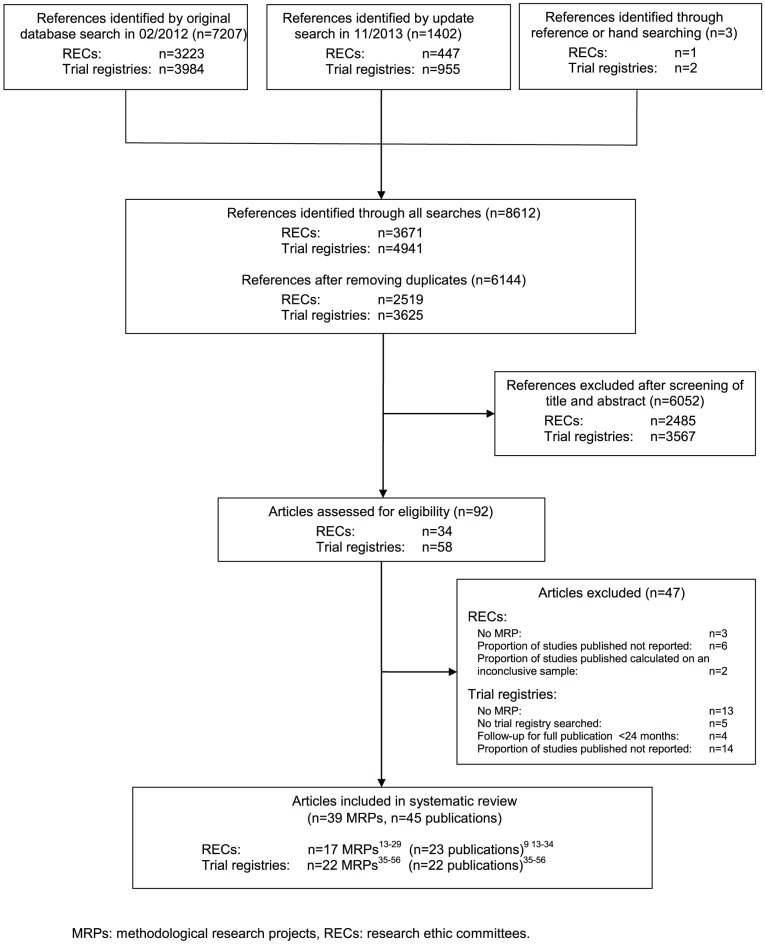
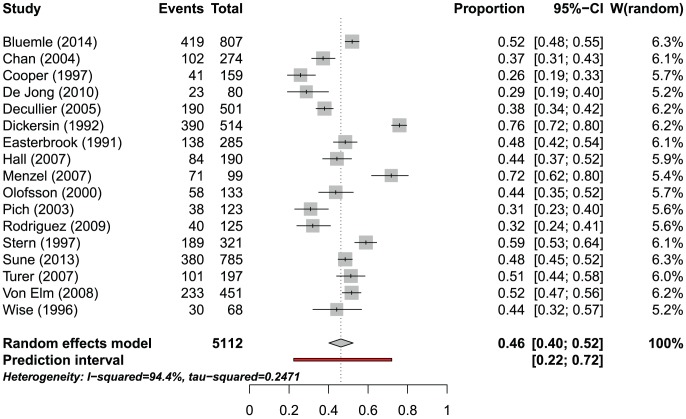
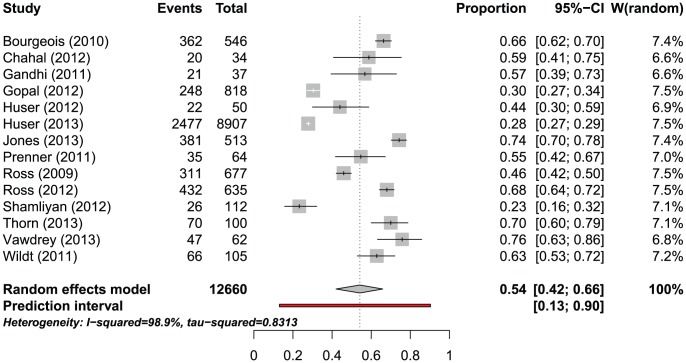
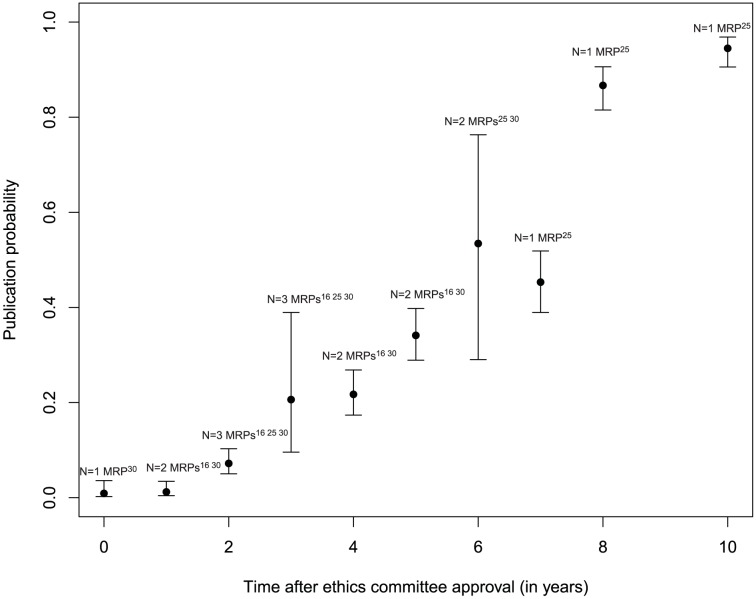
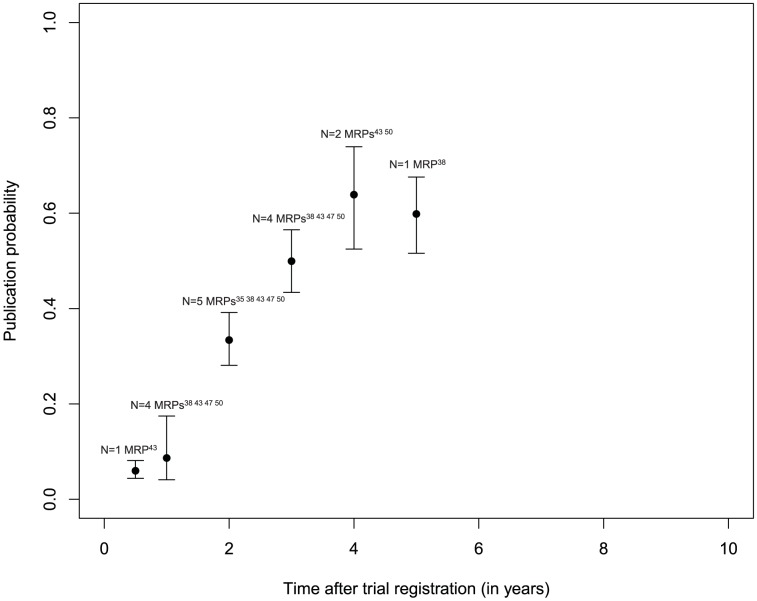
BACKGROUND: The synthesis of published research in systematic reviews is essential when providing evidence to inform clinical and health policy decision-making. However, the validity of systematic reviews is threatened if journal publications represent a biased selection of all studies that have been conducted (dissemination bias). To investigate the extent of dissemination bias we conducted a systematic review that determined the proportion of studies published as peer-reviewed journal articles and investigated factors associated with full publication in cohorts of studies (i) approved by research ethics committees (RECs) or (ii) included in trial registries. METHODS AND FINDINGS: Four bibliographic databases were searched for methodological research projects (MRPs) without limitations for publication year, language or study location. The searches were supplemented by handsearching the references of included MRPs. We estimated the proportion of studies published using prediction intervals (PI) and a random effects meta-analysis. Pooled odds ratios (OR) were used to express associations between study characteristics and journal publication. Seventeen MRPs (23 publications) evaluated cohorts of studies approved by RECs; the proportion of published studies had a PI between 22% and 72% and the weighted pooled proportion when combining estimates would be 46.2% (95% CI 40.2%-52.4%, I2 = 94.4%). Twenty-two MRPs (22 publications) evaluated cohorts of studies included in trial registries; the PI of the proportion published ranged from 13% to 90% and the weighted pooled proportion would be 54.2% (95% CI 42.0%-65.9%, I2 = 98.9%). REC-approved studies with statistically significant results (compared with those without statistically significant results) were more likely to be published (pooled OR 2.8; 95% CI 2.2-3.5). Phase-III trials were also more likely to be published than phase II trials (pooled OR 2.0; 95% CI 1.6-2.5). The probability of publication within two years after study completion ranged from 7% to 30%. CONCLUSIONS: A substantial part of the studies approved by RECs or included in trial registries remains unpublished. Due to the large heterogeneity a prediction of the publication probability for a future study is very uncertain. Non-publication of research is not a random process, e.g., it is associated with the direction of study findings. Our findings suggest that the dissemination of research findings is biased.
Overview
The claims and statistics of this paper haven’t been checked yet.
Free: it reads the open-access text and checks the first 5 claims that cite a source we can check. Create a free account to check every claim.
Integrity signals
Registry
Cites
Statistics
Figures
Verification
Claims the paper makes
The claims and statistics of this paper haven’t been checked yet.
Free: it reads the open-access text and checks the first 5 claims that cite a source we can check. Create a free account to check every claim.
Claims other papers make about this one
Each is checked against this paper’s own text: does it say what the citing paper says it does?
The source backs part of the claim, not all of it — or backs it for a different population, condition or comparison.
In the citing paper
“Such an association has been observed for randomized and non-randomized studies of interventions 6 , diagnostic test accuracy studies 9 , prognostic accuracy studies 10 and qualitative studies 11 .”
From Investigating and dealing with publication bias and other reporting biases in meta-analyses of health research: a review (2021) · cites this paper as [6]
Experimental — accuracy not yet measuredThe cited source says what the claim attributes to it.
In the citing paper
“These investigations have found that, on average, studies with statistically significant or “positive” results are more likely to be published than null or “negative” studies (Figure 1).”
From Investigating and dealing with publication bias and other reporting biases in meta-analyses of health research: a review (2021) · cites this paper as [6]
Self-check
Percentages, sums and reported differences re-computed from the paper’s own numbers.
The self-check needs the paper’s full text.
Citations
Cites
Measuring inconsistency in meta-analyses
Higgins, J. P. T., Thompson, S. G., Deeks, J. J., & Altman, D. G. (2003) · BMJ · doi:10.1136/bmj.327.7414.557 · Cited by 63,139 · cited 1×
“[11] Given the substantial heterogeneity found we also decided to calculate prediction intervals (PI) - which were not pre-specified in the published protocol - using the method suggested by Higgins et al.”
MethodWhy Most Published Research Findings Are False
Ioannidis, J. P. A. (2005) · PLoS Medicine · doi:10.1371/journal.pmed.0020124 · Cited by 10,505
Why Most Published Research Findings Are False
Ioannidis, J. P. A. (2005) · CHANCE · doi:10.1080/09332480.2005.10722754 · Cited by 4,702 · cited 1×
“[5] It is obvious that these selection mechanisms violate the fundamental scientific and ethical imperative that findings from all research on humans should be available to advance knowledge.”
BackgroundPublication bias in clinical research
Easterbrook, P. J., Gopalan, R., Berlin, J. A., & Matthews, D. R. (1991) · The Lancet · doi:10.1016/0140-6736(91)90201-y · Cited by 3,109 · cited 3×
“Easterbrook 1992 [9, 19] Different medical specialties UK Research protocols approved/completed by the Central Oxford REC between 1984 and 1987 (RCT+others) Author contact (100% response) 29 (from completion) 285 (completed)/ 487 (approved) 138 (48.”
BackgroundA Re-Evaluation of Random-Effects Meta-Analysis
Higgins, J. P. T., Thompson, S. G., & Spiegelhalter, D. J. (2009) · Journal of the Royal Statistical Society Series A: Statistics in Society · doi:10.1111/j.1467-985x.2008.00552.x · Cited by 2,569
Chan, A.-W., Hróbjartsson, A., Haahr, M. T., Gøtzsche, P. C., & Altman, D. G. (2004) · JAMA · doi:10.1001/jama.291.20.2457 · Cited by 1,845 · cited 5×
“Eight [17, 19–21, 23, 26–28] included studies from different fields and five [13, 14, 18, 22, 25] did not provide any information.”
BackgroundMethodInfluentialSuñé, P., Suñé, J. M., & Montoro, J. B. (2013) · PLoS ONE · doi:10.1371/journal.pone.0054583 · Cited by 1,687 · cited 6×
“Factors associated with time to publication The time to full publication of studies being published in peer-reviewed journals was reported in two MRPs following studies after REC approval: [17, 26] One MRP [17] reported a statistically significant (p,0.”
BackgroundInfluentialIncreasing value and reducing waste in research design, conduct, and analysis
Ioannidis, J. P. A., Greenland, S., Hlatky, M. A., Khoury, M. J., Macleod, M. R., Moher, D., Schulz, K. F., & Tibshirani, R. (2014) · The Lancet · doi:10.1016/s0140-6736(13)62227-8 · Cited by 1,597
The Existence of Publication Bias and Risk Factors for Its Occurrence
Dickersin, K. (1990) · JAMA: The Journal of the American Medical Association · doi:10.1001/jama.1990.03440100097014 · Cited by 1,417
Dwan, K., Gamble, C., Williamson, P. R., Kirkham, J. J., & the Reporting Bias Group (2013) · PLoS ONE · doi:10.1371/journal.pone.0066844 · Cited by 1,127 · cited 1×
“[58] In addition, a Cochrane Review concluded that trials with positive findings are published more often and more quickly than trials with negative findings.”
Background
Cited by
Why clinical trial outcomes fail to translate into benefits for patients
Heneghan, C., Goldacre, B., & Mahtani, K. R. (2017) · Trials · doi:10.1186/s13063-017-1870-2 · Cited by 404
“approved trials, half go unpublished [38], and trials with positive outcomes are twice as likely to be published, and published faster, compared with trials with negative outcomes [39, 40].”
BackgroundAssessing risk of bias due to missing results in a synthesis
Page, M. J., Higgins, J. P., & Sterne, J. A. (2019) · Cochrane Handbook for Systematic Reviews of Interventions · doi:10.1002/9781119536604.ch13 · Cited by 402
How should systematic reviewers handle conference abstracts? A view from the trenches
Scherer, R. W., & Saldanha, I. J. (2019) · Systematic Reviews · doi:10.1186/s13643-019-1188-0 · Cited by 336
Self-citationDeVito, N. J., Bacon, S., & Goldacre, B. (2020) · The Lancet · doi:10.1016/s0140-6736(19)33220-9 · Cited by 336
Full publication of results initially presented in abstracts
Scherer, R. W., Meerpohl, J. J., Pfeifer, N., Schmucker, C., Schwarzer, G., & von Elm, E. (2018) · Cochrane Database of Systematic Reviews · doi:10.1002/14651858.mr000005.pub4 · Cited by 307
Self-citationPage, M. J., Sterne, J. A. C., Higgins, J. P. T., & Egger, M. (2021) · Research Synthesis Methods · doi:10.1002/jrsm.1468 · Cited by 294
Page, M. J., McKenzie, J. E., & Higgins, J. P. T. (2018) · BMJ Open · doi:10.1136/bmjopen-2017-019703 · Cited by 278
Considering bias and conflicts of interest among the included studies
Boutron, I., Page, M. J., Higgins, J. P., Altman, D. G., Lundh, A., Hróbjartsson, A., & on behalf of the Cochrane Bias Methods Group (2019) · Cochrane Handbook for Systematic Reviews of Interventions · doi:10.1002/9781119536604.ch7 · Cited by 258
Schmucker, C. M., Blümle, A., Schell, L. K., Schwarzer, G., Oeller, P., Cabrera, L., von Elm, E., Briel, M., Meerpohl, J. J., & on behalf of the OPEN consortium (2017) · PLOS ONE · doi:10.1371/journal.pone.0176210 · Cited by 227
Self-citationCatalogue of bias: publication bias
DeVito, N. J., & Goldacre, B. (2019) · BMJ Evidence-Based Medicine · doi:10.1136/bmjebm-2018-111107 · Cited by 225
Goldacre, B., DeVito, N. J., Heneghan, C., Irving, F., Bacon, S., Fleminger, J., & Curtis, H. (2018) · BMJ · doi:10.1136/bmj.k3218 · Cited by 186
Scherer, R. W., Ugarte-Gil, C., Schmucker, C., & Meerpohl, J. J. (2015) · Journal of Clinical Epidemiology · doi:10.1016/j.jclinepi.2015.01.027 · Cited by 174
“eu) project for their systematic review) [7, 8], which aims to determine the proportion and/or rate of non-publication of studies by following cohort of studies that were presented as abstracts at conferences.”
BackgroundSelf-citationZunhammer, M., Bingel, U., Wager, T. D., & for the Placebo Imaging Consortium (2018) · JAMA Neurology · doi:10.1001/jamaneurol.2018.2017 · Cited by 168
A historical review of publication bias
Marks‐Anglin, A., & Chen, Y. (2020) · Research Synthesis Methods · doi:10.1002/jrsm.1452 · Cited by 165
Precision medicine and therapies of the future
Sisodiya, S. M. (2020) · Epilepsia · doi:10.1111/epi.16539 · Cited by 185
Moorthy, V. S., Karam, G., Vannice, K. S., & Kieny, M.-P. (2015) · PLOS Medicine · doi:10.1371/journal.pmed.1001819 · Cited by 155
“There is now a strong body of evidence showing failure to comply with results-reporting requirements across intervention classes, even in the case of large, randomised trials [3–7].”
BackgroundZwierzyna, M., Davies, M., Hingorani, A. D., & Hunter, J. (2018) · BMJ · doi:10.1136/bmj.k2130 · Cited by 127
Baudard, M., Yavchitz, A., Ravaud, P., Perrodeau, E., & Boutron, I. (2017) · BMJ · doi:10.1136/bmj.j448 · Cited by 107
Magnon, V., Vallet, G. T., Benson, A. C., Mermillod, M., Chaussé, P., Lacroix, A., Bouillon‐Minois, J., & Dutheil, F. (2022) · Cortex · doi:10.1016/j.cortex.2022.07.008 · Cited by 117
Is it time for a paradigm shift in drug research and development in endometriosis/adenomyosis?
Guo, S.-W., & Groothuis, P. G. (2018) · Human Reproduction Update · doi:10.1093/humupd/dmy020 · Cited by 95
Searching clinical trials registers: guide for systematic reviewers
Hunter, K. E., Webster, A. C., Page, M. J., Willson, M., McDonald, S., Berber, S., Skeers, P., Tan-Koay, A. G., Parkhill, A., & Seidler, A. L. (2022) · BMJ · doi:10.1136/bmj-2021-068791 · Cited by 85
Do feasibility studies contribute to, or avoid, waste in research?
Morgan, B., Hejdenberg, J., Hinrichs, S., & Armstrong, D. (2018) · PLoS ONE · doi:10.1371/journal.pone.0195951 · Cited by 102
GRADE-CERQual Coordinating Team, Booth, A., Lewin, S., Glenton, C., Munthe-Kaas, H., Toews, I., Noyes, J., Rashidian, A., Berg, R. C., Nyakang’o, B., et al. (2018) · Implementation Science · doi:10.1186/s13012-017-0694-5 · Cited by 82
Self-citationPeriodontitis and Oral Health–Related Quality of Life: A Systematic Review and Meta‐Analysis
Agnese, C. C. D., Schöffer, C., Kantorski, K. Z., Zanatta, F. B., Susin, C., & Antoniazzi, R. P. (2024) · Journal Of Clinical Periodontology · doi:10.1111/jcpe.14074 · Cited by 87
McGrath, T. A., McInnes, M. D. F., van Es, N., Leeflang, M. M. G., Korevaar, D. A., & Bossuyt, P. M. M. (2017) · Clinical Chemistry · doi:10.1373/clinchem.2017.271544 · Cited by 72
“9 Conclusion claiming test equivalence or superiority based on indirect comparisons 6 (5) 1–9 6 (5) 1–9”
BackgroundSpeich, B., Gryaznov, D., Busse, J. W., Gloy, V. L., Lohner, S., Klatte, K., Taji Heravi, A., Ghosh, N., Lee, H., Mansouri, A., et al. (2022) · PLOS Medicine · doi:10.1371/journal.pmed.1003980 · Cited by 69
“A systematic review by Schmucker and colleagues [24] revealed that 2 previous studies also assessed the publication rate of ethically approved RCT protocols.”
BackgroundSelf-citationFleminger, J., & Goldacre, B. M. (2018) · PLoS ONE · doi:10.1371/journal.pone.0193088 · Cited by 64
Goldacre, B., & Gray, J. (2016) · Trials · doi:10.1186/s13063-016-1290-8 · Cited by 63
“welcome results [1, 2], and there are no clear data on how much is missing for each treatment, sponsor, research site, or investigator [3], which undermines efforts at audit and accountability.”
BackgroundPharmaceutical companies’ policies on access to trial data, results, and methods: audit study
Goldacre, B., Lane, S., Mahtani, K. R., Heneghan, C., Onakpoya, I., Bushfield, I., & Smeeth, L. (2017) · BMJ · doi:10.1136/bmj.j3334 · Cited by 61
Powell-Smith, A., & Goldacre, B. (2016) · F1000Research · doi:10.12688/f1000research.10010.1 · Cited by 58
Wieschowski, S., Riedel, N., Wollmann, K., Kahrass, H., Müller-Ohlraun, S., Schuermann, C., Kelley, S., Kszuk, U., Siegerink, B., Dirnagl, U., et al. (2019) · Journal of Clinical Epidemiology · doi:10.1016/j.jclinepi.2019.06.002 · Cited by 60
“conducted a systematic review on similar tracking investigations with a total of 5,112 studies and found that on average 54% of studies are unreported, with a range from 24% - 74% for the individual tracking investigations [14].”
BackgroundSelf-citationRates of Discontinuation and Nonpublication of Head and Neck Cancer Randomized Clinical Trials
Johnson, A., Fladie, I. A., Anderson, J. M., Lewis, D. M., Mons, B. R., & Vassar, M. B. (2019) · JAMA Otolaryngology–Head & Neck Surgery · doi:10.1001/jamaoto.2019.3967 · Cited by 57
How to perform meta-analysis in R: a simple yet comprehensive guide
Shamim, M. A., Gandhi, A. P., Dwivedi, P., & Padhi, B. K. (2023) · The Evidence · doi:10.61505/evidence.2023.1.1.6 · Cited by 83
Toews, I., Glenton, C., Lewin, S. A., Berg, R. C., Noyes, J., Booth, A., Marušić, A., Malički, M., Munthe‐Kaas, H. M., & Meerpohl, J. J. (2016) · PLoS ONE · doi:10.1371/journal.pone.0159290 · Cited by 62
Self-citationBuljan, I., Barać, L., & Marušić, A. (2018) · Accountability in Research · doi:10.1080/08989621.2018.1463162 · Cited by 52
“…is similar to that described for other research settings, where previously published studies show that over 50% trials never get published (Schmucker et al. 2014), standard authorship guidelines are not followed (Marusic et al. 2016), and inappropriate use of statistical methods leads to…”
ResultZeraatkar, D., Pitre, T., Leung, G., Cusano, E., Agarwal, A., Khalid, F., Escamilla, Z., Cooper, M. A., Ghadimi, M., Wang, Y., et al. (2022) · BMJ Medicine · doi:10.1136/bmjmed-2022-000309 · Cited by 44
Wieschowski, S., Biernot, S., Deutsch, S., Glage, S., Bleich, A., Tolba, R., & Strech, D. (2019) · PLOS ONE · doi:10.1371/journal.pone.0223758 · Cited by 44
“Several of these studies exist for clinical research [12], but we are not aware of any study following-up animal studies from protocol to publication.”
BackgroundAn Action Plan for Diamond Open Access
Borrell-Damián, L., & Rooryck, J. (2022) · doi:10.4000/books.oep.16147 · Cited by 61
Inconsistent outcome reporting in large neonatal trials: a systematic review
Webbe, J., Ali, S., Sakonidou, S., Webbe, T., Duffy, J. M., Brunton, G., Modi, N., & Gale, C. P. (2019) · Archives of Disease in Childhood Fetal & Neonatal · doi:10.1136/archdischild-2019-316823 · Cited by 44
“The aims of this review were to determine the range and heterogeneity of outcomes reported in randomised controlled trials of interventions involving infants receiving neonatal care, and whether former patients or parents were involved in the selection of outcomes.”
Nakagawa, S., Lagisz, M., Yang, Y., & Drobniak, S. M. (2024) · PLoS Biology · doi:10.1371/journal.pbio.3002423 · Cited by 43
Toews, I., Booth, A., Berg, R. C., Lewin, S. A., Glenton, C., Munthe‐Kaas, H. M., Noyes, J., Schroter, S., & Meerpohl, J. J. (2017) · Journal of Clinical Epidemiology · doi:10.1016/j.jclinepi.2017.04.010 · Cited by 60
Self-citationSystematic review: Outcome reporting bias is a problem in high impact factor neurology journals
Howard, B., Scott, J., Blubaugh, M., Roepke, B., Scheckel, C., & Vassar, M. B. (2017) · PLoS ONE · doi:10.1371/journal.pone.0180986 · Cited by 47
A review of the literature on ethical issues related to scientific authorship
Hosseini, M., & Gordijn, B. (2020) · Accountability in Research · doi:10.1080/08989621.2020.1750957 · Cited by 38
The significance of the trial outcome was associated with publication rate and time to publication
Song, S. Y., Koo, D.-H., Jung, S.-Y., Kang, W., & Kim, E. Y. (2017) · Journal of Clinical Epidemiology · doi:10.1016/j.jclinepi.2017.02.009 · Cited by 36
“5 A number of studies have previously addressed publi cation bias using various 6 methods and data sources such as assessing the publ ication of results using clinical trial 7 registries [8, 9, 17-22], research ethics committee s [23], the FDA database [24], and surveys 8 [7].”
MethodOpen Science Needs No Martyrs, but We Must Recognize the Need for Reform
Susi, T. (2022) · doi:10.4000/books.oep.16156 · Cited by 36
Delays in the Publication of Important Clinical Trial Findings in Oncology
Qunaj, L., Jain, R. H., Atoria, C. L., Gennarelli, R. L., Miller, J. E., & Bach, P. B. (2018) · JAMA Oncology · doi:10.1001/jamaoncol.2018.0264 · Cited by 42
Habineza, H., Nsanzabaganwa, C., Nyirimanzi, N., Umuhoza, C., Cartledge, K., Conard, C., & Cartledge, P. (2019) · BMC Medical Education · doi:10.1186/s12909-018-1425-6 · Cited by 39
“The future synthesis of research in systematic reviews is also compromised by dissemination bias if journal publications represent a biased selection of all studies that have been conducted [32].”
BackgroundPapageorgiou, S. N., Kloukos, D., Petridis, H. P., & Pandis, N. (2015) · Journal of Dentistry · doi:10.1016/j.jdent.2015.08.005 · Cited by 34
Time to publication for results of clinical trials
Showell, M. G., Cole, S., Clarke, M. J., DeVito, N., Farquhar, C. M., & Jordan, V. (2024) · Cochrane Database of Systematic Reviews · doi:10.1002/14651858.mr000011.pub3 · Cited by 57
Wieschowski, S., Silva, D. S., & Strech, D. (2016) · PLOS Biology · doi:10.1371/journal.pbio.2000391 · Cited by 32
Adherence to guidance on registration of randomised controlled trials published in Anaesthesia
El‐Boghdadly, K., Wiles, M. D., Atton, S., & Bailey, C. R. (2018) · Anaesthesia · doi:10.1111/anae.14103 · Cited by 33
“Although this was beyond the scope of our review, recent data suggest that half the clinical trials that are ethically approved remain unpublished [41], and less than a third of all clinical trials are published in academic journals within two years of completion [42].”
BackgroundGoing Beyond “Not Enough Time”: Barriers to Preparing Manuscripts for Academic Medical Journals
Oshiro, J., Caubet, S. L., Viola, K. E., & Huber, J. M. (2020) · Teaching and Learning in Medicine · doi:10.1080/10401334.2019.1659144 · Cited by 32
“96 General Internal Medicine 53 (23) 4 (8) 3 (11) Radiation Oncology 7 (3) 3 (6) 2 (7) Gastroenterology 7 (3) 2 (4) 1 (4) Other 149 (65) 44 (83) 22 (79) Academic Rank v(2)(3, N1⁄4 92) 1⁄4 2.”
BackgroundJones, C. W., Braz, V. A., McBride, S. M., Roberts, B. W., & Platts‐Mills, T. F. (2016) · BMJ Open · doi:10.1136/bmjopen-2016-013649 · Cited by 31
The ethics of reporting all the results of clinical trials
Brassington, I. (2017) · British Medical Bulletin · doi:10.1093/bmb/ldw058 · Cited by 30
“21).(4) If that’s true, then research the outcome of which is not published is prima facie impermissible.”
BackgroundBorysowski, J., Wnukiewicz‐Kozłowska, A., & Górski, A. (2020) · British Journal of Clinical Pharmacology · doi:10.1111/bcp.14223 · Cited by 32
“clinical trials is never published; overall, it is estimated that the results of up to 50% of clinical trials may not be available in peer-reviewed journal publications.(2,3) An important problem limiting the credibility of”
BackgroundBrænd, A. M., Straand, J., Jakobsen, R. B., & Klovning, A. (2016) · BMJ Open · doi:10.1136/bmjopen-2015-010535 · Cited by 25
“RCTs have been found to be published more often than observational studies,(4) 15 and phase III trials more often than phase II trials.(4) As drug trials are often RCTs, and there were few phase II trials in our cohort, this might partly explain why we found a relatively high proportion”
BackgroundResultInfluentialBlümle, A., Schandelmaier, S., Oeller, P., Kasenda, B., Briel, M., von Elm, E. B., & on behalf of the DISCO study group (2016) · PLoS ONE · doi:10.1371/journal.pone.0165605 · Cited by 27
Self-citationMartin, P. B., Surian, D., Bashir, R., Bourgeois, F. T., & Dunn, A. G. (2019) · JAMIA Open · doi:10.1093/jamiaopen/ooy062 · Cited by 27
McGrath, T. A., Bowdridge, J., Prager, R. T., Frank, R. A., Treanor, L. M., Sharifabadi, A. D., Salameh, J., Leeflang, M., Korevaar, D. A., Bossuyt, P. M., et al. (2020) · Clinical Chemistry · doi:10.1093/clinchem/hvaa093 · Cited by 26
Jones, P. M. (2016) · Canadian Journal of Anesthesia/Journal canadien d anesthésie · doi:10.1007/s12630-016-0632-z · Cited by 27
Korevaar, D. A., Salameh, J., Vali, Y., Cohen, J. F., McInnes, M. D. F., Spijker, R., & Bossuyt, P. M. (2020) · Research Synthesis Methods · doi:10.1002/jrsm.1389 · Cited by 27
“Unfortunately, a reviewer's job is impeded by the fact that approximately half of all initiated biomedical studies are never reported in full in a peer-reviewed journal.(3) Unpublished studies are often difficult to identify, making the inclusion of their results in systematic reviews a hazardous task.”
BackgroundBlümle, A., Wollmann, K., Bischoff, K., Kapp, P., Lohner, S., Nury, E., Nitschke, K., Zähringer, J., Rücker, G., & Schumacher, M. C. (2021) · BMC Medical Research Methodology · doi:10.1186/s12874-021-01359-x · Cited by 31
“It has long been known that only a part of the clinical studies conducted ultimately reach the stage of full publication in peer-reviewed journals [4].”
BackgroundDeVito, N. J., Bacon, S., & Goldacre, B. (2018) · bioRxiv (Cold Spring Harbor Laboratory) · doi:10.1101/266452 · Cited by 24
Batra, A., Marchioni, M., Hashmi, A. Z., Lonergan, P. E., Morgans, A. K., Nead, K. T., Nguyen, P. L., Winquist, E., & Chin, J. L. (2020) · Journal of Geriatric Oncology · doi:10.1016/j.jgo.2020.11.002 · Cited by 25
Campbell’s Law Explains the Replication Crisis: Pre-Registration Badges Are History Repeating
Klonsky, E. D. (2024) · Assessment · doi:10.1177/10731911241253430 · Cited by 27
“Also as always, the factors that influence which studies are written up and submitted for publication and which of these studies are chosen by journals for publication include whether the hypothesis was confirmed or whether interesting effects were obtained (Schmucker et al., 2014).”
Dunn, A. G., Coiera, E. W., & Bourgeois, F. T. (2017) · Journal of Clinical Epidemiology · doi:10.1016/j.jclinepi.2017.12.007 · Cited by 24
“This includes determining which clinical studies remain unpublished [8-12], or comparing registered outcomes with what is reported in published articles [13-21].”
ResultDeVito, N., & Goldacre, B. M. (2022) · Clinical Trials · doi:10.1177/17407745211073483 · Cited by 22
Evidence Supports a Causal Model for Vitamin D in COVID-19 OutcomesPreprint
Davies, G., Garami, A., & Byers, J. (2020) · medRxiv · doi:10.1101/2020.05.01.20087965 · Cited by 24
A web-based tool for automatically linking clinical trials to their publications
Smalheiser, N. R., & Holt, A. W. (2022) · Journal of the American Medical Informatics Association · doi:10.1093/jamia/ocab290 · Cited by 20
Korevaar, D. A., van Es, N., Zwinderman, A. H., Cohen, J. F., & Bossuyt, P. M. M. (2016) · BMC Medical Research Methodology · doi:10.1186/s12874-016-0177-4 · Cited by 20
“Background Many completed biomedical studies take years to get published, if they get published at all [1, 2].”
BackgroundHow medicine is broken, and how we can fix it
Goldacre, B. M., & Heneghan, C. J. (2015) · BMJ · doi:10.1136/bmj.h3397 · Cited by 23
Berendt, L., Petersen, L. G., Bach, K. F., Poulsen, H. E., & Dalhoff, K. (2017) · PLoS ONE · doi:10.1371/journal.pone.0172581 · Cited by 20
“found an association between publication and direction of study findings in a large-scale meta-analysis of observational and interventional studies [25].”
Choosing Wisely in clinical practice: Embracing critical thinking, striving for safer care
Furlan, L., Francesco, P. D., Costantino, G., & Montano, N. (2022) · Journal of Internal Medicine · doi:10.1111/joim.13472 · Cited by 23
Evidence of citation bias in the pesticide ecotoxicology literature
Hanson, M. L., Deeth, L. E., & Prosser, R. S. (2018) · Ecotoxicology · doi:10.1007/s10646-018-1918-4 · Cited by 19
Korevaar, D. A., Cohen, J. F., Spijker, R., Saldanha, I. J., Dickersin, K., Virgili, G., Hooft, L., & Bossuyt, P. M. M. (2016) · Journal of Clinical Epidemiology · doi:10.1016/j.jclinepi.2016.06.002 · Cited by 17
Scientific Reporting: Raising the Standards
McLeroy, K. R., Garney, W. R., Mayo‐Wilson, E., & Grant, S. (2016) · Health Education & Behavior · doi:10.1177/1090198116668522 · Cited by 19
“Publication bias and selective outcome reporting have been documented in cohorts of studies (e.g., registered trials or trials approved by research ethics committees; Dwan et al., 2008; Schmucker et al., 2014).”
Salholz‐Hillel, M., Grabitz, P., Pugh-Jones, M., Strech, D., & DeVito, N. (2021) · BMJ Open · doi:10.1136/bmjopen-2021-053096 · Cited by 21
Morgan, B., Hejdenberg, J., Kuleszewicz, K., Armstrong, D., & Ziebland, S. (2021) · Pilot and Feasibility Studies · doi:10.1186/s40814-021-00931-y · Cited by 16
Racial, Ethnic, and Gender Diversity in United States Ophthalmology Clinical Trials
Montazeri, F., Wang, M. C., Atkuru, A., Estrada, M. M., Liu, Y., & Emami-Naeini, P. (2023) · Ophthalmology Science · doi:10.1016/j.xops.2023.100402 · Cited by 18
“25 This substantial underreporting in clinical trials may introduce bias and restrict access to crucial data, potentially resulting in poorly-informed medical decisions and the waste of resources.”
Clinical Trial Registry Use in Orthopaedic Surgery Systematic Reviews
Reddy, A. K., Anderson, J. M., Gray, H. M., Fishbeck, K., & Vassar, M. B. (2021) · Journal of Bone and Joint Surgery · doi:10.2106/jbjs.20.01743 · Cited by 16
Industry Sponsor Influence in Clinical Trial Reporting in Canada: A Qualitative Interview Study
Morrow, R. L., Mintzes, B. J., Gray, G., Law, M. R., Garrison, S., & Dormuth, C. R. (2021) · Clinical Therapeutics · doi:10.1016/j.clinthera.2021.11.019 · Cited by 21
Cherpak, L. A., Korevaar, D. A., McGrath, T. A., Dang, W., Walker, D., Salameh, J., Sharifabadi, A. D., & McInnes, M. D. F. (2019) · Radiology · doi:10.1148/radiol.2019182206 · Cited by 17
Discontinuation and non‐publication of neurodegenerative disease trials: a cross‐sectional analysis
Stefaniak, J. D., Lam, T.-F., Sim, N. E., Salman, R. A., & Breen, D. P. (2017) · European Journal of Neurology · doi:10.1111/ene.13336 · Cited by 16
“A recent systematic review of trials into medical conditions similarly found that decreasing number of centres and decreasing phase of trial were positively associated with trial non-publication [4].”
BackgroundWang, S., Šuster, S., Baldwin, T., & Verspoor, K. M. (2022) · Journal of Medical Internet Research · doi:10.2196/38859 · Cited by 17
“…less likely to appear as publications [7]; (3) the likelihood of publication is associated with the direction and significance of study findings [11,24], although whether to assign this publication bias to rejection by journals or the lack of time and interest by the investigators has been…”
The value of core outcome sets in health psychology
Matvienko‐Sikar, K., Terwee, C. B., Gargon, E., Devane, D., Kearney, P. M., & Byrne, M. (2020) · British Journal of Health Psychology · doi:10.1111/bjhp.12447 · Cited by 16
Tompson, A., Petit-Zeman, S., Goldacre, B. M., & Heneghan, C. J. (2016) · BMJ Open · doi:10.1136/bmjopen-2015-009285 · Cited by 17
“How do publication performance of trials supported by the NIHR Oxford BRC and BRU compare with other institutions? A 2014 systematic review evaluated the publication rates of 22 cohorts of trials that had been identified via trial registries.(17) These cohort studies were published between 2008 and 2013, and together…”
Registered Randomized Trials Comparing Generic and Brand-Name Drugs: A Survey
Flacco, M. E., Manzoli, L., Boccia, S., Puggina, A., Rosso, A., Marzuillo, C., Scaioli, G., Gualano, M. R., Ricciardi, W., Villari, P., et al. (2016) · Mayo Clinic Proceedings · doi:10.1016/j.mayocp.2016.04.032 · Cited by 17
Deutsch, S., Reuter, S., Rose, A., & Tolba, R. H. (2020) · PLoS ONE · doi:10.1371/journal.pone.0243092 · Cited by 13
“[10] indicated that 26% to 76% of the studies approved by research ethics committees were associated with peer-reviewed publications, with a pooled estimate publication rate of 46% (95% Cl, 40.”
BackgroundBohus, M. (2015) · Verhaltenstherapie · doi:10.1159/000381154 · Cited by 13
“Eine jüngste Freiburger Studie untersuchte die Publikationsrate von klinischen Studien, die entweder von Ethikkommissionen genehmigt oder als Clinical Trials registriert waren [Schmucker et al., 2014]: Weniger als die Hälfte aller angemeldeten und registrierten Studien wurde veröffentlicht.”
BackgroundDal‐Ré, R., Goldacre, B. M., Mahíllo, I., & DeVito, N. (2021) · Journal of Clinical Epidemiology · doi:10.1016/j.jclinepi.2021.11.005 · Cited by 13
Vollgraff Heidweiller-Schreurs, C. A., Korevaar, D. A., Mol, B. W. J., Bax, C. J., de Groot, C. J. M., de Boer, M. A., & Bossuyt, P. M. M. (2019) · Journal of Clinical Epidemiology · doi:10.1016/j.jclinepi.2019.07.016 · Cited by 12
Page, M. J., Bero, L. A., Kroeger, C. M., Dai, Z., McDonald, S., Forbes, A. B., & McKenzie, J. E. (2019) · F1000Research · doi:10.12688/f1000research.20726.2 · Cited by 14
“There is extensive evidence that shows many studies are never published 8 , and that those studies that are published tend to have larger effect estimates than unpublished studies 9 .”
Lahiri, N. K., Vuckovic, N., Sidhu, A. S., Li, J., Sun, Y., Naiken, S., Curtis, S., Bisch, E. J., Bolda, R., Nagra, P. S., et al. (2025) · British Journal of Anaesthesia · doi:10.1016/j.bja.2025.04.021 · Cited by 13
Showell, M. G., Buckman, S., Berber, S., Allah, N. A., Patterson, B., Cole, S., Farquhar, C. M., & Jordan, V. (2023) · PLoS ONE · doi:10.1371/journal.pone.0279926 · Cited by 14
Kirkham, J. J., Dwan, K. M., Blümle, A., von Elm, E. B., & Williamson, P. R. (2016) · PLoS ONE · doi:10.1371/journal.pone.0157883 · Cited by 12
“As summarized in recent systematic reviews of non-publication and reporting biases [1] there is solid evidence confirming both areas of problem [2].”
BackgroundClinical trial registration and publication in acupuncture studies: a systematic review
MATSUURA, Y., Welch, N. T., SAKAI, T., & Tsutani, K. (2020) · Integrative Medicine Research · doi:10.1016/j.imr.2020.01.008 · Cited by 12
Nury, E., Bischoff, K., Wollmann, K., Nitschke, K., Lohner, S., Schumacher, M. C., Rücker, G., & Blümle, A. (2020) · BMC Medical Research Methodology · doi:10.1186/s12874-020-01125-5 · Cited by 15
Ruvalcaba, Y., Rodríguez, A. L., Eaton, A. A., Stephens, D. P., & Madhivanan, P. (2022) · Aggression and Violent Behavior · doi:10.1016/j.avb.2022.101760 · Cited by 10
Klatte, K., Sluka, C., Gloy, V., Heravi, A. T., Schönenberger, C., Jones, N., Brunnschweiler, E., Pauli‐Magnus, C., & Briel, M. (2023) · BMC Medical Research Methodology · doi:10.1186/s12874-023-01840-9 · Cited by 10
DeVito, N., Morley, J., & Goldacre, B. M. (2024) · Health Policy · doi:10.1016/j.healthpol.2024.104991 · Cited by 11
Metadata
- Authors
- Schmucker, C., Schell, L. K., Portalupi, S., Oeller, P., Cabrera, L., Bassler, D., Schwarzer, G., Scherer, R. W., Antes, G., von Elm, E., Meerpohl, J. J., & on behalf of the OPEN consortium
- Affiliations
- University of Freiburg (DE)
- University Hospital Zurich (CH)
- Johns Hopkins University (US)
- Corresponding author
- Meerpohl, Joerg J.
- Venue
- PLoS ONE
- Publisher
- Public Library of Science (PLoS)
- Published
- 2014-12-23
- Volume
- 9
- Issue
- 12
- Pages
- e114023
- ISSN
- 1932-6203 (ISSN-L)
- PMC
- PMC4275183
- OpenAlex
- W1976996265
- Cited by
- 269
- References
- 65
- Citations by year
- 2026: 9 · 2025: 14 · 2024: 14 · 2023: 19 · 2022: 61 · 2021: 32 · 2020: 29 · 2019: 22 · 2018: 21 · 2017: 16 · 2016: 19 · 2015: 12 · 2014: 1
- FWCI
- 15.68
- Type
- journal article
- Language
- en
- Open access
- gold
- doi.org
- Locations
- PLoS ONE (publishedVersion, cc-by)
- PubMed Central (publishedVersion, cc-by)
- PubMed (publishedVersion)
- Zurich Open Repository and Archive (University of Zurich) (acceptedVersion, cc-by)
- RePEc: Research Papers in Economics (acceptedVersion)
- SERVAL (Université de Lausanne) (acceptedVersion, other-oa)
- IRIS (submittedVersion, other-oa)
- Archivio Istituzionale della Ricerca (Universita Degli Studi Di Milano) (submittedVersion, other-oa)
- DOAJ (DOAJ: Directory of Open Access Journals) (submittedVersion, cc-by-sa)
- Figshare (submittedVersion, cc-by)
- Zurich Open Repository and Archive (University of Zurich) (submittedVersion, cc-by)
- Zurich Open Repository and Archive (University of Zurich)
- Funders
- European Commission (2007–2013, FP7 2007-2013, FP7/2007)
- Topics
- Social Sciences › Decision Sciences › Statistics, Probability and Uncertainty › Meta-analysis and systematic reviews
- Social Sciences › Library and Information Sciences › Academic Publishing and Open Access
- Health Sciences › Nursing › Issues, ethics and legal aspects › Pharmaceutical industry and healthcare
- Keywords
- dissemination bias, non-publication, research ethics committees, clinical trial registries, publication bias, statistical significance, prediction intervals, research ethics approval, research integrity, time to publication
- MeSH terms
- Clinical Trials as Topic, Humans, Probability, Publications, Registries, Time Factors, Cohort Studies, Publication Bias, Ethics Committees, Research
About these checks
Registry, retraction, Cites and statistics results are computed, not judged, with one exception: a printed reference that no index lists is read once by a model before it counts as a citation error. Claims are extracted by a model and kept only when their quote appears verbatim in the text; each cited source is then checked, with a model’s help, for whether it says what the claim relies on. Those verdicts can be wrong — read the claim’s quote and the cited source before relying on one.
Statistics and arithmetic are recomputed, not judged.
Confidence bands are shown only for fields calibrated on our annotated test set. None is calibrated yet, so no band is shown.
What counts as a claim ›How we measure confidence ›How we check this ›
Are you an author, or do you see a problem with this page? Request a review
Data sources
Bibliographic data: Semantic Scholar, OpenAlex, Crossref.
Contains information from the Semantic Scholar Academic Graph Datasets, made available under the ODC Attribution License (ODC-BY 1.0).
Semantic Scholar’s data is described in: Kinney, R., et al. (2023). The Semantic Scholar Open Data Platform. arXiv:2301.10140.
