

The DOI matches its Crossref record; 103 of the 104 references it cites were found in a registry or an index.
The ‘Maltreatment and Abuse Chronology of Exposure’ (MACE) Scale for the Retrospective Assessment of Abuse and Neglect During Development
Open accessAbstract
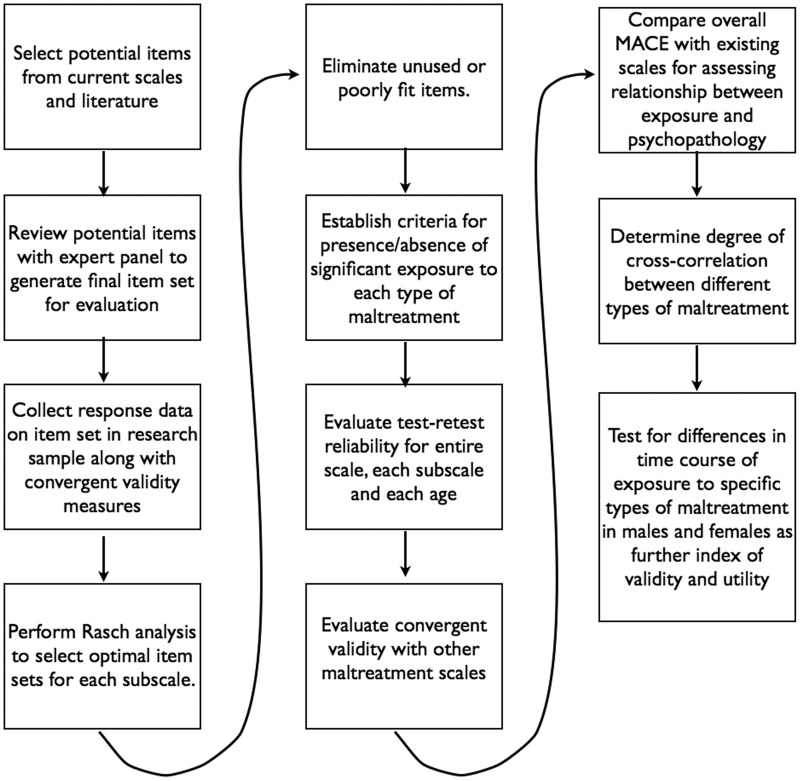
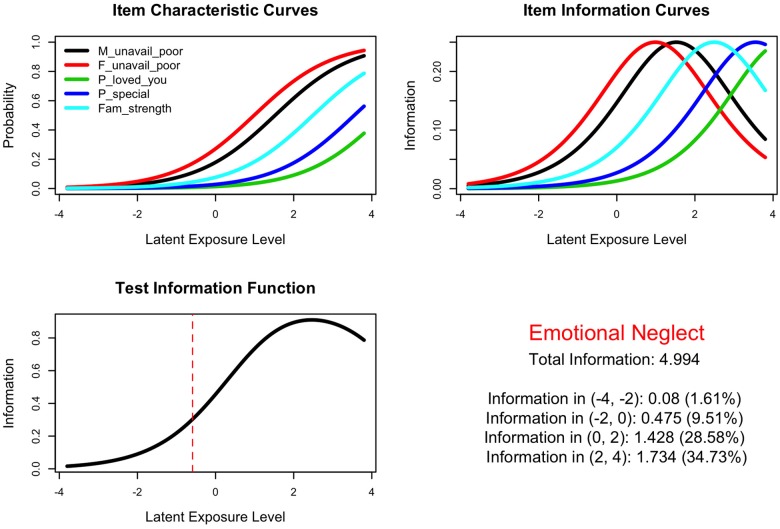
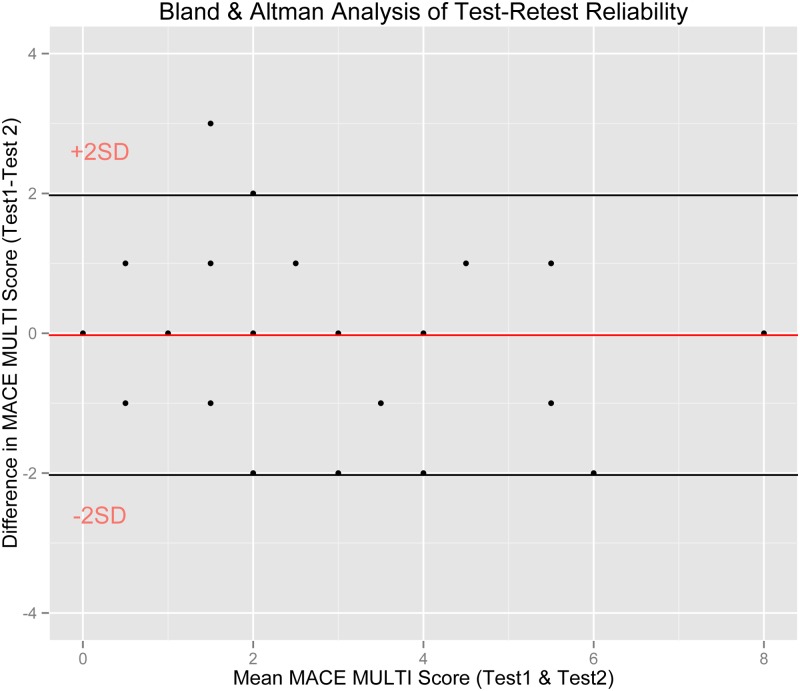
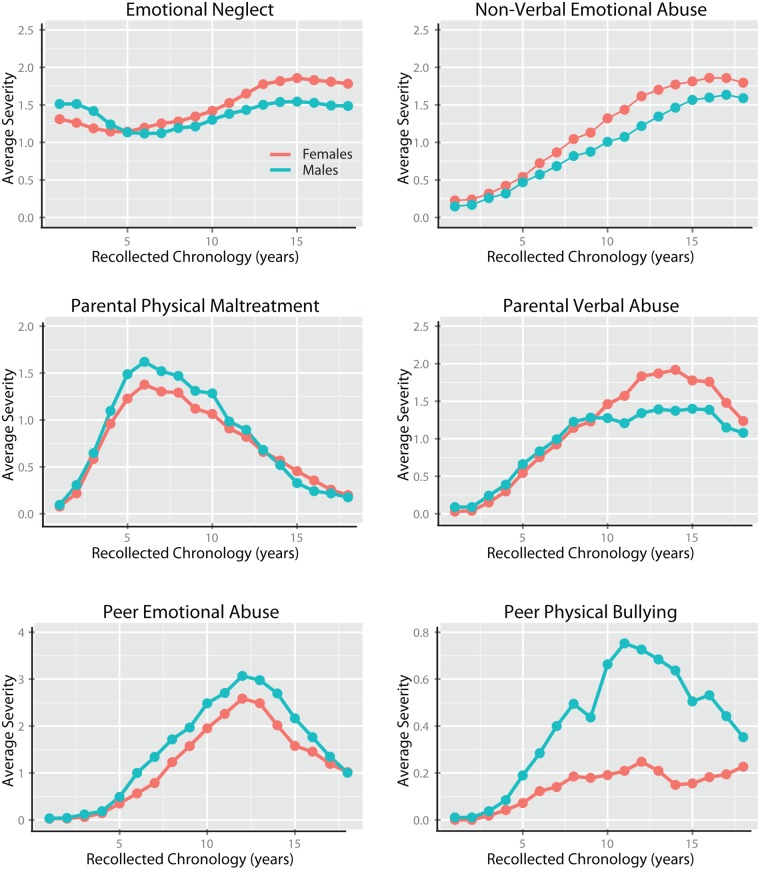
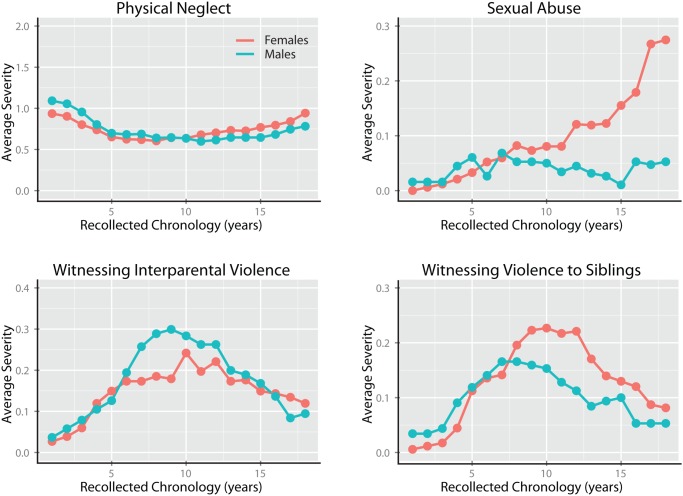
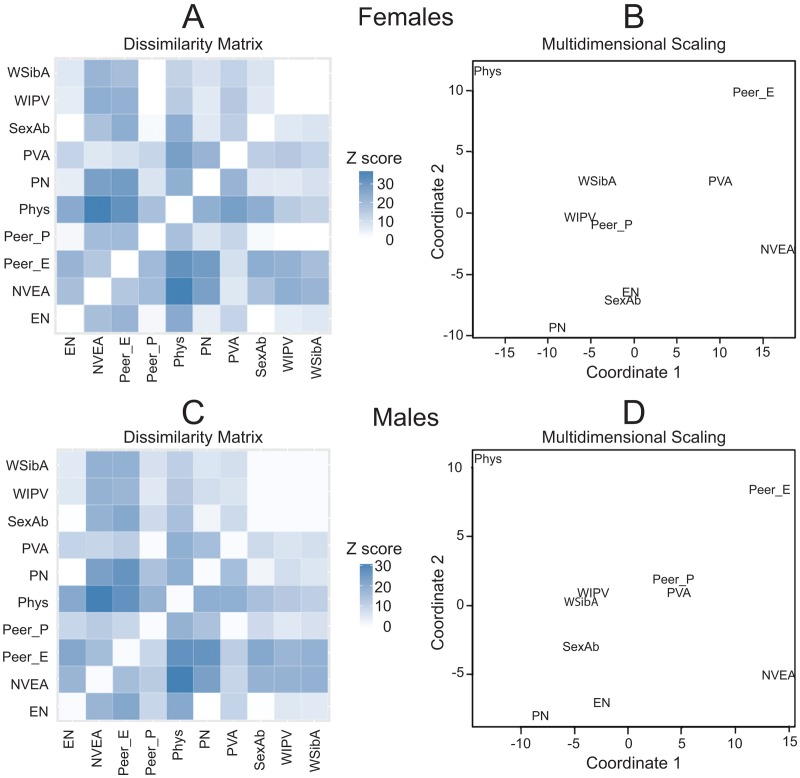
There is increasing interest in childhood maltreatment as a potent stimulus that may alter trajectories of brain development, induce epigenetic modifications and enhance risk for medical and psychiatric disorders. Although a number of useful scales exist for retrospective assessment of abuse and neglect they have significant limitations. Moreover, they fail to provide detailed information on timing of exposure, which is critical for delineation of sensitive periods. The Maltreatment and Abuse Chronology of Exposure (MACE) scale was developed in a sample of 1051 participants using item response theory to gauge severity of exposure to ten types of maltreatment (emotional neglect, non-verbal emotional abuse, parental physical maltreatment, parental verbal abuse, peer emotional abuse, peer physical bullying, physical neglect, sexual abuse, witnessing interparental violence and witnessing violence to siblings) during each year of childhood. Items included in the subscales had acceptable psychometric properties based on infit and outfit mean square statistics, and each subscale passed Andersen's Likelihood ratio test. The MACE provides an overall severity score and multiplicity score (number of types of maltreatment experienced) with excellent test-retest reliability. Each type of maltreatment showed good reliability as did severity of exposure across each year of childhood. MACE Severity correlated 0.738 with Childhood Trauma Questionnaire (CTQ) score and MACE Multiplicity correlated 0.698 with the Adverse Childhood Experiences scale (ACE). However, MACE accounted for 2.00- and 2.07-fold more of the variance, on average, in psychiatric symptom ratings than CTQ or ACE, respectively, based on variance decomposition. Different types of maltreatment had distinct and often unique developmental patterns. The 52-item MACE, a simpler Maltreatment Abuse and Exposure Scale (MAES) that only assesses overall exposure and the original test instrument (MACE-X) with several additional items plus spreadsheets and R code for scoring are provided to facilitate use and to spur further development.
Overview
The claims and statistics of this paper haven’t been checked yet.
Run the check — free, no account needed. It reads the open-access text and checks the sources it cites.
Integrity signals
Registry
Cites
Statistics
Figures
Verification
Claims the paper makes
The claims and statistics of this paper haven’t been checked yet.
Run the check — free, no account needed. It reads the open-access text and checks the sources it cites.
Claims other papers make about this one
Each is checked against this paper’s own text: does it say what the citing paper says it does?
In the citing paper
“In fact, the Maltreatment and Abuse Chronology of Exposure (MACE) (Teicher and Parigger, 2015) is the first measure to directly assess timing of childhood maltreatment exposure within a developmental framework.”
From Developmental psychoneuroendocrine and psychoneuroimmune pathways from childhood adversity to disease (2017) · cites this paper as Teicher and Parigger, 2015
Self-check
Percentages, sums and reported differences re-computed from the paper’s own numbers.
The self-check needs the paper’s full text.
Citations
Cites
STATISTICAL METHODS FOR ASSESSING AGREEMENT BETWEEN TWO METHODS OF CLINICAL MEASUREMENT
Martin Bland, J., & Altman, D. (1986) · The Lancet · doi:10.1016/s0140-6736(86)90837-8 · Cited by 47,965
Felitti, V. J., Anda, R. F., Nordenberg, D., Williamson, D. F., Spitz, A. M., Edwards, V., Koss, M. P., & Marks, J. S. (1998) · American Journal of Preventive Medicine · doi:10.1016/s0749-3797(98)00017-8 · Cited by 18,943
Beckett, A. H., Rowland, M., & TURNER, P. (1965) · The Lancet · doi:10.1016/s0140-6736(65)91037-8 · Cited by 16,917
The Revised Conflict Tactics Scales (CTS2): Development and Preliminary Psychometric Data
STRAUS, M. A., HAMBY, S. L., BONEY-McCOY, S., & SUGARMAN, D. B. (1996) · Journal of Family Issues · doi:10.1177/019251396017003001 · Cited by 6,923
Applying the Rasch Model: Fundamental Measurement in the Human Sciences
Bond, T. G., & Fox, C. M. (2003) · Journal of Educational Measurement · doi:10.1111/j.1745-3984.2003.tb01103.x · Cited by 4,490
Anda, R. F., Felitti, V. J., Bremner, J. D., Walker, J. D., Whitfield, C., Perry, B. D., Dube, S. R., & Giles, W. H. (2006) · European archives of psychiatry and clinical neuroscience · doi:10.1007/s00406-005-0624-4 · Cited by 4,292
Relational Aggression, Gender, and Social-Psychological Adjustment
Crick, N. R., & Grotpeter, J. K. (1995) · Child Development · doi:10.1111/j.1467-8624.1995.tb00900.x · Cited by 3,954
Development, reliability, and validity of a dissociation scale
BERNSTEIN, E. M., & PUTNAM, F. W. (1986) · The Journal of Nervous and Mental Disease · doi:10.1097/00005053-198612000-00004 · Cited by 3,793 · cited 4×
“Dissociation was assessed using the Dissociative Experience Scale (DES) [68], which consists of 28 questions and Likert lines assessing the frequency of occurrence of various dissociative experiences in an individual’s daily life.”
MethodInfluentialInitial reliability and validity of a new retrospective measure of child abuse and neglect
(1994) · American Journal of Psychiatry · doi:10.1176/ajp.151.8.1132 · Cited by 3,577
Straus, M., Hamby, S., Finkelhor, D., Moore, D. W., & Runyan, D. K. (1998) · International Journal of Child Abuse & Neglect · doi:10.1016/s0145-2134(97)00174-9 · Cited by 2,528
Research works printed but not linked: 1
- JM Linacre, 1994, Dichotomous Infit and Outfit Mean-Square Fit Statistics / Chi-Square Fit Statistics, Rasch Measurement Transactions, 8, 350
Cited by
Sorted by citations
Annual research review: enduring neurobiological effects of childhood abuse and neglect
Teicher, M. H., & Samson, J. A. (2016) · Journal of Child Psychology and Psychiatry · doi:10.1111/jcpp.12507 · Cited by 1,473
Self-citationHerzog, J. I., & Schmahl, C. (2018) · Frontiers in Psychiatry · doi:10.3389/fpsyt.2018.00420 · Cited by 583
McKay, M. T., Cannon, M., Chambers, D., Conroy, R. M., Coughlan, H., Dodd, P., Healy, C., O’Donnell, L., & Clarke, M. C. (2021) · Acta Psychiatrica Scandinavica · doi:10.1111/acps.13268 · Cited by 548
Calvano, C., Engelke, L., Di Bella, J., Kindermann, J., Renneberg, B., & Winter, S. M. (2022) · European Child & Adolescent Psychiatry · doi:10.1007/s00787-021-01739-0 · Cited by 423
MacDonald, K. S., Thomas, M. L., Sciolla, A., Schneider, B., Pappas, K., Bleijenberg, G., Bohus, M., Bradley, B., Carpenter, L. L., Carr, A., et al. (2016) · PLoS ONE · doi:10.1371/journal.pone.0146058 · Cited by 374
Metadata
- Authors
- Teicher, M. H., & Parigger, A.
- Affiliations
- Harvard University (US)
- University of Konstanz (DE)
- Corresponding author
- Teicher, Martin H.
- ORCID
- Teicher, Martin H.
- Venue
- PLOS ONE
- Publisher
- Public Library of Science (PLoS)
- Published
- 2015-02-25
- Volume
- 10
- Issue
- 2
- Pages
- e0117423
- ISSN
- 1932-6203 (ISSN-L)
- PMC
- PMC4340880
- OpenAlex
- W2103710345
- Cited by
- 421
- References
- 104
- Citations by year
- 2026: 45 · 2025: 59 · 2024: 61 · 2023: 50 · 2022: 39 · 2021: 30 · 2020: 36 · 2019: 29 · 2018: 28 · 2017: 24 · 2016: 11 · 2015: 9
- FWCI
- 29.80
- Type
- journal article
- Language
- en
- Open access
- gold
- doi.org
- Licence
- Locations
- PLoS ONE (publishedVersion, cc-by)
- Europe PMC (PubMed Central) (publishedVersion, cc-by)
- PubMed Central (publishedVersion, cc-by)
- PubMed (publishedVersion)
- KOPS (University of Konstanz) (submittedVersion, cc-by)
- Digital Access to Scholarship at Harvard (DASH) (Harvard University) (submittedVersion, cc-by)
- RePEc: Research Papers in Economics (submittedVersion)
- DOAJ (DOAJ: Directory of Open Access Journals) (submittedVersion, cc-by-sa)
- Figshare (submittedVersion, cc-by)
- Funders
- National Institutes of Health (1r01mh091391-01, 5r01da017846-14)
- National Institute of Mental Health (R01 MH-091391, MH091391, R01 MH-, DA-017846)
- National Institute on Drug Abuse (R01DA-017846, DA017846, MH-091391)
- Topics
- Social Sciences › Psychology › Clinical Psychology › Child Abuse and Trauma
- Social Sciences › Sociology and Political Science › Child Welfare and Adoption
- Social Sciences › Psychology › Clinical Psychology › Child and Adolescent Psychosocial and Emotional Development
- Keywords
- child abuse, abuse and neglect, retrospective evaluation, exposure timing, sensitive period, emotional neglect, physical abuse, sexual abuse, bullying, witnessing violence, peer abuse, psychiatric symptoms, adverse childhood experiences, Childhood Trauma Questionnaire, scale development, item response theory
- MeSH terms
- Adolescent, Adult, Child, Child Abuse, Child Development, Child, Preschool, Emotions, Female, Humans, Infant, Male, Psychometrics, Surveys and Questionnaires, Retrospective Studies, Risk Factors, Reproducibility of Results, Prevalence, Young Adult, Public Health Surveillance
About these checks
Registry, retraction, Cites and statistics results are computed, not judged, with one exception: a printed reference that no index lists is read once by a model before it counts as a citation error. Claims are extracted by a model and kept only when their quote appears verbatim in the text; each cited source is then checked, with a model’s help, for whether it says what the claim relies on. Those verdicts can be wrong — read the claim’s quote and the cited source before relying on one.
Statistics and arithmetic are recomputed, not judged.
Confidence bands are shown only for fields calibrated on our annotated test set. None is calibrated yet, so no band is shown.
What counts as a claim ›How we measure confidence ›How we check this ›
Are you an author, or do you see a problem with this page? Request a review
