

The DOI matches its Crossref record; 41 of the 41 references it cites were found in a registry or an index.
Dimethyl Fumarate and Monoethyl Fumarate Exhibit Differential Effects on KEAP1, NRF2 Activation, and Glutathione Depletion In Vitro
Open accessAbstract
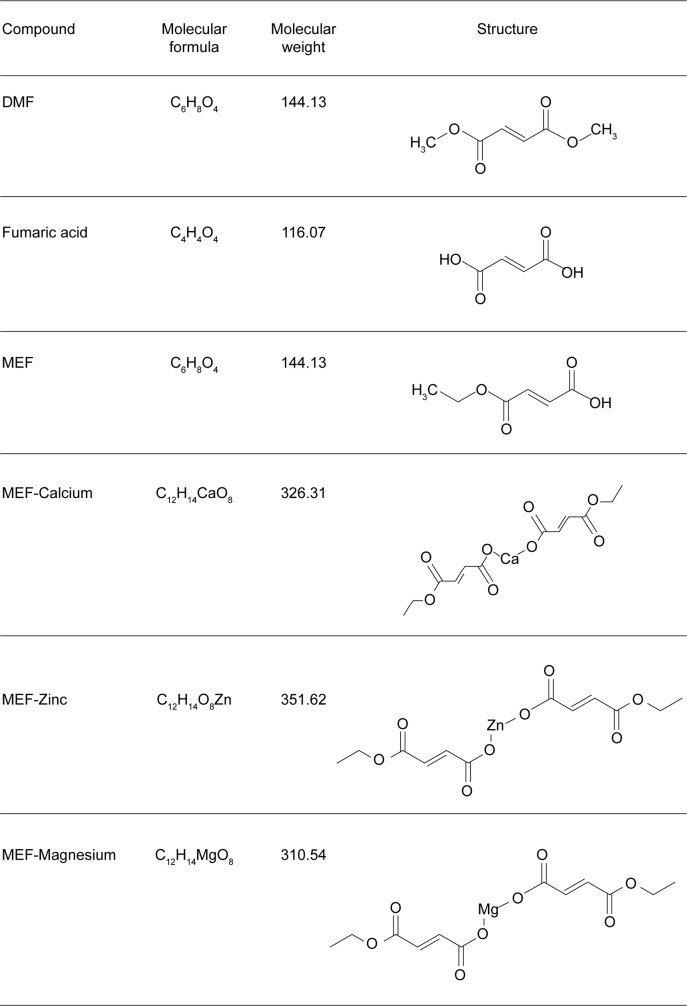
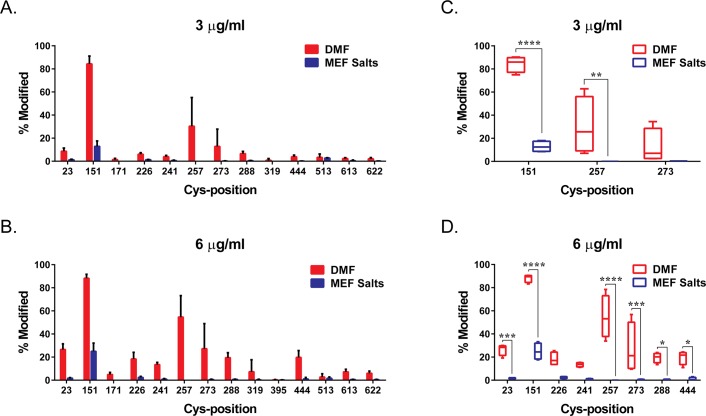
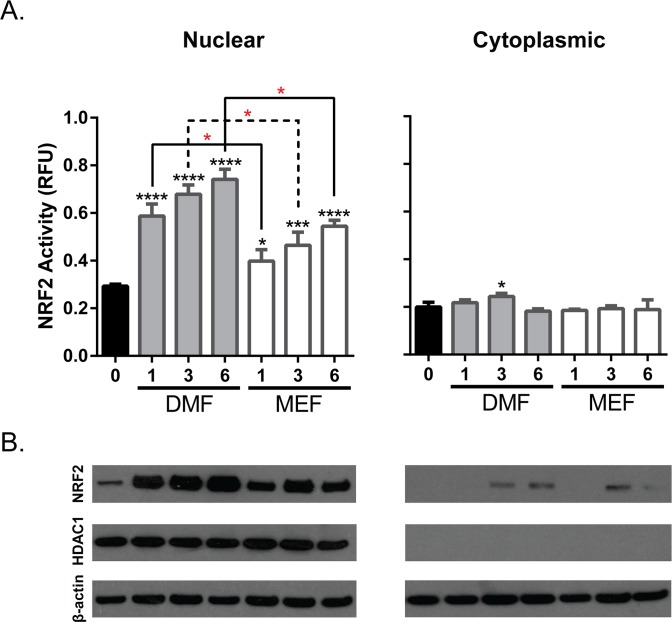
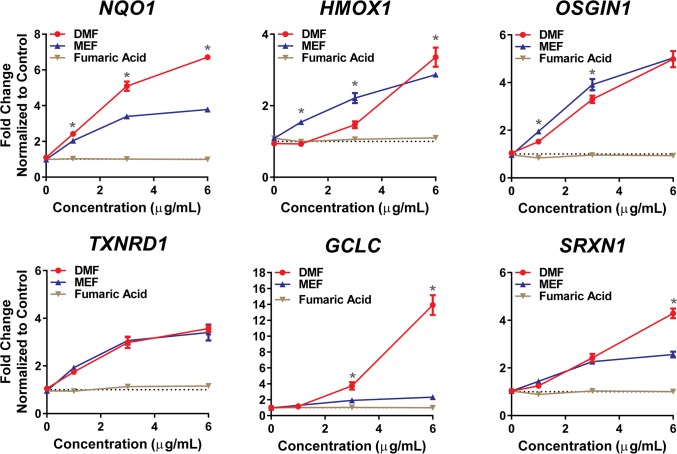
Delayed-release dimethyl fumarate (also known as gastro-resistant dimethyl fumarate), an oral therapeutic containing dimethyl fumarate (DMF) as the active ingredient, is currently approved for the treatment of relapsing multiple sclerosis. DMF is also a component in a distinct mixture product with 3 different salts of monoethyl fumarate (MEF), which is marketed for the treatment of psoriasis. Previous studies have provided insight into the pharmacologic properties of DMF, including modulation of kelch-like ECH-associated protein 1 (KEAP1), activation of the nuclear factor (erythroid-derived 2)-like 2 (NRF2) pathway, and glutathione (GSH) modulation; however, those of MEF remain largely unexplored. Therefore, the aim of this study was to evaluate the in vitro effects of DMF and MEF on KEAP1 modification, activation of the NRF2 pathway, and GSH conjugation. Using mass spectrometry, DMF treatment resulted in a robust modification of specific cysteine residues on KEAP1. In comparison, the overall degree of KEAP1 modification following MEF treatment was significantly less or undetectable. Consistent with KEAP1 cysteine modification, DMF treatment resulted in nuclear translocation of NRF2 and a robust transcriptional response in treated cells, as did MEF; however, the responses to MEF were of a lower magnitude or distinct compared to DMF. DMF was also shown to produce an acute concentration-dependent depletion of GSH; however, GSH levels eventually recovered and rose above baseline by 24 hours. In contrast, MEF did not cause acute reductions in GSH, but did produce an increase by 24 hours. Overall, these studies demonstrate that DMF and MEF are both pharmacologically active, but have differing degrees of activity as well as unique actions. These differences would be expected to result in divergent effects on downstream biology.
Overview
The claims and statistics of this paper haven’t been checked yet.
Run the check — free, no account needed. It reads the open-access text and checks the sources it cites.
Integrity signals
Registry
Cites
Statistics
Figures
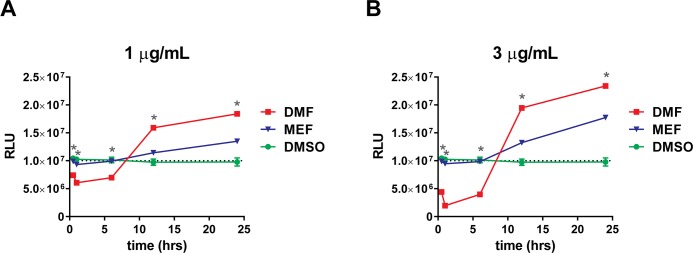
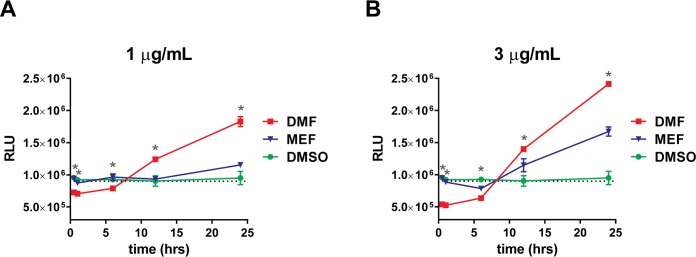
Verification
Claims the paper makes
The claims and statistics of this paper haven’t been checked yet.
Run the check — free, no account needed. It reads the open-access text and checks the sources it cites.
Claims other papers make about this one
Each is checked against this paper’s own text: does it say what the citing paper says it does?
In the citing paper
“Nair and colleagues (2018) convincingly demonstrated an increase in pro-inflammatory cytokine production, including IL-6 and IL-1β, in Mtb-infected Irg1-deficent mice”
From Coupling Krebs cycle metabolites to signalling in immunity and cancer (2018) · cites this paper as [73]
In the citing paper
“this effect was independent of its ability to act as an anti-bactericidal agent73.”
From Coupling Krebs cycle metabolites to signalling in immunity and cancer (2018) · cites this paper as [73]
In the citing paper
“an effect thought to be a consequence of itaconate-mediated transcriptional regulation of the inflammatory response73.”
From Coupling Krebs cycle metabolites to signalling in immunity and cancer (2018) · cites this paper as [73]
In the citing paper
“Irg1 was shown to specifically impair neutrophil recruitment to the lungs to curtail excessive lung inflammation and pathology”
From Coupling Krebs cycle metabolites to signalling in immunity and cancer (2018) · cites this paper as [73]
Self-check
Percentages, sums and reported differences re-computed from the paper’s own numbers.
The self-check needs the paper’s full text.
Citations
Cites
Itoh, K., Chiba, T., Takahashi, S., Ishii, T., Igarashi, K., Katoh, Y., Oyake, T., Hayashi, N., Satoh, K., Hatayama, I., et al. (1997) · Biochemical and Biophysical Research Communications · doi:10.1006/bbrc.1997.6943 · Cited by 3,999
Noseworthy, J. H., Lucchinetti, C. F., Rodriguez, M., & Weinshenker, B. G. (2000) · New England Journal of Medicine · doi:10.1056/nejm200009283431307 · Cited by 3,016
Kobayashi, A., Kang, M.-I., Okawa, H., Ohtsuji, M., Zenke, Y., Chiba, T., Igarashi, K., & Yamamoto, M. (2004) · Molecular and Cellular Biology · doi:10.1128/mcb.24.16.7130-7139.2004 · Cited by 2,224
Dinkova-Kostova, A. T., Holtzclaw, W. D., Cole, R. N., Itoh, K., Wakabayashi, N., Katoh, Y., Yamamoto, M., & Talalay, P. (2002) · Proceedings of the National Academy of Sciences · doi:10.1073/pnas.172398899 · Cited by 1,947 · cited 1×
“However, in the presence of electrophiles or oxidative stress, these molecules can bind KEAP1 cysteine residues resulting in an allosteric conformational change that diminishes KEAP1-dependent degradation of NRF2 [11].”
BackgroundZhang, D. D., & Hannink, M. (2003) · Molecular and Cellular Biology · doi:10.1128/mcb.23.22.8137-8151.2003 · Cited by 1,480
Molecular mechanisms of the Keap1-Nrf2 pathway in stress response and cancer evolution
Taguchi, K., Motohashi, H., & Yamamoto, M. (2011) · Genes to Cells · doi:10.1111/j.1365-2443.2010.01473.x · Cited by 1,478
Regulatory Mechanisms Controlling Gene Expression Mediated by the Antioxidant Response Element
Nguyen, T., Sherratt, P. J., & Pickett, C. B. (2003) · The Annual Review of Pharmacology and Toxicology · doi:10.1146/annurev.pharmtox.43.100901.140229 · Cited by 1,232 · cited 2×
“This allows NRF2 to accumulate and translocate to the nucleus to regulate cytoprotective genes associated with the phase II antioxidant response [12,13].”
BackgroundMethod(2002) · PubMed · Cited by 1,190
Linker, R. A., Lee, D.-H., Ryan, S., van Dam, A. M., Conrad, R., Bista, P., Zeng, W., Hronowsky, X., Buko, A., Chollate, S., et al. (2011) · Brain · doi:10.1093/brain/awq386 · Cited by 1,155
Self-citationBalogun, E. A., Hoque, M., Gong, P., Killeen, E., Green, C. J., Foresti, R., Alam, J., & Motterlini, R. (2003) · Biochemical Journal · doi:10.1042/bj20021619 · Cited by 1,038
Itoh, K., Wakabayashi, N., Katoh, Y., Ishii, T., O'Connor, T., & Yamamoto, M. P. (2003) · Genes to Cells · doi:10.1046/j.1365-2443.2003.00640.x · Cited by 828
Offen, D., Gilgun-Sherki, Y., & Melamed, E. (2004) · Journal of Neurology · doi:10.1007/s00415-004-0348-9 · Cited by 638
Physiological Significance of Reactive Cysteine Residues of Keap1 in Determining Nrf2 Activity
Yamamoto, T., Suzuki, T., Kobayashi, A., Wakabayashi, J., Maher, J. M., Motohashi, H., & Yamamoto, M. P. (2008) · Molecular and Cellular Biology · doi:10.1128/mcb.01704-07 · Cited by 515 · cited 1×
“Cysteine 151 (Cys151) modification of KEAP1 has been identified as one of the major sites important for stress sensing; however, modifications of other KEAP1 cysteine residues, including but not limited to cysteine 257 (Cys257), cysteine 273 (Cys273) and cysteine 288 (Cys288), have also been identified to contribute t…”
BackgroundEggler, A. L., Liu, G., Pezzuto, J. M., van Breemen, R. B., & Mesecar, A. D. (2005) · Proceedings of the National Academy of Sciences · doi:10.1073/pnas.0502402102 · Cited by 476
Scannevin, R. H., Chollate, S., Jung, M.-Y., Shackett, M. N., Patel, H., Bista, P., Zeng, W., Ryan, S. T., Yamamoto, M. P., Lukashev, M., et al. (2012) · Journal of Pharmacology and Experimental Therapeutics · doi:10.1124/jpet.111.190132 · Cited by 461 · cited 2×
“1) has been shown to have anti-inflammatory, cytoprotective, and immunomodulatory properties in pre-clinical models of MS [7, 8].”
BackgroundSelf-citationHong, F., Freeman, M. L., & Liebler, D. C. (2005) · Chemical Research in Toxicology · doi:10.1021/tx0502138 · Cited by 404
Fumarates improve psoriasis and multiple sclerosis by inducing type II dendritic cells
Ghoreschi, K., Brück, J., Kellerer, C., Deng, C., Peng, H.-Y., Rothfuss, O. C., Hussain, R. Z., Gocke, A. R., Respa, A., Glocova, I., et al. (2011) · Journal of Experimental Medicine · doi:10.1084/jem.20100977 · Cited by 366
The Fungal Pathogen Candida albicans Autoinduces Hyphal Morphogenesis by Raising Extracellular pH
Vylkova, S., Carman, A. J., Danhof, H. A., Collette, J. R., Zhou, H., & Lorenz, M. C. (2011) · mBio · doi:10.1128/mbio.00055-11 · Cited by 365
Nguyen, T., Sherratt, P. J., Nioi, P., Yang, C. S., & Pickett, C. B. (2005) · Journal of Biological Chemistry · doi:10.1074/jbc.m503074200 · Cited by 345 · cited 1×
“Cys151, Cys273 and Cys288 have been recognized in the literature as major KEAP1 sensors and studies have suggested that different cysteine residues may play discrete functions mediating the fate of KEAP1 and phase II antioxidant regulation [36].”
BackgroundRadical changes in multiple sclerosis pathogenesis
van Horssen, J., Witte, M. E., Schreibelt, G., & de Vries, H. E. (2010) · Biochimica et Biophysica Acta (BBA) - Molecular Basis of Disease · doi:10.1016/j.bbadis.2010.06.011 · Cited by 325
Hydroxycarboxylic acid receptor 2 mediates dimethyl fumarate’s protective effect in EAE
Chen, H., Assmann, J. C., Krenz, A., Rahman, M., Grimm, M., Karsten, C. M., Köhl, J., Offermanns, S., Wettschureck, N., & Schwaninger, M. (2014) · Journal of Clinical Investigation · doi:10.1172/jci72151 · Cited by 303
Heating decreases epithiospecifier protein activity and increases sulforaphane formation in broccoli
Matusheski, N. V., Juvik, J. A., & Jeffery, E. H. (2004) · Phytochemistry · doi:10.1016/j.phytochem.2004.04.013 · Cited by 302
Dimethylfumarate Inhibits TNF-Induced Nuclear Entry of NF-κB/p65 in Human Endothelial Cells
Loewe, R. P., Holnthoner, W., Gröger, M., Pillinger, M., Грубер, Ф., Mechtcheriakova, D., Hofer, E., Wolff, K. S., & Petzelbauer, P. (2002) · The Journal of Immunology · doi:10.4049/jimmunol.168.9.4781 · Cited by 198
Chen, Z.-H., Saito, Y., Yoshida, Y., Sekine, A., Noguchi, N., & Niki, E. (2005) · Journal of Biological Chemistry · doi:10.1074/jbc.m508556200 · Cited by 196
The Glutathione System: A New Drug Target in Neuroimmune Disorders
Morris, G., Anderson, G., Dean, O. M., Berk, M., Gałecki, P., Martín-Subero, M., & Maes, M. H. J. (2014) · Molecular Neurobiology · doi:10.1007/s12035-014-8705-x · Cited by 194
Garg, R., Gupta, S., & Maru, G. B. (2008) · Carcinogenesis · doi:10.1093/carcin/bgn064 · Cited by 185
Glutathione Depletion Induces Heme Oxygenase‐1 (HSP32) mRNA and Protein in Rat Brain
Ewing, J. F., & Maines, M. D. (1993) · Journal of Neurochemistry · doi:10.1111/j.1471-4159.1993.tb03315.x · Cited by 178
Lehmann, J. C. U., Listopad, J. J., Rentzsch, C., Igney, F. H., von Bonin, A., Hennekes, H., Asadullah, K., & Döcke, W. (2007) · Journal of Investigative Dermatology · doi:10.1038/sj.jid.5700686 · Cited by 160 · cited 2×
“GSH is the most abundant cellular thiol and kinetic studies of the GSH/DMF interaction have shown that DMF can stably conjugate with GSH and rapidly deplete free circulating GSH levels [23].”
BackgroundLin, S. X., Lisi, L., Russo, C. D., Polak, P. E., Sharp, A. J., Weinberg, G. L., Kalinin, S., & Feinstein, D. L. (2011) · ASN NEURO · doi:10.1042/an20100033 · Cited by 156
Schmidt, T. J., Ak, M., & Mrowietz, U. (2006) · Bioorganic & Medicinal Chemistry · doi:10.1016/j.bmc.2006.09.053 · Cited by 139 · cited 1×
“However, modification of the cysteine redox sensors on KEAP1, as a result of oxidation or by conjugation with electrophiles, results in NRF2 accumulation and transcriptional pathway activation [35].”
BackgroundModulation of Phase II Enzymes by Sulforaphane: Implications for Its Cardioprotective Potential
Angeloni, C., Leoncini, E., Malaguti, M., Angelini, S., Hrelia, P., & Hrelia, S. (2009) · Journal of Agricultural and Food Chemistry · doi:10.1021/jf900549c · Cited by 117
Mechanisms of Oxidative Damage in Multiple Sclerosis and a Cell Therapy Approach to Treatment
Witherick, J., Wilkins, A., Scolding, N. J., & Kemp, K. C. (2010) · Autoimmune Diseases · doi:10.4061/2011/164608 · Cited by 116
Chemistry of the Cysteine Sensors in Kelch-Like ECH-Associated Protein 1
Holland, R., & Fishbein, J. C. (2010) · Antioxidants and Redox Signaling · doi:10.1089/ars.2010.3273 · Cited by 109
Neuron-astrocyte interactions: implications for cellular energetics and antioxidant levels.
Aschner, M. (2000) · PubMed · Cited by 77
Nelson, K. C., Carlson, J. L., Newman, M. L., Sternberg, P., Jones, D., Kavanagh, T. J., Diaz, D., Cai, J., & Wu, M. (1999) · PubMed · Cited by 75
Multiple sclerosis: advances in understanding, diagnosing, and treating the underlying disease.
Fox, R., Bethoux, F., Goldman, M., & Cohen, J. A. (2006) · Cleveland Clinic journal of medicine · doi:10.3949/ccjm.73.1.91 · Cited by 75
Fumaric acid diesters deprive cultured primary astrocytes rapidly of glutathione
Schmidt, M., & Dringen, R. (2010) · Neurochemistry International · doi:10.1016/j.neuint.2010.01.006 · Cited by 66 · cited 1×
“These increases in total GSH following initial depletion may be a compensatory response to cellular GSH loss in the presence of DMF and this may play a protective role; however, a more direct role of NRF2-dependent upregulation of GSH biosynthetic machinery is also possible since both fumaric acid esters eventually in…”
BackgroundFumaric Acid Esters Stimulate Astrocytic VEGF Expression through HIF-1α and Nrf2
Wiesner, D., Merdian, I., Lewerenz, J., Ludolph, A. C., Dupuis, L., & Witting, A. (2013) · PLoS ONE · doi:10.1371/journal.pone.0076670 · Cited by 45
Horikawa, S., Yoneya, R., Nagashima, Y., Hagiwara, K., & Ozasa, H. (2001) · FEBS Letters · doi:10.1016/s0014-5793(01)03270-7 · Cited by 37
Disease-modifying drugs for multiple sclerosis: current and future aspects
Freedman, M. S. (2006) · Expert Opinion on Pharmacotherapy · doi:10.1517/14656566.7.1.s1 · Cited by 33
The Glutathione Depleting Agent Diethylmaleate Prolongs Renal Allograft Survival
Nathens, A. B., Rotstein, O. D., Jones, J., Dackiw, A. P. B., & Gorczynski, R. M. (1998) · Journal of Surgical Research · doi:10.1006/jsre.1998.5338 · Cited by 9
Research works printed but not linked: 3
- K Itoh, 2003, Keap1 regulates both cytoplasmic-nuclear shuttling and degradation of Nrf2 in response to electrophiles, Genes Cells, 8, 379, 10.1046/j.1365-2443.2003.00640.x · DOI
- TJ Schmidt, 2007, Reactivity of dimethyl fumarate and methylhydrogen fumarate towards glutathione and N-acetyl-L-cysteine—preparation of S-substituted thiosuccinic acid esters, Bioorg Med Chem, 15, 333, 10.1016/j.bmc.2006.09.053 · DOI
- R Holland, 2010, Chemistry of the cysteine sensors in Kelch-like ECH-associated protein 1, Antioxid Redox Signaling, 13, 1749, 10.1089/ars.2010.3273 · DOI
Cited by
Sorted by citations
Targeting oxidative stress in disease: Promise and limitations of antioxidant therapy
Forman, H. J., & Zhang, H. (2021) · Nature Reviews Drug Discovery · doi:10.1038/s41573-021-00233-1 · Cited by 2,900
Itaconate is an anti-inflammatory metabolite that activates Nrf2 via alkylation of KEAP1
Mills, E. L., Ryan, D. G., Prag, H. A., Dikovskaya, D., Menon, D., Zaslona, Z., Jedrychowski, M. P., Costa, A. S. H., Higgins, M., Hams, E., et al. (2018) · Nature · doi:10.1038/nature25986 · Cited by 1,885
Coupling Krebs cycle metabolites to signalling in immunity and cancer
Ryan, D. G., Murphy, M. P., Frezza, C., Prag, H. A., Chouchani, E. T., O’Neill, L. A., & Mills, E. L. (2018) · Nature Metabolism · doi:10.1038/s42255-018-0014-7 · Cited by 398
The Role of Astrocytes in Multiple Sclerosis
Ponath, G. D., Park, C., & Pitt, D. (2018) · Frontiers in Immunology · doi:10.3389/fimmu.2018.00217 · Cited by 378
Dimethyl fumarate treatment induces adaptive and innate immune modulation independent of Nrf2
Schulze‐Topphoff, U., Varrin‐Doyer, M., Pekarek, K. L., Spencer, C. M., Shetty, A., Sagan, S. A., Cree, B., Sobel, R. A., Wipke, B. T., Steinman, L., et al. (2016) · Proceedings of the National Academy of Sciences · doi:10.1073/pnas.1603907113 · Cited by 292
“Kensler TW, Wakabayashi N, Biswal S (2007) Cell survival responses to environmental stresses via the Keap1-Nrf2-ARE pathway.”
BackgroundInfluentialSelf-citation
Metadata
- Authors
- Brennan, M. S., Matos, M. F., Li, B., Hronowski, X., Gao, B., Juhasz, P., Rhodes, K. J., & Scannevin, R. H.
- Affiliations
- Biogen (United States) (US)
- Corresponding author
- Scannevin, Robert H.
- Venue
- PLOS ONE
- Publisher
- Public Library of Science (PLoS)
- Published
- 2015-03-20
- Volume
- 10
- Issue
- 3
- Pages
- e0120254
- ISSN
- 1932-6203 (ISSN-L)
- PMC
- PMC4368598
- OpenAlex
- W2008817720
- Cited by
- 188
- References
- 41
- Citations by year
- 2026: 23 · 2025: 19 · 2024: 15 · 2023: 14 · 2022: 21 · 2021: 11 · 2020: 13 · 2019: 16 · 2018: 18 · 2017: 14 · 2016: 17 · 2015: 6
- FWCI
- 7.96
- Type
- journal article
- Language
- en
- Open access
- gold
- doi.org
- Licence
- Locations
- PLoS ONE (publishedVersion, cc-by)
- Europe PMC (PubMed Central) (publishedVersion, cc-by)
- PubMed Central (publishedVersion, cc-by)
- PubMed (publishedVersion)
- DOAJ (DOAJ: Directory of Open Access Journals) (submittedVersion, cc-by-sa)
- Figshare (submittedVersion, cc-by)
- Funders
- Biogen
- Topics
- Life Sciences › Biochemistry, Genetics and Molecular Biology › Molecular Biology › Genomics, phytochemicals, and oxidative stress
- Life Sciences › Biochemistry, Genetics and Molecular Biology › Molecular Biology › Glutathione Transferases and Polymorphisms
- Life Sciences › Biochemistry, Genetics and Molecular Biology › Molecular Biology › Redox biology and oxidative stress
- Keywords
- dimethyl fumarate, Keap1, Nrf2 activation, glutathione depletion, cysteine modification, nuclear translocation, antioxidant pathways, multiple sclerosis, psoriasis, fumarate salts
- MeSH terms
- Dimethyl Fumarate, Kelch-Like ECH-Associated Protein 1, Astrocytes, Cell Nucleus, Cysteine, Extracellular Space, Fumarates, Gene Expression Regulation, Glutathione, Humans, Protein Transport, Intracellular Signaling Peptides and Proteins, NF-E2-Related Factor 2, HEK293 Cells
About these checks
Registry, retraction, Cites and statistics results are computed, not judged, with one exception: a printed reference that no index lists is read once by a model before it counts as a citation error. Claims are extracted by a model and kept only when their quote appears verbatim in the text; each cited source is then checked, with a model’s help, for whether it says what the claim relies on. Those verdicts can be wrong — read the claim’s quote and the cited source before relying on one.
Statistics and arithmetic are recomputed, not judged.
Confidence bands are shown only for fields calibrated on our annotated test set. None is calibrated yet, so no band is shown.
What counts as a claim ›How we measure confidence ›How we check this ›
Are you an author, or do you see a problem with this page? Request a review
