

The Effects of Extraversion, Social Support on the Posttraumatic Stress Disorder and Posttraumatic Growth of Adolescent Survivors of the Wenchuan Earthquake
Open accessThe DOI matches its Crossref record; 73 of the 74 references it cites were found in a registry or an index.
Abstract
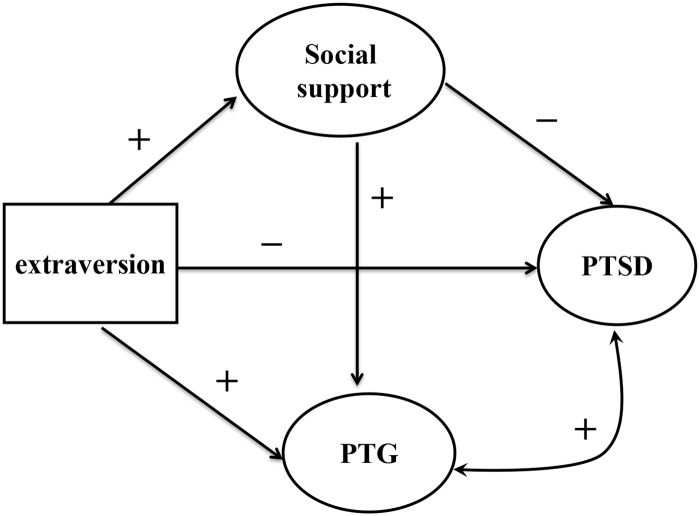
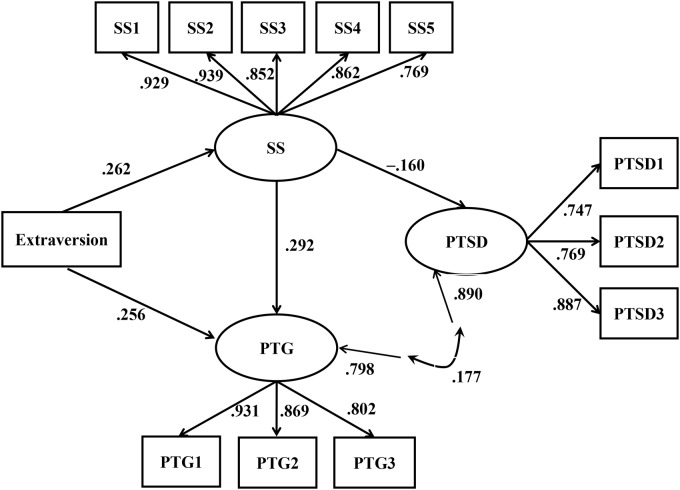
OBJECTIVE: The aim of this study was to examine the relationships among extraversion, social support, posttraumatic stress disorder and posttraumatic growth among adolescent survivors of the Wenchuan earthquake. METHODS: Six hundred thirty-eight participants were selected from the survivors of the 2008 Wenchuan earthquake. Participants completed four main questionnaires, including the Extraversion Subscale, the Social Support Scale, the Child PTSD Symptom Scale, and the Posttraumatic Growth Inventory. RESULTS: A bivariate correlation analysis revealed significant correlations among extraversion, social support, posttraumatic stress disorder and posttraumatic growth. Extraversion had significant indirect effects on posttraumatic stress disorder (β = -.037, p < .01) and posttraumatic growth (β = .077, p < .001) through social support. The results also indicated that extraversion had a significant direct effect on posttraumatic growth and a nonsignificant direct effect on posttraumatic stress disorder. CONCLUSIONS: Social support fully mediates the relationship between extraversion and posttraumatic stress disorder and partially mediates the relationship between extraversion and posttraumatic growth. Psychological interventions and care for survivors of the earthquake should include the various functions and sources of social support and how they serve to benefit individuals.
Overview
The claims and statistics of this paper haven’t been checked yet.
Free: it reads the open-access text and checks the first 5 claims that cite a source we can check. Create a free account to check every claim.
Integrity signals
Registry
Cites
Statistics
Figures
Verification
Claims the paper makes
The claims and statistics of this paper haven’t been checked yet.
Free: it reads the open-access text and checks the first 5 claims that cite a source we can check. Create a free account to check every claim.
Self-check
Percentages, sums and reported differences re-computed from the paper’s own numbers.
The self-check needs the paper’s full text.
Citations
Cites
Diagnostic and Statistical Manual of Mental Disorders
Williams, J. B. W., & First, M. (2013) · Encyclopedia of Social Work · doi:10.1093/acrefore/9780199975839.013.104 · Cited by 109,519
Confidence Limits for the Indirect Effect: Distribution of the Product and Resampling Methods
MacKinnon, D. P., Lockwood, C. M., & Williams, J. (2004) · Multivariate Behavioral Research · doi:10.1207/s15327906mbr3901_4 · Cited by 7,806 · cited 1×
“Because bias-corrected bootstrapping has greater statistical power to detect mediation effects than other forms of mediation analyses [65], we used a bias-corrected bootstrap estimation with a 95% confidence interval to determine the significance of the indirect effects.”
MethodTARGET ARTICLE: "Posttraumatic Growth: Conceptual Foundations and Empirical Evidence"
Tedeschi, R. G., & Calhoun, L. G. (2004) · Psychological Inquiry · doi:10.1207/s15327965pli1501_01 · Cited by 7,154
The posttraumatic growth inventory: measuring the positive legacy of trauma
Tedeschi, R. G., & Calhoun, L. G. (1996) · Journal of Traumatic Stress · doi:10.1002/jts.2490090305 · Cited by 7,061 · cited 1×
“The original PTGI developed by Tedeschi and Calhoun consisted of 21 items covering five subscales [4]: personal strength, new possibilities, the ability to relate to others, appreciation of life, and spiritual change.”
MethodMeta-analysis of risk factors for posttraumatic stress disorder in trauma-exposed adults
Brewin, C. R., Andrews, B., & Valentine, J. D. (2000) · Journal of Consulting and Clinical Psychology · doi:10.1037/0022-006x.68.5.748 · Cited by 5,243
Predictors of posttraumatic stress disorder and symptoms in adults: a meta-analysis
Ozer, E. J., Best, S. R., Lipsey, T. L., & Weiss, D. S. (2003) · Psychological Bulletin · doi:10.1037/0033-2909.129.1.52 · Cited by 3,322
A Brief Guide to Structural Equation Modeling
Weston, R., & Gore, P. A. (2006) · The Counseling Psychologist · doi:10.1177/0011000006286345 · Cited by 2,718 · cited 2×
“The degree of model fit was assessed using the following fit indices [64]: the chi-square statistic, the root mean squared error of approximation (RMSEA), the comparative fit index (CFI), and the standardized root mean square residual (SRMR).”
MethodChildren's perceptions of the personal relationships in their social networks.
Furman, W., & Buhrmester, D. (1985) · Developmental Psychology · doi:10.1037//0012-1649.21.6.1016 · Cited by 2,338
Positive change following trauma and adversity: A review
Linley, P. A., & Joseph, S. (2004) · Journal of Traumatic Stress · doi:10.1023/b:jots.0000014671.27856.7e · Cited by 2,260
A meta-analytic review of benefit finding and growth.
Helgeson, V. S., Reynolds, K. A., & Tomich, P. L. (2006) · Journal of Consulting and Clinical Psychology · doi:10.1037/0022-006x.74.5.797 · Cited by 1,864
Research works printed but not linked: 4
- 24. Park CL. The notion of growth following stressful life experiences: Problems and prospects. Psychol Inq. 2004; 15: 69-76.
- 53. Zhou H, Niu L, Zou H. A development study on the five-factor personality questionnaire for middle school students. Psychol Dev Educ. 2000; 16: 48-54.
- 54. Lei L, Yang Y, Liu M. The Relationship between adolescents' neuroticism, internet service preference, and internet addiction. Acta Psychol Sin. 2006; 38: 375-381.
- 61. Hou Z, Zhou X, Chen J, Zhu l, Ni J, Chen S. The influencing factors of PTSD and PTG among teachers after Wenchuan earthquake: Perspectives from before, during and after disaster. Psycholl Dev Edu. 2014; 30: 82-89.
Cited by
Dai, W., Chen, L., Lai, Z., Li, Y., Wang, J., & Liu, A. (2016) · BMC Psychiatry · doi:10.1186/s12888-016-0891-9 · Cited by 281
“Jia et al [35] 2015 Cross-sectional Wenchuan, China 8.”
BackgroundInfluentialEltanamly, H., Leijten, P., Jak, S., & Overbeek, G. (2021) · Trauma, Violence, & Abuse · doi:10.1177/1524838019833001 · Cited by 236
Zhou, X., Wu, X., & Zhen, R. (2018) · Anxiety, Stress, & Coping · doi:10.1080/10615806.2017.1374376 · Cited by 121
“Specifically, and consistent with previous research (Jia et al., 2015; Ma et al., 2011; Zhou & Wu, 2016), our direct effect model results suggest that social support positively predicts PTG but negatively predicts PTSD.”
ResultSelf-citationZhou, X., Wu, X., & Zhen, R. (2017) · Psychological Trauma: Theory, Research, Practice, and Policy · doi:10.1037/tra0000213 · Cited by 105
“In addition, consistent with previous studies (e.g., Jia et al., 2015; Yu et al., 2014) and the direct model of social support (Cohen & Syme, 1985), we found that social support had a positive and direct prediction on PTG, Here, social support appeared to provide some necessary emotional support…”
ResultSelf-citationLiang, Y., Cheng, J., Ruzek, J. I., & Liu, Z. (2019) · Journal of Affective Disorders · doi:10.1016/j.jad.2018.09.047 · Cited by 107
Posttraumatic Growth as a Response to Natural Disasters in Children and Adolescents
Bernstein, M., & Pfefferbaum, B. J. (2018) · Current Psychiatry Reports · doi:10.1007/s11920-018-0900-4 · Cited by 101
Canale, N., Marino, C., Lenzi, M., Vieno, A., Griffiths, M. D., Gaboardi, M., Giraldo, M., Cervone, C., & Santinello, M. (2021) · Journal of Happiness Studies · doi:10.1007/s10902-021-00421-1 · Cited by 93
Wang, W., Wu, X., & Tian, Y. (2018) · Frontiers in Psychology · doi:10.3389/fpsyg.2018.02131 · Cited by 58
Self-citationLiu, A., Wang, W., & Wu, X. (2021) · European Journal of Psychotraumatology · doi:10.1080/20008198.2020.1864949 · Cited by 67
“In recent years, Chinese researchers have found that social support had a positive effect on PTG among adolescents after the Wenchuan earthquake (Jia, Ying, Zhou, Wu, & Lin, 2015).”
BackgroundSelf-citationYan, S., Yang, J., Ye, M., Chen, S., Xie, C.-Y., Huang, J., & Liu, H. (2021) · Frontiers in Psychology · doi:10.3389/fpsyg.2021.658307 · Cited by 70
Extraversion and happiness: The mediating role of social support and hope
Tan, C., Low, S. K., & Viapude, G. N. (2018) · PsyCh Journal · doi:10.1002/pchj.220 · Cited by 70
Tan, C., Krishnan, S., & Lee, Q.-W. (2016) · Current Psychology · doi:10.1007/s12144-016-9444-0 · Cited by 60
“Jia et al. (2015) investigated the effects of extraversion and social support on posttraumatic stress disorder and posttraumatic growth among adolescent earthquake survivors.”
BackgroundXie, C., & Kim, Y. (2022) · Healthcare · doi:10.3390/healthcare10020224 · Cited by 63
“Social support is a common predictor included in many previous studies on PTG [20,21].”
BackgroundResultInfluentialWang, Y., Xu, J., & Lu, Y. (2019) · Journal of Affective Disorders · doi:10.1016/j.jad.2019.11.067 · Cited by 57
Laslo‐Roth, R., George‐Levi, S., & Margalit, M. (2020) · Journal of Community Psychology · doi:10.1002/jcop.22490 · Cited by 54
Jia, X., Liu, X., Ying, L., & Lin, C. (2017) · Frontiers in Psychology · doi:10.3389/fpsyg.2017.01275 · Cited by 50
“The modified PTGI was based on an original PTGI developed by Tedeschi and Calhoun (1996) and was composed of three subscales: perceived changes in the self (9 items), the sense of relationship with others (7 items), and changed philosophy of life (6 items; An et al., 2011; Jia et al., 2015).”
MethodSelf-citationType and Timing of Negative Life Events Are Associated with Adolescent Depression
Nishikawa, S., Fujisawa, T. X., Kojima, M., & Tomoda, A. (2018) · Frontiers in Psychiatry · doi:10.3389/fpsyt.2018.00041 · Cited by 57
“Finally, we did not examine the influence of other psychosocial factors such as social support (52), meaning-making (e.”
BackgroundRzeszutek, M. (2017) · European Journal of Psychotraumatology · doi:10.1080/20008198.2017.1412225 · Cited by 37
Allen, L. R., Jones, C. A., Fox, A. P., Copello, A. G., Jones, N., & Meiser‐Stedman, R. (2021) · Journal of Affective Disorders · doi:10.1016/j.jad.2021.07.028 · Cited by 45
An, Y., Yuan, G., Zhang, N., Xu, W., Liu, Z., & Zhou, F. (2018) · Psychiatry Research · doi:10.1016/j.psychres.2018.03.034 · Cited by 40
Liu, A., Wang, W., & Wu, X. (2023) · Current Psychology · doi:10.1007/s12144-021-01643-5 · Cited by 40
Self-citationEray, Ş., Uçar, H. N., & Murat, D. (2017) · International Journal of Disaster Risk Reduction · doi:10.1016/j.ijdrr.2017.05.026 · Cited by 42
Identifying medical students at risk of underperformance from significant stressors
WILKINSON, T. J., McKenzie, J. M., Ali, A., Rudland, J., Carter, F. A., & Bell, C. (2016) · BMC Medical Education · doi:10.1186/s12909-016-0565-9 · Cited by 39
“The associations between introversion /extraversion and arousal [29] and social support [30] justified inclusion of this measure.”
BackgroundXiong, T., Milios, A., McGrath, P. J., & Kaltenbach, E. (2022) · European Journal of Psychotraumatology · doi:10.1080/20008198.2021.2011601 · Cited by 42
Jingran, L., Xue, L., & Pan, H. (2022) · Frontiers in Psychiatry · doi:10.3389/fpsyt.2022.805380 · Cited by 34
“One possible interpretation was that social support can integrate the meaning of traumatic events and reduce the negative impact of traumatic events on individuals (52).”
BackgroundPosttraumatic Growth, Personality Factors, and Social Support Among War-Experienced Young Georgians
Panjikidze, M., Beelmann, A., Martskvishvili, K., & Chitashvili, M. (2019) · Psychological Reports · doi:10.1177/0033294118823177 · Cited by 32
“Our results are partly consistent with the previous PTG studies (Garnefski et al., 2008; Jia et al., 2015) and underline the particular contribution of extraversion and conscientiousness.”
ResultLi, W. W., & Xie, G. (2020) · Health Psychology Open · doi:10.1177/2055102920965053 · Cited by 34
“Another possible explanation is that extroverted individuals are more likely to express their emotions and expose themselves to others, which may reduce STS in interpersonal interactions (Jia et al., 2015).”
BackgroundRole of social context in posttraumatic stress disorder (PTSD)
Vogt, D. S., Erbes, C. R., & Polusny, M. A. (2017) · Current Opinion in Psychology · doi:10.1016/j.copsyc.2017.01.006 · Cited by 36
Hu, T., Xu, S., & Liu, W. (2018) · Psychiatry Research · doi:10.1016/j.psychres.2018.09.043 · Cited by 30
Kang, H., Fischer, I. C., Dickinson, S., Na, P. J., Tsai, J., Tedeschi, R. G., & Pietrzak, R. H. (2023) · Psychiatric Quarterly · doi:10.1007/s11126-023-10061-8 · Cited by 31
“…included sociodemographic variables such as gender [20], race/ethnicity [21], and marital status [22]; personality variables such as extraversion [23, 24], openness to experience [24, 25], conscientiousness [26], and agreeableness [24, 25]; military variables such as combat exposure [22]; mental…”
BackgroundXu, W., Feng, C., Tang, W., & Yang, Y. (2022) · Frontiers in Public Health · doi:10.3389/fpubh.2021.764127 · Cited by 28
“Nevertheless, a positive psychological perspective that changes the focus of trauma research to concepts such as posttraumatic growth (PTG) has been increasingly recognized, especially in the non-artificial trauma psychology field [such as earthquake and COVID-19 pandemic; (11, 12)].”
BackgroundResultSurviving the War in Syria: Survival Strategies in a Time of Conflict
Schon, J. (2020) · Cambridge University Press eBooks · doi:10.1017/9781108909716 · Cited by 32
Yakşi, N., & Eroğlu, M. (2024) · Archives of Public Health · doi:10.1186/s13690-024-01434-x · Cited by 29
“Accordingly, we concluded that anxiety disorder after the earthquake is a prominent risk factor for PTSD. Social support is a protective variable for preventing or reducing post-earthquake PTSD symptoms [52–54].”
BackgroundRen, Z., Wang, H., & Zhang, W. (2016) · Journal of Interprofessional Care · doi:10.1080/13561820.2016.1233097 · Cited by 22
An, Y., Ding, X., & Fu, F. (2017) · Frontiers in Psychology · doi:10.3389/fpsyg.2017.02152 · Cited by 23
“For instance, Jia et al. (2015) presented in their Frontiers in Psychology | www.frontiersin.org 4 December 2017 | Volume 8 | Article 2152 research that 12 months after the Wenchuan earthquake, the mean score of PTG for adolescents was 3.10 (SD = 0.91).”
BackgroundInfluentialSocial Support Is Linked to Post-Traumatic Growth among Tunisian Postoperative Breast Cancer Women
Fekih‐Romdhane, F., Riahi, N., Achouri, L., Jahrami, H., & Cheour, M. (2022) · Healthcare · doi:10.3390/healthcare10091710 · Cited by 23
“These results are in line with those of previous studies that have examined the role of perceived social support in PTG among clinical populations who have survived life-threatening illness [25,26], as well as among nonclinical populations after traumatic events [27,28].”
ResultShafierizi, S., Faramarzi, M., Esmaeilzadeh, S., Khafri, S., & Ghofrani, F. (2022) · Perspectives In Psychiatric Care · doi:10.1111/ppc.13023 · Cited by 23
Liu, Q., Mo, L., Huang, X., Lu, Y., & Liu, Y. (2020) · PLoS ONE · doi:10.1371/journal.pone.0236648 · Cited by 22
“Previous studies demonstrated that social support had a buffering effect on stress [17] and was a protective factor for adolescents’ behavior problems [18–19].”
BackgroundOlk, K., Osmani, V., & Klug, S. J. (2025) · Journal of Affective Disorders · doi:10.1016/j.jad.2025.119750 · Cited by 22
Liu, A., Xu, B., Liu, M., Wang, W., & Wu, X. (2023) · Journal of Mental Health · doi:10.1080/09638237.2023.2182411 · Cited by 19
“Studies have found that adolescents report high levels of PTG shortly after an earthquake (Jia et al., 2015).”
BackgroundSelf-citationSystematic Review of Posttraumatic Growth From Sexual Assault in Women
Fayaz, I. (2023) · Journal of Loss and Trauma · doi:10.1080/15325024.2023.2254240 · Cited by 20
“However, there are not enough studies to determine if it is social support that enhances PTG, or if the results from perceived growth are the ones that improve satisfaction with social relationships (Cryder et al., 2006; Jia et al., 2015).”
BackgroundMa, Z., Xia, Y., & Lin, Z. (2019) · Psychiatry Research · doi:10.1016/j.psychres.2019.02.032 · Cited by 19
Post-Traumatic Stress Disorder in Children and Adolescents: Some Recent Research Findings
Li, Y., Zhou, Y., Chen, X., Fan, F., Musa, G. J., & Hoven, C. W. (2020) · IntechOpen eBooks · doi:10.5772/intechopen.92284 · Cited by 20
“Extraversion was reported to have significant indirect effects on both PTSD and post-traumatic growth through social support [49].”
Fayaz, I. (2022) · Journal of Aggression Maltreatment & Trauma · doi:10.1080/10926771.2022.2133656 · Cited by 15
“closer relationships, more compassionate behaviors, and new contacts and friendships, which turn social support into an outcome (Cryder et al., 2006; Felix et al., 2015; Yu et al., 2010, & Jia et al., 2015).”
BackgroundInfluentialXu, Y., Yang, G., Liu, L., & Wu, X. (2023) · Frontiers in Public Health · doi:10.3389/fpubh.2023.1043402 · Cited by 15
Self-citationNegi, B. S., Joshi, S. K., Nakazawa, M., Kotaki, T., Bastola, A., & Kameoka, M. (2018) · PLoS ONE · doi:10.1371/journal.pone.0198071 · Cited by 15
Lv, M., Tan, X., Xing, C., Zheng, J., & Han, S. (2021) · Frontiers in Psychology · doi:10.3389/fpsyg.2021.743970 · Cited by 14
McClatchey, I. S., & Raven, R. F. (2017) · Advances in Social Work · doi:10.18060/21239 · Cited by 14
“…be significantly associated with PTG in several studies (Devine, Reed-Knight, Loiselle, Fenton, & Blount, 2010; Hafstad, Kilmer, & Gil-Rivas, 2011; Jia et al., 2015), with research suggesting that it may play a catalytic role in the posttraumatic growth process among youth (Kilmer & Gil-Rivas,…”
BackgroundSchmit, A., Schurr, T., Frajo-Apor, B., Pardeller, S., Plattner, B., Tutzer, F., Conca, A., Fronthaler, M., Häring, C., Holzner, B., et al. (2024) · Frontiers in Psychiatry · doi:10.3389/fpsyt.2024.1304491 · Cited by 13
Tian, Y., Chen, J., & Wu, X. (2020) · Anxiety Stress & Coping · doi:10.1080/10615806.2020.1746769 · Cited by 14
“…adolescents experienced moderate level of © 2020 Informa UK Limited, trading as Taylor & Francis Group CONTACT Xinchun Wu xcwu@bnu.edu.cn Supplemental data for this article can be accessed https://doi.org/10.1080/10615806.2020.1746769 PTG (Jia et al., 2015; Jin et al., 2014; Xu & Liao, 2011).”
BackgroundInfluentialSelf-citationOshiro, R., Soejima, T., Kita, S., Benson, K., Kibi, S., Hiraki, K., Kamibeppu, K., & Taku, K. (2023) · International Journal of Environmental Research and Public Health · doi:10.3390/ijerph20115965 · Cited by 15
“Other cross-sectional studies with adolescent earthquake survivors [21,22] and women diagnosed with infertility [23] found a positive correlation between PTG and social support.”
Posttraumatic Growth among Children and Adolescent Survivors of Trauma: Systematic Scoping Review
Fayaz, I. (2024) · Journal of Child & Adolescent Trauma · doi:10.1007/s40653-024-00670-1 · Cited by 9
“The ability to cope with and successfully recover from traumatic events is influenced by social support (Cryder et al., 2006 & Jia et al., 2015).”
InfluentialZhang, X., Gao, Y., Dai, X., Zhou, J., Yan, L.-Q., Hou, F.-R., Yuan, P., & Wen, J. (2021) · Medicine · doi:10.1097/md.0000000000025089 · Cited by 12
Improving post-traumatic growth of disaster survivors: An integrative literature review
Susanti, H., Putri, A. F., Susanti, S. S., Malini, H., Alim, S., & Bintari, D. R. (2024) · International Emergency Nursing · doi:10.1016/j.ienj.2024.101484 · Cited by 9
Social exclusion and behavior problems in adolescents with cancer and healthy counterparts
Efe, Y. S., Özbey, H., Caner, N., Erdem, E., Kuzucu, E. G., Karakükçü, M., Patıroğlu, T., Ünal, E., Yilmaz, E. A., & Özcan, A. (2022) · Journal of Pediatric Nursing · doi:10.1016/j.pedn.2021.12.023 · Cited by 10
Çağış, Z. G., & Akçe, İ. (2025) · Current Psychology · doi:10.1007/s12144-025-07556-x · Cited by 7
“Researchers have indicated that the prevalence of PTG in earthquake survivors is over 50% (e.g., Jia et al., 2015; Jin et al., 2014).”
Latuperissa, G. R., Rumaolat, W., Susanti, I., & Soulisa, F. F. (2020) · Jurnal Ners · doi:10.20473/jn.v15i1sp.18998 · Cited by 7
Long-term posttraumatic stress disorder in mine workers after a coalmining disaster
Tan, M. N., Mevsim, V., Topal, İ., & Alkan, Ç. (2020) · Archives of Clinical Psychiatry (São Paulo) · doi:10.1590/0101-60830000000223 · Cited by 6
Sanaullah (2025) · Transcultural Psychiatry · doi:10.1177/13634615251355387 · Cited by 5
“Violence can trigger PTSD as well as PTG (Jia et al., 2015; Rizkalla & Segal, 2018).”
Chen, W., Yao, J., Zhu, G., Liu, Z., Wang, H., Chu, D., & Niu, H. (2025) · Frontiers in Psychology · doi:10.3389/fpsyg.2025.1542883 · Cited by 5
Feng, Y., Su, M., Si, Y. J., Guo, Q., Lin, J., Cao, T., Zhang, X., Fan, M., & Fang, D. Z. (2017) · American Journal of Medical Genetics Part B Neuropsychiatric Genetics · doi:10.1002/ajmg.b.32615 · Cited by 7
“There were huge variants of prevalence, risk factors and predictors of PTSD (Dai et al., 2016; Fan et al., 2011, 2015; Fu et al., 2013; Hong & Efferth, 2016; Jia et al., 2015; Jin et al., 2014; Liu et al., 2010, Liu et al., 2011; Ying et al., 2013; Zhang et al., 2012), which have not been fully elucidated yet.”
BackgroundPost-Traumatic Stress Disorder and associated factors among adolescents after 2015 Nepal Earthquake
Mishra, D. K., Giri, D., & Marahatta, S. B. (2018) · Journal of Manmohan Memorial Institute of Health Sciences · doi:10.3126/jmmihs.v3i1.19178 · Cited by 5
Salimi, S., Asgari, Z., Izadikhah, Z., & Abedi, M. (2021) · Journal of Child & Adolescent Trauma · doi:10.1007/s40653-021-00376-8 · Cited by 6
Şimşek, G. G., Tekeli, F. N., Parim, C., Özkan, B., Özkan, E., Karadağ, T., & Satıcı, S. A. (2025) · Acta Psychologica · doi:10.1016/j.actpsy.2025.105285 · Cited by 5
Long-term post-traumatic growth after natural disasters: A scoping review of contextual influences
Nguyen, H. T. D., Pope, D., & Harms, L. (2022) · The British Journal of Social Work · doi:10.1093/bjsw/bcac240 · Cited by 6
Liu, Y., Liu, Y., Wang, Y., Li, Z., & Luo, Y. (2023) · SSM - Population Health · doi:10.1016/j.ssmph.2023.101490 · Cited by 6
Oliinyk, V., & Larionov, S. (2024) · Науковий вісник Ужгородського національного університету Серія Психологія · doi:10.32782/psy-visnyk/2024.3.19 · Cited by 3
Peker, A., & Cengiz, S. (2025) · Acta Psychologica · doi:10.1016/j.actpsy.2025.105159 · Cited by 3
Aliche, C. J., & Idemudia, E. S. (2024) · Journal of Psychology in Africa · doi:10.1080/14330237.2024.2371718 · Cited by 4
“Research on the relationship between PTSD and PTG has remained contradictory (Jia et al ., 2015; Shakespeare-Finch & Lurie-Beck, 2014; Ying et al ., 2016) .”
Kang, G., Na, H., Song, J., & Hyun, M. (2018) · Korean Journal of Stress Research · doi:10.17547/kjsr.2018.26.3.193 · Cited by 3
“그러나 보다 최근에는 외상적 사건을 경험한 뒤 긍정적인 변화를 보 이는 사람은 어떠한 특성을 지니고 있는지를 확인함으로써 외상을 경험한 사람의 적응을 촉진하려는 노력이 증가하고 있다(Jia et al., 2015; Kim H et al., 2015; Yoon MS et al., 2015).”
Calegaro, V. C., Negretto, B. L., Weber, L. P., Kerber, N., Zoratto, G., Rodrigues, L., Braun, L. E., Köchler, J., Girardi, Picinin, V. D., et al. (2020) · doi:10.21203/rs.3.pex-945/v2 · Cited by 3
Strengths-Based and Mutual Aid Approaches in Social Work and Psychodrama
Giacomucci, S. (2021) · Psychodrama in Counselling, Coaching and Education · doi:10.1007/978-981-33-6342-7_9 · Cited by 2
Ettah, N. A. A., Soetikno, N., & Dewi, F. I. R. (2023) · GUIDENA Jurnal Ilmu Pendidikan Psikologi Bimbingan dan Konseling · doi:10.24127/gdn.v13i4.8497 · Cited by 4
Łukasik, A., Borawski, D., & Wołpiuk‐Ochocińska, A. (2019) · Psychologia Rozwojowa · doi:10.4467/20843879pr.19.003.10594 · Cited by 3
Ma, W., Lei, R., Sun, Y., Liang, X., Zhang, S., Wang, C., Tang, Y., Wang, G., Li, H., & Yu, Z. (2023) · Brain and Behavior · doi:10.1002/brb3.2963 · Cited by 2
“Natural disasters occur without warning and do not allow people the opportunity to prepare psychologically, resulting in emotional effects ranging from depression to dissociative symptoms; the most notable among these is post-traumatic stress disorder (PTSD) (Jia et al., 2015; Wang et al., 2015).”
BackgroundStress-Related Growth in Japanese Adolescents Experiencing High School Entrance Examinations
Iimura, S. (2017) · Current Psychology · doi:10.1007/s12144-017-9564-1 · Cited by 2
“To date, these positive changes in adolescents have been reported post exposure to various types of adversity: hurricanes (Kilmer and Gil-Rivas 2010); earthquakes (Jia et al. 2015), cancer (Barakat et al. 2006), and interpersonal problems (Ickovics et al. 2006).”
BackgroundSmith, R. (2015) · UC Research Repository (University of Canterbury) · doi:10.26021/6666 · Cited by 2
Winograd, M. (2017) · Seton Hall University eRepository (Seton Hall University) · Cited by 2
A Theory of Civilian Survival Strategies
Schon, J. (2020) · Cambridge University Press eBooks · doi:10.1017/9781108909716.002 · Cited by 1
Schon, J. (2020) · Cambridge University Press eBooks · doi:10.1017/9781108909716.003 · Cited by 1
Yun, K. S., & Ha, J. H. (2021) · THE KOREAN JOURNAL OF COUNSELING AND PSYCHOTHERAPY · doi:10.23844/kjcp.2021.08.33.3.1155 · Cited by 1
Posttraumatic growth in firefighters
Sanderson, L. (2017) · Nottingham Trent University's Institutional Repository (Nottingham Trent Repository) · Cited by 3
Calegaro, V. C., Negretto, B. L., Weber, L. P., Kerber, N., Zoratto, G., Rodrigues, L., Braun, L. E., Köchler, J., Girardi, F. L., Picinin, V. D., et al. (2020) · doi:10.21203/rs.3.pex-945/v1 · Cited by 1
Brian, R. (2021) · University of Canterbury Research Repository (University of Canterbury) · doi:10.26021/11367 · Cited by 1
Schon, J. (2020) · Cambridge University Press eBooks · doi:10.1017/9781108909716.012 · Cited by 1
1999 Marmara Depremlerinin Etkilerinin Travma Sonrası Gelişim Modeli Çerçevesinde Değerlendirilmesi
Çapar, T. (2016) · Hacettepe University Institutional Repository (hacettepe.edu.tr) · Cited by 3
Kao, C.-Y., Bradshaw, T., & Mazarakis, T. (2021) · Tzu Chi Medical Journal · doi:10.4103/tcmj.tcmj_123_20
“Family and peers in adolescent life Adolescence is a time when family and peer support are of paramount importance [8] particularly in high PTSD risk youth [9].”
BackgroundSchon, J. (2020) · Cambridge University Press eBooks · doi:10.1017/9781108909716.005
Why and How People Share Information during Conflict
Schon, J. (2020) · Cambridge University Press eBooks · doi:10.1017/9781108909716.007
Schon, J. (2020) · Cambridge University Press eBooks · doi:10.1017/9781108909716.004
Schon, J. (2020) · Cambridge University Press eBooks · doi:10.1017/9781108909716.009
Schon, J. (2020) · Cambridge University Press eBooks · doi:10.1017/9781108909716.010
Introduction: How Civilians Protect Themselves
Schon, J. (2020) · Cambridge University Press eBooks · doi:10.1017/9781108909716.001
Schon, J. (2020) · Cambridge University Press eBooks · doi:10.1017/9781108909716.008
Schon, J. (2020) · Cambridge University Press eBooks · doi:10.1017/9781108909716.011
How Wasta Provides Opportunity to Act Safely
Schon, J. (2020) · Cambridge University Press eBooks · doi:10.1017/9781108909716.006
Rumaolat, W. (2023) · OSF Preprints (OSF Preprints) · doi:10.31219/osf.io/jmu4y · Cited by 1
Zhang, S., Liang, X.-H., Wang, X., Ji, J.-R., Bao, Y., Gao, F., Zhao, J., & Cao, B. (2024) · Research Square · doi:10.21203/rs.3.rs-4034965/v1
Şirin, Y. E., Uluer, T., & Tiyekli, E. (2024) · Lecture notes in civil engineering · doi:10.1007/978-3-031-57357-6_48
Metadata
- Authors
- Jia, X., Ying, L., Zhou, X., Wu, X., & Lin, C.
- Affiliations
- Beijing Normal University (CN)
- Zhejiang Sci-Tech University (CN)
- Corresponding author
- Lin, Chongde
- Venue
- PLOS ONE
- Publisher
- Public Library of Science (PLoS)
- Published
- 2015-03-27
- Volume
- 10
- Issue
- 3
- Pages
- e0121480
- ISSN
- 1932-6203 (ISSN-L)
- PMC
- PMC4376870
- OpenAlex
- W1984765952
- Cited by
- 100
- References
- 74
- Citations by year
- 2026: 3 · 2025: 6 · 2024: 9 · 2023: 8 · 2022: 10 · 2021: 12 · 2020: 22 · 2019: 5 · 2018: 10 · 2017: 10 · 2016: 5
- FWCI
- 10.33
- Type
- journal article
- Language
- en
- Open access
- gold
- doi.org
- Licence
- Locations
- PLoS ONE (publishedVersion, cc-by)
- Europe PMC (PubMed Central) (publishedVersion, cc-by)
- PubMed Central (publishedVersion, cc-by)
- PubMed (publishedVersion)
- DOAJ (DOAJ: Directory of Open Access Journals) (submittedVersion, cc-by-sa)
- Topics
- Social Sciences › Psychology › Clinical Psychology › Posttraumatic Stress Disorder Research
- Social Sciences › Psychology › Clinical Psychology › Resilience and Mental Health
- Social Sciences › Psychology › Clinical Psychology › Grief, Bereavement, and Mental Health
- Keywords
- extraversion, social support, post-traumatic stress disorder, posttraumatic growth, adolescents, earthquake survivors, Wenchuan earthquake, mediation, personality traits
- MeSH terms
- Adolescent, Child, Extraversion, Psychological, Female, Humans, Male, Personality Inventory, Surveys and Questionnaires, Risk Factors, Social Support, Stress Disorders, Post-Traumatic, Survivors, Earthquakes
About these checks
Registry, retraction, Cites and statistics results are computed, not judged, with one exception: a printed reference that no index lists is read once by a model before it counts as a citation error. Claims are extracted by a model and kept only when their quote appears verbatim in the text; each cited source is then checked, with a model’s help, for whether it says what the claim relies on. Those verdicts can be wrong — read the claim’s quote and the cited source before relying on one.
Statistics and arithmetic are recomputed, not judged.
Confidence bands are shown only for fields calibrated on our annotated test set. None is calibrated yet, so no band is shown.
What counts as a claim ›How we measure confidence ›How we check this ›
Are you an author, or do you see a problem with this page? Request a review
Data sources
Bibliographic data: Semantic Scholar, OpenAlex, Crossref.
Contains information from the Semantic Scholar Academic Graph Datasets, made available under the ODC Attribution License (ODC-BY 1.0).
Semantic Scholar’s data is described in: Kinney, R., et al. (2023). The Semantic Scholar Open Data Platform. arXiv:2301.10140.
