

The DOI matches its Crossref record; 62 of the 63 references it cites were found in a registry or an index.
Nisin ZP, a Bacteriocin and Food Preservative, Inhibits Head and Neck Cancer Tumorigenesis and Prolongs Survival
Open accessAbstract
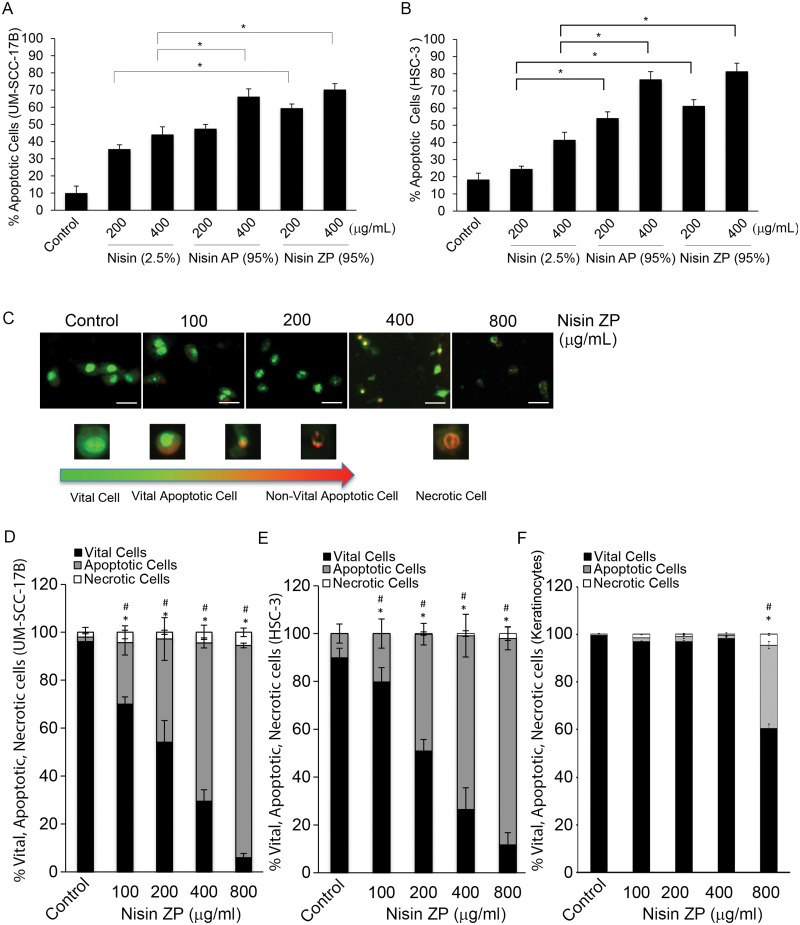
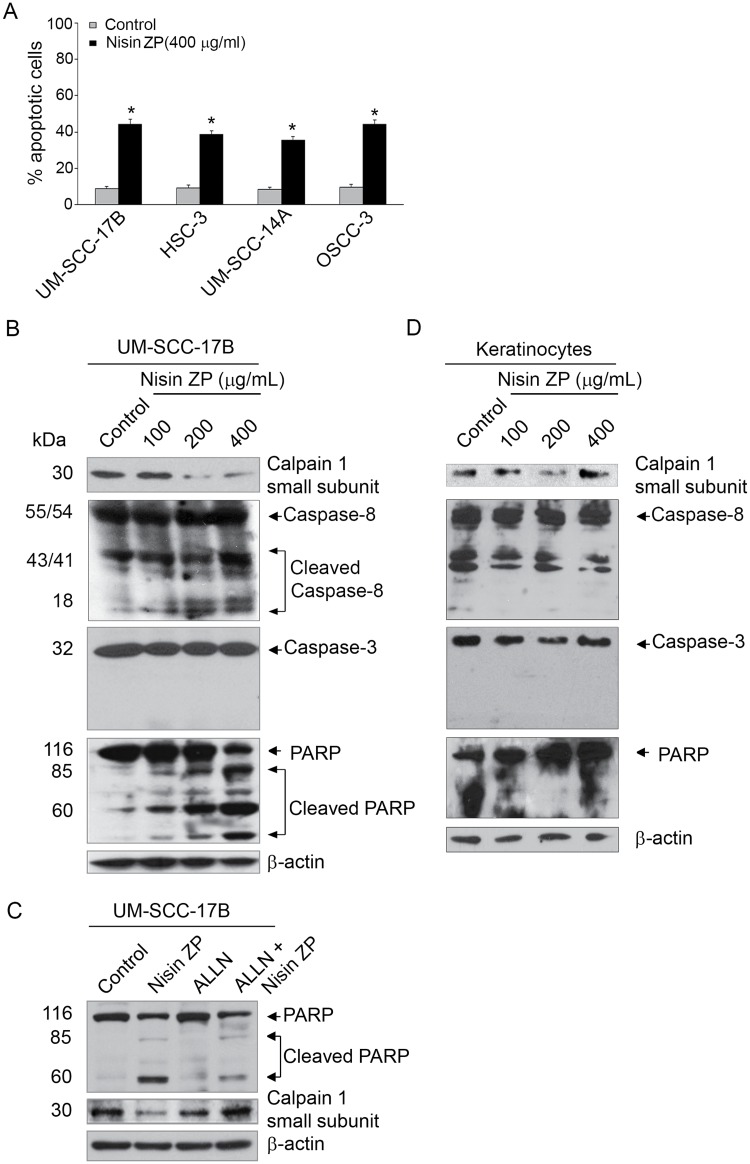
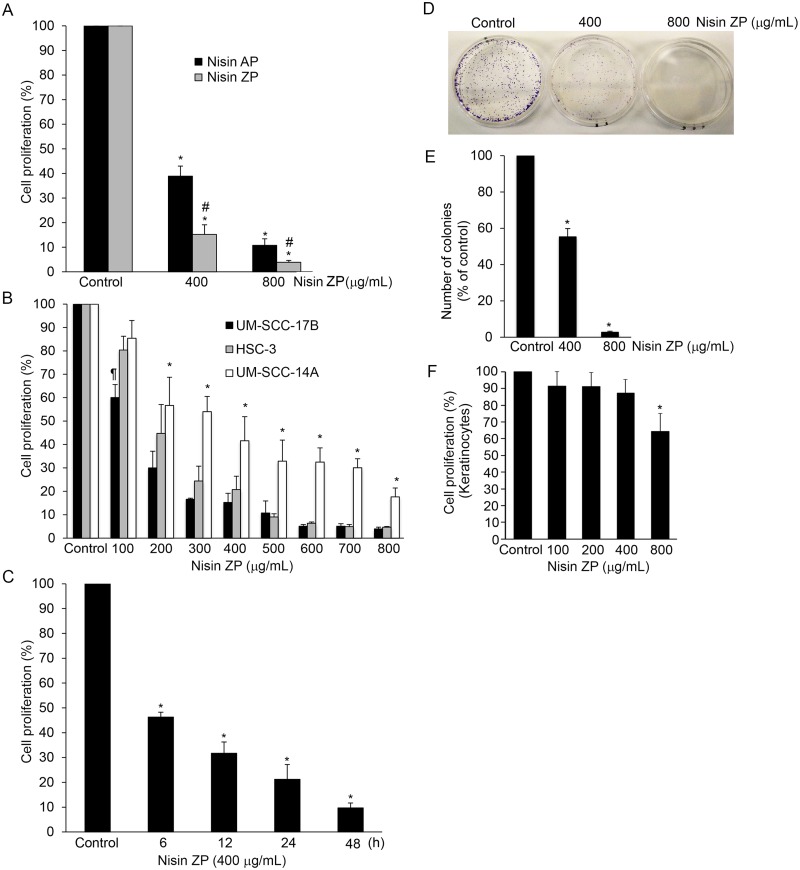
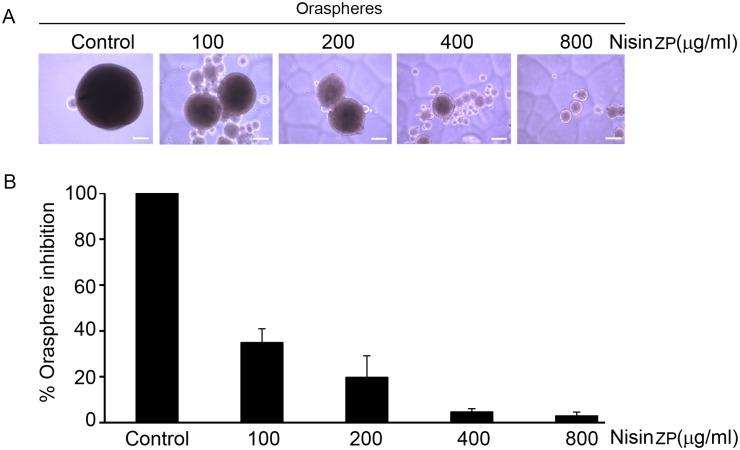
The use of small antimicrobial peptides or bacteriocins, like nisin, to treat cancer is a new approach that holds great promise. Nisin exemplifies this new approach because it has been used safely in humans for many years as a food preservative, and recent laboratory studies support its anti-tumor potential in head and neck cancer. Previously, we showed that nisin (2.5%, low content) has antitumor potential in head and neck squamous cell carcinoma (HNSCC) in vitro and in vivo. The current studies explored a naturally occurring variant of nisin (nisin ZP; 95%, high content) for its antitumor effects in vitro and in vivo. Nisin ZP induced the greatest level of apoptosis in HNSCC cells compared to low content nisin. HNSCC cells treated with increasing concentrations of nisin ZP exhibited increasing levels of apoptosis and decreasing levels of cell proliferation, clonogenic capacity, and sphere formation. Nisin ZP induced apoptosis through a calpain-dependent pathway in HNSCC cells but not in human oral keratinocytes. Nisin ZP also induced apoptosis dose-dependently in human umbilical vein endothelial cells (HUVEC) with concomitant decreases in vascular sprout formation in vitro and reduced intratumoral microvessel density in vivo. Nisin ZP reduced tumorigenesis in vivo and long-term treatment with nisin ZP extended survival. In addition, nisin treated mice exhibited normal organ histology with no evidence of inflammation, fibrosis or necrosis. In summary, nisin ZP exhibits greater antitumor effects than low content nisin, and thus has the potential to serve as a novel therapeutic for HNSCC.
Overview
The claims and statistics of this paper haven’t been checked yet.
Run the check — free, no account needed. It reads the open-access text and checks the sources it cites.
Integrity signals
Registry
Cites
Statistics
Figures
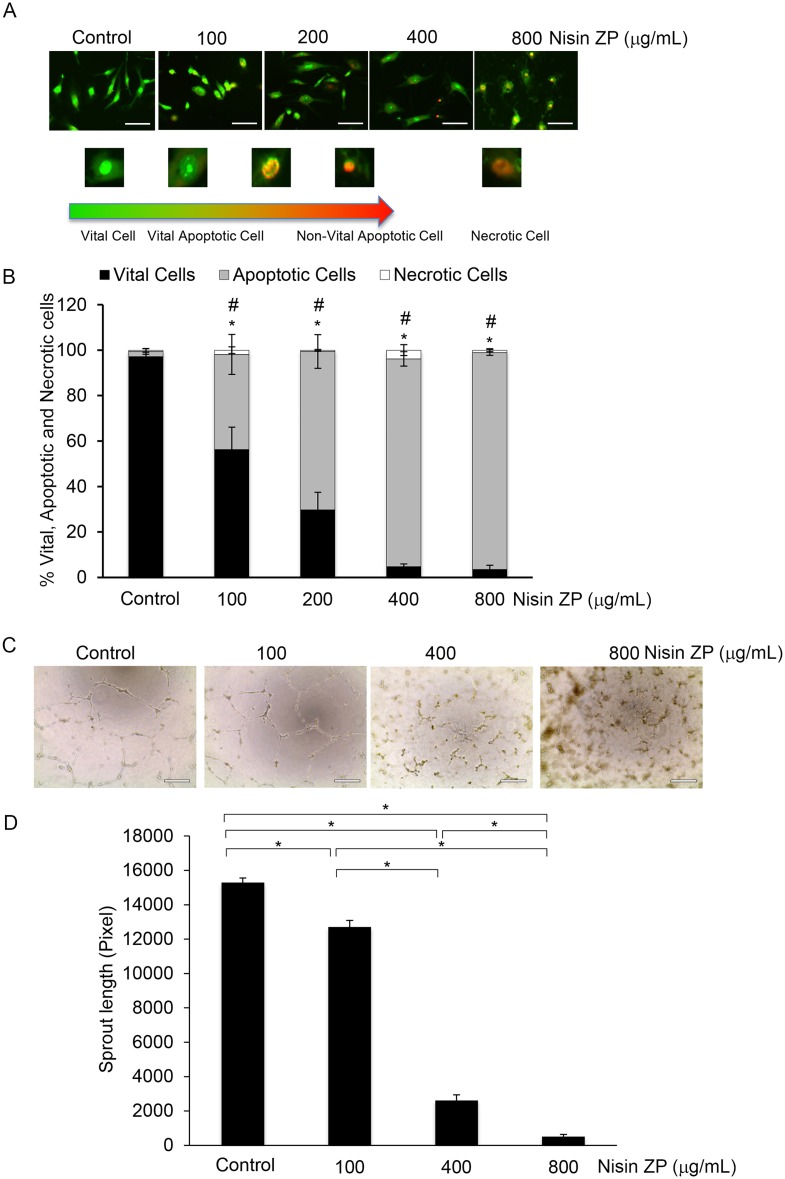
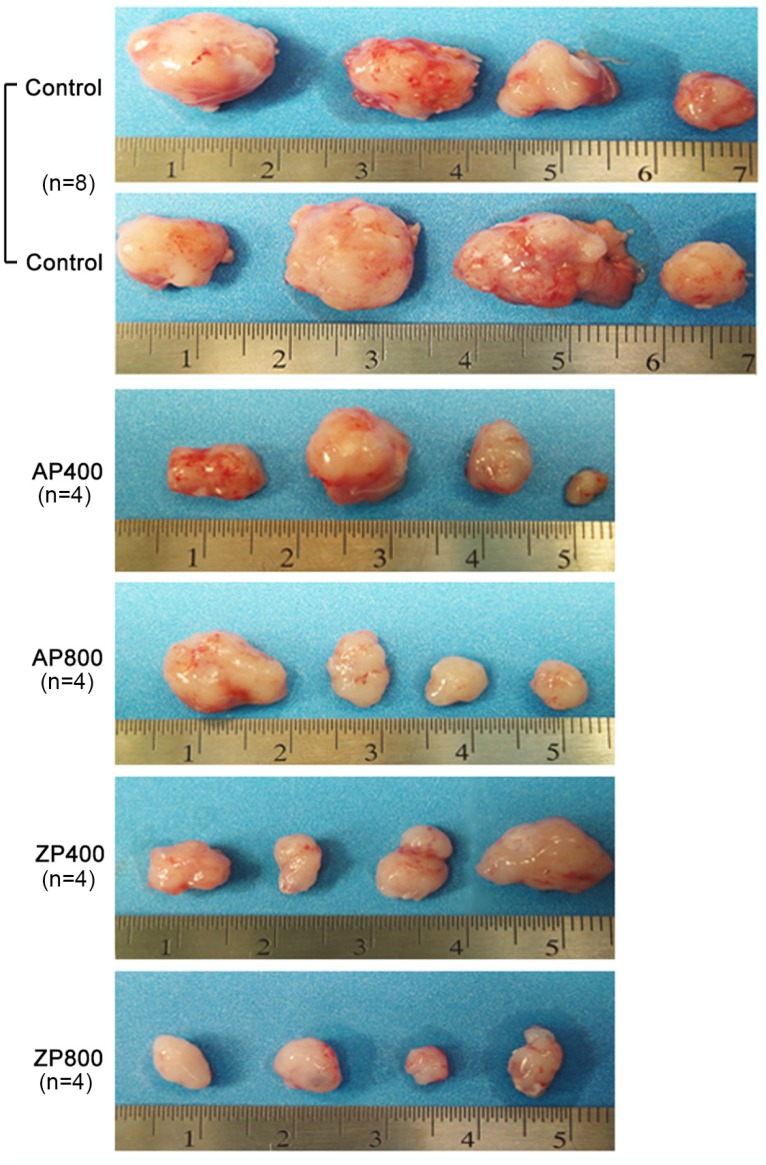
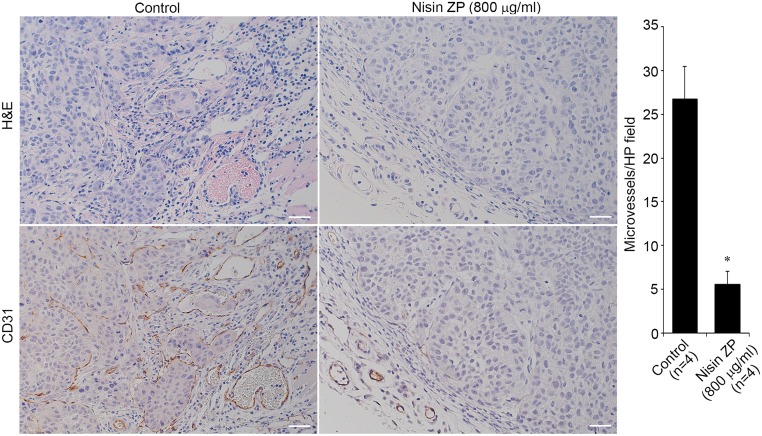
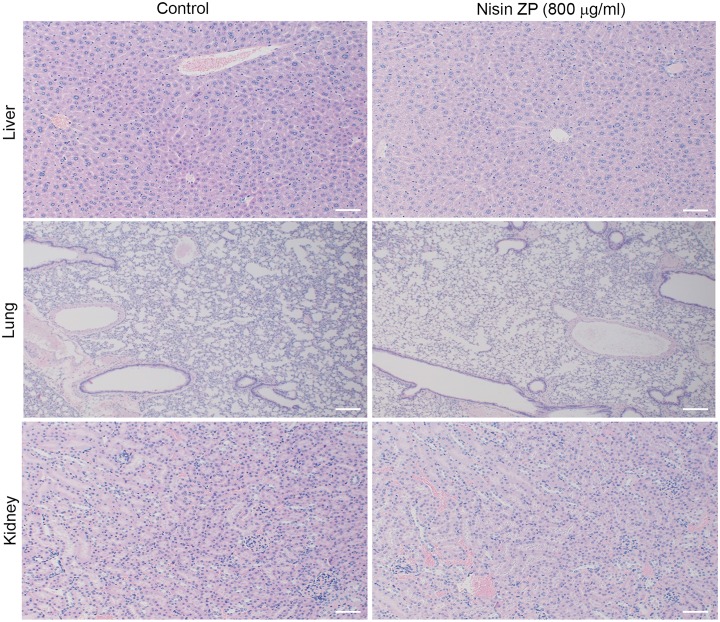
Verification
Claims the paper makes
The claims and statistics of this paper haven’t been checked yet.
Run the check — free, no account needed. It reads the open-access text and checks the sources it cites.
Claims other papers make about this one
Each is checked against this paper’s own text: does it say what the citing paper says it does?
In the citing paper
“Lactococcus lactis, a commensal of the oral microbiota, produces nisin, a bacteriocin that has been shown to reduce oral tumorigenesis and extend the life span of mice with tumors.165, 166”
From The oral microbiome: Role of key organisms and complex networks in oral health and disease (2021) · cites this paper as [166]
Self-check
Percentages, sums and reported differences re-computed from the paper’s own numbers.
The self-check needs the paper’s full text.
Citations
Cites
Siegel, R., Naishadham, D., & Jemal, A. (2012) · CA: A Cancer Journal for Clinicians · doi:10.3322/caac.20138 · Cited by 10,679
Bacteriocins: safe, natural antimicrobials for food preservation.
Cleveland, J., Montville, T. J., Nes, I. F., & Chikindas, M. L. (2001) · International Journal of Food Microbiology · doi:10.1016/s0168-1605(01)00560-8 · Cited by 1,835
Studies on anticancer activities of antimicrobial peptides
Hoskin, D. W., & Ramamoorthy, A. (2007) · Biochimica et Biophysica Acta (BBA) - Biomembranes · doi:10.1016/j.bbamem.2007.11.008 · Cited by 1,297
Self-citationA simple technique for quantifying apoptosis in 96-well plates
Ribble, D., Goldstein, N. B., Norris, D. A., & Shellman, Y. G. (2005) · BMC Biotechnology · doi:10.1186/1472-6750-5-12 · Cited by 854
Wiedemann, I., Breukink, E. J., van Kraaij, C., Kuipers, O. P., Bierbaum, G., KRUIJFF, B. D., & Sahl, H. (2001) · Journal of Biological Chemistry · doi:10.1074/jbc.m006770200 · Cited by 793
Identification and characterization of the lantibiotic nisin Z, a natural nisin variant
Mulders, J. W. M., Boerrigter, I. J., Rollema, H. S., Siezen, R. J., & de Vos, W. M. (1991) · European Journal of Biochemistry · doi:10.1111/j.1432-1033.1991.tb16317.x · Cited by 429
Mungrue, I. N., Pagnon, J. C., Omid Kohannim, A., Gargalovic, P. S., & Lusis, A. J. (2009) · The Journal of Immunology · doi:10.4049/jimmunol.182.1.466 · Cited by 332
Ihle, N. T., Williams, R. R., Chow, S., Chew, W. M., Berggren, M. I., Paine-Murrieta, G. D., Minion, D. J., Halter, R. J., Wipf, P., Abraham, R. T., et al. (2004) · Molecular Cancer Therapeutics · doi:10.1158/1535-7163.763.3.7 · Cited by 317
Koczulla, A. R., & Bals, R. (2003) · Drugs · doi:10.2165/00003495-200363040-00005 · Cited by 309
Genotyping of 73 UM‐SCC head and neck squamous cell carcinoma cell lines
Brenner, J. C., Graham, M. P., Kumar, B., Saunders, L. M., Kupfer, R., Lyons, R. H., Bradford, C. R., & Carey, T. E. (2010) · Head & Neck · doi:10.1002/hed.21198 · Cited by 304
Cited by
Sorted by citations
The oral microbiome: Role of key organisms and complex networks in oral health and disease
Sedghi, L., DiMassa, V., Harrington, A., Lynch, S. V., & Kapila, Y. L. (2021) · Periodontology 2000 · doi:10.1111/prd.12393 · Cited by 755
Self-citationBiomedical applications of nisin
Shin, J. M., Gwak, J. W., Kamarajan, P., Fenno, J. C., Rickard, A. H., & Kapila, Y. L. (2016) · Journal of Applied Microbiology · doi:10.1111/jam.13033 · Cited by 607
Self-citationBacteriocins as a new generation of antimicrobials: toxicity aspects and regulations
Soltani, S., Hammami, R., Cotter, P. D., Rebuffat, S., Said, L. B., Gaudreau, H., Bédard, F., Biron, É., Drider, D., & Fliss, I. (2020) · FEMS Microbiology Reviews · doi:10.1093/femsre/fuaa039 · Cited by 585
Kumariya, R., Garsa, A. K., Rajput, Y. S., Sood, S. K., Akhtar, N., & Patel, S. (2019) · Microbial Pathogenesis · doi:10.1016/j.micpath.2019.01.002 · Cited by 455
Bacteriocins as Potential Anticancer Agents
Kaur, S., & Kaur, S. (2015) · Frontiers in Pharmacology · doi:10.3389/fphar.2015.00272 · Cited by 288
Metadata
- Authors
- Kamarajan, P., Hayami, T., Matte, B., Liu, Y., Danciu, T., Ramamoorthy, A., Worden, F., Kapila, S., & Kapila, Y.
- Affiliations
- University of Michigan (US)
- Corresponding author
- Kapila, Yvonne
- ORCID
- Venue
- PLOS ONE
- Publisher
- Public Library of Science (PLoS)
- Published
- 2015-07-01
- Volume
- 10
- Issue
- 7
- Pages
- e0131008
- ISSN
- 1932-6203 (ISSN-L)
- PMC
- PMC4489501
- OpenAlex
- W1871229721
- Cited by
- 214
- References
- 63
- Citations by year
- 2026: 12 · 2025: 22 · 2024: 26 · 2023: 27 · 2022: 31 · 2021: 33 · 2020: 24 · 2019: 9 · 2018: 9 · 2017: 13 · 2016: 5 · 2015: 3
- FWCI
- 8.42
- Type
- journal article
- Language
- en
- Open access
- gold
- doi.org
- Licence
- Locations
- PLoS ONE (publishedVersion, cc-by)
- Europe PMC (PubMed Central) (publishedVersion, cc-by)
- PubMed Central (publishedVersion, cc-by)
- PubMed (publishedVersion)
- eScholarship (California Digital Library) (submittedVersion)
- RePEc: Research Papers in Economics (submittedVersion)
- DOAJ (DOAJ: Directory of Open Access Journals) (submittedVersion, cc-by-sa)
- Funders
- University of Michigan
- Coordenação de Aperfeiçoamento de Pessoal de Nível Superior
- Conselho Nacional de Desenvolvimento Científico e Tecnológico
- Peking University
- Ciência sem Fronteiras
- Division of Graduate Education
- Topics
- Life Sciences › Immunology and Microbiology › Microbiology › Antimicrobial Peptides and Activities
- Life Sciences › Biochemistry, Genetics and Molecular Biology › Biotechnology › Bacterial Cancer Therapy
- Health Sciences › Medicine › Otorhinolaryngology › Head and Neck Cancer Studies
- Keywords
- bacteriocins, antimicrobial peptides, head and neck squamous cell carcinoma, anticancer activity, apoptosis, calpain, tumor angiogenesis, microvessel density, carcinogenesis, survival, food preservatives, oral keratinocytes, endothelial cells
- MeSH terms
- Animals, Carcinoma, Squamous Cell, Dose-Response Relationship, Drug, Flow Cytometry, Head and Neck Neoplasms, Humans, Mice, Nude, Mouth Neoplasms, Neoplasms, Experimental, Neovascularization, Pathologic, Nisin, Blotting, Western, Apoptosis, Cell Line, Tumor, Cell Proliferation, Mice, Microvessels, Carcinogenesis
About these checks
Registry, retraction, Cites and statistics results are computed, not judged, with one exception: a printed reference that no index lists is read once by a model before it counts as a citation error. Claims are extracted by a model and kept only when their quote appears verbatim in the text; each cited source is then checked, with a model’s help, for whether it says what the claim relies on. Those verdicts can be wrong — read the claim’s quote and the cited source before relying on one.
Statistics and arithmetic are recomputed, not judged.
Confidence bands are shown only for fields calibrated on our annotated test set. None is calibrated yet, so no band is shown.
What counts as a claim ›How we measure confidence ›How we check this ›
Are you an author, or do you see a problem with this page? Request a review
